16 Sep 2022 | Belarus, Brazil, China, Iran, North Korea, Opinion, Russia, Ruth's blog, Saudi Arabia, Sri Lanka, Turkey, United Kingdom
The United Kingdom is in a period of national mourning, marking the passing of our head of state, Her Majesty Queen Elizabeth II. Global media has been transfixed, reporting on the minutiae of every aspect of the ascension of the new monarch and the commemoration of our former head of state. While the pageantry has been consuming, the constitutional process addictive (yes I am an addict) and the public grief tangible – the traditions and formalities have also highlighted challenges in British and global society – especially with regards to freedom of expression.
We have witnessed people being arrested for protesting against the monarchy. While the protests could be considered distasteful – I certainly think they are – that doesn’t mean that they are illegal and that the police should move against them. Public protest is a legitimate campaigning tool and is protected in British law. As ever, no one has the right not to be offended. And protest is, by its very nature, disruptive, challenging and typically at odds with the status quo. It is therefore all the more important that the right to peacefully protest is protected.
While I was appalled to see the arrests, I have been heartened in recent days at the almost universal condemnation of the actions of the police and the statements of support for freedom of expression and protest in the UK, from across the political system.
What this chapter has confirmed is that democracies, great and small, need to be constantly vigilant against threats to our core human rights which can so easily be undermined. This week our right to freedom of expression and the right to protest was threatened and the immediate response was a universal defence. Something we should cherish and celebrate because it won’t be long before we need to utilise our collective rights to free speech – again.
Which brings me onto the need to protest and what that can look like, even on the bleakest of days. On Monday, the largest state funeral of my lifetime is being held in London. Over 2,000 dignitaries are expected to attend the funeral of Her Majesty, Queen Elizabeth II, in Westminster Abbey. The heads of state of Russia, Belarus, Afghanistan, Syria, Venezuela and Myanmar were not invited given current diplomatic “tensions”. While I completely welcome their exclusion from the global club of acceptability, it does highlight who was deemed acceptable to invite.
Representatives from China, Brazil, Saudi Arabia, Turkey, Iran, North Korea and Sri Lanka will all be in attendance, all of whom have shown a complete disregard for some of the core human rights that so many of us hold dear. Can you imagine the conversation between Bolsonaro and Erdogan? Or the ambassador to Iran and the vice president of China?
While I truly believe that no one should picket a funeral – the very idea is abhorrent to me – that doesn’t mean that there are no other ways of protesting against the actions of repressive regimes and their leadership, who will be in the UK in the coming days. In fact the British Parliament has shown us the way – by banning representatives of the Chinese Communist Party from attending the lying in state of Her Majesty – as a protest at the sanctions currently imposed on British parliamentarians for their exposure of the acts of genocide happening against the Uyghur population in Xinjiang province. This was absolutely the right thing to do and I applaud the Speaker of the House of Commons, Rt Hon Lindsay Hoyle MP, for taking such a stance.
Effective protest needs to be imaginative, relevant and take people with you – highlighting the core values that we share and why others are a threat to them. It can be private or public. It can tell a story or mark a moment. But ultimately successful protests can lead to real change. Even if it takes decades. Which is why we will defend, cherish and promote the right to protest and the right to freedom of expression in every corner of the planet, as a real vehicle for delivering progressive change.
29 Jul 2022 | Artistic Freedom, Asia and Pacific, News, Sri Lanka
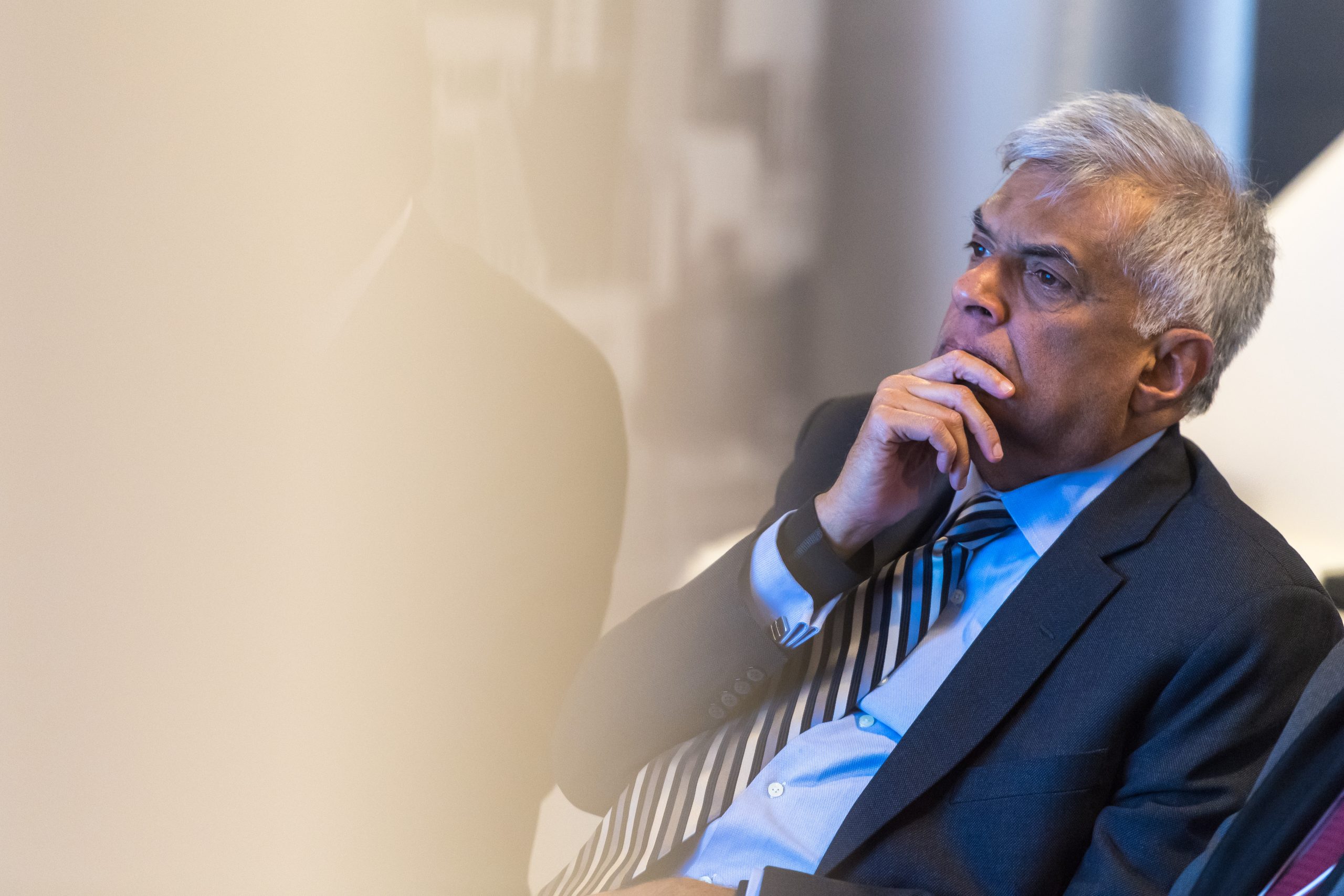
Ranil Wickremesinghe, now president of Sri Lanka, attending a presentation at the Annual Meeting 2017 of the World Economic Forum in Davos, January 17, 2017. Photo: World Economic Forum/ Mattias Nutt/Flickr
I’m writing this on the morning of 22 July while watching footage from the early hours of this morning showing military and police assaulting protesters, journalists and lawyers outside of the Presidential Secretariat at Galle Face, Colombo. Activists report on social media that protesters and journalists were severely beaten with batons, threatened with being shot. Many of the tents and structures built by the protesters over the last three months at this site were destroyed. This was Ranil Wickremesinghe’s first day in power, after being selected as the new Rajapaksa proxy president in a deeply corrupt vote held by a Rajapaksa-controlled parliament.
Of particular note in this moment is that the protesters had already announced their intention to vacate the site later today, responding to an itself repressive court order. Even by the standards of dictatorial abuse of power, the violence was tactically superfluous. Instead, it was a message to protesters and the nation at large signalling how Wickremesinghe intends to govern, beginning with the brutal, malicious repression of peaceful dissent.
This can be confusing to an outside observer. Much of the commentary about Gotabaya and Mahinda Rajapaksa (the brothers who have dominated Sri Lankan politics in recent years) focused on their family: corrupt strongmen who were to blame for the island’s many failures. If the nepotistic, violent Rajapaksas were everything that was wrong about Sri Lanka, it seems as if deposing them should have improved matters. Instead, little has changed. This is for two reasons, both deeply intertwined. The first reason is that Sri Lanka’s structure of governance is deeply warped around the over-empowered office of the executive president, generating a stream of power-addicted despots. The only purpose of that office is to abuse it. One of the calls of the current protest movement is to abolish the office entirely.
The second reason is that the Rajapaksas are far from the only nepotistic, violent political dynasty to hold executive power in Sri Lanka. There are three of note: the Rajapaksas, of course. The Bandaranaikes, whose patriarch invented the racist demagoguery that characterizes Sri Lankan politics to this day, and whose statue overlooks the protest site that was brutalized last night. And there are the Wijewardenas, now headed by Ranil Wickremesinghe, the new executive president of Sri Lanka, who holds the office created forty years ago by his own first cousin once removed, J.R. Jayawardena.
It was Jayawardena who also gave Sri Lanka the Prevention of Terrorism Act (PTA), which has been used for four decades to arbitrarily detain and torture. Its targets, as the targets of the Sinhala-Buddhist dominated Sri Lankan state have usually been in the postcolonial period, have primarily been members of the Tamil and Muslim minority populations, though it is a blunt instrument and used as carte blanche by the state. Detainees are nominally accused of “terrorism” but often held without charges for years or decades. Journalists and writers, too, have been frequent targets of this and other legal instruments the Sri Lankan state uses for repression. These are by no means the sole mechanism the state has at its disposal—many journalists and writers have been killed, disappeared, assaulted and forced into exile. But other than the state’s extrajudicial violence, cases under the PTA also demonstrate the depth of complicity from the various arms and bodies of the state in carrying out repression.
A clear example is the case of Ahnaf Jazeem, a teacher and poet. In 2019, after the Easter bombings, the government began arresting hundreds of Muslims under the PTA, often on the most tenuous “evidence,” such as the possession of texts in Arabic. Jazeem, then 25, was arrested under the PTA in May 2020, after these far-fetched “investigations” led police to search his place of work, a private school where he had been teaching and living until the pandemic lockdown. In his quarters, they found copies of his book of poems. This was his first collection, Navarasam, which had been published a few years earlier. The poems were written in Tamil, which the Sinhala police could not read and which, because of the ingrained racism of the Sri Lankan state, were therefore automatically suspicious. Too, the book included art alongside some poems, some of which depicted militants, illustrating (what the police could not read as) antiwar poems. In this context, that was considered sufficient to imprison a poet without charge or trial. Early reports in the Sinhala media did not even identify Navarasam as a poetry collection: it was referred to solely as “an extremist text.”
Jazeem was detained in squalid conditions in the TID building under the PTA, handcuffed even while sleeping, with no access to a lawyer, for months. He was accused of supporting terrorism, the Easter bombers, and ISIS through his teaching and his book. The magistrate’s court had Navarasam rush-translated by the court’s sworn translators, resulting in a highly literal word-for-word translation which was then sent to a group of child psychiatrists at a government hospital to report on whether this text could influence children toward “extremism”. The psychiatrists’ report was mealymouthed, but sufficiently affirmative for the magistrate’s purpose, citing multiple poems as promoting violence and religious hatred.
Navarasam was later translated independently by writers and academics working for Jazeem’s release together with his pro bono legal defense team—which of course took much longer, because proper literary translation of a book of poetry is not something that can be done in a few days to support a trumped-up court case. Here is an extract of one such counter-translation, by Shash Trevett, of one of Jazeem’s poems, “The Thundering Himalayas,” that the psychiatrists’ report specifically cited as promoting violence, leading to Jazeem spending 19 months in detention in total.
If you are brave, you can defeat tragedies.
If you are submissive, failure will follow you.
If, every minute of every day
you think anything is possible
you will own every obstacle in your way
and the world will spread open beneath your feet.
A river is not designed to stand still all day.
It runs towards its desire
to join as one with the sea.
Whatever will obstruct, will obstruct.
What is to occur, will occur.
Whatever lies in its path, will lie there
as the river creeps ever forward.
A rock might block its path
a dam might impede its course
but a river will always overcome obstacles
that hamper its flow.
In order to reach its goal
it will splash and spray.
It will gently dislodge the rock
and set a brand new course.
It doesn’t meet obstacles with violence.
It doesn’t drown them
or split them in two.
Instead, it rises above the rocks
and flows on its way.
If you were to be like a river
you can achieve whatever you wish for.
Even if the Himalayas were to block your way
you will be able to dismantle them with ease.
During that period, more and more writers, activists, academics and organisations spoke up offering readings on the book, both in the original and via its legitimate translations, confirming again and again that the text was explicitly anti-extremist, anti-war, anti-violence, and in fact, specifically anti-IS. Jazeem was finally released on bail in December 2021, but the case is still ongoing and he is required to travel 180 km every month to sign at the Terrorism Investigation Department, even as this grows increasingly difficult due to Sri Lanka’s fuel shortage.
Jazeem was arrested and detained under the PTA without investigators or magistrate being even able to read the book they considered damning evidence against him. The prosecution and its accomplices wallowed in this expedient illiteracy; it was his defenders that had to read poetry, produce counter-translations, argue for a just reading and make the case that truth even matters. In this case as in so many others, the Sri Lankan state’s utter indifference to reality in the service of power, manifests as hypocrisy but is so deeply ingrained in systemic conditions that it’s perhaps better described as perversion.
The Rajapaksa’s genocidal “humanitarian operation” in 2009 remains the nadir, but Ranil Wickremesinghe’s administration today is fully engaged in the same rhetorical manoeuvre, citing “civil liberties” to justify the violent assault of protestors and “political stability” to explain his reappointment of a cabal of Rajapaksa allies and Sinhala-Buddhist extremists to his new cabinet—the very government that had lost their mandate to mass protests, whose resignations prompted Wickremesinghe’s own entry into government to rescue the Rajapaksa throne as it tottered on the brink of falling. Under this Rajapaksa caretaker administration, the quick return of Gotabaya himself seems altogether too likely.
6 Jun 2019 | Asia and Pacific, Global Journalist, Media Freedom, media freedom featured, News, Sri Lanka
[vc_row][vc_column][vc_column_text]This article is part of Index on Censorship partner Global Journalist’s Project Exile series, which has published interviews with exiled journalists from around the world.[/vc_column_text][vc_column_text]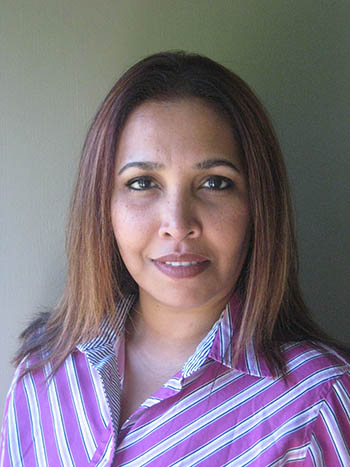 Sonali Samarasinghe remembers the last words of her husband Lasantha Wickrematunge on the day he was killed in 2009: “Don’t worry, I got it under control.”
Threats weren’t new to Wickrematunge. As the editor of The Sunday Leader, a Sri Lankan newspaper that published articles exposing government corruption, he’d been followed, attacked with clubs and received a funeral wreath at his office.
Samarasinghe was the chief investigative journalist and consulting editor for the newspaper and also the founding editor-in-chief of its sister paper, The Morning Leader.
Like other journalists, the couple worked in a difficult environment, as their newspapers competed with state-owned newsrooms and faced constant pressure for criticising the government of then-president Mahinda Rajapaksa. In late 2008 and early 2009, Rajapaksa’s government was in the final months of a brutal decades-long civil war with Tamil Tiger rebels. Still, Wickrematunge’s assassination shocked the south Asian nation and would force Samarasinghe into years of exile.
“For the Mahinda Rajapaksa administration, Wickrematunge was the biggest thorn in their flesh,” Samarasinghe wrote in a blog post. “He investigated corrupt military procurement deals, spoke out strongly and passionately for a negotiated settlement to the ethnic conflict and debunked blatant government propaganda on the war.”
Indeed Wickrematunge’s first wife, Raine, was so fearful for her family’s safety that she left Sri Lanka for Australia in 2002 with the couple’s three children. Samarasinghe worked for Wickrematunge for years before the couple married in 2008, just two months before his death.
She too made powerful enemies. Samarasinghe was once interrogated for more than four hours by Sri Lanka’s Criminal Investigations Department in an attempt to get her to reveal her sources in an investigation into the central bank’s dealings with a company accused of running a Ponzi scheme. In another incident, an article about tsunami relief accused Rajapaksa and other top officials of siphoning off millions in aid money. The Morning Leader’s printing presses were attacked and copies of the paper burned in 2007 by 15 gunmen after a separate exposé on the family of cabinet minister Mervyn Silva.
On 8 January 2009, Samarasinghe and Wickrematunge received a call from the newspaper while returning home from the pharmacy. It was a warning: they were being followed.
As they got out of their car, two men wearing black fatigues on a black motorcycle sped past them, staring them down, says Samarasinghe in an interview with Global Journalist. The couple went into the house and closed all their doors. Samarasinghe says she tried to keep Wickrematunge at home, but he was determined to go to the office to write his well-known political column.
On his way to the newspaper during rush hour, Wickrematunge was ambushed and killed in broad daylight by motorcycle-riding attackers, one of at least 19 journalists slain in Sri Lanka for their work since 1992, according to the Committee to Protect Journalists. Wickrematunge had been prepared for this outcome. He’d already written his own obituary, which included the line: “…when finally I am killed, it will be the government that kills me.”
“We were up against an administration that had taken impunity to the level of a martial art,” Samarasinghe says.
Samarasinghe continued receiving threats even after Wickrematunge’s assassination. Ttwo weeks later, she escaped to New York.
She became a Nieman Fellow at Harvard University in August 2009 and started the independent Lanka Standard news site in 2011. After Harvard, she spent time as a journalist in residence at City University of New York and Ithaca College.
Then in 2015 came an opportunity for justice. Rajapaksa suffered a surprise defeat to former ally Maithripala Sirisena in presidential elections. The six-year-old investigation into Wickrematunge’s death, which had yielded no convictions, was reopened. Samarasinghe was hired by the new administration to work in New York at Sri Lanka’s mission to the United Nations.
In 2016, a former soldier was found dead with an apparent suicide note in which he claimed responsibility for killing Wickrematunge’s. A police report implicated a special military unit led by Rajapaksa’s brother and defence secretary, Gotbaya Rajapaksa.
Yet progress stalled. Gotbaya, who is also being sued by Wickrematunge’s daughter in US courts for her father’s death, has announced he’s running for president to succeed Sirisena in elections later this year. Both Rajapaksas have denied involvement in the editor’s death. Meanwhile, after a wave of terrorist bombings in April killed more than 250 people, President Sirisena said that investigations into human rights abuses during the Sri Lankan Civil War had weakened the security forces and left the country at risk.
Samarasinghe spoke with Global Journalist’s Seth Bodine about the killing of her husband, the threats against her, and the prospect of those responsible escaping Sri Lankan justice. Below is an edited version of their interview.
Global Journalist: What was it like being a journalist in Sri Lanka around the time of your husband’s death?
Samarasinghe: We were up against an administration that had taken impunity to the level of a martial art. It had incrementally closed the democratic space, the space for freedom of expression. This didn’t happen overnight. It happened incrementally.
One by one private media organisations were being bought by businessmen or acolytes of the president at the time, Mahinda Rajapaksa. Even his own family.
Those who were not bought up chose to associate themselves with the ruling regime because then they could engage in lucrative business with the government. The state-controlled media was really state-controlled. It included the nation’s largest newspaper group. So, you could not compete with that.
At the time, when we were working, there was no freedom of information act. Speaking to journalists was actively discouraged by the government.
Even though the constitution provided for freedom of expression, that freedom of expression right was infringed upon by other laws. With emergency power regulations, anything could happen. There was the Prevention of Terrorism Act, which was another draconian piece of legislation which really curtailed freedom. And there were other laws, giving the government and the armed forces power to arrest without warrant.
So you could be detained at that time for up to 20 months without charge. Officials were shielded from prosecution so you couldn’t even challenge them.
The culture of impunity was just staggering. I mean, at that time white vans would go around abducting journalists and activists. Some of them never to be seen again, some of them beaten to a pulp and thrown on the side of the road.
GJ: Was there any warning of the danger to you and Lasantha?
Samarasinghe: We weren’t given any warning about the motorcyclists except a few minutes before when someone from the office called to say that he was being followed. But before that, there were certain things that were happening.
For instance, he received a cutting of a newspaper which was drenched in red ink. This was like a week before. He himself knew. He was talking to me, and he said, “It’s very dangerous now.”
Then, two days before Wickrematunge’s death, a very independent TV network was destroyed. They came in and they burned the place down.
GJ: What led you to flee?
Samarasinghe: It was the trauma of going through the death of my husband in such a violent manner. Then, neighbours let us know that the motorcyclists had come back and were circling the premises.
So I immediately left my home. My mother didn’t know where I was, I didn’t tell anyone where I was, and I stayed with a friend.
Meanwhile things were happening at home. Two men walked into the house, and despite my mother’s protest, they very aggressively started taking photos of the inside and outside of my home. They photographed my little niece. Then they rushed out of the house. So, within two weeks I realised I had to leave.
Both the Australian and American ambassadors reached out to help. And ultimately, I fled to Europe and found shelter in the home of a European ambassador who took me in for two months.
GJ: What happened at The Sunday Leader after Lasantha’s death?
Samarasinghe: For the two weeks I was in charge of the newspaper following the assassination of my husband, I wrote the political column focusing on his death, the then-president’s reaction, and the immediate aftermath. I also had other journalists intensely focus on the investigation.
We ran half-page ads on a black background of threats made by president Rajapaksa to Lasantha. However, I was compelled to flee the country. The newspaper ground to a halt and understandably diluted itself and went into survival mode.
GJ: How did you feel when you left?
Samarasinghe: You really feel like your country has betrayed you. And you also have to face so many emotions. Those who knew Lasantha just denied knowing him. Everyone was scared. It was such a horrid time.
Some of my friends and family would no longer ride in the same car with me because I had to drive to work in those two weeks, fearing that they would be collateral damage, that I would be the next obvious target. For a long time, I couldn’t even convince a caretaker or friend to check in on my house because they were just scared people were watching it, or that they could be attacked or targeted.
Superstition was doing its bit. Nobody wanted to rent or buy a home they felt was one of tragedy – because it was a home of a couple whose dreams were dashed within two months of marriage. So they thought it was bad luck.
All these things, all of these cultural and political issues were just swirling around. It was a really torrid time because of that.
It was just the panic of having to leave and having to look undefeated for the cameras because you have to look strong. The panic of not seeing familiar faces, the stress of coming to an unknown place.
Language had failed me. And I was a journalist who wrote 10,000 words or more a week. It was then that I learned and was relieved to know that it was post-traumatic stress disorder.
GJ: Before Rajapaksa surprisingly lost the 2015 election, did you imagine that you would ever go back to Sri Lanka?
Samarasinghe: I had just abandoned all hope of getting back to Sri Lanka. I thought this was going to go on forever. In 2015, before the election, even the New York Times had an editorial that said the regime is going to remain. None of us expected this to happen. The next day, we all bought tickets to go back to Sri Lanka. Everyone was buying tickets.
GJ: Gotabaya Rajapaksa, who was defence minister at the time of your husband’s death, and who was linked to his killing by a police report, has announced he will run for president this year. Are you upset that the people responsible for his death are still free?
Samarasinghe: Investigations into Lasantha’s murder are still continuing. It is not for me to comment at this time. The people of Sri Lanka will decide in democratically-held elections.
I will say this: I believe in the rule of law and I believe in divine justice. As Dr. King noted: “Evil may so shape events that Caesar will occupy a place and Christ a cross, but that same Christ will rise up and split history into AD and BC, so that even the life of Caesar must be dated by his name…the arc of the moral universe is long, but it bends toward justice.” [/vc_column_text][/vc_column][/vc_row][vc_row][vc_column width=”1/2″][vc_video link=”https://youtu.be/6BIZ7b0m-08″][/vc_column][vc_column width=”1/2″][vc_column_text]Index on Censorship partner Global Journalist is a website that features global press freedom and international news stories as well as a weekly radio program that airs on KBIA, mid-Missouri’s NPR affiliate, and partner stations in six other states. The website and radio show are produced jointly by professional staff and student journalists at the University of Missouri’s School of Journalism, the oldest school of journalism in the United States. [/vc_column_text][/vc_column][/vc_row][vc_row][vc_column][vc_custom_heading text=”Don’t lose your voice. Stay informed.” use_theme_fonts=”yes”][vc_separator color=”black”][vc_row_inner][vc_column_inner width=”1/2″][vc_column_text]Index on Censorship is a nonprofit that campaigns for and defends free expression worldwide. We publish work by censored writers and artists, promote debate, and monitor threats to free speech. We believe that everyone should be free to express themselves without fear of harm or persecution – no matter what their views.
Join our mailing list (or follow us on Twitter or Facebook). We’ll send you our weekly newsletter, our monthly events update and periodic updates about our activities defending free speech. We won’t share, sell or transfer your personal information to anyone outside Index.[/vc_column_text][/vc_column_inner][vc_column_inner width=”1/2″][gravityform id=”20″ title=”false” description=”false” ajax=”false”][/vc_column_inner][/vc_row_inner][/vc_column][/vc_row][vc_row full_width=”stretch_row_content”][vc_column][three_column_post title=”Global Journalist / Project Exile” full_width_heading=”true” category_id=”22142″][/vc_column][/vc_row]

 [/vc_column_text][/vc_column_inner][/vc_row_inner][/vc_column][/vc_row][vc_row][vc_column][vc_column_text]