Bryan faces a charge of ‘hooliganism’ after he was arrested while filming a Greenpeace protest on an Arctic Ocean oil rig.
Hooliganism is defined in article 213 of the Russian criminal code as “a gross violation of the public order which expresses patent contempt for society, attended by violence against private persons or by the threat of its use, and likewise by the destruction or damage of other people’s property”
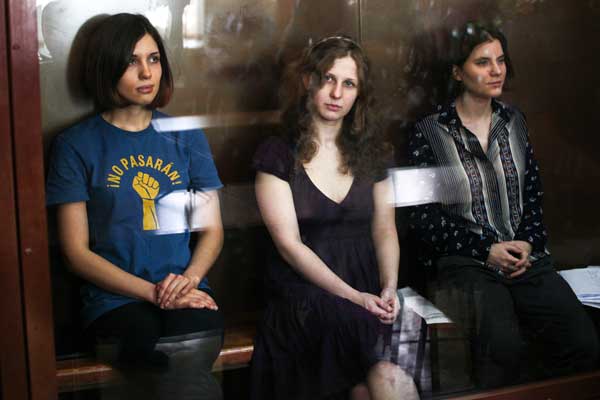
Bryon could end up with a two-year sentence should he be convicted. That’s what Nadezhda Tolokonnikova, Maria Alekhina and Ekaterina Samutsevic of Pussy Riot received after they were convicted of “hooliganism motivated by religious hatred” in October 2012. Samutsevic has been released on bail, but Alekhina and Tolokonnikova remain in prison. There were fears for the wellbeing of Tolokonnikova recently after authorities could not confirm her whereabouts in the course of a prison transfer.
In the past week, artist Pyotry Pavlensky was charged with hooliganism for nailing his scrotum to Red Square, in what he said was a protest against political apathy.
Azerbaijan meanwhile, defines it as “deliberate actions roughly breaking a social order, expressing obvious disrespect for a society, accompanying with application of violence on citizens or threat of its application, as well as destruction or damage of another’s property…”
In May of this year, Azerbaijani activist Ilkin Rustamzadeh was sentenced to two months pre-trial detention for a hooliganism charge after he allegedly took part in a “Harlem Shake” video. Rustamzadeh, who had been active in calling for investigations into the deaths of young soldiers in Azerbaijan’s army, denied ever having taken part in the videos.
Before that, in 2009, Azerbaijan had jailed two young activists for hooliganism after they posted a video on YouTube satirising the government’s expenditure on importing donkeys from Germany.
It was suggested that the donkey import was a cover for money laundering. Shortly after the video was posted, the activists, Emin Milli and Adnan Hadjizadeh, were attacked in a Baku cafe. They were blamed for the fight and sentenced two and a half years and two years respectively.
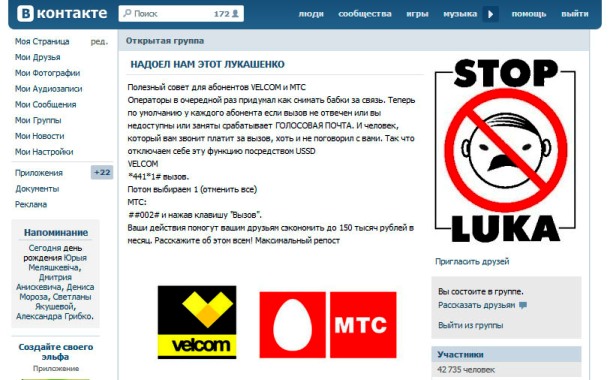
In Belarus, Alexander Lukashenko’s regime frequently uses hooliganism charges to harass journalists and activists. Lukashenko is so paranoid about dissent that he at one point banned clapping in public, so its unsurprising that moderators of online anti-government groups get arrested. In August 2012, Pavel Yeutsikheieu and Andrei Tkachou, administrators of the “We are fed up with Lukashenko” group on Russian social network VKontakte, were both given short prison sentences for “minor hooliganism”.
In the old Soviet Union, inconvenient people were often declared mad and locked up by the authorities. Now, they’re classified as hooligans.
Last year’s Internet Governance Forum in Baku, Azerbaijan proved controversial due to the choice of host. This year’s event, in Bali, Indonesia was bound to be contentious, after Edward Snowden’s leaks on the US’s PRISM programme. PRISM and TEMPORA (the UK system of mass surveillance) were a lightening rod for general discontent from activists who feel an increasing sense of ill ease over the state of internet freedom. Many of the sessions were bad-tempered affairs with civil society rounding on the perceived complacency of government officials from democracies who refused to state their opposition to mass state surveillance in clear enough terms.
US rep use the phrase “alleged US intelligence practices” and then continue by saying: “everyone does it” #IGF2013SV#IGF2013
At an event hosted by the Global Network Initiative, Index on Censorship, andPakistan’s Centre for Social and Policy Analysis, a US government official was heckled by the audience when he attempted to justify PRISM as an anti-terrorism measure. Of particular concern for delegates was a sense that PRISM is now being used by less democratic and authoritarian states to justify their own surveillance systems. The Chinese were quick to point out the ‘double standards’ of the US at this workshop, following it with appalling doublespeak to gloss over their poor domestic record on human rights violations. A point I challenged them on in no uncertain terms.
WOW China is actually lecturing the US on #prism THIS IS SO DEPRESSING #igf2013
Participants in the workshop from across the globe from Pakistan to South Africa stated their concern that a race to the bottom is beginning with new surveillance capacities being debated in countries such as Russia, New Zealand and the UK. Other areas of concern at the workshop included the increasing use of filters at ISP level (in particular in Indonesia where a significant number of ISPs are adopting filtering) and the pressure now felt by Telcos from states who are imposing burdensome requirements to filter content. One worrying prospect is that the ITU will succumb to a push to ensure Telcos do not distribute ‘blasphemous’ content which could lead to the full Balkanisation of the internet.
Although the outlook is bleak, civil society is pushing back at corporations and governments. Bytes for All in Pakistan has done impressive work in chronicling censored online content. A number of coalitions strengthened at the IGF with closer co-operation between international NGOs to take on mass state surveillance. This weekend, a number of US NGOs will rally in Washington DC against the PRISM programme with thousands expected to take to the streets. Index on Censorship’s #DontSpyOnMe petition of 7,000 signatures was this week sent to Lithuanian President Dalia Grybauskaitė, who currently hold the Presidency of the Council of the EU, and Herman van Rompuy, President of the European Council. The EU heeded our calls to discuss mass surveillance at the Council of Ministers meeting – a big success. The pressure on corporations is being felt too, Telcos came under particular fire for their willingness to install surveillance equipment in their networks. Yet, many are beginning to speak publicly over the pressures they feel from states and the need for transparency so their users are at least aware of the surveillance they may be subject to and so can adjust their behaviour accordingly. Meanwhile, Google launched new tools to illustrate the threats the internet faces. The Digital Attack Map is a realtime website displays DDOS attacks and where they originate from – useful in tracking attacks on civil society websites from state-run or criminal botnets. Google also launched a project to provide free, secure web hosting for internet activists under attack.
One of the strengths of the IGF is the broadness of the workshop programme. From the challenges felt by the disabled online, minority rights online, through to bridging the ‘digital divide’ between the rich and poor both internationally and internally within even wealthier countries, the IGF covered a significant amount of ground. Yet, one of the big challenges to the IGF is how to engage a wider section of civil society. While the IGF was better attended by delegates from South-East Asia, fewer delegates from Europe and the Middle East were visible during this IGF. This remains a challenge to the organisers, with too much interaction from those physically present at the conference and too little from the many remote participants, many of whom couldn’t afford the air fare to Bali but have much to contribute. Bridging this divide will be important in the future.
The tone of this IGF was set by the Snowden revelations. The US and other Western democracies were on the back foot, in stark contrast to their confident promotion of net freedom in Baku. Without openess, increased transparency and an end to mass surveillance it’s hard to see how they will regain their moral authority, leaving a huge vacuum at the heart of these debates. A vacuum that others – in particular China – are willing to fill. The battle to keep the multistakeholder, open internet free from top-down state interference is on-going. The IGF should give once confident advocates of net freedom serious pause for thought.
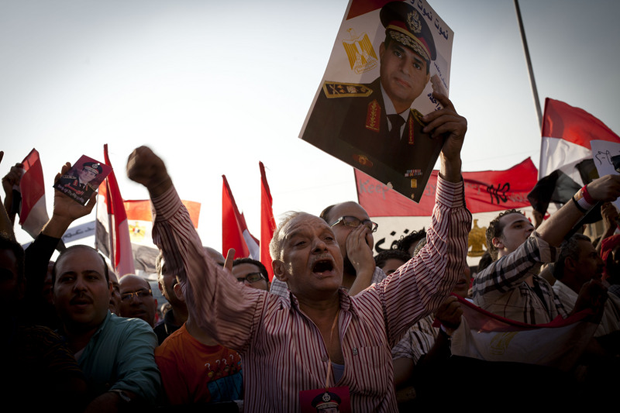
A protester holds a portrait of General Abdel Fattah al-Sisi during protests in July. (Shawkan / Demotix)
While the situation in Egypt is complex and unpredictable, there can be little doubt that General Abdel Fattah al-Sisi and his men are in charge of a country in deep crisis. On several occasions, they have handled this crisis with violent crackdowns that have attracted widespread, international condemnation. It appears they are now looking for some outside help to polish up their image as protectors of the state.
Industry publication AdAge reported last week that Egypt’s interim military government is seeking support from western public relations companies.
“The government (…) is in talks with a handful of firms that have strong public-affairs capabilities in the U.S. and Europe, and has issued at least one global RFP out of London, according to people familiar with the matter”, the publication said.
But with PR being a quickly growing industry, and a sea of options out there, it can be difficult to even know where to start browsing. Egypt, however, is not the first country to seek the help and guidance of western PR.
We have put together a list of companies that are not strangers to working for regimes with questionable human rights records.
London-based Bell Pottinger, once described as a ‘firm synonymous with this international spin’ has worked with everyone from Bahrain to Belarus, Sri Lanka and Yemen. But a word of advice, their services don’t come cheap. In 2012 it was reported that Bahrain’s royal family have spent £7.5 million on contracts with the firm. On the other hand, whereas American PR firms have to declare their dealings with foreign governments to American authorities, such regulations do not exist in the UK.
Where is the first place people go for information on a country, if not the world’s favourite user-generated encyclopedia? With Egypt’s current Wikipedia page not necessarily painting the military government in the best light, it’s helpful to know that Washington-based company Qorvis have reportedly helped clients like Saudi Arabia polish up theirs. For people seeking more in-depth knowledge, the firm has also been known to place favorable reports regarding their clients.
Mainstream media is one of the best ways to advertise your country as the new it-holiday destination or a booming business hotspot, or even get a policy point across. A PR firm can help you do that. London-based Ketchum was credited with placing Vladimir Putin’s much read recent New York Times op-ed on Syria. Could they make a ‘23 Ways You Know You Definitely Haven’t Staged A Coup’ Buzzfeed piece a reality?
Sometimes, it can be equally important to get stories removed from the media. In that case, Dragon Associates could be an alternative. They were credited with having a critical comment piece about their clients Bahrain removed from the Guardian website, ahead of the country’s controversial Formula One Grand Prix race.
There are also options outside the US and the UK – Azerbaijan’s government has worked with Berlin-based Consultum Communications. In 2011, a prestigious gala event in celebration of the 20th anniversary of Azerbaijan’s independence was held in the German capital. Attendees included former Foreign Minister Hans-Dietrich Genscher and former Economics Minister Michael Glos – both board members of Consultum.
Then again, it might be nice to go for someone with historical ties to Egypt, like the PLM Group. The joint venture between the Podesta Group and Livingston Group in 2007 signed a deal with then-president Hosni Mubarak’s government to “provide general, high-level strategic advice relative to the Egyptian image among American decision-makers.”
And if that’s not familiar enough, how about hiring a company that will come to you? British Grayling took over an office in Belarus, the country regularly labelled ‘Europe’s last dictatorship’, and in the face of public pressure refused to close it down.
Journalist Yavuz Baydar has been fired by Turkish daily newspaper Sabah, after articles he wrote criticising the government were censored
In the latest report, Freedom in the World 2013, Freedom House defines Turkey as ‘partly free’.
Authorities in Ankara – both the government and bureaucrats – refute these claims, although the Ministry of Justice openly admits that there are serious shortcomings when it comes to providing for freedom of expression, both in law and implementation.
Some international organisations, such as the Organization for Security and Co-operation in Europe (OSCE) and the European Federation of Journalists (EFJ), meanwhile, help build the myth that Turkey tops the world rankings for one of the worst ‘oppressive’ states because of the number of jailed journalists there. The Committee to Protect Journalists reports that there are 49 journalists in prison, while Reporters Sans Frontières put the number at 72, if the number of people includes all jailed media professionals. But claims that the country is entirely free or grossly oppressive are both wrong. These extreme views must be taken with a pinch of salt; the truth is somewhere in between.
The complexities of Turkey today make it a unique case, demanding careful examination so that clichés can be dispersed, particularly those deriving from the perception that the country remains a police state, as it was prior to the late 1990s.
Turkey today is exactly as Freedom House says it is: not ‘free’, nor ‘not free’, but ‘partly free’.
In this context, Turkey’s problems are already out in the open.
Thousands of Kurdish activists connected to the Koma Civakên Kurdistan network – affiliated with the Kurdistan Workers’ Party (PKK) – as well as around 200 students and 72 other journalists and activists (mainly Kurdish) are in detention.
According to the monitoring site engelliweb.com, internet access is blocked to approximately 9000 websites, mostly on an arbitrary, non-transparent basis.
Prime Minister Recep Tayyip Erdog˘an regularly files libel charges against journalists and cartoonists, a move that singles him out because other powerful figures do not engage in similar practices. He has developed a habit of lashing out at the media in public, which has had dire consequences.
The so-called ‘mainstream media’, in other words, the 85 per cent of it controlled by proprietors who are for the most part engaged in vast business activities other than media (and therefore dependent on the government for economic interests), is suffocated and distinctly lacking in freedom and editorial independence.
In big media outlets, fierce censorship and self-censorship are practised on a daily basis.
They are severely crippled in their pursuit of journalism, unable or unwilling to cover corruption and abuse of power or to allow critical voices and dissent to be heard. When it comes to particular topics, such as criticism of the government, corruption or abuse of power, news stories are either filtered or unpublished; direct censorship – the actual blacking out of text – is exercised when material is found to be ‘too sensitive’ for the government’s or newspaper owners’ interests. But at the same time, there is little problem with pluralism and diversity, as opposed to countries like Iran, China, Azerbaijan or Belarus. With more than 40 national dailies (including a few independent newspapers and a vital partisan, antigovernment press), 2500 local papers, 250 private TV channels (of which 18 broadcast news seven days a week, 24 hours a day), 1300 radio stations and more than 150 news websites and online portals, Turkey has a big, competitive sector. Internet access is increasing at a huge rate, with access passing the 50 per cent mark recently. Because of the internet, despite attempts to command control, this is a milieu in which no story or comment is missed.
Anti-terror law and Ergenekon
The state of Turkey’s media freedom has been oversimplified, looking only at the number of journalists incarcerated without distinction, without looking closely at the specifics for those detentions. It’s a remnant of Cold War mentality. ‘Turkey is an undemocratic country’ has become almost like a slogan, concealing far deeper problems that extend throughout many sectors and structures within Turkish society.
It is true that people are in jail for voicing dissent, among them journalists. Almost all of them are Kurds who, because of the very nature of the Kurdish cause they pursue, combine publishing and self-expression with activism. This means their activity falls inside the boundaries of the utterly problematic Anti-Terror Law, which makes it extremely difficult to distinguish between those who
are members of terrorist groups that commit acts of violence or praise acts of terrorism and those who are simply exercising their right to express opinion. Dissidents, including journalists, have faced detention and prosecution because the law makes it practically impossible to make these important distinctions. The Anti-Terror Law must, at the very least, be revised so that it conforms to the European Convention on Human Rights (ECHR) or, better still, abolished altogether.
Around 10 per cent or so of those jailed are Turkish journalists whose imprisonment relates to the Ergenekon case – a clandestine, undemocratic, politically motivated mafiastyle network that, among other acts over a number of years, plotted a series of coups to oust the government and parliament. Since 2008, dozens of journalists have been arrested in connection with Ergenekon plots, together with hundreds of military officers.
Yet, in these cases, the most obvious clash with ECHR directives has to do with the extremely lengthy detention periods and trial procedure (take, for example, the case of Özkan vs Turkey). Needless to say, Turkey should have determined these periods of incarceration in line with international standards, including EU human rights legislation, releasing journalists while they awaited their trials. But apart from these cases, the European Court of Human Rights has rejected many appeals lodged by the accused, undercutting the assumption held by many that journalists should enjoy immunity even when charged with serious crimes such as conspiracy.
In addition to anti-terror laws, there are dozens of articles – in the Penal Code, in Turkey’s Internet Law, the Press Law and Turkish Radio and Television Law – that restrict freedom of expression and freedom
of the press. Some are implemented on a regular basis and some remain dormant, though still on the books. These punitive measures threaten freedom in Turkey, applying not only to media but also to academia, NGOs, political parties and ordinary citizens across the country.
The rise of independent media and the threat to public interest
Paradoxically, Turkish ‘glasnost’ under the ruling Justice and Development Party (AKP) over the past decade, with the immense help of the EU accession process, has meant, for the most part, that there are no longer many taboo subjects. National mass hypnosis is over. Tiny but independent news outlets – like the dailies Taraf and Zaman or the weekly Nokta – have helped broaden debate about the country’s murky past, untangle myths about the army being the guardian of the system and expose crimes against humanity.
In a pluralist and hugely diverse environment such as Turkey’s, it would be a lie to claim that news dissemination has been fully blocked. Take the case of the Uludere bombing in 2011, when a group of Kurdish villagers were attacked by Turkish fighter jets as they travelled from Iraq along a well-known smugglers’ route, resulting in 34 deaths. Main media group outlets failed to report on the killings for almost a day, but minor papers and those using social media began reporting on the incident
within minutes of it happening.
It could be argued that Turkey has one of the most independent medias in the world – it is truly a phenomenon.
Many countries in democratic transition after the end of the Cold War have had complex changes in their media environment, particularly in southeastern Europe, the Black Sea region and the North Caucasus. From the late 1980s on, this environment has been marked by the emergence of a new type of media proprietor who often – as in some Balkan countries as well as in Russia – entered the media sector with other businesses in tow, with mafia-like habits and connections, with the aim of money laundering, or with enormous greed. For the most part, these players aimed to use media outlets as a tool for keeping government and bureaucracy in check because they became fearful of what might be reported in this new, thriving media landscape, but these people and companies only had personal business gains in mind. Turkey has been part of this reality, and those coming to it from wellestablished, high-standard media environments in the West either do not understand or do not consider the considerable threats to media freedom to be important.
In some countries, for example, Albania, Serbia and Ukraine, media conglomerate proprietors operate in alliance with the ruling powers, establishing politics-media cooperation in the service of their mutual interests, rather than allowing media to serve the public interests.
This addictive system is the primary source of censorship and self-censorship in the wider region, and the blame for destroying the prospects of good journalism must be shared equally between politicians and media owners. In Turkey, in most cases, proper coverage of corruption and any investigative journalism are completely dead. Because this proprietor prototype is in essence non-transparent, Turkey’s media has never bothered to or been in a position to demand transparency or accountability from those in control of the news. In this context, nowhere in the world is the self-destructive role of media proprietors more visible, more irrational or more aggressive than in Turkey
On 19 October 2011, Prime Minister Erdog˘an assembled media proprietors in Ankara to ask for ‘help’ regarding ‘terror coverage’. It’s a call the media should have rejected, but instead they went beyond even what the prime minister had desired: they openly begged him to tell them exactly how long he thought TV dispatches on funerals connected with terrorism should be and shamelessly offered to set up a ‘censorship committee’ by themselves! If created, it would be tasked with ‘filtering’ news prior to publication, particularly when it pertained to clashes between the military and the PKK and political statements issued by them and other Kurdish activists.
In a more recent case, on 18 March 2013, there were reports that the proprietor of the daily newspaper Milliyet, Erdog˘an Demirören, forced veteran pundit Hasan Cemal to resign after he wrote a column defending the right to publish accurate stories, no matter how ‘disturbing’ they would be for the government or media owners. The article was never published, a breach of the journalist’s contract with his employer. Accused of causing the departure of Cemal, Prime Minister Erdog˘an, in his blunt manner some days later, explained that the very same proprietor had visited him to ask whom he should appoint as editor-in-chief for the newspaper.
The uphill struggle: how to solve Turkey’s media dilemmas?
These episodes speak volumes about how polluted Turkey’s media corporate culture is today. Media professionals – by which I mean real, decent journalists, and not those who either defend the government no matter what, or those who condemn it outright under the false belief that all journalism must be oppositional and not critical – face two rather hopeless challenges.
The first frontline for journalists is the political executive and the legislature. Unless the current government amends all laws in favour of freedom of expression and the press, these problems will keep reappearing. In general, the current parliament is a forum of intolerance for freedom of the press, opinion and dissent. In the mindset of the current parliament, the ‘old Turkey’ still rules.
Secondly, media proprietors represent a real challenge to free speech: most of them have no clue about the role and nature of good journalism.
I have long argued that unless these media owners are challenged, one cannot simply go on blaming everything on the political powers. But how do we challenge media owners? Because this is the key to enhancing freedom and independence in Turkey.
It is an uphill struggle. Journalists in Turkey have been forced to live under the ‘unholy alliance’ between governments and big media owners. It is a vicious cycle and very tough to break. We must persuade owners not to interfere in editorial decisions and let us be; we must encourage them to ct transparently in their businesses. Currently, none of them has the civil courage or the wisdom to be on the side of journalists’ fight for freedom.
We could try to persuade the government to ban media owners from entering public tenders, restrict cross-ownership, support local media and allow high share investments for foreign capital owners, with the aim of giving much more autonomy to the national broadcaster, Turkish Radio and Television.
And, of course, we can pressure the government to ensure union activities and memberships in all media outlets are protected by law.
Although their cases are of course the most urgent, problems regarding media freedom in Turkey will not cease to exist when all the journalists in jail – detained or sentenced – are released and pardoned. Turkey can never be part of the democratic league as long as it insists on suppressing and punishing dissent and free speech. But if we limit our professional struggle to these cases only, and introduce minimal amendments to some of the worst laws, we will continue to affect only the tip of the iceberg. If we do only this, held back by a sector that is bleeding spiritually, ruled by owners who are insensitive to the profession, operating without independence, we will continue to operate in appalling conditions, where newsrooms resemble open air prisons.
Freedom must be coupled with true professional independence.
Yavuz Baydar is a columnist for Today’s Zaman and was, until he published a piece criticising media ownership in The New York Times, the news ombudsman for the daily newspaper SABAH