12 Jul 2013 | In the News
INDEX EVENTS
18 July New World (Dis)Order: What do Turkey, Russia and Brazil tell us about freedom and rights?
Index, in partnership with the European Council on Foreign Relations, is holding a timely debate on the shifting world order and its impact on rights and freedoms. The event will also launch the latest issue of Index on Censorship magazine, including a special report on the multipolar world.
(More information)
AZERBAIJAN
President Aliyev: Creating conditions for free activity of media is one of main directions of state policy
Creating conditions for free activity of media to ensure the political pluralism in Azerbaijan is one of main directions of the state policy, Azerbaijani President Ilham Aliyev said in his letter of appeal to participants of the sixth Congress of Azerbaijani Journalists on July 11.
(Trend)
BELARUS
Praying in Homeless Shelter a Crime
A young Catholic layman, who turned his home into a shelter for homeless people with a prayer room, is being accused of leading an unregistered religious organization. Aleksei Shchedrov, who says he has helped about 100 local people since December 2011, is being investigated on criminal charges under Article 193-1. As a result, he now faces a maximum possible sentence of two years’ imprisonment.
(Canadian Free Press)
BRAZIL
Brazilian writer convicted for fictional story
José Cristian Góes says case brought against him is a “direct attack on free speech. Rafael Spuldar reports
(Index on Censorship)
Brazil May Seek to Speak With Snowden as Spy Charges Spread
Brazil’s government said it may contact fugitive former security contractor Edward Snowden as it probes allegations the U.S. monitored phone calls and e-mail in Latin America’s largest economy.
(Bloomberg)
CANADA
Canada Repeals Restriction on Online “Hate Speech”
Have you heard about this place called Canada? It’s like some weird parallel America where they never had a revolution.
(Reason)
CJFE concerned by arrest of New Brunswick journalist
Canadian Journalists for Free Expression (CJFE) is deeply concerned about the RCMP’s arrest under unusual circumstances of New Brunswick-based journalist Miles Howe.
(Press Release)
Censoring Canadian science
Last summer, a rally of over 2,000 researchers, scientists, and students gathered on Parliament Hill to protest a federal trend of scientific censorship that began when the Conservative party took control of the Federal government in 2006. For the protesters, the government had crossed the line with numerous budget cuts to environmental research programs, extensive job cuts to Agriculture and Agri-Food Canada and the Department of Fisheries and Oceans, and numerous restrictions on investigators’ communications with the media.
(McGill Daily)
GHANA
Journalist freed in Ghana amid free speech concerns
A Ghanaian newspaper editor was released Thursday after serving a controversial 10-day jail term ordered by the west African nation’s supreme court for criticising the judges’ handling of a dispute over last year’s presidential election.
(AFP)
GUINEA
Radio Station Director Charged for Libel
Managing Director of Planete FM, Mandian Sidibe, has been charged with libel and placed under judicial review by a Magistrates’ Court in Conakry, the capital, for comments he made during a radio programme.
(All Africa)
INDONESIA
Indonesia Affirms Restrictions to Freedom of Expression
On July 10 and 11, 2013 the UN Human Rights Committee reviewed the implementation of the International Covenant on Civil and Political Rights, one of the most important human rights treaties Indonesia has ratified and has the obligation to implement to ensure protection of these rights in Indonesia.
(Scoop)
KENYA
Kenyan Media shock over new Media Bill that removes self-regulation
Media stakeholders are worried after learning that sections of the Media Bill 2013 that guarantee self-regulation of the press have been deleted from the original draft.
(Standard Digital)
NEW ZEALAND
Suicide reporting rules under review
The Government has announced that New Zealand’s 25-year-old censorship of suicide reporting is to be reviewed by the Law Commission. JAMES HOLLINGS talks to two leading experts who think the restrictions should go.
(The Press)
RUSSIA
New Russian video game takes aim at punk band riot
A Russian Orthodox youth group unveiled a video game on Thursday that gives players a chance to “kill” members of the punk band Pussy Riot, whose profanity-laden protest in a Moscow cathedral last year angered the church and offended some believers.
(Reuters)
SRI LANKA
Sri Lanka flirts with press regulation
Is Sri Lanka’s President Rajapaksa, identified as an “enemy of the press”, taking lessons from Leveson, asks Padraig Reidy
(Index on Censorship)
TRINIDAD AND TOBAGO
Defending press freedom
Although freedom of the press is enshrined in our Constitution, it is a right which nonetheless requires eternal vigilance. This is because powerful persons and groups are continually trying to erode this right, to the detriment of the average citizen.
(Trinidad Express)
TUNISIA
Tunisia’s version of Tamarod
A Tunisian version of the Egyptian Tamarod movement has been collecting signatures against the country’s government and institutions, writes Lasaad Ben Ahmad in Tunis
(Al-Ahram)
TURKEY
Scientific Conflict in Turkey
The Turkish government’s refusal to fund a summer school course on evolution has brought into sharp focus the divisions between political Islam and secular society in Turkey.
(BBC)
UNITED STATES
Porn Producers Say Unprotected Sex Is Free Speech Right
Pornographic movie makers told a judge that a Los Angeles County voter-approved measure requiring adult-film actors to wear condoms violates their constitutional right to free speech.
(Bloomberg)
Hate speech or free speech in Milford
You’ve heard that freedom isn’t free. The “cost” of free speech is that everybody gets it, even people you don’t like.
(Connecticut Post)
Removing the Kahane Google App Isn’t Censorship
In a recent Open Zion column, Zack Parker criticized Google’s decision to take down a Google App containing Kahane quotes, to which the radical settler extremist Baruch Marzel had linked, as censorship. While the objective of preserving free speech is pure, the criticism of the takedown as censorship misunderstands the nature of free speech and the implementation of the criticism would be a severe blow to counter-radicalization efforts.
(The Daily Beast)
Proposed restrictions on Fort Williams artists raise free speech issue in Cape Elizabeth
A public hearing grew tense Monday when a local artist and his wife accused the Town Council of undermining the U.S. Constitution.
(The Forecaster)
My fight for free speech at LSU
I decided in seventh grade that one day I was going to attend Louisiana State University’s law school, and anyone who knows me can tell you that I’ve bled purple and gold ever since. So when I finally got there last fall, I never expected that in a few short months I would be involved in a lawsuit against the school.
(Live Action News)
Previous Free Expression in the News posts
July 11 | July 10 | July 9 | July 8 | July 5 | July 4 | July 3 | July 2 | July 1 | June 28
11 Jul 2013 | In the News
INDEX EVENTS
18 July New World (Dis)Order: What do Turkey, Russia and Brazil tell us about freedom and rights?
Index, in partnership with the European Council on Foreign Relations, is holding a timely debate on the shifting world order and its impact on rights and freedoms. The event will also launch the latest issue of Index on Censorship magazine, including a special report on the multipolar world.
(More information)
CHINA
Censoring the News Before It Happens
Every day in China, hundreds of messages are sent from government offices to website editors around the country that say things like, “Report on the new provincial budget tomorrow, but do not feature it on the front page, make no comparisons to earlier budgets, list no links, and say nothing that might raise questions”; “Downplay stories on Kim Jung-un’s facelift”; and “Allow stories on Deputy Mayor Zhang’s embezzlement but omit the comment boxes.” Why, one might ask, do censors not play it safe and immediately block anything that comes anywhere near offending Beijing? Why the modulation and the fine-tuning?
(New York Review of Books)
EGYPT
Egypt, the military and the media: Worse yet to come?
After the fall of Egypt’s Islamist president this month, security officials shut down media linked to the Muslim Brotherhood. With a history of biased media and an increasingly divided nation, the future Egypt looks grim. Shahira Amin reports
(Index on Censorship)
GLOBAL
Fine words on open government don’t match actions
From America to Azerbaijan, leaders have pledged themselves to a new era of openness and transparency. So why are whistleblowers and journalists still punished, asks Mike Harris
(Index on Censorship)
GHANA
Freedom of Speech and the Supreme Court of Ghana
Not long ago a great Katakyie by the name of Ken Kuranchie was incarcerated for standing for what he believes in i.e. Freedom of Speech! He was summarily convicted by the Supreme Court for daring to question some of the judgments of the Justices and going on to criticize the basis upon which some of the decisions in the august court were made.
(Ghana Web)
INDIA
Is India about to gets its own PRISM?
Two surveillance entities are being set up to monitor Indian citizens’ communications, Mahima Kaul writes
(Index on Censorship)
TUNISIA
Gobvernment should create jobs, not regulate religious behavior
The number of believers in Tunisia seems to increase dramatically during the month of Ramadan and decrease suddenly afterwards. It is as if praying is limited to this particular part of the year, when even those who are normally heavy smokers or drinkers become outraged when they see their fellow sinners engaging in such activities. Official policies seek to reinforce this yearly change in behavior, but the government must realize that instilling religious morals must not take priority over ensuring the welfare of its people.
(Tunisia Live
UNITED KINGDOM
Freedom of speech is not freedom to spin
Free speech does not imply the freedom to mislead. We want our media to be free, but also honest and reliable.
(The Conversation)
UNITED STATES
Arch Insurance Group launches libel insurance for bloggers
Arch Insurance Group is launching a new insurance program that will protect bloggers against libel and copyright infringement lawsuits.
(New York Business Journal)
University of Alabama at center of free speech debate
A pro-abortion rights student organization at the University of Alabama and a civil liberties group have asked the university to re-evaluate its grounds-use policy, arguing that it is contradictory and unconstitutional.
(Tuscaloosa News)
SEC Finally Permits Free Speech for Hedge Funds, VCs, and Entrepreneurs
Today is finally the day that the Securities and Exchange Commission — one year and three months after it was instructed to do so by the bipartisan Jumpstart Our Business Startups (JOBS) Act signed by President Obama — lifted the ban on advertising and communication to and from hedge funds and the private equity and venture capital community. Lifting these archaic rules is a victory for entrepreneurs, all types of investors, and, most importantly, the First Amendment.
(Open Market)
FROM INDEX ON CENSORSHIP MAGAZINE
Global view: Who has freedom of expression?
Freedom of expression is a universal, fundamental human right. But who actually has access to free expression? Index CEO Kirsty Hughes looks at the evidence.
(Index on Censorship)
Global view: Who has freedom of expression?
Freedom of expression is a universal, fundamental human right. But who actually has access to free expression? Index CEO Kirsty Hughes looks at the evidence.
(Index on Censorship)
The multipolar challenge to free expression
As emerging markets command influence on the international stage, Saul Estrin and Kirsty Hughes look at the impact on economics, politics and human rights.
(Index on Censorship)
News in monochrome: Journalism in India
The media’s infatuation with a single narrative is drowning out the country’s diversity, giving way to sensationalist reporting and “paid for” news. But, says Bharat Bhushan, moves towards regulation could have a chilling effect too
(Index on Censorship)
Censorship: The problem child of Burma’s dictatorship
Writer and artist Htoo Lyin Myo gives his personal account of working under government censorship in Burma
(Index on Censorship)
Previous Free Expression in the News posts
July 10 | July 9 | July 8 | July 5 | July 4 | July 3 | July 2 | July 1 | June 28 | June 27
10 Jul 2013 | Azerbaijan News, Politics and Society
From America to Azerbaijan, leaders have pledged themselves to a new era of openness and transparency. So why are whistleblowers and journalists still punished, asks Mike Harris
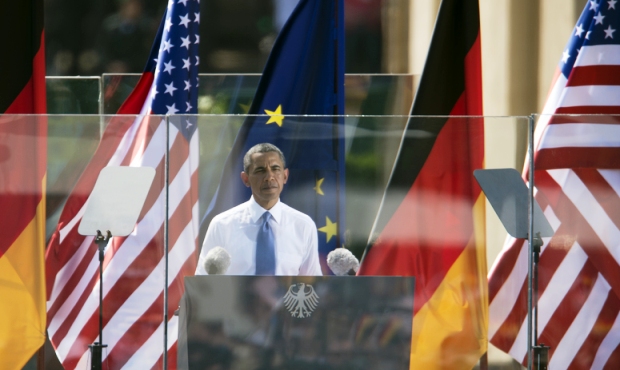
Is Barack Obama committed to transparency? (pic Gonçalo Silva/Demotix)
(more…)
26 Jun 2013 | In the News
INDEX POLICY PAPER
Is the EU heading in the right direction on digital freedom?
While in principle the EU supports freedom of expression, it has often put more emphasis on digital competitiveness and has been slow to prioritise and protect digital freedom, Brian Pellot, digital policy advisor at Index on Censorship writes in this policy paper
(Index on Censorship)
AZERBAIJAN
Tensions between two natural allies
Protesters face an extra three months in prison without trial. Padraig Reidy reports. Members of Azerbaijan’s N!DA Civic movement have been held since the end of March this year. It was confirmed this week that their pre-trial detention is to continue for another three months.
(Index on Censorship)
EUROPEAN UNION
Free expression guidelines a crucial opportunity for EU
As the European Commission opens a consultation on its planned freedom of expression guidelines, Index on Censorship is publishing a public note setting out what it sees as the key principles that must underpin such guidelines.
(Index on Censorship)
INDIA
Tensions between two natural allies
The doctrine of prior restraint and the more potent contempt of court provisions have the potential to disturb the relationship between the judiciary and media
(The Hindu)
ISRAEL
Bill making libel against IDF a crime ‘highly problematic’
The Knesset’s Constitution, Law and Justice Committee on Monday debated the so-called “Jenin-Jenin bill,” which suggests making libelous statements or accusations against the Israel Defense Forces in the media would become a criminal offense.
(Israel Hayom)
LIBYA
Libyan political party officials could face death penalty over election posters
Libyan judicial authorities should immediately drop all criminal charges that violate freedom of speech over election poster cartoons against two Libyan National Party officials, Human Rights Watch said today. Under the laws being applied in this case, the men could face the death penalty over posters their party displayed during the 2012 election campaign for the General National Congress.
(IFEX)
PAKISTAN
‘Solid’ culture policy can help defeat terrorism
The Culture Journalists Forum (CJF) on Monday demanded of the PTI-led Khyber Pakhtunkhwa government to announce a ‘solid and clear’ culture policy, allocate funds for the promotion of art and culture in the province and set up a transparent censorship board to check production of substandard and vulgar Pashto CDs.
(Dawn)
NORWAY
Freedom of Expression Grant to Far-Right Blogger Stirs Debate in Norway
Culture Minister Hadia Tajik supports Freedom of Expression grant for the controversial blogger Peder Nøstvold Jensen, best known by the nickname Fjordman.
(The Nordic Page)
SPAIN
Spain’s Google privacy case “an interference with the freedom of expression”
Should search engines be forced to block results that link to newspaper articles? No, the Advocate General of the European Court of Justice said earlier today, deciding Google need not block “legal and legitimate information that has entered the public domain”. Brian Pellot writes
(Index on Censorship)
TAIWAN
Taiwan: Internet Policy Reforms Spark Fears of Censorship
This spring, the Taiwanese government has proposed multiple amendments to existing laws that could impact free expression online, sparking concern among Taiwanese netizens. While many are comparing the amendments to Chinese-style speech control, others have noted the influence of the United States on the legislation.
(Global Voices Online)
TURKEY
Turkey protests restrict Erdogan’s foreign activism
Expert: Ankara still may act in key regions, including Gaza; twenty arrested in latest raid in Turkey.
(The Jerusalem Post)
EU agrees to reopen Turkey membership talks
The EU agreed to reopen long-stalled talks on Turkey’s EU membership on Tuesday, but not until a later date due to concerns from Germany that it could send the wrong message to Ankara after its tough crackdown on anti-government protests.
(France 24)
UKRAINE
Femen and Facebook in ‘Pornography’ Row over Topless Pictures
Radical feminist group Femen has had two of its Facebook pages blocked by the social networking site because of nudity. The Facebook censors went into action because of the large number of images of Femen activists taking part in topless demonstrations.
(International Business Times)
UNITED STATES
The chilling effects of surveillance
Revelations contained in documents recently leaked to the Guardian by whistleblower Edward Snowden have placed the United States front and centre in the ongoing global debate around mass surveillance.
(Al Jazeera)
Edward Snowden: history will be kind to him
Daniel Ellsberg, the leaker of the Pentagon Papers 40 years ago, was smeared and denounced at the time
(The Guardian)
Have you noticed growing assaults on free speech? Here? And here? And here?
Revelations contained in documents recently leaked to the Guardian by whistleblower Edward Snowden have placed the United States front and centre in the ongoing global debate around mass surveillance.
(Investor’s Business Daily/a>)
Abortion Opponents: ‘Buffer Zones’ At Abortion Clinics Violate Free Speech
The Supreme Court has said it will reconsider the constitutionality of protest zones
(US News and World Report)
Previous Free Expression in the News posts
June 25 | June 24 | June 21 | June 20 | June 19 | June 18 | June 17