20 Jun 2013 | In the News
GLOBAL
Journalists in exile 2013
Fifty-five journalists fled their homes in the past year with help from the Committee to Protect Journalists. The most common reason to go into exile was the threat of violence, such as in Somalia and Syria, two of the most deadly countries in the world for the profession. Others fled the threat of prison, especially in Iran, where the government deepened its crackdown ahead of elections. A CPJ special report by Nicole Schilit
(Committee to Protect Journalists)
AZERBAIJAN
Azerbaijan’s Government Must Lift Travel Ban on Mehman Huseynov
A travel ban on a prominent Azerbaijani photo and video journalist imposed just before he planned to travel to receive a prestigious human rights prize, must be lifted immediately, Institute for Reporters’ Freedom and Safety (IRFS) said.
(Institute for Reporters’ Freedom and Safety)
BRAZIL
What Brazil’s Protests Say About Latin America’s Fumbling Elites
It’s a delusion harbored by the ruling classes the world over, but especially in Latin America. It’s the bogus belief that even if people get richer, they don’t get smarter.
(Time)
CHILE
RWB urges Chile to enact new media laws
Reporters Without Borders today submitted recommendations on Chile to the UN Human Rights Council (see document below), which is due to discuss the country during the 18th Universal Periodic Review in January and February 2014, shortly after the November presidential election. This process consists of a review of human rights achievements by UN member countries and, if necessary, a reminder of their responsibilities in this area.
(Reporters Without Borders)
CHINA
Surveillance and censorship in China
For about two weeks now, a warning flashes consistently when I open my Gmail account. It warns me that – for no reason apparent to me at least – “state-sponsored” attackers could be targeting my computer or my email account and that I should take steps to protect them.
(Hindustan Times)
ECUADOR
Ecuador’s new media regulations stoke controversy
Proposed laws will not calm President Correa’s stormy relationship with the press, says Padraig Reidy
(Index on Censorship)
IRELAND
Shatter novel prompts censorship reform
Minister for Justice made decision to avert possible conflict of interest, after complaints novel was ‘obscene’ and advocated abortion
(Irish Times)
LATIN AMERICA
Censorship a major tool for Latin American dictators
The manual for the perfect Latin American dictator has always had a full chapter of media censorship. Silencing the press is a crucial first step towards eliminating freedom of expression and democracy.
(Sun Sentinel)
PAKISTAN
Pakistan uses Canadian company Netsweeper to monitor, censor Internet: Study
A Toronto research group has found evidence that a Canadian firm is providing Internet surveillance and censorship technology to Pakistan.
(Toronto Star)
RUSSIA
Russian Opposition Figures Charged with Plotting Mass Riots
Russian prosecutors have charged opposition activists Sergei Udaltsov and Leonid Razvozzhayev with plotting mass riots during a demonstration in Moscow last May, their lawyers said on Wednesday.
(Ria Novosti)
SRI LANKA
Rights groups criticize proposed media code in Sri Lanka, saying it threatens free speech
Rights groups are criticizing a code of media ethics proposed by Sri Lanka’s government, saying Wednesday that the code could have a chilling effect on free speech in the Indian Ocean island nation.
(Washington Post)
TURKEY
Turkey in Turmoil
Prime Minister Recep Tayyip Erdogan had many opportunities over the last three weeks to resolve the political crisis in Turkey peacefully and quickly. However, with almost every statement and directive he has made the situation worse, increasing concerns at home and abroad over his authoritarian tendencies and Turkey’s future as a democratic model in the Muslim world.
(The New York Times)
Turkey’s ‘standing man’ to join ranks of history’s iconic symbols of human drama?
The image was stark: a silent, solitary figure standing in passive defiance to the Turkish prime minister’s demand for protesters to clear Taksim Square in central Istanbul.
(Washington Post)
UNITED KINGDOM
Just what is family-friendly Wi-Fi?
Web filtering is not as simple as it sounds, says Brian Pellot
(Index on Censorship)
UNITED STATES
CSU-Fresno student appeals dismissal of censorship lawsuit
A college student who filed a First Amendment complaint in January is appealing a district court ruling because he believes his complaint was unjustly dismissed.
(Student Press Law Center)
Debate Over Guns, Morse Recall Mired in Cyber Censorship
The Colorado Secretary of State announced this week that 10,137 of the more than 16,000 signatures collected in a petition to recall State Senator John Morse are valid and sufficient to potentially qualify for the first-ever recall election in Colorado history.
(The Colorado Independent)
Loudness and liberty: When free speech is shouted down
So how “free” is free speech, really? By law, under the First Amendment, speech is very free. Government can only stop us from speaking, or punish us for what we’ve said, under very limited circumstances.
(Baxter Bulletin)
Free speech and loathing in Tennessee
More than a month ago, Barry West, a county commissioner in a rural stretch of middle Tennessee, posted a Facebook image of a man closing one eye as he aimed a shotgun. His caption read: ‘HOW TO WINK AT A MUSLIM.’
(Spiked)
What Your Cell Phone Data Actually Looks Like—and How It Might Be Used Against You
David Simon, the creator of HBO’s epic series The Wire, has weighed in on the recent disclosure that the National Security Agency has been combing through our cell phone records as part of its anti-terrorism efforts. It’s an interesting read, particularly coming from the guy who wrote such interesting stories (presumably based on what he saw as a crime reporter for the Baltimore Sun) about police surveillance. Basically, his take is that using broad swathes of cell phone data (numbers dialed, minutes used, locations, etc.) is not particularly invasive, is perfectly legal, and has been a regular tool of law enforcement since well before 9/11.
(Index on Censorship)
All Out: Downloading is a choice
Gay rights campaigners should be wary of calling for censorship of a “sexual purity” app, says Sean Gallagher
(Index on Censorship)
VENEZUELA
Venezuelan court stops judge from using social media
On June 15, 2013, Marilda Ríos, head judge at a Caracas court, issued a precautionary measure prohibiting María Lourdes Afiuni (a judge who was jailed pending a criminal suit) from speaking to the national and international media and expressing herself on social media. This prohibition was issued within the framework of the decision of granting her parole on account of health difficulties.
(Instituto Prensa y Sociedad de Venezuela via IFEX)
Previous Free Expression in the News posts
June 19 | June 18 | June 17 | June 14 | June 13 | June 12 | June 11
12 Jun 2013 | Europe and Central Asia
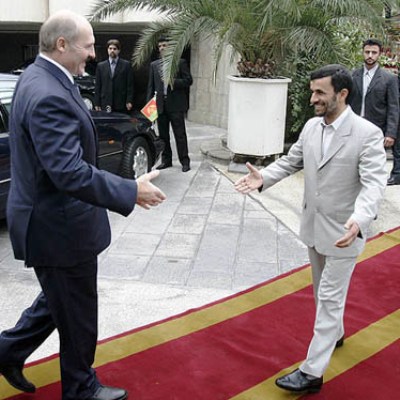 Belarus’s dictator Alexander Lukashenko will be able to count on some “like-minded” friends when it comes to a vote on his human rights record at the UN this week. Andrei Aliaksandrau reports
(more…)
7 Jun 2013 | In the News
AZERBAIJAN
Europe criticizes Azeri leader over Internet defamation law
European institutions criticized Azeri President Ilham Aliyev yesterday for signing legislation making defamation over the Internet a criminal offence punishable by imprisonment as the country prepares for an autumn presidential election.
(Free Malaysia Today)
EGYPT
Columnist sentenced to prison for libel
Writer Osama Ghareeb did not know he had already been sentenced to one year in prison by a Cairo court until being summoned to Moqattam Police Station on Wednesday, according to the writer’s Twitter account. (Daily News Egypt)
GLOBAL
Gallery: Five free expression exiles
IFEX marks World Refugee Day, 20 June 2013, with profiles of five people living in exile for practicing the right to free expression through their professions (IFEX)
INDIA
Safeguards needed to protect privacy, free speech in India: HRW
The Indian government should enact clear laws to ensure that increased surveillance of phones and the Internet does not undermine rights to privacy and free expression, Human Rights Watch said today. (Business Standard)
Standing up to censorship central
A recent judgment on the airing of ‘low value’ television programming misinterprets the proportionality doctrine and raises the question: should the state be giving advice to adults? (The Hindu)
MALAWI
(Censorship Board Says Does Not Regulate Material On the Internet
The Malawi Censorship Board has said it does not censor materials on the Internet because it is not mandated to do so.(AllAfrica.com)
NEW ZEALAND
Racial stereotypes pervade
It was interesting watching the response last week after cartoonist Al Nisbet was allowed to draw cartoon stereotypes in the Marlborough Express about Maori and Pacific Islanders. (Auckland Now)
SINGAPORE
Web ‘blackout’ in Singapore to protest new online rules
Over 130 Singaporean bloggers blacked out their homepages Thursday to protest new licencing rules for news websites they say will muzzle freedom of expression. (NDTV)
TURKEY
Protests expose the extent of self-censorship in Turkish media
Only days after Turkish Prime Minister Recep Tayyip Erdogan called social media “the worst menace to society”, the country arrested 25 social media users in Izmir for allegedly “spreading untrue information” on Twitter. Sara Yasin gives a rundown on Turkey’s Twitter phobia. (Index on Censorship)
Turkey’s prime minister vows to continue Gezi Park development
Despite mass protests, Recep Tayyip Erdogan to push ahead with construction, saying it will make Istanbul more beautiful (The Guardian)
UKRAINE
Censorship by violence
One of my friends recently told me a story about the son of her friends. He had to be taken to a psychologist after watching news on TV about a mother killing her child. (Kyiv Post)
UNITED STATES
Documents: U.S. mining data from 9 leading Internet firms; companies deny knowledge
The National Security Agency and the FBI are tapping directly into the central servers of nine leading U.S. Internet companies, extracting audio and video chats, photographs, e-mails, documents, and connection logs that enable analysts to track foreign targets, according to a top-secret document obtained by The Washington Post. (Washington Post)
Drawing Line On Free Speech
The freedom to say what we think, no matter how repugnant to others, is one of the greatest glories of our system of government. It also is the foundation supporting our other liberties. (The Intelligencer)
Lindsey Graham Hates Free Speech
Are we starting to get under the skin of U.S. Sen. Lindsey Graham (RINO-S.C.)? At first glance it would appear that way … Graham, a frequent target of this website’s criticism (due to his frequent awfulness), suggested this week that bloggers don’t deserve one of the most basic freedoms guaranteed to all Americans under the U.S. Bill of Rights.
(Fits News)
IRS Attorney Carter Hull Sent Targeted Letters to ACLJ Tea Party Clients from Washington, D.C.
The Wall Street Journal reports that transcripts of interviews by congressional staffers point the finger to IRS attorneys in Washington, further confirming that the targeting of conservative groups originated by the IRS in Washington, D.C. and that it was not the mistake of a couple of rogue, low level IRS agents in one Cincinnati office as the Obama Administration and the IRS continue to claim. (ACLU)
New York Post hit with libel lawsuit over ‘Bag Men’ Boston bombings cover
Two Massachusetts residents sue New York Post on claims it falsely portrayed them as suspects in Boston Marathon attack (The Guardian)
ZAMBIA
Kasonokomona Wins First Round of Court Battle
Zambian activist Paul Kasonkomona has won an important first round in his court battle. In an interview on Zambian television in April he called for the recognition of gay and lesbian rights, as well as the rights of sex workers. He was arrested after the interview and charged under section 178(g) of the Zambian Penal Code. (AllAfrica.com)
28 May 2013 | In the News
AUSTRALIA
Photographers withdraw from Vivid over censorship claims
Two international photographers have withdrawn their works from an exhibition in Sydney in protest over what one has described as censorship. (ABC News)
AZERBAIJAN
In Azerbaijan, authorities use ‘Harlem Shake’ to silence activist
The recent arrest of Ilkin Rustamzadeh highlights how Azerbaijan’s authorities use trumped up charges to silence messages they are not comfortable with, blogger Ali Novruzov writes from Baku. (Index on Censorship)
CHINA
´Ai Weiwei´s work embodies freedom of speech´
The popularity of Chinese artist and activist Ai Weiwei in the Netherlands is largely fueled by the Dutch love of art that hovers on the edge of acceptability. This commitment to pushing the boundaries of freedom of expression is evident in the exhibition FUCK OFF 2 which he’s curated and which opens at the Groninger Museum on Sunday. (Radio Netherlands Worldwide)
ISRAEL
Al-Jazeera draws fire over self-censorship
The Qatar-based al-Jazeera network has been criticized over its decision to remove a controversial article posted on its website amid claims the story was “anti-Jewish” in a seemingly self-censoring act. (YNet.com)
RUSSIA
Interpol Rebuffs Russia in Its Hunt for a Kremlin Critic
Interpol has rejected a Russian request for a worldwide police hunt for William F. Browder, a British investment banker and a Kremlin nemesis who has made no secret of his whereabouts or of his battle against the government of President Vladimir V. Putin over accusations of human rights abuses. (New York Times)
Russia: Gay Rights Activists Arrested At Rally
Dozens of activists at a gay pride march in Moscow have been arrested by Russian police. (Sky News)
TUNISIA
Tunisia’s ‘topless feminist’ faces jail for having pepper spray
The lawyer of a Tunisian woman who gained notoriety for posting online topless pictures of herself as a protest says she faces six months in prison for carrying a dangerous object. (AP via CBS47)
TURKEY
Turkey Kissing Protest Held In Subway As Couples Defy Ban On Public Displays Of Affection
Dozens of couples have locked lips at a subway stop in Turkey’s capital, Ankara, to protest subway authorities’ admonishment of a couple that kissed in public. (AP via Huffington Post)
Turkey takes important steps to end human rights violations
Turkish Deputy Prime Minister Besir Atalay said on Thursday that Turkey has made significant improvements in human rights, especially in freedom of expression. (Turkish Weekly)
UNITED KINGDOM
Speaker’s wife faces £150,000 bill for online libel
SPEAKER’S wife Sally Bercow faces a legal bill of £150,000 after losing a libel battle with Lord McAlpine yesterday over a tweet which falsely linked him to allegations of sex abuse. (The Daily Express)
Could “snooper’s charter” stop terror attacks?
Some UK politicians have said the murder of a soldier in Woolwich, London this week demonstrates the need for greater surveillance of communications data. But would a “snooper’s charter” really have made a difference? Index asked Emma Carr of Big Brother Watch and Jamie Bartlett of Demos for their views. (Index on Censorship)
UNITED STATES
Microsoft Disables Comments For Xbox One Videos Following Harsh Criticisms
Want to let Microsoft know how you feel about the Xbox One? You won’t be able to do it on the official YouTube videos. If you head to Microsoft’s official channel for the Xbox One, the comments for the videos have been aptly disabled. (Gaming Blend)
Attacks on the press should come as no surprise
Freedom of the press. It’s a bedrock of our Constitution, right there in the very first amendment. That means it’s one of the most important freedoms and rights guaranteed to this country, freedom of religion, freedom of speech, and freedom of the press, all interlocked and interdependent. (Marietta Times)
As UN’s Censorship Alliance Lashes Out from Anonymity, UN Does Nothing
UN scribes from Reuters, Bloomberg News, Voice of America, Agence France Presse and others on the board of the UN Correspondents Association tried to get Inner City Press thrown out of the UN in 2012. In 2013 they have started anonymous social media accounts to falsely accuse Inner City Press of being funded by terrorists.
(Inner City Press)