In this issue, Index investigates Karel Gott’s troubles with censorship.

Pop star’s dilemma: How Karel Gott almost emigrated
read more
In this issue, Index investigates Karel Gott’s troubles with censorship.

In this issue, Iranian writers, lawyers and judges demand respect for civil liberties and an end to censorship.

In this issue, Index publishes replies to a questionnaire on what has been – or is likely to be – achieved by the 1975 Final Act.

In this issue, Index publishes the text of an open letter sent to the Argentinian junta by a leading investigative journalist in March this year.

In this issue, a distinguished Uruguayan writer, now in exile, discusses the ‘dangerous profession of writing’.

In this issue, Index investigates the grim consequences for Uruguay’s cultural life of three years military rule.

In this issue, Index publishes an account of Alata’s time in prison from the book that was seized by French police last October.

In this issue, former editor of the London Observer finds freedom of the British press in jeopardy.
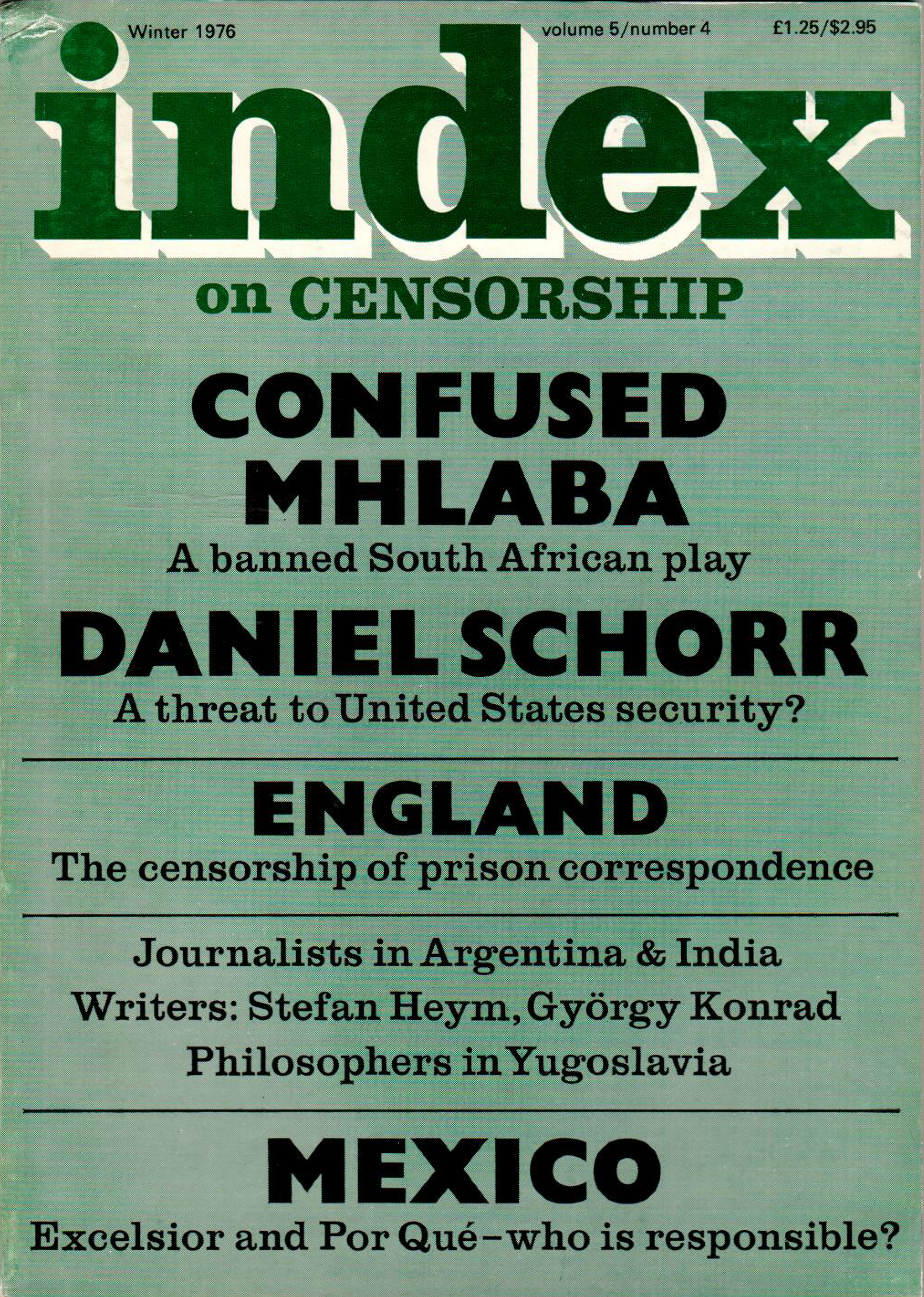
In this issue, Index publishes three scenes from the play banned by South African censors.
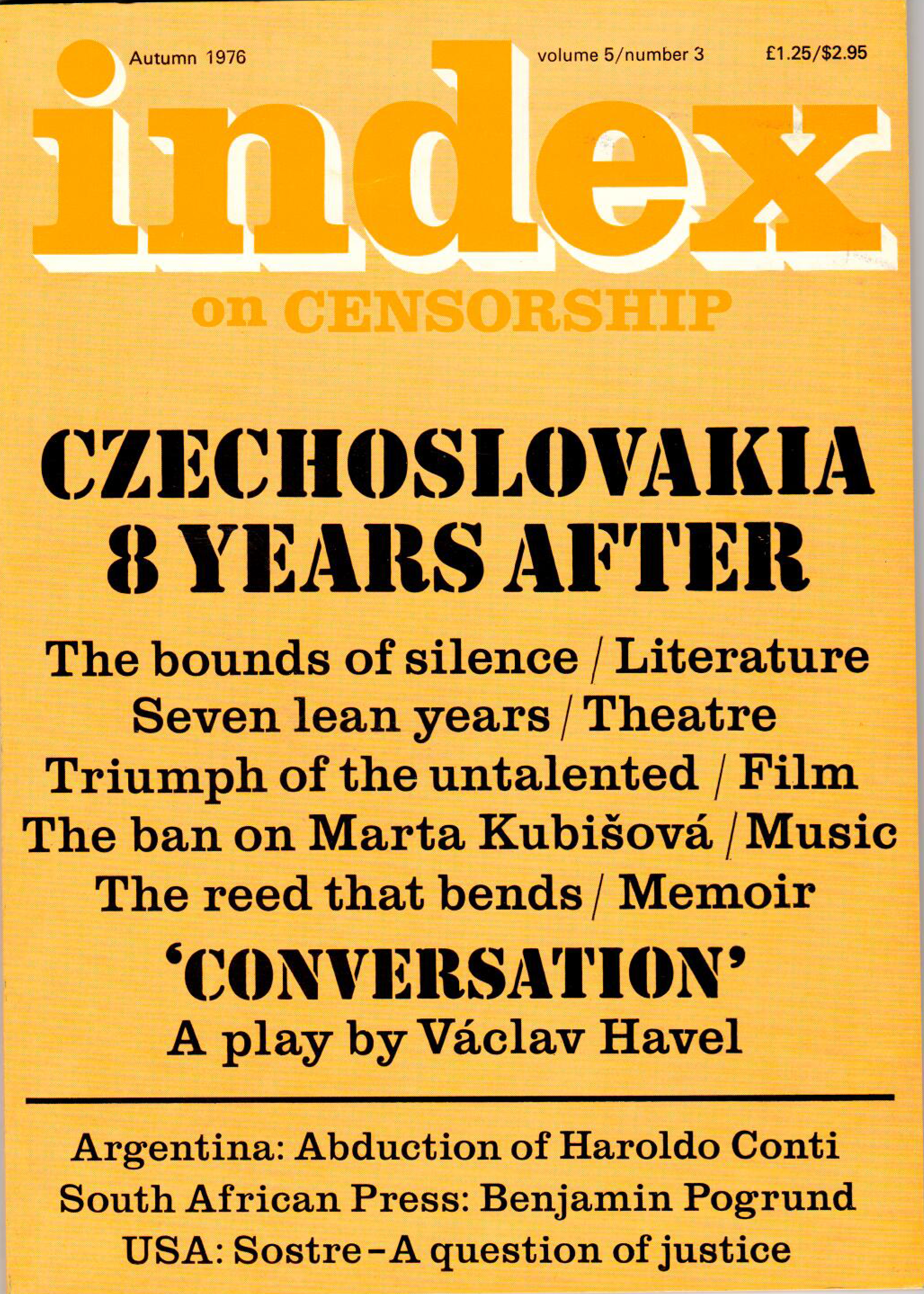
In this issue, Index publishes four case histories on Czechoslovakia.
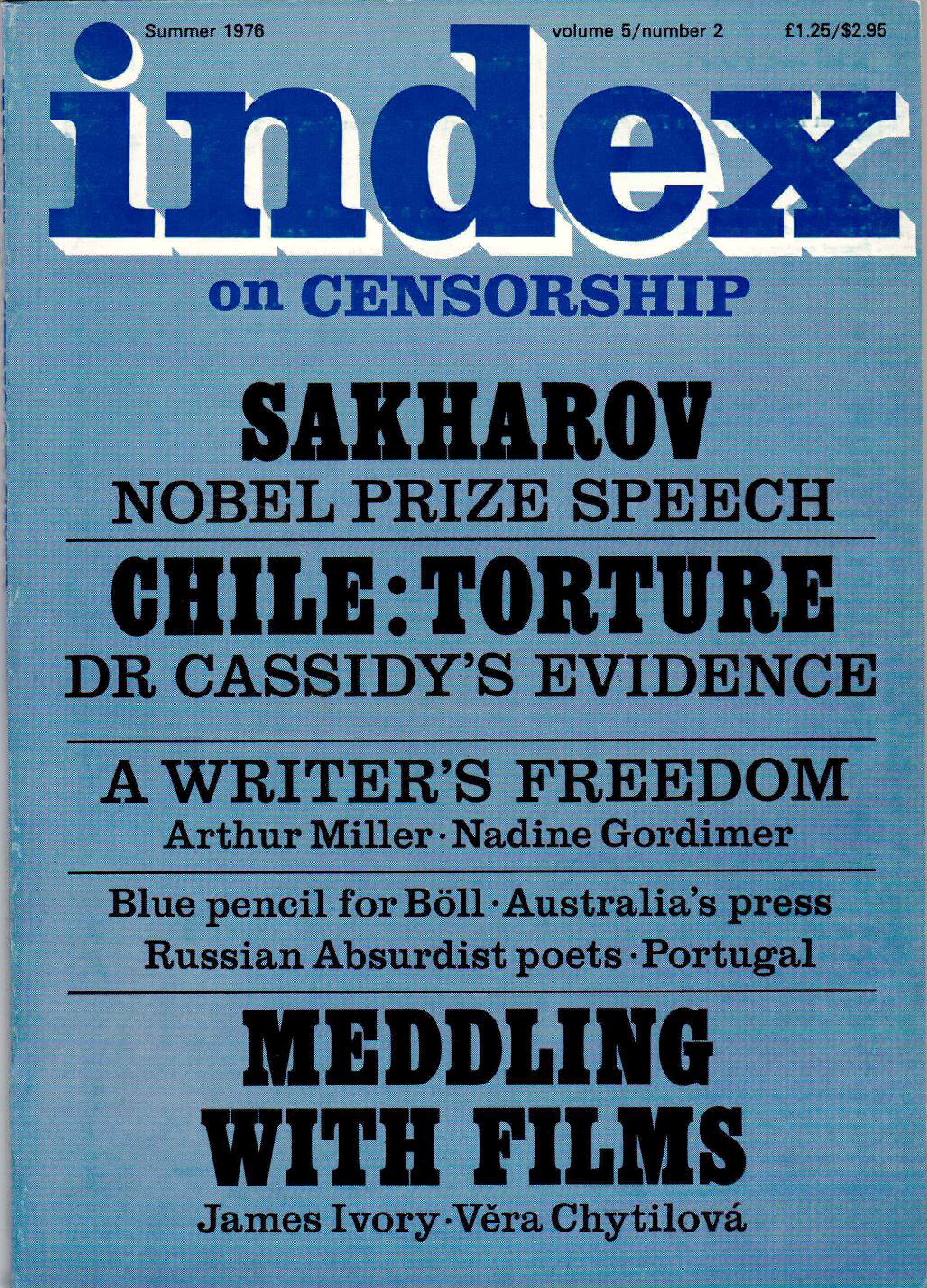
In this issue, Index publishes the text of Andrei Sakharov’s 1975 Nobel Lecture.
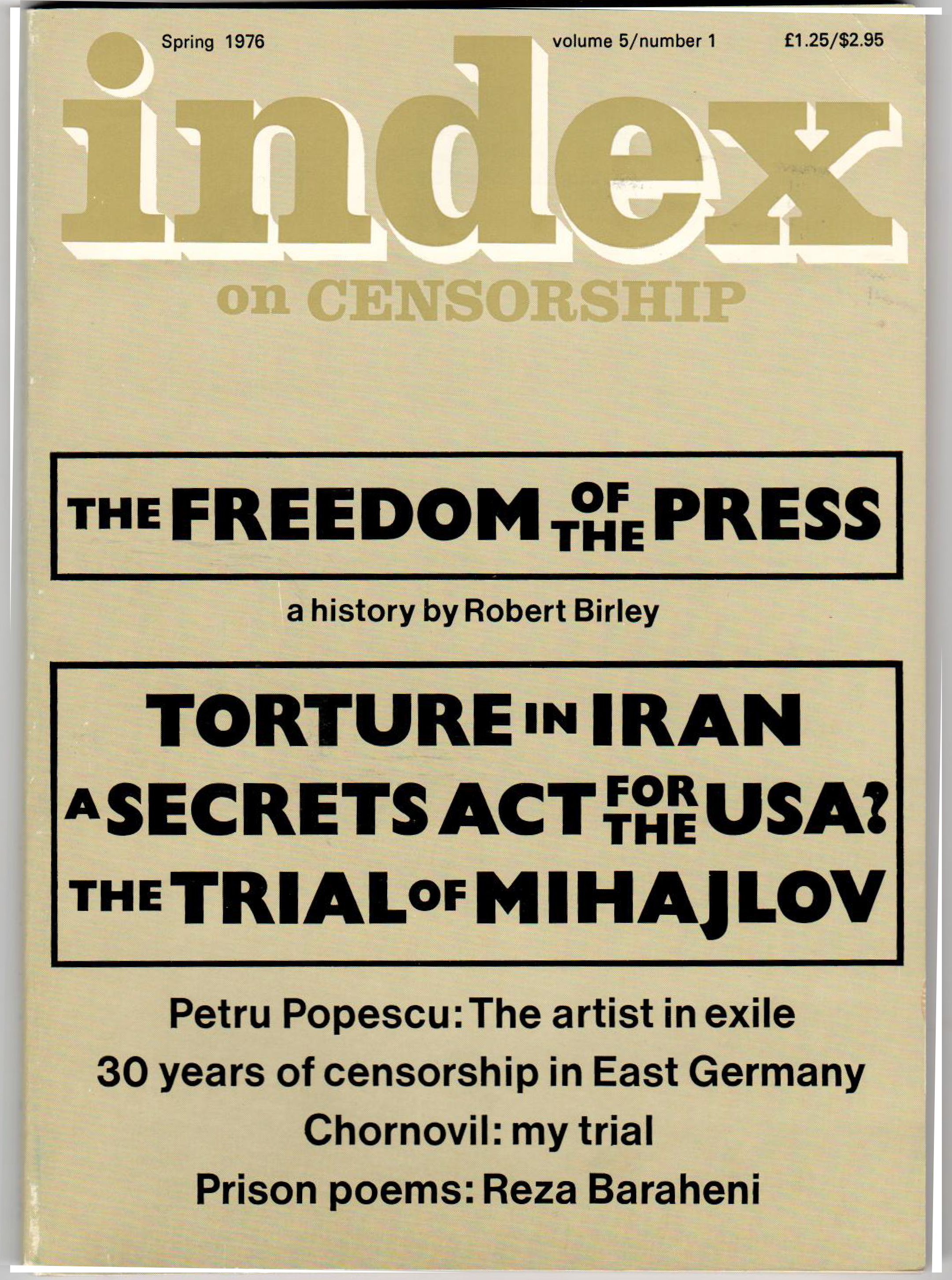
In this issue, a distinguished historian looks at the action taken by governments to suppress ‘dangerous’ literature from 1486 for the present day.
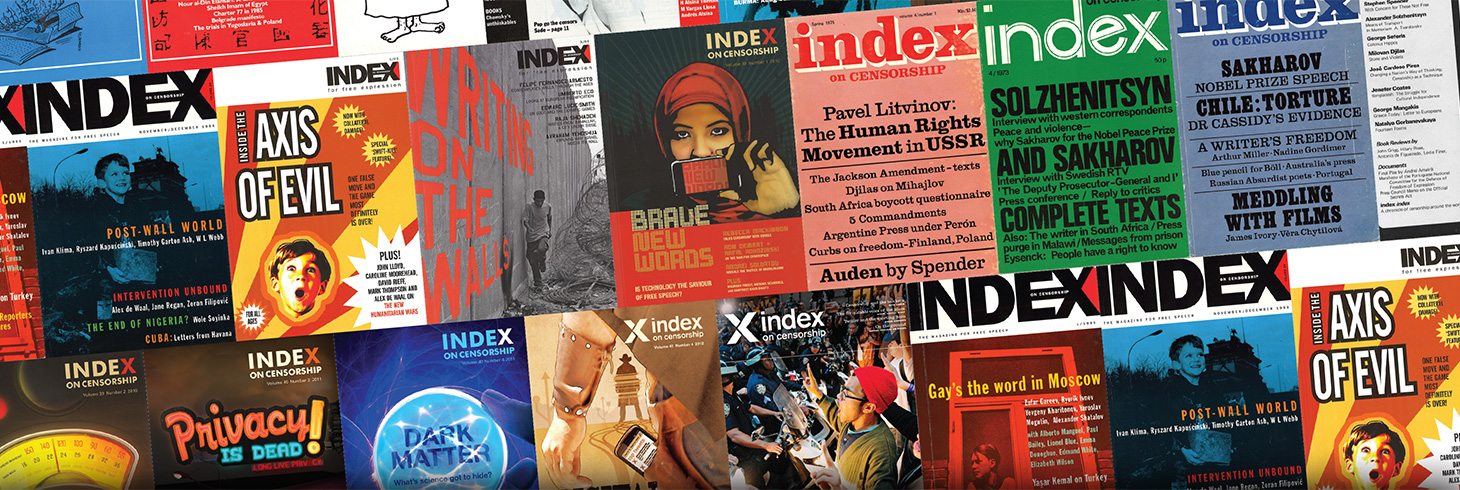
A quarterly journal set up in 1972, Index on Censorship magazine has published oppressed writers and refused to be silenced across hundreds of issues.
The brainchild of the poet Stephen Spender, and translator Michael Scammell, the magazine’s very first issue included a never-before-published poem, written while serving a sentence in a labour camp, by the Soviet dissident Aleksandr Solzhenitsyn, who went on to win a Nobel prize later that year.
The magazine continued to be a thorn in the side of Soviet censors, but its scope was far wider. From the beginning, Index declared its mission to stand up for free expression as a fundamental human right for people everywhere – it was particularly vocal in its coverage of the oppressive military regimes of southern Europe and Latin America but was also clear that freedom of expression was not only a problem in faraway dictatorships. The winter 1979 issue, for example, reported on a controversy in the United States in which the Public Broadcasting Service had heavily edited a documentary about racism in Britain and then gone to court attempting to prevent screenings of the original version. Learn more.