In this issue, the organiser of the ‘bulldozed’ art exhibition in Moscow tells the story of modern Soviet artists who do not conform to socialist realism.
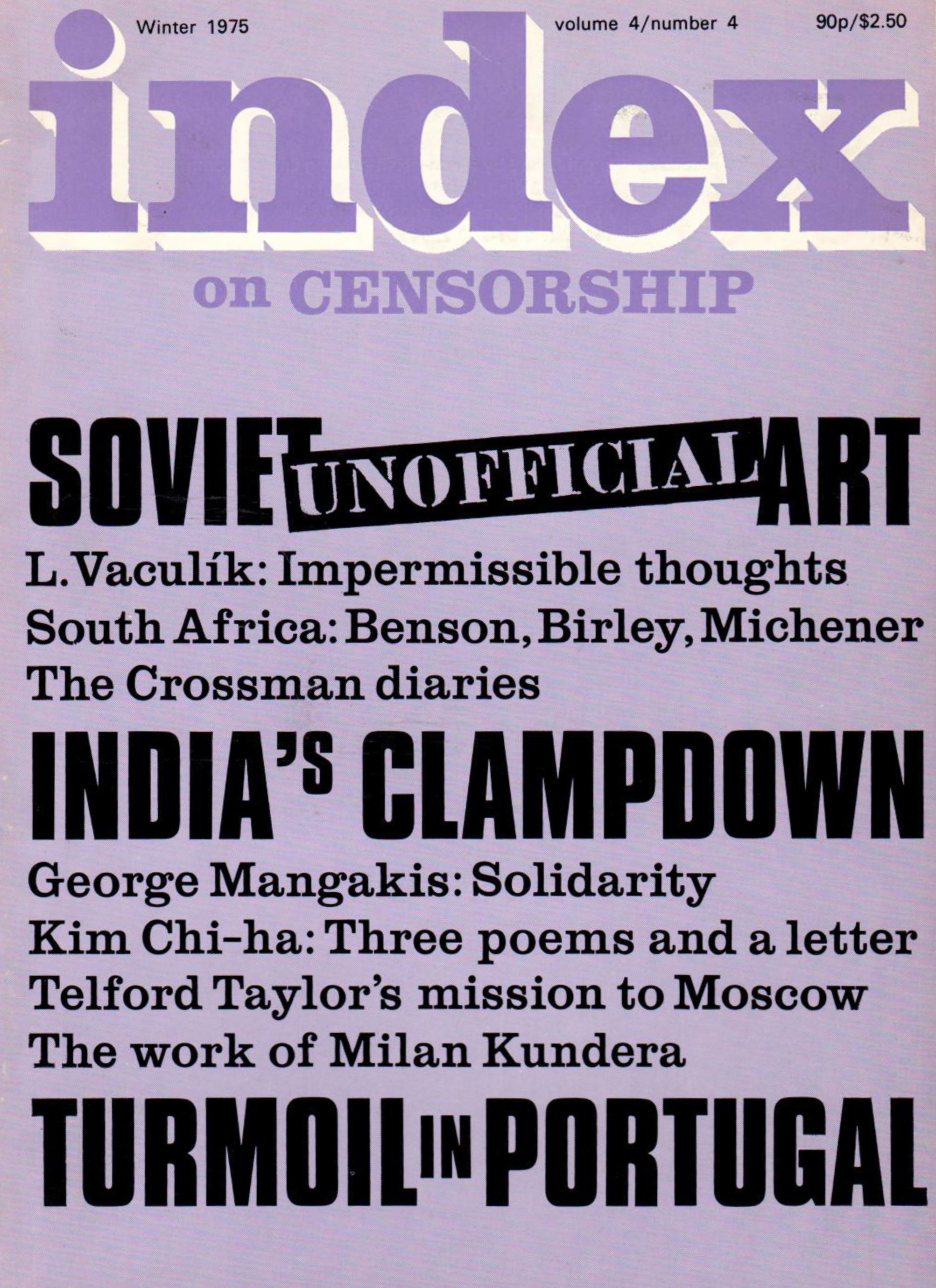
Soviet “unofficial” art
read more
In this issue, the organiser of the ‘bulldozed’ art exhibition in Moscow tells the story of modern Soviet artists who do not conform to socialist realism.
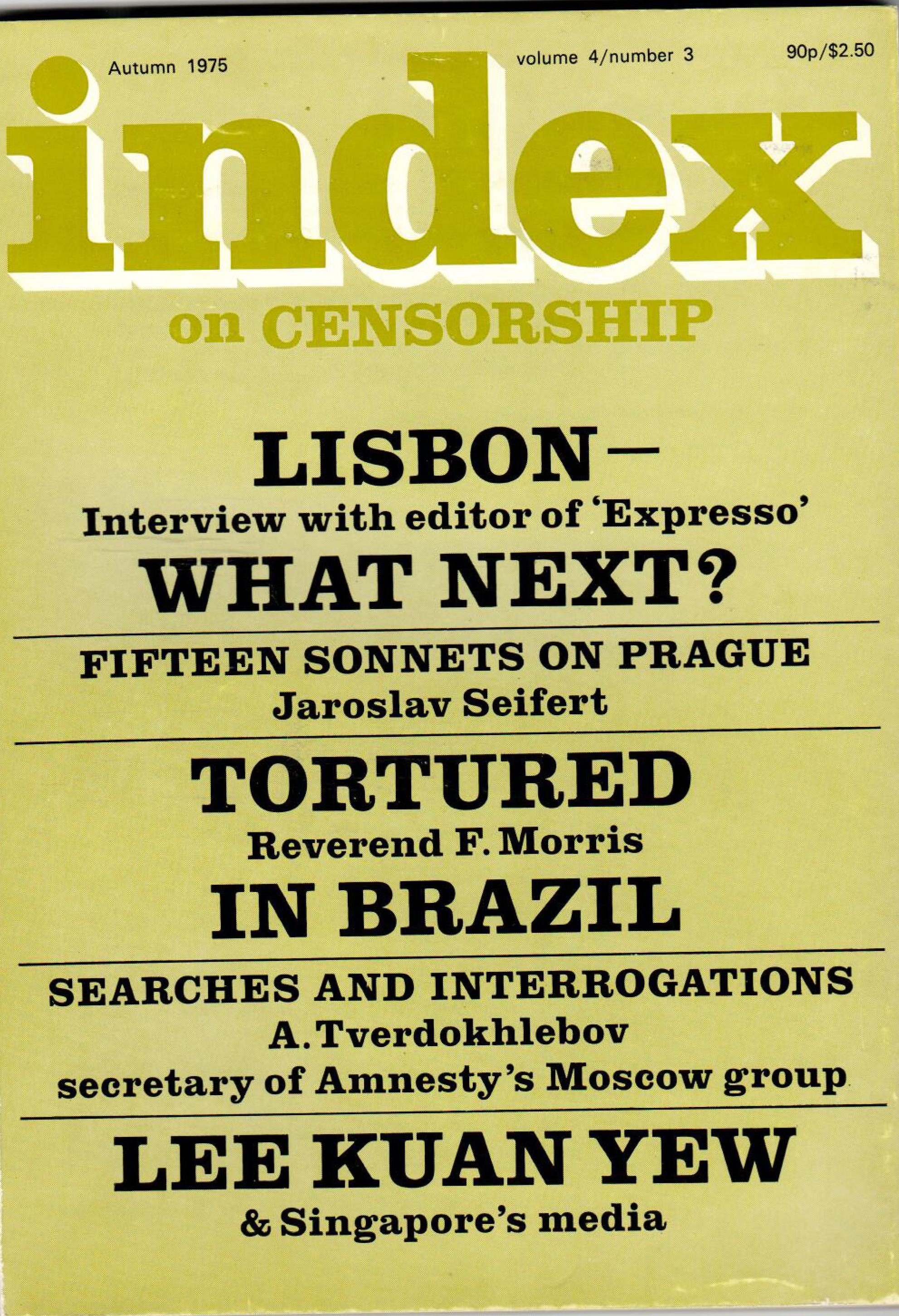
In this issue, Index publishes an interview with the Editor of Expresso, one of the few independent papers left in Portugal.
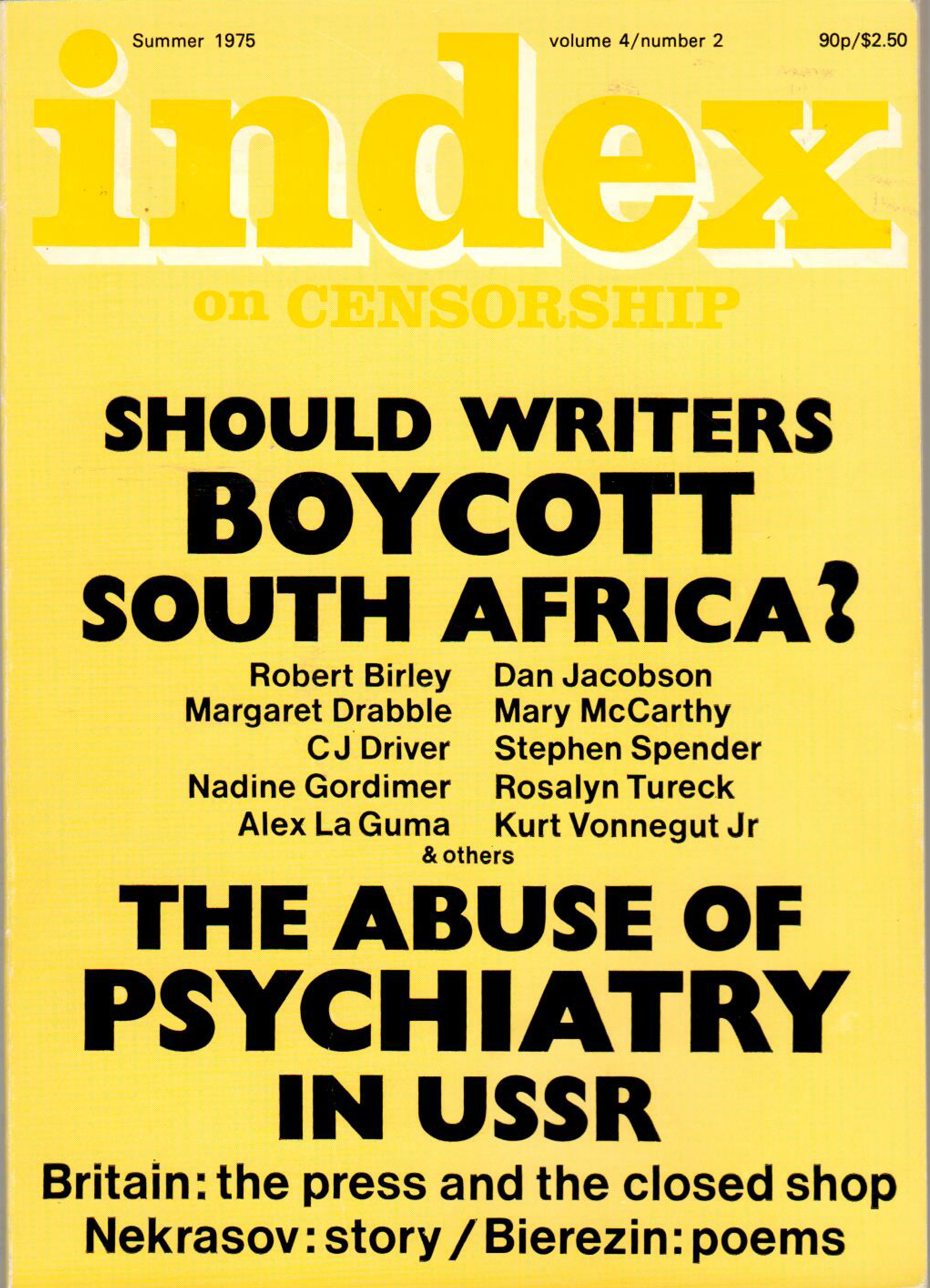
[vc_row][vc_column][vc_column_text] Late last year Index on Censorship circulated to six hundred artists and intellectuals around the world a...
In this issue, Index publishes a summary of replies to the questionnaire.
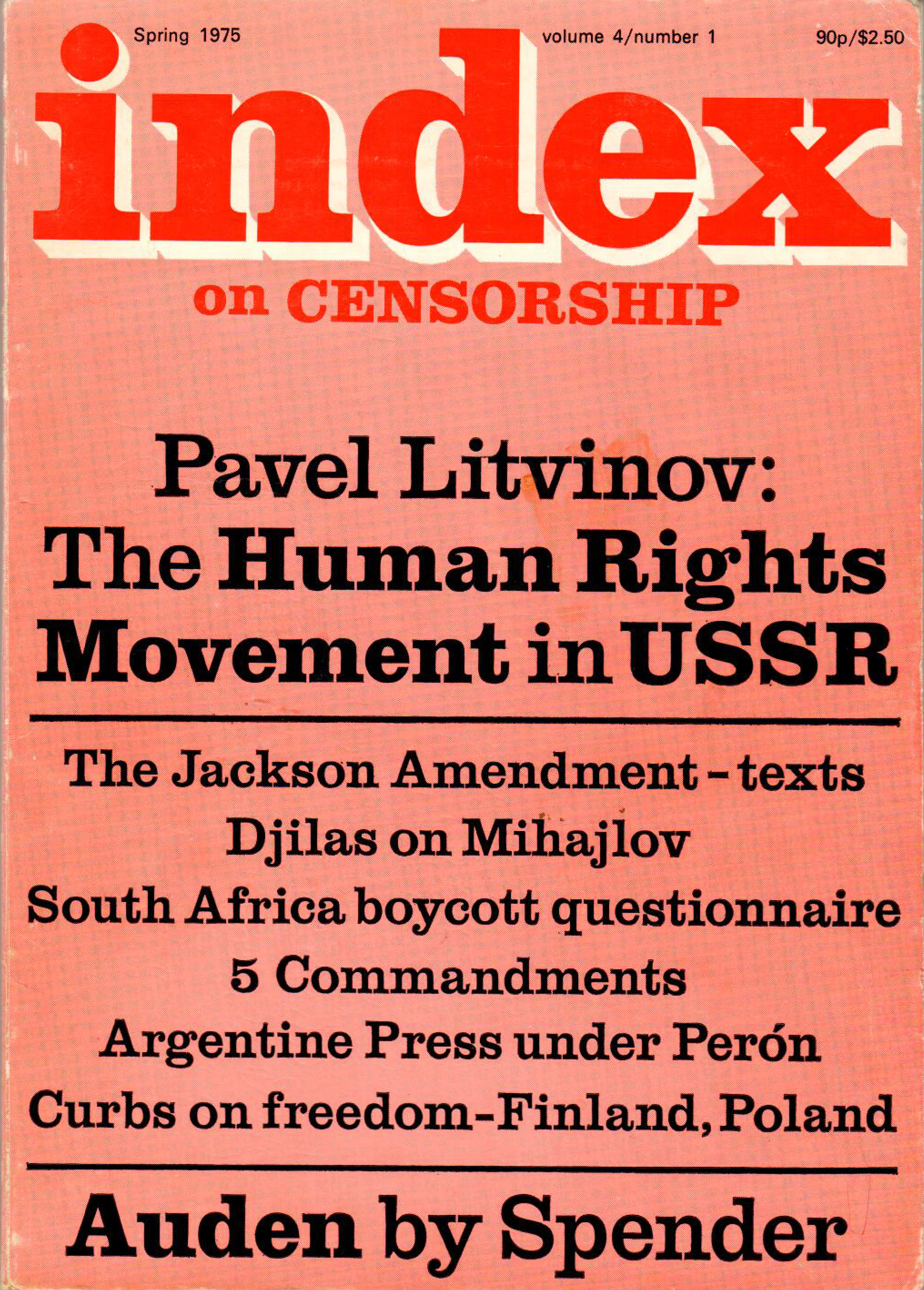
In this issue, Index publishes the text of Pavel Litvinov’s lecture at the Royal Institute of International Affairs during his London visit.
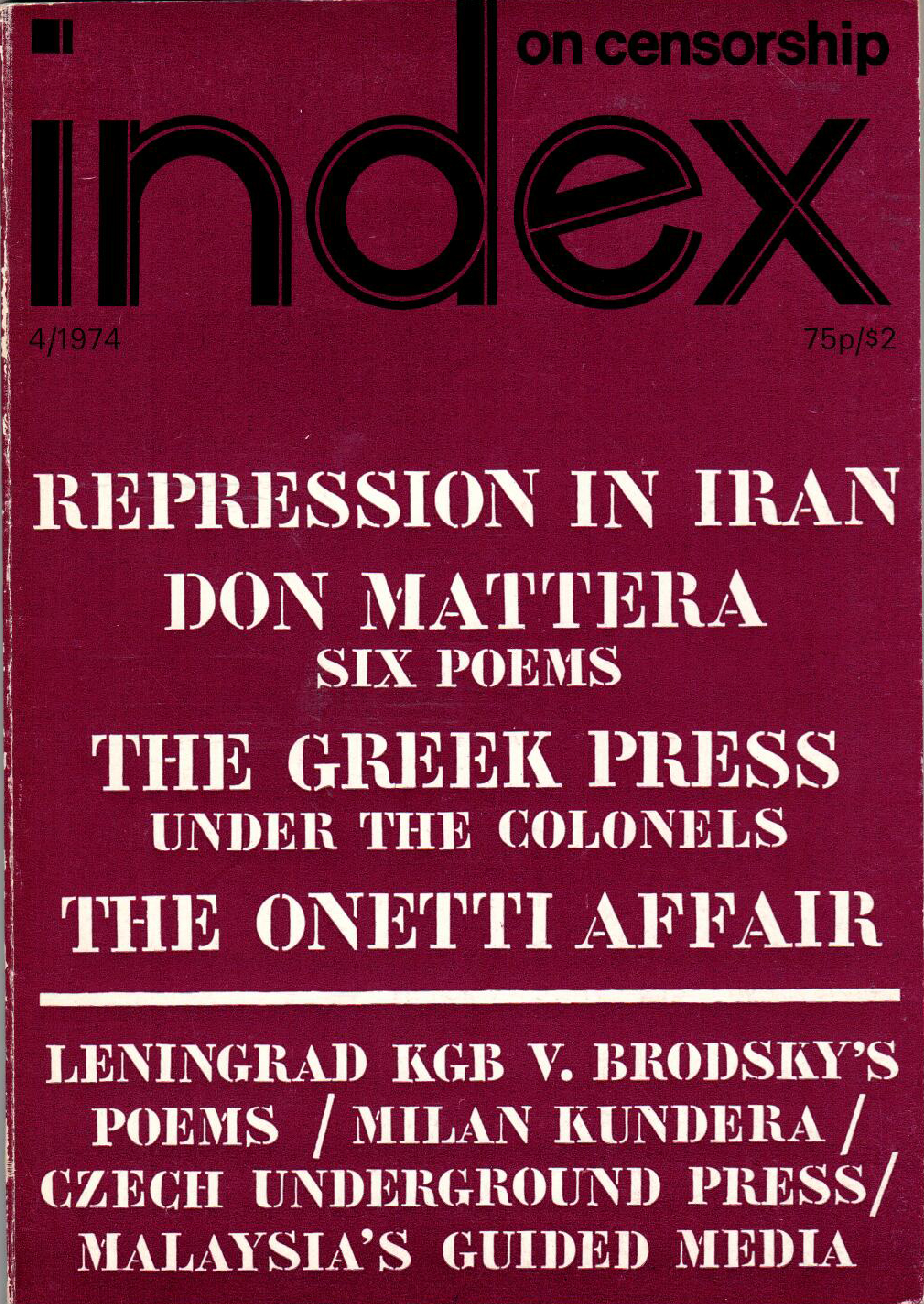
In this issue, Index publishes a historical survey of censorship and cultural repression in Iran from the seventh century to the present day.
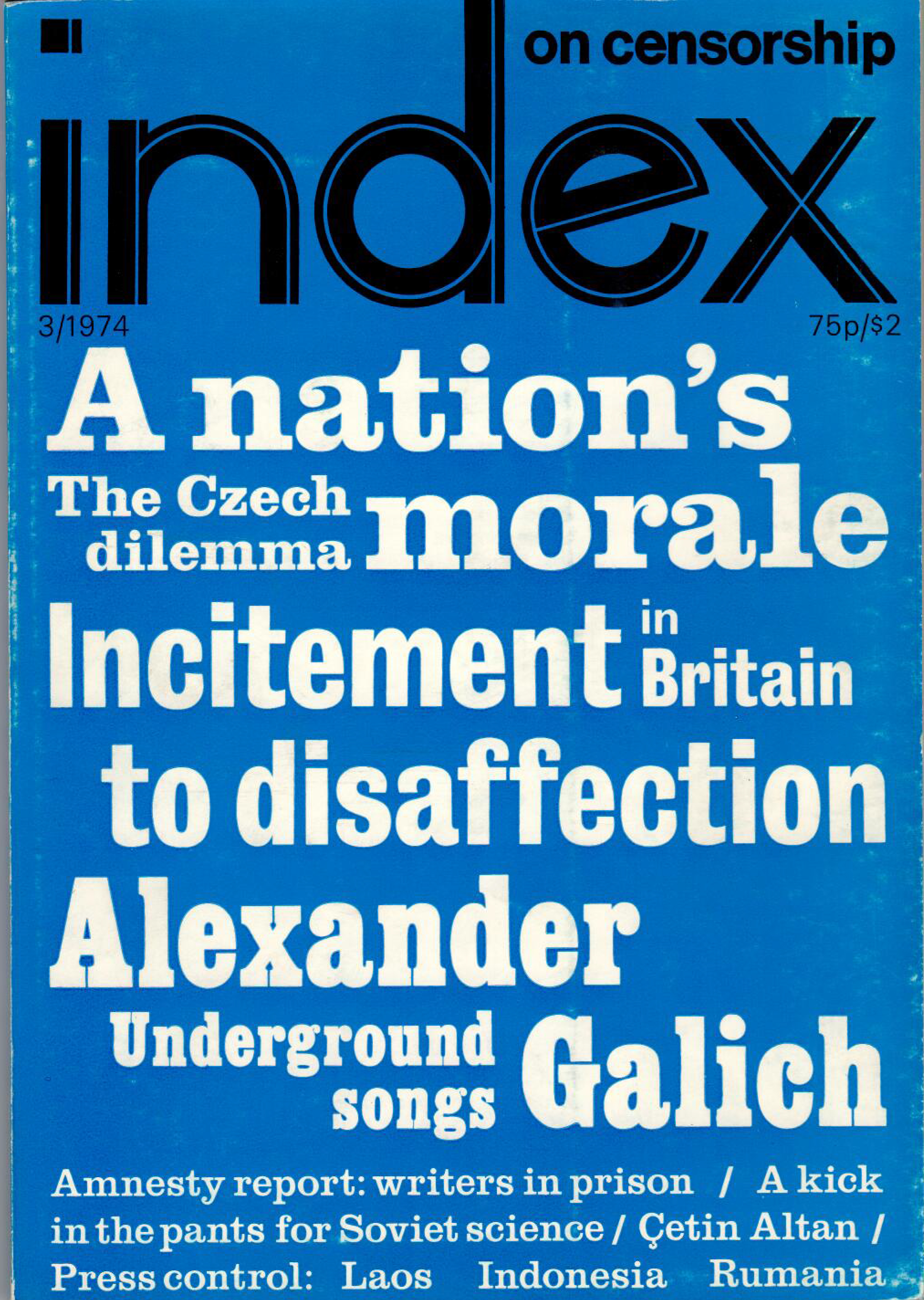
In this issue, Index investigates political apathy in Czechoslovakia as morale declines
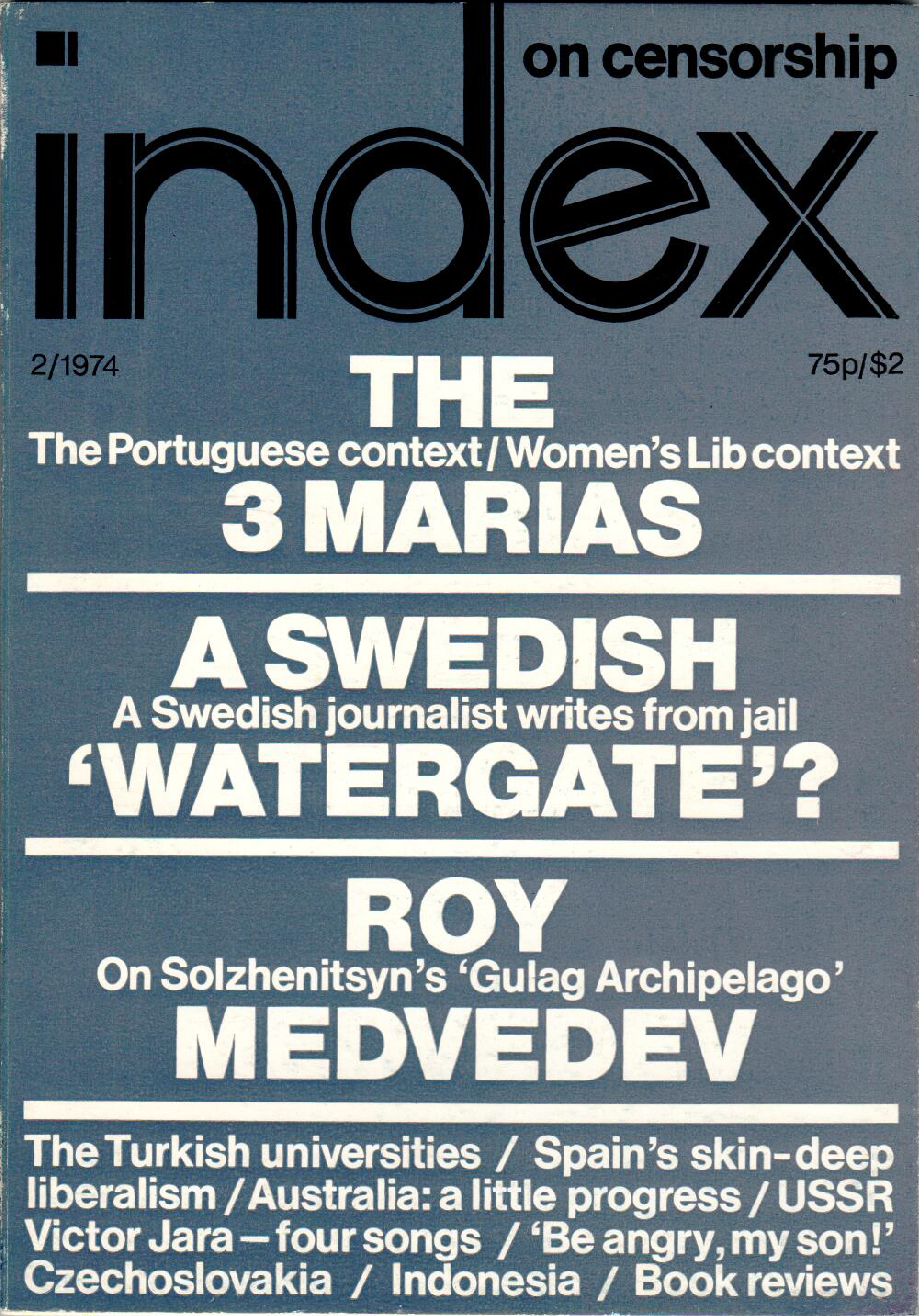
In this issue, Index investigates the case of the 3 Marias in a Portuguese context and a Women’s Lib context.
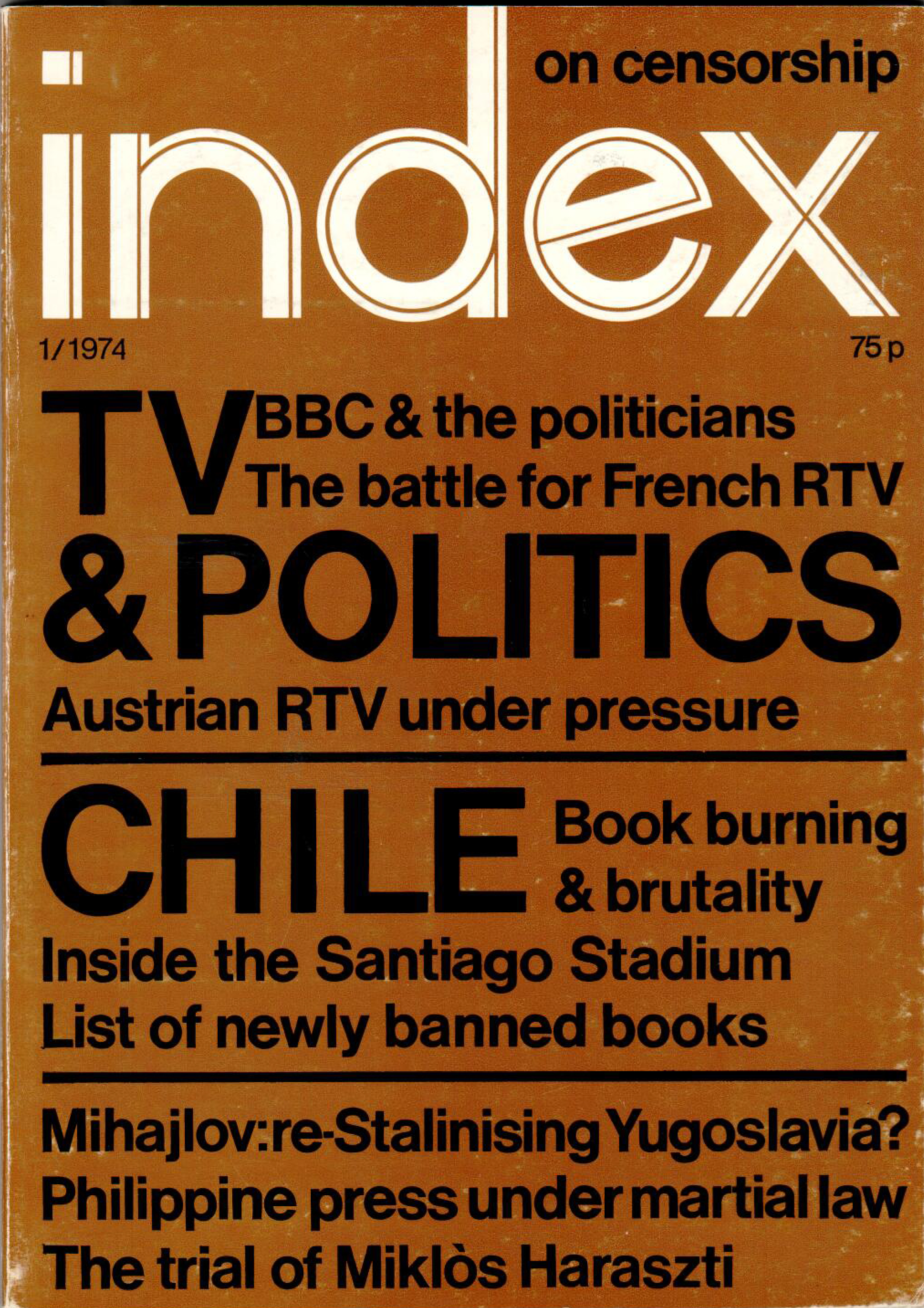
In this issue, Index publishes a report from Paris on the conflict between Arthur Conte and President Pompidou.
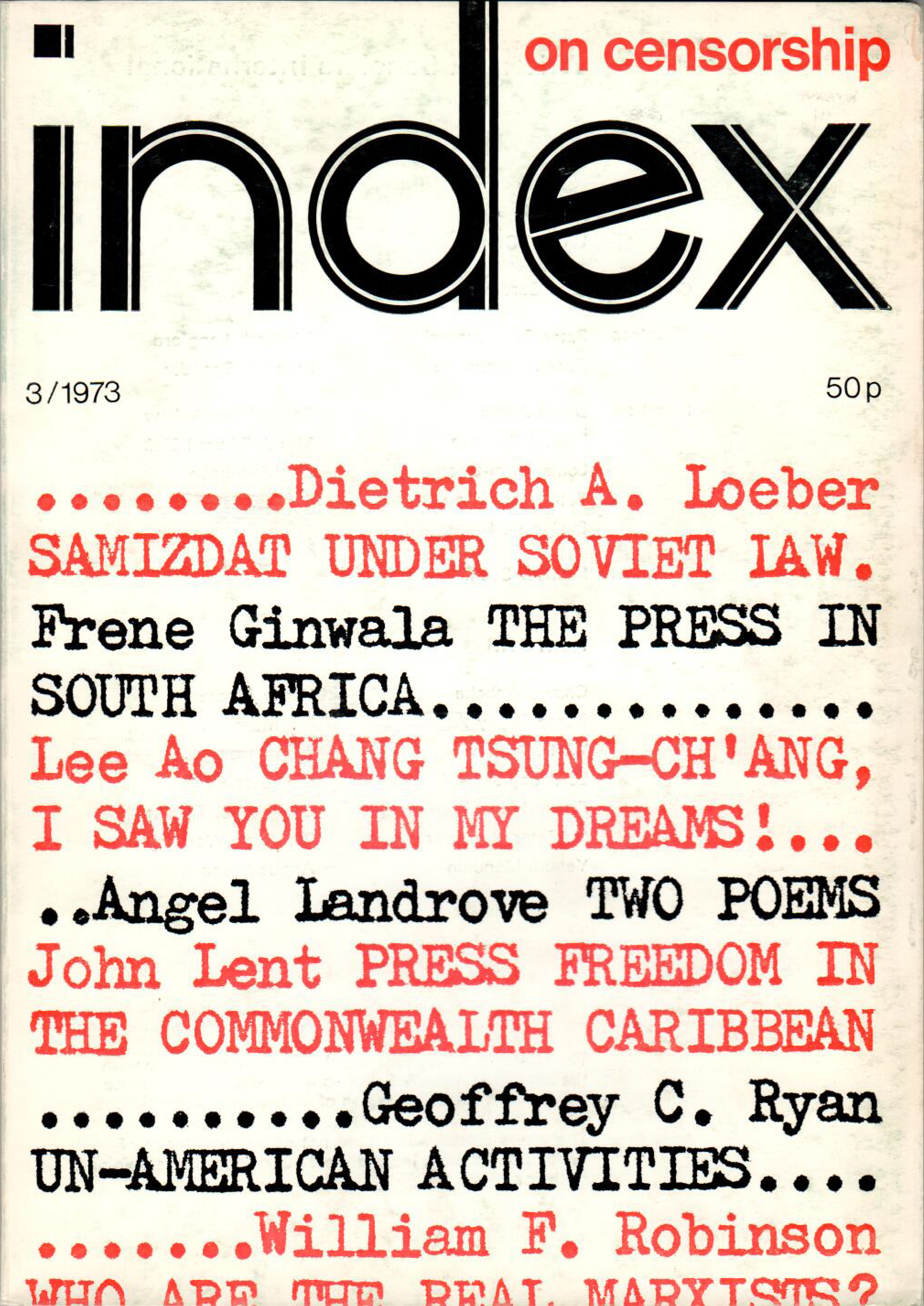
In this issue, Index investigates the legal status of Russia’s unofficial and unpublished writings.
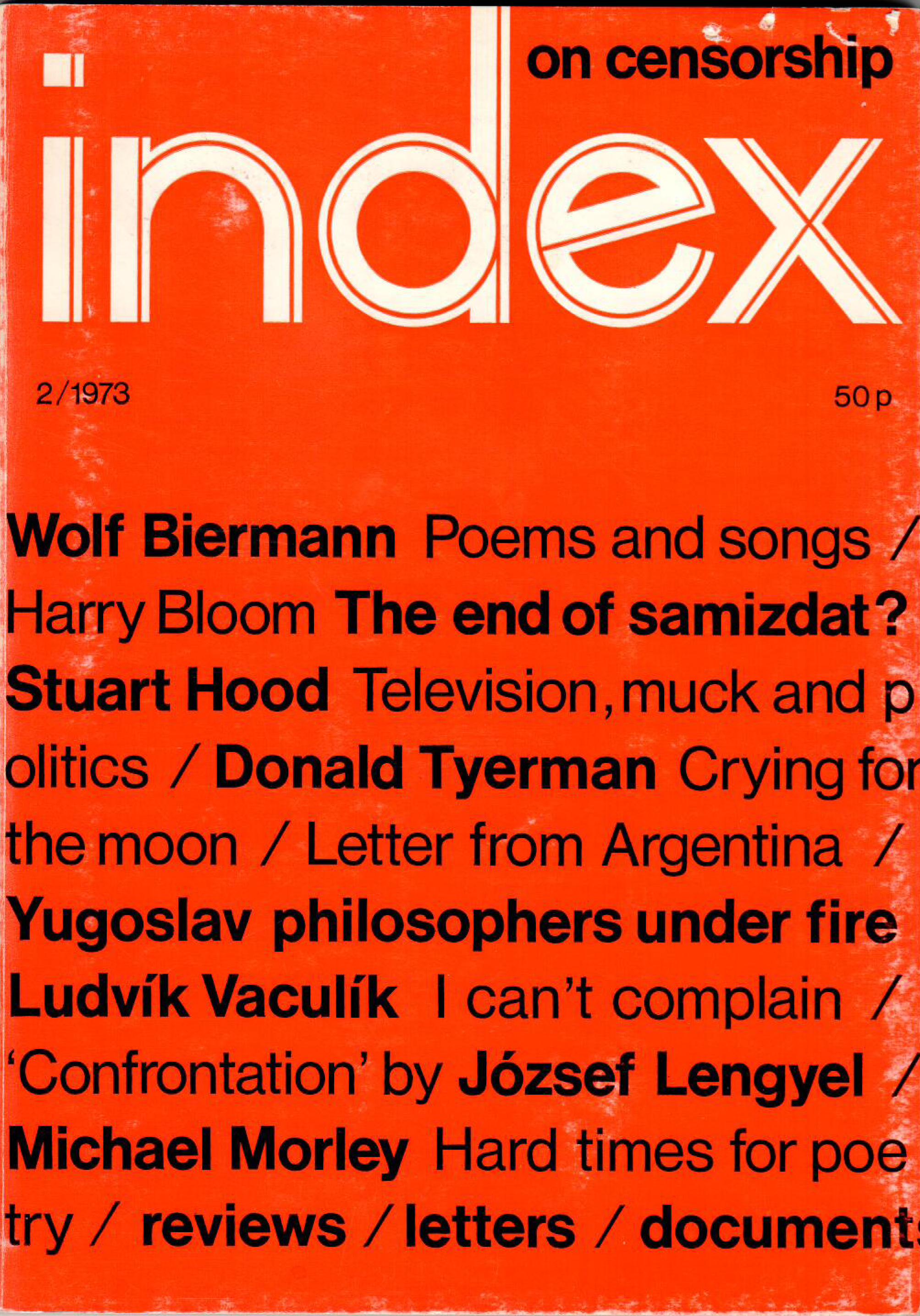
In this issue, Index explores the process of the Soviet Union signing the UCC.
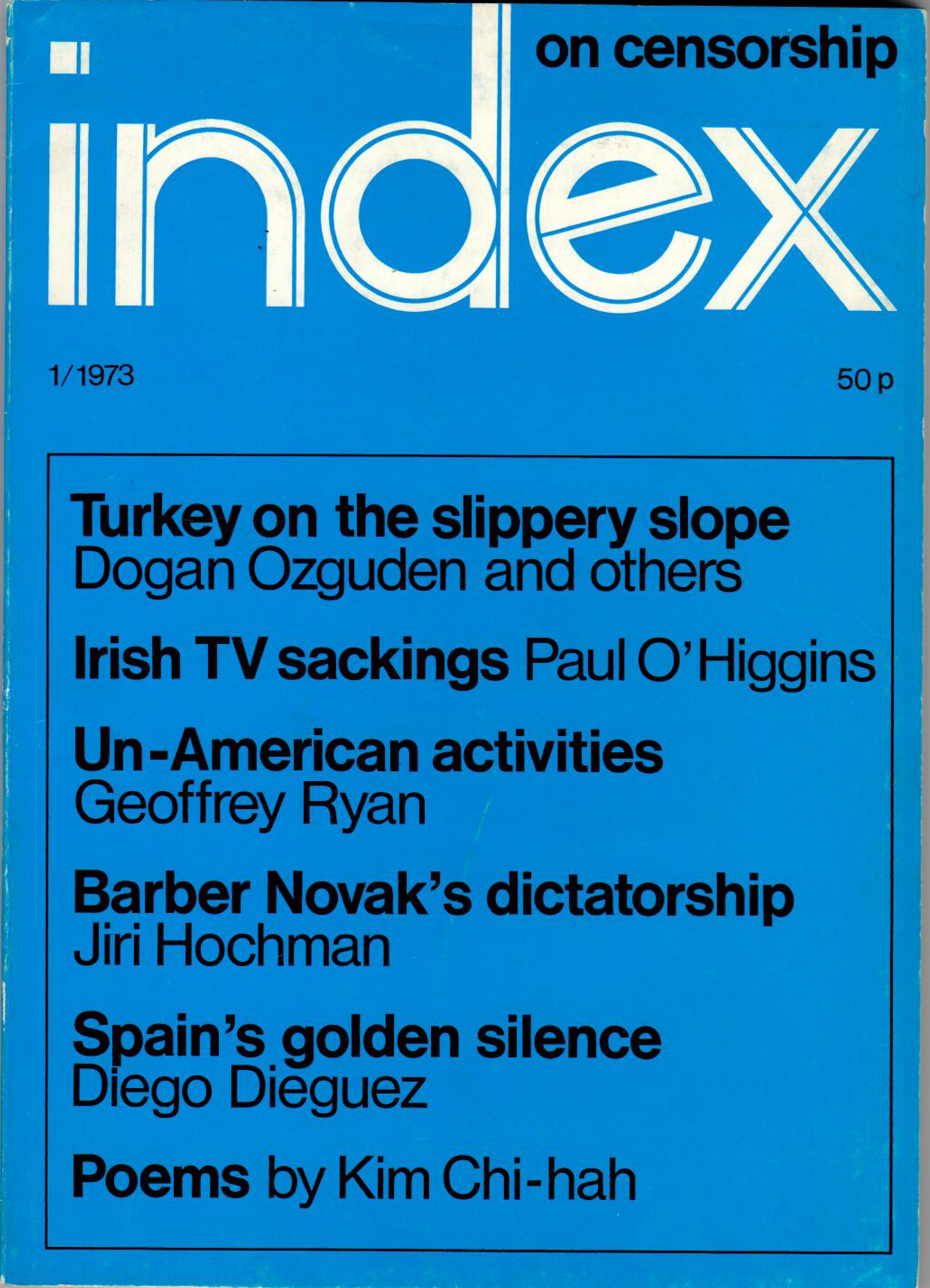
[vc_row][vc_column][vc_column_text] Introduction On 12 March 1971 the ten-year period of democratic rule that Turkey had been enjoying was brought to an end by a military coup which forced the government then in power to resign, and created in its place a new ‘ strong government’ designed to put an end to what was regarded as […]
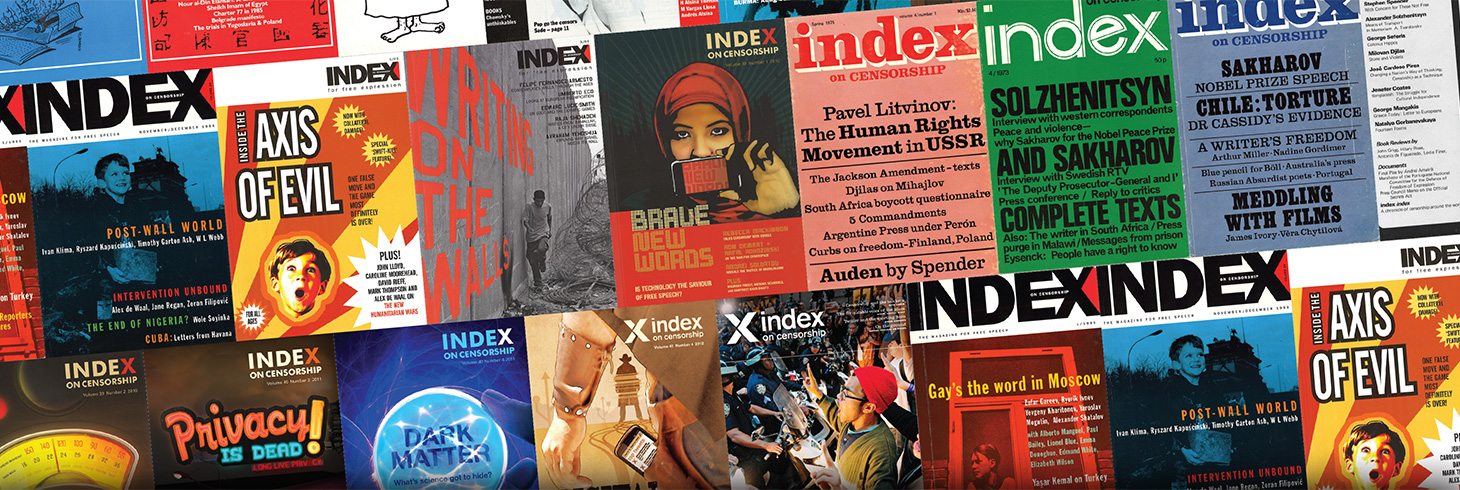
A quarterly journal set up in 1972, Index on Censorship magazine has published oppressed writers and refused to be silenced across hundreds of issues.
The brainchild of the poet Stephen Spender, and translator Michael Scammell, the magazine’s very first issue included a never-before-published poem, written while serving a sentence in a labour camp, by the Soviet dissident Aleksandr Solzhenitsyn, who went on to win a Nobel prize later that year.
The magazine continued to be a thorn in the side of Soviet censors, but its scope was far wider. From the beginning, Index declared its mission to stand up for free expression as a fundamental human right for people everywhere – it was particularly vocal in its coverage of the oppressive military regimes of southern Europe and Latin America but was also clear that freedom of expression was not only a problem in faraway dictatorships. The winter 1979 issue, for example, reported on a controversy in the United States in which the Public Broadcasting Service had heavily edited a documentary about racism in Britain and then gone to court attempting to prevent screenings of the original version. Learn more.