FEATURES

How the Ukraine War has split the country’s youth
Gen Zers who stayed and Gen Zers who left have found themselves censoring what they say to each other
17 Feb 2026

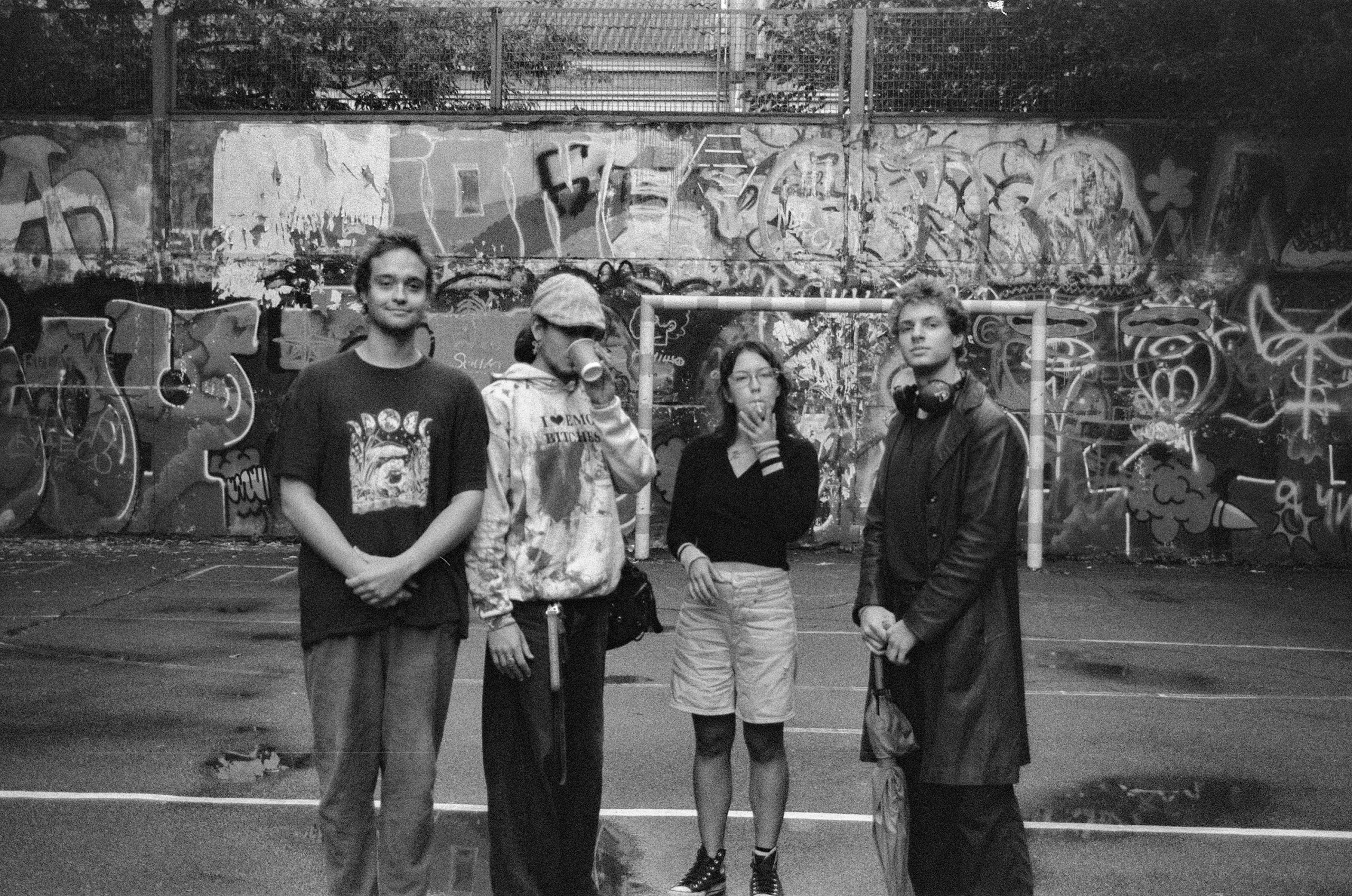
Ukraine's youth abroad are censoring what they say to those still at home. Photo: Illia Horokhovsky/Unsplash

This article first appeared in the Winter 2025 issue of Index on Censorship, Gen Z is revolting: Why the world’s youth will not be silenced, published on 18 December 2025.

For Ukraine’s Gen Z, the war has created two kinds of silence: one under sirens and the other under guilt.

Those who stayed live through air raid alerts and numb routine; those who left watch from abroad – scrolling through updates, unsure what to say to the people they love back home. Both carry their version of survival, and both are having to learn to speak to each other again.

In Dnipro, Dasha Buldenko, 19, says she has grown used to fear.

“You get used to the sirens, you get used to the explosions. You stop feeling anything,” she tells me. “We live in totally different worlds now.”

For her, life has narrowed to a quiet persistence: staying, coping and enduring without expecting understanding from those who left Ukraine.

“People who moved abroad forget where they came from,” she says, frustrated by what she calls the “pity” tone of returning friends.

“They see a different world, different opportunities. We don’t have those because of war.”

Mark Neshta, a 21-year-old student at the University of Essex in the UK, describes another kind of distance: the one between empathy and experience.

“You just can’t truly understand how it feels,” he admits. “At the beginning, I was deeply depressed that my country was going through such horror while I was sitting safely 1,000km away.”

He calls it “a strange cognitive dissonance” when “you’re physically abroad but all you care about, all you live by, is news from Ukraine. You consume it only through the internet or through conversations with loved ones who stayed”.

Over time, that guilt has turned into a determination to define himself more clearly. Living abroad, he says, has made him think about what it means to represent Ukraine.

“When people ask where I’m from, I want them to see more than war, to see culture, history, identity.”

He even switched to speaking Ukrainian, though he grew up speaking Russian. “I don’t think living abroad is what caused that,” he says. “It was the war itself.”

Both voices show the same wound from opposite sides.

Those inside Ukraine hide their pain behind fatigue. Those outside hide their guilt behind activism or composure. When they talk, it is not politics that divides them but the need to censor emotion, to sound strong, to sound grateful, to avoid hurting each other with what the other cannot understand.

What does that do to identity? For Dasha, being Ukrainian “just is”.

She says: “We are all Ukrainians; we stand for our own, regardless of language barriers.”

For her, it is a fact of staying and surviving. For Mark, it is something to articulate and explain. One holds on by living it, the other by translating it.

In the end, both sides are searching for the same thing: to be understood.

“People just need to actually listen to each other,” Dasha says.

Support free expression for all


At Index on Censorship, we believe everyone deserves the right to speak freely, challenge power and share ideas without fear. In a world where governments tighten control and algorithms distort the truth, defending those rights is more urgent than ever.

But free speech is not free. Instead we rely on readers like you to keep our journalism independent, our advocacy sharp and our support for writers, artists and dissidents strong.

If you believe in a future where voices aren’t silenced, help us protect it.

Make a £10 monthly donation

At Index on Censorship, we believe everyone deserves the right to speak freely, challenge power and share ideas without fear. In a world where governments tighten control and algorithms distort the truth, defending those rights is more urgent than ever.

But free speech is not free. Instead we rely on readers like you to keep our journalism independent, our advocacy sharp and our support for writers, artists and dissidents strong.

If you believe in a future where voices aren’t silenced, help us protect it.

Make a £20 monthly donation

At Index on Censorship, we believe everyone deserves the right to speak freely, challenge power and share ideas without fear. In a world where governments tighten control and algorithms distort the truth, defending those rights is more urgent than ever.

But free speech is not free. Instead we rely on readers like you to keep our journalism independent, our advocacy sharp and our support for writers, artists and dissidents strong.

If you believe in a future where voices aren’t silenced, help us protect it.

Make a £10 one-off donation

At Index on Censorship, we believe everyone deserves the right to speak freely, challenge power and share ideas without fear. In a world where governments tighten control and algorithms distort the truth, defending those rights is more urgent than ever.

But free speech is not free. Instead we rely on readers like you to keep our journalism independent, our advocacy sharp and our support for writers, artists and dissidents strong.

If you believe in a future where voices aren’t silenced, help us protect it.

Make a £20 one-off donation

At Index on Censorship, we believe everyone deserves the right to speak freely, challenge power and share ideas without fear. In a world where governments tighten control and algorithms distort the truth, defending those rights is more urgent than ever.

But free speech is not free. Instead we rely on readers like you to keep our journalism independent, our advocacy sharp and our support for writers, artists and dissidents strong.

If you believe in a future where voices aren’t silenced, help us protect it.

Donate a different amount

SUPPORT INDEX'S WORK