16 Mar 2011 | Uncategorized
Speaking publicly for the first time in four months, Julian Assange addressed the Cambridge Union on Tuesday. Members waited for hours in a queue around the building; many did not make it inside and watched it on screens elsewhere in the Union.
For legal reasons, the boundaries of Assange’s talk were clearly defined before he began. He would talk only of the leaked cables and not sexual assault allegations.
He barely acknowledged the rapturous applause and seemed drained by his experiences. He began by drawing on Orwell:
“He who controls the present controls the past. He who controls the past controls the future.”
This was the first of a number of lofty allusions which peppered Assange’s rhetoric. He referred to the radical publishers stifled by the licensing system of the 1640s; and Soviet attempts to alter encyclopaedia entries. He described his theme as “the privatisation of censorship”.
His speech focused on political events surrounding the publication of Wikileaks cables. He quoted figures revealed in the Iraq War logs and the Tunisian cables about Ben Ali. Assange praised the online resurrection of Al Akbhar, an Arabic newspaper which had published several Wikileaks cables. It was subjected to Denial of Service attacks and banned by the Tunisian government. Assange described a period where visitors to the newspaper’s website were redirected to a Saudi “sex site”. The publication returned to the internet earlier in the day.
He claimed Wikileaks prevented Joe Biden from maintaining that Mubarak was not a dictator and was critical of America’s relations with the Middle East. He was disparaging about Hillary Clinton’s comments on the role of the internet. Whilst he acknowledged that Twitter and Facebook had played a part in the uprisings, he said that Al Jazeera had been far more influential.
The Egyptian revolutionaries’ handbook explicitly and repeatedly warned against using Facebook and Twitter, he said, following a brutal lesson when previous revolution attempts used these media. He claimed that officials used Facebook to “round up all the principal participants” who “were then beaten, interrogated and incarcerated”. He used this to support his opinion that the internet is “the greatest spying machine the world has ever seen.”
Answering questions following the speech, he said he recognised the importance of the rule of law, but said that there were certain situations where he believed citizens must break the law. The most contentious question concerned the detention of Private Bradley Manning. The Cambridge Union’s president intervened as this did not fall within the strict remit of the talk, but Assange answered anyway.
He explained that Wikileaks operated a technological system whereby sources were unknown, as “the best way to keep a secret is not to have it in the first place”. He expressed his sadness at Manning’s plight and accepted that Wikileaks would have some responsibility if he actually had been a source. He claimed that Manning was arrested following revelations to Wired magazine.
16 Mar 2011 | Uncategorized
Speaking publicly for the first time in four months, Julian Assange addressed the Cambridge Union on Tuesday. Members waited for hours in a queue around the building; many did not make it inside and watched it on screens elsewhere in the Union.
For legal reasons, the boundaries of Assange’s talk were clearly defined before he began. He would talk only of the leaked cables and not sexual assault allegations.
He barely acknowledged the rapturous applause and seemed drained by his experiences. He began by drawing on Orwell:
“He who controls the present controls the past. He who controls the past controls the future.”
This was the first of a number of lofty allusions which peppered Assange’s rhetoric. He referred to the radical publishers stifled by the licensing system of the 1640s; and Soviet attempts to alter encyclopaedia entries. He described his theme as “the privatisation of censorship”.
His speech focused on political events surrounding the publication of Wikileaks cables. He quoted figures revealed in the Iraq War logs and the Tunisian cables about Ben Ali. Assange praised the online resurrection of Al Akbhar, an Arabic newspaper which had published several Wikileaks cables. It was subjected to Denial of Service attacks and banned by the Tunisian government. Assange described a period where visitors to the newspaper’s website were redirected to a Saudi “sex site”. The publication returned to the internet earlier in the day.
He claimed Wikileaks prevented Joe Biden from maintaining that Mubarak was not a dictator and was critical of America’s relations with the Middle East. He was disparaging about Hillary Clinton’s comments on the role of the internet. Whilst he acknowledged that Twitter and Facebook had played a part in the uprisings, he said that Al Jazeera had been far more influential.
The Egyptian revolutionaries’ handbook explicitly and repeatedly warned against using Facebook and Twitter, he said, following a brutal lesson when previous revolution attempts used these media. He claimed that officials used Facebook to “round up all the principal participants” who “were then beaten, interrogated and incarcerated”. He used this to support his opinion that the internet is “the greatest spying machine the world has ever seen.”
Answering questions following the speech, he said he recognised the importance of the rule of law, but said that there were certain situations where he believed citizens must break the law. The most contentious question concerned the detention of Private Bradley Manning. The Cambridge Union’s president intervened as this did not fall within the strict remit of the talk, but Assange answered anyway.
He explained that Wikileaks operated a technological system whereby sources were unknown, as “the best way to keep a secret is not to have it in the first place”. He expressed his sadness at Manning’s plight and accepted that Wikileaks would have some responsibility if he actually had been a source. He claimed that Manning was arrested following revelations to Wired magazine.
15 Mar 2011 | Uncategorized
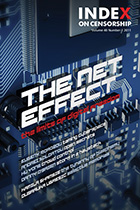
As digital technology continues to transform the culture of activism and access to information – from revolution in Egypt to reporting on the secret services in Russia — Index on Censorship assesses the ways and means of using new media to get the word out and asks if the United States is internet freedom’s best friend.
Jillian C York Tools of resistance
Jamie Kirchick Surviving Lukashenko
Supinya Klangnarong Thai trials
David McNeill Pyongyang unwrapped
Saeed Valadbaygi Virtual community
Ivan Sigal Going local
Ashraf Khalil Route to revolution
Ben Bland Spring chill
AND
Maureen Freely The last days of Hrant Dink
Salwa Ismail Days of anger
David L Sobel WikiLeaks and the urge to classify
Kamila Shamsie Speak no evil
Charles Young Trouble in Malta
Martin Rowson’s Stripsearch
TO SUBSCRIBE, PLEASE CLICK HERE
14 Mar 2011 | Uncategorized
Index on Censorship has published the shortlist for the Freedom of Expression Awards 2011.
The 11th annual Index on Censorship Freedom of Expression Awards honour those who, often at great personal risk, give voice to issues and stories from around the globe that may otherwise have passed unnoticed.
This year’s ceremony on 24 March 2011 will be hosted by broadcaster Jonathan Dimbleby at the Royal Institution in London, with a keynote speech by Booker Prize-winning novelist Howard Jacobson. Click here to buy tickets.
Award judges introduce the nominees in each category at these links:
The Bindmans award for Law and Campaigning
The Guardian Journalism award
The Intelligent Life Arts award
The New Media award, supported by Google
Nominees for this year’s awards, presented in association with SAGE, include Egyptian newspaper editor Ibrahim Eissa, British playwright Gurpreet Kaur Bhatti, campaigning Pakistani politician Sherry Rehman and MF Husain, regarded as India’s greatest living artist. There will also be a special commendation, presented by Sir Tom Stoppard.
