The long-running corruption scandal surrounding the diversion of funds from Ukraine’s energy sector proved to be both a prelude and stimulus to yet another round of “peace talks” initiated by the US Trump administration.
The scandal seemed to create fertile soil into which the White House could plant ideas for achieving peace in Ukraine. We now know that they were not trying to plant fresh saplings, but Putin’s old “forever” plan of total domination over Ukraine. The apparently fertile soil was the Ukrainian leadership’s weakened position due to the corruption scandal, which led to resignation of apparently the most powerful man after President Volodmyr Zelensky – the head of President’s office Andriy Yermak.
Ukrainians didn’t believe Yermak would resign until the very moment of his resignation. Essentially, Zelensky will have to reinvent himself as a president-without-Yermak. How easy or possible this will be is unclear. Regardless of the outcome of the criminal investigation, Yermak protected Zelensky from his own people and from others, practically controlling access to him.
Many in Ukraine believed that Yermak made all the decisions in the presidential office. In fact, if you analyse all of Yermak’s statements, you’ll see that Zelensky and Yermak said the same thing. In essence, Yermak was an “extension” of Zelensky – a kind of doppelganger only without the charisma. Some people who have met Yermak have noted that he possesses a rather negative charisma, but he always repeated Zelensky’s ideas, using more or less the same words.
At meetings with foreign partners, like Zelensky, he demanded military aid and support rather than asking for it. As the president of a country at war, foreign partners have forgiven Zelensky his forthrightness and occasionally insufficiently explicit expressions of gratitude for assistance provided. However, since the scandal with JD Vance at the White House over “ingratitude”, Zelensky has made a point of thanking foreign partners, especially President Trump much more often than before.
Some high-level guests to Ukraine didn’t immediately understand that Yermak was an extension of Zelensky, his most trusted confidant. However, they would almost certainly picked up on the feeling in Ukrainian society that Yermak was disliked.
Yermak’s reputation among Ukrainians was very negative, but not as sinister as the oligarch Viktor Medvedchuk’s under Ukraine’s Russian-sympathising second president Leonid Kuchma who was in office until 2005 and whose legacy still casts a shadow.
But then again, Yermak represented Zelensky’s inner circle of friends and business partners, which existed before Zelensky entered politics. Now, no one from this “inner circle” remains. At first, it seemed that the entire corruption affair, starting with Zelensky’s and Yermak’s attempt to wrest independence from National Anti-Corruption Bureau of Ukraine, (NABU) and the Specialised Anti-Corruption Prosecutor’s Office (SAP), to businessman Timur Mindych’s reported escape to Israel (just before his office was due to be raided by anti-corruption police over kickbacks from the energy sector), coincided too closely with the new negotiations about Trump peace plan.
Since independence, Ukrainian presidents have had eighteen heads of administration, and not all of them earned themselves negative reputations. Some came and went without being embroiled in high-profile corruption or political scandals. The latest scandal, however, is bound to cast a shadow over the entire office of the President since Mindych was co-owner of Zelensky’s Kvartal 95 production company, for which Yermak provided legal services before Zelensky’s official entry into politics.
Few Ukrainians can understand how it could be that a group of people like Mindych, his partner Oleksandr Zukerman and others so close to the presidential office, could have allegedly spent months siphoning money from state-owned enterprises in the energy sector. Why was it that only NABU signaled that something was wrong and that it involved Mindych? Why didn’t other intelligence agencies and law enforcement bodies stop their criminal activities sooner?
On Tuesday of last week, NABU representatives announced that more than 520 files containing personal information on 15 NABU detectives, National Security Services employees, journalists who write about corruption, and deputy ministers of justice, members of Parliament were discovered in a secret office belonging to Mindych’s group. This personal information, including home addresses, phone numbers, and so on, could only have been obtained through the police or other law enforcement agencies.
Now it appears that a real possibility that the peace negotiations could have been an attempt by the Zelensky administration (which meant Yermak) to resume negotiations in order to shift attention of Ukrainians from the Mindych case to the “peace process.” In other words, the initiative this time may have come from Zelensky.
Today Zelensky’s position, and therefore Ukraine’s one, is much weaker than before the Mindych scandal. Only very quick and decisive personnel changes can improve (but not correct) the situation. It would be better to change the tradition altogether and either rename the position of “head of the presidential administration” to something more political, or abolish it, replacing it with some narrow “office of political advisers.”
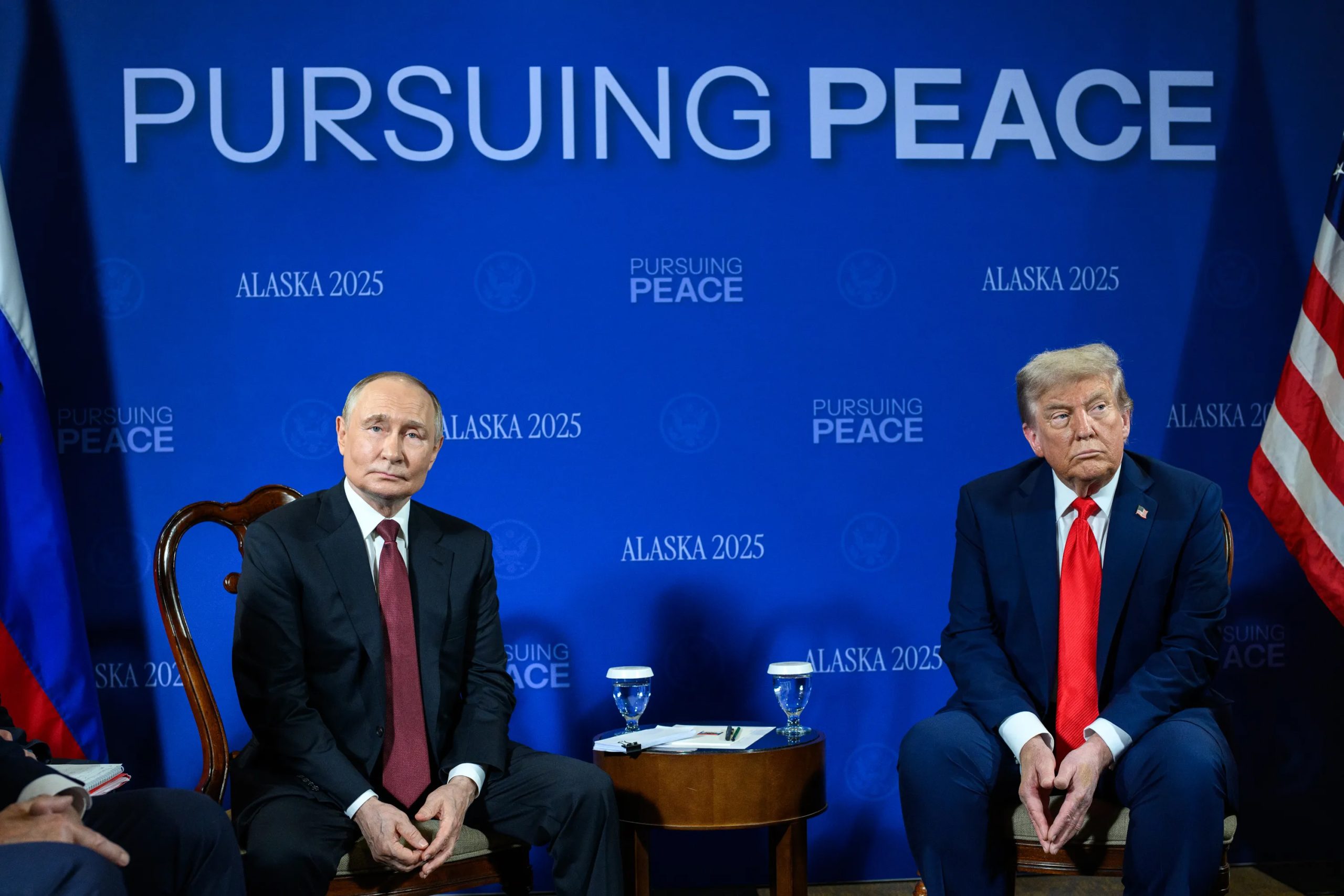
As to the peace plan, the obvious Russian origins of the plan, which was also proved by statements from US secretary of state Marco Rubio, sparked immediate controversy, first in Ukraine, and then in the United States itself.
It was precisely because of the protests from inside the USA that President Trump was at first forced to abandon his plan to aggressively force what he considered a weakened Zelensky into publicly accepting these most recent proposals. Within two days, the pressure on Zelensky was relaxed and the “plan” – a list of demands Ukraine should accept in exchange for peace or a ceasefire – began to shrink in scope and mutate, resulting quickly in rejection by Russia.
Under the original Putin-Witkoff plan, Ukraine was supposed to reduce its army, renounce possession of long-range missiles, withdraw from its own territory, and guarantee non-accession to NATO. For good measure, the plan also promised the US a 50% share of the profits from the reconstruction of devastated Ukraine, but omitted to make any demands on Russia – the aggressor country that has violated all possible international treaties and obligations. The idea that the USA should take 50% profits from reconstruction of Ukraine is so surreal it is hardly worth mentioning, except as a joke.
Even if Ukraine had agreed to all the demands, the plan would have remained a roadmap for Russia’s further aggression against Kyiv because it lacked the one element required to bring the aggression to an end – a change to the Russian Constitution.
The original 28-point plan guarantees the continuation of the war because it does not demand that Russia rescind the inclusion of four Ukrainian regions and the Autonomous Republic of Crimea in the Russian Constitution. At the very least, Russia should first remove from its constitution the two regions through which the front line currently runs – Kherson and Zaporizhia oblasts.
In Russia, every captured Ukrainian village is called “liberated” precisely because, in early October 2022, Putin signed constitutional amendments, which the Russian State Duma dutifully voted for. According to the amendments, five Ukrainian regions became the so-called “new territories” of Russia. Until they are are repealed, Russia will continue not only to occupy Ukrainian territories but also to seize further territory.
In just a couple of days, a 28-point pro-Russian plan has morphed into a draft of a 19-point, more pro-justice plan that Russia will not sign up to. Trump is no longer demanding Zelensky’s immediate agreement to negotiate, but preliminary talks are ongoing. Moreover, information has emerged about contacts in Abu Dhabi between Russian and Ukrainian intelligence officials and while Putin’s spokesman, Dmitry Peskov, states that Russia rejects this “American” plan, other Russian politicians are less categorical.
Last week another information bomb exploded across the world. Bloomberg gained access to recordings of phone calls between Steve Witkoff and Russian negotiator Kirill Dmitriev, as well as a conversation between Dmitriev and Putin aide Ushakov. These conversations confirmed the theory of the “peace plan’s” Russian origin.
But, what appears far more dangerous for Ukraine, it became clear that Witkoff, through Dmitriev, was advising Putin on when to call Trump and how best to communicate with the US president. Although Trump has so far defended Witkoff in this situation, just as Zelensky defended Yermak until it wasn’t possible any more, it is clear that Trump represents Russian interests more than those of Ukraine and Europe in the peace negotiations.
These are very dangerous times for Ukraine as the country seeks to negotiate a peace plan with Russia, backed by an unreliable US administration, all the while uncovering a major corruption scandal which goes to the heart of its president’s office.