INDEX INTERVIEW: ‘I’ve never published a correction or apology’
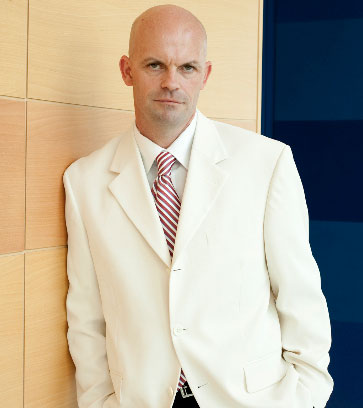
LONDON (INDEX). Exposing financial crime is a dangerous career path. David Marchant — an investigative journalist and publisher of OffshoreAlert — knows that. He has been sued numerous times and has never lost, his first accuser is currently serving 17 years in prison for tax evasion and money laundering.
Offshore alerts specialises in reporting about offshore financial centres (known as OFCs), with an emphasis on fraud investigations, and also holds an annual conference on OFCs focusing on financial products and services, tax, money laundering, fraud, asset recovery and investigations. It caters to financial services providers and other financial institutions.
Marchant talks to INDEX — ahead of the OffshoreAlert Conference Europe: Investigations & Intelligence, 26 – 27 November — about the importance of free expression and the peculiarities of his trade.
 INDEX: As investors continue to pour millions of pounds each month into offshore bank accounts, the Western world is in economic disarray, demanding much more from law-abiding taxpayers to bailout banks. What is your view on the economic crisis, and has it had any effect on the type of investigative journalism you practice?
DAVID MARCHANT: It is unfair to blame the global economic crisis on offshore financial centres. It is, essentially, a people-problem, the majority of whom live in the world’s major countries.
For me, the most interesting aspect of the crisis is that it confirmed what I already knew, i.e. many of the world’s major banks and financial services firms are not well managed. A significant part of the problem is that offering huge short-term financial incentives invites your personnel to act in a manner that is not in the long-term interests of a company. It encourages risk-taking and the concealment of losses to create the appearance of success, as opposed to actual success. It seems that few, if any, material changes have been made to the system, that you can’t change human nature overnight and that history is destined to repeat itself in the future. Other than the crisis causing more schemes to collapse early and there being more to write about, it has had no effect on OffshoreAlert’s investigative reporting.
INDEX: Greek investigative journalist Kostas Vaxevanis was arrested a few days ago in Athens for publishing the “Lagarde List” —containing the names of more than 2,000 people who hold accounts with HSBC in Switzerland (one imagines, hoping to escape the taxman). The list remained unused for two years after Christine Lagarde passed it onto then Finance Minister Giorgos Papakonstantinou. What do you think about it?
DM: It would not surprise me if the Greek authorities had indeed sat on this information. Governments and corruption or incompetence go hand in hand.
INDEX: Tax evasion is not considered money laundering in some jurisdictions, and it looks less frightening than laundering drug or criminal proceeds. Do you hold any views on this subject?
DM: Money laundering is a criminal offence in its own right. The predicate crimes vary country by country and, in some countries, tax evasion is not among them or was not among them now at one time. In the Cayman Islands, for example, fiscal offences were initially omitted from the jurisdiction’s money laundering laws but the jurisdiction was forced — screaming and kicking — into adding them at a later date. Tax evasion clearly should be a predicate crime. Paying taxes is a price we must pay to live in a civilised society. Who wants to live in an uncivilised society? Certainly not me.
INDEX: How do you balance the need for privacy with the need for transparency in the offshore world?
DM: As a journalist, the more transparency the better but information must be handled responsibly. The word “privacy” is a soft word for secrecy and people have secrets for a reason, i.e. they are typically trying to conceal something that is illegal, immoral or otherwise shameful.
INDEX: You receive sponsorship from security companies like Kroll Advisory Solutions. The global intelligence industry caters for crooks and corrupt, repressive governments alongside corporate clients. Twenty years ago, the value of this sector was negligible — today it is estimated to be worth around $3bn. Any thoughts on this?
DM: To be clear, OffshoreAlert is an independent organisation, not beholden to anyone or anything other than accuracy and fairness. We have limited advertising on our web-site but we do have sponsors for our financial due diligence conferences, which is a commercial necessity. The global intelligence industry is like any other. Companies aren’t particularly choosy about who they will accept as clients. It’s all about making money. I have no idea whether the global intelligence industry has become more prevalent or not over the last 20 years. If it has grown significantly, however, I would guess that much of such growth would be fuelled by banks and other financial firms having to comply with tougher anti-money laundering laws.
INDEX: How do you compare your work with that of, for example, Wikileaks?
DM: I have little or no respect for WikiLeaks. In my limited dealings with the organisation, I have found Wikileaks to be amateurish and fundamentally dishonest. In its very early days, it was clear to me that, in one action at federal court in the United States, Wikileaks clearly misled the court. It is not trustworthy. I consider Julian Assange to be an irresponsible, hypocritical, over-hyped poseur. His major talent seems to be self-publicity. I cringe when I see him described as a journalist. It denigrates the entire profession. Fortunately, there are few, if any, similarities between Wikileaks and OffshoreAlert. We’re not in the same business or market and there is a gulf of difference in the level of professionalism between the two.
INDEX: You actually own 100 per cent of OffshoreAlert and I understand that you are not insured against libel and other legal risks in order to avoid “lawyering” your exposes. Is this correct? Is it necessary in order to safeguard your journalistic independence?

Former accountant and self-styled “offshore asset protection guru”,Marc Harris was convicted of money laundering and tax evasion by the US in 2004
DM: I do indeed beneficially own OffshoreAlert in its entirety. Prior to launch in 1997, I looked into purchasing libel insurance. The premiums were reasonable but the problem was that every article would need to be pre-approved by a recognised libel attorney. That would have been costly and would have inevitably led to the attorney recommending that stories be watered down, which would have defeated the primary purpose of OffshoreAlert, which is to expose serious financial crime while it is in progress. I have an even better de facto insurance policy: If someone sues me for libel, I will take all of my incriminating evidence to law enforcement, and do everything in my power to ensure that the plaintiff is held criminally accountable for their actions. This is no idle promise. The first person to sue me for libel (self-proclaimed “King of the Offshore World” Marc Harris) thought he could put me out of business. Instead, he is currently serving 17 years in prison for fraud and money laundering.
INDEX: However, you have been taken to court for libel on many occasions and always won. So the objective behind these law suits seems to be to intimidate or drain you dry. How do you about surviving suing threats?
DM: OffshoreAlert has been sued for libel multiple times in different countries and jurisdictions. [He was sued in the USA (state and federal court), Cayman Islands, Canada (Toronto), Grenada (by then Prime Minister Keith Mitchell), and Panama]. We’ve never lost a libel action, never published a correction or apology to any plaintiffs and never paid — or been required to pay — them one cent in costs or damages. It is a record of which I am very proud. I know how the game is played, I am extremely resourceful, and I am not intimidated easily. This might come across as conceited, but my attitude towards plaintiffs is that I am brighter, tougher and more talented than you and your attorneys and that, if you want to sue me, I will do everything in my power to ensure that you pay the ultimate price of being criminally prosecuted for your actions.
INDEX: According to organisations such as ours, English libel law has been shown to have a chilling effect on free speech around the world. Especially worrying is “libel tourism”, where foreign claimants have brought libel actions to the English courts against defendants who are neither British nor resident in this country. What do you think about it?
DM: British libel law, generally, is among the most repulsive pieces of legislation that exists in the civilised world. It is a reprobate’s best friend and protects the reputations of people who don’t deserve to have their reputations protected. I couldn’t operate OffshoreAlert in the UK or in any country or jurisdiction that has adopted similar laws because OffshoreAlert would be sued out of existence. British libel law is considered to be so repugnant that, in 2010, the United States passed The SPEECH Act that renders British libel judgments unenforceable in the US there is no de facto free speech in Britain because of its libel laws. I find the entire British legal system to be terrible in dispensing justice. In that regard, it is light years behind the legal system that exists in the US, where OffshoreAlert is based.
Miren Gutierrez is Editorial Director of Index