8 May 2008 | Comment, News, United Kingdom
 Visual artists and even pop stars could face prosecution under new British legislation, writes John Ozimek
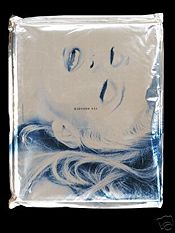
Collectors looking to make a fast buck by investing in erotica had a nervous awakening this morning. And fans of Madonna were left wondering whether they would need to mutilate one of her most famous books.
The Criminal Justice Bill, which received royal assent today, includes new laws on ‘extreme pornography’. This makes it illegal to possess images that depict ‘explicit realistic extreme acts’ that are also ‘grossly offensive, disgusting or otherwise of an obscene character’. The penalty, if found guilty, is up to three years in prison.
Supporters claim that the target of the bill is very clear. Others are not so sure.
Sex, by Madonna, caused controversy on its publication in 1992. It was shot by respected photographer Steven Meisel. But critics accused it of including hardcore images of sado-masochism and even bestiality. In one photo, Madonna appears threatened by a knife. In another she appears in a sexually suggestive pose with a dog. Sex was banned in Japan.
Up to 100,000 copies may still be owned in the UK. Mint copies of this work are being traded for up to £700 on Amazon.
Confusion reigns. A barrister with expertise in this area argues that at least one of the images in Madonna’s book could pass all three tests set by the new law.
(more…)
13 Sep 2007 | Comment
March 9 dawned with Chief Justice Iftikhar Muhammad Chaudhry presiding over his bench in the Supreme Court. He was informed that the president, who is also the chief of army staff, would like to see him. There has been much controversy over whether he went voluntarily or whether the president summoned him, but it has been established in the Supreme Court – and I have argued it – that he was summoned. That is another issue.
The chief justice, I think, was happy. He was going to see the president. He had an agenda to discuss the appointment of judges. He had requested a consultation (mandatory since a Supreme Court judgment in 1996 on how judges must be appointed). He had a list of judges that he took to the president to come to some decision.
The charges
Instead of discussing the appointment of judges, the president began to discuss charges formulated against the chief justice. And sitting with him, this general-president, were four other generals, three in military uniform: two intelligence chiefs – director-general of Military Intelligence and director-general of Inter Services Intelligence (one of them, I believe, living here in London these days!) – the director-general of the Intelligence Bureau, a brigadier, and also a lieutenant-general, and another general. So five generals, three in uniform, encircled the chief justice, while the president, also in uniform, outlined the charges.
‘Yes, well I’ve read about them. Lawyers have written a letter to me about some of them and most have been published in the press, there has been an outcry on that basis. They are spurious. Nobody takes them seriously.’
The general said: ‘No, but I take them seriously.’
The justice said: ‘Oh? Up to you.’
The general said: ‘I’ll make an indictment to the Supreme Judicial Council.’
‘Well that is your choice, sir. You can make the indictment, but I tell you the charges are spurious.’
‘Then you have an option.’
‘What is the option?’
‘Resign!’
The justice said: ‘I’m not resigning.’
‘But you’ve got to resign.’
The justice said ‘No!’ At which point, after a while of fervent persuasion, the general-chief of army staff left the room, leaving the justice in the custody of his colleagues.
They were very anxious to extract a resignation because the general had instructed the justice to resign, and if the chief of army staff instructs you to resign, you have to resign. But the chief justice kept refusing and saying, I assume meekly and softly, that he too was a chief – just not their chief, because he was not wearing their uniform.
The long and short of it was that the justice was detained for five hours and driven in custody to his house where he was detained with his family until 13 March. In the meantime, what actually had happened was that the army had a Plan A, but no Plan B.
Plan A was: ‘Call the chief justice, sit him down and tell him to resign, he’ll resign. What will he do? He’ll resign!’
But when he refused, they had no Plan B.
So, in pure military fashion, what do you do if the chief justice is refusing to resign, what do you do? You secure the Supreme Court. How do you secure the Supreme Court? By appointing an acting chief justice! How do you appoint an acting chief justice when there is already a chief justice? You suspend the chief justice. How do you suspend a chief justice? You find a reference! So immediately a reference was churned out of a computer in some joint secretary’s office and sent to the Supreme Judicial Council. And because the matter had been referred to the Supreme Judicial Council, the chief justice was suspended. But nobody read the reference and nobody read the documents that accompanied the reference.
The silence
He spent four days under house arrest, with his children and family – all his servants had been picked up by the intelligence agencies for interrogation. Pakistan had turned a new page. First the lawyers and the bar association came out militantly in defence of the chief justice. Then, the people… On March 13, the Supreme Judicial Council, not having read the reference and not having read the material, had appointed the day for the first hearing of the chief justice.
That was the first time the chief justice had come out of his house in four days. Four days of confinement with his telephone lines cut, television signals jammed, newspapers prohibited, with intelligence agents serving his food. That was the day there was a big demonstration outside the supreme court and that was the day he retained me as his lawyer. It was a great privilege, from amongst all lawyers, to be selected by the chief justice of Pakistan when his life, his liberty and reputation were at stake. The only thing I asked him, when he asked me to be his lawyer, was: ‘Do not buckle!’
‘I am faced by desperate men,’ he said, ‘but there is no way they can break me.’
I then said, ‘There is one other thing. From now on, no public statements, no media conversations.’
‘But the media are trying to get into my bedroom. What should I do?’
‘If the judges learn in the next month or the next six weeks that you have turned from a judge into a politician, I will have lost the case. So, no statements to the press. No media.’
Which he abided by assiduously. So that was an important decision. The other decision we took was to have a panel to support the chief justice and that included the Supreme Court Bar Association President and the Pakistan Bar Council Vice Chairman. We took a decision, you know: the chief justice is doing nothing! He’s been suspended, he can perform no constitutional duty, neither administratively nor judicially. But is there something he can still do while on forced leave?
So we looked at the rules and the code of conduct, etc, and we found that he could go and address bar associations. So, why not? It’s part of the duty of a judge to try to maintain good relations between the bar and the bench.
The Pajero
So, since he was receiving invitations to address bar associations, we took the decision that he would. But with that we took another decision that was crucial. And that was to travel to the bar associations by road. We did not know when we decided about the kind of response we would get from the people of Pakistan. It was phenomenal.
The 150 miles between Islamabad and Lahore we covered in 26 hours: the people would not let the vehicle go past. They would block it. People ask me now: ‘Are you a better lawyer, a better parliamentarian, a better politician or a better driver?’ I think I’m a better driver than anything else. We went to Peshawar – 70 miles we covered in ten hours; we went to Faizlabad, and those 150 km were covered in 23 hours; and when we went from Lahore to Multan, those 200 miles were covered in 40 hours.
It was just crowds and crowds and crowds. It was like driving at the bottom of the sea with the resistance of the water against you. And you’ve got to drive at an optimum speed. People are trying to push the car back in their enthusiasm to shake hands with the chief justice and they had to do it from my side because his window wouldn’t go down. The radiator was choked with rose petals and there was no cooling down. This was May 6, in the hottest month. Everybody was dressed in black robes, black jacket, black trousers. People were running around the vehicle, kissing the vehicle, getting on top of the vehicle. I have a photograph of the vehicle, a Mitsubishi Pajero Chief, which the Japanese ambassador especially came to my house to photograph!
I can tell you one thing. Out of the two, the manual or the automatic, the only one you can use is the manual, because you need the clutch to determine speed. Without that, if you take your foot off the gas pedal, the car starts moving backwards with the force of the crowd, and if you put your foot on it, the car jumps into the crowd. Go with manual every time!
The gate
We had not expected the response we got. It changed the face of the country. It gave heart to the judiciary. In the movement for the independence of the judiciary, that was the most significant and important factor. And then, let me also say very simply and straightaway, the chief could not be exposed to political slogans, he couldn’t even show photographers a v-sign. There would be political parties, political flags, cadres, civil society, shopkeepers and crowds.
When we entered Faizlabad at 3am, it took us five hours while the whole town was alight, celebrating. All the shops and bazaars were open, people were chanting slogans, dancing, beating drums. It took us five hours to get to Kacheri Gate. Fifty thousand people marched with us; there were several hundred thousand that remained in the squares or went back to bed after we had passed. The gate opened. Only lawyers and the chief justice’s car went in: every political worker or civil society worker stayed out because we kept saying that the chief justice is not going to address a public meeting. He cannot, because he is the chief justice.
It was amazing the love that was showered by the people, but let me tell you that the love they had for the chief justice was not matched by the hatred and contempt that they had for the general.
So we had first a decision: that the chief justice would not speak to the press and media, only to the bar associations. We had a second decision: that he would travel to address the bar associations. And a third critical decision: that he would go by road. We had a letter from the acting chief justice that the chief justice should not undertake the Islamabad-Lahore journey by road, but take a flight. The Supreme Court judges wanted the chief justice to go by air it seemed, but we had made all the arrangements to go by road. We did not realise there would be large crowds and that this would be a 26-hour journey. So one of our friends picked up the phone and rang up the Gujarat District Bar and said: ‘Hurry up and fax an invitation to the chief justice to address the Gujarat Bar Association immediately.’
The council
The proceedings were being held in camera at the Supreme Judicial Council. The Supreme Judicial Council is composed of colleagues of the chief justice who are immediately junior to him. Each in his turn would become the chief justice of Pakistan if the chief justice was prematurely ousted. I said: ‘In case the chief justice is reinstated – this is all in camera – you will be reviled as the senior puny judge of the Supreme Court – but in case he is ousted, by your judgment, you will be chief justice of Pakistan for four long years.’
‘No,’ he said, ‘three years, six months and 14 days.’
I said: ‘That is what I wanted to establish was going on in your mind!’
The petition
Eighteen hours before the Supreme Judicial Council was due to meet, driving back with the chief justice, a little depressed and despondent, I said to him: ‘Chief, I think the goose is being cooked.’
He said: ‘What do we do?’
I said: ‘We have to go and petition the Supreme Court.’
‘Who will petition the Supreme Court?’
‘The chief justice of Pakistan.
‘Who? Me?’
I said: ‘Yes.’
‘Petition the Supreme Court? Me? The chief justice of Pakistan? My own court?’
I was the sole voice saying it had to be the chief justice’s petition. Not the Supreme Court Bar Association, not the Pakistan Bar Council, not any good Samaritan. It won’t be taken seriously. Everybody and his grandmother in Pakistan thought that we were not going to fight. As I was going to leave the chief justice’s house, he held my hand and whispered in my ear: ‘Just go and lodge the petition.’
That decision was unprecedented and the judgment will also be without precedent.
To argue the petition and to establish that a chief justice could petition his own court – we were challenging the Supreme Judicial Council before the Supreme Court – my associates and I scanned every jurisdiction on Earth for the last 500 years of judgment.
The cases I quoted were from Trinidad and Tobago, and Belize, of course from the United Kingdom and India. No where had the chief justice of a country sued the head of state in his own court. This, to that extent, was something without precedent.
(more…)
19 Apr 2007 | Comment, News
We are going to Moscow on Thursday evening. There are a few meetings arranged there. I could have gone at the very beginning of the week but was absolutely overloaded with the usual work in the office.
Stas [Stanislaw Mikhailovich] is thinking about whether to stay in Moscow through until Saturday to take part in the March of the Discontented. He is worried his participation might complicate his situation. He was detained in Gorky Square in Nizhny Novgorod during the March of March 24. They didn’t open a case into his alleged breach of the administrative law, for some reason. At the same time I feel that he has already made his choice and is morally ready to go further on. He demands that I leave Moscow on Friday evening. He feels that I will be of more help staying in Nizhny. I understand that his concerns about my safety are the only background of all this reasoning. OMON [the internal affairs ministry militia] in Nizhny demonstrated their readiness to follow whatever order they received.
We are taking the midnight train to Moscow. Our carriage is the last one. Some groups of passengers are shifting from one foot to another. Passing them, I recognize two familiar faces of the UBOP (special department on combating organized crime) servicemen. There is tension in the air as they watch us while we walk. Their chief, Maxim Bedyrev, rushes to us, saying:
‘Stanislaw, we would like to talk to you…’
‘What’s the reason? Any warrant?’
‘No, just let’s go aside and have a word.’
‘I don’t want to.’
We keep wrangling for a few minutes. Never forget to refer to Article 51 of the constitution: we have the right to remain silent. It’s clear that if we submit, the train will leave without us. Maxim squints at us. It is evident that he is furious and trying hard to hold his feelings.
‘Are you so sure that no accident will happen in your homes while you are away?’
‘Absolutely.’
‘You should not be that sure. What if you have failed to switch off an iron?’
We can’t wait any longer – the train is leaving. As we get on, we hear Bedyrev call ‘Stanislaw Mikhailovich, are you aware what will happen if you dare to go to Pushkin Square on Saturday?’
***
We arrive at Kursky station, Moscow, at 6 am on Friday. As we are getting off the train, three policemen enter our carriage. One of them introduces himself and demands our documents. We are asked to follow them to the police station.
The office is full of policemen. One detained man is looking at us through the bars of the cage. Another detainee is sweeping the floor of the police office. When they hear that we work with the Nizhny Novgorod Foundation for Promoting Tolerance, they inquire what we mean by the word ‘tolerance’. The policemen treat us in a much more polite way after I receive a call from journalists from the Echo of Moscow radio station. I tell them, ‘Guys, you are in the news.’ While I am commenting on our problem in a live interview, a young investigator is filling in his report asking Stas the usual questions about any criminal convictions. He confirms the conviction he received for incitement to racial hatred after publishing an article by Chechen separatist Aslan Maskhadov.
They are evidently puzzled after our comprehensive explanation of what tolerance is.
‘And what? Are people already taken to jails for publishing Maskhadov in our country?’
I am amazed by the simplicity of his reaction. Maskhadov is not a notorious ‘terrorist’ in the perception of this particular police lieutenant. Our conversation is just friendly after that. We are told that we will be released in just five minutes. The policemen drop a few sarcastic remarks about their colleagues from Nizhny Novgorod and we leave.
***
10 am on Saturday morning. I am going to my friends’ office to drop my backpack there. I still hope that I will manage to leave Moscow in the evening. My train ticket to Nizhny Novgorod for the previous night was just wasted.
The first coincidence happens when Stas and I meet activist Marina Litvinovich. She is taking huge heaps of roses out of her car. They are planning to distribute copies of the constitution of the Russian Federation among young people. I get a bunch of roses to distribute among those who join the March. Stas takes some copies of the constitution.
***
11.30. While approaching Pushkin Square, we see huge numbers of OMON and military. I am going along Tverskaya Square with my bunch of roses. Reserved men in plain clothes with wires poking out of their ears are casting suspicious glances at me but don’t try to stop. They must be consulting with their chiefs as their lips keep moving whispering something into receivers. Pushkin Square is blocked off. All the area around the monument to Pushkin is crammed with people in blue uniforms. There are around a thousand of them there. The opposite side of the square is also cordoned off. People start to approach us as they see the roses and take them for some sign.
Just in the middle of Pushkin Square we bump into one of the Dutch journalists who were detained in Nizhny. Remke was beaten in Nizhny Novgorod by the OMON servicemen as he failed to understand how wide they wanted him to spread his legs. He has mended his torn leather overcoat by now. He is not shocked by the sight of numerous military trucks and heavily armed police force after what he observed in Nizhny Novgorod when the protesters were dispersed on March 24. But he is evidently shocked by the minimal response from his own government to the violation of the rights of citizens of the Netherlands at the demo. The so-called political interests and double-dealing diplomacy of political and economical interests is clouding the eyes of European politicians so much that they don’t want to make a notice of the growing danger posed by Putin. Our Dutch friend says, ‘I am just worn out and don’t want to be detained once again.’ But he is in the square now, and nobody knows how the situation is going to develop.
***
11.45 We are trying to find out where our friends are. Marina Litvinovich’s phone answers that we can find her in Tverskaya Street. We head towards her. We overhear two police colonels giving the order: ‘There is a group of about 50 people going towards the Square. Detain them all.’ In a few seconds we see this group. It is being led by Garry Kasparov. We join them trying to distribute the constitutions and roses among the people. The OMON blocks our way. We are standing face to face with them. Kasparov tries to persuade them to let us go on. One of the OMON people is making a nasty remark about Kasparov being a traitor. He calmly responds:
‘You don’t have the right to call me a traitor as when I was your age I was gaining recognition and honour for my country, while you are breaking its main law.’
People start to shout out, ‘Give way!’ We are being supported from behind the chain of the OMON. It is they who are surrounded by people. People are protruding their hands over the hard-helmeted heads of the OMON. Then the slogan changes: ‘Russia without Putin!’ Immediately the OMON chiefs give the order to detain people. We try to escape through the open doors of some cafés and shops. The OMON grab an elderly woman who is clutching a lamppost. She squeals ‘They are killing me’, while three huge men are trying to tear her off the pole. I see Stas being dragged into the bus. He is screaming, ‘Let me go.’ Several men are trying to hold him and he is being dragged in opposite directions. People on the right and on the left of me are just disappearing one by one. The bus is crowded with people. Some OMON servicemen are taking Kasparov from a café.
***
I am looking around trying to calm down. We have to decide what to do next. I recognise a man in a blue windbreaker. It is Andrey Illarionov, a former Putin adviser, now a senior fellow at the Cato Institute in the US.
‘What are you going to do?’
‘We should try to get to Turgenev Square and take people from here.’
He is right. The authorized rally is going to start in under an hour in Turgenev Square. It is absolutely pointless to wait in Tverskaya Street until we are also loaded onto the buses.
We are going down the underground path. There are some journalists who recognize Illarionov. The flashes of their cameras attract people’s attention. When we get out, some 50 people are following us.
Andrey and I are getting close to the police cordon to find out what is going on in the buses with the detained people. I see Kasparov’s face through the broken window of a bus. Some minutes before that a young man broke it from the inside and escaped. Again we come face to face with the OMON. A CNN journalist is interviewing Illarionov. There are instigators in the crowd. One of them is screaming, pointing his finger at Illarionov, ‘What are you waiting for? Kick him with your baton at his head. Don’t beat Russians. Fracture the head of this American vermin. What are you doing here? Aren’t you still in Washington?’ Andrey ignores him. An OMON chief shoulders his way through the crowd. He tries to grab Andrey, but the people don’t let him.
We decide to go to Turgenev Square, taking a route that goes from the office of the Izvestia newspaper in the opposite direction to Pushkin Square. The OMON and the military bosses won’t expect us to take this route. Nastasyinskiy Lane is empty. The way is free. We call our friends, trying to find them and get them to join us. I get a text message from my friend Ilya, ‘I have been detained. We tried to break through the OMON cordon. People say that 1,000 people are marching to the Sadovoye Koltso.’ It is our column Ilya’s heard about.
Banners are unfolded. The red, white and blue banners of the Russian Federation fly over our heads. People shout: ‘Russia without Putin!’; ‘We want other Russia’; ‘No to a police state’. There are no obstacles in our way. We approach a Russian Orthodox church where we see people on the belfry. When we come alongside the church, they start ringing the bells, expressing their support. We feel free and cheered up. Stas calls me from a police station. I tell that the March is making its way. I hear him relaying the news to Kasparov.
As the march reaches Petrovka, 38, the famous address of the criminal police, people start singing, ‘Our proud Varyag is not going to give up’, a song of undefeated Russian sailors from the time of the Russian-Japanese war of 1905. We are also shouting, ‘No to the state with the FSB everywhere.’
In Trubnaya we see several hundred people more. Our two columns flow together.
The OMON chiefs have sent their watchdogs to stop us. They appear from Sretenskiy Avenue. Andrey is next to me. Marina Litvinovich is marching shoulder to shoulder to Ruslan Kutaev, a Chechen businessman and politician who was the co-chair of our Russian-Chechen Friendship Society for the first few years. Andrey is pulling me by a sleeve, telling me it’s time to run. I understand that he wants to pass the narrow street where the OMON is running to before they close their ranks.
We fail and run into the shields of the OMON. Andrey is telling them to let people go on. He keeps repeating, ‘This is our city’. Pointless. He pulls me out of the crowd just at the moment the OMON begin to detain people. We run over the OMON chain and jump over a fence. Many people escape with us. Hundreds of others keep running towards the Sretenskaya Square. Another OMON cordon. This time they are just chasing people as the column has already been dispersed. We see them dragging people, like sacks of flour, into their cars. We see them beating people with their batons.
Two OMON servicemen try to seize a young man who was marching next to us. Andrey and I run up to them and try to talk them into not detaining him. It is useless. They are hunters and the young boy is their prey. One of them is threatening us with his baton. Andrey tries to protect me. Suddenly, I feel an acute pain in my ankle. It is not a baton – it is the heavy boot of a policeman who is kicking my leg. As I limp aside, I see Litvinovich being chased by some other OMON militiamen.
***
Several hundred manage to get to Turgenev Square. The rally is underway. We have to go through the metal detectors. Policemen are searching Illarionov. There are several books in his inner pocket.
‘What are they?’
‘These are very interesting books…. This one is the constitution of the Russian Federation. The other one is the Criminal Code.’
They let us go through. Former Russian prime minister Mikhail Kasyanov is behind us. His face is red. He also had problems getting to the site as the OMON tried to detain him on the way. They failed. Andrey Illarionov refuses to make speeches although he is the person who has become de facto leader. Political satirist Viktor Shenderovich is making a speech. It is difficult to make out how many people have managed to get together here. Not less than 2,000. I am told that Putin has left Moscow for Saint Petersburg.
***
It’s time for the rally to finish. Marina and I decide to go to Presnenskiy police station, where the first detainees have been taken. Stas is among them with Garry Kasparov, and a range of activists, reporters and ordinary protestors.
There is already a crowd in front of the police station. I see Vladimir Ryzhkov, a member of the State Duma whose Republican Party of Russia is likely to be liquidated soon. He tells that some hundred members of the party participated in the rally. He has just seen the detained people. There are two lawyers with them: Karinna Moskalenko and Elena Liptzer. I again meet Andrey Illarionov. He has also come to support the friends. People from the Moscow Helsinki Group and the Demos Center are here. My friend Alik Mnatskanyan calls my cell phone. I see him standing on the steps of the police station. He is working as a journalist taking pictures. Nina Tagankina of the Moscow Helsinki group shows me a torn copy of the constitution. She picked it up in Tverskaya after the dispersal.
‘It would be one of the main exhibits in future. The constitution trampled by the OMON.’
I want to say that human rights defenders should do more than just pick up ‘exhibits’ after the events. But Nina’s eyes are shining with joy and I don’t want to upset her. She is here with all the people. And that’s important.
But time is passing. The prisoners have been detained for more than three hours now. The crowd of people is shouting ‘Freedom to political prisoners.’ We try to express our support, shouting out the names of the detainees. The site is surrounded with five-storey apartment buildings. Their residents are getting out onto their balconies and express their support to us.
The chief of the police station comes out with a megaphone. He is being followed by an OMON lieutenant-colonel. The pale-faced police chief is trying to persuade the crowd to disperse, but his voice is trembling. Andrey approaches him. He is very calm and reserved. He explains that it is better to release all the detained people as their custody has become unlawful. In response, the police chief murmurs, ‘The OMON isn’t following our orders. Somebody else operates them.’
The whole area is surrounded by the OMON again. Huge trucks can be seen on the main road. They don’t let people get past their cordons. Then the violence starts again. OMON beats people, seizes them and drags them to their buses.
We count our ‘casualties’. Eighteen people have been taken away this time.
Stas appears on the staircase. He is standing smoking. Then he comes towards us. Nobody is trying to stop him. The OMON has left and these policemen are sick and tired of the whole thing. He shows us the report on his ‘breach’ of the administrative law. It says: ‘Was detained while shouting out anti-governmental slogans in a big crowd of people.’ However, there are evident breaches in the report. No name and no signature of the person who made the ruling. No time of detention is indicated. This should mean it can be appealed.
We go to Amnesty International’s office. My foot is aching, and it is difficult to walk. I probably need to go to hospital. My friend who works with Amnesty is trying to get the address of the nearest hospital with a trauma surgery office. Failed, failed, failed…. She groans, ‘It is a disaster to fall ill in Russia.’ Yes, it is. At the same time, I’m trying to get the contact details of lawyers, as we keep receiving calls from Marina Litvinovich about violations of rights of many people who have been taken to other police stations. She is still in Novaya Square at the court building, waiting for Kasparov and the rest.
On the way to hospital Friederike is making phone calls to the most troublesome police stations. They respond as some minutes later we begin to receive calls that detainees there have not been so maltreated. It does help as these guys still don’t like international attention. They are dreaming about escaping their reality for good. Certainly, they won’t be able to afford Kurshavel, the resort of choice of the oligarchs.
I talk to Andrey Illarionov on the phone. He is going to be my witness. I really am going to report the trauma of being kicked. It will be pointless but I will do it.
In hospital we are not very welcome. They are evidently not going to provide me with help. I have no registration in Moscow. I have left my Russian passport in the office. I have to beg the doctor. She does me a favour in the long run but it takes me 200 rubles. No fracture, fortunately, but the foot is swollen. As I am leaving, she tells me that I was the 54th patient she’d seen from the demonstration.
When I get to Nizhny and wake up after a half-a-day’s heavy sleep, I turn on TV to learn that Putin has spent the weekend in St Petersburg in the company of Jean Claude Van Damme. Putin in a black shirt, with radiantly-smiling van Damme, is watching no-holds barred fighting. The white marble of Van Damms’s teeth looks even brighter against the background of Putin’s black shirt and pale face.
(more…)