14 Feb 2014 | Kenya, News, Politics and Society
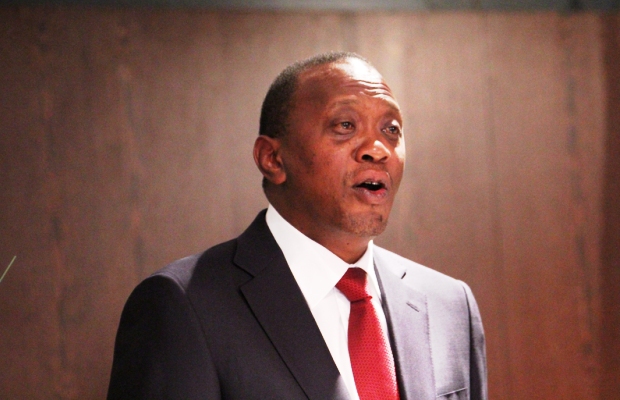
Kenyan president Uhuru Kenyatta (Image Demotix/David Mbiyu)
In 2010 the International Criminal Court (ICC) issued summons for Uhuru Kenyatta and William Ruto, among others, for their alleged role in the violence that erupted following the 2007 Kenyan General Elections. The charges include crime against humanity. Nevertheless, in the elections of 2013, Kenyatta was sworn in as president — Ruto his deputy president — after securing 50.51 percent of the vote in a highly contested but generally peaceful election.
This now means that any movement to evaluate the defendants’ criminal culpability implicates the broader state itself. With Kenyatta and Ruto heading the executive branch of government, the implications of the ICC cases cannot be overstated. But while testing the state’s eagerness to confront the legacy of 2007 these cases offer up a further test; the ability of Kenya’s media institutions, journalists and citizens to freely interrogate the proceedings. Will Kenyatta, Ruto and, by extension, the state let such scrutiny happen in public?
Kenyan legislation in this regard is coloured by tragedy. Following the attacks on Westgate Mall in Nairobi in September 2013, the state moved fast to shore up perceived gaps in legislation that could have enabled the attacks to happen. One of these “gaps” referred to the media, ushering in two pieces of legislation: the Kenya Information and Communications (Amendment) Bill (KICA) and the Media Council Bill. The former, an amendment to the 1998 law, creates a Communication and Multimedia Appeals Tribunal under the jurisdiction of the state-controlled Communications Authority. According to free speech group Article 19, the tribunal has the power “to impose hefty fines on media houses and journalists, recommend de-registration of journalists and make any order on freedom of expression”.
While raising concerns for media bodies looking to cover the ICC cases of Kenyatta and Ruto among others, the Commission for the Implementation of the Constitution (CIC), have pointed out a number of more systemic issues. The 2010 constitution drafted to address the political and ethnic divisions that led to the violence of 2007 established robust protections for freedom of expression. KICA potentially undermines these protections, as CIC explained in a statement:
“Clause 7 of the Bill creates a Communications Authority of Kenya…with some of its board members appointed through a process that solely involves the National Executive and the National Assembly…These clauses violate the provisions of Article 34(3) of the Constitution by leaving the Body responsible for licensing broadcasters under the control of two arms of government, the Executive and the National Assembly.”
Any information deemed too sensitive to be in the public domain during the individual cases draws out KICA as a potential tool for the state to restrict the media’s ability to analyse the cases in an unobstructed manner.
The punitive measures outlined in KICA are not to be sniffed at. According to Charles Onyango Obbo of the Daily Nation: “The Sh20 million penalty against a media house that violated several provisions of the new Bill or the Code of Conduct for the Practice of Journalism, is again among the highest a tribunal can hand out in Africa.” A further provision states that media houses will face punitive measures if 45 percent of their coverage is not deemed “local”. The is a potential hindrance for media bodies looking to analyse the ICC cases – how local is The Hague?
Clause (37) of KICA goes on to state that the tribunal may “accept an anonymous complaint concerning an issue of public interest”. This inability for media bodies to identify its accusers opens the process up to manipulation. Can the tribunal determine that protecting Kenyatta and Ruto is in the public interest? When members of the tribunal are selected at the discretion of the National Executive, it is a possibility.
In the context of the ICC cases, this has created a perfect storm in terms of media freedom. Media houses face disproportionate measures, while their governance is outlined by a body at the discretion of both the executive and legislative branches of government – the former facing interrogation from both the ICC and the media.
It’s too early to tell what will happen and what powers will be invoked, but there have already been warning signs. A case was thrown out after it was alleged that a key witness had received a bribe from the defendant and questions remain regarding similar allegations in the case against William Ruto. Does this represent a collective desire to withhold information? The acts of alleged bribery are by no means definitive, but to skew proceedings, it would be the place to start.
And the next step? Media bodies must surely be holding their collective breath because, while they have not used them yet, KICA offers just the tools the state may need.
This article was posted on 14 February 2014 at indexoncensorship.org
7 Jan 2014 | News, Religion and Culture, Turkey
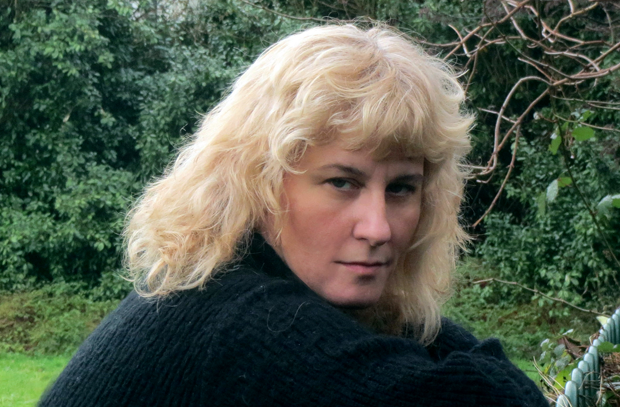
Meltem Arikan
In the days after the Gezi Park protests, Turkish playwright and author Meltem Arikan found herself at the centre of a government-led hate campaign that left her fearing for her life.
Arikan, now living in the United Kingdom, left Turkey because of the vicious and sustained campaign against her on social media and TV. She was subjected to a continuous barrage of brutal verbal abuse and rape and death threats. The attacks were fronted by Turkish politicians who accused her, and the people behind the production of her play Mi Minor, of being the architects of the Gezi Park demonstrations. The campaign was targeted and persecutory, “like a witch hunt in the 15th century” and members of the public were encouraged by politicians to create Twitter accounts and join the action against her.
This was not the first time that the government had tried to silence her. Arikan’s 2004 novel Stop Hurting my Flesh tells the story of women’s lives that have been left devastated by experiences of sexual abuse and incest. The novel was banned by the government accusing it of “destroying the Turkish family order, offending the Namus (honour) of the society, arousing sexual desire in the readers and disturbing the order of society by inducing fear within women, by using a feminist approach.”
Arikan was interviewed by Index on Censorship Head of Arts Julia Farrington.
Index: How did censorship of your novel affect you?
Arikan: When you experience censorship or a ban you don’t feel fully comfortable about the things you produce. You always have the feeling of “what’s going to come out of this now?” I have already discovered that when my work connects with real lives, I get into trouble.
When they banned my novel, I felt so furious, pure fury. Really. And after that I started a lot of campaigns. Before my novel if you said the word “incest” on TV you would be fined. But the act of incest itself was not punished at all. And you couldn’t open a case on incest because there was no law against incest. They only had child abuse but they are totally different things. My campaigns contributed to the word being accepted, and the law has changed as a result of these campaigns. Later I was awarded the ‘Freedom of Thought and Speech Award’ by the Turkish Publishers Association. But none of this stopped my fury. And then I understood that people are actually comfortable with the way things are. And that when I try to talk about something uncomfortable, people think that I am paranoid, or exaggerating so I stopped. And I started to focus on the world as a whole through social media.
Index: What started your interest in social media?
Arikan: When Wikileaks published the data cables, it shook the male dominated world order. Seeing that world leaders were powerless to stop Wikileaks from fearlessly publishing data cables, excited me very much. Turkish press did not pay enough attention to what was happening around the world. That’s why I started to follow the developments from world press and social media. I started using my Facebook and Twitter accounts more, to inform the people in my country about the happenings. I was not interested in social media as much before, but afterwards I spent most of my time sharing information. I got quite obsessed. People even wrote tweets to me to say ‘have some sleep, you need to sleep’ because I wanted to be awake when people started tweeting in US due to the time difference.
Index: How did this time spent on social media influence the writing of Mi Minor?
Arikan: For two years in social media around the time of Arab revolutions, and the Occupy movement, I felt, received and perceived what was happening around the world. I witnessed how social media gave a platform for people to share their personal stories or give information by using Twitter, broadcasting with their mobile phones using Ustream, live-stream when traditional media was silent. After I got involved in social media I didn’t care about individual countries anymore because I came to realize that interactions on social media happen regardless of the borders of distances, languages, nations, religions or ideologies, and this inspired me to create a play. It was all about the situations and events happening all around the world. Later I shared the script of Mi Minor with people from various countries. A friend from US read my play and said, this is just like US. Then during the rehearsals a friend said that it resembles Korea and another said that it was just like Turkmenistan. This was exactly what I wanted, that it was perceived by people from different countries as their own country.
As a writer it was important to be able to understand what kind of a change was happening and seeing the free flow of information and how people’s perception was changing. During that time I realised we are in a transition period from analogue to the digital world. And I was interested to see how the perception was changing, especially to see where young people’s perception was heading and how it affected the relationship between people and government.
As a woman and writer not just using the social media, but becoming aware of the kind of impact it has had, and using it to develop an art piece to make others aware of the transition we are in – all this has changed my life completely.
Index: In what ways is Mi Minor a ‘social media’ play?
Arikan: Mi Minor was a play that was set in a country called Pinima: freedom in a box deMOCKracy. During the play the audience could choose to play the President’s deMOCKracy game of the or support the Pianist’s rebellion against the system. The Pianist starts reporting all the things that are happening in Pinima through Twitter, which starts a Role Playing Game (RPG) with the audience. Mi Minor was staged as a play where an actual and social media oriented RPG was integrated with the actual performance. It was the first play of its kind in the world.
It was written to be located and performed anywhere in the world and everywhere the show would be live streamed online through Ustream and online audience would influence the action as much as the real live audience.
The actual audience could stand along side the actors, they could use their smart phones during the play to tweet, take photos and share them online in order to show the world what was happening in the fictional country Pinima. At the same time the online audience would do the same by following everything from the Pianist’s Ustream in English, which she starts from the beginning of the play. This created another platform for the actual audience and the online audience to interact with the hashtag #miminor on Twitter. In every performance there were digital actors who would be ready in front of their computers as well as the actual actors. Together they would make the play happen. On every level, the audience was made to make a choice as to which side they were going to be in Mi Minor?
We created a promotional website for Pinima that introduces you to the politics, geography and culture of this small fantasy state. I chose a lot of silly rules from other countries. I researched ridiculous laws around the world, and selected some of them, exaggerated and changed them and put them in the play.
Examples of laws and regulations from Mi Minor: There will no longer be treble sounds and the key of E on the pianos. A masterpiece of design, these brand new pianos will be down to a size that they could be carried in the pockets; President hasn’t slept for 48 hours and he listened to the telephones of people whom he randomly chose. The President declared that this shall be done by him once a week. In his declaration, he underlined that in every country; the telephones are being listened to, however they do it behind closed doors. It’s never announced to the public whose telephones are listened to. Whereas in our country what the President is doing, in the name of democracy and transparency, should be set as an example to the whole world; The president has decided that only two parties will participate in the elections. He is the presidential candidate for both parties; To protect the solidarity and morality of the family, all curtains in homes must be kept closed while having sex at home. Having sex in cars and other conveyances will be a criminal act. Also from today, bar owners are obliged to provide soup to their customers. Bars that fail to provide soup are hereby prohibited from selling alcoholic beverages; From now on, peacocks will have priority on the roads. To awaken a sleeping polar bear to take its photograph is strictly forbidden, plus, those who disturb frogs and rabbits will be fined.
Index: The play has been translated into English but not yet published. Can you give us an idea of the story?
Arikan: I really didn’t want to tell a story. With Mi Minor I wanted to create a situation in which people, anywhere in the world, could see what they do when they were given the opportunity to change something – do they get involved or do they keep quiet?
Index: And when you performed it in Istanbul what did the audience do?
Arikan: At the beginning, during the first couple of performances the audience mainly kept back. Later, there were some very active women and young people, high school and university students, who would be against the system in Pinima during the performances. In each play there were also those who chose to support the system and showed their respect and love to the President of Pinima. Audience who are used to conventional theatre chose to sit in the stalls and watch the action. They didn’t get so involved as the others. I must say, that those who are not aware of the digital world couldn’t get properly involved with the play but those who are aware of it enjoyed every minute of the play and took action using their imaginations.
Index: How did the online audience behave, interact? Did the anonymity and separation made the online audience more or less radical?
Arikan: Using the digital media tools gave the both digital and actual audience another platform to express themselves about what they perceive or experience in the Pinima world during the play. And as far as I observed, the anonymity and separations made them more radical all around the world.
Index: Some pro-government media have claimed that the play was designed as a rehearsal for the demonstrations in Gezi Park.
Arikan: When I read the accusations on some pro-government newspapers and later watched how it was taken to an extreme level on TV programs, I was shocked. In my play my intention was to criticise the patriarchy and perception of the analogue world all around the world. Even though all the countries in the world are being ruled by different leaders, even though it seems like every country has a different system of its own, I believe there is only one domination that exists and that is the Patriarchy.
When I was researching for Mi Minor [in 2011] I did everything I could so that the play wasn’t associated with Turkey, or the particular situation of Turkish politics, or any other actual country. It was a fictional dystopia. Mi Minor is an absurd play and it is too worrying to see how absurdity can be accused of being responsible for the reality of what happened in Gezi Park.
And the most interestingly worrying is that these accusations are still on-going. I wrote an absurd play and now my life has become more absurd then my play.
Index: One of the icons of the Gezi Park demonstrations was a woman in a red dress and the pianist in the Mi Minor wears a red dress. And someone took a piano into the Taksim Square. Is this a coincidence?
Arikan: One of the icons of Gezi Park demonstrations being the woman in red dress and the revolutionary pianist with red dress in my play Mi Minor is a coincidence. When I was writing the play, I was criticized by many for choosing to put a piano at the Pinima square. When they said it would be ridiculous to have a piano at the square, an instrument such as guitar or violin would be much better; I strongly stood against it and refused to change it. During the Gezi Park demonstrations I was surprised to see a piano being brought to the Taksim Square on TV. But then months later I was literally shocked when I saw the picture of another piano in the middle of the protests in Ukraine.
On the other hand Oscar Wilde says, “…life imitates art far more than art imitates life.”
As a woman writer, for three years I tried to understand the transition period from analogue to the digital world and I wrote many articles about this subject. After writing articles about this transition period to digital world, I decided to write a play to convey my vision to society as well. Today I’m seeing how one after the other my predictions in my articles and in my play are coming to life.
When I was writing Mi Minor, I have recognised that the younger generation who are widely perceived to be wasting their time in front of their computers and therefore apolitical, could, if given a platform to express themselves, become political and resist a the oppressions of the analogue system together as women and men. That’s why I created the characters in the play called The Teenagers who joined the pianist in the revolution. During the performances I have witnessed that young people, high school and university students were the most active members of the audience. When I look at what happened during the Gezi Park demonstrations I can clearly see how right I was. Unlike everyone else, I had no difficulty understanding the behaviour of these digital teenagers and young adults who were peacefully resisting the authorities out on the streets and parks as well as social media without any attempt of violence, without any leadership.
Even before writing my play in one of my articles I said,
“…We are in a transition from analogue to the digital world. During this transition the common problematic of all sides of the world, from East to the West, from South to the North, is the concept and perception of freedom in societies.
The West is still being dominated with the data and foundations of the analogue world. The transition from analogue to the digital world does not just involve the technological developments but also involves the change in the perception of people. Even though, the West says, “yes” to this transition on technological developments, -just like the East- it says “no” in terms of social and psychological developments of this transition…”
Also, at the time I wrote this article, the news about Snowden hadn’t been leaked and the global debates about surveillance hadn’t started yet.
So my question that I would like to see debated: Would you be potentially guilty if you can foresee what could happen in the world?
This article was posted on 7 Jan 2013 at indexoncensorship.org
2 May 2013 | In the News, Newswire
GLOBAL
Report: World Media Freedom At Low Point
Media freedom throughout the world declined last year to its lowest point in almost a decade, according to a new report from Freedom House, a U.S.-based democracy-monitoring organization. (Radio Free Europe)
CANADA
Harper Government muzzles scientists
The Harper government is facing an investigation by the Federal Information Commissioner’s Office concerning allegations of the censorship of Canadian scientists. (The Canadian)
CUBA
No freedom of speech in Cuba despite easier foreign travel
The Castro government’s easing of foreign travel restrictions on Cubans has not led to greater freedoms on the island, a leading dissident said yesterday. (Free Malaysia Today)
INDIA
No consensus on sex, violence and censorship in Bollywood
Getting directors, producers and activists into a room to figure out Indian cinema’s connection to violence toward women, rape and crudeness in society can be like a family gathering. People shout, get angry and fail to solve fundamental problems because they can’t agree on anything. (Reuters)
LIBYA
Voices in Danger: In Libya, Gaddafi’s media suppression lingers
Though Gaddafi is gone, the tools he used to stop Libyan journalists attacking him are still being used. (The Independent)
The New Libya Is Free, if You Don’t Count the Jailed Journalists
Being a journalist under the autocratic rule of Libyan dictator Moammar Qadhafi was an exercise in choice: between promoting state propaganda and spending time in jail. Now that NATO has toppled the regime, Libya is a little better at letting reporters practice their trade. But the press in Libya is by no means free. (Wired)
SOUTH KOREA
S. Korea ranks higher in terms of press freedom in 2013
How free is the press in South Korea? Well, according to the U.S.-based human rights organization Freedom House’s latest report, Korea’s level of press freedom increased this year ranking sixty-fourth out of 196 countries. (Arirang News)
SRI LANKA
World Press Freedom day, Uthayan and Freedom of Expression in Sri Lanka
This year, World Press Freedom Day focuses on themes that are particularly relevant to Sri Lanka. “Safe to Speak: Securing Freedom of Expression in All Media” and focuses on safety of journalists, combating impunity for crimes against freedom of expression, and securing a free and open Internet as the precondition for online safety. (Ground Views)
TRINIDAD
Libel laws to be amended
Prime Minister Kamla Persad-Bissessar will today take a note to Cabinet to amend the laws to ensure that no journalist can be jailed under section nine of the Libel and Defamation Act for the malicious publication of any defamatory libel. (Trinidad Express)
UGANDA
We should protect freedom of expression in all media
World Press Freedom Day is celebrated every May 3 to celebrate the fundamental principles of press freedom and to honour journalists who have lost their lives in pursuit of their profession. (Daily Monitor
UNITED KINGDOM
Don’t give politicians final say on changes to press regulation system, say public
Most members of the public do not want to see politicians interfering in a new system regulating the press, new research suggests. (The Telegraph)
UNITED STATES
Black pastor uninvited from speaking at college for criticizing Obama
Rev. Kevin Johnson, senior pastor of Bright Hope Baptist Church in North Philadelphia and alumni of the famed Morehouse College in Atlanta, was scheduled to speak at the school until he criticized Barack Obama in an op-ed at the Philadelphia Tribune. As a result of that op-ed, The Blaze reported Tuesday, Johnson was uninvited by the school. (Examiner.com)
In First Amendment Case Over Afghan War Memoir, Justice Department Asks Judge to End Lawsuit
The Justice Department has asked a federal judge to conclude that a former Defense Intelligence Agency officer “has no First Amendment right to publish the information at issue” in a memoir he penned at on his service in the war in Afghanistan. (The Dissenter)
Texas House OKs measure mitigating defamation lawsuits
The Texas House has passed a bill allowing publishers to mitigate the effects of libel lawsuits if the party affected by a mistake doesn’t request a correction or retraction. (SFGate)
2 May 2013 | Uncategorized
GLOBAL
Report: World Media Freedom At Low Point
Media freedom throughout the world declined last year to its lowest point in almost a decade, according to a new report from Freedom House, a U.S.-based democracy-monitoring organization. (Radio Free Europe)
CANADA
Harper Government muzzles scientists
The Harper government is facing an investigation by the Federal Information Commissioner’s Office concerning allegations of the censorship of Canadian scientists. (The Canadian)
CUBA
No freedom of speech in Cuba despite easier foreign travel
The Castro government’s easing of foreign travel restrictions on Cubans has not led to greater freedoms on the island, a leading dissident said yesterday. (Free Malaysia Today)
INDIA
No consensus on sex, violence and censorship in Bollywood
Getting directors, producers and activists into a room to figure out Indian cinema’s connection to violence toward women, rape and crudeness in society can be like a family gathering. People shout, get angry and fail to solve fundamental problems because they can’t agree on anything. (Reuters)
LIBYA
Voices in Danger: In Libya, Gaddafi’s media suppression lingers
Though Gaddafi is gone, the tools he used to stop Libyan journalists attacking him are still being used. (The Independent)
The New Libya Is Free, if You Don’t Count the Jailed Journalists
Being a journalist under the autocratic rule of Libyan dictator Moammar Qadhafi was an exercise in choice: between promoting state propaganda and spending time in jail. Now that NATO has toppled the regime, Libya is a little better at letting reporters practice their trade. But the press in Libya is by no means free. (Wired)
SOUTH KOREA
S. Korea ranks higher in terms of press freedom in 2013
How free is the press in South Korea? Well, according to the U.S.-based human rights organization Freedom House’s latest report, Korea’s level of press freedom increased this year ranking sixty-fourth out of 196 countries. (Arirang News)
SRI LANKA
World Press Freedom day, Uthayan and Freedom of Expression in Sri Lanka
This year, World Press Freedom Day focuses on themes that are particularly relevant to Sri Lanka. “Safe to Speak: Securing Freedom of Expression in All Media” and focuses on safety of journalists, combating impunity for crimes against freedom of expression, and securing a free and open Internet as the precondition for online safety. (Ground Views)
TRINIDAD
Libel laws to be amended
Prime Minister Kamla Persad-Bissessar will today take a note to Cabinet to amend the laws to ensure that no journalist can be jailed under section nine of the Libel and Defamation Act for the malicious publication of any defamatory libel. (Trinidad Express)
UGANDA
We should protect freedom of expression in all media
World Press Freedom Day is celebrated every May 3 to celebrate the fundamental principles of press freedom and to honour journalists who have lost their lives in pursuit of their profession. (Daily Monitor
UNITED KINGDOM
Don’t give politicians final say on changes to press regulation system, say public
Most members of the public do not want to see politicians interfering in a new system regulating the press, new research suggests. (The Telegraph)
UNITED STATES
Black pastor uninvited from speaking at college for criticizing Obama
Rev. Kevin Johnson, senior pastor of Bright Hope Baptist Church in North Philadelphia and alumni of the famed Morehouse College in Atlanta, was scheduled to speak at the school until he criticized Barack Obama in an op-ed at the Philadelphia Tribune. As a result of that op-ed, The Blaze reported Tuesday, Johnson was uninvited by the school. (Examiner.com)
In First Amendment Case Over Afghan War Memoir, Justice Department Asks Judge to End Lawsuit
The Justice Department has asked a federal judge to conclude that a former Defense Intelligence Agency officer “has no First Amendment right to publish the information at issue” in a memoir he penned at on his service in the war in Afghanistan. (The Dissenter)
Texas House OKs measure mitigating defamation lawsuits
The Texas House has passed a bill allowing publishers to mitigate the effects of libel lawsuits if the party affected by a mistake doesn’t request a correction or retraction. (SFGate)
