Russia: Press freedom violations August 2019

[vc_row][vc_column][vc_column_text]

Index on Censorship’s Monitoring and Advocating for Media Freedom project tracks press freedom violations in five countries: Azerbaijan, Belarus, Russia, Turkey and Ukraine. Learn more.

[/vc_column_text][vc_custom_heading text=”27 Incidents” use_theme_fonts=”yes”][/vc_column][/vc_row][vc_row][vc_column][vc_column_text]

Senator’s security assaulted Ren TV filming crew

31 August 2019 – Ren TV reporter Evgeniya Mogilevskaya filed a complaint with the police against Irkutsk senator Vyacheslav Markhaev accusing him of an assault, Ren TV reported.

According to the reporter, she was interviewing the senator and asked him about his alleged ties with gambling businesses when an aide of the official started to push her and cameraman Klimkin away, trying to prevent them from filming. 

At the same time the private security of the senator started twisting arms of Klimkin and tried to grab his camera. Mogilevskaya tried to film it with her phone, when Markhaev himself grabbed and twisted her arm and released the reporter only after she pointed out that they were being filmed by security cameras.

Links: 

http://ren.tv/novosti/2019-08-31/zhurnalist-ren-tv-obratilas-v-sk-posle-napadeniya-senatora-marhaeva?fbclid=IwAR0ZhB-R_gF4CIpMYR8vVxFwGPNojixmXL-3PFraApwCi61nbQ-i6b-ZWVA   

Category: Physical Assault/Injury

Source of Violation: Government/State Agency/Public official(s)/Political party

Editor-in-chief of “MK in Peter” accused of pushing policeman with a baby pram 

29 August 2019 – Maxim Kuzahkmetov, the editor-in-chief of “MK in Peter”, was visited by child protection officers after a state-run local newspaper published a defamatory article accusing him of “pushing a policeman with a baby pram”, Lenizdat reported. 

Kuzakhmetov said he was amused by the speed with which the guardianship officers reacted to the fake article published on 21 August 2019 in the Ekateringofskiy Vestnik, while a more serious journalistic publication can’t get government attention that fast. 

Links:

https://lenizdat.ru/articles/1156178/?fbclid=IwAR0N5LShj393p1y4h7-4yrkI9V4seaq7ZIK0VieRJr77Pc2H3L-Kuk_73dI

Category: Intimidation; Offline Defamation/Discredit/Harassment/Verbal Abuse

Source of violation: Police/State security; Government/State Agency/Public official(s)/Political party; Another media

Roskomnadzor blocks Krot website because of interview with stoic

29 August 2019 – Roskomnadzor, the Russian state media regulator, blocked the Krot website because it published an interview with stoic philosophy professor Massimo Pigliucci, Krot reported in its Telegram channel. 

The page containing the interview with Pigliucci, of City College of New York, was included on Roskomnadzor’s “black list” on 30 July on the basis of the law “About Information”. It is thought that the block occured because Pigliucci made comments on suicide: he mentioned that ancient stoics approved suicide and gave some examples of it. 

Krot said that they did not receive any warnings before the blocking and due to its use of https protocol, the whole website was blocked, not just one page. 

“We received no warnings, of course, but even if we did, there is no sense in talking to those who harass Russian people for love to Epictetus and Seneca. Due to this, we declare that we are not going to delete anything”, editorial team of Krot said.

Links: 

https://zona.media/news/2019/08/29/krtstk?fbclid=IwAR25rA-i_7pjmF0wyr-8VvqRHYYQM83-W2UUfL9Sun8GZwp9PDfgyqZp6Es

https://t.me/breakonthrough/543

Category: Legal Measures

Source of violation: Government/State Agency/Public official(s)/Political party 

Anti-LGBT group threatens St Petersburg journalist with murder

27 August 2019 – Anti-LGBT group Pila sent an email with murder threats to Vitaly Bespalov, a St Petersburg-based journalist, who is the editor of LGBT website Parni PLUS, Bespalov said in a Facebook post. 

Pila demanded Bespalov kill photographer Maxim Lapunov, who published the information about the tortures of gay men in Chechnya or pay 1 million rubles ($15,000); otherwise Pila threatened to kill Bespalov by the end of the year. 

The email also said that the murder of LGBT-activist Elena Grigorieva, who was killed in St Petersburg on 22 July 2019, was also ordered by Pila. 

Bespalov said that he tried to file a complaint about the email through a police website, but couldn’t do it due to system errors.

Links: 

https://www.facebook.com/vit.bespalov/posts/1345337482283845

https://lenizdat.ru/articles/1156166/?fbclid=IwAR2BA4CA_dd4NzVlm3YHKxkgOjW5p-m-ifAnk9KPXYXacByUJRNP52jA9wY

https://www.facebook.com/vit.bespalov/posts/1345337482283845

Category: Intimidation

Source of violation: Criminal organisation

Courts in Moscow barred journalists from covering trial on mass protests

27 August 2019 – Journalists were barred from reporting at the Tverskoy district court in Moscow for two days while trials of people arrested during mass protests against the disqualification of independent candidates for Moscow city parliament were taking place, MBH Media reported. 

The journalists were not allowed to enter the floor where the trial was going, instead they were forced to go down to the ground floor. An MBH Media reporter was told that the journalists can not enter the floor because of a “court decision”. 

The journalists were barred from covering the trial on the mass protests in the same way at the Meschansky and Presnensky district courts also in Moscow. 

Links: 

https://mbk-news.appspot.com/news/perekrili/

https://zona.media/news/2019/08/27/again?fbclid=IwAR1bQGr6yOq-gfXgNZGAygTIcJaCrpNmuXufhQGhcrEKo2-A4eXLSX9AszI

https://meduza.io/news/2019/08/26/moskovskie-sudy-blokirovali-etazhi-gde-rassmatrivayut-moskovskoe-delo-ne-puskayut-ni-pressu-ni-rodstvennikov?utm_source=facebook.com&utm_medium=share_fb&utm_campaign=share&fbclid=IwAR2YTvROqlmScqql0i0PNPRLvbXNxvKuF3cSubNntr8YVHaleffLuftuKoQ

Category: Blocked Access

Source of violation: Court/Judicial

Journalist summoned for questioning for video parody on Krasnoyarsk governor

27 August 2019 – Journalist Dmitry Polushin was summoned to the investigative committee because of a video parody of Alexandr Uss, the governor of the Krasnoyarsk region, in which Uss’ speech was matched with video from Bunker movie about Adolf Hitler, Polushin said in a Facebook post. 

According to the journalist, the Investigative Committee summoned for questioning not only him, but other people who reposted his video parody on the governor. The video titled “Movie and the Germans. Planning meeting at the governor Uss’s office” was made by Polushin and first published on 18 July on the YouTube channel KrasNews. The video, in which Hitler was scolding his generals, was matched with the speech of Uss scolding his aids because of the recent scandal with the region’s Accounts Chamber’s head Tatyana Davydenko, who was fired after the interview in which she revealed that Krasnoyarsk officials are not capable of tackling wildfires in the region. In 2018 fires caused damage of 4 billion rubles (over $60 million) in the region. 

Links: 

https://zona.media/news/2019/08/27/hitler?fbclid=IwAR23GXhYMPJJdSdAFQx1qMpC1j9-dw5NG5HLluQDfA0_L4Ep_L5GdD2wMlU

https://www.facebook.com/photo.php?fbid=2528584507206686&set=a.738879889510499&type=3&theater

https://www.youtube.com/watch?v=qM6PhMIcbbs&feature=youtu.be

Category: Arrest/Detention/Interrogation

Source of violation: Police/State security

Kisilevsk mayor accused local journalist of talking to the city residents “without permission”

26 August 2019 – Maxim Shkarabeynikov, the mayor of Kisilevsk in the Kemerovo region, accused Nataliya Zubkova, a reporter working for local online media outlet Novosti Kiselevska, of interviewing city’s residents without permission, Tayga.Info reported.

 “Recently, the gatherings of the residents happened more often, which were organised by an editor of online media outlet Natalya Zubkova…In violation of the federal law, she doesn’t notify the local government about public gatherings, therefore putting herself and the residents to a danger”, Shkarabeynikov said in his letter to the city prosecutor Alexey Trefilov. 

Zubkova was reporting on the city’s communal problems and interviewing residents of different districts. She was the first one who reported on such problems as an  underground fire near residential buildings. 

In February, around 200 residents of Afonino village came to meet her to tell her about charcoal dust in potable water. Police and ambulances were present at that meeting, which Zubkova believed was organised by the city government to show “the preparation for the public gathering”. 

Zubkova believes that the mayor’s demands are unlawful. 

Links: 

https://tayga.info/148410?fbclid=IwAR3HZSgzPWr1J3E-zDeGVyEQEEJ6nem9uEA9gFMjlMMIrsjPJ8Raebsw_X4

Category: Intimidation; Blocked Access

Source of violation: Government/State Agency/Public official(s)/Political party

Mediazona reporter David Frenkel detained in St Petersburg

24 August 2019 – David Frenkel, a reporter and photographer with Mediazona, was detained in St Petersburg while covering a protests against the silencing of homophobic crimes, Mediazona reported. 

According to Frenkel, police initially told him that he was detained for jaywalking, but later in told that he was detained “for the propaganda of untraditional sexual relations”. Once at the police station, the journalist was formally charged with disobeying police, allegedly because he refused to go to a police van. 

Links: 

https://zona.media/news/2019/08/24/david

https://meduza.io/news/2019/08/24/v-peterburge-zaderzhan-korrespondent-mediazony-david-frenkel?utm_source=facebook.com&utm_medium=share_fb&utm_campaign=share&fbclid=IwAR3aLJgjVUlUrjesP13N6T7ZGfVgvX6EK0G2Mz2sF1o0sbexlb4yYdk0tlE

Category: Arrest/Detention/Interrogation

Source of violations: Police/State security

Orenburg Election Committee files a complaint with police over a journalist’s phone call 

23 August 2019 – The Orenburg Election Committee filed a complaint with police over a journalist call, Echo Moskvy in Orenburg reported. 

A reporter for Echo Moskvy in Orenburg called Oxana Karnashenkova, deputy of the village parliament of Svetlisnkoye, introduced himself and told the deputy he would be recording the telephone conversation. At the end of the discussion, Karnashenkova asked the reporter to call her back to confirm some information. 

Karnashenkova said that she didn’t know who was calling her and said that the journalist said that he was a member of the election committee. She filed a complaint to the police. The election committee also asked the police to check the complaint. 

Links: 

http://echo-oren.ru/2019/08/23/78978?fbclid=IwAR17Y0viLp3_jP5tNfdFd8nsnOH3Bagg9FDiMSgRmE7UMrJtQS-8BNpDAmQ

Category: Subpoena / Court Order/ Lawsuits

Source of violations: Police/State security; Government/State Agency/Public official(s)/Political party

Chita.ru editor-in-chief was questioned by police after the complaint from local deputy

22 August 2019 – Ekaterina Shaitanova, the editor-in-chief of local news agency Chita.ru, was questioned by police because of a defamation complaint from a local deputy Yana Shpak. 

That same day, Chita.ru published the second part of the investigation on redistribution of signatures between candidates for the post of head of the region, providing evidence that signatures for another candidate were illegally assigned to Shpak and her registration was therefore unlawful.

 “I explained [to the police] that I don’t see any signs of defamation, but see an excellent journalistic work”, Shaitanova said. 

Links: https://www.chita.ru/news/134310/?fbclid=IwAR2P7ZzbtadBnWTzYJAqmbhDw9LuGgOyb9UCqA8PnmRnxTX8yWcuiZR0vds

Category: Arrest/Detention/Interrogation

Source of violation: Police/State security; Government/State Agency/Public official(s)/Political party

FSB colonel files third complaint against newspaper

21 August 2019 – Sergey Sorokin, a colonel with the State Security Service (FSB) filed a complaint against local newspaper Yakutsk Vecherny for the third time, Mediazona reported. 

Last year Sorokin twice filed a complaint against the newspaper to Roskomnadzor, the  Russian state media regulator, about the disclosure of his personal data: First, when the newspaper published a news article about Sorokin beating a pensioner; Second, when the newspaper published a news article on winning a lawsuit filed against the media outlet by Sorokin. 

This year Yakutsk Vecherny published an article about the pressure on the newspaper from law enforcement, mentioning Sorokin’s actions as one of the examples. Sorokin filed a complaint on the disclosure of his personal data again. After that, Vitaly Obedin, the editor-in-chief of the newspaper, was summoned for questioning to Roskomnadzor. He called the incident “pure bullying” from the law enforcement authorities.  

Links: 

https://zona.media/news/2019/08/21/plkvnksrkn?fbclid=IwAR3dVoEMe2OfeA_ezTpdYBbkjVcM29Fwif0-BFmxnWKETloW1p_L9py1N

Category: Subpoena / Court Order/ Lawsuits

Source of violation: Known Private Individual; Police/State security; Government/State Agency/Public official(s)/Political party

The death of Togliatti journalist investigated under “Incitement to Suicide” article

16 August 2019 – Police opened a criminal case under the article 110 of the criminal code of Russia (“Incitement to Suicide”) to investigate the death of Togliatti journalist Mikhail Kurakin, Volga.News reported. 

Kurakin, died on 17 July, leaving a note “I don’t know why, but seems like I have serious problems”. 

Kurakin was believed to be the author of Telegram-channel “Komitet”, which was publishing critical comments on the local authorities, business and law enforcement. 

Links: 

https://volga.news/article/513340.html?fbclid=IwAR1YFKDJDEEL9qDRqL5arlkSkHEP06Bpyas2vFPT1x06uzNRuDXCoL5dt98

Category: Death/Killing

Source of violation: Unknown

Novaya Gazeta reporter barred from reporting on Great Terror mass grave 

14 August 2019 – Employees of the state run Russian Military History Society attempted to expel Irina Tumakova, a reporter with independent Novaya Gazeta, from Sandarmoh forrest, where a mass grave containing victims of 1936–1938 Soviet purges  were uncovered, on the grounds that the journalist may have American citizenship, Novaya Gazeta reported.

Later the same day, when Tumakova was reporting from the scene, two men approached her, introducing themselves as a district policeman and a migration service officer. They said that they received a call about an American citizen being in the grave zone and asked Tumakova to show her passport. 

The journalist showed her Russian passport and was asked if she had a second citizenship. Tumakova answered that she had not and asked what would be wrong if she had. The men said there would be nothing wrong, however, they stayed at the scene and kept preventing Tumakova and two other journalists from the independent website 7×7 from doing their work, particularly barring them from taking photos of the graves. 

Earlier this summer, Russian Military History Society has started a new excavation in Sandarmokh, trying to prove that the mass graves were not of the victims of the Soviet political repressions of 1937-1938, as independent historians say, but Soviet prisoners of war who were shot by the invading Finns in 1941-1944.

Links: 

https://www.novayagazeta.ru/news/2019/08/14/154331-korrespondenta-novoy-popytalis-udalit-s-mesta-raskopok-v-sandarmohe-pod-predlogom-amerikanskogo-grazhdanstva

https://www.newsru.com/russia/15aug2019/sandarmoha.html?utm_source=share&fbclid=IwAR3d_XE3_BJwJz54P7uIVWXIRrCZPJzljRBldwgUXZBGERR-kn35n9kcvJo

Category: Blocked Access

Source of violation: Police/State security; Government/State Agency/Public official(s)/Political party

Deputy governor of Khakasia sues media outlets for reporting on his conflict with his driver 

13 August 2019 – Konstantin Kharisov, the deputy governor of the Khakasia region, said that he filed a defamation lawsuit against media outlets that reported on a conflict with his own driver, Leninzdat reported. 

Kharisov didn’t specify what media outlets he sued. 

News agency Agentstvo Informatsionnykh Soobshcheniy (AIS) published an article saying that Kharisov’s driver kicked him of the state-owned car because of the official’s rudeness. Later the article was republished by other local media outlets. 

The mentioned driver at first said that media exaggerated the circumstances of the conflict. But later the government of Khakasia published a press release, saying there was no conflict at all. 

The head of AIS, Alexandr Bortnikov said that he is confident about the truth of the information about the conflict that the agency published.

Link: https://lenizdat.ru/articles/1156109/?fbclid=IwAR0WE9juky0McAPvSaiC7BwTbOCV6V-m6aLRWzHCDkM38bPHy4CZdMVPBr8

Category: Subpoena / Court Order/ Lawsuits

Source of violation: Government/State Agency/Public official(s)/Political party

Dozhd ordered to remove article alleging state deputy had ties with criminal 

13 August 2019 – Independent broadcaster Dozhd was ordered by a court to remove an article from its website.

The Belgorod court ordered the removal of the piece, which alleged that state deputy Andrey Skoch had connections to criminal kingpin Shakro Molodoy. 

Links: 

https://meduza.io/news/2019/08/13/dozhd-po-resheniyu-suda-udalil-statyu-gde-deputat-andrey-skoch-upominalsya-v-svyazi-s-delom-shakro-molodogo

https://tvrain.ru/teleshow/vechernee_shou/skoch-457141/?fbclid=IwAR3vqF1wRMzaCSDhNQdKB0AstG7NmsnAl4rOTyjincEt9nLKHT-YBmpQrlI

Category: Subpoena / Court Order/ Lawsuits

Source of violation: Court/Judicial

Roskomnadzor falsely accused Ekaterinburg local media of lacking age-restriction mark

12 August 2019 – The Russian state media regulator, Roskomnadzor demanded Ekatrinburg local media outlet It’s My City mark their articles with an age restriction marker, proving the lack of such markers with screenshots, in which the marker was obscured by Windows calendar, TJ reported. 

The founder of the media outlet, journalist Dmitry Kolezev said he is going to sue Roskomnadzor. 

Links: 

https://tjournal.ru/news/110976-rkn-chtoby-dokazat-otsutstvie-na-sayte-it-s-my-city-vozrastnogo-cenza-perekryl-ego-na-skrinshotah-kalendarem-windows

https://t.me/kolezev/5138 

Category: Subpoena / Court Order/ Lawsuits

Source of violation: Government/State Agency/Public official(s)/Political party

Chelyabinsk journalist was shot in the head from air gun

12 August 2019 – Yuliya Zyabrina, journalist with Cheyabinsk local newspaper Obshchestveniy Zashchitnik (Public Defender) was shot in the head with an air gun outside her house late in the evening of 8 August, Interfax reported. 

The journalist was hospitalised with the head injury. Zyabrina believes that the attack was connected to her professional activity. 

Links: 

https://www.interfax.ru/russia/672445

Category: Physical Assault/Injury

Source of violation: Unknown

State sponsored hackers organised a phishing attack on independent journalists

12 August 2019 – Journalists working for investigative media outlets The Insider and Bellingcat became targets of sophisticated phishing attack allegedly organised by the hackers with the Russian state security service, Roskomsvoboda reported. 

The attack with the use of ProtonMail service was confirmed by the administration of this Swiss protected email service. 

ProtonMail said the attack was unsuccessful. ProtonMail and Bellingcat believe that the hackers behind the attack belong to GRU, Russian state security service that was reported to have a special hackers division. 

Links: 

https://roskomsvoboda.org/48832/?fbclid=IwAR3RbSbnOSIMKRAJ7OTomo5TvlAxG7xIf-vFYNZD_YQFKFe9Sz131ivlM2k&_utl_t=fb

Category: DDoS/Hacking/Doxing

Source of violation: Police/State security; Unknown

At least 24 journalists detained during mass protests in Moscow and St Petersburg

10 August 2019 – Ahead of the mass rally against the disqualification of independent candidates for local election, police broke into the headquarters of opposition leader Lyubov Sobol in Moscow and started a search, detaining all the journalists who were present in the offices. 

Alexey Korostelev, a reporter with the independent broadcaster Dozhd, said that police pushed him down to the floor and then made him and three other journalists stand next to a wall for about 2 hours. Among the detained journalists were Maxim Kardopoltsev and Ernest Arutyunov, who also work for Dozhd; Timur Olevsky and Sergey Korsakov, a reporter and a cameraman working for Current Time TV (a project of Radio Free Europe/ Radio Liberty) and Anastasiya Olshanskaya, a reporter of MBH Media. All the journalists presented their press-cards and editorial assignments, but the police ignored them, taking away the journalists’ mobile phones and taking photos of their documents.

Police also raided the studio of YouTube-channel Navalny Live, forcing 10 media professionals to lay face down on the floor. Among the detainees were Alexey Shuplyakov, Egor Albitskiy, Alexey and Oleg Yaovlev, Alexandr Lukyanenko, Dmitry Nikolenko, Pavel Zelensky, Polina Arkatova and Olga Klyuchnikova. All of them were detained in the studio for 5.5 hours. Police seized their mobile phones and laptops, bank cards and documents. 

According to Navalny Live, Alexey Shuplyakov and the Yakovlev brothers were dragged across the floor, with one of them suffering an injury to their eye; Pavel Zelenskiy was taken ill during the interrogation. All of the detained Navalny Live employees were taken to a police station for interrogation and later released without charges.  

Anton Baev, a journalist with independent online media outlet The Bell, was detained for about an hour while covering protests in the center of Moscow and released after his documents were checked. Alexandra Sivtsova, a reporter with Meduza, said she was brutally pushed by a policeman while covering the protests.

Ekaterina Maximova,the head of the international desk at local broadcaster 360 Podmoskovie, was also detained at the protest and taken to a police department, despite her saying that she was not participating in the rally or covering it as a journalist, but happened to be there by chance. Maximova was asked whether she knows many foreign journalists working in Moscow and who of them support or criticise president Putin. After that, police offered to let her talk to a representative of Agora, a human rights organisation, but she said she was questioned again by some suspicious people in plain clothes. The head of Agora ater denied that the organisation’s representatives participated in the questioning.  

In St Petersburg, Ekaterina Khabidulina, a reporter with ZAKS.Ru and Novaya Gazeta, was detained while covering the mass rally, despite having a big armband saying “Press” and a visible press-card hanging from her neck. She was taken away from the protest to a police van, where policemen checked her documents and later released her. 

According to the Professional Union of Journalists and Media Workers, Lilit Sarkisyan, reporter with Novaya Gazeta and unnamed reporter with Kommersant were also briefly detained for a documents check and taken to a police van for a “prophylactic talk”.  

Polina Antonova, reporter of Forpost, was also detained while covering the protests.   

Category: Arrest/Detention/Interrogation

Source of violation: Police/State security

St Petersburg journalist assaulted, pepper sprayed 

9 August 2019 – An unknown individual assaulted photojournalist Georgiy Markov, hitting him in the head and using pepper spraying against him. 

Markov said he believes that the goal of the person who assaulted him was to intimidate him. Markov said the main told him: “‘So what would you do to me, f***ing journalist; we will find you all’”. 

The journalist said he decided not to file a report to the police, noting that he receives a lot of negative comments on social media, but no direct threats. The assault happened on the night before a Saint-Petersburg rally against the disqualification of independent candidates for local parliament.

Links: 

https://lenizdat.ru/articles/1156105/

Category: Physical Assault/Injury

Source of violation: Unknown

Factory director accuses local newspaper editor of extremism

9 August 2019 – Natalia Kuznetsova, editor-in-chief of newspaper Vestnik Goroda Otradnogo, told a state deputy that Andrey Kichaev, general director of local factory Remetall-C, was making allegations of extremism against her in retaliation for her paper’s coverage, Zasekin.ru reported. 

The paper had previously published a series of articles on environmental problems, allegedly caused by Remetall-C. 

Kuznetsova was told by police that Kichaev filed a complaint against her, accusing her of transferring money “to terrorists somewhere abroad”. Kuznetsova was summoned for questioning. Kuznetsova also said that the similar defamatory rumours were published by the local government-run newspaper Rabochaya Tribuna. 

Links:

https://zasekin.ru/edition/obshhestvo/27151?fbclid=IwAR217fLXct_ZpcQDQNAfoXbjHc4ZFP-aWR6XYfDHyTeKVkpzTiHecXX13qE

Category: Intimidation

Source of violation: Known private individual(s)

Rosneft security service allegedly spied on Baza journalists

8 August 2019 – Independent media outlet Baza said it learned from its  sources that the state oil and gas corporation Rosneft’s security service was allegedly spying on Baza journalists, checking information on their computers daily and surveilling their phone calls and texts with the help of the latest technology provided by the state security services. 

Baza says its journalists have also noticed that their batteries were draining much faster than normal, experienced connection issues, and their VPN services started turning off randomly. Their sources mentioned that the surveillance intended to find out whether anyone had ordered a Baza investigation into head of Rosneft Igor Sechin’s latest real estate deals. 

In July, Baza published an investigation revealing that Sechin was building two new houses worth $270 million in the luxury village of Barvikha near Moscow. In a statement published on their website, Baza noted that no defamation lawsuit came from Sechin. “Their tool is provocations, but we’re ready for them”, the editorial board wrote.

The press service of Rosneft refused to comment on the accusations.

Links: 

https://baza.io/posts/4bd338c2-0920-46cb-b3ab-68277a7dfadd

https://tvrain.ru/news/baza_zajavila_o_slezhke_sluzhby_bezopasnosti_rosnefti_za_zhurnalistami-491178/?fbclid=IwAR1ld6cYjkkbQV4yFfQGotqyfhHK0i8VLIJHusr7t8xkS-XMDyNKMOs5fOc 

Categories: DDoS/Hacking/Doxing

Source of violation: Corporation/Company

St Petersburg media outlet Fontanka significantly amended report on campaign

7 August 2019 – Local website Fontanka significantly amended a report on a candidate’s campaign for governor, Porebrik.Media reported. 

The initial text was published on 6 August, describing the experience of reporter Maria Karpenko, who had worked as a promoter handing out leaflets on the streets about the  campaign, which is backed by the deputy governor Alexandr Beglov. On 7 August, the text was amended to remove mention of payments to “volunteers” for leafleting, as well as a direct quote from Beglov’s headquarters on state funds provided for the campaign. 

In the initial text, Fontanka said that it had obtained the document called “instructions” for promoters with explanations how to respond to residents’ questions, saying that two sources in Beglov’s office confirmed the document was original. In the later text, Fontanka said that the reporter did not have such a document and removed several quotes from those instructions, for example, the mentioning of opposition politician who was criticising Beglov and the mentioning of the road collapse due to heavy snow last winter and who the administration should be blamed for it. 

The name of the reporter also was removed from the text, which Porebrik.Media explains as a possible wish of the author herself as the result of the editorial changes she disagreed with. 

Links

https://porebrik.media/2019/08/07/fontanka-beglov/?fbclid=IwAR3OxwAr5XVMxJxPMNyFLJywzw1wFPTCnYFEThRqPHI-4Sbcuq73syNzNsY

https://zona.media/news/2019/08/07/fontanka-cut-cut-cut?fbclid=IwAR3e_HgT6aXqfyScuBEglwTr8mAHMgOr-_okr9lFieNqYjrlUKwJagepwpk

Category: Censorship

Source of violation: Employer/Publisher/Colleague(s)

At least eight journalists detained at mass protests in Moscow

3 August 2019 – Vladimir Romensky, reporter with independent broadcaster Dozhd, was detained at Pushkinskaya Square in the center of Moscow while covering a mass protest against the disqualification of independent candidates to Moscow city parliament, Dozhd reported. 

According to Romensky, he was detained when he gave a branded microphone to his colleague. Police searched the reporter’s backpack and found his accreditation and editorial assignment. Romensky, who had been taken to a police van, was released, but soon after he was detained again and taken to a police station. He was later released without any charges.

Elena Vanina, a reporter with independent business newspaper Vedomosti, was also detained at Pushkinskaya Square and taken to a police van. She and other detainees were taken to a police station and later released without any charges. 

Snob reported that its reporter Nikita Pavlyuk-Pavlyuchenko was also detained while covering the protests, he was released after showing his press credentials multiple times. Mediazona reporter Anastasia Yasenitskaya also said she was briefly detained despite showing a press-card.

Among other detainees were Dutch journalist Joost Bosman,MBH-Media reporters Alexandra Semenova and Alexey Stepanov, Baza reporter Petr Koronaev.  

Links

https://meduza.io/news/2019/08/03/na-aktsii-protesta-v-moskve-politsiya-zaderzhala-zhurnalistov-dozhdya-vedomostey-i-snoba

https://www.vedomosti.ru/politics/online/2019/08/03/807992-protesti-v-moskve-iz-za-viborov-mosgordumu-onlain-translyatsiyai

Categories: Arrest/Detention/Interrogation

Source of violation: Police/State security

Tax inspection began after Dozhd conducted live coverage of mass protests

1 August 2019 – The tax inspectorate requested that independent broadcaster Dozhd provide income and expense statements, as well as documents confirming payment of income tax in 2016-2018. 

A photo of the request was posted on Facebook by Natalya Sindeeva, the general director of Dozhd, a broadcaster.

Sindeeva suggested in an interview with Mediazona that the check was not planned and may be connected to the live coverage of mass protests in Moscow. The protests were  against the disqualification of independent candidates to Moscow city parliament on 27 July. During that live coverage, policemen came to Dozhd studio to summon the broadcaster’s editor-in-chief for questioning.

Links:

https://www.facebook.com/sindeeva/posts/10211568644051099

https://zona.media/news/2019/08/01/rain-proverka

https://meduza.io/news/2019/08/01/telekanal-dozhd-soobschil-o-nalogovoy-proverke?utm_source=facebook.com&utm_medium=share_fb&utm_campaign=share&fbclid=IwAR2aYvdib1423lSPQflSCos1pUNBurGYbcW2kTfVtXTPT86Rpygsygu465Q

Categories: Legal Measures

Source of violation: Government/State Agency/Public official(s)/Political party

Police search home of administrator of popular Mordovian social groups

1 August 2019 – Police searched the home of Roman Toder, the administrator of popular Mordovian Vkontakte public groups “Podsluchano v Saranske” and “Podslushano v Ruzaevke”, Idel.Realii reported 

According to Toder, the police did not show any documents and seized all his equipment. Toder believes that the extremism department of Federal Security Service (FSB) may have targeted him because of his professional activity on his Telegram-channels, where he also published articles by Otkrytaya Rossia (Open Russia) which is considered an “undesirable organisation” by the Russian authorities. 

“In those public groups, we write about everything, as we are not going to be patient. Just yesterday there was a post about the need to obtain permission to hold a rally in Saransk on pension reform. We write what will not be shown on TV and what will be kept silent otherwise. We also understand that this is pressure from the law enforcement. I was more indignant at the way they seized the equipment, in which there was also personal information, Toder was reported as saying.

Links: 

https://www.idelreal.org/a/30086912.html

https://ovdinfo.org/express-news/2019/08/01/u-administratora-podslushano-saransk-proshel-obysk-eto-mozhet-byt-svyazano-s?utm_source=fb&utm_medium=share&fbclid=IwAR2B3rF0sNpEd1hr2WQS9N5iri1bYggtRjdCmsnwXe7GHPUtlAGxPSB7Or0

Categories: Intimidation

Source of violation: Police/State security

Moscow court barred journalists from covering open trial on Civil Union

1 August 2019 – A Zamoskvoretsky district court in Moscow barred journalists from covering an open trial on illegal inclusion of the charity fund Civil Union into the list of foreign agents, 7×7 reported. 

The judge’s aide approached journalists and said there there would be no hearing today, but only “preliminary talk, during which attendees and journalists” are not needed. 

Links: 

https://7×7-journal.ru/articles/2019/08/01/otkrytyj-process-za-zakrytymi-dveryami-sud-v-penze-ne-stal-rassmatrivat-isk-grazhdanskogo-soyuza-o-neobosnovannom-vklyuchenii-ego-v-reestr-inostrannyh-agentov

Categories: Blocked Access

Source of violation: Court/Judicial[/vc_column_text][/vc_column][/vc_row][vc_row][vc_column][vc_basic_grid post_type=”post” max_items=”4″ element_width=”6″ grid_id=”vc_gid:1567606474292-90c13e2e-e1fd-2″ taxonomies=”8996″][/vc_column][/vc_row]
Podcast: Border forces with Peppermint, Ariana Drehsler and Steven Borowiec

In the Index on Censorship autumn 2019 podcast, we focus on how travel restrictions at borders are limiting the flow of free thought and ideas. Lewis Jennings and Sally Gimson discuss the latest issue of the magazine and reveal what to expect. Guests include trans woman and activist Peppermint, runner-up of RuPaul’s Drag Race season nine, who opens up about a transphobic experience in a Russian airport; San Diego photojournalist Ariana Drehsler talks about her detainment at a Mexican border and how this compares to a similar situation that happened in Egypt; and Steven Borowiec, a regular contributor to the magazine based in South Korea, discusses the laws surrounding the toughest border in the world.

Print copies of the magazine are available on Amazon, or you can take out a digital subscription via Exact Editions. Copies are also available at the BFI, the Serpetine Gallery and MagCulture (all London), News from Nowhere (Liverpool). Red Lion Books (Colchester) and Home (Manchester). Each magazine sale helps Index on Censorship continue its fight for free expression worldwide.

The autumn 2019 podcast can also be found on iTunes.

Laugh and the World Laughs with Me

[vc_row][vc_column][vc_column_text]


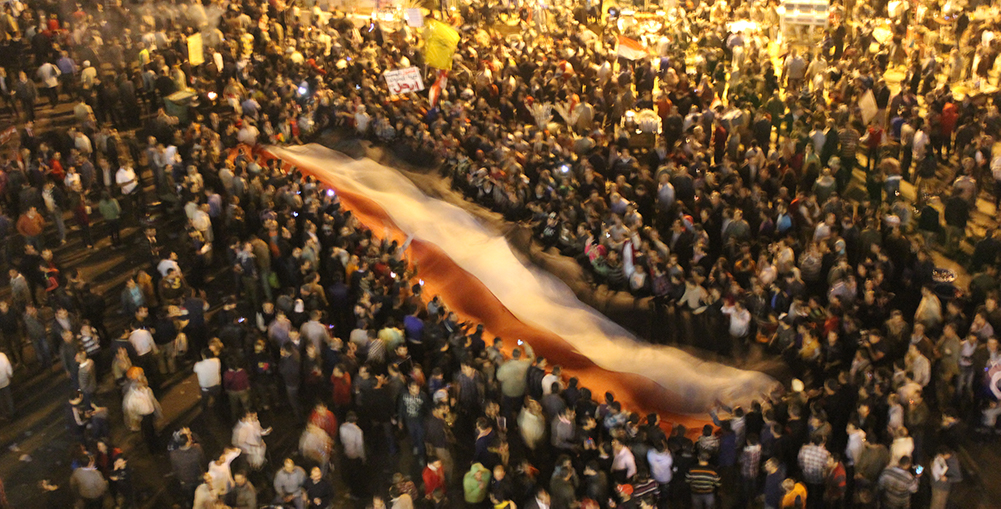
Laugh and the World Laughs with Me is an intimate short story of a young woman who has a schizophrenic brother, set against the backdrop of the Tahrir Square demonstrations, from Egyptian writer Eman Abdelrahim. An extract of this new short story was first published in the summer issue of Index on Censorship magazine. Many of her tales often touch upon taboo subjects like mental health and presents women’s dilemmas in surreal ways. Her main influences when writing stems from Russian greats like Anton Chekhov, Nikolai Gogol and Fyodor Dostoevsky. She says she sees parallels between Egyptian society today and 19th century Tsarist Russia.

Laugh and the World Laughs with Me

By Eman Abdelrahim

The three of them are sitting now watching Al Jazeera on the TV. New events are occurring incessantly. No one trusts what is being said. The father asks Shadi to take his medicine, as the time for that has come round. Shadi goes to his desk. He keeps the strip of tablets in the drawer. Fadwa creeps up behind him surreptitiously. She watches him from behind the curtain at the window. She checks that he is putting the tablets into his mouth now, then swallowing them with water from the tumbler. She hurries back to the sofa, in front of the TV, before Shadi comes back too.

Now Shadi sits down on the sofa next to her. The father gets up to prepare dinner for them. Fadwa talks to Shadi in amazement. She tells him that today is the third since this uprising broke out, and the President has still not appeared. Shadi presses his lips together and looks as if he is thinking deeply, shakes his head with a knowing air and tells Fadwa that he will appear, he’s just got some things to do that he, Shadi, knows all about, and then he will appear. Fadwa gives him a long, thoughtful look, then goes back to watching the TV.

The father calls Fadwa to help him carry the plates of food from the kitchen to the dining table. Fadwa hurries in to him. She knows very well that in reality he doesn’t need her help except to keep any eye on the atmosphere, to make it easier for him to sneak an extra dose of Shadi’s medicine into his food.

After they have eaten dinner, the three of them sit in front of the TV again. The channel is showing a breaking news item on the titles that run along the bottom of the screen. It says that the President will appear in a speech shortly. Shadi springs up and says, “Didn’t I tell you?” to them several times over.

Neither the father nor Fadwa know that Shadi alone knows where the President has been until this moment. Shadi knows that during the past three days the President has been meeting with Rim’s family, he’s been beseeching them to give him his job back, to return the situation back to how it was before and send the people back to their dens.

When the President makes his speech, in which he seems unconcerned about what he is saying, Shadi asserts that Rim’s family has almost succeeded or has actually succeeded in doing it. After the speech, Shadi informs his father and Fadwa knowingly that things will return to normal within the next two days at most.

When the riots, which break out immediately after the speech, begin, the father decides that Fadwa will not go to work the next day. She objects and yells at her father, trying to persuade him that her work is not just a job but is a mission that it is her duty to perform. Shadi, who has slept through the two of them yelling, wakes up. He knows the reason for their quarrel and he screams hysterically into Fadwa’s face. He calls her filthy names. He threatens her, saying “You daughter of a whore, you fucking bitch, you’re not going out or I’ll beat the crap out of you!” Fadwa looks at her father, who is standing there in silence, then tells them both that she will not go out. Shadi asks her to pass him her handbag. So she passes it to him obediently then tells them that she is heading off to bed.

Lying on her bed, Fadwa cries bitterly. It would be possible for her to go out despite their wishes, but she will not do it, not from fear of Shadi, but from fear for him.

Fadwa sees her work as a presenter on BBC Arabic as an important revolutionary mission. It is no less important than what the demonstrators are doing now in Tahrir Square. She sees herself as conveying the truth. She is conveying their voice to the whole world. To tell the truth, she would dearly love to be with the demonstrators now, but she will not do it. She is afraid, not of getting killed in the demonstrations, but of the fear and the anxiety it would inflict on her father and brother.

On the Saturday following the Friday of Rage Fadwa stands at night on the balcony with Shadi. They hear the sound of fighting in the street, followed by firing and women screaming. Shadi is terrified and drags Fadwa inside by her arm. Fadwa cries, she avoids looking into Shadi’s eyes. Against her will, their glances meet and she sees in his eyes the terror that she was afraid of seeing. She will not forgive. That is what she decides at this moment. She will not forgive the President and his regime that have caused her to see such a look in her brother’s eyes, even if the people and the families of the martyrs forgive them for shedding the blood of their sons. She is crying at this moment not from fear of the state of terror and the insecurity, for she has known ever since she saw yesterday’s speech that the President is definitely making people choose between safety with him or chaos without him. But she is crying from fear for Shadi.

Somebody knocks at the door of the flat and their father runs to open it. Karim, the neighbours’ son, is asking the father to come out with them to protect the building from what the thugs are doing. The father closes the door and goes to change his clothes, but Shadi stops him and says that he will go down himself. The father quickly gives in to his wish because in his condition he cannot withstand any fighting. Shadi does indeed go down, after picking up a club to carry with him. Fadwa wants to go with him, she doesn’t know what sort of panic attack he might suffer out there all by himself. Shadi knows what is going on in his sister’s head, so he locks the door behind him with the key. He comes up about every half an hour and asks Fadwa to make him a cup of tea, then goes back down again.

The call to dawn prayers comes. Fadwa feels compassion for her father, who has fallen asleep on the sofa in the living room. She wakes him up so that he can pray, and asks him to go bed afterwards. She tells him that she will not go to bed until Shadi comes back up and she is sure that he is asleep.

At nine a.m. Shadi finally decides that he will not go back down again. He talks to Fadwa about the events of the horrific night. He says that Rim’s family have given the President the job of terrorising the people. He says that they are making use of devils and demons to assist him with that. He says that he himself saw two yellow-coloured devils in an ambulance down there. Fadwa observes that he is trembling violently as he talks. She tries to calm him and asks him to go to bed.

Fadwa watches the TV for about an hour after Shadi has gone to bed. She tiptoes into his room, and tries to check in the dim light that he is finally asleep. She is unable to see his eyes but she can hear his regular breathing, or that is how it seems to her. She leaves his room. She gets dressed. She fetches her handbag from the kitchen cupboard. She opens the door of the flat and slips out quietly, heading for work.

Fadwa doesn’t know that Shadi was not asleep. He is now trembling on his bed. He feels intense fear and he sobs. He heard all Fadwa’s movements outside and he knew she was determined to go out but he was incapable of moving to prevent her. Fear has completely paralysed his limbs.

Fadwa returns home two days later, at midday on Tuesday. (The father) welcomes her without any reproach. He just tells her, appearing on the verge of collapse, that Shadi is in a very bad state and is not sleeping. She tries to appear strong as she tells her father that he must take him to the doctor tomorrow without his knowledge. She suggests that her father should pretend to be ill while she is at work and should ask Shadi to take him to the heart specialist.

Fadwa goes in to Shadi’s office. She finds him sitting with his eyes wide open, clutching a copy of the Qur’an and reading it aloud, repeating verses like a shaykh exorcising a devil. He is trembling incessantly, his lips are blue and the muscles on the left side of his jaw are twitching erratically, involuntarily. She hugs him and he stands there, unable to believe that she is still in the land of the living. He asks her about the rest of the hostages. She informs him that they are fine, and that everything is fine, God willing.

Fadwa doesn’t know that the latest events reminded Shadi of that terrorist incident that he was involved in two years ago. When he was sitting with Rim at sunset on one of the marble seats at the university, everyone around them suddenly fled in a panic. Everyone was screaming and running while Shadi and Rim sat in their place not understanding what was going on or knowing the reason for it. Within minutes the university and its campus was completely empty except for them. Rim felt afraid. Shadi reassured her and he got up to cautiously check the empty campus around them. Shadi saw an indistinct yellow glow that darted past quickly and disappeared, with a hissing sound, behind the trunks of the enormous ancient trees. Sometimes it approached Shadi and at others it moved away. Shadi knew that it was the devil, so he returned quickly to where Rim was sitting, hugged her, closed his eyes and started reciting verses that he remembered from the Qur’an. Until Allah finally saved them.

At that moment the President sent a battalion of the Republican Guard to save Rim and Shadi. The incident was written about in the newspapers the following day, but they did not mention that the Presidential Guard had intervened to exterminate the devil, but said it was to pursue a dragon which had escaped from the zoo and was attacking students on the university campus.

After that, the way Rim treated Shadi would change and their relationship crumbled away. Shadi would follow her surreptitiously to discover the reason, and the day came when he discovered the whole truth. Rim’s family were evil sorcerers. They worshipped the devil, who had chosen their beautiful daughter Rim for himself. And thus the family became bound up with him in a blind allegiance. They used black magic to split Shadi and Rim up, and Rim was the one most affected, bearing in mind that she was living in their den, so she fell totally under their control.

Shadi also knew that the President’s intervention was thus not for the sake of Allah. The President was afraid that Shadi would destroy the devil and burn him. The President made use of Rim’s family in the Country’s Affairs Department. The President could not rule without the assistance of the devil and using black magic against his whole people.

Once Shadi knew all that, he tried to expose it all. The President would unleash one of the dogs of State Security on him, to rape him in the university toilets. After that, Rim’s family would threaten him with raping his sister and setting fire to his father. Only then would Shadi back down and decide to forget about Rim and give her up forever.

On the Wednesday night, the President delivers his second speech. Afterwards, Shadi comments that they must not trust him or sympathise with him. He asks Fadwa to contact her friends in the square and ask them to return to their homes immediately. Shadi is convinced that the President will gather the greatest number of people possible together and will seize them in order to offer them as a sacrifice to the devil. There is indeed a large number of hostages with him now, and the people should all stay in their homes so that Shadi himself can find a means to save them. Fadwa, who notices her father surreptitiously wiping tears from his eyes, indulges him.

On the morning of the following day, Shadi has not slept, as is normal for him these days, he is crying hard, and begs Fadwa not to leave the house. He kneels down to kiss her feet. Fadwa sits on a chair in the living room and tells him that she will not go out, in compliance with his wishes. She takes advantage of his going to the bathroom and leaves quickly and closes the door behind her.

After midday, the events of The Battle of the Camels begin. Fadwa follows them from her workplace and she receives calls and pleas for help from the square. She moves around, she comes and goes, and through all that tears keep pouring down her face until in time she forgets that she is crying.

At sunset, she replies to her father who has called her on her mobile. She hears him start to cry, she takes a breath and says “Have you seen, Dad, what have the heathen sons of dogs done?!… Never mind, Dad, the blood of those people will not be wasted.” Her father’s voice on the other end is chopped. He tells her that he is crying for the sake of her brother who ran away from him when he was trying to take him to the doctor in accordance with the plan that he had agreed with her. Her father tells her that her brother is now missing altogether, he does not have an ID card on him nor a mobile, not even any small change in his pocket. Her father begs her for help, saying that he doesn’t know what he should do. Fadwa takes her handbag and leaves Maspero [the headquarters of the Egyptian Radio and Television Union] in a hurry without even asking permission. She gets in her car and drives around the streets searching for Shadi. She calls her father – who is also out searching – from time to time.

She drives around the main roads and narrow side-streets of Ayn Shams where Rim, his ex-girlfriend, lives. At three in the morning she is driving her car along Rameses Street when a friend of hers calls to tell her about a sniper and countless numbers of deaths and injuries. Fadwa gets out close to the Ghamra metro station and sits on the pavement. She slaps her face several times. Fadwa smacks herself and screams, her tears mingle with her snot in the pitch-dark of the completely empty street. Her mobile rings again. Her father asks her to come back home and tells her that Shadi is now with him and that they are on their way to the hospital.

Fadwa will learn from her father when he returns that the army contacted him to ask him if he knew anyone called Shadi and requested that he head for the airport immediately to take him back. When Shadi arrives, the father finds him barefoot. His clothes are ripped and he has multiple wounds. He will learn from the captain that he was beaten up by people in the Sheraton compound who thought that he was tripping and the army only managed to rescue him from their hands by the skin of their teeth, realising belatedly that he was not fully in his right mind, and were able by some miracle to find out his name and the mobile number that they called him on.

The father gets in the car after helping the exhausted Shadi to stretch out on the back seat. The captain, speaking only to him, says, “Take good care of him, Hajj, it would be a shame to let someone in that state out on his own in these troubled times.” The father wipes away a tear that he can’t fight back and takes Shadi to the hospital.

Neither the father nor Fadwa know that Shadi fled from his father in the morning in order to rescue Fadwa who had been detained with the hostages when she went out that morning. The hostages were all together in the Al-Fateh mosque and the President’s men kept smuggling them from mosque to mosque to prevent Shadi, their saviour, from arriving to rescue them. They finally came to a stop in a mosque in the Sheraton compound and Shadi managed to trick his way into it before it was evacuated at the time of evening prayer. The hostages were praying at the time, pleading with Allah to rescue them from the situation they were in. Shadi interrupted their prayers and freed them all.

He punched some of them, but that didn’t matter because it was all for their benefit at the end of the day. When Shadi was sure they had all left the mosque and were safe, he finally left the mosque himself and was met outside by the dogs of State Security wearing plain clothes. They showered blows down on him, then handed him over to the Republican Guard who in their turn gave him a good beating. When Rim learnt from her family what was happening to him, she asked the devil to call his soldiers off him and threatened that otherwise she would desert him. The devil acquiesced to her command, and requested that the President let Shadi go, so the President immediately gave an order to the Republican Guard to phone his father so that he could come and take charge of him.

A week later, on the Thursday, Fadwa would receive leaked information, in the course of her work, of a report that the President had stepped down that night. She hurriedly finishes her work and decides to go home to listen to the speech with her father so that they can share in the joy together.

At twenty minutes to ten at night, she is downloading a set of the most famous patriotic songs onto her computer at home. She connects a speaker to the computer, and decides that the celebration will be loud and last until dawn.

After the speech Fadwa was trying to stand up, but she just couldn’t. She thought of calling out for her father, then gave up the idea, out of pity for his state of health. She told herself that that was the last thing he needed. She kept quiet, and after several minutes she tried again to stand up, but she still couldn’t do it. She burst into silent tears, after which she fell asleep where she was, sitting on the chair. She felt her father waking her up and leading her to her bed. She wanted to know what the time was but she could not see the clock, she was just focused on the fact that she was actually walking now with her father.

The following day she sees a brilliant video on the computer telling the story of the events of the revolution from the very beginning. She feels deeply moved and tears run down her face. She prays “Oh, Lord, we did what we had to do, now you must play your part, oh Lord.” Her father is sitting in the living room watching terrestrial TV, when she hears a collective roar from the street and the neighbours, like the one you hear when the national team scores a goal in an African Nations Cup match. She runs out to the living room and finds her father prostrate, crying, on the floor. She follows with unbelieving eyes the breaking news titles on the TV reporting the news of the resignation. She starts to jump up and down like a crazy woman. She is yelling, believing that she is trilling cries of joy, but she doesn’t know how to do that so she just keeps on yelling. Her father watches her, sitting on the floor, and laughs amid his tears.

She prances back to the computer and starts playing the patriotic songs that she downloaded yesterday at top volume. She dances, she jumps and carries on shouting, her father comes into her room, smiling at her, dancing with her, then hugs her and cries.

The following day, in the afternoon, when Fadwa has finished getting dressed, she goes out, accompanied by her father, to bring Shadi back from the hospital, where he has spent ten days receiving intensive treatment. Shadi is calm now. His face is bloated from so much sleep and he has almost zero ability to concentrate because of the high dosage of strong medication that he has been on there.

Once home, Shadi sits in front of the TV. He watches for himself the resignation speech, which all the channels are broadcasting on continuous repeat. Fadwa sits at his side. He laughs and points at the man10 standing behind Omar Suleiman and says to Fadwa “Why is that man there doing that?” Fadwa notices for the first time the man with his scowling face and suspicious penetrating glances, and she laughs too.

Shadi asks her about dinner and she tells him that they will get a Kentucky Fried Chicken takeaway tonight. He asks her to order the 68-piece meal for him and she laughs and tells him that she’s ordered the 116-piece one for him, then he laughs too.

After a few minutes they watch the speech which is being shown again. Shadi looks contemplatively at Omar Suleiman then turns to Fadwa saying “Can you believe it? – that Suleiman was using black magic too?” Fadwa looks aghast and the delight drains from her face, indeed her right eye flickers in a nervous movement that she can’t control. Shadi observes her reaction and bursts out laughing and says, “I’m kidding you, you idiot.” She smiles slowly and cautiously, and his giggles grow louder and he repeats it to her, struggling to breathe from his laughter, “I swear to God, and even on the life of our father.” She contemplates his non-stop laughter, then she laughs too, until tears fill her eyes, and the sound of their intermingled laughter fills the space of the living room.

Eman Abdelrahim is an Egyptian short-story writer best known for her collection Rooms and Other Stories. One of her stories appears in The Book of Cairo, published by Comma Press

An extract of Laugh and the World Laughs with Me was first published in the summer 2019 issue of Index on Censorship.

[/vc_column_text][/vc_column][/vc_row][vc_row][vc_column width=”1/3″][vc_custom_heading text=”How governments use power to undermine justice and freedom” font_container=”tag:h3|text_align:left” link=”url:https%3A%2F%2Fwww.indexoncensorship.org%2F2019%2F06%2Fmagazine-judged-how-governments-use-power-to-undermine-justice-and-freedom%2F|||”][vc_column_text]The summer 2019 Index on Censorship magazine looks at the narrowing gap between a nation’s leader and its judges and lawyers.[/vc_column_text][/vc_column][vc_column width=”1/3″][vc_row_inner][vc_column_inner][vc_single_image image=”107686″ img_size=”full” onclick=”custom_link” link=”https://www.indexoncensorship.org/2019/06/magazine-judged-how-governments-use-power-to-undermine-justice-and-freedom/”][/vc_column_inner][/vc_row_inner][/vc_column][vc_column width=”1/3″][vc_custom_heading text=”Subscribe” font_container=”tag:h3|text_align:left”][vc_row_inner][vc_column_inner][vc_column_text]In print, online. In your mailbox, on your iPad.

Subscription options from £18 or just £1.49 in the App Store for a digital issue.

Every subscriber helps support Index on Censorship’s projects around the world.

SUBSCRIBE NOW[/vc_column_text][/vc_column_inner][/vc_row_inner][/vc_column][/vc_row]

Cases against Academics for Peace have become emblematic of the attacks on freedom of expression in Turkey

[vc_row][vc_column][vc_column_text]

Noémi Lévy-Aksu

On 26 July 2019, Turkey’s highest court brought new hope to Turkish academics when it ruled that ten educators who had signed the petition “We will not be a Party to This Crime!” (Bu Suça Ortak Olmayacağız) had been tried unfairly and in violation of their rights. 

The petition, created by the Kurdish rights group Academics for Peace, called on the Turkish government to “prepare the conditions for negotiations and create a road map that would lead to a lasting peace which includes the demands of the Kurdish political movement”. It was signed by over two thousand academics, all of whom were then individually charged with  “conducting propaganda for a terrorist organisation”. The news that the resulting trials might violate the signatories rights sparked a firestorm of controversy in Turkey, where academia is tightly controlled and public discussion of the trials has been constrained.

Noémi Lévy-Aksu is an historian of the late Ottoman Empire and modern Turkey and an  aspiring lawyer. She has French and Turkish citizenship and was working as an assistant professor at Boğaziçi University until 2017, when she was dismissed for signing the Academics for Peace petition, an experience about which she previously spoke to Index in 2018. Lévy-Aksu is currently a teaching fellow at the London School of Economics and she is involved in human rights advocacy and volunteer legal work. She still speaks out about her experience and she spoke with Index’s Sophia Paley about the latest developments in the challenges facing Turkish academics and their students.

Index: Thousands of academics have been dismissed for political reasons since the coup in 2016, most of them were not signatories of the Academics for Peace petition. Why do you think the Academics for Peace cases have gotten so much more international attention than these other cases?

Noémi Lévy-Aksu: The case of the Academics for Peace has become emblematic of the attacks on academic freedom and freedom of expression in today’s Turkey. The sole ground on which academics have been threatened, dismissed and prosecuted is their endorsement of a declaration demanding the end of state violence against civilians and the resumption of the peace process. In this respect, it is one of the multiple cases of criminalisation of critical thought and expression, which target journalists, political actors, human rights defenders as well. The degree of international attention is also due to the efforts of the Academics for Peace themselves, who have established solidarity networks in Turkey and abroad to support the signatories and raise awareness about their cases among academics, human rights defenders and policy-makers.  

Index: What do you think will happen to the petition signatories who have already been sentenced, including those who legally forfeited their right to an appeal?

Lévy-Aksu: Turkey’s constitutional court has ruled that the conviction of the signatories of the Academics for Peace declaration was a violation of their rights and considered that the declaration was within the scope of academic freedom. The court also ordered that a copy of the decision be sent to the lower courts involved in the process. Accordingly, those still under prosecution should be acquitted, re-trials should be held for the ones who have received a final sentence and the regional courts of appeal should reverse the conviction for the cases that are pending on appeal. 

Index: Do you think that the high court’s verdict represents a genuine turning point for academic freedom in Turkey, or is that a false hope? What is the verdict’s significance?

Lévy-Aksu: The decision of the constitutional court is an important landmark, following a few other positive decisions acknowledging the wide scope of freedom of expression in international law and Turkish legislation. In this respect, it brings hope not only to academics, but also to all those who are currently prosecuted for their opinions and statements in Turkey, as well as to the national and national human rights defenders. However, the decision was adopted with a one-vote majority and triggered harsh criticism in the pro-governmental media. Legally, the decisions of the constitutional court are binding on inferior courts, but in the last few years some inferior court judges have proved reluctant to apply those decisions, so the next few months will be crucial to evaluate the legal impact of this judgment.  

Finally, one should not forget that the criminal prosecution of the Academics for Peace is just one aspect of the multiple attacks against academic freedom in today’s Turkey. Arbitrary dismissals and obstacles to critical research remain burning issues, which cannot be solved without a strong political will.

Index: According to pro-state media, 1,071 academics have signed a manifesto condemning the high court’s verdict. Why do you think they would do such a thing? Do they truly believe their fellow academics are promoting terrorism? What is their motivation?

Lévy-Aksu: The “1071” declaration was initiated by a few university rectors, who did not hesitate to stand against the highest court of the country to show their loyalty to the political power. The number “1071” was chosen as a reference the Malazgirt battle in 1071, but it soon appeared that the list was not accurate: some signatories appeared twice, while a few declared that their names had been included without their consent. One lecturer from Istanbul Aydın University even resigned to protest against her name being used without her consent. As for the more than a thousand academics who chose to endorse such a declaration, some are active supporters to the government, while others probably feared sanctions if they answered negatively to their rectors’ requests. In any case, this declaration gives an idea of the atmosphere in these universities, where administrations are completely beholden to political power and the academic staff have little choice but active or passive consent.

Index: How familiar is the Turkish public with the government’s tightening restrictions on academic freedom? What do you believe is their reaction?  

Lévy-Aksu: Turkey’s public sphere is so divided that it is impossible to talk about the “Turkish public”. The case of the Academics for Peace petition has received attention both in pro-governmental and in independent media, from very different perspectives. In the pro-governmental discourse, purges in academia are presented as part of the fight against terror and its supporters, either Gulenists or pro-Kurdish. In that view, state security and the interests of the nation are involved, so academic freedom is not important. On the other hand, restrictions on academic freedom are increasingly criticised in the public sphere, as part of the broader violations of human rights and freedoms in Turkey, but also because of their negative impact on the quality of teaching and research in the Turkish academia.

Index: Speaking of the quality of Turkish higher education, how do solidarity academies differ from other private educational institutions, and what is their role in providing space for open inquiry and critical thought?

Lévy-Aksu: Solidarity academies are alternative structures created by academics who believe that new spaces are needed to resist attacks against academic freedom and critical thought. Many of them, though not all, are signatories to the Academics for Peace petition who were dismissed from their academic positions. Solidarity academies started as local, informal initiatives in various cities of Turkey, such as Eskişehir, Kocaeli, Dersim, Mersin, Izmir, Ankara and Istanbul. Several have now become more organised and obtained a legal status as associations. Contrary to private educational institutions, they are non-profit organisations and they aim to develop innovative approaches to research and teaching, with special emphasis on freedom and critical thinking. While they do not seek to reproduce the conventional academic system, these academies have connections with international research networks and scholars and they make an important contribution to knowledge production in Turkey. As an increasing number of countries witness attacks on academic freedom, such initiatives are vital to develop transnational networks of solidarity and support academics and students affected by these developments.

Index: The Turkish government is increasingly relying on anti-terrorism legislation to attack its political enemies. Why was this specific justification chosen, and how does it change the legal process?

Lévy-Aksu: Using anti-terror legislation to attack political enemies is a strategy that has been used by the Turkish successive governments for decades. As in other countries, anti-terrorism legislation enables the state to limit the rights of the suspects, as illustrated by the anti-terror law adopted after the state of emergency was lifted in July 2018. Inter alia, it allows longer custody periods and defenders and lawyers can be prevented from accessing the case file. Beyond these legal aspects, labelling critical voices as terrorist is a political strategy that aims to shape public opinion and increase support of the government. It presents the prosecution and imprisonment of opponents as legitimate and necessary for the interests of the nation.

Index: The Turkish Constitution includes provisions forbidding “[u]niversities, members of the teaching staff and their assistants” from engaging “in activities directed against the existence and independence of the State, and against the integrity and indivisibility of the Nation and the Country”. This unity of the nation includes linguistic and cultural unity, as shown in the mandate that “No language other than Turkish shall be taught as a mother tongue to Turkish citizens at any institutions of training or education”. Do these guarantees of a unitary ethnostate for Turks influence how the Academics for Peace petition signatories and others were treated? 

Lévy-Aksu: This question raises several important issues which it is impossible to fully answer here. The first issue is related to the tension between academic freedom and national security. This is not specific to Turkey (see for instance the much debated Prevent legislation in the UK), but since the beginning of the republic, regardless of the political orientation of the government (and with a few exceptions), the state’s approach to academic freedom has been particularly restrictive in Turkey.

The second issue has to do with Turkish nationalism and its negative perception of cultural and linguistic diversity, which has constituted an important aspect of the Kurdish issue in the last decades. Education in their mother tongue is a recurrent demand of the Kurdish rights movement. While the government seemed willing to develop a more conciliatory approach to the question during the peace negotiations, since the process collapsed, a rigid version of Turkish nationalism has been on the rise again. As an urgent call to stop state violence against civilians, the declaration of the Academics for Peace was not directly related to the question of cultural rights, but it emphasised the need for a peaceful resolution to a conflict that has lasted for decades. The attacks against the signatories illustrate how, under the current government, human rights and democratic values are treated as subversive when they are used to articulate a critique of the state. Meanwhile, countless citizens have been imprisoned or prosecuted for their political and cultural activities on behalf of Kurdish rights and democracy.

Index: Some observers emphasise the worsening situation for academics after the failed coup of 2016. Do you agree that 2016 was the turning point, or if not, when did these problems begin?

Lévy-Aksu: Attacks on academic freedom did not start with the failed coup of 2016, nor actually with the AKP government. With respect to the Academics for Peace signatories, the repression started right after the petition was released in January 2016. The signatories were immediately the targets of hate speech, the first dismissals occurred, and four signatories were imprisoned. However, after a state of emergency was proclaimed in July 2016, the process dramatically accelerated and the purges targeting Gulenists, the Academics for Peace signatories and other opponents became massive in higher education, as in other sectors. The civil servants dismissed by the emergency decrees did not only lose their jobs: their passports were revoked, and they received a life-long ban on public service. In addition, they continue to face informal practices of black listing and discrimination. This process has been described as “civil death” by some signatories and continue to have dramatic moral and material consequences.

Index: Are you worried or hopeful for the future of Turkey’s education system, and why?

Lévy-Aksu: The current situation of Turkey’s education system is extremely worrying. Successive reforms implemented in primary and secondary education have further disorganised the system, and all levels of education have experienced purges. Higher education has been decimated by these purges. Even though not all critical academics have been dismissed, the space for academic freedom has dramatically shrunk in all universities and many choose self-censorship to avoid possible sanctions. Both the Turkish Higher Education Council and the Scientific and Technological Research Council (TUBITAK) have been discredited by their prominent role in the dismissal and marginalisation of critical scholars. The students are the main victims of this process, both because they have lost many dedicated and inspiring teachers, but also because they are themselves targeted by repression, both at the disciplinary and criminal levels. There are tens of thousands students imprisoned today in Turkey.

Yet, the resilience of civil society in Turkey is remarkable, and international solidarity has enabled a number of critical scholars to continue their research away from Turkish academia. It is my hope that the experience academics have gained of alternative structures such as the solidarity academies and the international networks developed during these years will contribute to transforming the education system for the better when there is a political opening. [/vc_column_text][vc_basic_grid post_type=”post” max_items=”4″ element_width=”6″ grid_id=”vc_gid:1566481960332-5be62801-2970-10″ taxonomies=”8843″][/vc_column][/vc_row]

SUPPORT INDEX'S WORK