19 Mar 2013 | Newswire
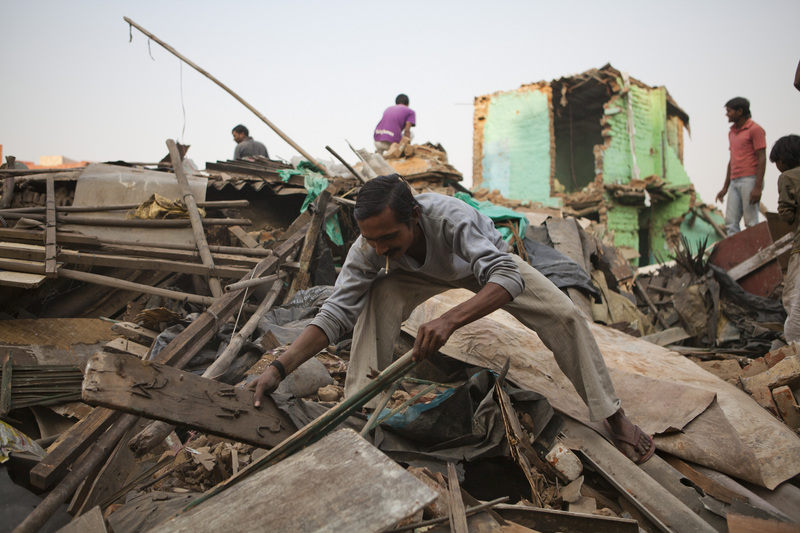
Forced evictions of India’s marginalised Dalit community in Delhi have been carried out by the country’s government
All over the world today, both in developing and developed states, liberal democracies and less free societies, there are groups who struggle to gain full access to freedom of expression for a wide range of reasons including poverty, discrimination and cultural pressures. While attention is often, rightly, focused on the damaging impact discrimination or poverty can have on people’s lives, the impact such problems have on free expression is rarely addressed.
We are not talking about obvious examples of challenges to freedom of expression where repressive regimes attempt to block, limit and inhibit across a population as a whole. Rather we are looking at cases where in both more and less free societies particular groups face greater barriers to free expression than the wider population. Such groups can often be denied an equal voice, and active and meaningful participation in political processes and wider society. Poverty, discrimination, legal barriers, cultural restrictions, religious customs and other barriers can directly or indirectly block the voices of the already marginalised.
Why is access to freedom of expression important? Freedom of expression is a fundamental human right. It also underpins most other rights and allows them to flourish. The right to speak your mind freely on important issues in society, access information and hold the powers that be to account, plays a vital role in the healthy development process of any society.
The lack of access to freedom of expression is a problem that particularly affects the already marginalised — that is, minorities facing discrimination both in developed and developing countries, from LGBT people in African countries, to disabled people in Western Europe. While the scale of their struggles varies greatly, the principle is the same: within the context of their society, these groups face greater barriers to freedom of expression than the majority. If they are unable to communicate their ideas, views, worries and needs effectively, means they are often excluded from meaningful participation in society, and from the opportunity to better their own circumstances. In other words, discrimination is one of the core elements of unequal access to freedom of expression.
Access to free expression is also vital as a development goal in its own right. The connection was perhaps most famously put forward by Amartya Sen in his widely cited book — Development as Freedom — where he argued that expansion of freedom is both the primary end and the principal means of development.
It is striking to note the way in which cultural and religious customs are sometimes used to clamp down on various minorities’ rights to expression and assembly in many countries around the world. Human Rights Watch’s latest world report states that “traditional values are often deployed as an excuse to undermine human rights.” One example of this is the caste system still in place in countries including India, Nepal and Pakistan. This is culturally-based discrimination on a major, systematic scale. A significant proportion of Dalits, (lower-caste people, or “untouchables”) are barred from participation in public life and have a limited say in policies that directly affect them. In May 2008, the Dalit community in the Nesda village in the state of Gujarat attempted to stage a protest after being excluded from the government’s development funds allocation, by refusing to fulfil their historic “caste duty” of disposing of dead animals. The dominant caste in the region promptly blocked the protest through a “social boycott”, forbidding any social or economic interaction between Dalits and non-Dalits. This is only one example of Dalit’s being barred from having a say in development matters directly relating to them. When they attempted to stage a peaceful protest, they were only further marginalised, and their weak economic, social and political position further cemented. It’s a vicious cycle.
Another major area where discrimination has a knock-on effect on freedom of expression, LGBT (lesbian, gay, bisexual, transgender) people’s rights across the globe. They are discriminated against for traditional, especially religious, reasons, with countries like Malaysia and Jamaica claiming that homosexuality is simply “not in our culture” when clamping down on LGBT civil rights. The right to express one’s sexuality is an aspect of the right to freedom of expression both in itself (as an expression of identity) but also because in countries where LGBT rights are not respected, the cultural expression of such rights is often also a political act. Cultural events organised by the LGBT community, such as Pride parades, find themselves banned from exercising their right to freedom of assembly and expression, which happened last October in Serbia and Moldova. LGBT-themed art is also often times censored. One example reported by Index took place in Uganda, where a play about a gay man was banned, and its British producer, David Cecil, jailed and later deported. Countries also adopt laws that ban or circumscribe the discussion of homosexualty. In Russia, the Duma recently voted in favor of a draft law to ban “homosexual propaganda”. The amendment, passed by an overwhelming majority, prohibits the “propaganda of homosexuality” (in a practical sense, the discussion of homosexually) to protect children. The bill would in effect seriously curtail the right to freedom of expression of LGBT people.
Full access to freedom of expression is difficult to achieve in the absence of universal education and literacy. Around the world, illiteracy and inadequate (or non-existent) education hits the poorest hardest — both because education is often private, and because in poor countries where it is provided by the state, the standard of education can be low. Women and girls in the developing world are the groups most affected by illiteracy. There are a number of factors contributing to this, including higher levels of poverty among women, with culture and tradition also playing a significant part. There are still a number of societies around the world where it simply is not accepted that girls should receive education at all, and certainly not higher education. While the gender gap in education has been decreasing over time, in 2009, there were still around 35 million girls out of primary education, compared to 31 million boys. Lack of education is still the single biggest contributing factor to high and persistent levels of illiteracy — making it the most basic barrier to freedom of expression. It stops people from effectively participating in society, as it hinders them from being able to read, write and share written information, and thus fully engage with a range of issues or debates. Women make up the majority (64 per cent) of the nearly 800 million illiterate people in the world today. UNHCHR resolution 2003/42 identified this as a contributing factor to constraints on women’s rights to freedom of expression.
As well as the impact of poverty, discrimination and religious and cultural factors, governments and local authorities often put in place more formal mechanisms which result in significant restrictions on access to freedom of expression for minority groups. This can come in the form of restrictions on minority languages, such as Kurdish in Turkey, or barriers to political participation, such as the Bosnian constitutional ban on Jews and Roma running for high office.
Refugees are among the hardest hit people in terms of facing significant and basic restrictions on freedom of expression. A report by the UN High Commissioner for Refugees on the political rights of refugees stated that they, “…like other aliens, are entitled to the same freedom of expression, association and assembly as citizens.” However, a 2005 report investigating the state of Italian immigration detention centres showed that those detained in Italy were given few opportunities for communication with the outside world. Similarly, allegations of arbitrary deprivation of liberty in Greek detention centres are to be examined by independent experts selected by the UN Human Rights Council later this year. These are only a few examples of fundamental barriers on refugees’ access to fully express themselves. This, of course, cannot be separated from the wider discrimination as outlined above. Refugees constitute a group which often face prejudice and racism. Research from Cardiff University has for instance shown that they do not have the platform to counter the overwhelmingly negative way in which they are portrayed in the UK media. Refugees have universal rights like all other people around the world — states must recognise this and must act to tackle discrimination in all forms.
The barriers to free expression discussed here show why exercising our right to free expression is not as simple as living in a democratic society that broadly respects rights. Barriers that block or inhibit access to freedom of expression exist all over the world, in various forms and to varying degrees. Through being denied a voice, these groups are being denied a fundamental right, are facing barriers to their active participation in society, and, in many cases, are facing additional limits on their ability and opportunity to play a part in improving their own lives. Tackling the barriers from poverty to discrimination to laws that limit access to freedom of expression is vital.
19 Mar 2013 | Uncategorized
Forced evictions of India’s marginalised Dalit community in Delhi have been carried out by the country’s government
All over the world today, both in developing and developed states, liberal democracies and less free societies, there are groups who struggle to gain full access to freedom of expression for a wide range of reasons including poverty, discrimination and cultural pressures. While attention is often, rightly, focused on the damaging impact discrimination or poverty can have on people’s lives, the impact such problems have on free expression is rarely addressed.
We are not talking about obvious examples of challenges to freedom of expression where repressive regimes attempt to block, limit and inhibit across a population as a whole. Rather we are looking at cases where in both more and less free societies particular groups face greater barriers to free expression than the wider population. Such groups can often be denied an equal voice, and active and meaningful participation in political processes and wider society. Poverty, discrimination, legal barriers, cultural restrictions, religious customs and other barriers can directly or indirectly block the voices of the already marginalised.
Why is access to freedom of expression important? Freedom of expression is a fundamental human right. It also underpins most other rights and allows them to flourish. The right to speak your mind freely on important issues in society, access information and hold the powers that be to account, plays a vital role in the healthy development process of any society.
The lack of access to freedom of expression is a problem that particularly affects the already marginalised — that is, minorities facing discrimination both in developed and developing countries, from LGBT people in African countries, to disabled people in Western Europe. While the scale of their struggles varies greatly, the principle is the same: within the context of their society, these groups face greater barriers to freedom of expression than the majority. If they are unable to communicate their ideas, views, worries and needs effectively, means they are often excluded from meaningful participation in society, and from the opportunity to better their own circumstances. In other words, discrimination is one of the core elements of unequal access to freedom of expression.
Access to free expression is also vital as a development goal in its own right. The connection was perhaps most famously put forward by Amartya Sen in his widely cited book — Development as Freedom — where he argued that expansion of freedom is both the primary end and the principal means of development.
It is striking to note the way in which cultural and religious customs are sometimes used to clamp down on various minorities’ rights to expression and assembly in many countries around the world. Human Rights Watch’s latest world report states that “traditional values are often deployed as an excuse to undermine human rights.” One example of this is the caste system still in place in countries including India, Nepal and Pakistan. This is culturally-based discrimination on a major, systematic scale. A significant proportion of Dalits, (lower-caste people, or “untouchables”) are barred from participation in public life and have a limited say in policies that directly affect them. In May 2008, the Dalit community in the Nesda village in the state of Gujarat attempted to stage a protest after being excluded from the government’s development funds allocation, by refusing to fulfil their historic “caste duty” of disposing of dead animals. The dominant caste in the region promptly blocked the protest through a “social boycott”, forbidding any social or economic interaction between Dalits and non-Dalits. This is only one example of Dalit’s being barred from having a say in development matters directly relating to them. When they attempted to stage a peaceful protest, they were only further marginalised, and their weak economic, social and political position further cemented. It’s a vicious cycle.
Another major area where discrimination has a knock-on effect on freedom of expression, LGBT (lesbian, gay, bisexual, transgender) people’s rights across the globe. They are discriminated against for traditional, especially religious, reasons, with countries like Malaysia and Jamaica claiming that homosexuality is simply “not in our culture” when clamping down on LGBT civil rights. The right to express one’s sexuality is an aspect of the right to freedom of expression both in itself (as an expression of identity) but also because in countries where LGBT rights are not respected, the cultural expression of such rights is often also a political act. Cultural events organised by the LGBT community, such as Pride parades, find themselves banned from exercising their right to freedom of assembly and expression, which happened last October in Serbia and Moldova. LGBT-themed art is also often times censored. One example reported by Index took place in Uganda, where a play about a gay man was banned, and its British producer, David Cecil, jailed and later deported. Countries also adopt laws that ban or circumscribe the discussion of homosexualty. In Russia, the Duma recently voted in favor of a draft law to ban “homosexual propaganda”. The amendment, passed by an overwhelming majority, prohibits the “propaganda of homosexuality” (in a practical sense, the discussion of homosexually) to protect children. The bill would in effect seriously curtail the right to freedom of expression of LGBT people.
Full access to freedom of expression is difficult to achieve in the absence of universal education and literacy. Around the world, illiteracy and inadequate (or non-existent) education hits the poorest hardest — both because education is often private, and because in poor countries where it is provided by the state, the standard of education can be low. Women and girls in the developing world are the groups most affected by illiteracy. There are a number of factors contributing to this, including higher levels of poverty among women, with culture and tradition also playing a significant part. There are still a number of societies around the world where it simply is not accepted that girls should receive education at all, and certainly not higher education. While the gender gap in education has been decreasing over time, in 2009, there were still around 35 million girls out of primary education, compared to 31 million boys. Lack of education is still the single biggest contributing factor to high and persistent levels of illiteracy — making it the most basic barrier to freedom of expression. It stops people from effectively participating in society, as it hinders them from being able to read, write and share written information, and thus fully engage with a range of issues or debates. Women make up the majority (64 per cent) of the nearly 800 million illiterate people in the world today. UNHCHR resolution 2003/42 identified this as a contributing factor to constraints on women’s rights to freedom of expression.
As well as the impact of poverty, discrimination and religious and cultural factors, governments and local authorities often put in place more formal mechanisms which result in significant restrictions on access to freedom of expression for minority groups. This can come in the form of restrictions on minority languages, such as Kurdish in Turkey, or barriers to political participation, such as the Bosnian constitutional ban on Jews and Roma running for high office.
Refugees are among the hardest hit people in terms of facing significant and basic restrictions on freedom of expression. A report by the UN High Commissioner for Refugees on the political rights of refugees stated that they, “…like other aliens, are entitled to the same freedom of expression, association and assembly as citizens.” However, a 2005 report investigating the state of Italian immigration detention centres showed that those detained in Italy were given few opportunities for communication with the outside world. Similarly, allegations of arbitrary deprivation of liberty in Greek detention centres are to be examined by independent experts selected by the UN Human Rights Council later this year. These are only a few examples of fundamental barriers on refugees’ access to fully express themselves. This, of course, cannot be separated from the wider discrimination as outlined above. Refugees constitute a group which often face prejudice and racism. Research from Cardiff University has for instance shown that they do not have the platform to counter the overwhelmingly negative way in which they are portrayed in the UK media. Refugees have universal rights like all other people around the world — states must recognise this and must act to tackle discrimination in all forms.
The barriers to free expression discussed here show why exercising our right to free expression is not as simple as living in a democratic society that broadly respects rights. Barriers that block or inhibit access to freedom of expression exist all over the world, in various forms and to varying degrees. Through being denied a voice, these groups are being denied a fundamental right, are facing barriers to their active participation in society, and, in many cases, are facing additional limits on their ability and opportunity to play a part in improving their own lives. Tackling the barriers from poverty to discrimination to laws that limit access to freedom of expression is vital.
11 Mar 2013 | Digital Freedom
The debate over the direction of the web has just started, and contradictory messages that need careful scrutiny are emerging from governments and corporations alike, says Kirsty Hughes
This article was originally published on Open Democracy, as a part of a week-long series on the future digital freedom guest-edited by Index
(more…)
8 Mar 2013 | Uncategorized
Twenty years ago, at the UN Conference on Human Rights in Vienna, an extraordinary group of women activists forced the human rights movement to confont the sexism that had shaped their agenda until that time. The promise of Vienna was that the access to rights enshrined in the Universal Declaration would be made explicit in relation to women and gender.
The conference declaration said: “All human rights are universal, indivisible and interdependent and interrelated. The international community must treat human rights globally in a fair and equal manner, on the same footing, and with the same emphasis.” It went into considerable detail about what this means for women.
However the Vienna Declaration said very little about free expression. Nor was this omission rectified in the Beijing Declaration on Women’s Rights in 1995. The year before, after serving as founding chair of the International PEN Women Writers Committee, I had become President of a new organisation, Women’s WORLD (Women’s World Organisation for Rights, Literature and Development).
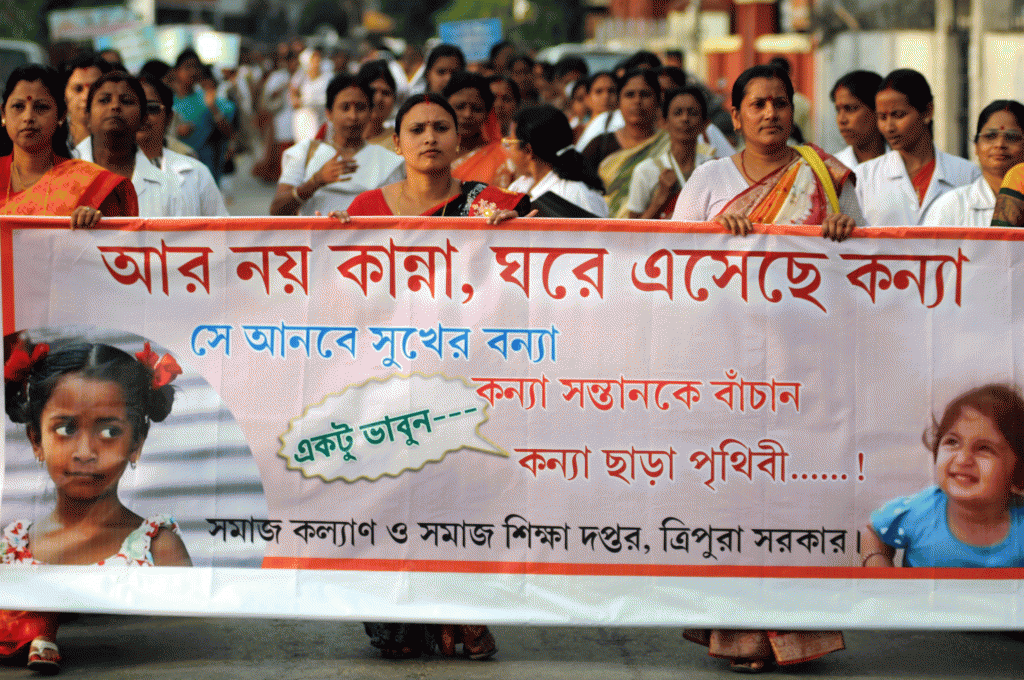
Women hold a banner to ‘Save the Girl Child’ during a 2012 International Women’s Day rally in Agartala
Women’s WORLD was set up to investigate and advocate against gender-based censorship, both formal and informal, and to defend feminist writers. We prepared a document for Beijing called The Power of the Word: Culture, Censorship and Voice, emphasising the importance of voice and thus of women writers to the struggle for women’s equality:
“The subordination of women is basic to all social systems based on dominance; for this reason, conservatives hate and fear the voices of women. That is why so many religions have made rules against women preaching or even speaking in the house of worship. That is why governments keep telling women to keep quiet: ‘You’re in the Constitution,’ they will say, ‘you have the vote, so you have no right to complain.’ But having a voice is as important, perhaps more important, than having a vote. When censors attack women writers, they do so in order to intimidate all women and keep them from using their right to free expression. Gender-based censorship is therefore a problem not only for women writers, but for everyone concerned with the emancipation of women.
“Women writers are a threat to systems built on gender hierarchy because they open doors for other women. By expressing the painful contradictions between men and women in their society, by exposing the discrepancy between what society requires of women and what they need to be fulfilled, woman writers challenge the status quo…[and] make a breach in the wall of silence. They say things no one has ever said before and say them in print, where anyone can read and repeat them.”
As President of Women’s WORLD, I produced an analysis of the Declaration and Platform for Action that came out of the Beijing Conference. While recognising the Platform of Action was a huge step forward in translating women’s issues into the language of human rights, I concluded that it fell short in the area of free expression, for these reasons:
- The Platform of Action did not consider the centrality of voice to female emancipation. It did not mention censorship nor recognise that women’s right to free expression is jeopardised in many parts of the world, and that the silencing of women is a barrier to both development and democracy.
- With the exception of indigenous women, who were seen to have a culture and the right to develop it, the Platform of Action framed culture in negative terms, as something that limited women’s rights rather than as something women make, transmit, and shape.
- The Platform of Action’s main concern with media was in terms of harmful portrayals of women, with some slight emphasis on the need for women to have access to the new electronic media. Nowhere did it mention that free expression is not only a right but the means to protect other rights, nor the social contributions women could make if their voices were not continually suppressed.
Our paper for Beijing said, “While there is no question that indigenous and colonised peoples are under particular cultural assault, all women need cultural rights. We need the time and space and access to means of cultural expression to be able to articulate our own social values. Without attention to culture, sustainable development and real democracy are not possible, because profound changes must necessarily be culture-related. Women’s silence is thus as serious a problem as poverty itself, and is both a cause of poverty and its effect.”
In the years after 1995, Women’s WORLD struggled to raise issues of voice but kept running up against a narrowing of women’s human rights to the issue of violence against women, while we were striving for a more inclusive vision that would connect this violence to culture, religion, economics, power politics, censorship and war. Our work was also affected by a separation within the human rights movement between groups that deal mainly with free expression and the big mainstream multi-issue groups.
This same separation was reflected in the global movement for women’s human rights. For instance, when the Women’s Human Rights Defenders International Coalition released a global report in 2012 on dangers facing feminists in various regions, it did not even think of drawing on the many years of experience of groups that defend writers and journalists, many of whom are women.
In the last few years, the global women’s movement has found itself stonewalled by the rise of religious fundamentalism to the degree that many activists now oppose moves for another UN conference on women, fearing that the gains of the 90s will be undermined.
The UN Council on Human Rights has been a battleground over issues of culture, with a newly religious Russia forming a bloc with many African and Muslim-majority countries, to support a resolution calling for the application of the “traditional values of humankind” to human rights norms. Such “traditional values” are, of course, invoked whenever women, sexual minorities, or religious minorities want equal rights, including the right to free expression.
In the darkness of this backlash against women’s human rights, the UN’s 2009 appointment of Pakistani feminist Farida Shaheed, first as an independent expert and now as the special rapporteur in the field of cultural rights, was one of the few rays of light. In her 2012 report, Shaheed flagged ways in which fundamentalism impinges on women’s exercise of their cultural rights, as when “solo female singing has been banned and restrictions have been placed on female musicians performing in public concerts.”
She linked culture to violence against women, pointing out that when women try to deviate from the dominant culture of their communities or interpret and reshape them, “they often confront disproportionate opposition, including different forms of violence, for acts as apparently simple as choosing who to marry, how to dress, or where to go.”
She has taken a proactive approach to women’s cultural production, shifting the perspective from seeing culture as an obstacle to women’s human rights to ensuring that women have equal cultural rights. Hopefully her work as special rapporteur will help turn back the proponants of the “traditional values of mankind,” and encourage a wider recognition that freedom of expression is critical to equality for women.
Meredith Tax, an American writer and activist, is Chair of the Board of the Centre for Secular Space, a new thinktank based in London http://www.meredithtax.org/
