6 Dec 2012 | Russia, Uncategorized
The gay community is one of the most vulnerable minorities in Russia, and homophobia is one of the country’s most rampant prejudices. According to Levada centre research, around 74 per cent of Russian citizens consider members of the Lesbian, Gay, Bisexual and Transsexual (LGBT) community to be “dissolute” and “mentally retarded”.
 Russian lawmakers seem to agree with this prejudice and plan to pass a federal law “against the promotion of homosexuality”.
The law forbids exposing underage Russians to information about homosexuality and, moreover, about the fact that “traditional and non-traditional relationship(s) are socially equal” (sic). Anyone exposing children under 18 to “homosexual propaganda” should expect to pay the price: LGBT NGOs can be fined up to 500 thousand roubles (10, 782 GBP) and activists up to 50 thousand roubles (1007 GBP).
The law already exists in the cities of Ryazan, Archangelsk and Kostroma. In March it was passed in St Petersburg by United Russia deputy Vitaly Milonov, prompting a furious response from human rights activists and the civil society. The European Parliament says the law “violates freedom of expression regarding sexual orientation”, and the US State Department has called for respect towards LGBT activists in the country.
But the only response they received from Russian authorities was announcing plans to pass the law nationwide; forbidding another gay pride in Moscow and triggering several bizarre examples of the law’s misuse. Here are just a few:
United Russia v Madonna
 Vitaly Milonov came after pop star Madonna, after she used a 9 August concert in the city to speak out against St Petersburg’s anti-gay law. During her performance, Madonna yelled out her message of support to the crowd:
“I am here to say that the gay community and gay people here and all around the world have the same rights — to be treated with dignity, with respect, with tolerance, with compassion, with love,”
The pop star was not only outspoken about gay rights during her trip, she also donned a balaclava and called for the release of Pussy Riot during a 7 August show in Moscow. Milonov’s Ultranationalist associates from the Narodny Sobor organisation filed a civil law suit against Madonna demanding 333 million roubles (about £6.5m ) to compensate for “moral damage” caused by “promoting homosexuality”, arguing that this would cause lower birthrates and subsequently destroy Russia through eroding its military. Milonov’s case was thrown out by Moscow’s district court in St Petersburg on 22 November.
Meanwhile, Milonov is keeping alive the fight against LGBT-friendly pop stars: He has made it clear that minors won’t be making it to Lady Gaga’s 9 December performance in St Petersburg, having warned concert organisers that no one under 18 should be allowed into the concert.
Homosexuality v Field Hockey
The first implementation of the law in St Petersburg happened in May 2012, when gay pride organiser and rights advocate Nikolay Alexeev staged a single picket holding a placard with a quote from iconic Russian actress Faina Ranevskaya:
“Homosexuality is not a perversion. A perversion is field hockey and ballet on ice”.
Alexeev, a professional lawyer, was fined five thousand roubles (approximately £100) for “promoting homosexuality”. The European Court of Human Rights (ECHR) slammed the ban on gay-prides in Moscow, but Russia’s courts have ignored the ECHR’s decision. ECHR is yet to rule its decision on the controversial law.
Nationalists v milk
 Lead by Milonov’s assistant Anatoly Artyukh, the local chapter of Narodny Sobor filed a complaint against a dairy company with the prosecutor’s office in St Petersburg, alleging that its packaging began to feature a rainbow after the city passed the ban in March. The group claims that Vimm-Bill-Dann dairy company promotes homosexuality by producing dairy products with a rainbow — a symbol of the LGBT community — on the packaging. “That’s an open propaganda of vice,” — Artyukh told Interfax news agency, adding that he, together with his fellow activists, will be preventing St Petersburg citizens from buying the company’s products. However, the dairy company denies the allegations, saying that the rainbow is nothing more than a rainbow.
Braces v rallies
Pavel Samburov, one of Moscow’s leading LGBT activists and deputy head of Rainbow Association NGO told Index that it’s unlikely that St Petersburg’s anti-LGBT laws would be passed nation wide by the State Duma. Samburov claims the law aims to “to frighten and discriminate” against members of the LGBT community “rather than focusing on implementing them heavily. “St Petersburg authorities claim 73 people have been fined for promoting homosexuality” but Samburov doubts these statistics, adding “[the] gay community is very united in Russia and is likely to know at least something about each case, but none of us know about the [other] 72 cases, only Nikolai Alexeyev‘s prosecution”.
One of Samburov’s friends was threatened by St Petersburg police after participating in demonstrations for human rights in the city on 1 May — for wearing rainbow coloured braces. He was fined 500 roubles (£10) in the end, not for breaking the gay propaganda law, but for “breaking [the] rules of participating in rallies”. While the application of anti-gay laws has brought about some ridiculous cases, Samburov explained why the law is no laughing matter:
“The law might seem funny in its misuse with Madonna, dairies or others targets, but after it was passed LGBT people in St Petersburg faced more pressure, especially in schools and medical institutions — people were told day by day they were not welcome at work and finally had to quit because they couldn’t deal with such psychological pressure. The other consequence has been that assaults against LGBT people in streets and near gay clubs became more frequent.”
20 Nov 2012 | Europe and Central Asia, Russia
In October a wave of censorship swept the Russian internet prior to the official introduction of a new federal internet blacklist law on 1 November.
Regional authorities targeted internet service providers to block access to websites featuring anti-Islamic, Islamist and Nazi material on the grounds that they were “extremist”. Regional prosecutors targeted websites that allowed access to the video The Innocence of Muslims, an amateur film that attracted Islamist protests worldwide. Regional prosecutors throughout Russia demanded that internet service providers block access to the film in early October. The video was subsequently declared extremist by a Moscow court in the middle of the month.
But prosecutors also targeted websites publishing texts as disparate as Adolf Hitler’s Mein Kampf and a treatise by the medieval Islamic scholar Abu Hamid al-Ghazali, as well as right-wing Russian nationalist material. Among the victims of the trawl are websites run by Jehovah’s Witnesses and conspiracy theorists. Internet Service Providers (ISPs) have also been told to block access to websites giving advice on how to commit suicide and promoting pyramid schemes.
The new national register of banned websites set up by the Federal Service for Supervision of Telecoms, Information Technologies and Mass Communications (Roskomnadzor) has the power to make ISPs block access to websites within three days.
Check back in December for the full list of what was censored in November.
Literature
 16 October Stavropol court restricts access to electronic version of late Russian nationalist historian Yuri Petukhov’s The Russian World Order.
17 October Tver prosecutor announces that website is making available Hitler’s Black Guard, which is on a federal extremist list, and tries (unsuccessfully) to block the website.
18 October Perm prosecutor successfully demands the blocking of websites publishing Hitler’s Mein Kampf.
24 October Liven prosecutor demands block on ISPs hosting of work of nationalist writer Oray Volot.
Suicide
 10 October Stavropol prosecutor demands that ISPs stop access to websites giving advice on how to commit suicide.
20 October Russian supreme court upholds Rostov prosecutor’s 2011 demand that an ISP stops access to websites giving advice on how to commit suicide.
Drugs
 18 October Samara court moves against “legal highs” websites.
15 October Surgat court starts action to prevent the sale of “legal high” drugs online.
22 October Orel prosecutor tries to make an ISP block access to the Wikipedia page on “Russian obscenities” and website advocating use of laughing gas.
Extremism
 1 October-17 October Warnings issued by prosecutors in Astrakhan, Kaluga, Kostroma, Tomsk, Krasnodar, Mordovia, the Jewish Autonomous Region, Samara, Bashkiria, Bashkortostan, Tula, Ivanovo to ISPs providing access to The Innocence of Muslims.
1 October Ipatovsk prosecutor blocks the website publishing text of Abu Hamid al-Ghazali’s Council for Kings, a medieval theological treatise included on the federal list of extremist materials.
1 October Ivanovo prosecutor identifies two Jehovah’s Witnesses’ websites as extremist and issues a warning to an ISP.
3 October Altai prosecutor blocks access to lib.rus.ec internet library on grounds of extremist content.
11 October Vladivostok prosecutor orders ISPs to block access to an allegedly anti-Semitic leaflet.
11 October Irkutsk prosecutor blocks access to an “extremist” website.
15 October Ufa prosecutor starts cases against educational institutions supposedly allowing access to “extremist” materials.
17 October Moscow court declares The Innocence of Muslims to be extremist.
17 October Belgorod prosecutor demands that an ISP restricts access to 14 sites carrying extremist materials.
22 October North Ossetia prosecutor demands ISPs restrict access to 33 sites containing “extremist” texts.
22 October Saratov prosecutor demands 20 ISPs restrict access to “extremist” material.
23 October Nenets prosecutor demands ISPs block access to nationalist websites.
25 October St Petersburg prosecutors demand ISPs restrict access to extremist websites.
Finance
 10 October Nefteyugansk prosecutor demands an ISP stops access to financial services websites it alleges are pyramid schemes.
12 October Tomsk prosecutor demands an ISP stops access to a pyramid scheme website.
Source: Agentura.Ru
Andrei Soldatov is a Russian journalist, and together with Irina Borogan, co-founder of the Agentura.Ru website. Last year, Soldatov and Borogan co-authored The New Nobility: The Restoration of Russia’s Security State and the Enduring Legacy of the KGB (PublicAffairs)
31 Oct 2012 | Russia
Mikhail Afanasyev is a veteran of the libel courts. As one of the few independent journalists in Russia’s Urals he has faced 13 defamation suits in 15 years, and won every one.
Afanasyev edits an online newspaper, New Focus, and reports to Glasnost Defense Foundation — a Russian-based NGO which monitors free expression violations. In 2004 Afanasyev was awarded the Andrei Sakharov award for “Journalism as an Act of Conscience,” in recognition of his reports on poaching and illegal hunting — a favourite hobby for Russian officials, according to Afanasyev.Having faced down numerous attempt by the local authorities to silence his reporting through defamation lawsuits, Afanasyev now faces 15 days in prison another charge, neglecting police orders.
Afanasyev wrote a story for New Focus about a man who went missing in September. The man has never been found but the police arrested two of his friends and allegedly tortured them in an attempt to get them to confess to killing him. They were later exonerated of charges on murder.
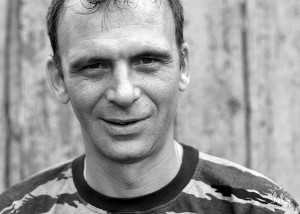 Covering the case, Anfasayev was confronted by a policeman as he shot a video report outside a pre-trial detention centre where one of the men was due to be transported. The policeman was ordered to seize Afanasyev and his brother, who now also faces charges of neglecting police orders.
In a hearing on 24 October, Department of Internal Affairs representatives testified that Afanasyev tried to initiate a fight with the policemen, in spite of evidence to the contrary from the police’s own video recording. The case resumes today (31 October).
In a telephone interview from Abakan, Afanasyev told INDEX about the difficulties of fighting for free expression in provincial Russia.
INDEX: Thirteen defamation lawsuits, and now a charge of ignoring a policemen’s order — what other ordeals have you faced?
Mikhail Afanasyev: I was badly beaten twice in revenge for my articles. And each time I faced defamation lawsuits I managed to win them, but I couldn’t bring the people who sued me to justice: corrupt law enforcement authorities stand together. But life has punished them instead. For example, one of the investigators who conducted the investigation on the defamation case was sentenced to 14 years for a murder.
INDEX: What does freedom of expression mean to you? Why are you still a journalist after all you’ve been through?
Mikhail Afanasyev: No matter how pathetic it sounds, I love my people. Most of them do not know that they can be tortured in police departments or face trumped-up charges until it happens to them personally. I am trying to warn them and prevent these violations of human rights. A journalist should be like a guard dog that protects its people from the authoritarian state. It’s hard. Local advertisers depend on local authorities. Fortunately, my online paper attracted advertisers from Ukraine. That’s how I make my living. I have three small children and I don’t want them to live in such widespread lawlessness.
INDEX: Russian journalists, especially outside Moscow, face intimidation and physical violence. Bringing corrupt officials to justice won’t change the system. What can?
Mikhail Afanasyev: A change of power in Russia. That is why we need free elections. This country lives by the rules of the underworld: that’s my colleagues and I face controversial charges.
19 Oct 2012 | Russia
In July the Russian parliament approved a bill designed to increase the Kremlin’s control of the internet. The new laws grant the government sweeping powers to block access to internet resources.
Russian Wikipedia blacked out to protest the law claiming that it would “lead to the creation of a Russian analogue to China’s great firewall”. Campaigners fear the new rules will lead to widespread censorship. Even though the law doesn’t come into effect until November, Russian internet service providers are already coming under pressure to block internet resources and services.
Here, Andrei Soldatov tells us what Russia censored in September
Click here to find out what Russia censored in October
(more…)
