16 Mar 2011 | Uncategorized
Speaking publicly for the first time in four months, Julian Assange addressed the Cambridge Union on Tuesday. Members waited for hours in a queue around the building; many did not make it inside and watched it on screens elsewhere in the Union.
For legal reasons, the boundaries of Assange’s talk were clearly defined before he began. He would talk only of the leaked cables and not sexual assault allegations.
He barely acknowledged the rapturous applause and seemed drained by his experiences. He began by drawing on Orwell:
“He who controls the present controls the past. He who controls the past controls the future.”
This was the first of a number of lofty allusions which peppered Assange’s rhetoric. He referred to the radical publishers stifled by the licensing system of the 1640s; and Soviet attempts to alter encyclopaedia entries. He described his theme as “the privatisation of censorship”.
His speech focused on political events surrounding the publication of Wikileaks cables. He quoted figures revealed in the Iraq War logs and the Tunisian cables about Ben Ali. Assange praised the online resurrection of Al Akbhar, an Arabic newspaper which had published several Wikileaks cables. It was subjected to Denial of Service attacks and banned by the Tunisian government. Assange described a period where visitors to the newspaper’s website were redirected to a Saudi “sex site”. The publication returned to the internet earlier in the day.
He claimed Wikileaks prevented Joe Biden from maintaining that Mubarak was not a dictator and was critical of America’s relations with the Middle East. He was disparaging about Hillary Clinton’s comments on the role of the internet. Whilst he acknowledged that Twitter and Facebook had played a part in the uprisings, he said that Al Jazeera had been far more influential.
The Egyptian revolutionaries’ handbook explicitly and repeatedly warned against using Facebook and Twitter, he said, following a brutal lesson when previous revolution attempts used these media. He claimed that officials used Facebook to “round up all the principal participants” who “were then beaten, interrogated and incarcerated”. He used this to support his opinion that the internet is “the greatest spying machine the world has ever seen.”
Answering questions following the speech, he said he recognised the importance of the rule of law, but said that there were certain situations where he believed citizens must break the law. The most contentious question concerned the detention of Private Bradley Manning. The Cambridge Union’s president intervened as this did not fall within the strict remit of the talk, but Assange answered anyway.
He explained that Wikileaks operated a technological system whereby sources were unknown, as “the best way to keep a secret is not to have it in the first place”. He expressed his sadness at Manning’s plight and accepted that Wikileaks would have some responsibility if he actually had been a source. He claimed that Manning was arrested following revelations to Wired magazine.
16 Mar 2011 | Uncategorized
Speaking publicly for the first time in four months, Julian Assange addressed the Cambridge Union on Tuesday. Members waited for hours in a queue around the building; many did not make it inside and watched it on screens elsewhere in the Union.
For legal reasons, the boundaries of Assange’s talk were clearly defined before he began. He would talk only of the leaked cables and not sexual assault allegations.
He barely acknowledged the rapturous applause and seemed drained by his experiences. He began by drawing on Orwell:
“He who controls the present controls the past. He who controls the past controls the future.”
This was the first of a number of lofty allusions which peppered Assange’s rhetoric. He referred to the radical publishers stifled by the licensing system of the 1640s; and Soviet attempts to alter encyclopaedia entries. He described his theme as “the privatisation of censorship”.
His speech focused on political events surrounding the publication of Wikileaks cables. He quoted figures revealed in the Iraq War logs and the Tunisian cables about Ben Ali. Assange praised the online resurrection of Al Akbhar, an Arabic newspaper which had published several Wikileaks cables. It was subjected to Denial of Service attacks and banned by the Tunisian government. Assange described a period where visitors to the newspaper’s website were redirected to a Saudi “sex site”. The publication returned to the internet earlier in the day.
He claimed Wikileaks prevented Joe Biden from maintaining that Mubarak was not a dictator and was critical of America’s relations with the Middle East. He was disparaging about Hillary Clinton’s comments on the role of the internet. Whilst he acknowledged that Twitter and Facebook had played a part in the uprisings, he said that Al Jazeera had been far more influential.
The Egyptian revolutionaries’ handbook explicitly and repeatedly warned against using Facebook and Twitter, he said, following a brutal lesson when previous revolution attempts used these media. He claimed that officials used Facebook to “round up all the principal participants” who “were then beaten, interrogated and incarcerated”. He used this to support his opinion that the internet is “the greatest spying machine the world has ever seen.”
Answering questions following the speech, he said he recognised the importance of the rule of law, but said that there were certain situations where he believed citizens must break the law. The most contentious question concerned the detention of Private Bradley Manning. The Cambridge Union’s president intervened as this did not fall within the strict remit of the talk, but Assange answered anyway.
He explained that Wikileaks operated a technological system whereby sources were unknown, as “the best way to keep a secret is not to have it in the first place”. He expressed his sadness at Manning’s plight and accepted that Wikileaks would have some responsibility if he actually had been a source. He claimed that Manning was arrested following revelations to Wired magazine.
24 Feb 2011 | News
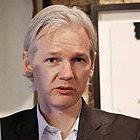
Lawyers for Julian Assange, founder of Wikileaks, are to appeal his extradition to Sweden to face a sexual assault investigation.
Judge Howard Riddle ruled today that the European Arrest Warrant issued by a Swedish prosecutor was valid, and that Assange should return to Sweden to face questioning.
(more…)
15 Feb 2011 | Digital Freedom, Uncategorized
With a crushing majority of 40 in favour, 0 against and 5 abstentions, the Civil Liberties Committee of the European Parliament has voted against a European Commission proposal to introduce mandatory EU-wide web blocking. This comes as a result of a campaign by European Digital Rights, supported by organisations such as the German Association of Child Abuse Victims against Web Blocking and the European ISP Association.
In the year since the original proposal was launched, parliamentarians have grown increasingly concerned by the lack of vision of the European Commission regarding the proposal’s aims. At meeting after meeting, commission representatives and the commissioner herself were unable to provide any evidence that blocking would serve a purpose, they were not even able to be clear on what blocking was meant to achieve.
They started by saying that blocking would “disrupt” commercial child-porn networks, until their own research showed that this is a small and diminishing problem. Then they said it was to stop accidental access, until they were unable to show this was an actual problem or that blocking would help. Finally, they said that it would help victims psychologically — although any policy which leaves abuse images on the internet is hardly likely to do this. The permanent retreat into ever-more facile arguments eventually started grating on parliamentarians who, like the citizens they represent, deserve better. A restriction on the right to communication cannot be based on soundbites and gut reactions.
At the same time, parliamentarians became increasingly aware of the damage that existing blocking systems are doing to both child protection and fundamental rights in those countries where it is already imposed. They saw how countries like Denmark and Sweden create blocking lists outside the rule of law, sometimes leaving whole websites abroad blocked but with no way of even knowing — the accusatory and defamatory blocking page being shown only to people in the countries doing the blocking.
The blocking approach in Denmark, Sweden and the UK breaks every element of the European Convention on Human Rights. It is neither “necessary” nor is it “prescribed by law” in those countries. How can child abuse material have such a low priority that its regulation is the only crime which does not require countermeasures to be laid down in law? Worse still, once the blocking veil is cast thoughtlessly and lawlessly over the allegedly illegal sites abroad and over government inaction to have the websites removed, countries promptly lose the will to take even minimal measures to address the crime. A Danish police official, for example, said in a speech to the German Federal Parliament that they don’t see any need to send reports of these serious crimes to the United States or Russia. Which other serious crime would be treated in this way? Why does blocking destroy the will of governments to treat online child abuse with the seriousness it deserves? Why would child protection organisations ever dream of supporting such a counterproductive measure?
This is the essence of the text agreed by the European Parliament’s Committee on the evening of 14 February. The text demands effective action against the crimes — it demands supervision of the member states’ efforts through a yearly report on their activities. It removes the obligation on member states to introduce blocking and places new measures on member states that insist on blocking in order to at least move in the direction of respect for basic fundamental rights. It chooses concrete child protection measures over symbols, excuses and failure. 14 February… a day to start loving the European Parliament.
Read the European Digital Rights report on web blocking here
Joe McNamee works as Advocacy Coordinatory for European Digital Rights in Brussels (EDRi). He works on issues related to privacy, cybercrime, intellectual property, freedom of information/communication and related topics.
