6 Mar 2008 | Uncategorized

Index on Censorship: I know it when I see it
From Ulysses to Last Exit to Brooklyn, obscenity trials are a benchmark for the limits of cultural tolerance. As the first prosecution of the written word in more than 30 years takes place in the UK, Index on Censorship assesses the landscape.
Are we becoming less permissive than our parents? Is the Obscene Publications Act fit for purpose? Should governments control what we see online to protect our children? Leading commentators on the subject give their verdict.
Anthony Julius and Julian Petley: a discussion on art, obscenity and the law
Read exclusively free here!
John Ozimek: the technology revolution is redefining the boundaries
Tony Bennett: comic books are not just for kids
Julian Petley on the prospects for free speech online
Read exclusively free here!
Marjorie Heins says the Internet is making the law unworkable
Anne Higonnet on why artists are heading for a collision course
Read exclusively free here!
Elena Martellozzo and Helen Taylor assess the impact of child pornography
Seth Finkelstein on the censoring of obscenity online
BBFC film examiner Murray Perkins gives the lowdown
Read exclusively free here!
Also in this issue
INDEX IN IRAQ
Rohan Jayasekera on Iraq’s year of elections
DISPATCHES
Shahvalad Chobanoglu says independent press in Azerbaijan is struggling to survive
Sanjuana Martinez exposes a culture of censorship in Mexico
Sanjana Hattotuwa explains the chilling effect of legislation in Sri Lanka
THE ART OF OFFENCE
Martin Rowson says breaking taboos is the heart of satire
FICTION: CUBA
Ena Lucia Portela ‘The last passenger’
For subscription details and stockists, click here
30 Jan 2008 | Azerbaijan News, News and features
A court in Baku, Azerbijan, has sentenced two journalists to hard labour following their conviction for libel. The charges related to articles they published in 2007 regarding alleged corruption in government circles.
(more…)
16 Jan 2008 | Comment
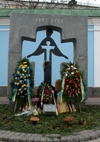 The battle over the legacy of the Ukranian famine threatens to divide the country, writes Michael Foley
So often that which politicians hope will unite their countries does exactly the opposite. The legacy of the famines which devasted Ukraine in the 1930s might do just that. Ukraine’s President Viktor Yushchenko is to campaign internationally for the famine, or the Holodomor, as it is called in Ukrainian, that killed possibly as many as 10 million people in 1932-3 to be recognised by the United Nations as genocide. Mr Yushkenko is hoping to complete his task by November, 2008, to mark 75th anniversary of the Holodomor.
In November last year a law was tabled in the Ukrainian parliament in November making it illegal to deny the Holodomor.
The famine of 1932 and 1933 was a man-made one. Unlike, for instance, the Irish Famine of the 1840s, no crops failed. The Holodomor was the result of Stalin’s farm collectivisation programme. When in 1932 the grain harvest did not meet imposed targets, Communist party activists travelled to Ukraine’s villages and confiscated all the grain and bread, and all other foodstuffs, ensuring starvation. Watchtowers were erected in order to make sure no peasants tried to take a few ears of corn.
The confiscations continued into 1933, with devastating results. It is uncertain how many died, and most Ukrainians knew little of the famine due to the extreme secrecy of the Soviet period, but with records now open and historical investigations taking place, it is believed as many as 10 million people may have perished.
(more…)