30 Jan 2013 | Uncategorized
A former CIA officer was sentenced on 25 January to more than two years in prison for leaking official information to the media. John Kiriakou had released the name of a covert officer to a reporter in 2007 in media interviews which were among the first to confirm the waterboarding of detainees, including al-Qaida terrorist Abu Zubaydah. Defenders say the former officer acted as a whistleblower to the CIA’s use of torture to interrogate detained terrorists, whilst prosecutors said his intention was purely to gain fame and status. He pleaded guilty to violating the Intelligence Identities Protection Act in 2012, the first conviction under the law in 27 years. Kiriakou was initially charged under the World War I-era Espionage Act but swapped charges in a plea deal. The deal meant US district judge Leonie Brinkema was restricted to imposing a two and a half year sentence — which she said she would have extended if she could.

Poster for the play Behzti – Gurpreet Bhatti has faced censorship of another play by the BBC
Human rights defender Alaa Abdel Fattah was arrested in Egypt on 29 January for allegedly defaming a judge. The political activist and 2012 Index on Censorship awards nominee was released on bail by Judge Tharwat Hammad on Tuesday, as part of a wider investigation into allegations against private satellite channels. Charges have been filed by 1,164 judges, who complained that TV station workers had invited guests on air who had criticised the judiciary. Abdel Fattah was charged with incitement against the military in October 2011 during the Maspero demonstrations in which 27 protestors were killed.
Playwright Gurpreet Bhatti said that her play scheduled for broadcast on BBC Radio 4 on 1 February has had lines removed from the script. During Index on Censorship’s arts conference Taking the Offensive at the Southbank Centre on 29 January, Bhatti told attendees that her play Heart of Darkness had been altered by broadcasters. The episode, due to be played on the Afternoon Drama slot, followed the investigation into the honour killing of a 16 year old Asian girl – a case investigators are told to handle sensitively because of her Muslim heritage. Bhatti’s play Behzti was axed from a Birmingham theatre in 2004 following protests from the Sikh community. The playwright denied the BBC’s compliance department accusations that lines were offensive in Heart of Darkness, saying “we live in a fear-ridden culture.”
Germany’s foreign minister said on 28 January that Russia’s draft bill banning “homosexual propaganda” could harm Russia’s ties with Europe. In a meeting on Monday evening, Guido Westerwelle told Russia’s ambassador in Berlin, Vladimir Grinin, that the law violated the European human rights convention and will harm Russia’s image and relationships within Europe. The draft legislation was passed by the State Duma, Russia’s lower house of parliament, on 25 January and prompted protests by the gay community, including a kiss-in protest by activists which was broken up by police on Friday. The law will ban the promotion of homosexuality amongst children and is alleged to intend consolidation of public support for President Vladimir Putin.
On 28 January, Twitter began censoring porn related searches on its video sharing app Vine yesterday, after a six-second porn clip was accidentally made editor’s pick. Searching for terms such as #sex and #porn came up with no results, but users could still access pornographic content if it had been posted under a different hashtag. The social networking site apologised for circulating the video of a graphic sex act on the app launched last week, blaming the slip-up on a “human error”. Vine was introduced to Twitter as a video programme similar to Instagram, where users can upload six second video loops, some of which proving to appeal to a more adult audience. Last week, Apple banned 500px, a photography app with a section dedicated to nudity, from its app store.
29 Jan 2013 | Uncategorized
Indian intellectual Ashis Nandy is facing a police investigation after remarks about underprivileged people made at the Jaipur Literary Festival. Nandy was quoted as saying that “Most corrupt people come from Other Backward Classes, scheduled castes and scheduled tribes.” Nandy later claimed that he had meant that most people prosecuted for corruption were from the lower castes, as they did not have the means to defend themselves. But complaints have reportedly been made to police.
Writers including novelist Hari Kunzru were threatened with prosecution at the Jaipur festival last year after they read extracts from the work of Salman Rushdie, who had been forced to withdraw from appearing at the event following threats.
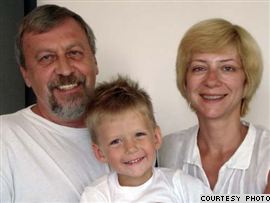
Irina Khalip with husband Andrei Sannikov and son Danil
Belarusian journalist Irina Khalip is to apply to leave the country to visit the UK and Russia. Khalip, who is married to former presidential candidate Andrei Sannikov, is currently subject to a two-year suspended sentence, handed down after a crackdown on opposition journalists and activists in the wake of Belarus’s 2010 presidential election. Her husband has been granted asylum in the UK.
Egypt’s Prosecutor General has ordered the arrest of all members of alleged anarchist group “Black Bloc”.
The newly-emerged Black Bloc, adopting tactics from international anarchist protest movements, and wearing distinctive black hoodies and balaclavas, has been denounced as “barbaric” by Muslim Brotherhood-aligned media. But some commentators have likened the crackdown on the tiny grouping to a panic over heavy metal fans during the Mubarak era.
Philippines Solicitor-General Francis Jardeleza has said that “liking” a libelous post on Facebook could lead to criminal prosecution.
Jardazela’s addmission, during a discussion on the Philippines cybercrime law, prompted one Supreme Court judge to admit that he would now be “reluctant to express [his] view on the web.
17 Jan 2013 | Awards
Kostas Vaxevanis, Greek journalist
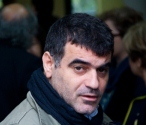 The arrest of Greek investigative journalist Kostas Vaxevanis on 28 October 2012, just days after he published a list of more than 2,000 suspected tax evaders, drew international condemnation.
He was found not guilty of breaking data privacy laws in November 2012, but the Athens public prosecutor subsequently ordered a retrial. If he is sentenced, he faces up to two years’ imprisonment or a fine.
Vaxevanis published the so-called “Lagarde List” of wealthy Greeks with Swiss bank accounts in his weekly magazine Hot Doc in October 2012. The list is named after IMF head Christine Lagarde, who handed it over to her Greek counterpart in 2010 when she was French finance minister.
Successive Greek governments have failed to prosecute a single person on the list or any other high-profile individual for tax evasion. Vaxevanis argues that publication of the list was in the public interest. He told the Guardian: “The country is governed by a poisonous combination of politicians, businessmen and journalists who cover one another’s backs … Had it not been for the foreign media taking such an interest in my own story, it would have been buried.”
Dimitris Trimis, head of the Athens Newspaper Editors Union, told the BBC that the pressure on press freedom in Greece was the most intense of his career. Before Vaxevanis’ arrest two state TV presenters were taken off air after discussing a minister’s response to claims by anti-fascist demonstrators that they had been tortured by the police.
Soon after Vaxevanis’ arrest, journalist Spiros Karatzaferis was detained after announcing he would leak damaging documents about the country’s faltering economy. “The government feels insecure,” Trimis said. The only way it feels it can convince society of its policies is to try to manipulate the media through coercion.
Photo: Demotix / Kostas Pikoulas
Mosireen, Egyptian citizen media collective
 Founded in Egypt in early 2011, the Mosireen Collective sought to support and promote the growing wave of citizen journalism that had emerged in the lead-up to the ousting of Hosni Mubarak, when members of the public captured the protests and police brutality on their mobile phones.
Working as facilitators, producers and archivists, Mosireen provide both online and offline space to share this wave of citizen news and people’s perspectives with the wider world.
Whilst none of the Mosireen founders were journalists by profession – they come from a variety of other disciplines, from urban planning to graphic design and mechanics – they recognised the importance of the independent media voices emerging from the revolution.
Mosireen’s media centre in Cairo is a community-supported space, and although professionals also use the centre, the focus is on providing ordinary people with skills, equipment, and know-how. The collective has since trained several hundred people with the output of their work available to download, stream, screen and distribute for free on a non-commercial basis. Footage from the archive is also regularly screened at Tahrir Cinema, a free open-air cinema off Tahrir Square (pictured). It continues to film the on-going discontent to this day.
Mosireen – a play on the Arabic words for “Egypt” and “determined” – also holds regular public events and talks in its workspace in downtown Cairo. The opportunity for the public to get involved in all aspects of production allows for an unprecedented level of interactivity in the creation of Egyptian history. All of which is in line with another of Mosireen’s objectives: to counter the narratives put forward by state-owned media through the presentation of multiple viewpoints.
Ta Phong Tan, imprisoned Vietnamese blogger
 Ta Phong Tan is one of three Vietnamese bloggers, collectively calling themselves the ‘Club for Free Journalists’, at the centre of a draconian clampdown by the country’s authorities. Vietnam is one of the world’s most restrictive countries for freedom of speech and the press. Only China, Eritrea and North Korea come lower on RSF’s press-freedom index.
Tan (pictured) and her fellow bloggers were arrested in September 2012 and charged with ‘conducting propaganda against the state’ in articles that allegedly ‘distorted and opposed’ the Vietnamese government.
In fact in over 700 articles on Tan’s blog Cong Ly va Su That (‘Justice and Truth’) she exposed the extent of corruption in the country. She covered a broad range of social issues, including the maltreatment of children, corruption, unfair taxation and illegal land confiscations by local party officials.
Before becoming a journalist, Tan worked as a police woman in Hanoi, giving her an insight into the workings of the system. On 4 October 2012, after a trial lasting just one day, Tan was sentenced to spend the next ten years in jail, with an additional five years of house arrest upon release. She refused to plead guilty.
This month a court in Vinh in Nghe An province, northern Vietnam, sentenced 14 activists, many of them bloggers, to up to 13 years in jail followed by several years of house arrest. The BBC reported that their convictions relied on loosely worded national security laws — in this instance article 79 of the penal code, which vaguely prohibits activities aimed at overthrowing the government. The Committee to Protect Journalists reported that state officials had beaten and stripped online reporter Nguyen Hoang Vi while detained by Ho Chi Minh City police.
“These shocking prison sentences confirm our worst fears — that the Vietnamese authorities have chosen to make an example of these bloggers, in an attempt to silence others,” Rupert Abbott, Amnesty’s researcher on Vietnam, told the New York Times, adding that freedom of expression in the country was “dire and worsening.”
Before the trial began, Tan’s mother killed herself in a self-immolation protest against the treatment of her daughter, and the violence, harassment and threats of deportation levelled against the family.
Sadiye Eser and Turkey’s imprisoned journalists
 Sadiye Eser (pictured) who writes for the leftist daily Evrensel (Universal) Newspaper, was arrested on 10 December and is still being held. The most recent reports claimed she is now likely to be being held at Bakirkoy Women’s prison.
Police asked Eser about political rallies she had covered as a journalist, as well as the notes she had kept on them, according to a statement by the Journalists’ Union of Turkey.
Broadly worded anti-terror and penal code statutes allow the authorities to conflate coverage of banned groups and special investigations with outright terrorism or other anti-state activity.
These statutes ” make no distinction between journalists exercising freedom of expression and [individuals] aiding terrorism,” said Mehmet Ali Birand, an editor with the Istanbul-based station, Kanal D, speaking to Committee to Protect Journalists (CPJ).
Censorship in Turkey remains endemic. CPJ estimated that Eser’s detention brought to 50 the number of people in jail for journalistic activity in the country. Other organisations suggest the number is even higher. Turkey currently is ahead of even Iran and China in the number of journalists it is known to have in prison.
There is also more widely a chilling atmosphere for free expression and press freedom in Turkey leading to sackings of journalists and self-censorship: as the European Commission said in its 2012 progress report on Turkey: “On a number of occasions journalists have been fired after signing articles openly critical of the government. All of this, combined with a high concentration of the media in industrial conglomerates with interests going far beyond the free circulation of information and ideas, has a chilling effect and limits freedom of expression in practice, while making self-censorship a common phenomenon in the Turkish media.” They also point out that 16641 cases in total were pending against Turkey at the European Court of Human Rights in September 2012. In March 2012, Orhan Pamuk, a Turkish writer and Nobel laureate, was charged and fined for a statement in a Swiss newspaper that “we have killed 30,000 Kurds and one million Armenians.”
17 Jan 2013
Kostas Vaxevanis, Greek journalist
The arrest of Greek investigative journalist Kostas Vaxevanis on 28 October 2012, just days after he published a list of more than 2,000 suspected tax evaders, drew international condemnation.
He was found not guilty of breaking data privacy laws in November 2012, but the Athens public prosecutor subsequently ordered a retrial. If he is sentenced, he faces up to two years’ imprisonment or a fine.
Vaxevanis published the so-called “Lagarde List” of wealthy Greeks with Swiss bank accounts in his weekly magazine Hot Doc in October 2012. The list is named after IMF head Christine Lagarde, who handed it over to her Greek counterpart in 2010 when she was French finance minister.
Successive Greek governments have failed to prosecute a single person on the list or any other high-profile individual for tax evasion. Vaxevanis argues that publication of the list was in the public interest. He told the Guardian: “The country is governed by a poisonous combination of politicians, businessmen and journalists who cover one another’s backs … Had it not been for the foreign media taking such an interest in my own story, it would have been buried.”
Dimitris Trimis, head of the Athens Newspaper Editors Union, told the BBC that the pressure on press freedom in Greece was the most intense of his career. Before Vaxevanis’ arrest two state TV presenters were taken off air after discussing a minister’s response to claims by anti-fascist demonstrators that they had been tortured by the police.
Soon after Vaxevanis’ arrest, journalist Spiros Karatzaferis was detained after announcing he would leak damaging documents about the country’s faltering economy. “The government feels insecure,” Trimis said. The only way it feels it can convince society of its policies is to try to manipulate the media through coercion.
Photo: Demotix / Kostas Pikoulas
Mosireen, Egyptian citizen media collective
Founded in Egypt in early 2011, the Mosireen Collective sought to support and promote the growing wave of citizen journalism that had emerged in the lead-up to the ousting of Hosni Mubarak, when members of the public captured the protests and police brutality on their mobile phones.
Working as facilitators, producers and archivists, Mosireen provide both online and offline space to share this wave of citizen news and people’s perspectives with the wider world.
Whilst none of the Mosireen founders were journalists by profession – they come from a variety of other disciplines, from urban planning to graphic design and mechanics – they recognised the importance of the independent media voices emerging from the revolution.
Mosireen’s media centre in Cairo is a community-supported space, and although professionals also use the centre, the focus is on providing ordinary people with skills, equipment, and know-how. The collective has since trained several hundred people with the output of their work available to download, stream, screen and distribute for free on a non-commercial basis. Footage from the archive is also regularly screened at Tahrir Cinema, a free open-air cinema off Tahrir Square (pictured). It continues to film the on-going discontent to this day.
Mosireen – a play on the Arabic words for “Egypt” and “determined” – also holds regular public events and talks in its workspace in downtown Cairo. The opportunity for the public to get involved in all aspects of production allows for an unprecedented level of interactivity in the creation of Egyptian history. All of which is in line with another of Mosireen’s objectives: to counter the narratives put forward by state-owned media through the presentation of multiple viewpoints.
Ta Phong Tan, imprisoned Vietnamese blogger
Ta Phong Tan is one of three Vietnamese bloggers, collectively calling themselves the ‘Club for Free Journalists’, at the centre of a draconian clampdown by the country’s authorities. Vietnam is one of the world’s most restrictive countries for freedom of speech and the press. Only China, Eritrea and North Korea come lower on RSF’s press-freedom index.
Tan (pictured) and her fellow bloggers were arrested in September 2012 and charged with ‘conducting propaganda against the state’ in articles that allegedly ‘distorted and opposed’ the Vietnamese government.
In fact in over 700 articles on Tan’s blog Cong Ly va Su That (‘Justice and Truth’) she exposed the extent of corruption in the country. She covered a broad range of social issues, including the maltreatment of children, corruption, unfair taxation and illegal land confiscations by local party officials.
Before becoming a journalist, Tan worked as a police woman in Hanoi, giving her an insight into the workings of the system. On 4 October 2012, after a trial lasting just one day, Tan was sentenced to spend the next ten years in jail, with an additional five years of house arrest upon release. She refused to plead guilty.
This month a court in Vinh in Nghe An province, northern Vietnam, sentenced 14 activists, many of them bloggers, to up to 13 years in jail followed by several years of house arrest. The BBC reported that their convictions relied on loosely worded national security laws — in this instance article 79 of the penal code, which vaguely prohibits activities aimed at overthrowing the government. The Committee to Protect Journalists reported that state officials had beaten and stripped online reporter Nguyen Hoang Vi while detained by Ho Chi Minh City police.
“These shocking prison sentences confirm our worst fears — that the Vietnamese authorities have chosen to make an example of these bloggers, in an attempt to silence others,” Rupert Abbott, Amnesty’s researcher on Vietnam, told the New York Times, adding that freedom of expression in the country was “dire and worsening.”
Before the trial began, Tan’s mother killed herself in a self-immolation protest against the treatment of her daughter, and the violence, harassment and threats of deportation levelled against the family.
Sadiye Eser and Turkey’s imprisoned journalists
Sadiye Eser (pictured) who writes for the leftist daily Evrensel (Universal) Newspaper, was arrested on 10 December and is still being held. The most recent reports claimed she is now likely to be being held at Bakirkoy Women’s prison.
Police asked Eser about political rallies she had covered as a journalist, as well as the notes she had kept on them, according to a statement by the Journalists’ Union of Turkey.
Broadly worded anti-terror and penal code statutes allow the authorities to conflate coverage of banned groups and special investigations with outright terrorism or other anti-state activity.
These statutes ” make no distinction between journalists exercising freedom of expression and [individuals] aiding terrorism,” said Mehmet Ali Birand, an editor with the Istanbul-based station, Kanal D, speaking to Committee to Protect Journalists (CPJ).
Censorship in Turkey remains endemic. CPJ estimated that Eser’s detention brought to 50 the number of people in jail for journalistic activity in the country. Other organisations suggest the number is even higher. Turkey currently is ahead of even Iran and China in the number of journalists it is known to have in prison.
There is also more widely a chilling atmosphere for free expression and press freedom in Turkey leading to sackings of journalists and self-censorship: as the European Commission said in its 2012 progress report on Turkey: “On a number of occasions journalists have been fired after signing articles openly critical of the government. All of this, combined with a high concentration of the media in industrial conglomerates with interests going far beyond the free circulation of information and ideas, has a chilling effect and limits freedom of expression in practice, while making self-censorship a common phenomenon in the Turkish media.” They also point out that 16641 cases in total were pending against Turkey at the European Court of Human Rights in September 2012. In March 2012, Orhan Pamuk, a Turkish writer and Nobel laureate, was charged and fined for a statement in a Swiss newspaper that “we have killed 30,000 Kurds and one million Armenians.”
