13 Nov 2014 | Europe and Central Asia, News, Politics and Society, Russia, United Kingdom
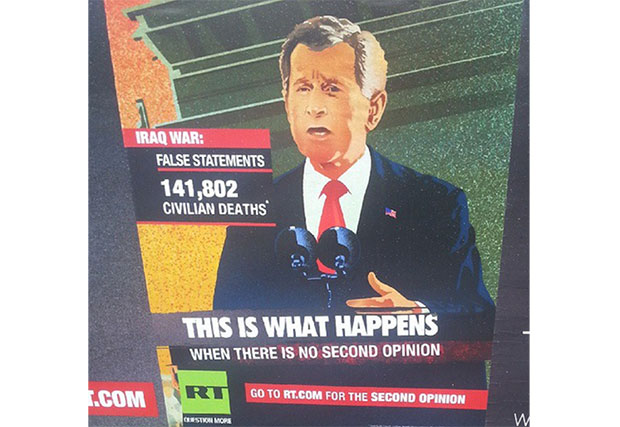
(Photo: Padraig Reidy)
There’s a poster near my house in London. It shows a poorly illustrated George W. Bush, aboard the USS Abraham Lincoln early in the Iraq war, with the now infamous “Mission Accomplished” banner behind him. To his side, the tally of dead in the Iraq War (at least according to Iraq Body Count). Underneath is emblazoned the slogan: “This is what happens when there is no second opinion.” It is an advert for Russian propaganda channel RT (formerly Russia Today).
It’s a slightly muddled poster, but the signal is clear: did you feel lied to about the Iraq war? Watch RT.
Curiously, RT, which launched a UK channel on 30 October, seems to believe the poster doesn’t exist. A “report” on the RT website, dated 9 October, claims that the campaign of which this poster is part was “rejected for outdoor displays in London because of their ‘political overtones’”. The story goes on to claim that the “rejected” posters were replaced by ones that simply say “redacted”, before urging readers to download an RT app to view the ads on their phones.
But I have seen the poster. I even took a picture. Yet RT insists it has been banned, saying that outdoor advertising companies cited the Communications Act 2003, which “prohibits political advertising”. This prohibition is indeed to be found in the act, but only applies to broadcast advertisements, not billboard advertisements for broadcasters.
This is a fairly crude illustration of RT’s attitude to the truth. It is simply not an issue. What’s important is something that might sound true, something just about plausible, to suit the agenda (in this case, the agenda is threefold: one, to get people to download the app; two, to sow the belief that “they” are scared of RT; and three, to introduce the notion that political advertising is subject to a blanket ban in the UK).
Fair enough, you might say. But have you seen Fox News? Don’t all sorts of news organisations bend the truth to fit their agenda? There’s a case to be made, but there’s also a crucial difference. RT is funded and controlled by the Kremlin and is on a mission; a mission outlined in a new report by The Interpreter, part of the Institute of Modern Russia (disclosure: Index on Censorship has on occassion crossposted content from The Interpreter).
“The Menace of Unreality: How the Kremlin Weaponizes Information, Culture and Money” elucidates what we had already long suspected: the Soviet Union may be dead, but Soviet tactics remain. And while the west may not want to believe it is in conflict with Russia, the Russians are already acting like it is (witness reports of heightened Russian air force activity in and near Nato airspace).
The report’s authors, Michael Weiss and Peter Pomerantsev, describe disinformation techniques dating back to the Soviet era: straight propaganda, certainly, but also Dezinformatsiya — the planting of false stories to undermine confidence in western governments. These include alleged coup plots, the bizarre theory that AIDS was created by the CIA, even the suggestion that the assassination of Kennedy was an inside job.
The suggestion is that democracy is a sham, and that democratic governments are at best hypocrites and at worst constantly, deliberately acting against the interests of their own populations.
The best false stories always have a ring of truth and a ring of empathy. Many politicians are hypocrites, some politicians act against the interests of those they should represent. If this much is true, is it that much of a leap to imagine that the entire system is a crock? That democracy and human rights are empty terms? We’re just asking legitimate questions, as every conspiracy theorist ever has said at some point.
Conspiracy theorists find a home at RT. Presenter Abby Martin, for example, who briefly won praise for apparently criticising Russia’s actions in Ukraine, says she still has “many questions” (just asking questions!) about the September 2001 attacks on the World Trade Center, and has used her show to expound on “false flag” attacks, alleged Israeli eugenics, and every US conspiracy theorists’ favourite, the massacre in Waco, Texas of David Koresh’s Branch Davidian cult in 1993.
All this would mean nothing if RT didn’t have a willing audience in the UK, the US and beyond. But a combination of a large budget, photogenic presenters and a certain way with a YouTube clip makes RT a serious player. It never quite veers into the straight out lunacy of Iran’s Press TV, which is quite open about its conspiracist contributors, and it looks like a serious operation. Furthermore, its positioning as an “alternative news source”, albeit one controlled by an increasingly authoritarian, paranoid and erratic Russian state, finds it fans among people who would rail against their own liberal states and societies (on the two occasions I visited the Occupy St Paul’s encampment in London, Russia Today was playing on a large screen there). All the while, the autocratic Putin is strengthened as democracy in undermined worldwide (witness how easily Putin was able to put the kibosh on effective intervention against Syria’s Assad through the relentless repetition of the line that helping the opposition would mean helping jihadist terrorists).
So what, as Lenin himself once asked, is to be done? After reports of UK broadcast regulator Ofcom’s recent investigations into RT for bias earlier this week, some people saw a chance to get RT taken off the air just weeks after it had begun. But this impulse is too close to political censorship in principle, and in practice, an ineffective sanction against a force that has huge power online, with millions upon millions of YouTube hits.
Decent democrats that they are, Weiss and Pomerantsev suggest eternal vigilance is required: we must be able to combat RT’s half truths and insinuations effectively, with hard facts and hard arguments, in order to stop them spreading. As ever, when arguments for counterspeech as the best defence against poison is suggested, one remembers Yeats’s lines: “The best lack all conviction, while the worst/Are full of passionate intensity.”
But this time 25 years ago, as East and West Germans embraced on top of the Berlin Wall, the world showed that the right argument can win even against the very worst. The Kremlin is playing the same games now as it did in its darkest days. Democrats should be ready to fight back.
This article was posted on 13 November 2014 at indexoncensorship.org
24 Oct 2014 | Europe and Central Asia, News, Turkey
When Turkish political cartoonist Musa Kart faced nine years in prison for “insulting” President Recep Tayyip Erdogan, his colleagues from across the world fought back in the best way they know how — by drawing their own #erdogancaricature.
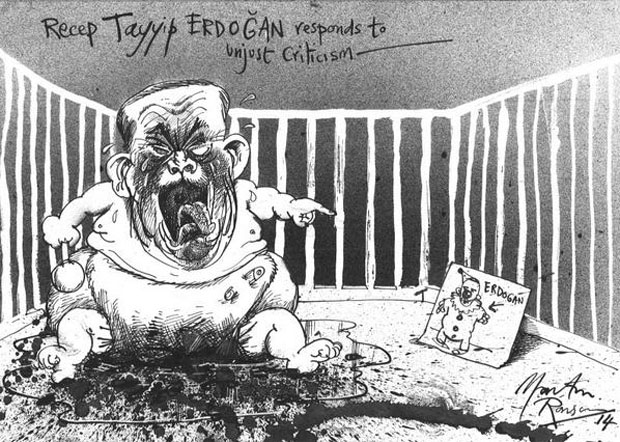
By: Martin Rowson
The online campaign was started on Thursday by Martin Rowson, cartoonist for The Guardian, The Independent and Index on Censorship among others, as Kart was scheduled to appear in court.
Erdogan himself filed the complaint against Kart over a cartoon published in the daily Cumhuriyet on 1 February 2014 showing the then prime minister as a hologram watching over a robbery. This was a reference to his alleged involvement covering up a high-profile graft scandal.
Erdogan claimed Kart was guilty of “insulting through publication and slander,” reports Today Zaman. And while the court initially ruled that there were no legal grounds for action, this decision was revoked following complaints from Erdogan’s lawyer. Kart was also fined in 2005 for drawing Erdogan as a cat.
In court on Thursday, Kart stated: “Yes, I drew it [the cartoon] but I did not mean to insult. I just wanted to show the facts. Indeed, I think that we are inside a cartoon right now. Because I am in the suspect’s seat while charges were dropped against all the suspects [involved in two major graft scandals]. I need to say that this is funny.”
He was finally acquitted, but many of his fellow cartoonists has already shared their artistic interpretations of Erdogan and the case.
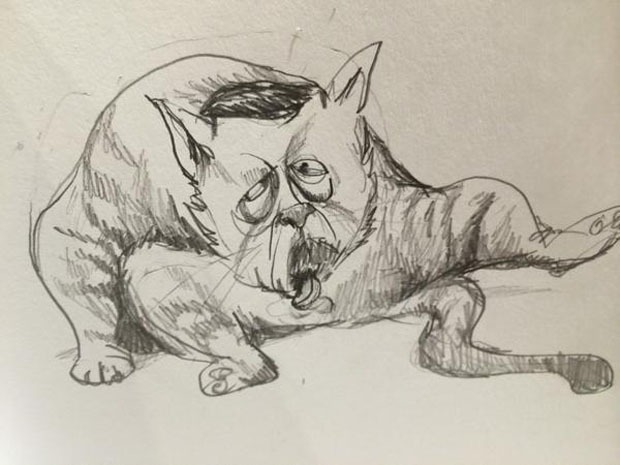
By: Morten Morland
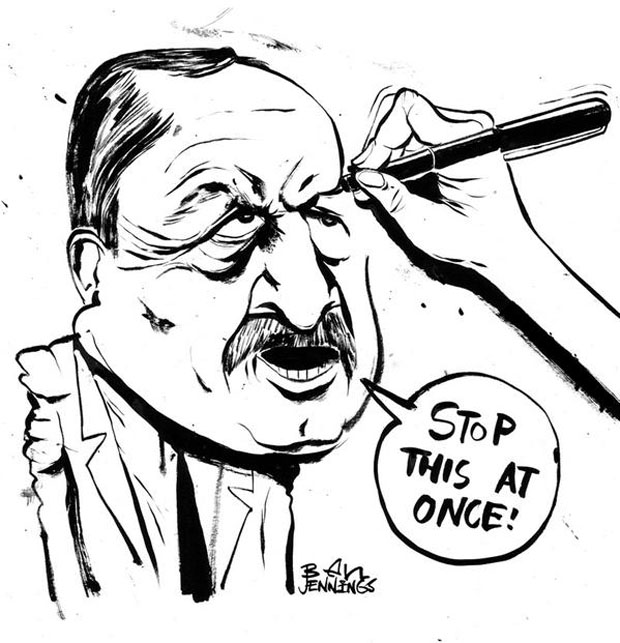
By: Ben Jennings
“I was alerted to Musa Kart’s plight by the excellent Cartoonists’ Rights Network International (CRNI) and previously, when an Iranian cartoonist was sentenced to 40 lashes, a bunch of us got together to draw the offended politician who’d had him arrested, the sentence was commuted,” Martin Rowson told Index via email.
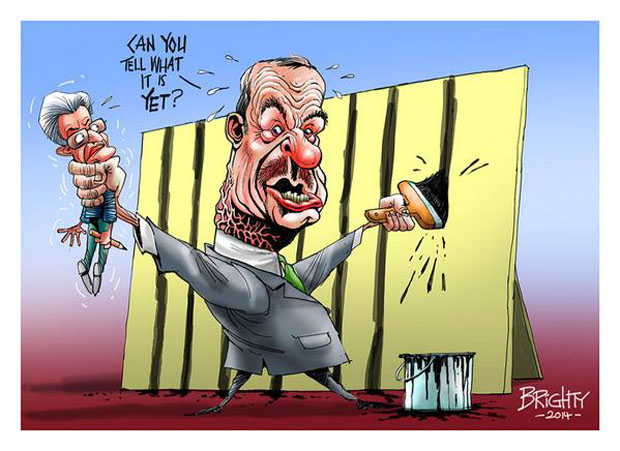
By: Steve Bright
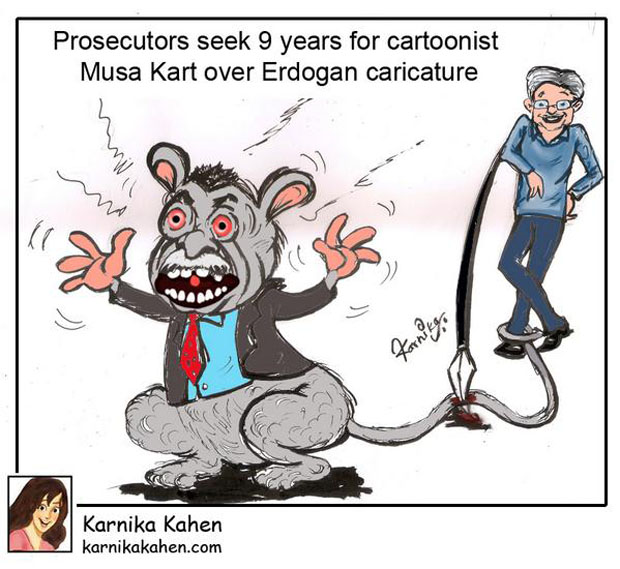
By: Kanika Mishra
“It seems this kind of international bullying by cartoon does have an effect, as even the chippiest despot out there can usually detect a batsqueak of the shamefulness of not being able to take a joke. In Musa Kart’s case, the threat of up to nine years in prison was such an outrageous abuse of power I didn’t wait for anyone else to organise this and simply put out a call via Twitter for cartoons of Erdogan to show solidarity. No idea if it had any effect on the court (I doubt it) though it may put Erdogan off the idea of taking the case to a higher court. I hope so. And I hope it gave Musa Kart a feeling that he wasn’t on his own in there. Basically, this is cartoonists playing the Spartacus card, because if one of us, anywhere, is persecuted for laughing at power, we all are,” said Rowson.
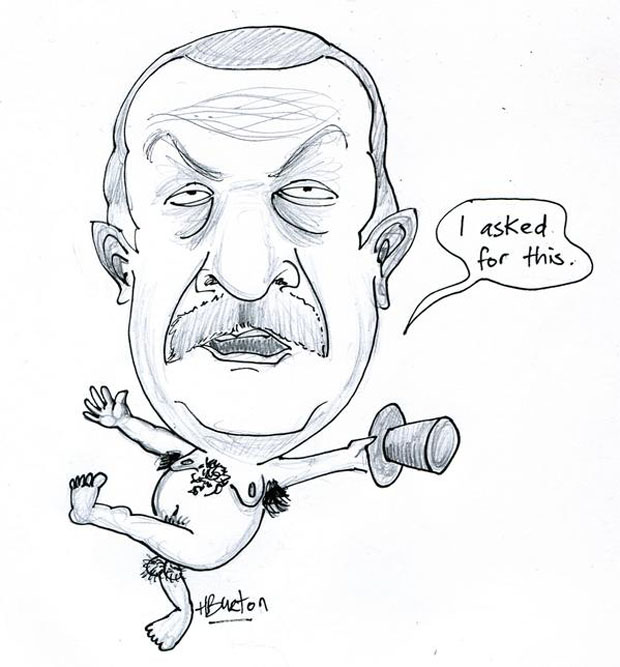
By: Harry Burton
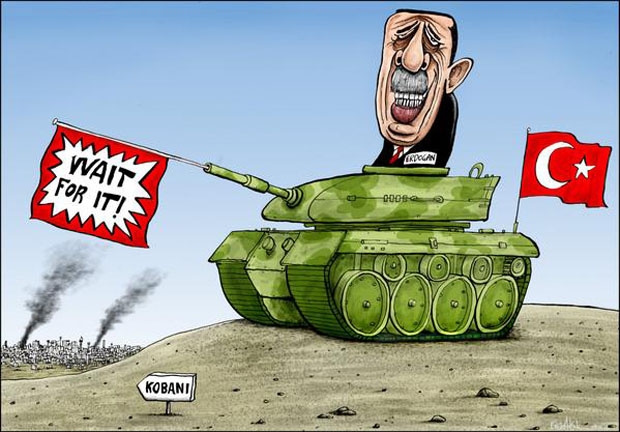
By: Brian Adcock
“Cartoonists are often the last bastion of free speech in repressive regimes and equally valued for telling the truth as it is, in democratic societies too; some consider their work to be of just as much value, if not more, as journalists, and many respected for the courage and ability to often say and report what others cannot, or fear to do, alongside the just as valued use of satire to reveal a truth which otherwise might not see the light of day,” Patricia Bargh from CRNI explained to Index in an email.
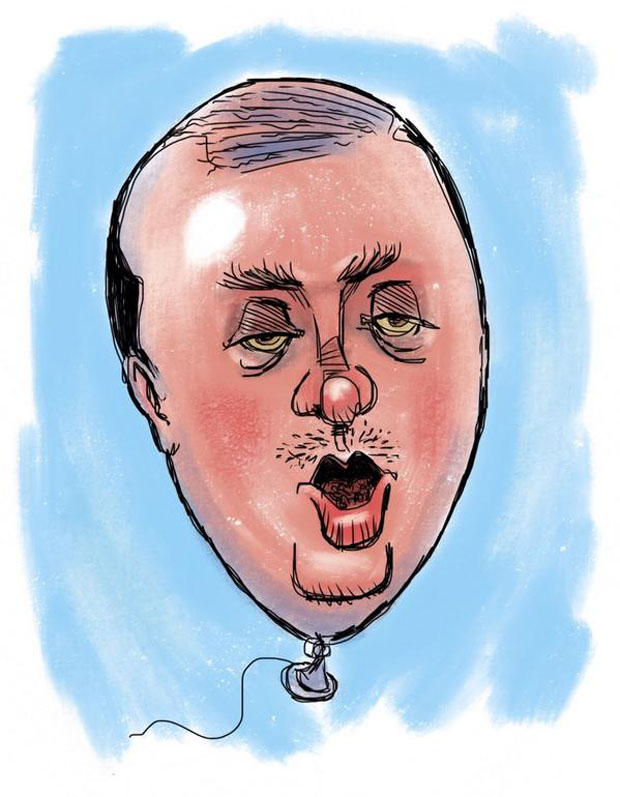
By: Mike Roberts
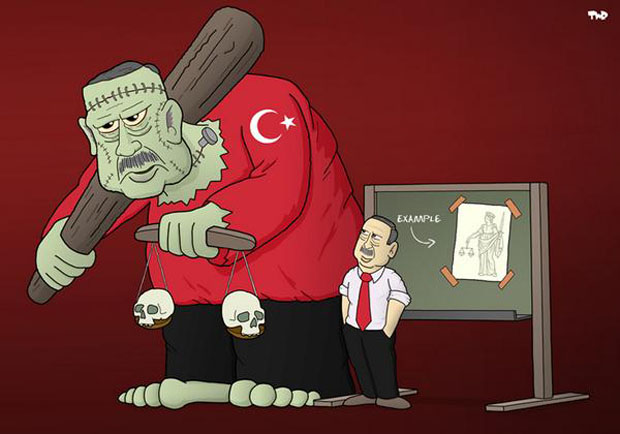
By: Tjeerd Royaards
“Thus as societies we should value and protect their right to do what they do, and if they know there is an organisation out there who will take up their case, should they be targeted, we hope that gives them the confidence to continue to on and assists them in their valuable work too,” Bargh added.
This article was originally posted on 20 October at indexoncensorship.org
16 Oct 2014 | Draw the Line, Youth Board
This month the Index Youth Advisory Board is discussing legal regimes and how they nurture or stifle the free expression of ideas. Examples of draconian laws abound: from Russia’s law banning “homosexual propaganda” to the UK’s use of RIPA legislation to violate the confidentiality of journalists’ sources.
When it comes to free speech: laws, what are they good for?
Legal frameworks protect speech and broader free expression. Take for instance Article 19 of the Universal Declaration of Human Rights which tells us that we all have the right to freedom of opinion and expression. Most of us, I’m sure, would cherish this right – who wouldn’t want to be able to express themselves freely and say what they like without the interference of the state?
In the United Kingdom, Article 10 of the Human Rights Act grants citizens freedom of expression. Most countries have different forms of Article 10. It is these laws – the ones that promote and protect our right to free speech – that form the crucial pillars of any democracy.
But do all laws protect our right to free speech?
Article 10 does a good job of granting us the confidence to speak out and ensure our voices are heard, but do other laws do the same? Or are there laws that, in some way, serve to restrict free speech? The example from Russia underline the use of legislation to restrict the right to expression. The law also curtails the right to assembly, another important part of a democratic society.
When you look into Article 10 itself, you begin to learn about the restrictions of the law and begin to understand how, in many ways, the state still does have authority over our freedom of expression. For example, Article 10 can be restricted “in the interests of national security” and in order to “maintain the authority of the judiciary”.
And what about the countries that don’t have specific laws that promote freedom of expression as strongly as the UK’s Article 10? Many may find it easy to conclude that countries like Iran have more laws that serve to restrict free speech, rather than protect it. It’s interesting to look at blasphemy laws in this instance to examine whether it protects the rights of those who are religious or restricts the rights of those who wish to criticise religion.
This month on Draw the Line, we discuss the impact a country’s laws have on our freedom of expression. Join the discussion and let us know whether laws serve to protect or restrict your right to free speech.
This article was posted on 16 Oct, 2014 at indexoncensorship.org