14 Feb 2013 | Index Index
A Bahraini teenager has been killed by security forces today (14 February) during demonstrations to mark the second anniversary of the Bahrain revolution. Al Jazeeera reported the 16-year-old boy’s name as Ali Ahmed Ibrahim al-Jazeeri. He allegedly died from internationally banned exploding bullets after Bahraini authorities opened fire on the mounting crowds in Al DAih, near the capital Manama. The interior ministry announced a death on its Twitter this morning, but didn’t disclose any further details.

— A child painted with the national colours of Bahrain during the uprisings second anniversary protests, in which a teenager was killed
Evidence given by Jeremy Paxman and a senior BBC official to the BBC internal inquiry into its handling of the Jimmy Savile affair will be removed from public transcripts detailing the investigations evidence. Lawyers examining the soon to be published transcripts said that evidence from the Newsnight presenter and global news director Peter Horrocks was potentially defamatory, and was particularly critical of how BBC management handled the criticism arising from the Savile scandal in Autumn last year. The findings of the inquiry, overseen by former head of Sky News Nick Pollard, were published by the BBC in December. The report examined the corporation’s handling of Newsnight’s dropped investigation into the case in 2011, and its later response after Savile was allegedly outed as a paedophile in October 2012. At the time the transcript was produced, those giving evidence reportedly didn’t know the report was to be made public. Overall, less than 10 per cent of the Pollard review transcripts will be redacted before publication.
A powerful new firewall used to censor online activity could be established in Pakistan within the next month. The Pakistani government has allegedly been working with the same technology companies that helped Iran, China and Libya curb online dissent, to allow authorities to block pornographic or blasphemous online content. Pakistan’s interior minister Rehman Malik confirmed the reports on Twitter, saying The Pakistan Telecommunication Authority (PTA) were in their final negotiations for obtaining the software. The PTA originally tried to introduce a similar $10million measure in 2012, which was quashed after being met with fierce public opposition. Whilst Pakistan claims to use the firewall to protect the country’s internet users from blasphemous and pornographic content, it has already blocked a number of unrelated sites, such as the US-based Buzzfeed.
An NHS whistleblower under investigation for high mortality rates has voiced concerns over patient safety despite a legal gag preventing him from speaking out. Gary Walker warned civil servants that he had been given the same choices that had resulted in the Mid Staffordshire NHS Foundation Trust scandal. He was fired from his job as chief executive of United Lincolnshire Hospitals Trust in 2010 for gross professional misconduct, allegedly because he swore during a meeting. Walker claims he was fired for refusing to meet Whitehall targets for non-emergency patients and then gagged as part of a reported £500,000 settlement emerging from an unfair work dismissal tribunal. He said he was instructed by the East Midlands Strategic Health Authority to meet the 18-week non-emergency target “whatever the demand” and was told to resign when he refused to do so. East Midlands Strategic Health Authority refuted the claims. The Francis report published last week recommended that gagging orders on NHS staff be lifted, orders which Walker said were due to a “culture of fear” within the service. His case has been raised in the commons.
The Israeli government has admitted that “Prisoner X”, the mystery detainee who later committed suicide in solitary confinement, was in fact a spy for Israel. Ben Zygier, as he is now known from reports, was part of Israel’s external intelligence forces known as the Mossad and was arrested in 2010 for charges which still remain unspecified, though they were revealed to be serious. The detention of Australian-Israeli Zygier was reportedly enshrouded in such secrecy that even the prison guards didn’t know his true identity or alleged offence. The information was revealed after a gagging order which forbade the media in Israel from reporting on the case was partially lifted by the Israeli government on 13 February.
14 Feb 2013 | Uncategorized
A Bahraini teenager has been killed by security forces today (14 February) during demonstrations to mark the second anniversary of the Bahrain revolution. Al Jazeeera reported the 16-year-old boy’s name as Ali Ahmed Ibrahim al-Jazeeri. He allegedly died from internationally banned exploding bullets after Bahraini authorities opened fire on the mounting crowds in Al DAih, near the capital Manama. The interior ministry announced a death on its Twitter this morning, but didn’t disclose any further details.
— A child painted with the national colours of Bahrain during the uprisings second anniversary protests, in which a teenager was killed
Evidence given by Jeremy Paxman and a senior BBC official to the BBC internal inquiry into its handling of the Jimmy Savile affair will be removed from public transcripts detailing the investigations evidence. Lawyers examining the soon to be published transcripts said that evidence from the Newsnight presenter and global news director Peter Horrocks was potentially defamatory, and was particularly critical of how BBC management handled the criticism arising from the Savile scandal in Autumn last year. The findings of the inquiry, overseen by former head of Sky News Nick Pollard, were published by the BBC in December. The report examined the corporation’s handling of Newsnight’s dropped investigation into the case in 2011, and its later response after Savile was allegedly outed as a paedophile in October 2012. At the time the transcript was produced, those giving evidence reportedly didn’t know the report was to be made public. Overall, less than 10 per cent of the Pollard review transcripts will be redacted before publication.
A powerful new firewall used to censor online activity could be established in Pakistan within the next month. The Pakistani government has allegedly been working with the same technology companies that helped Iran, China and Libya curb online dissent, to allow authorities to block pornographic or blasphemous online content. Pakistan’s interior minister Rehman Malik confirmed the reports on Twitter, saying The Pakistan Telecommunication Authority (PTA) were in their final negotiations for obtaining the software. The PTA originally tried to introduce a similar $10million measure in 2012, which was quashed after being met with fierce public opposition. Whilst Pakistan claims to use the firewall to protect the country’s internet users from blasphemous and pornographic content, it has already blocked a number of unrelated sites, such as the US-based Buzzfeed.
An NHS whistleblower under investigation for high mortality rates has voiced concerns over patient safety despite a legal gag preventing him from speaking out. Gary Walker warned civil servants that he had been given the same choices that had resulted in the Mid Staffordshire NHS Foundation Trust scandal. He was fired from his job as chief executive of United Lincolnshire Hospitals Trust in 2010 for gross professional misconduct, allegedly because he swore during a meeting. Walker claims he was fired for refusing to meet Whitehall targets for non-emergency patients and then gagged as part of a reported £500,000 settlement emerging from an unfair work dismissal tribunal. He said he was instructed by the East Midlands Strategic Health Authority to meet the 18-week non-emergency target “whatever the demand” and was told to resign when he refused to do so. East Midlands Strategic Health Authority refuted the claims. The Francis report published last week recommended that gagging orders on NHS staff be lifted, orders which Walker said were due to a “culture of fear” within the service. His case has been raised in the commons.
The Israeli government has admitted that “Prisoner X”, the mystery detainee who later committed suicide in solitary confinement, was in fact a spy for Israel. Ben Zygier, as he is now known from reports, was part of Israel’s external intelligence forces known as the Mossad and was arrested in 2010 for charges which still remain unspecified, though they were revealed to be serious. The detention of Australian-Israeli Zygier was reportedly enshrouded in such secrecy that even the prison guards didn’t know his true identity or alleged offence. The information was revealed after a gagging order which forbade the media in Israel from reporting on the case was partially lifted by the Israeli government on 13 February.
1 Feb 2013 | Events
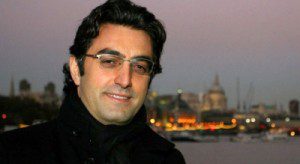
Date: Weds 13 Feb, 6.45pm (Screening 7:15pm – 8:15pm)
Venue: Free Word Centre (here)
Tickets: £6 (available here)
Index on Censorship and English PEN present a screening of journalist and film maker Maziar Bahari’s new film Forced Confessions, followed by Q+A with Jon Snow.
Few things are more humiliating than having to reel off someone else’s lies. In 2009, millions of Iranians watched on TV as filmmaker Maziar Bahari, was forced to make a false confession. He had supposedly been collaborating with the West and was accused of espionage. As a filmmaker and journalist working for Western broadcasting corporations, he was the perfect scapegoat for the regime.
It has now been 30 years since the first false public confession. No Iranian believes any of them, but the ruling regime continues to use them. Maziar Bahari tells his story, and the story of forced confessions, through his own voice-over and interviews with fellow Iranians who have been through the same ordeal.
Jon Snow will interview Maziar Bahari directly after the screening.
31 Jan 2013 | Uncategorized
A woman who said she was raped by state security forces and the journalist who interviewed her were charged by police on 29 January in Somalia. Journalist Abdiaziz Abdinur Ibrahim could face four years imprisonment for insulting a government body and two years for inducing false evidence. Abdiaziz has been charged with insulting a government body, simulating a criminal offence and making a false accusation. The alleged rape victim’s husband and two others who introduced her to the journalist were charged with assisting her to secure a profit for the rape allegation and assisting her to evade investigation. The sentences are five and four year terms respectively. The next hearing will be held on 2 February. Abdiaziz had interviewed the woman on 8 January after she said she was raped by soldiers at a displaced persons camp in Mogadishu. He was detained by the Central Investigations Department of the police two days later.

Non-thinker (2012) by Aida Makoto – A less controversial piece from the Japanese artist
The New York Times has claimed it was hacked by Chinese officials over a period of four months. The attacks are thought to have come from hackers connected to the military in a possible retaliation to a series of stories run by the newspaper — alluding to the vast wealth accumulated by premier of the state council Wen Jiabao. The hackers entered into the Times’s systems, accessing information on the personal computers of 53 employees, including China correspondents. Mandiant, an internet security company hired by the newspaper on 7 November, said the attacks were likely to have been part of a spy campaign, after discovering that the computers used for the attacks were the same used for Chinese military attacks on US military contractors in the past. Hackers began attacking the Times on 13 September, around the time the Wen Jiabao story was in its final pre-publishing stages.
A former policeman in the Ukraine has been sentenced to life in prison for the murder of an investigative journalist, it was reported on 30 January. Oleksiy Pukache was the fourth person to be charged with the murder of Georgiy Gongadze, after his dismembered body was discovered in 2000. The other three were sentenced to 12 and 13 years. As Pukache was sentenced, he announced that equal blame for the murder should be placed on the country’s former president Leonid Kuchma and then presidential chief of staff Volodymyr Lytvyn.
Gongadze’s headless body was found in the woods six weeks after he was kidnapped in Kiev — a case which caused huge demonstrations and helped prompt the 2004 Orange Revolution. A lawsuit taken out against Kuchma in March 2011 was dismissed when prosecutors deemed it unlawful.
A Chinese man who was sent to a labour camp for making a joke about politician Bo Xilai has received minor damages after his compensation appeal was rejected. Fang Hong was sentenced to re-education for a year in 2011 for posting a poem online mocking the disgraced politician and his then police chief Wang Lijun. Chongqing’s Dianjiang county court rejected Fang’s request for around £37,400 in psychological damages, instead offering him just over £5,800, as well as rejecting his appeal for a public apology. This was the first known case of officials compensating for Bo-era abuses. Fang said he would ask his lawyers about appealing the ruling, but critics said his initial appeal was rejected to prevent a stream of further claims. Fang was freed in 2012 following the fall of Bo — whose wife Gu Kailai was convicted of the murder of British Businessman Neil Heywood in November 2011.
An art exhibition in Japan depicting cannibalism and Sadomasochism has prompted a debate over artistic freedom of expression. Aida Makoto’s Monument for Nothing exhibition at the Mori Art Museum in Tokyo on 29 January caused protests from Japanese organisation People Against Pornography and Sexual Violence, who wrote to museum director Nanjo Fumio to demand Makoto’s work be removed. Some of the artists pieces, depicted a giant blender filled with naked women, as well as Japanese pensioners playing croquet with severed heads. Makoto is said to use pornography to prompt people to look beneath Japan’s calm exterior and examine the darker elements of Japanese culture.
