20 Mar 2013 | News
[vc_row][vc_column][vc_column_text]
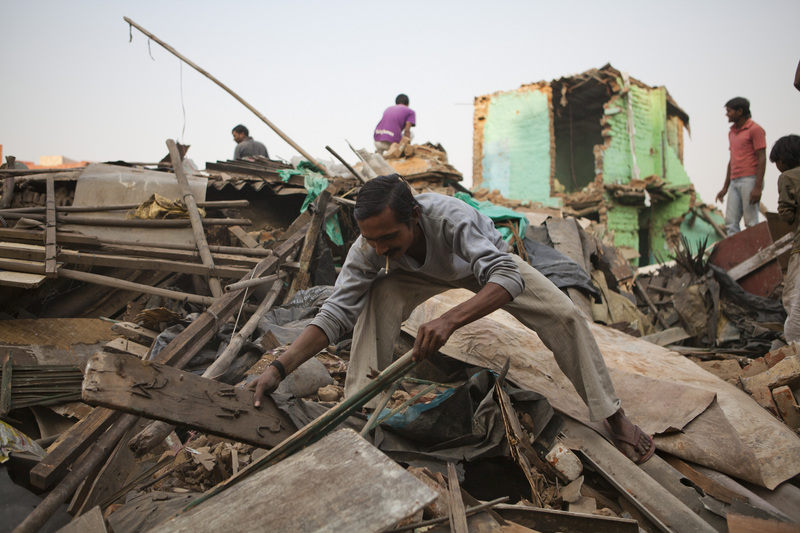
Forced evictions of India’s marginalised Dalit community in Delhi have been carried out by the country’s government
All over the world today, both in developing and developed states, liberal democracies and less free societies, there are groups who struggle to gain full access to freedom of expression for a wide range of reasons including poverty, discrimination and cultural pressures. While attention is often, rightly, focused on the damaging impact discrimination or poverty can have on people’s lives, the impact such problems have on free expression is less rarely addressed.
We are not talking about the classic examples of challenges to freedom of expression where repressive regimes attempt to block, limit and inhibit across a population as a whole. Rather we are looking at cases where in both more and less free societies particular groups face greater barriers to free expression than the wider population. Such groups can often be denied an equal voice, and active and meaningful participation in political processes and wider society. Poverty, discrimination, legal barriers, cultural restrictions, religious customs and other barriers can directly or indirectly block the voices of the already marginalised. How much do these barriers and lack of access to freedom of expression matter? A lot – as the examples below tell us.
Why is access to freedom of expression important? Freedom of expression is a fundamental human right. It also underpins most other rights and allows them to flourish. The right to speak your mind freely on important issues in society, access information and hold the powers that be to account, plays a vital role in the healthy development process of any society.
The lack of access to freedom of expression is a problem that particularly affects the already marginalised – that is, minorities facing discrimination both in developed and developing countries, from LGBT people in African countries, to disabled people in Western Europe. While the scale of their struggles varies greatly, the principle is the same: within the context of their society, these groups face greater barriers to freedom of expression than the majority. If they are unable to communicate their ideas, views, worries and needs effectively, means they are often excluded from meaningful participation in society, and from the opportunity to better their own circumstances. In other words, discrimination is one of the core elements of unequal access to freedom of expression.
Access to free expression is also vital both to support the development process and as a development goal in its own right. The connection was perhaps most famously put forward by Amartya Sen in his widely cited book — Development as Freedom — where he argued that expansion of freedom is both the primary end and the principal means of development
It is striking to note the way in which cultural and religious customs are sometimes used to clamp down on various minorities’ rights to expression and assembly in many countries around the world. Human Rights Watch’s latest world report states that “traditional values are often deployed as an excuse to undermine human rights.” One example of this is the caste system still in place in countries including India, Nepal and Pakistan. This is culturally-based discrimination on a major, systematic scale. A significant proportion of the Dalits, (lower-caste people, or “untouchables”) are barred from participation in public life and have a limited say in policies that directly affect them. In May 2008, the Dalit community in the Nesda village in the state of Gujarat attempted to stage a protest after being excluded from the government’s development funds allocation, by refusing to fulfil their historic “caste duty” of disposing of dead animals. The dominant caste in the region promptly blocked the protest through a ‘social boycott’, forbidding any social or economic interaction between Dalits and non-Dalits. This is only one example of Dalit’s being barred from having a say in development matters directly relating to them. When they attempted to stage a peaceful protest, they were only further marginalised, and their weak economic, social and political position further cemented. It’s a vicious cycle.
Article continues below
[/vc_column_text][/vc_column][/vc_row][vc_row][vc_column][vc_custom_heading text=”Stay up to date on free speech” font_container=”tag:p|font_size:28|text_align:left” use_theme_fonts=”yes”][vc_separator color=”black”][/vc_column][/vc_row][vc_row][vc_column width=”1/2″][vc_column_text]Index on Censorship is a nonprofit that defends people’s freedom to express themselves without fear of harm or persecution. We fight censorship around the world.
To find out more about Index on Censorship and our work protecting free expression, join our mailing list to receive our weekly newsletter, monthly events email and periodic updates about our projects and campaigns. See a sample of what you can expect here.
Index on Censorship will not share, sell or transfer your personal information with third parties. You may may unsubscribe at any time. To learn more about how we process your personal information, read our privacy policy.
You will receive an email asking you to confirm your subscription to the weekly newsletter, monthly events roundup and periodic updates about our projects and campaigns.[/vc_column_text][/vc_column][vc_column width=”1/2″][gravityform id=”20″ title=”false” description=”false” ajax=”false”][/vc_column][/vc_row][vc_row][vc_column][vc_separator color=”black”][/vc_column][/vc_row][vc_row][vc_column][vc_column_text]Another major area where discrimination has a knock-on effect on freedom of expression, is with regards to LGBT (lesbian, gay, bisexual, transgender) people across the globe. They are discriminated against for traditional, especially religious, reasons, with countries like Malaysia and Jamaica claiming that homosexuality is simply “not in our culture” when clamping down on LGBT civil rights. The right to express one’s sexuality is an aspect of the right to freedom of expression both in itself (as an expression of identity) but also because in countries where LGBT rights are not respected, the cultural expression of such rights is often also a political act. Cultural events organised by the LGBT community, such as pride parades, find themselves banned from exercising their right to freedom of assembly and expression, which happened last October in Serbia and Moldova. LGBT-themed art is also often times censored. One example reported by Index took place in Uganda, where a play about a gay man was banned, and its British producer, David Cecil, jailed and later deported. Countries also adopt laws that ban or circumscribe the discussion of homosexualty. In Russia, the Duma recently voted in favor of a draft law to ban “homosexual propaganda”. The amendment, passed by an overwhelming majority, prohibits the “propaganda of homosexuality” (in a practical sense, the discussion of homosexually) to protect children. The bill would in effect seriously curtail the right to freedom of expression of LGBT people.
Full access to freedom of expression is difficult to achieve in the absence of universal education and literacy. Around the world, illiteracy and inadequate (or non-existent) education hits the poorest hardest – both because education is often private, and because in poor countries where it is provided by the state, the standard of education can be low. Women and girls in the developing world are the groups most affected by illiteracy. There are a number of factors contributing to this, including higher levels of poverty among women, with culture and tradition also playing a significant part. There are still a number of societies around the world where it simply is not accepted that girls should receive education at all, and certainly not higher education. While the gender gap in education has been decreasing over time, in 2009, there were still around 35 million girls out of primary education, compared to 31 million boys. Lack of education is still the single biggest contributing factor to high and persistent levels of illiteracy — making it the most basic barrier to freedom of expression. It stops people from effectively participating in society, as it hinders them from being able to read, write and share written information, and thus fully engage with a range of issues or debates. Women make up the majority (64 per cent) of the nearly 800 million illiterate people in the world today. UNHCHR resolution 2003/42 identified this as a contributing factor to constraints on women’s rights to freedom of expression.
As well as the impact of poverty, discrimination and religious and cultural factors, governments and local authorities often put in place more formal mechanisms which result in significant restrictions on access to freedom of expression for minority groups. This can come in the form of restrictions on minority languages, such as Kurdish in Turkey, or barriers to political participation, such as the Bosnian constitutional ban on Jews and Roma running for high office.
Refugees are one of the hardest hit groups of people in terms of facing significant and basic restrictions on freedom of expression. A report by the UN High Commissioner for Refugees on the political rights of refugees stated that they, “…like other aliens, are entitled to the same freedom of expression, association and assembly as citizens.” However, a 2005 report investigating the state of Italian immigration detention centres showed that those detained in Italy were given few opportunities for communication with the outside world. Similarly, allegations of arbitrary deprivation of liberty in Greek detention centres are to be examined by independent experts selected by the UN Human Rights Council later this year. These are only a few examples of fundamental barriers on refugees’ access to fully express themselves. This, of course, cannot be separated from the wider discrimination as outlined above. Refugees constitute a group which often face prejudice and racism. Research from Cardiff University has for instance shown that they do not have the platform to counter the overwhelmingly negative way in which they are portrayed in the UK media. Refugees have universal rights like all other people around the world — states must recognise this and must act to tackle discrimination in all forms.
The barriers to free expression discussed here show why exercising our right to free expression is not as simple as living in a democratic society that broadly respects rights. Barriers that block or inhibit access to freedom of expression exist all over the world, in various forms and to varying degrees. Through being denied a voice, these groups are being denied a fundamental right, are facing barriers to their active participation in society, and, in many cases, are facing additional limits on their ability and opportunity to play a part in improving their own lives. Tackling the barriers from poverty to discrimination to laws that limit access to freedom of expression is vital.[/vc_column_text][/vc_column][/vc_row][vc_row][vc_column][vc_basic_grid post_type=”post” max_items=”12″ style=”load-more” items_per_page=”4″ element_width=”6″ grid_id=”vc_gid:1538131110552-4a302ad6-3f7c-10″ taxonomies=”346, 571, 986″][/vc_column][/vc_row]
19 Mar 2013 | Newswire
Forced evictions of India’s marginalised Dalit community in Delhi have been carried out by the country’s government
All over the world today, both in developing and developed states, liberal democracies and less free societies, there are groups who struggle to gain full access to freedom of expression for a wide range of reasons including poverty, discrimination and cultural pressures. While attention is often, rightly, focused on the damaging impact discrimination or poverty can have on people’s lives, the impact such problems have on free expression is rarely addressed.
We are not talking about obvious examples of challenges to freedom of expression where repressive regimes attempt to block, limit and inhibit across a population as a whole. Rather we are looking at cases where in both more and less free societies particular groups face greater barriers to free expression than the wider population. Such groups can often be denied an equal voice, and active and meaningful participation in political processes and wider society. Poverty, discrimination, legal barriers, cultural restrictions, religious customs and other barriers can directly or indirectly block the voices of the already marginalised.
Why is access to freedom of expression important? Freedom of expression is a fundamental human right. It also underpins most other rights and allows them to flourish. The right to speak your mind freely on important issues in society, access information and hold the powers that be to account, plays a vital role in the healthy development process of any society.
The lack of access to freedom of expression is a problem that particularly affects the already marginalised — that is, minorities facing discrimination both in developed and developing countries, from LGBT people in African countries, to disabled people in Western Europe. While the scale of their struggles varies greatly, the principle is the same: within the context of their society, these groups face greater barriers to freedom of expression than the majority. If they are unable to communicate their ideas, views, worries and needs effectively, means they are often excluded from meaningful participation in society, and from the opportunity to better their own circumstances. In other words, discrimination is one of the core elements of unequal access to freedom of expression.
Access to free expression is also vital as a development goal in its own right. The connection was perhaps most famously put forward by Amartya Sen in his widely cited book — Development as Freedom — where he argued that expansion of freedom is both the primary end and the principal means of development.
It is striking to note the way in which cultural and religious customs are sometimes used to clamp down on various minorities’ rights to expression and assembly in many countries around the world. Human Rights Watch’s latest world report states that “traditional values are often deployed as an excuse to undermine human rights.” One example of this is the caste system still in place in countries including India, Nepal and Pakistan. This is culturally-based discrimination on a major, systematic scale. A significant proportion of Dalits, (lower-caste people, or “untouchables”) are barred from participation in public life and have a limited say in policies that directly affect them. In May 2008, the Dalit community in the Nesda village in the state of Gujarat attempted to stage a protest after being excluded from the government’s development funds allocation, by refusing to fulfil their historic “caste duty” of disposing of dead animals. The dominant caste in the region promptly blocked the protest through a “social boycott”, forbidding any social or economic interaction between Dalits and non-Dalits. This is only one example of Dalit’s being barred from having a say in development matters directly relating to them. When they attempted to stage a peaceful protest, they were only further marginalised, and their weak economic, social and political position further cemented. It’s a vicious cycle.
Another major area where discrimination has a knock-on effect on freedom of expression, LGBT (lesbian, gay, bisexual, transgender) people’s rights across the globe. They are discriminated against for traditional, especially religious, reasons, with countries like Malaysia and Jamaica claiming that homosexuality is simply “not in our culture” when clamping down on LGBT civil rights. The right to express one’s sexuality is an aspect of the right to freedom of expression both in itself (as an expression of identity) but also because in countries where LGBT rights are not respected, the cultural expression of such rights is often also a political act. Cultural events organised by the LGBT community, such as Pride parades, find themselves banned from exercising their right to freedom of assembly and expression, which happened last October in Serbia and Moldova. LGBT-themed art is also often times censored. One example reported by Index took place in Uganda, where a play about a gay man was banned, and its British producer, David Cecil, jailed and later deported. Countries also adopt laws that ban or circumscribe the discussion of homosexualty. In Russia, the Duma recently voted in favor of a draft law to ban “homosexual propaganda”. The amendment, passed by an overwhelming majority, prohibits the “propaganda of homosexuality” (in a practical sense, the discussion of homosexually) to protect children. The bill would in effect seriously curtail the right to freedom of expression of LGBT people.
Full access to freedom of expression is difficult to achieve in the absence of universal education and literacy. Around the world, illiteracy and inadequate (or non-existent) education hits the poorest hardest — both because education is often private, and because in poor countries where it is provided by the state, the standard of education can be low. Women and girls in the developing world are the groups most affected by illiteracy. There are a number of factors contributing to this, including higher levels of poverty among women, with culture and tradition also playing a significant part. There are still a number of societies around the world where it simply is not accepted that girls should receive education at all, and certainly not higher education. While the gender gap in education has been decreasing over time, in 2009, there were still around 35 million girls out of primary education, compared to 31 million boys. Lack of education is still the single biggest contributing factor to high and persistent levels of illiteracy — making it the most basic barrier to freedom of expression. It stops people from effectively participating in society, as it hinders them from being able to read, write and share written information, and thus fully engage with a range of issues or debates. Women make up the majority (64 per cent) of the nearly 800 million illiterate people in the world today. UNHCHR resolution 2003/42 identified this as a contributing factor to constraints on women’s rights to freedom of expression.
As well as the impact of poverty, discrimination and religious and cultural factors, governments and local authorities often put in place more formal mechanisms which result in significant restrictions on access to freedom of expression for minority groups. This can come in the form of restrictions on minority languages, such as Kurdish in Turkey, or barriers to political participation, such as the Bosnian constitutional ban on Jews and Roma running for high office.
Refugees are among the hardest hit people in terms of facing significant and basic restrictions on freedom of expression. A report by the UN High Commissioner for Refugees on the political rights of refugees stated that they, “…like other aliens, are entitled to the same freedom of expression, association and assembly as citizens.” However, a 2005 report investigating the state of Italian immigration detention centres showed that those detained in Italy were given few opportunities for communication with the outside world. Similarly, allegations of arbitrary deprivation of liberty in Greek detention centres are to be examined by independent experts selected by the UN Human Rights Council later this year. These are only a few examples of fundamental barriers on refugees’ access to fully express themselves. This, of course, cannot be separated from the wider discrimination as outlined above. Refugees constitute a group which often face prejudice and racism. Research from Cardiff University has for instance shown that they do not have the platform to counter the overwhelmingly negative way in which they are portrayed in the UK media. Refugees have universal rights like all other people around the world — states must recognise this and must act to tackle discrimination in all forms.
The barriers to free expression discussed here show why exercising our right to free expression is not as simple as living in a democratic society that broadly respects rights. Barriers that block or inhibit access to freedom of expression exist all over the world, in various forms and to varying degrees. Through being denied a voice, these groups are being denied a fundamental right, are facing barriers to their active participation in society, and, in many cases, are facing additional limits on their ability and opportunity to play a part in improving their own lives. Tackling the barriers from poverty to discrimination to laws that limit access to freedom of expression is vital.
19 Mar 2013 | Uncategorized
Forced evictions of India’s marginalised Dalit community in Delhi have been carried out by the country’s government
All over the world today, both in developing and developed states, liberal democracies and less free societies, there are groups who struggle to gain full access to freedom of expression for a wide range of reasons including poverty, discrimination and cultural pressures. While attention is often, rightly, focused on the damaging impact discrimination or poverty can have on people’s lives, the impact such problems have on free expression is rarely addressed.
We are not talking about obvious examples of challenges to freedom of expression where repressive regimes attempt to block, limit and inhibit across a population as a whole. Rather we are looking at cases where in both more and less free societies particular groups face greater barriers to free expression than the wider population. Such groups can often be denied an equal voice, and active and meaningful participation in political processes and wider society. Poverty, discrimination, legal barriers, cultural restrictions, religious customs and other barriers can directly or indirectly block the voices of the already marginalised.
Why is access to freedom of expression important? Freedom of expression is a fundamental human right. It also underpins most other rights and allows them to flourish. The right to speak your mind freely on important issues in society, access information and hold the powers that be to account, plays a vital role in the healthy development process of any society.
The lack of access to freedom of expression is a problem that particularly affects the already marginalised — that is, minorities facing discrimination both in developed and developing countries, from LGBT people in African countries, to disabled people in Western Europe. While the scale of their struggles varies greatly, the principle is the same: within the context of their society, these groups face greater barriers to freedom of expression than the majority. If they are unable to communicate their ideas, views, worries and needs effectively, means they are often excluded from meaningful participation in society, and from the opportunity to better their own circumstances. In other words, discrimination is one of the core elements of unequal access to freedom of expression.
Access to free expression is also vital as a development goal in its own right. The connection was perhaps most famously put forward by Amartya Sen in his widely cited book — Development as Freedom — where he argued that expansion of freedom is both the primary end and the principal means of development.
It is striking to note the way in which cultural and religious customs are sometimes used to clamp down on various minorities’ rights to expression and assembly in many countries around the world. Human Rights Watch’s latest world report states that “traditional values are often deployed as an excuse to undermine human rights.” One example of this is the caste system still in place in countries including India, Nepal and Pakistan. This is culturally-based discrimination on a major, systematic scale. A significant proportion of Dalits, (lower-caste people, or “untouchables”) are barred from participation in public life and have a limited say in policies that directly affect them. In May 2008, the Dalit community in the Nesda village in the state of Gujarat attempted to stage a protest after being excluded from the government’s development funds allocation, by refusing to fulfil their historic “caste duty” of disposing of dead animals. The dominant caste in the region promptly blocked the protest through a “social boycott”, forbidding any social or economic interaction between Dalits and non-Dalits. This is only one example of Dalit’s being barred from having a say in development matters directly relating to them. When they attempted to stage a peaceful protest, they were only further marginalised, and their weak economic, social and political position further cemented. It’s a vicious cycle.
Another major area where discrimination has a knock-on effect on freedom of expression, LGBT (lesbian, gay, bisexual, transgender) people’s rights across the globe. They are discriminated against for traditional, especially religious, reasons, with countries like Malaysia and Jamaica claiming that homosexuality is simply “not in our culture” when clamping down on LGBT civil rights. The right to express one’s sexuality is an aspect of the right to freedom of expression both in itself (as an expression of identity) but also because in countries where LGBT rights are not respected, the cultural expression of such rights is often also a political act. Cultural events organised by the LGBT community, such as Pride parades, find themselves banned from exercising their right to freedom of assembly and expression, which happened last October in Serbia and Moldova. LGBT-themed art is also often times censored. One example reported by Index took place in Uganda, where a play about a gay man was banned, and its British producer, David Cecil, jailed and later deported. Countries also adopt laws that ban or circumscribe the discussion of homosexualty. In Russia, the Duma recently voted in favor of a draft law to ban “homosexual propaganda”. The amendment, passed by an overwhelming majority, prohibits the “propaganda of homosexuality” (in a practical sense, the discussion of homosexually) to protect children. The bill would in effect seriously curtail the right to freedom of expression of LGBT people.
Full access to freedom of expression is difficult to achieve in the absence of universal education and literacy. Around the world, illiteracy and inadequate (or non-existent) education hits the poorest hardest — both because education is often private, and because in poor countries where it is provided by the state, the standard of education can be low. Women and girls in the developing world are the groups most affected by illiteracy. There are a number of factors contributing to this, including higher levels of poverty among women, with culture and tradition also playing a significant part. There are still a number of societies around the world where it simply is not accepted that girls should receive education at all, and certainly not higher education. While the gender gap in education has been decreasing over time, in 2009, there were still around 35 million girls out of primary education, compared to 31 million boys. Lack of education is still the single biggest contributing factor to high and persistent levels of illiteracy — making it the most basic barrier to freedom of expression. It stops people from effectively participating in society, as it hinders them from being able to read, write and share written information, and thus fully engage with a range of issues or debates. Women make up the majority (64 per cent) of the nearly 800 million illiterate people in the world today. UNHCHR resolution 2003/42 identified this as a contributing factor to constraints on women’s rights to freedom of expression.
As well as the impact of poverty, discrimination and religious and cultural factors, governments and local authorities often put in place more formal mechanisms which result in significant restrictions on access to freedom of expression for minority groups. This can come in the form of restrictions on minority languages, such as Kurdish in Turkey, or barriers to political participation, such as the Bosnian constitutional ban on Jews and Roma running for high office.
Refugees are among the hardest hit people in terms of facing significant and basic restrictions on freedom of expression. A report by the UN High Commissioner for Refugees on the political rights of refugees stated that they, “…like other aliens, are entitled to the same freedom of expression, association and assembly as citizens.” However, a 2005 report investigating the state of Italian immigration detention centres showed that those detained in Italy were given few opportunities for communication with the outside world. Similarly, allegations of arbitrary deprivation of liberty in Greek detention centres are to be examined by independent experts selected by the UN Human Rights Council later this year. These are only a few examples of fundamental barriers on refugees’ access to fully express themselves. This, of course, cannot be separated from the wider discrimination as outlined above. Refugees constitute a group which often face prejudice and racism. Research from Cardiff University has for instance shown that they do not have the platform to counter the overwhelmingly negative way in which they are portrayed in the UK media. Refugees have universal rights like all other people around the world — states must recognise this and must act to tackle discrimination in all forms.
The barriers to free expression discussed here show why exercising our right to free expression is not as simple as living in a democratic society that broadly respects rights. Barriers that block or inhibit access to freedom of expression exist all over the world, in various forms and to varying degrees. Through being denied a voice, these groups are being denied a fundamental right, are facing barriers to their active participation in society, and, in many cases, are facing additional limits on their ability and opportunity to play a part in improving their own lives. Tackling the barriers from poverty to discrimination to laws that limit access to freedom of expression is vital.
20 Feb 2013 | Americas, Digital Freedom
 In this Index on Censorship magazine interview from 2011, the celebrated Cuban blogger talks to Nick Caistor and Amanda Hopkinson
(more…)
