11 Mar 2008 | Comment
On 4 March, to mark the publication of its latest issue, ‘How Free is the Russian Media?’, Index on Censorship hosted a discussion in London and Moscow on the future of the Russian media under President Medvedev. The discussion featured John Kampfner, Arkady Babchenko (author of One Soldier’s War in Chechnya), Maria Eismont (New Eurasia Foundation, Moscow), Alexander Verkhovsky (Sova Centre, Moscow), Natalia Rostova (Novaya Gazeta), Oleg Panfilov (Centre for Journalism in Extreme Situations), Maria Yulikova (Carnegie Centre) and Sergei Bachinin (Vyatsky Nablyudatel’) and Anna Sevortian (Centre for Development of Democracy).
The event was supported by the Open Society Foundation and the Royal Ministry of Foreign Affairs, Norway.
20 Dec 2007 | Comment
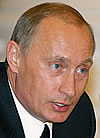
Coverage of the recent Duma poll and forthcoming presidential race suggests that Russian media increasingly only functions to endorse the government line, writes Oleg Panfilov
On 12 December, Vladimir Putin had an official meeting with the Chairman of the Central Election Commission, Vladimir Churov, and with the chairmen of several regional election commissions. The president offered his congratulations with regard to the Constitution Day and thanked them for the ‘highly professional work’ done during the campaign season of the State Duma elections.
The Central Election Commission is an officially independent organisation, so this meeting, and many others like it, could be viewed with some surprise. However, the reality is that Russians are not surprised or worried about this in the slightest. Political aggression from President Putin’s supporters has long been the norm, and it does not seem to upset anyone. On the contrary, such behaviour is widely welcomed, as many regard Putin’s actions to be an expression of masculine power, supreme courage and strong arm tactics.
(more…)
30 Nov 2007 | Comment
Vladimir Putin is ultimately responsible for last weekend’s oppression of political demonstrations, writes Oksana Chelysheva
There are two Russias nowadays. One is of Putin, with his images on every other bill board, trying hard to crush, scare and harass the other, democratic Russia.
Late Sunday evening I spoke by phone with Ella Poliakova, the chair of Soldiers’ Mothers’ Committee of Saint Petersburg. She had spent almost eleven hours in a police station. She was not detained during last weekend’s violently crushed march of dissent. Ella followed her friend Natalia Evdokimova, the chair of the Human Rights Council of Saint Petersburg, onto a police bus. She told me: “I heard an OMON [the militia of the internal affairs ministry] colonel ordering, “Detain that woman in the red overcoat”. He pointed at Natalia. I immediately rushed to her when she was being taken to the OMON bus.” A few hours later she was charged with resisting the police and participating in an unsanctioned rally.
(more…)
7 Oct 2007 | Russia
Just before my last trip to Chechnya in mid-September my colleagues at Novaya gazeta began receiving threats and were told to pass on the message: I shouldn’t go to Chechnya any more, they said, because if I did my life would be in danger. As always, our paper has its “own people” in the General Staff and the Ministry of Defence – I mean those who shares similar views to our own. We spoke to people at the ministry but, despite their advice, I did go back to Chechnya, only to find myself blockaded in the capital, Grozny. The city was sealed off after a series of strange events there. Controls were so tight you couldn’t even move between different districts within the city, let alone make your way out of Grozny on foot. On that day, 17 September, a helicopter carrying a commission, headed by Major-General Anatoly Pozdnyakov, from the General Staff in Moscow was shot down directly over the city. The general was engaged in work quite unprecedented for a soldier in Chechnya. (more…)
