15 Sep 2014 | European Union, News, United Kingdom

(Illustration: Shutterstock)
The Bureau of Investigative Journalism (BIJ) filed an application on Friday with the European Court of Human Rights in Strasbourg challenging current UK legislation on mass surveillance and its threat to journalism.
Lawyers Gavin Millar QC at Doughty Street Chambers, Conor McCarthy at Monckton Chambers and Rosa Curling at Leigh Day solicitors have been assisting the BIJ with its investigation. The group argues that UK legislation imposes constraints on journalistic free expression and does not offer enough protection for journalists’ sources, therefore it is in breach of Articles 8 and 10 of the European Convention of Human Rights (ECHR).
Information uncovered by American whistleblower Edward Snowden appears to highlight how developments in mass surveillance could pose a major threat to the process of journalism. Rules for the interception of data are set out in the Regulation of Investigative Powers Act (RIPA), however, this act does not offer enough controls or checks for external communications. Therefore, any information exchanged through services such as Gmail, Google Docs and Dropbox may not offer the level of confidentiality expected, the group wrote in their application to the ECHR.
It is not only communications which may be scrutinised by the government or secret services; they also have access to metadata, which is the data generated as you use technology. It includes information such as the date and time of phone calls and where emails are sent from. Metadata can be linked to sophisticated computer programs which can enable the user to collate masses of information, building an intricate picture of an individual or organisation’s movements, contacts, sources and lines of enquiry.
According to BIJ, the main implication of unregulated mass surveillance is that journalists can no longer offer anonymity to their sources, or assume that their work is confidential until publication.
This is further compounded by the number of the situations where it is deemed appropriate for surveillance techniques to be enlisted are vaguely defined within the law. It states that data can be intercepted where it is believed that the security or economic interests of the state are involved, meaning investigative journalists especially have to be cautious when covering topics which may be of interest to the government and the intelligence services.
Currently, the BIJ believes the only way in which journalists can be sure they are protected against mass surveillance is to do all of their communications in person, without the use of electronic devices – something which is often impossible, especially if sources are based outside of the UK.
However, under the ECHR journalists should be able to expect protection, the BIJ asserts. At the very least, the group said, this application will spark high-level debate within the government about how journalism and freedom of expression can be protected when governments are using advanced surveillance.
The BIJ says: “In the long term we would like to see proper regulatory control and scrutiny of how the intelligence services use mass surveillance to ensure these techniques and technologies are not being used to hamper legitimate journalistic investigation and inquiry.”
This article was posted on Sept 15, 2014 at indexoncensorship.org
4 Oct 2013 | News, United States
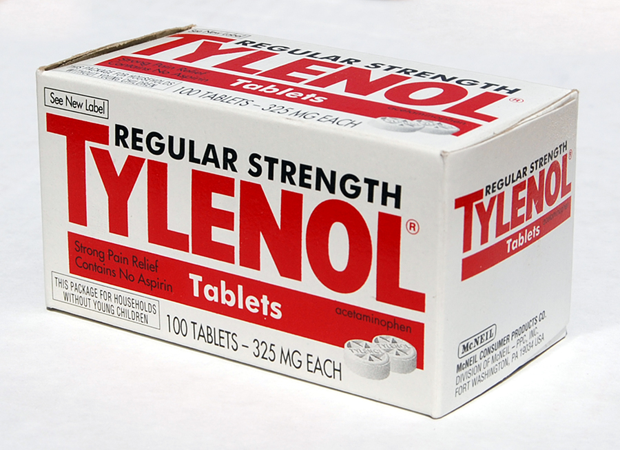
ProPublica and This American Life, both which I love, are making some waves for a story highlighting the risks of taking too much acetaminophen (known as paracetamol in the UK). They found that “taken over several days, as little as 25 percent above the maximum dosage – or just two additional extra strength pills a day – has been reported to cause liver damage”.
In a more than 10,000 word piece, they say that over the past decade 1,500 people have died from accidental overdoses of the drug in the US. The story is very critical of “McNeil Consumer Healthcare, the unit of Johnson & Johnson that has built Tylenol [the brand name of the drug in the US] into a billion-dollar brand and the leader in acetaminophen sales”. The story claims that:
McNeil opposed even a modest government campaign to educate the public about acetaminophen’s risks, in part because it would harm Tylenol sales.”
They also criticise the FDA, the US drugs regulator for not taking tougher action, but the agency said:
FDA officials said the agency saw the benefits of keeping acetaminophen widely available as outweighing the “relatively rare” risk of liver damage or death. Some patients cannot tolerate drugs such as ibuprofen, and for them acetaminophen may be the best option, said one agency official.”
I do appreciate that the story gave a bit of context in quoting the figures for accidental deaths of ibuprofen, another non-prescription pain killer. The article says deaths due to ibuprofen overdose are negligible.
Massive coverup? Hardly
But is the fact that acetaminophen can cause liver damage being hidden by an avaricious company with complete disregard for public safety or by an over-stretched US drugs regulator? Hardly. Google “acetaminophen risk”. The first result in the US is WebMD. See risks:
When taken incorrectly, however, acetaminophen can cause liver damage. And your risk of liver damage may be increased if you drink more than three alcoholic drinks every day, take more than the recommended dose (overdose), or if you take any additional drugs that also contain acetaminophen at the same time.”
Read a little further along under the next subhead, How to Use Acetaminophen Safely.
Make sure to use the correct dosage. Don’t take more acetaminophen than directed or take it more often than directed. Taking more than recommended can damage your liver — and won’t provide any more pain relief.”
We’ve got a couple of bottles of acetaminophen that we have bought in the US. One bottle from US pharmacy Walgreens says, “See New Warnings Information”. It has a specific liver damage warning. It has in bold: “Overdose warning: Taking more than the recommended dose (overdose) may cause liver damage.” Both bottles warn not to take with other drugs that contain acetaminophen or if you drink three or more alcoholic drinks per day.
Ok, I thought. Maybe McNeil is trying to protect their brand, Tylenol, as the story says over and over again. I went to the Tylenol site, the official site for McNeil’s acetaminophen brand, and at the bottom of the page, granted not prominently displayed but there, is a link called: Tylenol labeling change.
New Dosing Instructions: Beginning Fall 2011
Acetaminophen, the active ingredient in TYLENOL®, can be found in more than 600 over-the-counter (OTC) and prescription medications, such as TYLENOL®, SUDAFED® Triple Action™, NyQuil®, Percocet® and Vicodin®.* Acetaminophen is safe when used as directed, but when too much is taken (overdose), it can cause liver damage. Some people accidentally exceed the recommended dose when taking multiple products at the same time, often without realizing they contain acetaminophen or by not reading and following the dosing instructions.
To help encourage appropriate acetaminophen use, the makers of Extra Strength TYLENOL® have implemented new dosing instructions lowering the maximum daily dose for single-ingredient Extra Strength TYLENOL® (acetaminophen) products sold in the U.S. from 8 pills per day (4,000 mg) to 6 pills per day (3,000 mg). The dosing interval has also changed from 2 pills every 4 – 6 hours to 2 pills every 6 hours.“
Emphasis mine. Was McNeil against educating the public because they worried about damaging sales of their flagship brand? It would seem not.
Education Campaign: Get Relief Responsibly™
In addition to the new dosing instructions on the OTC label, the makers of TYLENOL® launched Get Relief Responsibly™, an initiative designed to educate consumers about the appropriate use of OTC and prescription medications, particularly those containing acetaminophen, and the importance of reading and following medication labels. As a part of this initiative, the makers of TYLENOL® have created a new website www.getreliefresponsibly.com. The site includes an interactive Acetaminophen Finder tool to help consumers identify products that contain acetaminophen and build a personal acetaminophen medication list to share with their healthcare provider or pharmacist.”
I don’t know how prominent the campaign was, as I live in the UK. And I thought that maybe they launched this quietly in response to the ProPublica investigation. Nope, the date on the page is autumn 2011. This would be consistent with the “See New Warnings Information” label on our bottle of Walgreen’s Pain Reliever PM. It undermines all the assertions in the investigation that McNeil has resisted efforts to reduce dosages or engage in public education.
Stating the obvious in thousands of words
These are facts hidden in plain view: Don’t take too much acetaminophen, especially with alcohol. Taking more than recommended won’t do you any good, and it could wreck your liver. As a matter of fact, we’re going to recommend taking less of our flagship product.
It took me 30 seconds to find the relevant info on WebMD, and another 30 seconds to quickly scan the Tylenol site. How long did it take ProPublica and This American Life? TWO YEARS AND $750,000.
As an editor, I keep saying to myself: Where’s the story here? The headline, anodyne even by American standards, is “Use Only as Directed”. My response: No shit. I mean, really? If you use a drug above the recommended dosage, there is a risk. If McNeil has ruthlessly tried to cover up the idea that if you take too much of the drug it will wreck your liver, they’re doing a really poor job.
Labelling on US acetaminophen bottles undermine repeated assertions in the investigation that the FDA has resisted calls for clearly labelling about overdose risks, especially with respect to liver damage. It is clearly listed under Warnings, in bold, on both bottles of acetaminophen we have.
Where is the breaking news? Has the FDA covered up the fact that if you take too much of the drug you can die? No, it hasn’t. Easily available information, both online and on the packaging, is clear about the risks of taking an overdose. But the key thing is that if you take too much of anything, even water, it can kill you. In technical terms it’s called LD50, the median lethal dose.
Whist Pro Publica’s piece does remind the reader to be more careful about taking other medications that might have acetaminophen and to more carefully monitor dosage, it isn’t revealing any new information, nor is it exposing a cover-up.
The story includes a clock, counting how long it has been since the FDA created an expert panel to evaluate the safety of over-the-counter pain relievers. The agency has not yet completed its work. This is about as damning as the revelations gets:
From 2001 to 2010, annual acetaminophen-related deaths amounted to about twice the number attributed to all other over-the-counter pain relievers combined, according to the poison control data.
In 2010, only 15 deaths were reported for the entire class of pain relievers, both prescription and over-the-counter, that includes ibuprofen, data from the CDC shows.”
If acetaminophen, at roughly 150 deaths per year, is twice the number of all other over-the-counter and prescription pain relievers combined, then doesn’t this undermine the entire assertion that the there is a pressing need for the FDA to have this expert panel deliver its findings? It doesn’t seem that pain killers as a class of drug are particularly dangerous at all.
Back to acetaminophen, in 2010, the last year the article has figures for fatal accidental acetaminophen poisoning, 166 Americans died. The CDC reported that 2,468,435 Americans died that year. The number who died from acetaminophen poisoning is 0.007 percent of total deaths in the entire country. Tragic? Yes. Common? Hardly. Ibruprofen deaths are negligible, especially compared with the 32,788 Americans who died in road traffic accidents. Journalists are incredibly poor at communicating relative risk, and this over-the-top investigation only serves to reinforce that. What pressing public health crisis has been identified at a cost of $750,000?
I don’t mean to dismiss the suffering of the nearly 150 people who died or of their friends and loved ones, and I think that this story is worth reporting, but in the right terms. For stories like this, I can even see the need to remind people every few years, just to drive home the point that taking too much acetaminophen is risky, especially if you drink a lot. However, I don’t think this story comes even close to rising to the standard of a two-year investigation costing hundreds of thousands of dollars.
Opportunity costs
Peter Osnos at The Atlantic praises the story and asks who will pay for expensive, investigative coverage. The piece seems to be equating the cost with impact. To me, as I said in a comment on the piece, this is not a piece for which we should be getting out our “yay investigative journalism” pom-poms. It proves that investigative journalism can be expensive, yes, but is it going to have an impact? This story will have no more impact than a run-of-the-mill public service piece that could have been bashed out in an afternoon.
Not all investigations lead to publication, and I know that some investigations take time to develop, but I cannot see why this story took two years and three-quarters of a million dollars to reveal information that can be found with a quick search online. As a journalist and editor, I have to ask what is the opportunity cost? The opportunity cost is:
The cost of an alternative that must be forgone in order to pursue a certain action. Put another way, the benefits you could have received by taking an alternative action.”
In this era of scarce resources, it is even more important to ask what opportunities are foregone because resources are deploying elsewhere. It’s Econ 101, but it is an incredibly important question that we need to ask. Two years and three-quarters of a million dollars is a huge investment. It’s the kind of resource that most journalists would give their spare kidney for, but if we’re going to sink that kind of time and precious coin into a story, that story better be worth it.
When I started this post, I thought this was simply about an overly expensive investigation. It took me almost no time at all to undermine the core elements of this story with basic online research. McNeil, if they trying to bully the FDA into inaction, appear to have failed. If a minimal bit of online research calls into question key elements of this story, there are even bigger problems than the excessive cost and time.
UPDATE: I did originally post this under the headline “30 seconds to debunk”, which in retrospect is a bit harsh. ProPublica has meticulously documented their points to the point where I think they completely diluted the impact of the piece. If as a journalist, you want to draw attention to the dangers of the drug, the piece should have been much, much shorter, highlighted the low margin for error in taking more than the recommended dose, especially with alcohol and been done with it. The story has problems, and one of the biggest is that it is incredibly self-indulgent. It fails the most basic commandment of a good piece of journalism: Get to the point.
This article was originally posted on 4 Oct 2013 at Strange Attractor and is reproduced here by permission.
5 Oct 2011 | Uncategorized
Key witnesses at the House of Lords Communication Committee believe that education is the key to the future of investigative journalism in an increasingly difficult media environment.
Speaking at the inquiry into the future of investigative journalism, key witnesses John Lloyd and David Levy from the Reuters Institute and John Mair, a senior lecturer in broadcasting at Coventry University suggested that reform of the journalism education system in the UK could be the way to move journalism forward in an ever evolving landscape.
John Lloyd explained that new forms of crime “are furiously complex” and as such a need for an improved education of journalism is crucial. Lloyd said that contemporary journalism needs better explaining and understanding skills than ever before, along with a wide range of new skills and an understanding of new technology.
John Mair commented that journalism education in the UK is “a mess”, and suggested that every journalism course should have an element of investigate journalism training, but added:
“Investigative journalists are a strange breed. They’re accurate, they have a sense of mischief, and they’re bloody determined. I’m not sure you can teach that.”
Levy explained the importance of investigative journalism in society, commenting that it “uncovers things people don’t want to be uncovered,” but stressed that there was a need to balance what was in the public interest with what interests the public. Levy also said that in the process of uncovering those things, deception was sometimes necessary, and spoke of an opportunity for journalism which “covers a wider spectrum of organisation,” suggesting that more organisations could benefit from closer scrutiny.
Describing the MP’s expenses revelations as “classic investigation,” Mair said that the scandal was “admirably” exposed by the Daily Telegraph.
Lloyd stressed that the public interest is the core of investigation. He supported the view that measures taken to uncover investigative journalism stories are retrospectively justified, claiming that the checks and balances that are in place are such that it is possible to determine the extent of the public interest. Throughout the evidence session, the witnesses stressed the importance of balancing the damage done through investigation proportionately with the public interest.
The witnesses suggested that “mutual” journalism, a result of the internet, between professionals and citizens could be the future of the trade. Mair added that the changes in the media sphere had changed dramatically, comparing citizen journalism as we know it now to the reader’s letters sections of the past.
Lloyd added that journalism must build into the area in which profits can be realised, citing investigative journalism as a key aspect of this. He described the MP’s expenses scandal as “an uninhibited search for scandalous information”, and went on to suggest that unless this kind of journalism is being undertaken, the plurality of the British press will shrink.
The committee raised concerns regarding “retrospective justification” of investigative journalism, and the witnesses explained that justification is the only kind there is, but explained that editors and journalists must be prepared to face the consequences of their investigations and publications. Lloyd explained in relation to the phone hacking case in particular, “the end justified the means.”
The session was completed with a statement from Mair: “Great investigations keep us all honest.”
