14 Sep 2011 | Index Index, minipost, News
According to a source on the ground in Sudan, National Scurity forces prevented the distribution of Al-Maydan, the newspaper belonging to the Sudanese Communist party on 13 September. Yesterday was the fifth confiscation of the tri-weekly newspaper since last week. Other newspapers have also been confiscated on multiple occasions in the past month.
14 Sep 2011 | Egypt, Middle East and North Africa
The Cairo offices of Al-Jazeera Mubasher (Direct), an affiliate of the Qatari-based Al-Jazeera International news network, were ransacked by Egyptian security forces early this week. In a raid on the channel reminiscent of an earlier raid on Al-Jazeera International’s Cairo offices by Mubarak’s security forces during the mass uprisings last February, equipment was seized and a studio engineer was detained. Transmission by the network — devoted almost entirely to live coverage of developments in post- revolutionary Egypt, including street protests — was abruptly brought to a halt. But programming resumed a few hours later from Al-Jazeera’s headquarters in Doha.
The channel’s website quotes an unnamed security source as saying that, prior to the raid, several complaints had been filed by residents of the Giza neighborhood where the channel’s offices are located. The residents accused the network of being noisy and disturbing public peace. The source added that during an ensuing probe, it was discovered that the channel had been running without a license in violation of Egyptian media laws.
The channel’s lawyer defended the network, saying Al-Jazeera Mubasher had applied for a licence before it began operating in March, but had not received any response from the Egyptian authorities.
Earlier, Egypt’s newly appointed Minister of Information, Osama Heikal, had issued a stern warning that the government would deal firmly with stations that “endanger the stability and security of the country.” Media analysts fear the raid and the minister’s warning signal a slide back to the repressive ways of the Mubarak regime.
The decision was met with an outcry from journalists. “This is unacceptable in the new Egypt,” said Ibrahim Badawy, a journalist working for the independent El Youm El Sabe. “The raid is a serious breach of a basic human right — the right to free expression. If we remain silent, the government will not stop at this but will take more measures to curb media freedom.”
In the same speech broadcast on Egyptian State TV, Heikal announced that the government would discontinue the issuance of permits for new stations, citing concerns about broadcasts that incite violence. The announcement came after fiery protests in front of the Israeli Embassy last Friday turned deadly. Three protesters were killed and nearly 1000 others were injured after security forces fired tear gas and plankets to disperse the protesters.
Wealthy businessmen closely connected to the previous regime had a monopoly on ownership of independent satellite channels during the Mubarak era. They used their privately-owned channels to further their own business interests and stuck rigidly to the government line, spreading the same government propaganda disseminated by state-owned TV channels.
After the uprisings that forced Mubarak’s authoritarian regime out, there were small signs that Egyptian media was finally changing course, as independent TV and radio channels and publications began to emerge. Most declare “objectivity, clarity and free expression” as their stated goal. Some, like the January 25 channel launched by veteran producer Mohamed Gohar after the revolution, claim that their motive is the creation of a people to people channel — one that allows Egyptians to see themselves for the first time. “For a long time the underprivileged members of society were hidden and not given a platform to air their views. But no more,” Gohar told me.
The new January 25 channel — named after the date Egypt’s longtime dictator Hosni Mubarak was ousted — is almost completely run by young revolutionaries themselves. Although critics describe it as amateurish, the channel is as revolutionary in content and form as the young activists themselves who operate it. A live cooking show presented by a former cook and housemaid turned celebrity chef is just one striking example of how things are changing in post-revolutionary Egypt.
Meanwhile activist and media specialist Hisham Qassem — who is in the process of establishing a new media group that will produce TV and radio broadcasts, an online wire service and a daily newspaper — described the government decision not to grant licenses to new media outlets as a “disappointing development.” He added that, with parliamentary elections less than two months away, it was a knee-jerk reaction from Egypt’s tense military rulers who wish to avoid any kind of incitement.
Qassem however pointed out that the decision may have an opposite effect. With the mainstream media’s credibility at an all- time low, the crackdown may give the politicised social media the chance of creating the very tensions the SCAF is hoping to avoid. “The crackdown on media freedom could very well lead to an information meltdown where rumours dominate,” he warned.
Both Qassem and Gohar believe that the new atmosphere for free expression in the post-revolutionary era will prevail. “The trend is irreversible and with the fear barrier now broken, there is little the government can do to silence the ‘free voices’ or curtail free expression,” said an optimistic Qassem.
Journalist and television anchor Shahira Amin resigned her post as deputy head of state-run Nile TV on February. Read why she resigned from the “propaganda machine” here.
14 Sep 2011 | Index Index, Middle East and North Africa, minipost, News
Algeria has announced plans for reforming stringent media laws in order to allow for private radio and television stations to operate for the first time since 1962. The cabinet of President Abdelaziz Bouteflika also pledged to stop jailing journalists for libel, and to free those already imprisoned on libel charges. A new commission will be created in order to regulate the press, rather than being under the control of the justice ministry, and the group would also include journalists. Newspapers could still face banning or suspension on the basis of “threatening state security”.
14 Sep 2011 | Uncategorized
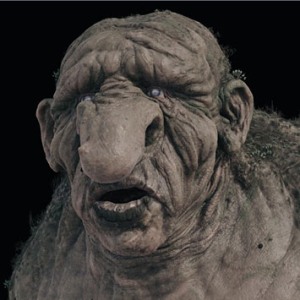 Sean Duffy has been jailed for 18 weeks for “trolling” tribute pages to suicide victims. But was he a “true troll” or was this harassment? And is there a philosophy behind trolling?
In this extract from an interview in Index on Censorship magazine, Whitney Phillips speaks to troll “Paulie Socash” about tribute sites, free expression and where trolls draw the line
(more…)
