This piece first appeared in the Winter 2025 issue of Index on Censorship, Gen Z is revolting: Why the world’s youth will not be silenced, published on 18 December 2025.
It was a bleak start to 2025 for Zelda Perkins. She had been working tirelessly to ban the misuse of non-disclosure agreements (NDAs) since she broke her own gagging order in November 2017. She revealed that other Miramax employees were silenced for almost two decades to prevent sexual misconduct allegations about former film producer and convicted sex offender Harvey Weinstein getting out.
After years of campaigning, when the Labour party won the UK general election in July 2024 Perkins felt that a ban on NDAs in UK workplaces was finally on the horizon.
“The exact opposite, in fact, happened,” she told Index. “The brakes were suddenly put on.”
In March this year the government told Perkins there was no place for the NDA clause in the much-lauded Employment Rights Bill (ERB) – an increasingly ambitious piece of legislation that promises to transform workers’ rights across the UK. Perkins wasn’t deterred, however.
“I just thought ‘I’ve literally spent seven years of my life on this. I’m not giving up right now – you must be joking’.”
After reaching out to contacts in parliament, an amendment to the ERB was soon tabled by MP Louise Haigh in April, receiving cross-party support.
“At this point I can only imagine that the government started to realise it wasn’t something that was going to go away,” Perkins said.
The government ultimately agreed to include it in the ERB, but wanted to come up with its own amendment. There were concerns – and not just from Perkins – that the final wording would be watered down to appease businesses nervous about banning NDAs altogether in the workplace.
Perkins says the final version, which was unveiled just before parliament broke for the summer recess in July, would protect all workers subjected to harassment and abuse from being silenced in future.
“This means that an intern is protected,” she said. “It means that a work experience person is protected. It means that a waitress in a restaurant who gets harassed or discriminated against by a customer is protected. That is extraordinary and is not something that I had dared ask for.”
There was another hurdle, though. In early September, some of the key architects of the legislation left government after the departure of deputy prime minister Angela Rayner prompted a cabinet reshuffle. Perkins was nervous this could spell the end of the NDA amendment, but it was debated in September. [Editor’s Note: The Bill finally received Royal Assent on 18 December 2025, becoming the Employment Rights Act. The Act now states that provisions in agreements between an employer and a worker that attempt to prevent the worker from making an allegation or disclosure of information relating to relevant harassment or discrimination are considered void.]
Perkins believes it will give a voice to victims while still allowing those who wish to seek confidentiality, or even settlements, the opportunity to do so.
“We’re now in a place where no clause, including non-disparagement, is valid if its action is to stop somebody speaking about harassment or discrimination,” she said. “That’s amazing. It’s not just workers’ rights, it’s human rights – and that’s not going to get rolled back.”
The devastating and unseen human impact of NDAs has always been viscerally close to the heart of Perkins’s campaigning. When her colleague Rowena Chiu alleged that Weinstein tried to rape her on a trip to the Venice Film Festival in 1998, she turned to Perkins. NDAs prevented both women from speaking to each other or anyone else about the incident for decades. Both had to abandon their careers, and Chiu even made two attempts on her life.
Already scarred by what had happened to her, Perkins remembers attending a government-run consultation on NDAs and realising the true extent of the problem.
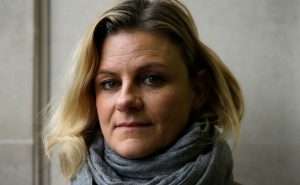
Zelda Perkins CBE says NDAs ruined many women;s lives. Photo: AP Photo/Alastair Grant/Alamy
“In that room, there was a teacher, a charity worker, a lawyer, a civil servant, somebody who works in the oil industry and others,” she said. “But what completely blew my mind was that every single person in that room told the same story, and that story was about how being silenced and having their voice taken away catastrophically changed the course of their life. The figures were different, the environment was different, but the tactics were exactly the same and the result – and the effect it had on their lives – was exactly the same. It essentially ruined all of their lives.”
It was partly this realisation, together with the recognition that the legal process itself was stacked against victims, that led Perkins to take on the unenviable task of trying to ban NDAs altogether.
“We can’t change the dark and light of human behaviour but we created law to protect us, and if the law is not doing that and, in fact, is working to enable poor behaviour and the darker side of humanity then it’s not working, and its integrity is being called into question.”
When asked whether she would do things differently if she were to begin her campaign now, Perkins nodded without hesitation.
“Two to three years ago I felt that I had a really strong hand speaking to the diversity, equity and inclusion policy [DEI] people in businesses because they really cared about it and whether, rightly or wrongly, they had to tick those boxes,” she said.
“Now that’s being reversed. There’s a huge shift and nervousness around the protection of the vulnerable in the workplace directly because of what’s happening in America.”
The increasing pushback against DEI initiatives by the current US administration is having a noticeable ripple effect, she said, with growing numbers of UK businesses quietly deprioritising and even ditching such initiatives altogether. This trend was explored in recent research by law firm Freeths, which found that some 28% of companies surveyed with more than £100m in revenue reported either making “wholesale changes” to or abandoning initiatives including DEI in response to the Trump administration’s criticism of the “woke” agenda.
Despite these developments, Perkins says it speaks volumes that the UK has taken the crucial step of legislating against the misuse of NDAs in the workplace at a time when “speaking truth to power is under such a huge, real threat”.
She also hopes the fallout from the USA could actually help her and other campaigners drive home the central message that the legal process itself must not be manipulated by lawyers or wealthy individuals to cover up systemic abuse.
“It is about the fact that you cannot use the law to hide harm. I’m talking about all forms of harm – all these different things that can be hidden behind confidentiality which are harmful,” she said. “You cannot have the law hiding malpractice.”