Each generation has its resentments and irritations with the previous one. The baby boomers rebelled against post-war austerity, and their fury fuelled the student revolutions that swept the world in 1968. In some senses, they were the lucky ones. In the UK, free higher education and cheap housing made the boomers rich and comfortable. My own peers, Generation X, sneered at their smug complacency as we were hit by recession, the Poll Tax and Thatcherism. But some also benefitted from the unleashing of the free market, or rather the housing market. The millennials that followed were the first digital natives. They were hopeful and idealistic, but they were also the first generation to be saddled with crippling student debt.
These generations had little in common, but one thing they rarely felt, in the West at least, was silenced.
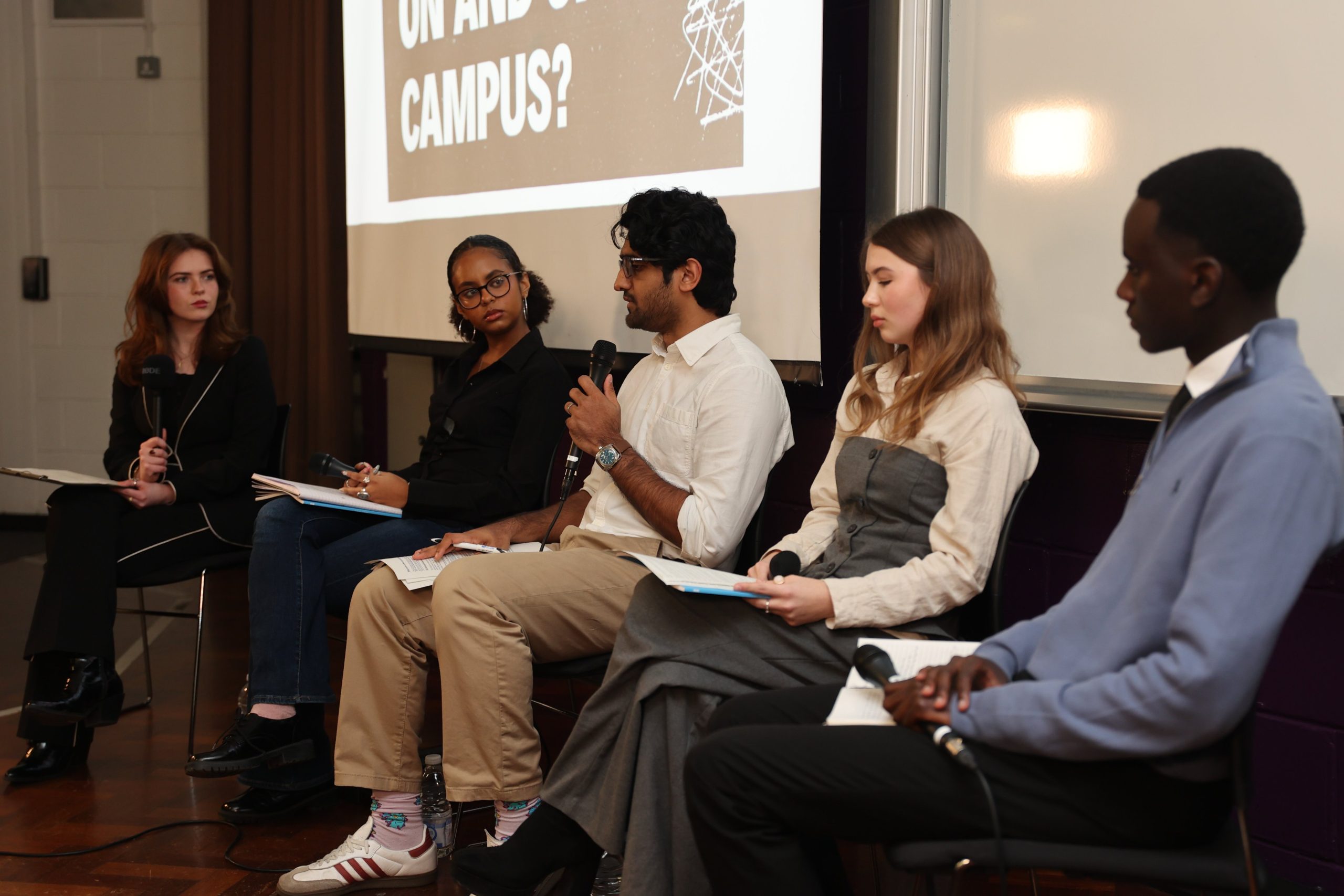
At the launch event for our Gen Z edition of Index on Censorship at the University of Essex recently it was striking how many ways the panellists felt their voices had been muffled and contained, if not outright censored. The speakers at the event (Has Gen Z Been Silenced On and Off Campus) could not have been more diverse, but they each felt restrictions on their free expression keenly. Sariah Lake, head of editorial at Essex Student Union’s Rebel Media said while she recognised that in some parts of the world, young people’s voices were being genuinely censored, for her the key issue was the influence of social media. “We are losing focus, we are getting distracted, we are just going to repost things,” she said. “Overcoming distraction, connecting with the real world, connecting with originality is what we can do to maintain freedom of speech.”
Adil Zawahir, an Indian lawyer working on a master’s degree in human rights law, said the situation was different for overseas students. “In the West, and the UK in particular, the curtailment of speech is not due to a fear of repression, it is more because of the fear of social ostracization and the anxiety you may feel after you’ve spoken out.” He added that international students have a double problem. “We share the social anxiety, but in addition to that, every time we think about speaking out, in the back of our minds is our status in this country. It is a temporary status. We are always subject to what the government decides for us.”
For Yelyzabeta Buriak, a journalism student from Ukraine who has written about her experience for the latest edition of Index, her situation as a refugee from a war zone brought with it extra concerns and restrictions. She said she avoided discussing the topic of Ukraine altogether for the first year in this country. “I’ve been carrying a feeling of guilt: for being safe here while my parents and friends are still in Ukraine in a very dangerous area,” she said. “You have this feeling of guilt, and you are always careful with words. You think ten times before saying something.” Sometimes, according to Buriak, the biggest silences are not caused by the law or university policy. “Sometimes it is self-censorship, sometimes it is fear, guilt and online judgement and sometimes its is paperwork and systems.”
An important reminder of the wider international context was provided by Merick Niyongabo, President of the Politics Society at Essex, who celebrated the Gen Z revolutions in Nepal, Bulgaria and Kenya but also pointed to the internet shutdowns being used across the world to silence dissent. “It’s important we raise the voices of those who are not being heard, the voices of those in Iran and Russia, who are going through repression, but not able to publish what they are writing or express their views because of censorship.”
A launch event for the Index on Censorship Gen Z issue was also held at Liverpool John Moores University, where the students mainly discussed a campaign to make LJMU a “Pro-Choice Campus”. A report of the event can be found on the Mersey News Live website, which is run by students at the university.
The event at University of Essex was to launch the Winter 2025 issue of Index on Censorship, Gen Z is revolting: Why the world’s youth will not be silenced, published on 18 December 2025.