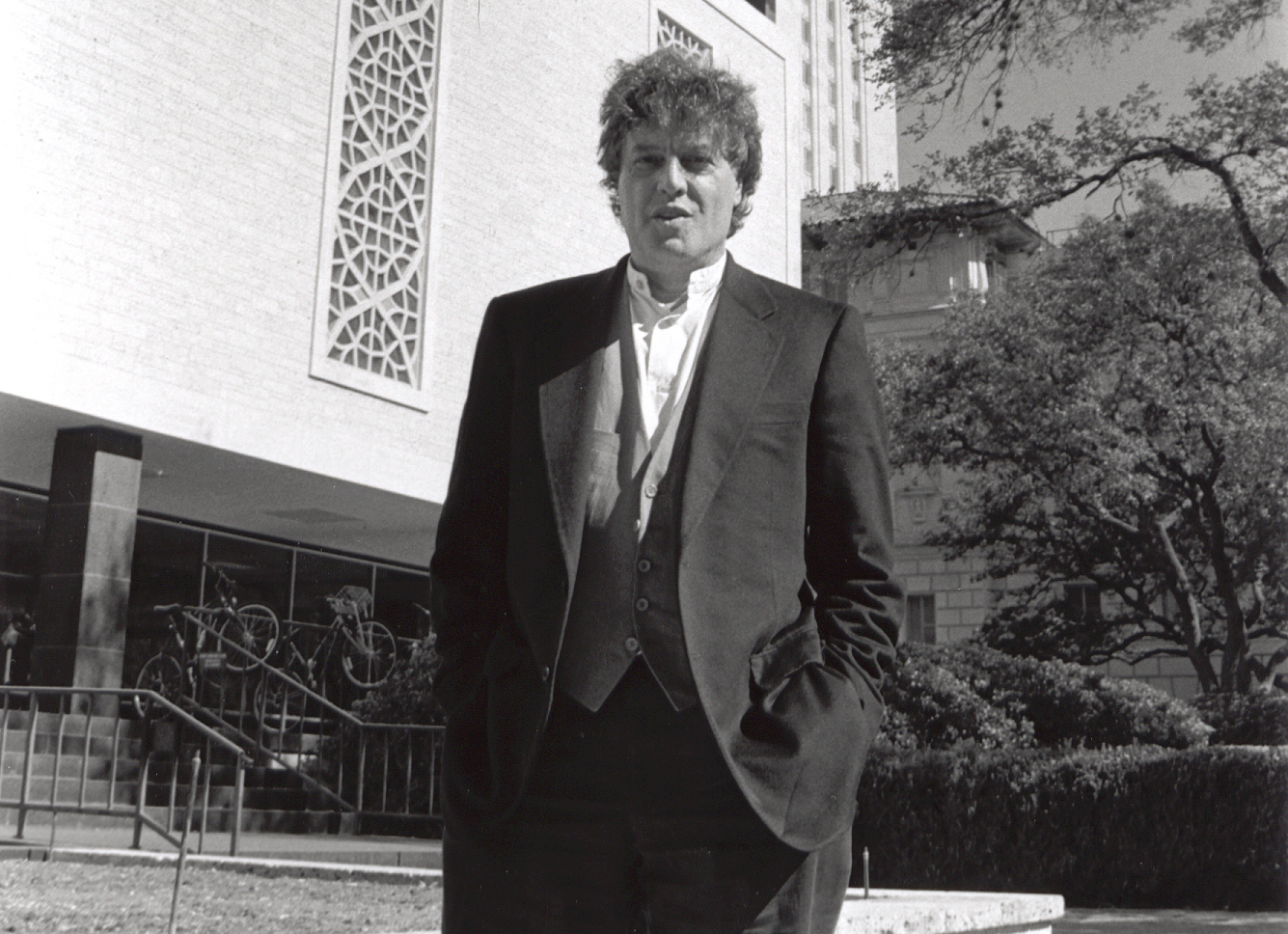
Some critics spotted a finality about Leopoldstadt, Sir Tom Stoppard’s play about generations of a cultured Viennese Jewish family charted through years of darkening anti-Semitism to the destiny of the camps.
Stoppard, the dramatist of ideas and pyrotechnic use of language, had chosen at last to confront his own history and identity. The late critic Kenneth Tynan had said many years before: “You must never forget that he is an émigré.” Jewishness, totalitarianism, history, family, enlightened conversation, liberty. It was as if all the cumulative themes of Stoppard’s life were woven into this play.
The character of Leo, who escaped to England and led “a charmed life”, is reproached by his cousin, an Auschwitz survivor: “You live as if without history, as if you throw no shadow behind you.” If Leo is the self-portrait of Stoppard then the play seems to be laying ghosts to rest for a playwright in his 84th year.
This view underestimates the extraordinary intellectual curiosity and restlessness of Stoppard. Lockdown has been a time of productivity for him, although he has not yet found the subject of a next play. There are new subjects and there are perpetual themes. He is a champion of freedom and plurality against totalitarianism in all its forms. He joined the advisory board of Index on Censorship in 1978, after writing about the incarceration of the Soviet dissident Viktor Fainberg. His moral world view was forged by the Soviet tanks that rolled into Prague in August 1968 and his long friendship with the dissident writer and, later, president of Czechoslovakia Václav Havel.
Stoppard on the creative process
The Jewish Czech émigré, bound like a sail to his past, is sitting in the kitchen of the rectory in Dorset that he shares with his third wife, the TV producer Sabrina Guinness. She has put the kettle on and is serving scones, jam and cream. Stoppard, who is sceptical of most orthodoxies, is chain-smoking.
We are here to discuss intellectual freedoms and his creative thinking, and he looks anxiously at my digital recorder and notebook. I remember the account in the recent major biography of Stoppard by Hermione Lee of a visit to his home by the former head of BBC Radio 4 to discuss a Reith lecture, only for Stoppard to talk himself out of the plan. His creative integrity is founded on uncertainty and ambivalence; his choice of words is precise. Journalism can simplify and blunt.
Yet he retains a camaraderie and interest towards my trade, for he began his career as a reporter on the Western Daily Press in Bristol.
I ask him first about the creative catharsis of Leopoldstadt. Was this the completion of self? He says: “I didn’t know how the play was going to develop and work out but what I did know was the last scene in the play would include someone much like me who came to England and had his name changed and carried on from there. I was nudged into it finally by a reference to myself in a book, Trieste by the Croatian novelist Daša Drndić. The heroine rebukes me – among others – for being too pleased with their luck and not looking back. I read this and my immediate thought was, ‘she’s right’. The seed for Leopoldstadt was planted in that moment, but I didn’t know it. At the time I was obsessed with the problem of consciousness – ‘the hard problem’ – as it was known to neuroscientists – and until I’d written that play I wasn’t open to anything else. Bloody typical! Set against my family history, consciousness was a problem? When I finally got to writing Leopoldstadt, it was an act of contrition to Drndić, but she had died a few months earlier. I wish I’d written to her.”
Yet the scene became a smaller part of the whole and, as Stoppard points out, if he had wanted to make it entirely autobiographical, he would have made the family Czech rather than Viennese.
“I didn’t identify personally with the family. Recently, I heard about somebody of my generation, my sort of background, whose name was changed in childhood, who because of seeing my play decided to revert to his original name. I mention that now because it never occurred to me to do that. I feel that I am the product of every decade of my life. I have been here for eight decades and I don’t feel defined by my first one. I have become incrementally who I am from the age of eight. I am now living an English life, with an English name and English attitudes. Because that is so, I am quite OK in my skin, to be this person. I don’t need to see myself differently as a result of this play.”
Stoppard on the West
Stoppard the man is the sum of his decades but he has a moral core of beliefs. He fled from the tyranny of Nazi-occupied Czechoslovakia as a child and confronted the Soviet tyranny that followed. He wrote in 1985: “We must still retain the view that the Western way of attempting to run a democracy is absolutely and metaphysically better than the undemocratic systems, not just because of some emotional preference for the system but because it is actually and intrinsically better.”
Is this still the case? The West now has to deal with the forces of populism, the internet and a rise of orthodoxies such as cancel culture which might threaten the tenet of free expression. Stoppard is too intellectually honest and curious to be complacent about his lifelong principles.
He draws on a cigarette, both handsome and frail. He talks of a lessening of energy to write and to think and yet he is as alert as a hare.
“What I was about to say was that essentially my views pretty much remain where I was when I was taking a proper interest in what was happening before the late ’80s when the Soviet Union existed, and it seemed absolutely clear to me that free expression was what made all the other freedom possible, so it was everything.
“I am not sure that I feel very different now, and we will come to whether the existence of the internet only alters the rules or changes the game. The view I took was that if someone indulges their right to free expression by putting forward a truly anti-social argument the only response was to put a better argument. I’d have to stop and think to know whether I am still there.’’ He pauses. “Yes. I am.”
Stoppard on the free press
A test of his resolve was the journalistic practices uncovered by the Leveson Inquiry, which in 2011 and 2012 investigated the culture, practices and ethics of the press in the UK. He tried to stand by his mantra that “junk journalism is the evidence of a society that has got at least one thing right, that there should be nobody with the power to dictate where responsible journalism begins”. He has kept fragments of coverage from that era, parliamentary reports, responses.
“I believe in a free press. I support Hacked Off because I want a free press to be a fair press which comes clean about its mistakes. Self-regulation failed and continues to fail. I’m on a knife-edge about regulation. When I read about some egregious behaviour by a newspaper, my blood boils and the idea of some kind of legislated redress for the victim no longer seems like anathema. But when I read about online investigators Bellingcat or listen to the podcast of the Paul Foot award for investigative journalism, I have the opposite reaction – hands off at all costs, even the cost of whatever unfairness. Journalism is fractal, it won’t separate into segments. Leveson was 10 years ago now; day after day, free expression in the context of British journalism seemed to me to be about as important a subject for any kind of writing, including plays, as you would find. But I never got as far as understanding how to deal with it as a playwright. Theatre is a storytelling art, and I didn’t know how to tell the story.”
More testing is the tornado of information on the internet and the new frontier of cyber warfare. Can the better argument be heard in the storm of “alternative facts”? How does contemporary public discourse feel to someone who values truth and precision above all?
His shoulder stoops slightly. “It feels ungovernable. And I don’t know what to do about it. A line of Philip Larkin comes into my head: ‘Get out as early as you can and don’t have any kids yourself’.
“It’s a kind of funk, it’s a kind of relief that the big problems will be somebody else’s, starting with climate change. So like most people I know, I try to do my bit on the side of right and the side of good behaviour and the right way to live, but that feels like making a posture towards a world that hasn’t arrived yet and looks as if it will arrive after I have gone. So I feel a bit cowardly about that – I mean, too passive.”
Then, cheering himself up, he adds: “ I have always been good at zig-zagging. I have always got a zag to my zig. Theatre is recreation. Entertaining is worth the effort, adds a bit to the common good. So there are these conflicting thoughts in my mind.”
What captivates him more than politics and current affairs is moral philosophy. “What is the good life? The questions that interest me enough for me to want to write a play about them are unfortunately so generalised across human behaviour, human nature, that you end up saying nothing about a real-life problem.”
His cuttings about a free press are the nearest he has got to preparation for a play. He always returns to the prevailing theme of his adulthood: freedom of expression.
“Have I fallen behind the times fatally or am I one of the dwindling band of old fogeys who are still trying to hang on to the core truth of what freedom of expression means? Since I am an old fogey, I naturally hang on to that.”
Stoppard on freedom of expression
What does freedom of expression mean to Stoppard in these times?
“My utopia is an arena where it is not just two sides of an argument, it is every side. A pluralism in which every side is free to express itself. I would pretty much have no problem with even the excesses of an over-excited popular press if the corrective to a particular excess was freely heard in the same arena.”
Is the pluralism of the internet compatible with this utopia or does social media drum out pluralism?
Stoppard replies that he is “attracted to the cacophony of the market place”. He likes the idea of the Hyde Park Corner soapbox as an electronic platform. But he asks: “Can a Hyde Park orator represent what is free? It is so asymmetrical. Now with the internet, the equation is just as unwritable as in mathematics, the equation is out of control.”
He defines censorship as “getting ahead of publication”, and this is the most worrying threat he sees to freedom of expression. It is the closing down of thought. It is the culture of cancellation. “What worries me is that the way the conflict is played out feels like the orthodoxy of those societies I was fighting against. The society which is now accommodating to the cancellation culture is taking on the character of totalitarianism. Of course, it is not totalitarianism, it is a different kind of frenzy. Both of them – the orthodoxy of totalitarianism and the orthodoxy of wokeness – take on the characterisation which one remembers from Stalinist and Maoist society. A kind of contagion. It is really quite ironic how the big battalions of corporate and commercial enterprises capitulate to the first murmurings of what is now the new demotic player.
“The other night I got to the end of an 800-page biography of Philip Roth I read a bit of Philip Roth ‘back then’ and more recently. It would be difficult to find another writer who is as illuminating as a spokesman for a certain part of American life.
“In other words, it is a book worth writing and a book worth reading and it is good that somebody wrote it and did a good job. And anybody who cares about writing should care about the absolute freedom to publish a biography of somebody like Philip Roth.
“And the idea that a really rich big publisher like Norton should throw in the towel at the first inkling of alleged misbehaviour by its author is astonishing.”
The publisher, WW Norton and Company, cancelled Roth’s biography, halted the distribution of unshipped copies and cut ties with its author Blake Bailey because of allegations of sexual harassment and assault. Bailey has denied any wrongdoing.
“It feels like a big defeat for literary culture,” says Stoppard. “In saying what I am saying about the book, I am not taking a view on the personal character of the biographer or of the subject of his biography. I am taking a view on the freedom to write and read the book.
“So you catch me at a moment in which I am quite depressed that the publisher would rather pulp 50,000 copies of this book rather than being willing to defend publication for fear of appearing to be underwriting somebody’s alleged behaviour. One doesn’t want a world where one is spuriously made to feel that one is taking sides on the wrong question.”
The appeal to judge writers for their work is surprisingly controversial in these times. Censorship is a cultural issue. Cancellation is coming from culture and, as Stoppard puts it, “culture determines everything”.
He adds: “Back then we used the term ‘brainwashing’ a lot. We used to think of millions of Chinese waving Mao’s Little Red Book as people who had been brainwashed. It shared some characteristics of a religious fervour.”
Stoppard on J K Rowling
I ask Stoppard about the nature of this cultural orthodoxy. The swiftness to condemn perceived transgression could be belief akin to religion – or could it be commercial self-interest? I ask him for his analysis, for instance, of the ditching of author JK Rowling by the cast who owe their fame and fortune to her.
He responds thoughtfully: “I asked myself at the time and since whether Emma Watson and Daniel Radcliffe acted from self-interest and panic, or whether I am really so far out of it that I can’t make the imaginative leap into the head of someone who was authentically affronted by what Rowling said.
“I have now got grandchildren, and I think this is a truth for them. Whereas I come from a generation where there seemed to be very little argument about what truth meant.”
I quote Oprah Winfrey talking to Meghan Markle about “her truth”. Is truth now assumed to be subjective, rooted in identity? How does it sound to a playwright who has spent his life trying to define the meaning of words, and thus their truth?
He shakes his head. “I would love to be able to write something, anything, which would make Meghan stop in her tracks and say: ‘Oh my God, I get it. Thanks Tom!’”
Was he sympathetic to the response of the Queen that “recollections may vary”? “It only increased my admiration for the Queen,” he says.
Righteous certitude seems some distance from the “cacophony of the market place” which is Stoppard’s intellectual forum. Is there room for doubt in our contemporary culture? “I threaten to see very often both sides of an argument. So I was very responsive to that period of Oxford philosophy which was essentially saying that anything not only true but intelligible had to be verifiable. That was my understanding about meaningful propositions. You can say that Virginia Woolf was the fourth tallest novelist in Sussex but you can’t say that she is the third best. It has to be verifiable.”
Stoppard on universities
Are universities still a place for free thought and questions?
“God, if there is anywhere where truth should be up for examination that’s where. The whole thing of ‘my truth’ just feels wrong. In a totalitarian society, for example, you can have Marxist physics, or capitalist physics. The idea that truth is susceptible to a view that is relative was and is still so wrong-headed to me it seems hardly worth contradicting it. It is bewildering, actually.The danger to society of actual censorship has probably never been greater. “
Stoppard, who has written of putting on Englishness “like a coat” and has defended this island democracy against angrier anti-establishment writers, sounds unexpectedly fretful and sombre.
“It could not have occurred to me in the 1960s, ’70s, ’80s, ’90s that this bulwark would begin to give way. It is deeply worrying because my position has always depended on people in general in this country holding, broadly speaking, common sensical views. It was other kinds of ideologies, other kinds of societies where the defences had given way. I used to say to myself that the difference was that abuses in Britain – and there were many: police corruption, whatever – were examples of a failure in the system, whereas in an undemocratic society, the abuses – violations of human rights – were an example of the system in good working order. That was a make-or-break frontier for me. That was the fault line between a fair and an unfair society. Now one asks oneself, can one actually say that all the abuses are the failure of the system or have they insidiously become part of the system? You have to ask yourself if you are being naive or if there is something substantial which has gone missing, been corroded.”
He is reluctant to be too particular but names the Greensill Capital lobbying affair in the UK as one example. The day after I see him, the story breaks about journalistic deceit at the BBC’s flagship Panorama programme 25 years ago.
Stoppard on communism
Does the “moral chasm” between the West and the communist world still hold true to him? Stoppard answers a more profound question. What were Václav Havel and his fellow writers fighting for?
“They were not trying to bring about a consumer society. They didn’t want Czechoslovakia to go from being communist to being West Germany. They were more idealistic about the kind of democracy they would have. Because of larger forces beyond my ability to delineate, the broad tendency has been towards a kind of populism. I think driven not so much by ideology as by a realisation that capitalism can itself be distorted for self-enrichment.”
The wind is whipping against the kitchen window and rain comes as if in handfuls of stones. Stoppard is incapable of intellectual complacency but his view of the world outside these solid rectory walls sounds more than questioning: it sounds sorrowful.
I ask him about religious thoughts and he describes himself as “not practising, nor irreligious”. Then he perks up. “I am told that very few people in the scientific field nowadays think there is such a thing as free will, whereas I do. I feel strongly that free will is a real thing.”
He pauses and we grin at each other. “It is a brilliant subject,” I say. “Yes, that is a good example of the kind of thing which unfortunately appeals to me as a possible play…”