17 Jun 2015 | Azerbaijan News, mobile, News
Governments don’t really like coming across as authoritarian. They may do very authoritarian things, like lock up journalists and activists and human rights lawyers and pro democracy campaigners, but they’d rather these people didn’t talk about it. They like to present themselves as nice and human rights-respecting; like free speech and rule of law is something their countries have plenty of. That’s why they’re so keen to stress that when they do lock up journalists and activists and human rights lawyers and pro-democracy campaigners, it’s not because they’re journalists and activists and human rights lawyers and pro-democracy campaigners. No, no: they’re criminals you see, who, by some strange coincidence, all just happen to be journalists and activists and human rights lawyers and pro-democracy campaigners. Just look at the definitely-not-free-speech-related charges they face.
1) Azerbaijan: “incitement to suicide”
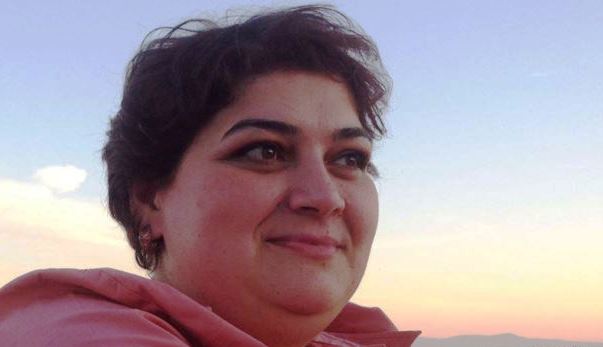
Khadija Ismayilova is one of the government critics jailed ahead of the European Games.
Azerbaijani investigative journalist Khadija Ismayilova was arrested in December for inciting suicide in a former colleague — who has since told media he was pressured by authorities into making the accusation. She is now awaiting trial for “tax evasion” and “abuse of power” among other things. These new charges have, incidentally, also been slapped on a number of other Azerbaijani human rights activists in recent months.
2) Belarus: participation in “mass disturbance”
Belorussian journalist Irina Khalip was in 2011 given a two-year suspended sentence for participating in “mass disturbance” in the aftermath of disputed presidential elections that saw Alexander Lukashenko win a fourth term in office.
3) China: “inciting subversion of state power”
Chinese dissident Zhu Yufu in 2012 faced charges of “inciting subversion of state power” over his poem “It’s time” which urged people to defend their freedoms.
4) Angola: “malicious prosecution”
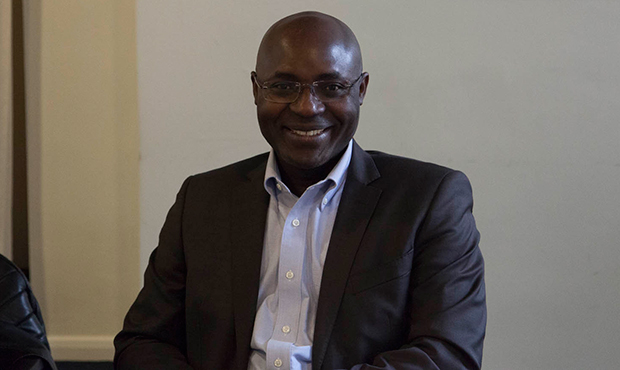
Journalist and human rights activist Rafael Marques de Morais (Photo: Sean Gallagher/Index on Censorship)
Rafael Marques de Morais, an Angolan investigative journalist and campaigner, has for months been locked in a legal battle with a group of generals who he holds the generals morally responsible for human rights abuses he uncovered within the country’s diamond trade. For this they filed a series of libel suits against him. In May, it looked like the parties had come to an agreement whereby the charges would be dismissed, only for the case against Marques to unexpectedly continue — with charges including “malicious prosecution”.
5) Kuwait: “insulting the prince and his powers”
Kuwaiti blogger Lawrence al-Rashidi was in 2012 sentenced to ten years in prison and fined for “insulting the prince and his powers” in poems posted to YouTube. The year before he had been accused of “spreading false news and rumours about the situation in the country” and “calling on tribes to confront the ruling regime, and bring down its transgressions”.
6) Bahrain: “misusing social media
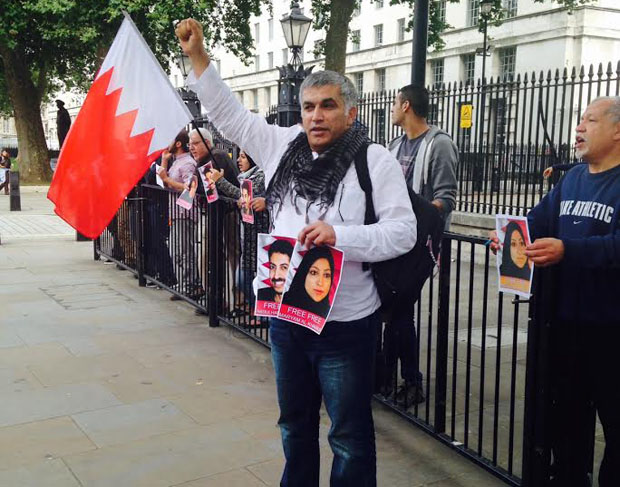
Nabeel Rajab during a protest in London in September (Photo: Milana Knezevic)
In January nine people in Bahrain were arrested for “misusing social media”, a charge punishable by a fine or up to two years in prison. This comes in addition to the imprisonment of Nabeel Rajab, one of country’s leading human rights defenders, in connection to a tweet.
7) Saudi Arabia: “calling upon society to disobey by describing society as masculine” and “using sarcasm while mentioning religious texts and religious scholars”
In late 2014, Saudi women’s rights activist Souad Al-Shammari was arrested during an interrogation over some of her tweets, on charges including “calling upon society to disobey by describing society as masculine” and “using sarcasm while mentioning religious texts and religious scholars”.
8) Guatemala: causing “financial panic”
Jean Anleau was arrested in 2009 for causing “financial panic” by tweeting that Guatemalans should fight corruption by withdrawing their money from banks.
9) Swaziland: “scandalising the judiciary”
Swazi Human rights lawyer Thulani Maseko and journalist and editor Bheki Makhubu in 2014 faced charges of “scandalising the judiciary”. This was based on two articles by Maseko and Makhubu criticising corruption and the lack of impartiality in the country’s judicial system.
10) Uzbekistan: “damaging the country’s image”
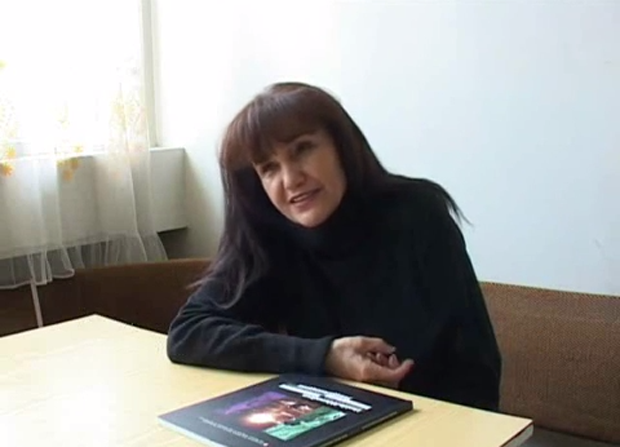
Umida Akhmedova (Image: Uznewsnet/YouTube)
Uzbek photographer Umida Akhmedova, whose work has been published in The New York Times and Wall Street Journal, was in 2009 charged with “damaging the country’s image” over photographs depicting life in rural Uzbekistan.
11) Sudan: “waging war against the state”
Al-Haj Ali Warrag, a leading Sudanese journalist and opposition party member, was in 2010 charged with “waging war against the state”. This came after an opinion piece where he advocated an election boycott.
12) Hong Kong: “nuisance crimes committed in a public place”
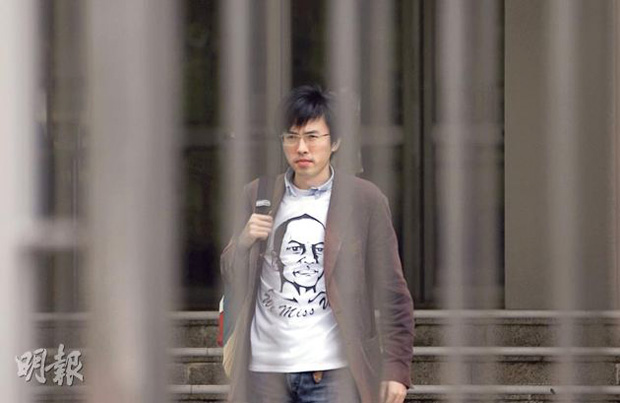
Avery Ng wearing the t-shirt he threw at Hu Jintao. Image from his Facebook page.
Avery Ng, an activist from Hong Kong, was in 2012 charged “with nuisance crimes committed in a public place” after throwing a t-shirt featuring a drawing of the late Chinese dissident Li Wangyang at former Chinese president Hu Jintao during an official visit.
13) Morocco: compromising “the security and integrity of the nation and citizens”
Rachid Nini, a Moroccan newspaper editor, was in 2011 sentenced to a year in prison and a fine for compromising “the security and integrity of the nation and citizens”. A number of his editorials had attempted to expose corruption in the Moroccan government.
This article was originally posted on 17 June 2015 at indexoncensorship.org
23 Jan 2015 | News
Bahrain
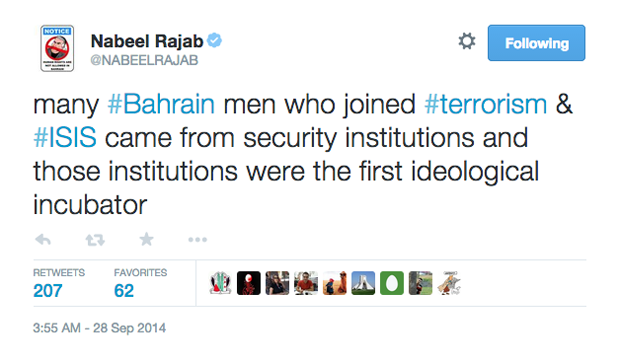
This week, prominent Bahraini human rights activist Nabeel Rajab was handed down a six month suspended sentence over a tweet in which both the country’s ministry of interior and ministry of defence allege that he “denigrated government institutions”. Rajab was only released last May after two years in prison, over charges that included sending offensive tweets. His experience is not unique in Bahrain. In May 2013, five men were arrested for “insulting the king” via Twitter.
Turkey
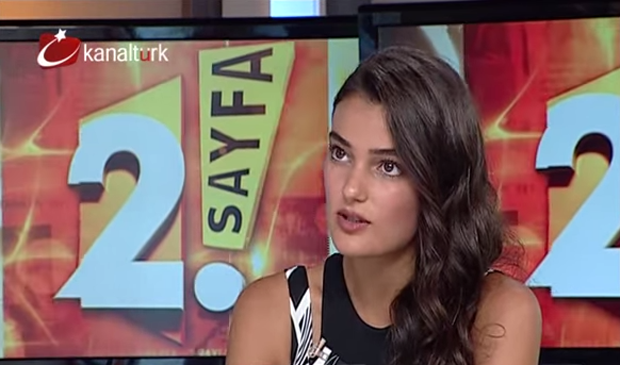
A former Miss Turkey was recently arrested for sharing a satirical poem criticising the country’s President Recep Tayyip Erdogan on her Instagram account. She is set to go on trial later this year. Turkey has a chequered relationship with social media, temporarily banning both Twitter and YouTube in the wake of the Gezi Park protests, in large part organised and reported through social media. In 2013, authorities arrested 25 individuals for spreading “untrue information” on social media.
Saudi Arabia
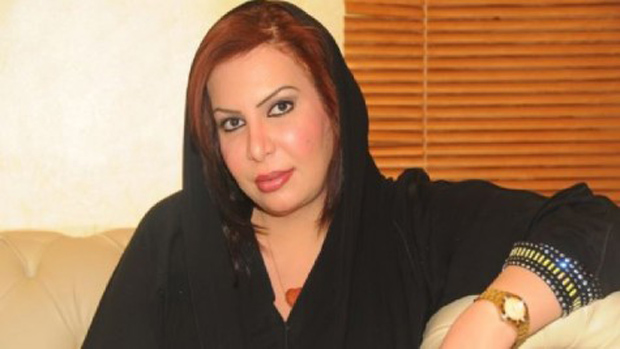
(Photo: Gulf Centre for Human Rights)
In late 2014, women’s rights activist Souad Al-Shammari was arrested during an interrogation over some of her tweets. The charges against her include “calling upon society to disobey by describing society as masculine” and “using sarcasm while mentioning religious texts and religious scholars”, according to the Gulf Centre for Human Rights.
France
![(Photo: « Source : Réseau Voltaire » [CC BY-SA 3.0 (http://creativecommons.org/licenses/by-sa/3.0)], via Wikimedia Commons](https://www.indexoncensorship.org/wp-content/uploads/2015/01/Dieudonné_Axis_for_Peace_2005-11-18.jpg)
(Photo: Réseau Voltaire [CC BY-SA 3.0], via Wikimedia Commons)
Following the series of terrorist attacks in Paris in early January, at least 54 people have been detained by police for “defending or glorifying terrorism”. A number of the cases, including against comedian Dieudonne M’bala M’bala, are believe to be connected to social media comments.
Britain
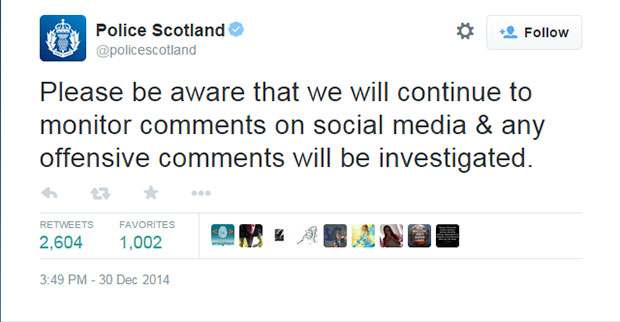
A 22 year old man was arrested in for “malicious communication” following Facebook messages made in response to the murder of soldier Lee Rigby, and another user was arrested after taunting Olympic diver Tom Daly about his dead father. More recently, police arrested a 19-year-old man over an “offensive” tweet about a bin lorry crash in Glasgow that killed six people. TV personality Katie Hopkins, known for her controversial tweets, was also reported to Scottish police following some tasteless tweets about about Scots. The incident prompted Scottish police the to post their now infamous tweet declaring they would continue to “monitor comments on social media“.
China
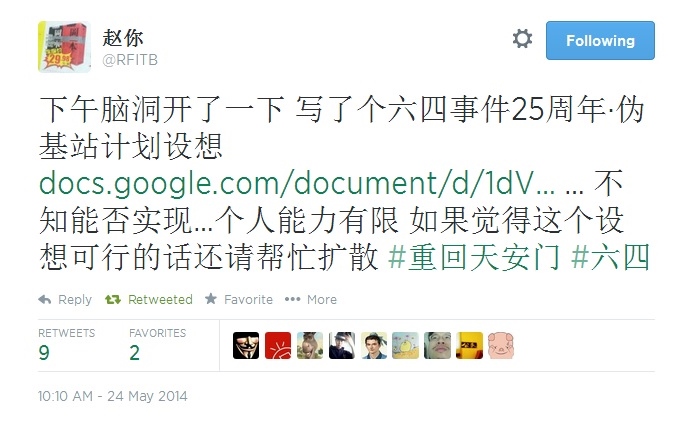
Online activist Cheng Jianping was arrested on her wedding day in 2010 for “disturbing social order” by retweeting a joke by her fiance. She was sentenced to one year of “re-education through labour”. Twitter is officially banned in China, and microblogging site Weibo is a popular alternative. In 2013, four Weibo users were arrested for spreading rumours about a deceased soldier labelled a hero and used in propaganda posters. The four were said to have “incited dissatisfaction with the government”, according to the BBC.
Australia
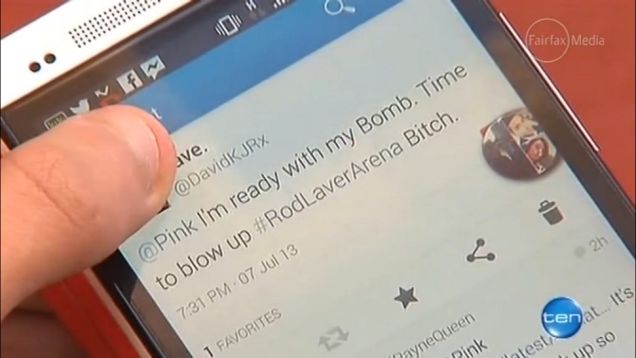
A teen was arrested prior to attending a Pink concert in Melbourne for tweeting: “I’m ready with my Bomb. Time to blow up #RodLaverArena. Bitch.” The tweet referenced lyrics from the American popstar’s song Timebomb.
India
An Indian medical student was arrested in 2012 over a Facebook post questioning why her city of Mumbai should come to a standstill to mark the death of a prominent politician. Her friend was arrested for liking the post. Both were charged with engaging in speech that was offensive and hateful.
United States
Back in 2009, a New York man was arrested, had his home searched and was placed under £19,000 bail for tweeting police movements to help G20 protesters in Pittsburgh avoid the officers. According to Global Voices, it is unclear whether his actions were actually illegal at the time.
Guatemala
A man was arrested in 2009 for causing “financial panic” by tweeting that Guatemalans should fight corruption by withdrawing all their money from banks.
This article was posted on 23 January, 2015 at indexoncensorship.org
25 Mar 2014 | Events
(Image: Mahmoud Illean/Demotix)
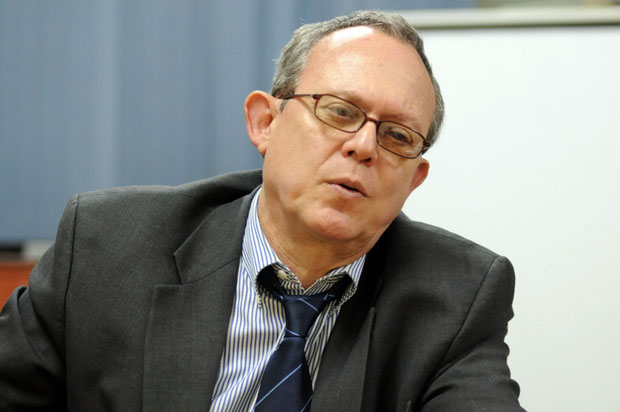
Frank La Rue, UN Special Rapporteur on the promotion and protection of the right to freedom of opinion and expression, will be interviewed by Index on Censorship’s CEO Kirsty Hughes, on his experience surrounding digital freedom while in office.
Frank La Rue is a lawyer and current Director of the Centro-American Institute for Social Democracy Studies (DEMOS) in Guatemala. He holds a degree in law from the University of San Carlos, Guatemala, and a postgraduate degree in U.S. foreign policy from Johns Hopkins University. He was also a professor of human rights at the University of Rafael Lavinder de Guatemala. La Rue has worked extensively on human rights issues, and as founding member and Director of the Centre for Legal Human Rights Action (CALDH), he was involved in presenting the first Guatemalan human rights case before the Inter-American Court for Human Rights. Mr. La Rue also brought the first case of genocide against the military dictatorship in Guatemala. As a human rights activist, he was nominated for the Nobel Peace Prize in 2004. La Rue has been serving as the United Nations Special Rapporteur on the promotion and protection of the right to freedom of opinion and expression since August 2008.
Join us for this exciting insight into digital freedom between leaders in the field from 4pm (GMT) on Wednesday 26 March. The event will be live streamed on Google+ here as well as via Index’s YouTube account here. Get involved with your questions prior to the event via Twitter or during the live stream on Google+.
22 May 2013 | Digital Freedom
jykhui | Instagram
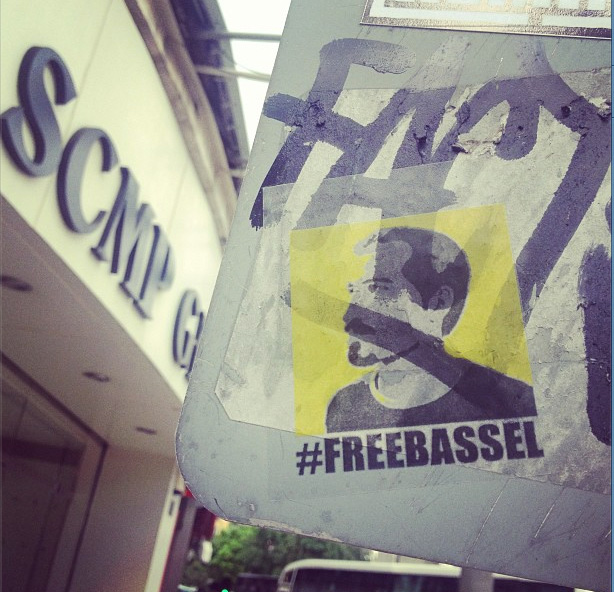
Software engineer and open-source advocate Bassel Khartabil will spend his second birthday in prison today. Palestinian-born Bassel was arrested on 15 March last year by Syrian security forces, and has been in prison ever since. On his birthday and the 799th day of Syria’s conflict, Index calls on the Syrian government to release Khartabil.
Index CEO Kirsty Hughes said:
‘Following courageous and peaceful protests in 2011, Syria descended into violence with appalling attacks on civilians across the country – and with over 80,000 people killed over the last two years. Up until his arrest last March, Bassel Khartabil bravely continued to work for a cause he passionately believes in – an open and free internet that is available to all. In a country torn apart by violence, he is a brave advocate for peaceful change and we call on the Syrian authorities to release him.’
Earlier this year, Bassel was awarded an Index on Censorship Digital Freedom Award, sponsored by Google for his work as a free internet pioneer, advancing open source technologies.
We’ve asked friends of Bassel from around the world to share their birthday messages to him with us. Share your own messages with us too:
You have been away now for almost 14months, you have spent two birthdays away in a cell, you probably lost weight, got tortured, and I am sure you feel so miserable. I can only say to you, I will make sure and try my best not to let you spend another birthday away. Happy birthday please try to have a happy one, even if you have to fabricate one in your head, rest assured I am lighting you a candle thinking of you. I miss you my friend. #freebassel. – Dana Trometer, friend and member of Free Bassel campaign
I just want him free, I pray for him to be free and I pray for all his friends who believe and work on Bassel’ s freedom. – Bassel’s mother
It is your birthday. It is not a day of happiness — yet. But when justice is done, and you are released from your wrongful imprisonment, all of us will celebrate with enormous happiness both this day, and every day that you have given us as an inspiration for hope across the world. – Larry Lessig, founder of Creative Commons
Bassel, I don’t know how or even if this message will reach you. Your birthday is important and you, you are important. Many of your friends miss you – they miss your positive contributions to the world at large, we miss how you bridge far away lands with well known and seemingly easy places. We miss you. It seems impossible to imagine what you are doing in this moment or how one might work to improve anything at all. There is a phrase that I learned once when traveling through your world, الحب و الحياة في وقت قصير – what you bring to the world is important, you set an example for every human and we love you. – Jacob Appelbaum, Tor project
Dear Bassel, I wish you health and freedom and hope to meet you in Buenos Aires at the CC summit. – Mélanie Dulong de Rosnay, Creative Commons
Happy birthday Bassel – we miss you and continue to admire your courage and await your release! – Jillian C York, Director for International Freedom of Expression at Electronic Frontier Foundation
Sana helua ya gamil ya Bassel habibi. I miss you and miss the old days in Damascus, and the trips with the musketeers! We will do your next birthday party together to celebrate free Bassel and free Syria, Inshallah. – Donatella Della Ratta, Creative Commons
Happy birthday you stubborn kid. Wish more algorithms to unlock and a beautiful lady to unlock your heart. – Bassel’s uncle, Oussama Al Rifai
You and me are the very same age. And we both come from troubled countries, in “transition” they call it. And for you it is not only a country where you are in prison, it is a region. I hope leaders in your region will realize soon how important young, creative, bright minds like you will be for a peaceful future. That “shared, inclusive culture” you embrace. With solidarity, I will toast tonight for the future conversations we will have. – Renata Avila, Creative Commons Guatemala
Happy birthday from Cairo. Your courage inspires us. Hold on. We will all celebrate FREEDOM for the PEOPLE very soon. – Dr. Rasha Abdulla, Journalism and Mass Communication Professor
We love you Bassel, I wish can see you soon and health and visit HK asap, and we can talk together and see your images eveywhere!!! I’m thinking of you everyday with my action. And Happy Birthday!!!! Next time we can cut the birthday cake!!!! – Jenny Hui, artist
The Free Bassel campaign has also launched a creative project to shed more light on the activist’s case. Visit the Bassel Sunlight page, where the campaign is looking for your help to unearth more information about what’s happened with him.
Special thanks to Renata Avila and Dana Tromoter for collecting these birthday messages.