20 Feb 2017
[vc_row][vc_column][vc_column_text]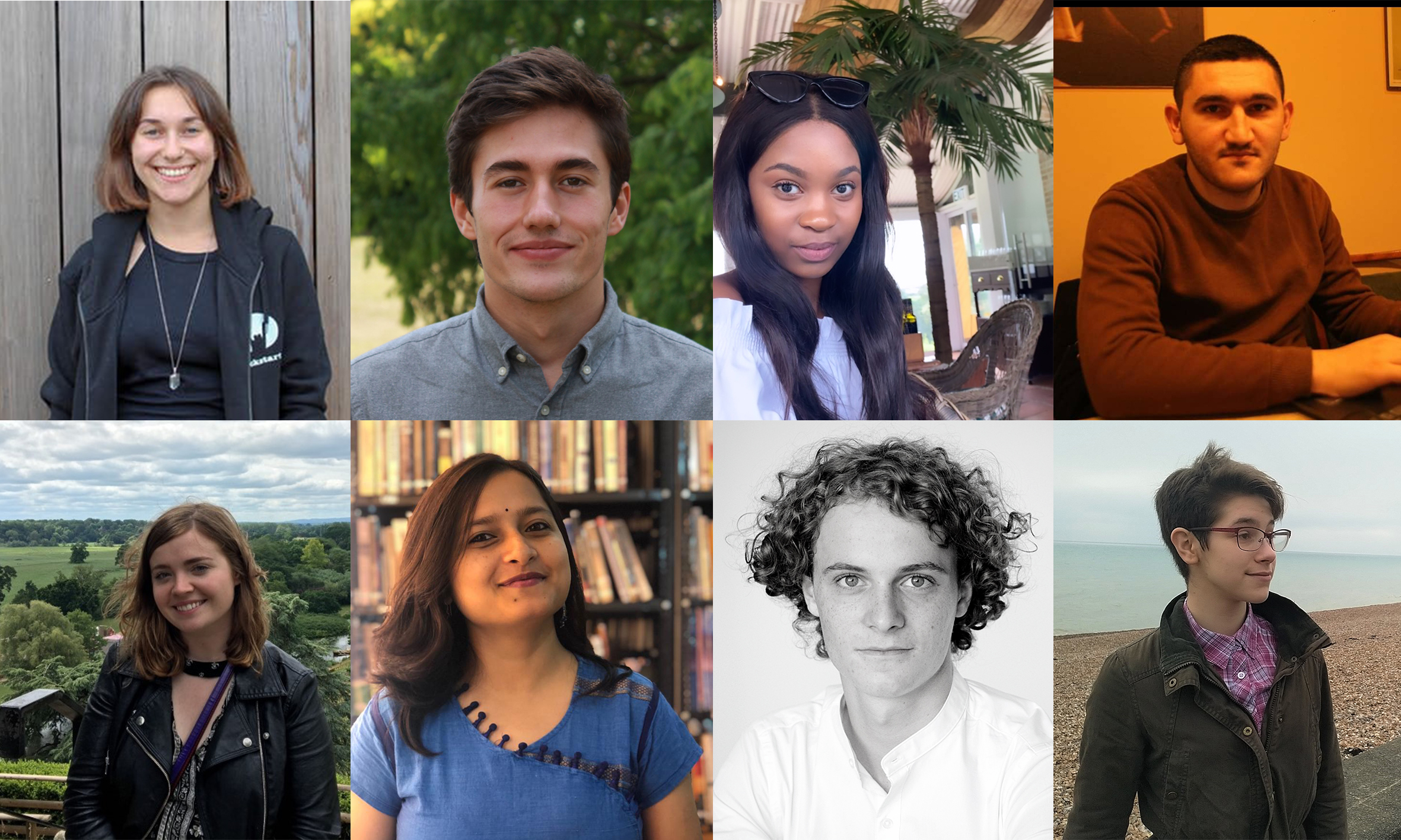 [/vc_column_text][vc_custom_heading text=”Youth Advisory Board” font_container=”tag:h1|text_align:center|color:%230a0a0a” use_theme_fonts=”yes”][vc_column_text]
The youth advisory board is Index on Censorship’s project aimed at engaging with young people aged 16-25 from around the world and gathering their views on freedom of expression issues.
What is the youth advisory board?
The youth board is a specially selected group of young people aged 16-25 who advise and inform Index on Censorship’s work, support our ambition to fight for free expression around the world and ensure our engagement with issues with tomorrow’s leaders. The current members are sitting from January to June 2020.
Why does Index have a youth board?
Index on Censorship is committed to fighting censorship not only now, but also in future generations, and we want to ensure that the realities and challenges experienced by young people in today’s world are properly reflected in our work.
Index is also aware that there are many who would like to commit some or all of their professional lives to fight for human rights and the youth board is our way of supporting the broadest range of young people to develop their voice, find paths to freely expressing it and potential future employment in the human rights, media, and arts sectors.[/vc_column_text][/vc_column][/vc_row][vc_row disable_element=”yes”][vc_column][vc_column_text css_animation=”none”]
Applications now open!
We are looking for enthusiastic young people, aged between 16-25, who must be committed to taking part in monthly meetings, which are held online with fellow participants. Applicants can be based anywhere in the world. We are looking for people who are communicative and who will be in regular touch with Index.
Each youth advisory board sits for six months, has the chance to participate in monthly video conferencing discussions about current freedom of expression issues from around the world, which sometimes include guest speakers. There are exciting opportunities to be interviewed for the podcast and contribute to Index’s Instagram page.
The next youth board is currently being recruited, and will sit from July to December 2020.
How to apply
Please send us the following:
- Cover letter
- CV
- A 250-word blog post about any free speech issue
Applications can be submitted to Orna Herr at [email protected]. The deadline for applications is 26 July at 11:59pm GMT.
What is the youth advisory board?
The youth board is a specially selected group of young people aged 16-25 who advise and inform Index on Censorship’s work, support our ambition to fight for free expression around the world and ensure our engagement with issues with tomorrow’s leaders. The current members are sitting from July to December 2019.
Why does Index have a youth board?
Index on Censorship is committed to fighting censorship not only now, but also in future generations, and we want to ensure that the realities and challenges experienced by young people in today’s world are properly reflected in our work.
Index is also aware that there are many who would like to commit some or all of their professional lives to fight for human rights and the youth board is our way of supporting the broadest range of young people to develop their voice, find paths to freely expressing it and potential future employment in the human rights, media, and arts sectors.[/vc_column_text][vc_row_inner disable_element=”yes”][vc_column_inner width=”1/4″][staff name=”Shini Wang” title=”USA” profile_image=”108370″]Shini Wang is a poet, journalist, and BA student of philosophy at the University of Texas at Austin. She is a member of her university’s liberal arts council, the editor of The Liberator Magazine, and a host of open discussions on campus. Interested in how freedom of expression plays into the creative and imaginative process of international writers and artists who witness injustice, her research investigates censorship and its effects during our post-truth political era.[/staff][/vc_column_inner][vc_column_inner width=”1/4″][staff name=”Nikhil Singh” title=”India” profile_image=”108371″]Nikhil Singh is a law student based in Kolkata, India. He has a keen interest in advocating the right to free speech and often spends his free time promoting it. In the past he has interned with senior advocates in the Supreme Court of India, and has worked on cases involving violation of the right to free speech, civil liberty, and human rights. After graduating from college, Singh intends to work in the legal industry, to fight for people’s rights.[/staff][/vc_column_inner][vc_column_inner width=”1/4″][staff name=”Charles Terroille” title=”France” profile_image=”108373″]Charles Terroille is a French dual degree student in political science and international relations at Sciences Po (Lille) and the University of Kent. His field of work covers media and journalism. After directing his first TV documentary about Dharavi in India at 16 years old, he continued to report in different types of newsrooms in France and the UK. Terroille also specialises in the issue of whistleblowers and has worked on the Luxleaks and Football Leaks cases. He collaborated with the Signals Network Foundation for advocacy and research on the leaks. Terroille is also the founder and director of the International Consortium of Student Journalism (ICSJ).[/staff][/vc_column_inner][vc_column_inner width=”1/4″][staff name=”Emma Quaedvlieg” title=”Serbia” profile_image=”104865″]Emma Quaedvlieg is a Master’s graduate from the Institute of Development Studies, where she focused on popular movements and inequality. She also holds a BA (Hons) in politics and international relations from the University of Nottingham. She has actively campaigned for various gender issues and was elected women’s officer for the student’s union in Nottingham. Her research largely focuses on the western Balkans, where she is contributing to freedom of expression and wider development in local government. Quaedvlieg has also worked in various (international) human rights organisations.[/staff][/vc_column_inner][/vc_row_inner][vc_row_inner disable_element=”yes”][vc_column_inner width=”1/4″][staff name=”Arpitha Desai” title=”India” profile_image=”104862″]Arpitha Desai is a lawyer based in New Delhi, India. As an avid student of constitutional law, she is passionate about civil liberties with a keen interest in censorship, surveillance, and digital rights. Keeping in mind the ever-evolving nature of technology and the needs of the government, industry, and common man, Desai believes that law and policy must strike a holistic balance between conflicting rights.[/staff][/vc_column_inner][vc_column_inner width=”1/4″][staff name=”Krzysztof Katkowski” title=”Poland” profile_image=”108374″]Krzysztof Katkowski is a student of Czacki High School in Warsaw. He is a young activist and journalist cooperating with “Krytyka Polityczna” where he focuses on youth’s community-minded engagement and education. Passionate about science, literature, and philosophy, he wants to popularise the idea of free speech and dialogue between different environments. In the future, Katkowski wants to fight for open society and tolerance which is endangered in recent years, especially in Poland.[/staff][/vc_column_inner][vc_column_inner width=”1/4″][staff name=”Elyse Popplewell” title=”Australia” profile_image=”108372″]Elyse Popplewell is the social media editor at The Australian, the most widely circulated national newspaper in Australia. After attaining a bachelor of communications (journalism) at the University of Technology, Sydney, she began her career at the Institute for Economics & Peace, the think tank that publishes the Global Peace Index annually. Popplewell focuses on the issue of Australian defamation laws gagging important journalism and movements like #MeToo.[/staff][/vc_column_inner][vc_column_inner width=”1/4″][/vc_column_inner][/vc_row_inner][/vc_column][/vc_row][vc_row disable_element=”yes”][vc_column][three_column_post title=”Recent posts” full_width_heading=”true” category_id=”6514″][/vc_column][/vc_row][vc_row][vc_column][vc_column_text]
Meet the Board
The current board is sitting from July to December 2020.[/vc_column_text][vc_row_inner][vc_column_inner width=”1/4″][staff name=”Aliyah Kaitlyn Orr” profile_image=”112187″]Aliyah Kaitlyn Orr (pen name A.K. Nephtali) is a college student in Britain. Orr has been inspired by the power of words ever since a novel helped them realise their gender-neutral identity. Orr writes inclusive fiction that aims to empower LGBTQ+ people around the world. One of their short stories will be published in a digital anthology by the end of 2020. [/staff][/vc_column_inner][vc_column_inner width=”1/4″][staff name=”Subhan Hasanli” profile_image=”114478″]Subhan Hasanli is a 25 year old lawyer, who works with local and international human rights organisations in Azerbaijan. He holds a bachelor’s degree in law from Nakhichevan State University. His goal is to promote the rule of law and human rights, and he hopes to achieve changes in these fields. Hasanli’s hobbies include catching fish, playing chess and reading books about science, politics, and philosophy. His favourite book is Diplomacy by Henry Kissinger. [/staff][/vc_column_inner][vc_column_inner width=”1/4″][staff name=”Carmen Ferri” profile_image=”114479″]Carmen Ferri is a digital rights activist based in Canada. She obtained an undergraduate degree in cultural studies and sociology at Maastricht University, Netherlands, and a master’s degree from the University of Amsterdam in new media and digital culture. During her studies, she worked on projects related to disinformation, hate speech and subcultural expression on digital platforms. Ferri has completed two internships with the Association for Progressive Communications. She worked as a policy analyst intern researching counter-hate speech movements in Asia, then as a communications research intern where she implemented a project examining actors and discourses within digital rights spaces on social media.[/staff][/vc_column_inner][vc_column_inner width=”1/4″][staff name=”Sneha” profile_image=”114480″]Sneha graduated from the Asian College of Journalism with a postgraduate diploma in journalism (new media) and is now a journalist for The Times of India. She previously worked as a reporter for the International Business Times. Sneha is concerned about the issues around press freedom in her country. She is an advocate for open discourse in the hope that it will lead to solutions. Sneha has an avid interest in governance, ecology, environment and urban planning.[/staff][/vc_column_inner][/vc_row_inner][/vc_column][/vc_row][vc_row][vc_column width=”1/4″][staff name=”Pablo Aguera” profile_image=”114481″]Pablo Aguera is a research fellow for Research ICT Africa working on digital rights, data justice and internet access and use. Aguera has produced creative multimedia projects and worked with social enterprises and youth movements across multiple countries. He holds a BSc in philosophy, politics and economics from the University of Warwick, and is currently completing a dual master’s degree in global media and communications at the London School of Economics and the University of Cape Town.
[/staff][/vc_column][vc_column width=”1/4″][staff name=”Siphesihle Fali” profile_image=”114482″]Siphesihle Fali is in her final year studying English literature & language, and media and writing at the University of Cape Town, South Africa. Fali is passionate about expanding her knowledge on societal constructs and the definitions of freedom. She aspires to create real conversations around the right to freedom of expression for the most censored and vulnerable communities, to safeguard and protect their rights. Fali’s interests lie mostly with the rights of women and children, and she intends on dedicating her career to being a voice for those who are denied one.[/staff][/vc_column][vc_column width=”1/4″][staff name=”Claes Kirkeby Theilgaard” profile_image=”114483″]Claes Kirkeby Theilgaard works as the editor-in-chief of the Danish online newspaper 180Grader. He is set to begin his studies in business and communications at the Copenhagen Business School. Theilgaard has worked in journalism and in various political organisations with the aim of furthering democracy and freedom, which has resulted in violent threats and other forms of intimidation. These experiences have made him more motivated to fight for the cause of free speech. Theilgaard is currently working to launch a campaign against “hate speech” laws in Denmark, as well as an organisation to fight censorship and work for free speech both in Denmark and abroad.[/staff][/vc_column][vc_column width=”1/4″][staff name=”Cecily Donovan” profile_image=”114484″]Cecily Donovan graduated from Boston University with degrees in International Relations and Political Science in 2019. She currently lives in New York City working in economic development for Invest Northern Ireland, a UK government agency. She has a background in state government, French language and politics, and European affairs. Donovan is passionate about women’s rights, LGBTQ+ rights, the Black Lives Matter movement and the impact of authoritarianism on freedom of expression globally.
[/staff][/vc_column][/vc_row]
25 Jan 2017 | Magazine, News, Volume 45.04 Winter 2016
[vc_row][vc_column][vc_custom_heading text=”Dealing with mutilated bodies, an attempted acid attack and speakers arresting each other. All part of his job organising Hay literature festivals around the world, explains Peter Florence in the winter 2016 issue of Index on Censorship magazine” google_fonts=”font_family:Libre%20Baskerville%3Aregular%2Citalic%2C700|font_style:400%20italic%3A400%3Aitalic”][/vc_column][/vc_row][vc_row][vc_column][vc_single_image image=”85033″ img_size=”full” add_caption=”yes”][vc_column_text]
Running a literature festival in a context where freedom of speech is not a given is like playing chess on a plain grey board. Sometimes you are just not able to imagine where to move, and sometimes you just keep playing on grey. But as US President Barack Obama said so eloquently after November’s election: “You say, OK, where are the places where I can push to keep it moving forward?”
Bringing people together around a table or a picnic rug or a campfire is a specific challenge. There is no mediated distance of print or broadcast. The whole point is that you’re face to face, that you’re making it personal. And the offence and the risk are as personal as the joy and the discovery. This makes it a fascinating challenge when the practicalities of running a big public event run into conflict with the authorities who license you to put up your stages.
Sometimes it comes like this: a week after a successful festival, a man you’ve been working with for a couple of years suggests a meeting in a café to review the year’s work. He’s a good man, an enabler; a man who has the careworn look of a bureaucrat who’s survived in an undemocratic regime by knowing which battles to fight.
You like him, because he’s helped navigate the public licences and public funding avenues. He orders cake. He enthuses about the opportunity to meet Hanif Kureishi at the screening of My Beautiful Launderette, and the honour of hearing Carl Bernstein speak about the First Amendment. His funder is thrilled. They love the Hay Festival in the city. We’re in a coffee shop, not his office. They are so thrilled they’d like to double the grant they give us. Alarm bells. Could we help them? Here it comes: could we programme the next festival just the same way, but without the homosexuals or the Jews?
Sometimes it’s harder. Our first festival in volatile, thrilling Mexico comes to a world heritage site in Zacatecas, because the state’s visionary governor has visited our festival in Cartagena, Colombia, and she wants to bring a similar experience to her home. The festival is a huge success. Her term ends and she is succeeded by a new governor who cancels all his predecessor’s funded projects.
But across the country a dynamic new governor in Veracruz, Javier Duarte, picks up the baton and invites us to Xalapa. A fortnight before we start, a drug cartel dumps 35 mutilated bodies onto a busy road nearby. “It’s a gang thing, an inter-narco incident,” we’re told.
We hold the festival. Tens of thousands of students come and listen and talk and wonder.
[/vc_column_text][/vc_column][/vc_row][vc_row][vc_column width=”1/4″][vc_icon icon_fontawesome=”fa fa-quote-left” color=”custom” align=”right” custom_color=”#dd3333″][/vc_column][vc_column width=”3/4″][vc_custom_heading text=”Could we programme the next festival just the same way, but without the homosexuals or the Jews?” google_fonts=”font_family:Libre%20Baskerville%3Aregular%2Citalic%2C700|font_style:400%20italic%3A400%3Aitalic”][/vc_column][/vc_row][vc_row][vc_column][vc_column_text]
During the third year the talk about the Governor Duarte’s probity starts. Journalists investigating the cartels are disappeared. We bring in Salman Rushdie, Jody Williams and Carl Bernstein again to speak up alongside Mexican writers. The students embrace the festival as a beacon of freedom of speech.
Year four, we receive a petition demanding that we cancel the festival and denounce the governor for failing to stem the constant steam of killings of journalists in Veracruz. The petition is signed by more than 300 journalists and some writers from across Latin America who have attended the festival. We listen. A rival, and much bigger petition is started by the students and teachers in Xalapa begging us not to leave, saying the festival is their bulwark against silence. But we cannot operate against the wishes of writers and journalists. We broadcast the festival digitally on BBC Mundo, and move to Mexico City and then to Querétaro. Many of the students from Xalapa come too. Duarte is currently on the run from the police and the cartels.
Sometimes it’s just farcical. In 2008, at our festival in Wales we invite George W Bush’s confidant and former US Ambassador to the UN John Bolton to discuss Abu Ghraib and the “war on terror”. Many supporters of Hay are appalled. Our good friend and neighbour George Monbiot, also a speaker, is so appalled he decides that he will attempt a citizen’s arrest at the festival. I assume he’s joking. Monbiot announces this is what he’s going to do in The Guardian. The Dyfed-Powys Police inform me of the legal procedure for citizen’s arrest and step away.
My mother reads me Voltaire. I brief our security team. The day comes. Bolton turns up. His interviewer is called to the BBC at lunchtime, so I have to go onstage with him. I ask him under what circumstances it would be OK for me, if I didn’t believe his answers, to tip him backwards, bag him, and pour water over his face. He doesn’t answer. He cannot say “under no circumstances”, though I’m not sure he understands that’s the issue. It’s on YouTube; it’s compelling.
Bolton knows that Monbiot is going to try to make a citizen’s arrest, and George knows I cannot allow him to do that and still hold Hay as a platform for free speech. So that’s what happens. We restrain a liberal hero from silencing an illiberal neo-con. A guy who throws a bottle of acid hits me, not Bolton. George writes a brilliant and widely shared account of why Bolton should be charged.
Hay Festival is 30 in 2017. We’ll be celebrating by arguing for freedoms of speaking and reading. The festival continues to run around the world in Mexico, Colombia, Ireland and Spain.
[/vc_column_text][/vc_column][/vc_row][vc_row][vc_column][vc_column_text]
Peter Florence is the director and co-founder of the Hay Festival
[/vc_column_text][/vc_column][/vc_row][vc_row][vc_column][vc_custom_heading text=”From the Archives”][vc_row_inner][vc_column_inner width=”1/3″][vc_single_image image=”89102″ img_size=”213×289″ alignment=”center” onclick=”custom_link” link=”http://journals.sagepub.com/doi/pdf/10.1177/0306422012448150″][vc_custom_heading text=”Taking a stand: lit fair challenges” font_container=”tag:p|font_size:24|text_align:left” link=”url:http%3A%2F%2Fjournals.sagepub.com%2Fdoi%2Fpdf%2F10.1177%2F0306422012448150|||”][vc_column_text]June 2012
As literary festivals and fairs become forums of censorship and protest, Salil Tripathi considers the challenges facing writers and their readers.[/vc_column_text][/vc_column_inner][vc_column_inner width=”1/3″][vc_single_image image=”91337″ img_size=”213×289″ alignment=”center” onclick=”custom_link” link=”http://journals.sagepub.com/doi/pdf/10.1080/03064229008534852″][vc_custom_heading text=”Soviet lit in Glasgow” font_container=”tag:p|font_size:24|text_align:left” link=”url:http%3A%2F%2Fjournals.sagepub.com%2Fdoi%2Fpdf%2F10.1080%2F03064229008534852|||”][vc_column_text]June 1990
Soviet writers attend literary forum, ‘New Beginnings’ Soviet Arts Festival in Glasgow, where selections from their work were read and discussed.[/vc_column_text][/vc_column_inner][vc_column_inner width=”1/3″][vc_single_image image=”94377″ img_size=”213×289″ alignment=”center” onclick=”custom_link” link=”http://journals.sagepub.com/doi/pdf/10.1080/03064228008533066″][vc_custom_heading text=”The prisoner: an excerpt” font_container=”tag:p|font_size:24|text_align:left” link=”url:http%3A%2F%2Fjournals.sagepub.com%2Fdoi%2Fpdf%2F10.1080%2F03064228008533066|||”][vc_column_text]June 1980
Imprisoned for a paper on education to be delivered at a festival, Yves-Emmanuel Dogbé was imprisoned without trial for five months.[/vc_column_text][/vc_column_inner][/vc_row_inner][vc_separator][/vc_column][/vc_row][vc_row][vc_column width=”1/3″][vc_custom_heading text=”Fashion Rules” font_container=”tag:p|font_size:24|text_align:left” link=”url:https%3A%2F%2Fwww.indexoncensorship.org%2F2016%2F12%2Ffashion-rules%2F|||”][vc_column_text]The winter 2016 issue of Index on Censorship magazine looks at fashion and how people both express freedom through what they wear.
In the issue: interviews with Lily Cole, Paulo Scott and Daphne Selfe, articles by novelists Linda Grant and Maggie Alderson plus Eliza Vitri Handayani on why punks are persecuted in Indonesia.[/vc_column_text][/vc_column][vc_column width=”1/3″][vc_single_image image=”82377″ img_size=”medium” alignment=”center” onclick=”custom_link” link=”https://www.indexoncensorship.org/2016/12/fashion-rules/”][/vc_column][vc_column width=”1/3″][vc_custom_heading text=”Subscribe” font_container=”tag:p|font_size:24|text_align:left” link=”url:https%3A%2F%2Fwww.indexoncensorship.org%2Fsubscribe%2F|||”][vc_column_text]In print, online. In your mailbox, on your iPad.
Subscription options from £18 or just £1.49 in the App Store for a digital issue.
Every subscriber helps support Index on Censorship’s projects around the world.
 SUBSCRIBE NOW[/vc_column_text][/vc_column][/vc_row]
28 Sep 2016 | mobile, News
Monday marked the beginning of Banned Books Week. To celebrate the freedom to read, Index on Censorship staff explore some of their favourite, and some of the most important, banned or challenged books.
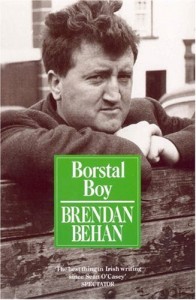
Ryan McChrystal – Borstal Boy by Brendan Behan
Brendan Behan’s autobiographical work Borstal Boy was banned in Ireland in December 1958. His London publisher, Hutchinson’s, had sent a batch of copies to Dublin to be sold at a Christmas market but they were confiscated at the port. Behan was outraged that a group of “country yobs” could prevent the distribution of his book.
Borstal Boy is the story of how a 16-year-old Behan landed himself in a series of institutions for young offenders in Kent, having been charged with membership of the IRA, and what happened to him after that.
Although Ireland’s Censorship of Publications Board never explained why the book was banned, it probably had something to do with its depictions of adolescents talking about sex and its pillorying of Irish social attitudes, republicanism and the Catholic Church. The board is, after all, known for its stringent adherence to Roman Catholic values.
When Behan later learned that the book was also banned in Australia and New Zealand, he took solace in song and humour as he went around Dublin singing:
“My name is Brendan Behan, I’m the latest of the banned
Although we’re small in numbers we’re the best banned in the land,
We’re read at wakes and weddin’s and in every parish hall,
And under library counters sure you’ll have no trouble at all.”
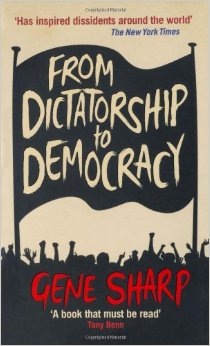
David Heinemann – From Dictatorship to Democracy by Gene Sharp
Running the Freedom of Expression Awards’ Fellowship and helping brave people who are often fighting totalitarian regimes can sometimes feel like an uphill battle. How can one person or organisation ever hope to defeat an entire dictatorship?
They can’t, of course, but Gene Sharp’s little book reminds me that “the deliberate, non-violent disintegration of dictatorships” is possible when people work together in certain ways. Part handbook, part political pamphlet, it’s an invaluable toolbox for any serious democratic activist. Its potency was illustrated last year when a group of young Angolans were imprisoned simply for trying to get together and discuss it at a book club.
The fact that I could read it on my commute home reminded me never to take my freedoms for granted.
Vicky Baker – The Bible
The Bible is not an obvious choice for me as I’m an atheist, but loosely picking up on that misattributed Voltaire quote, I would defend anyone’s right to read it – or indeed any other religious book.
Pope Francis has called The Bible “an extremely dangerous book”. Owning it or reading it can get you still get you imprisoned or killed in certain parts of the world. This is the sort of book banning that we should all be extremely worried about, whatever your religion.
These days I don’t even have a copy in my house, but its stories formed part of my childhood. When I grew up I learnt that my hometown, Amersham in Buckinghamshire, also had an important connection to censorship of The Bible. In the 16th century a group of local Lollards were burned at the stake for wanting to translate the book from Latin to English; some of their children were forced to light the pyre.
Known as the Amersham Martyrs, they have since been honoured in a memorial stone, costumed walking tours, and through occasional community plays about their lives, staged in a local church. (Imagine if the bishop who sentenced them saw this today.)
Sadly, we live in a world where censorship of the Bible is not ancient history. In 2014, an American man was sent to labour camp in North Korea for leaving a Bible in a restaurant’s bathroom when visiting as a tourist. It was deemed a crazy act – and, indeed, the move also endangered his local tour guides – but it is outrageous that simply leaving a book behind, so readers can choose to pick it up or not, can still lead to such punishments.
David Sewell – The Things They Carried by Tim O’Brien
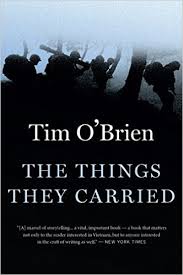
One of those cases in the USA where the pressure to ban comes not from the authorities, but from citizens wanting it pulled from libraries or schools. Complaints were made about its sweary language and its graphic depictions of violence and death. But there again it’s about a grunt’s eye view of the Vietnam war, so go figure.
Only this is really a remarkable work of fiction, which is highly literary in its narrative form. It uses stories to try and construct the extreme experience of war, but also uses war to explore the drive to create stories for ourselves. Language is used to defang terror on the battlefield, stories are invented (and embellished through the re-telling) to keep dead comrades alive, because if they are allowed to die, then it brings death one step closer to the surviving soldiers.
A fascinating book that tries to put words to the unsayable and unspeakable, and its would-be censors are attempting to make it a different kind of unspeakable and unsayable.
Kieran Etoria-King – Riotous Assembly by Tom Sharpe
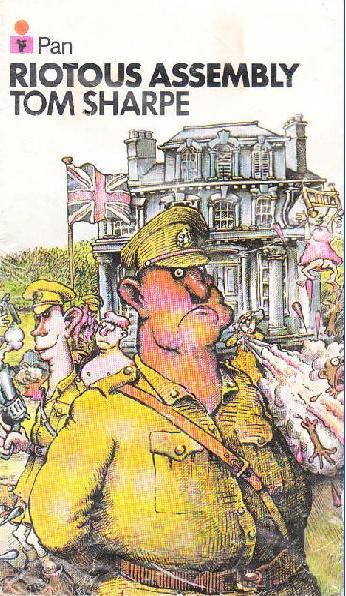
One of the most enduring, darkly funny things I’ve ever read was the opening chapter of Tom Sharpe’s 1971 novel Riotous Assembly, in which a South African police chief argues with an old white woman who shot her black chef in the garden of her stately home. As two deputies collect up the obliterated corpse of the man she killed with a four-barrelled elephant gun, Miss Hazelstone, who graphically describes her illicit love affair with the chef, demands to be arrested for murder, while a disgusted Kommandant van Heerden insists that the killing of a black person is not murder. Meanwhile, the entire police force of the fictional town of Piemburg, operating under mistaken intelligence, are engaged in a fierce and escalating firefight at the gate, unaware that they are actually shooting at each other from behind cover.
Sharpe had lived in South Africa from 1951 to 1961 before he was deported over a play he staged that criticised the government, so he had an intimate knowledge of the country and Riotous Assembly, a hilarious send-up of the South African police force, is driven as much by real venom and contempt for the Apartheid system as it is by vulgar humour. Of course, that system wasn’t going to tolerate such mockery and the book was banned in South Africa as well as Zimbabwe.
Helen Galliano – The Master and Margarita by Mikhail Bulgakov
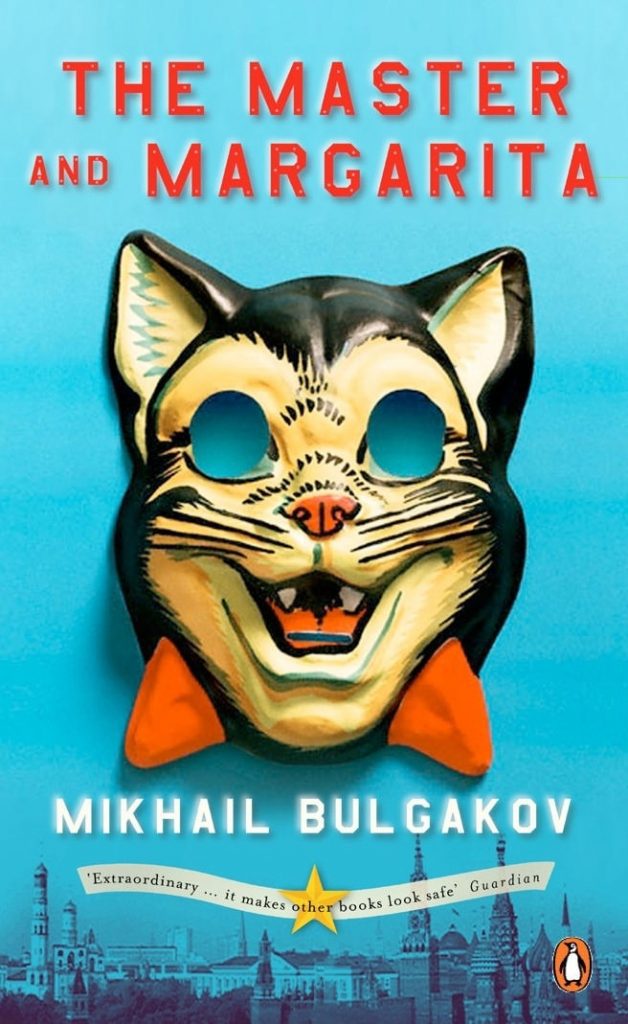
I first came across The Master and Margarita – considered to be one of the finest novels to come out of the Soviet Union – as a performance student at Goldsmiths and a lover of magical realism. I immediately fell into Bulgakov’s wild and dangerous world of talking cats, decapitations, magic shows, Satan’s midnight ball and plenty of vodka. I was hooked, reading it multiple times throughout my third year and even created a performance reimagining Margarita’s transformation into a witch.
The forward to the 1997 translation of the novel reads: “Mikhail Bulgakov worked on this luminous book throughout one of the darkest decades of the century. His last revisions were dictated to his wife a few weeks before his death in 1940 at the age of forty-nine. For him, there was never any question of publishing the novel. The mere existence of the manuscript, had it come to the knowledge of Stalin’s police, would almost certainly have led to the permanent disappearance of its author.”
Faced with persecution, Bulgakov burned the first manuscript of The Master and Margarita, only to re-write it later from memory. It was eventually published nearly three decades after his death and since then “manuscripts don’t burn”, a famous line from the book, has come to symbolise the power and determination of human creativity against oppression.
Great literature and great ideas will always survive.
What’s it like to be an author of a banned or challenged book? How can librarians support authors who find themselves in this situation? To mark Banned Books Week, Vicky Baker, deputy editor of Index on Censorship magazine, will chair an online discussion with three authors on 29 September, followed by a Q&A. It is free to join, although attendees must register in advance.