24 Apr 2014 | Ireland, News, Politics and Society, Turkey, United Kingdom
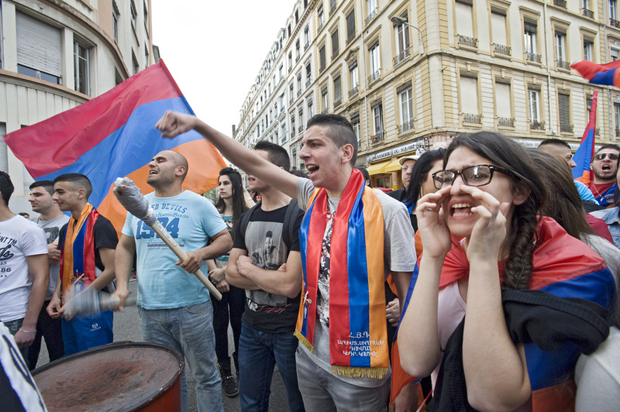
Armenian protesters in Lyons accused Turkey of supporting Islamic rebels in an attack on Kessab, an Armenian majority town located in Syria, on the Turkish border. (Image: Benjamin Larderet/Demotix)
It is, as Zhou Enlai might have said, probably too early to tell how significant Tayyip Erdogan’s comments alluding to the Armenian genocide will be.
The Turkish prime minister seems to have broken one of his country’s great taboos. In a statement translated into nine languages, the AK leader said: “It is with this hope and belief that we wish that the Armenians who lost their lives in the context of the early 20th century rest in peace, and we convey our condolences to their grandchildren.”
“Having experienced events which had inhumane consequences — such as relocation — during the First World War, should not prevent Turks and Armenians from establishing compassion and mutually humane attitudes among towards [sic] one another.”
According to Anadolu, Turkey’s state news agency, Erdogan also commented: “In Turkey, expressing different opinions and thoughts freely on the events of 1915 is the requirement of a pluralistic society as well as of a culture of democracy and modernity.”
This is not, you will have noticed, an apology. Offering condolence is not at all the same as expressing remorse. Though some would say it is not Erdogan’s duty to express remorse; he is the prime minister of the modern republic of Turkey, not the Ottoman Empire under which the alleged slaughter of over 1.5 million Armenian Christians in 1915 took place.
And some are utterly contemptuous of Erdogan’s statement: Reuters quotes the Armenian National Committee of America describing the statement as an “escalation” of Turkey’s “denial of truth and obstruction of justice”.
But let us assume that a) Erdogan is in a position to speak for Turkey past as well as present, and b) there is, at the kernel of this, an attempt at reconciliation with Armenia and the Armenian diaspora.
The very mention of the events are significant against the backdrop of the Turkish Penal Code’s controversial Article 301, which forbids insulting “the Turkish nation”. That law has in the past, effectively barred discussion of the genocide, and created a environment where simply identifying as Armenian within Turkey was seen as a provocative act.
The most famous victim of this culture was Hrant Dink, the editor of Agos who was assassinated in January 2007.
Dink saw himself as Turkish-Armenian, and his newspaper was bilingual. He was a firm believer in the potential for dialogue in bringing some reconciliation between Turks and Armenians. He also believed such dialogue could only take place in an atmosphere free of censorship, to the extent that he vowed that he would be the first person to break a proposed French law making denial of the Armenian genocide a crime (a cheap political trick aimed at both currying favour with the Armenian community in France and creating a barrier for Turkey’s proposed entry into the EU).
Ultimately, Dink believed that progress could only be made if we were able to talk freely and access historical debate without impediment or fear.
History, like science, is a process rather than a dogma. And like science, one’s interpretations of history can vary based on both the evidence available and the prevailing mood.
For a long time after the creation of the Irish state, for example, the teaching of history in schools was simple. I recall one primary school history text which seemed to consist entirely of tales of the terrible things foreigners had done to the Irish: first the Vikings, then the Normans, and finally the English. The book finished pretty much where the 1919 War of Independence began. The last page featured the words of the national anthem and a picture of the national flag.
Sympathetic portrayals of English people, and British soldiers in particular, were thin on the ground — Frank O’Connor’s tragic short story Guests of the Nation being one of the very few.
Since the late 1990s peace process, both fictional and historical perspectives on Ireland’s relationship with Britain have changed. Some of the novels of Sebastian Barry, for example, attempt to tell stories of people who were neglected and even vilified in nationalist, Catholic, post-independence Ireland. Part of the plot of Paul Murray’s Skippy Dies has a Catholic school history teacher attempting to get his pupils interested in Irish soldiers who fought for Britain in World War I. Meanwhile, a recent book by nationalist historian Tim Pat Coogan, attempting to paint the Irish potato famine as deliberate genocide rather than cruel neglect, was given short shrift, in spite of the fact that this would have been a mainstream view until relatively recently — one must only listen to the sickly sentimental lyrics of rugby anthem The Fields of Athenry, penned in the 1970s, to understand the appeal of that victim status to the Irish imagination. Wrongs were certainly done in Ireland, but the relationship between the two nations was a hell of a lot more complex than the oppressor/oppressed line that was spun for so many years.
There was no official sanction on differing views of Anglo-Irish relations, but politics permeated the debate. Likewise with the recent intervention of British education secretary Michael Gove on the issue of how World War I is taught in schools. Gove claimed that the idea of a pointless war in which a moribund (figuratively) ruling class led moribund (literally) working class boys to their graves was a modern lefty invention. He was wrong, in that that view had been common even in the 1920s, but his opponents were equally adamant in their insistence that there could only be one view of World War I. None of this discussion was accompanied by new evidence on either side.
At the extreme end of this hyper-politicisation of history are the Holocaust denial laws of many European countries, and laws on glorification of the Soviet era in former Eastern bloc.
In his cult memoir Fuhrer-Ex, East German former neo-nazi Ingo Hasslebach described how, growing up in the DDR, with its overwhelming anti-fascist narrative, nazi posturing was the ultimate rebellion. In the modern era, France’s prohibition on nazi revisionism has led some young north African immigrants, alienated from the French nation state, to see anti-semitism and the quasi-nazi quenelle gesture as the ultimate “fuck you” to the authorities.
Taboos about discussing events of the past breed bad history and bad politics. For the sake of Turkey, and the rest of us, Erdogan should be held to his words on the necessity of free speaking and free thinking.
This article was originally posted on 24 April 2014 at indexoncensorship.org
11 Apr 2014 | Digital Freedom, News

(Illustration: Shutterstock)
State surveillance has been much publicised of late due to Snowden’s revelations, but allegations against the NSA and GCHQ are only one aspect of the international industry surrounding wholesale surveillance. Another growing concern is the emergence and growth of private sector surveillance firms selling intrusion software to governments and government agencies around the world.
Not restricted by territorial borders and globalised like every other tradable commodity, buyers and sellers pockmark the globe. Whether designed to support law enforcement or anti-terrorism programmes, intrusion software, enabling states to monitor, block, filter or collect online communication, is available for any government willing to spend the capital. Indeed, there is money to be made – according to Privacy International, the “UK market for cyber security is estimated to be worth approximately £2.8 billion.”
The table below, collated from a range of sources including Mother Jones, the Electronic Frontier Foundation, Bloomberg, Human Rights Watch, Citizen Lab, Privacy International and Huffington Post, shows the flow of intrusion software around the world.
| Surveillance Company |
Country of Origin |
Alleged Countries of Use |
| VASTech |
South Africa |
Libya (137) |
| Hacking Team |
Italy |
Azerbaijan (160), Egypt (159), Ethiopia (143), Kazakhstan (161), Malaysia (147), Nigeria (112), Oman (134), Saudi Arabia (164), Sudan (172), Turkey (154), Uzebekistan (166) |
| Elbit Systems |
Israel |
Israel (96) |
| Creative Software |
UK |
Iran (173) |
| Gamma TSE |
UK |
Indonesia (132) |
| Narus |
USA |
Egypt (159), Pakistan (158), Saudi Arabia (164) |
| Cisco |
USA |
China (175) |
| Cellusys Ltd |
Ireland |
Syria (177) |
| Adaptive Mobile Security Ltd |
Ireland |
Syria (177), Iran (173) |
| Blue Coat Systems |
USA |
Syria (177) |
| FinFisher GmbH |
Germany |
Egypt (159), Ethiopia (143) |
Note: The numbers alongside the alleged countries of use are the country’s ranking from 2014 Reporters without Borders World Press Freedom Index 2014.
While by no means complete, this list is indicative of three things. There is a clear divide, in terms of economic development, between the buyer and seller countries; many of the countries allegedly purchasing intrusion software are in the midst of, or emerging from, conflict or internal instability; and, with the exception of Israel, every buyer country ranks in the lower hundred of the latest World Press Freedom Index.
The alleged legitimacy of this software in terms of law enforcement ignores the potential to use these tools for strictly political ends. Human Rights Watch outlined in its recent report the case of Tadesse Kersmo, an Ethiopian dissident living in London. Due to his prominent position in opposition party, Ginbot 7 it was discovered that his personal computer had traces of FinFisher’s intrusion software, FinSpy, jeopardising the anonymity and safety of those in Ethiopia he has been communicating with. There is no official warrant out for his arrest and at the time of writing there is no known reason in terms of law enforcement or anti-terrorism legislation, outside of his prominence in an opposition party, for his surveillance. It is unclear whether this is part of an larger organised campaign against dissidents in both Ethiopia and the diaspora, but similar claims have been filed against the Ethiopian government on behalf of individuals in the US and Norway.
FinFisher GmbH states on its website that “they target individual suspects and can not be used for mass interception.” Without further interrogation into the end-use of its customers, there is nothing available to directly corroborate or question this statement. But to what extent are private firms responsible for the use of its software by its customers and how robustly can they monitor the end-use of its customers?
In the US Electronic Code of Federal Regulations, there is a piece of guidance entitled Know Your Customer. This outlines steps to be undertaken by firms to identify what the end-use of its products is. This is a proactive process, placing the responsibility firmly with the seller to clearly identify and act on abnormal circumstances, or ‘red flags’. The guidance clearly states that the seller has a “duty to check out the suspicious circumstances and inquire about the end-use, end-user, or ultimate country of destination.”
Hacking Team has sold software, most notably the Remote Control System (RCS) to a number of countries around the world (see above). Citizen Lab, based out of the University of Toronto, has identified 21 countries that have potentially used this software, including Egypt and Ethiopia. In its customer policy, Hacking Team outlines in detail the lengths it goes to verify the end-use and end-user of RCS. Mentioning the above guidelines, Hacking Team have put into practice an oversight process involving a board of external engineers and lawyers who can veto sales, research of human rights reports, as well as a process that can disable functionality if abuses come to light after the sale.
However, Hacking Team goes a long way to obscure the identity of countries using RCS. Labelled as untraceable, RCS has established a “Collection Infrastructure” that utilises a chain of proxies around the world that shields the user country from further scrutiny. The low levels of media freedom in the countries purportedly utilising RCS, the lack of transparency in terms of the oversight process including the make-up of the board and its research sources, as well as the reluctance of Hacking Team to identify the countries it has sold RCS to undermines the robustness of such due diligence. In the words of Citizen Lab: “we have encountered a number of cases where bait content and other material are suggestive of targeting for political advantage, rather than legitimate law enforcement operations.”
Many of the firms outline their adherence to the national laws of the country they sell software to when defending their practices. But without international guidelines and alongside the absence of domestic controls and legislation protecting the population against mass surveillance, intrusion software remains a useful, if expensive, tool for governments to realise and cement their control of the media and other fundamental freedoms.
Perhaps the best way of thinking of corporate responsibility in terms of intrusion software comes from Adds Jouejati of the Local Coordination Committees in Syria, “It’s like putting a gun in someone’s hand and saying ‘I can’t help the way the person uses it.’”
This article was posted on 11 April, 2014 at indexoncensorship.org
9 Apr 2014 | Digital Freedom, European Union, News

(Photo illustration: Shutterstock)
Retaining data is the reflex of a functioning bureaucracy. What is stored, how it is stored, and when it is disseminated, poses the great trinity of management. These principles lurk, ostensibly at least, under an umbrella of privacy. The European Union puts much stake in Article 8 of the European Convention on Human Rights, stressing the values of privacy that covers home, family and correspondence. But there are also wide qualifications – interferences are warranted in the interest of national security and public safety, allowing Member States, and the EU, a degree of room to gnaw away at privacy rights.
That entitlement to privacy has gradually diminished in favour of the “security” limb of Article 8. The surveillance narrative is shaping privacy as a necessarily circumscribed right. The realm of monitoring and surveillance is being extended. Technologies have proliferated; laws have remained, if not stagnant, then ineffective.
Unfortunately for those occasionally oblivious drafters of rules in Brussels, the judges of the Court of Justice of the EU did not take kindly to the Data Retention Directive, which requires telecommunications and internet providers to retain traffic and location data. That is not all – the directive itself also retains data identifying the user or subscriber, a true stab against privacy proponents keen on principles of anonymising users.
The objective of the DRD, like so many matters concerned with bureaucratic ordering, is procedural: to harmonise regimes of data retention across various member states. More specifically, Directive 2006/24/EC of the European Parliament and of the Council of March 15 2006 deals with “retention of data generated or processed in connection with the provision of publicly available electronic communications services or of public communications networks”.
Other courts have expressed concern with the directive, which propelled the hearings to the ECJ. These arose from separate complaints in Ireland and Austria over measures taken by citizens and parties against the authorities. The Irish case began with a challenge by Digital Rights Ireland in 2006. The Austrian legal challenge was pushed by the Kärntner Landesregierung (Government of the Province of Carinthia) and numerous other concerned parties to annul the local legislation incorporating the directive into Austrian law.
The Constitutional Court of Austria and the High Court of Ireland shook their judicial fingers with rigour against it – the judges were not pleased. The disquiet continued to their brethren on the ECJ, which proceeded to make its stance on the scope of the retention law clear by declaring it invalid. EU officials should have seen it coming – in December last year, the Advocate General of the ECJ was already of the opinion that the DRD constituted “a serious interference with the privacy of those individuals” and a “permanent threat throughout the data retention period to the right of citizens of the Union to confidentiality in their private lives.”
The defensive stance taken by the authorities is so old it is gathering dust. Technology changes, but government rationales never do. Invariably, it is two pronged. The ever pressing concerns of security forms the first. The second: that such behaviour does not violate privacy – at least disproportionately. You will find these principles operating in tandem in each defence on the part of authorities keen to justify extensive data retention. Such intrusive measures have as their object the gathering of information, rather than the gathering of useful data. The usefulness is almost never evaluated as a criterion of extending the law. Instinct, not evidence, is what counts.
The rationale of the first premise is simple enough: information, or data, is needed to fight the shady forces of crime and terrorism. Better data retention practices equates to more solid defence against threats to public security. The ECJ acknowledged the reason as cogent enough – that data retention “genuinely satisfies an objective of general interest, namely, the fight against serious crime and, ultimately, serious security.” The authorities were also keen to emphasise that such a regime of retention was not “such as to adversely affect the essence of the fundamental rights to respect for private life and to the protection of private data.”
In dismissing the main arguments of the authorities, the points of the court are clear. In retaining the data, it is possible to “know the identity of the person with whom a subscriber or registered user has communicated and by what means”. Identification of the time of the communication and place form which that communication took place is also possible. Finally, the “frequency of the communications of the subscriber or registered user with certain persons during a given period” is also disclosed. Taken as a whole set, these composites provide “very precise information on the private lives of the persons whose data are retained, such as the habits of everyday life, permanent or temporary places of residence, daily or other movements, activities carried out, social relationships and the social environments frequented.” Former Stasi employees would be swooning.
The judgment provides a relentless battering of a directive that should never left the drafter’s desk. “The Court takes the view that, by requiring retention of those data and by allowing competent national authorities to access those data, the directive interfered in a particularly serious manner with the fundamental rights to respect for private life and to the protection of personal data.”
The laws of privacy tend to focus on specificity and limits. If there is to be interference, it should be proportionate. The directive had failed at the most vital hurdle – if privacy is to be interfered with, do so in even measure with minimal interference. The DRD had, in effect “exceeded the limits imposed by compliance with the principle of proportionality.” The decision is unlikely to kill off regimes of massive data retention – it will simply have to make those favouring surveillance over privacy more cunning.
This article was posted on April 9, 2014 at indexoncensorship.org
18 Mar 2014 | Magazine, News, Volume 43.01 Spring 2014
[vc_row][vc_column][vc_column_text]
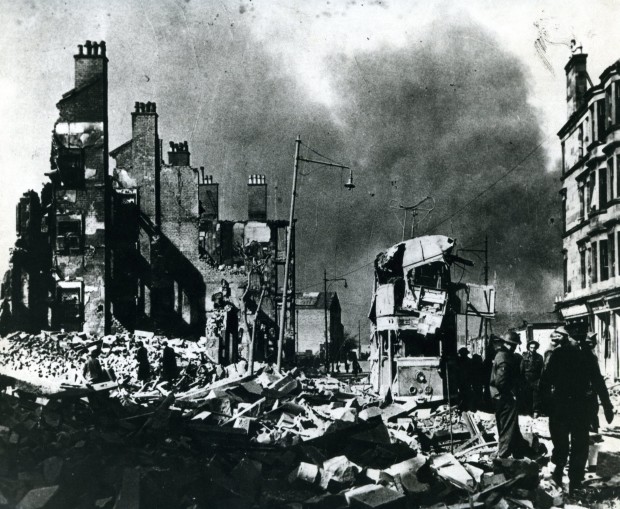
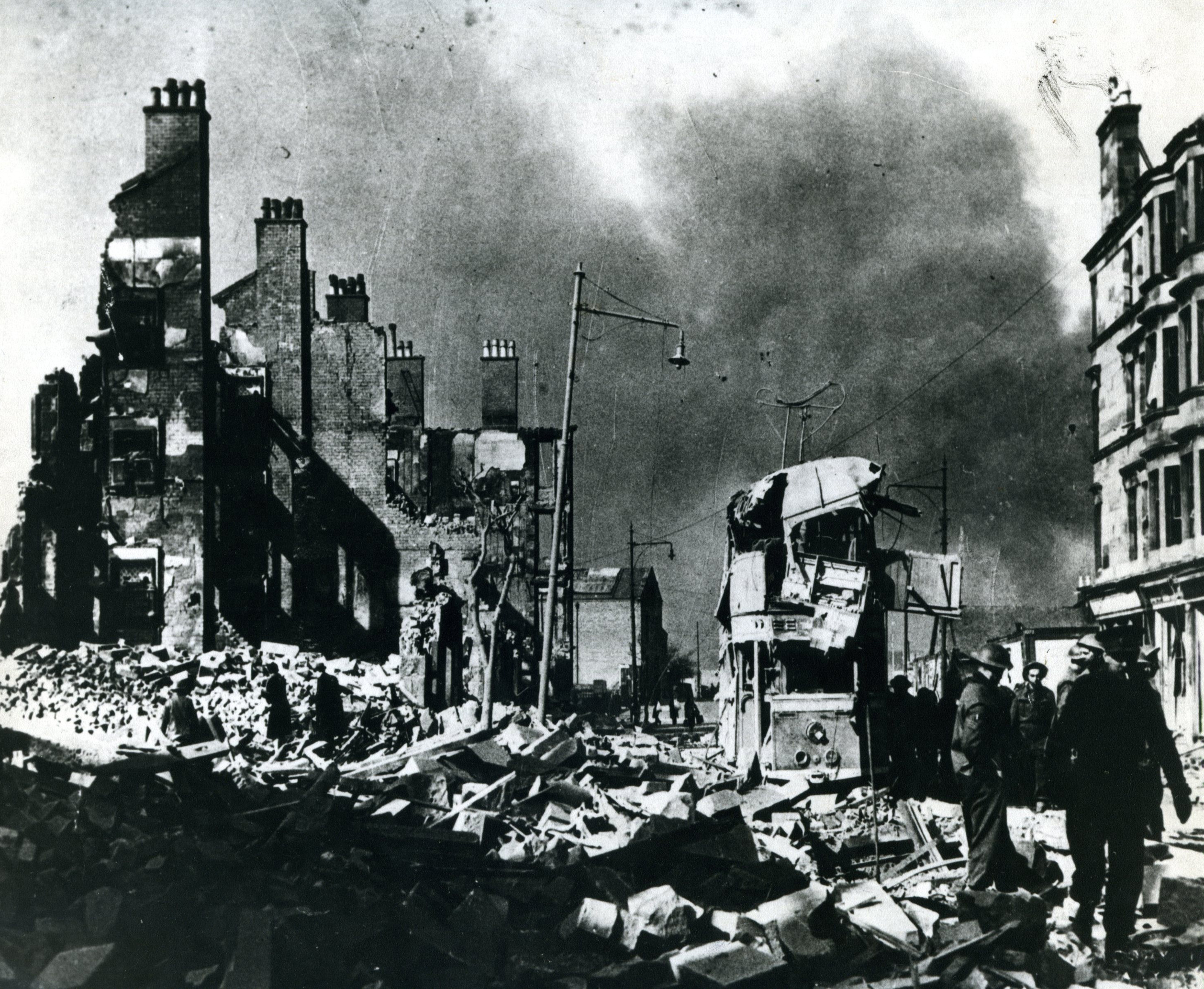
A destroyed tram is surrounded by the rubble on Dumbarton Road, Clydebank, after a WWII bomb raid
(Image: West Dunbartonshire Libraries and Cultural Services)
On a moonlit evening on Thursday 13 March 1941, just after 9pm, the first of 236 German bombers converged on Clydeside. By 9.10pm, over the western suburbs of Glasgow, over Bowling and Dalnottar and – especially – over the crowded, densely housed and productive little town of Clydebank, the bombs had begun to fall. And the next night, it happened all over again.
This was bombing of such ferocity that the explosions could be heard clearly at Bridge of Allan in Stirlingshire. The fires were of such frenzy that their glow could be clearly seen from rural Aberdeenshire and Northern Ireland.
Clydebank was all but destroyed. According to the official statistics 528 people, from one geographically small community, were killed, 617 seriously injured. Hundreds – perhaps thousands – more were superficially hurt and cut, or traumatised by blast. Of some 12,000 dwellings – including tenement blocks as well as villas and semi-detached homes – only seven were left entirely undamaged. Four thousand homes were completely destroyed, 4,500 more so severely damaged as to be uninhabitable for months.
The morning of the 14 March saw thousands of dazed survivors shambling along Dumbarton Road into Glasgow and, by the night of Saturday 15 March – as official records would eventually reveal – it was reckoned that more than 40,000 people had left the town amid utter chaos.
And, in the days immediately following the German assault, soldiers and servicemen came home on leave to Clydebank wholly innocent of what had happened. John Bowman, in March 2011, bleakly recalled – for a BBC Scotland audience – returning from his distant base in Sussex to find not only his house obliterated, but most of the street; and that his mother, two brothers and a younger sister had been killed.
There is still a place called Clydebank, and many who survived March 1941 still live there. But thousands who fled never returned. The community that had retired for the evening of Thursday 13 March 1941 was smashed beyond recovery in a single night in what, in proportion of lives lost and homes destroyed, was the worst bombing raid anywhere in Britain in the entire war. Clydebank, the historian Angus Calder bleakly noted in 1969, “had the honour of suffering the most nearly universal damage of any British town”.
But, outside Scotland, few have ever heard of the Clydebank Blitz. The Blitz, to most today, conjures up images of heroic London and battered Coventry – the first because it was, of course, the capital; and the second because the authorities deliberately exploited its ordeal for newsreel propaganda.
Of course very many towns and cities were bombed. Those particularly hard-hit included Liverpool, Hull, Southampton and Belfast. Besides, Clydebank is readily confused with the vague term “Clydeside”, used to describe the greater Glasgow area. But – beyond that – there was calculated wartime censorship by what was laughably known as the Ministry of Information.
Officials refused to allow any mention of the town’s name in subsequent newspaper reports – which only speak of the bombing of “a town in western Scotland”. No film-crews were allowed into the ruins. Neither royalty nor Prime Minister Winston Churchill sped north to visit and console. And, when one survivor, Thomas Kearns, wrote a detailed letter to family in Belfast, it was intercepted (and held) by censors. His words would not see publication till 1971.
A stark photograph, days later, of a Clydebank mass burial, was cropped before publication – on ministry orders – so that the public would not grasp just how terrible the disaster had been; sixty-seven people, or bits of them, lay in it. And the government did its best at first not to issue casualty figures at all and then to give most misleading ones.
On 18 March 1941 that the Ministry of Home Security – headed by Home Secretary Herbert Morrison – issued a foolish communiqué declaring that “about 500 persons had been killed on the raids in Clydeside”. In fact, 647 had died in Glasgow alone – quite apart from the Clydebank death-toll – and, on hearing of this fatuous announcement, a Home Guardsman in Clydebank is said bitterly to have exclaimed: “Which street?”
Bureaucrats seem to have been determined deliberately to conflate Clydebank and Glasgow fatalities, to the point where the home secretary was accused in the House of Commons of making “misleading statements”. Inevitably, feelings around Clydebank ran high.
A high official warned Tom Johnston, secretary of state for Scotland, that locals heard such official statistics with “frank incredulity” and, a year on, there was great consternation in high places when a Sunday Post anniversary piece, on 15 March 1942, lamented the “1,200 Clydebank people” who had died “as the result of the savage two-night blitz on the town”.
This article had somehow evaded censors. Clydebank Burgh Council now held a furious debate, in which all sides demanded hard, accurate numbers from the government.
But these it refused to yield for the rest of the war. Thus, to this day, many regard the official death toll, as at last made known, with profound scepticism – especially when, years and even decades after the attack, human remains were still being found in Clydebank rubble.
Such games of officialdom were not unique to the Clydebank catastrophe. As the historian Peter Lewis dryly notes, after the dreadful bombing of Manchester on 22 and 23 December 1940 The Manchester Guardian “was not allowed to name the city in its reports of the raids on ‘an inland town in north-west England’ or state that ‘a newspaper office’ hit by incendiaries was its own. Only when the Germans boasted of hitting Manchester was Manchester entitled to be told how heavy the raids and the damage were.”
Hull, the worst-bombed city in England, likewise grew inured to being described as “an east-coast town”, even as sailors came home on leave and lamented through incessant raids that they felt safer at sea. Yet the suppression of detail on Clydebank’s ordeal was determined and exceptional.
There were four evident reasons for this. The first was military. The Clyde generally was a vital workshop for ships, munitions and ordnance. Clydebank was of particular importance, notably for the great yard of John Brown’s. The authorities genuinely believed the Germans should never be told what they had actually hit, far less missed, lest they return and make good their failures.
The second was mortification. Though the imminent attack had been known for hours by the authorities, no warning of any kind had been given the people until German aircraft were practically within earshot. RAF tactics for the defence of greater Glasgow on those nights – too complex to discuss here – had been a humiliating failure. The scant anti-aircraft guns by Clydebank had run out of ammunition. Scottish Office officials had treated the town so contemptuously that Clydebank could not bury her dead even in cardboard coffins; most finally deposited in that huge grave were in bed-sheets tied with string.
Continues below
[/vc_column_text][vc_separator color=”black”][/vc_column][/vc_row][vc_row content_placement=”top”][vc_column width=”1/3″][vc_custom_heading text=”The war of the words” font_container=”tag:p|font_size:24|text_align:left” link=”url:https%3A%2F%2Fwww.indexoncensorship.org%2F2014%2F02%2Fthe-war-of-the-words%2F|||”][vc_column_text]Through a range of in-depth reporting, interviews and illustrations, the spring 2014 issue of Index on Censorship magazine explores how modern propaganda was invented and looks at poster campaigns, partisan journalism in the USA, WWII, Iraq, Afghanistan and Syria.[/vc_column_text][/vc_column][vc_column width=”1/3″][vc_single_image image=”80560″ img_size=”medium” alignment=”center” onclick=”custom_link” link=”https://www.indexoncensorship.org/2014/02/the-war-of-the-words/”][/vc_column][vc_column width=”1/3″ css=”.vc_custom_1481888488328{padding-bottom: 50px !important;}”][vc_custom_heading text=”Subscribe” font_container=”tag:p|font_size:24|text_align:left” link=”url:https%3A%2F%2Fwww.indexoncensorship.org%2Fsubscribe%2F|||”][vc_column_text]In print, online. In your mailbox, on your iPad.
Subscription options from £18 or just £1.49 in the App Store for a digital issue.
Every subscriber helps support Index on Censorship’s projects around the world.
 SUBSCRIBE NOW[/vc_column_text][/vc_column][/vc_row][vc_row][vc_column][vc_separator color=”black”][vc_custom_heading text=”Don’t lose your voice. Stay informed.” use_theme_fonts=”yes”][vc_row_inner][vc_column_inner width=”1/2″][vc_column_text]Index on Censorship is a nonprofit that campaigns for and defends free expression worldwide. We publish work by censored writers and artists, promote debate, and monitor threats to free speech. We believe that everyone should be free to express themselves without fear of harm or persecution – no matter what their views.
Join our mailing list (or follow us on Twitter or Facebook) and we’ll send you our weekly and monthly events newsletters and periodic updates about our projects defending free speech. We won’t share your personal information with anyone outside Index.[/vc_column_text][/vc_column_inner][vc_column_inner width=”1/2″][gravityform id=”20″ title=”false” description=”false” ajax=”false”][/vc_column_inner][/vc_row_inner][vc_separator color=”black”][/vc_column][/vc_row][vc_row][vc_column][vc_column_text]
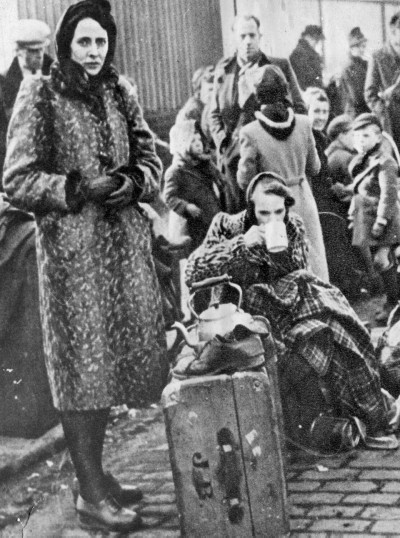
Evacuees in Whitecrook Street, Clydebank
(Image: West Dunbartonshire Libraries and Cultural Services)
A third undoubted concern was the spectre of Scottish nationalism. Tom Johnston had talked it up at every opportunity in the pursuit of London largesse, especially after a succession of witless mistakes. The BBC had ended all Scottish regional broadcasting when war began. The new BBC Home Service then persisted, for months, in the incessant playing of There’ll Always Be An England and authority at every level persisted stubbornly on using “English” as a synonym for British. In a spectacular gaffe – when a newsreel described the unambiguously Scottish RAF hero Donald Farquhar as an “English airman”, there was booing throughout Scottish cinemas.
The final factor was a baseless fear of Marxist sedition. Clydeside was an early – and, by 1941, the most organised – fortress of British socialism. She had Independent Labour Party and communist councillors. During World War I, her womenfolk had waged a determined (and successful) rent-strike against rapacious landlords. David Kirkwood – by 1941, the town’s veteran MP – had, as an earnest and vocal pacifist, been locked up in Edinburgh castle during that conflict and, in 1919, unrest was such that the Coalition government even sent troops and tanks into the streets of Glasgow.
In fact these “agitators” were a decent and remarkably conservative bunch; most, for instance, regularly attended church. But, in distant London, shattered Clydebank was viewed as a tinderbox of Bolshevism – especially as, at the time of the raids, there had been a protracted strike of apprentices in the local shipyards. (Not, in fact, greedy young lads, but time-served tradesmen still, unjustly, on apprentices’ wages.)
On all these counts, then, officialdom toiled tirelessly to block, from wider national consciousness, the effective destruction of an entire community.
It is only fair to remind ourselves – seven decades later, in a comfortable age – that Britain in March 1941 was battling for national survival – bombarded from the air, throttled in the Atlantic, close to starving and in real fear of invasion and conquest.
The desperate desire to maintain morale, deny useful information to the foe and stamp on defeatism was by no means dishonourable. And the public information films and perky propaganda posters of the struggle are maddening today less for their bossiness than for their sexism. All the same, the fatuity of wartime censorship and propaganda – much of it to mask incompetence – is remarkable.
Churchill himself intervened in two grave misjudgements. The first was in the wake of the Dunkirk disaster, when the Ministry of Information urged folk to report “defeatists” – having established it as an offence in law to spread “alarm and despondency”. Some 70 people were prosecuted after being shopped by ministry spies (cynically dubbed “Cooper’s Snoopers” after the minister of information, Duff Cooper) until Churchill ordered the nonsense to stop.
The second was after Buckingham Palace was bombed on 12 September 1940, when the king and queen only narrowly escaped death. “The Ministry of Information, with its genius for missing propaganda opportunities,” notes Lewis, “was busy suppressing news of the Palace bombing when Churchill heard of it. ‘Dolts, idiots, fools!’ he is said to have exploded. ‘Spread the news at once. Let it be broadcast everywhere. Let the people of London know that the King and Queen are sharing the perils with them…’”
Royalty was one matter; the people of Clydebank another. Whatever the motives and by whatever authority – perhaps even that of the prime minister himself – “official estimates of the damage and dead were deliberately played down”, as Meg Henderson, whose novel The Holy City is based on the experience of wartime Clydebank, put it in 1999.
“Unlike modern conflicts… there were no TV cameras to bring the horror directly into the nation’s living-rooms, but there were newsreel cameras. What Clydebank has never understood is why in Coventry and London the newsreel films were widely broadcast with proud boasts of ‘We can take it’, while in Clydebank the official view was that there had been little damage and few casualties…”
The town was never properly rebuilt; most of its March 1941 citizens never returned; and by the mid-1980s Clydebank had lost almost all her traditional industry. It’s a ragged, palpably sad place today, and with one lingering legacy from past ship-building glory – leading all Europe in asbestos-related illness and death.
This article is taken from the spring 2014 issue of Index on Censorship Magazine. Get your copy of the issue by subscribing here or downloading the iPad app.
[/vc_column_text][/vc_column][/vc_row]