20 Sep 2024 | News, Newsletters, United Kingdom
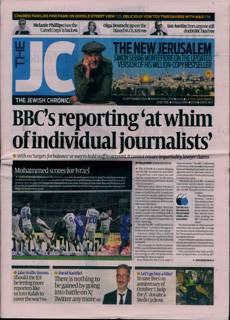
News – or more specifically the ownership of newspapers – has featured strongly in the headlines this week.
Last Friday, The Jewish Chronicle (JC) – the world’s oldest Jewish newspaper – issued a terse statement saying it had removed articles written by freelance journalist Elon Perry from the paper’s website and ended its association with the writer.
In the aftermath, four long-time JC columnists – David Aaronovitch, David Baddiel, Jonathan Freedland and Hadley Freeman – resigned over the scandal.
Aaronovitch, a former Index chair, wrote on his Substack that he was leaving the periodical after 20 years. He said he “really did not want to stop writing for The Jewish Chronicle” but cited the Perry case as the main reason.
He explained: “For six weeks Perry – who no one had ever heard of – broke a series of front-page exclusives supposedly involving captured Hamas information, most of which managed to justify a current twist in Bibi Netanyahu’s Gaza policy. Eventually journalists in Israel managed to establish that the security services believed these stories to be fake and that Perry himself was a fraud. It was a monstrous failure of editorial standards.”
Aaronovitch has also, along with other writers, asked for more clarity on the paper’s ownership. The JC recently announced the creation of a named board of trustees, but did not identify them. Former Guardian editor Alan Rusbridger wrote a piece in Prospect trying to shed some light on this and in particular the role of Sir Robbie Gibb, a member of the BBC’s editorial guidelines and standards committee.
In the article Rusbridger writes, “Sir Robbie Gibb, who, in his November 2023 BBC Declaration of Personal Interests stated that he was the 100 per cent owner of The Jewish Chronicle. As far as I’m aware, he does not have the funds to be the actual owner of the paper, so we might think of him as the frontman for the funder(s). Whoever they are.”
People become newspaper proprietors for many reasons but being able to use them as megaphones for your own views is usually high on the list, and has been for the past few centuries.
Following on from the JC appearing in its own headlines, we learned that Tortoise Media, the slow news company, was in talks with Guardian Media Group to buy The Observer, the world’s oldest Sunday newspaper.
On Tuesday, Tortoise issued a statement in which the company’s editor and founder James Harding said: “We think The Observer is one of the greatest names in news. We believe passionately in its future – both in print and digital. We will honour the values and standards set under The Guardian’s great stewardship and uphold The Observer’s uncompromising commitment to editorial independence, evidence-based reporting and journalistic integrity.”
The company said it would invest £25 million over five years into ”the editorial and commercial renewal of the title”.
According to the National Union of Journalists (NUJ), journalists at both The Observer and The Guardian oppose the plan.
This week also saw the publication of the last ever daily edition of the 200-year-old Evening Standard in London. Like the JC, The Evening Standard is a “local” newspaper with influence that goes way beyond its region.
The paper will now be replaced by a weekly publication, called The London Standard, each Thursday.
Editor-in-chief Dylan Jones writes that the paper “doubles down on the newspaper qualities the title is known for: sharp opinion, analysis, interviews, deeply researched features, scoops and the strong record in campaigning that is now part of its DNA”.
Writing in The Guardian, former Evening Standard opinion editor James Hanning wrote, “Often the Standard really did provide the first draft of history. If it thought something important, rightly or wrongly, other papers would follow.”
He added, “Politicians wanted our good opinion, to write for us, to have lunch with us. We seemed to know what was going on, were able to make the right calls and had a mild bearing on which way stories ran.”
It was this influence that appealed to proprietor Evgeny Lebedev, who now appears to have bowed to pressure over the daily title from Saudi investors brought into the paper six years ago.
Ownership is a key thread between these stories but they also show the dwindling influence of newspapers in a world dominated by the internet and social media in particular.
In countries where press freedom is cherished, newspapers are a vital part of the system of checks and balances that supports democracies. The best newspapers, which are driven by their journalists rather than their owners, have always held their politicians, businesses and individuals to account for actions that affected their readership.
Newspapers are in a worrying death spiral, due to falling circulation figures and loss of revenue. Research by UK media publication Press Gazette earlier this year revealed the precipitous decline of regional media in the UK.
In 2007, the nine companies that made up the majority of the UK’s regional media generated revenues of £2.4 billion and employed 9,000 journalists. By 2022, revenues had plummeted to £590 million and the number of journalists slashed to just 3,000. Adjusting for inflation, the size of the sector is just one seventh of its size 15 years earlier.
If newspapers continue to disappear, who is left to hold the powerful to account?
5 Aug 2024 | News, United Kingdom
Two UK photo-journalists have recently been arrested while covering an ecological protest and a pro-Palestine demonstration, in the latter case prior to the protest even taking place. The arrests, which come despite the police having been reprimanded for a similar series of ‘unlawful’ arrests of journalists covering protest actions in 2022, have raised fresh concerns over heavy-handed police tactics targeting the press.
“Police over-reach poses real harms to the perception of journalists’ roles, particularly in public order situations, and therefore poses real risks to their safety,” National Union of Journalists (NUJ) general secretary Michelle Stanistreet told Index. “Of particular concern… are instances where the UK Press Card Authority press card has been shown to officers and been dismissed, where journalists have been arrested and the equipment they rely upon for their livelihood seized.”
Guy Smallman, a veteran photojournalist and NUJ member whose coverage of protest activity appears throughout the UK press, was arrested on 25 June for aggravated trespass while standing on what he says was a public footpath, covering an ecological protest at a boating lake near former Prime Minister Rishi Sunak’s Yorkshire residence. He has since been released on bail, with the police retaining £14,000 worth of camera equipment. He has not been charged.
“The police are using criminal powers which don’t apply to [journalists], vindictively harassing people like us for covering issues they find embarrassing,” Smallman said.
It’s not an isolated incident. Martin Pope, a British Association of Journalists (BAJ) member, spent 20 years working for the Daily Telegraph and has also contributed photography to The Guardian, The New Yorker and The Sunday Times. In April 2024, he was swept up in a pre-emptive arrest of protesters planning to target an arms company implicated in Israel’s ongoing war on Gaza.
“Police came flying into the house,” he said, referring to the home of one of the protesters, where they had all gathered prior to the demonstration. “I identified myself as a journalist, but it didn’t make any difference.”
As noted by both of the veteran photojournalists, who work as freelancers rather than being employed by a newspaper, their arrests suggest that lessons have not been learned following a controversy where police were forced to apologise for what they admitted were ‘unlawful’ and excessive arrests directed by senior officers, targeting journalists documenting Just Stop Oil protests, including LBC reporter Charlotte Lynch.
Pope was himself previously arrested at the end of 2023 and held for 18 hours, before being released without charge. Police wrongly asserted that he was directly involved in the Palestine Action protest he was covering as a journalist.
When asked for comment on Pope’s latest arrest, Avon and Somerset police said: “The arrests were made with the purpose of attempting to prevent criminality… We fully appreciate the important role journalists have in documenting and reporting real-time events. Officers receive training to ensure the media are able to carry out their work fairly and without hindrance.”
North Yorkshire police did not respond to requests for comment on Smallman’s arrest.
Both arrests point to a concerning new range of tactics being applied to journalists covering protest activity in the UK.
“It is right that journalists act on information shared by sources including on the location of protests and any suggestion that doing so could risk detention must be condemned and rejected by all who support and value a free press,” Stanistreet said.
Yet in both of the recent arrests, police cited the journalists’ foreknowledge of the time and place of the protests as evidence of direct implication in the protest activity.
“The police said: if you’ve got a tip-off, you’re obviously part of the [protest] team,” Pope said. His detention marks the first time a journalist has been detained during a wave of recent pre-emptive arrests, a tactic which London’s Metropolitan Police have declared they plan to use more frequently in response to ongoing protests over a range of hot-button political and social issues.
There are also particular concerns around the police’s disregard for both journalists’ press cards. When Pope attempted to identify himself as a journalist, he was told: “Maybe you’re just an activist with a press card.”
Pope said: “But I’m not trying to be anonymous – I don’t have a balaclava! I’m not at all secretive about what I’m doing.”
Smallman faced similar treatment, saying he identified himself as a journalist but was arrested regardless.
There’s a parallel with prior arrests. In 2022, photojournalist Tom Bowles tried to show officers his press card and was detained anyway. Despite subsequent apologies, Smallman reports that the arresting police in his case had “no idea what journalistic privilege was”.
A final issue of key concern highlighted by the NUJ is the confiscation of equipment from both journalists, preventing them from carrying out future work. Though the investigation into Pope was ultimately dropped he also spent months under restrictive bail conditions further prohibiting his ability to work and earn a living. The statement given by police notes that “items belonging to the journalist, including camera equipment, laptop and a mobile phone have been returned. No material stored on them was downloaded or recorded in evidence.”
Smallman, whose equipment was also confiscated, has already raised money through crowd-funding to replace his confiscated equipment, and promises to donate the new gear to the Palestinian Journalists’ Syndicate once he receives his own equipment back from the police.
Pope and Smallman both said that arresting officers also demanded they hand over their phone passwords, raising further concerns over attempts to access confidential journalistic material. Smallman was threatened with a five-year jail sentence if he didn’t comply and hand over his passcodes, using a little-known and far-reaching police power. To Smallman, the police are “using criminal powers which don’t apply to [journalists], vindictively harassing us for covering stuff they find embarrassing”.
Stanistreet agrees, saying: “We have been vocal on the chilling effect caused by the targeting of journalists and continue to condemn the harm to media freedom where public interest journalism is impeded because of the wrongful use of police powers.”
In their most recent review of press freedoms in the UK, Reporters Without Borders (RSF) cited the 2022 arrests of journalists as demonstrating a continued “lack of pluralism” and “restrictive political climate” in the UK. The recent arrests add further weight to these concerns. What Smallman calls an attempted, “gradual erosion of any kind of [press] impartiality” by the UK police has not yet been halted by public, professional and union opposition to the harassment and detention of professional journalists. It is vital that journalists are allowed to report safely, without the risk of arrest weighing on their minds.
2 Aug 2024 | Israel, Middle East and North Africa, News, Palestine, Volume 53.02 Summer 2024
They emerge very slowly from a black hole in the background. Men and women, their faces tired, all take heavy steps. Some are dragging a bag, others have mattresses and household objects. The stage is lit in green and red, illuminating the young actors and dancers one by one, emphasising their individual suffering. The music – rapper Hijazi’s remix of the traditional Palestinian choral song Tarweeda Shamaly – repeats in a hypnotic loop to tell us that, for 70 years, the story of Palestinians has always been the same: moving forward in an exhausting and constantly uprooting process. The Palestinians call it Nakba and this dance-theatre show named The Story is Sick by the Ayyam al Masrah company, the only one active in the strip, was performed just over a year ago live in Gaza. It was a performance like no other which I saw on a reporting mission to the strip. Today it seems to rise again in tragic reality, after 7 October 2023.
The theatre has been destroyed now and no longer exists. The cast and crew have paid a horrific price for living in Gaza. Of the company’s 20 or so actors, aged between 20 and 35, many are displaced in Deir al-Balah. Only one, the stage technician, Ahmad Gheidar, decided to stay in Gaza, risking his life; a couple of actors, Mohannad and Lina, got engaged, left Gaza and did everything they could to escape to Egypt; three have died with all their families. None of the members of the company have a home to return to; their houses are all destroyed. The only thing left to the actors of Ayyam al Masrah is theatre, as the artistic director of the company, Mohammed al-Hessi recalls, constantly disturbed in the background by the buzz of Israeli drones.
For al-Hessi himself it was unimaginable that one of the play’s characters – a Palestinian, forced to abandon his home in 1967 and wander through refugee camps in the region – would be his reality a year later. Displaced from Gaza City after the Israeli bombings of November 2023, he and his wife and three daughters are searching for a fourth refuge, after Khan Younis, Deir al-Balah and Rafah.
“I am very worried,” he told Index in a series of daily voice messages that continue a dialogue that has already lasted more than six months. “There are thousands of people who continue to move by cars and donkeys like us. After being shot in the back and miraculously unharmed, I spent two months on Rafah beach in al-Mawasi. Here, at times I hoped to end it all. The cold in February was excessive and we tried to survive by somehow diluting the salty sea water for drinking. I was morally destroyed by the impossibility of giving a dignified life to my wife and my daughters, but I didn’t believe I would be forced to move again and again to get away from the bombings that reached us as far as the south of the strip”.
Al-Hessi’s fate is also that of a man unafraid to speak truth to power: inconvenient for Israel, to the point of not being able to leave Gaza for seven years now, because he raises political issues in his plays and is not afraid to highlight the impact of the Israeli occupation on Gazans’ daily life; inconvenient for Hamas because the theatre company has been the only one on the strip since 1995 that does not bow to the local powers that be. He has challenged Hamas’s moral police by putting men and women on stage as couples and has had the courage to question the Islamic values on which daily life is based, stimulating debate among spectators. In the audience, men and women sit together, next to each other, condemned by Hamas authorities as a dangerous potential for “promiscuity”.
In Gaza City, the success of The Story is Sick was so overwhelming when it was first staged in February 2023 that the number of performances was doubled to 40. “People loved our show because it manages to generate a great debate between the public and the actors,” al-Hessi told Index proudly. “After the performance everyone asks questions, as if looking for a solution. And the theatre has always been full: those who saw the show brought other people, students, associates. At the debut there were 350 people in the room and there were people waiting outside, sitting on the stairs.”
For those who attended the play last spring, the atmosphere was alive with debate, pulsating even. From the stands, many were wondering about the weight of tradition on family relationships and how the Israeli occupation and segregated life on the Gaza strip made the patriarchal system and male-female dynamics more burdensome and complicated.
Hana Abd al-Nabi, a lively and dynamic actor in the company, wrote the script of The Story is Sick together with the artistic director. She explained: “In this show we faced a new challenge: it was the first year in which we added male figures to the narrators on stage because we had always entrusted the role of the narrator to a female voice and body. The audience so far had not been mixed but was mostly female only.
“We then inserted male characters into the show and encouraged the presence of young men in both to change their point of view on the topics treated in our comedies. The female character tells the story from her point of view, and the male character tells the same story from his point of view. As an author I had to split between genders: if I were a man, would my wife say a certain thing, and would she complain in a certain way? And what would I do if I were a woman? And who would be right between the two? On stage, with respect to individual stories, both genders – man and woman – are right, each from their point of view. Actually, we still find ourselves trapped in the same cultural and social pattern, from the era of the Arabian Nights to the era of social media, where our entire lives, even private, are discovered, exhibited.”
The project started with a workshop between 23 actors to understand how to tell a story. The cast of Ayyam al Masrah had gathered the voices of three generations of Palestinians from Jaffa, Haifa and all of historic Palestine. Stories of the first Intifada, the second, and life today. Stories of couples who got married or who lived together or who had a love story. Each actor brought six stories. “In this journey,” said al-Hessi, “we saw something happen in front of us: in this story of the Palestinian people there was something sick. From 1948 to today, love and life have progressively disappeared. And we saw that the future in the eyes of the young was already broken, and that each of us was torn to pieces. We saw how each event – an intifada, an offensive, a siege – had an increasingly worse effect on social life. In the difficulties of everyday life, in looking for a job, in family life: even love stories have disappeared.”
The only moment al-Hessi smiles is when he talks about his workshops in refugee camps: “Our first show in 1995 was called Mothers. 200 women came to see it, and a long discussion started there too. Instead of an hour we stayed there for three hours because all the women wanted to talk. From there we started our storytelling programme for women. Now I have built a 20-minute show that stages our displacement in which women are once again the main characters and we will have three female actors on the stage. And I wrote another script, and I have three male actors on stage: it is a show tailored to the needs of children up to 12 years of age.”
Al-Hessi’s recipe is simple. At the end of the day, his bread is life: tragic, absurd, unexpected, constantly balanced between the grimace of pain and the laughter of survival.
12 Jul 2024 | News, Newsletters, Russia, United Kingdom
It’s been a hectic week in British politics after a Labour government was elected in a landslide last week. There are reported to be 30 new bills which will be announced in the King’s speech as part of the state opening of parliament next Tuesday.
As our CEO Jemimah Steinfeld indicated in last week’s newsletter, we at Index are keeping a beady eye on how much new Prime Minister Keir Starmer and his government will prioritise freedom of expression at home and abroad. To help guide his thinking, we have put together this manifesto, a wishlist for freedom of expression under the new government.
So far the signs are encouraging. As one of his first acts in office, the new foreign secretary David Lammy called for the immediate release of Russian-British journalist Vladimir Kara-Murza whose plight Index highlighted in April this year. Kara-Murza is languishing in a Russian penal colony in Omsk and there were fears this week for his health after it was reported that he had been moved to the prison’s hospital.
Lammy said in his statement : “His [Kara-Murza’s] absurd 25-year sentence shows the Kremlin’s deep fear that more Russians will know the reality of Putin’s illegal war – and is further evidence of the targeted repression of the opposition.” He also called for his lawyer to have permission to visit him, which subsequently happened.
In other encouraging news for free speech in the UK, human rights lawyer Richard Hermer KC was appointed attorney general. A former colleague of Starmer’s, he will serve in government from the House of Lords. He has a distinguished career fearlessly standing up for human rights highlighted today in a Guardian profile. He recently gave legal advice that the so-called BDS bill proposed by the Conservative government, would stifle free speech. The bill (which never became law) was introduced by the then communities secretary Michael Gove to stop local councils and other public bodies economically boycotting countries like Israel. The new solicitor general, freshly elected MP Sarah Sackman, also worked with Hermer at Matrix Chambers.
Meanwhile Index – as co-chairs of the Anti-SLAPP coalition – has written a letter to the Prime Minister to ask for a bill to be introduced next Tuesday, putting protections in place which prevent Strategic Lawsuits Against Public Participation (SLAPPs). Legislation had been introduced as a private members bill in the last parliament. It garnered cross-party support, but never became law. The letter, signed by Index’s Jessica Ní Mhainín and Nik Williams, calls for that bill to be revived and strengthened. As we highlight, these kind of lawsuits not only hinder clampdowns on fraud and corruption, but silence many ordinary people including “sexual violence survivors speaking out after the police or the CPS have refused to bring criminal charges, patients of healthcare services posting reviews to highlight concerns regarding their care, as well as members of the public scrutinising a wide variety of services they have received.” If the Labour government were to introduce a comprehensive Anti-SLAPP law early in their administration, it would be a brave and tangible indication of their commitment to free expression. In the meantime we are holding an event in Dublin on SLAPPs in October and you can sign up for tickets here.