Inna Lillahi wa inna ilaihi raji’un. I am informing all brave Muslims of the world that the author of The Satanic Verses, a text written, edited, and published against Islam, the Prophet of Islam, and the Qur’an, along with all the editors and publishers aware of its contents, are condemned to death. I call on all valiant Muslims wherever they may be in the world to kill them without delay, so that no one will dare insult the sacred beliefs of Muslims henceforth. And whoever is killed in this cause will be a martyr, Allah Willing. Meanwhile if someone has access to the author of the book but is incapable of carrying out the execution, he should inform the people so that [Rushdie] is punished for his actions. Rouhollah al-Mousavi al-Khomeini.”
On 14 February 1989, 25 years ago today, the supreme leader of the Islamic Republic of Iran handed down a death sentence not just on British author Salman Rushdie, but on anyone associated with the publication of his novel the Satanic Verses.
It’s always worth writing down exactly what happened. A medievalist tyrant decided a novelist and his editors and publishers should die, because he was offended by a book he could not claim to have read.
Rushdie went into hiding. Hitoshi Igarashi, the novel’s Japanese translator, was murdered. Because he had translated a novel.
The controversy did not begin with Khomeini – he merely attempted to capitalise on it. No, the first countries where the book stoked the ire of Islamists were South Africa and India, both countries whose divide-and-rule laws (the Indians’ law inherited from British colonial law, the South Africans’ in a diabolical league of its own) meant it paid to promote communal grievance.
Khomeini’s fatwa seems, in hindsight, a desperate bid to distract the people of Iran, and the rest of the Muslim world, from the fact that his reign, about to end, had been a disaster. Iranians had hoped their 1979 revolution would deliver them from the oppression of the Peacock Throne. Instead they just found their oppressors had simply grown beards.
The disaster was not entirely of Khomeini’s own making, perhaps. He could not be blamed for having the equally psychopathic Saddam Hussein as a neighbour, but nonetheless, he had sent hundreds of thousands of Iranians to their death, promised martyrdom as they marched into Saddam’s poisoned gas during the Iran-Iraq war that raged for almost the whole of the 1980s.
The Iran Iraq War ended in 1988. Neither side could legitimately claim victory. The Islamic Republic had not swept all before it. And Khomeini needed something new to establish his Shia theocracy as the leader of the Islamic world. He found it in harnessing the mounting anger over Rushdie’s book.
In Britain, this was the moment for political Islam. Young second generation South Asian Islamists exploited their parents’ folk memories of anti-Muslim violence during the torturous period before and after partition in 1947 (the subject of Rushdie’s great work, Midnight’s Children) to mobilise Muslims against Rushdie.
Inayat Bunglawala of the Muslim Council of Britain wrote in 2007:
So on February 14 1989, when the Iranian Islamic leader, Imam Khomeini delivered his fatwa calling for Salman Rushdie’s death, I was truly elated. It was a very welcome reminder that British Muslims did not have to regard themselves just as a small, vulnerable minority; they were part of a truly global and powerful movement. If we were not treated with respect then we were capable of forcing others to respect us.
Yusuf Islam, formerly known as cuddly hippy musician Cat Stevens, told a television audience at the time that he felt Rushdie deserved to die. Some on the British right were pleased, seeing the death sentence as comeuppance for a man who was a vicious critic of the racist establishment.
Khomeini is dead and Rushdie is a knight of the realm (though some, such as Shirley Williams, considered that elevation in 2007 unwise). But it is perhaps on those grounds only that victory can be claimed for free speech. As Kenan Malik has suggested, writing for Index on Censorship, we live still in the “shadow of the fatwa”.
Religious sensitivity has become an excuse for threats. “Offence” is something to be taken greedily, and then pumped back out with a mixture of aggression and self pity.
And the shadow of that fatwa does not only fall on Islam. Every zealot of every creed will now offer up special pleading for their right to be protected from mockery, debate and challenge with the line “You wouldn’t say that about Islam.” What they mean, always, is “We want you to be scared. We want you to be as scared as Salman Rushdie was when he received that threat. We want you to be so scared that you will never question our literalism, our version of events. Truth is ours and ours alone.”
Rushdie’s friend, the late Christopher Hitchens, wrote that the fatwa represented “an all out confrontation between the ironic and the literal mind: between every kind of commissar and inquisitor and bureaucrat and those who know that, whatever the role of social and political forces, ideas and books have to be formulated by individuals”.
South Korean prosecutors currently seeking a whopping 20 years imprisonment for lawmaker Lee Seok-ki on charges including praising North Korea. On 3 February, the Korean Supreme Court overturned a partial acquittal of a man charged with praising North Korea; that same day a 74-year-old man was given a sentence of two-and-a-half years for similar activities. On 28 January a man was sentenced to ten months in prison for posting pro-Pyongyang messages in an obscure online cafe.
These are some of the latest in a spate of recent cases which indicate that the South Korean government is more strictly enforcing its controversial National Security Law (NSL). Article 7 of the law long criticised as an unjust limit to freedom of expression, prescribes legal punishment for “any person who praises, incites or propagates the activities of an anti-government organisation”. What constitutes praise, incitement or propagation is not clearly defined.
While supporters say the NSL is necessary to protect a fragile peace against the North Korean threat, critics say the threat of North Korean infiltration is exaggerated and the law is really meant to stifle dissent within the country. Amnesty International said the NSL is “increasingly and arbitrarily used to curtail freedoms of association and expression”, while the United Nations special rapporteur for human rights defenders, Margaret Sekaggya, described the NSL as “seriously problematic for the exercise of freedom of expression”.
Recent years have seen cases where seemingly innocuous conduct led to criminal prosecution, notably the case of Park Jung-geun, who was indicted in 2012 on criminal charges for retweeting messages from North Korea’s official Twitter account. Between 2008 and 2011, the number of NSL cases shot up by 95.6 percent, according to an Amnesty report released in December 2012. Last year 103 people were charged with violating the law, the highest figure in ten years.
The charges against Lee Seok-ki were laid in spring of last year when Seoul and Pyongyang were engaged in a war of words that had many wondering if actual war was imminent. The main charge against him is making plans to help North Korea win in the event of a war. However, he is more likely to be convicted according to the NSL for praising North Korea at a meeting, referring to North Korea’s leadership using honorific titles. To be convicted of assisting North Korea during a war prosecutors would have to show that Lee’s plans were practicable, which is unlikely.
The NSL was instituted in the late 1940s, in the time between Korea’s colonial occupation by Japan and the start of the Korean War, ostensibly to protect South Korea from infiltration by North Korean spies. The combat phase of the Korean War ended with an armistice agreement in 1953, but no peace treaty was ever put in place, so the two countries technically remain at war. This enduring state of conflict has meant that the NSL has remained on the books as a limit to freedom of expression.
Throughout nearly all of its history, South Korea has been governed under something like a state of emergency, with the government arguing that due to the threat posed by North Korea, civil liberties needed to be suspended to maintain security and allow for economic development.
Last April, the country’s top legal authority, Justice Minister Hwang Kyo-ahn, defended use of the NSL in an interview with JTBC television. Hwang argued that pro-North Korea forces are plentiful in the South and that the NSL was needed as protection, saying: “A special kind of law is needed to defend against this special kind of crime”.
What Hwang didn’t mention is that the groups that voice these kinds of pro-North Korea statements are tiny, fringe outfits that almost no one takes seriously and have never had any real success. Critics say criminalising their statements only lends them an undue air of seriousness.
President Park Geun-hye and her cabinet are not a free speech-loving bunch, and are in office at a time of tense relations with North Korea, meaning that pro-North Korea activities are being taken seriously. Park herself is daughter of former South Korean president Park Chung-hee, a military dictator who suspended civil rights including freedom of speech in the name of national development.
The increased use of the NSL shows the durability of this logic, and the South Korean government’s steady position [means that] freedom of expression can be limited in the name of vague national objectives.
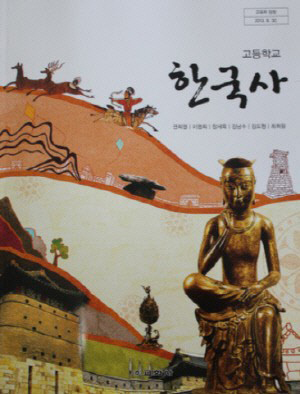
South Korea is embroiled in a “textbook war” over what high school students learn in history class. With schools selecting their textbooks for the coming academic year, objections have been raised to one textbook that critics felt distorted the country’s history of Japanese occupation and military dictatorship. A storm of conflict has followed, raising questions over longstanding disagreements regarding how to interpret history, what young people should learn and who gets to decide on the material they study from.
The controversy started in September after the Ministry of Education gave tentative approval to a book written and published by a company called Kyohak, which is known for its right-wing leanings. After receiving tentative approval, the Kyohak book was selected for the 2014 academic year (which starts in March) by around 20 schools, a small portion of the 800 high schools nationwide.
Liberal critics argued that the textbooks misrepresented some aspects of contemporary South Korean history. In particular, they said the books painted an inaccurately rosy picture of Korea’s colonial occupation by Japan and provided an airbrushed account of the military dictatorships that held power from the 1960s through to the democratization movement of the late 1980s, when the government in Seoul softened up and agreed to elections before hosting the 1988 Summer Olympics.
The choice of the Kyohak books led to an outcry from left wing civic groups across the country, who protested at schools and government offices in an attempt to pressure the schools to cancel their selections. All but one of the 20 schools that selected the Kyohak books have since cancelled their orders for them and said they’ll use different books. The one school that hasn’t cancelled its selection is reportedly “reconsidering” its decision to use the Kyohak book in class.
But parents and activists on the other side of the political spectrum, who are more in line with the account of history presented in the Kyohak books, have argued that the liberal groups’ pressure to change the textbooks amounts to intimidation and an infringement on the schools’ rights to use the book of their choosing.
Kyohak called the campaign to keep its textbooks out of classrooms a “witch hunt” and argued that as the book had gained government approval, schools were free to select and use it if they chose.
The Ministry of Education then conducted an investigation into the schools that selected the Kyohak books and then changed their minds. It concluded that the cancellations were made due to “relentless criticism from civic groups”, as Deputy Minister of Education Na Seung-il said in a Jan. 8 press briefing.
If high school history textbooks seem like a silly thing to fight over, consider the lasting controversy over history in South Korea. The antagonism illustrated in this discussion of high school history textbooks is born of a deep, long-standing split in South Korean society: The country is still roughly divided over those who benefited from the Japanese colonial occupation (1910-1945) and those who were harmed by it. South Korean politics and media are still characterised by a left-right divide where the two sides agree on almost nothing and undermine anything associated with the other side.
In the controversy over the Kyohak books, and in discussions of South Korean history generally, the interpretation of the rule of former President Park Chung-hee (1961-1979) is a particular point of contention. After Korea became independent from Japan, Park used reparation money to establish the infrastructure and industrial base that made South Korea’s economic miracle possible. During his rule, he suspended nearly all civil liberties and ruled as a military dictator. Whether he should be remembered as a father of a successful nation or a brutal dictator who trampled on the nation’s rights is still a matter of heated debate. The Kyohak books were accused of highlighting only the benefits of his policies and ignoring the human cost.
This recent furor over Kyohak has also reignited a conversation that Park initiated when he was president. In 1974, he initiated a system whereby all schools nationwide used one official textbook, which allowed the government to control what students learned in school about their country’s history . The books told students that the coup d’etat that brought Park to power and the lack of rights enjoyed by South Korean citizens were necessary for the country’s security and advancement.
The system whereby all schools used one state-designated history textbook was ended in the mid-1990s and autonomy was granted to schools to select their own textbooks. Last week, members of the ruling Saenuri Party floated the idea of returning to the system of state-designated textbooks, ostensibly to avoid ugly episodes like the recent friction over the Kyohak books.
Current President Park Geun-hye is the daughter of Park Chung-hee. One year into her rule, many have accused her of reverting to dissent-quashing tactics that are reminiscent of her father’s time in power. The same critics who objected to the Kyohak books see the suggestion of state textbooks as opportunist move by the government, and an attempt to take control over what all young people learn.
Beyond its near neighbourhood, the EU works to promote freedom of expression in the wider world. To promote freedom of expression and other human rights, the EU has 30 ongoing human rights dialogues with supranational bodies, but also large economic powers such as China.
The EU and freedom of expression in China
The focus of the EU’s relationship with China has been primarily on economic development and trade cooperation. Within China some commentators believe that the tough public noises made by the institutions of the EU to the Chinese government raising concerns over human rights violations are a cynical ploy so that EU nations can continue to put financial interests first as they invest and develop trade with the country. It is certainly the case that the member states place different levels of importance on human rights in their bilateral relationships with China than they do in their relations with Italy, Portugal, Romania and Latvia. With China, member states are often slow to push the importance of human rights in their dialogue with the country. The institutions of the European Union, on the other hand, have formalised a human rights dialogue with China, albeit with little in the way of tangible results.
The EU has a Strategic Partnership with China. This partnership includes a political dialogue on human rights and freedom of the media on a reciprocal basis.[1] It is difficult to see how effective this dialogue is and whether in its present form it should continue. The EU-China human rights dialogue, now 14 years old, has delivered no tangible results.The EU-China Country Strategic Paper (CSP) 2007-2013 on the European Commission’s strategy, budget and priorities for spending aid in China only refers broadly to “human rights”. Neither human rights nor access to freedom of expression are EU priorities in the latest Multiannual Indicative Programme and no money is allocated to programmes to promote freedom of expression in China. The CSP also contains concerning statements such as the following:
“Despite these restrictions [to human rights], most people in China now enjoy greater freedom than at any other time in the past century, and their opportunities in society have increased in many ways.”[2]
Even though the dialogues have not been effective, the institutions of the EU have become more vocal on human rights violations in China in recent years. For instance, it included human rights defenders, including Ai Weiwei, at the EU Nobel Prize event in Beijing. The Chinese foreign ministry responded by throwing an early New Year’s banquet the same evening to reduce the number of attendees to the EU event. When Ai Weiwei was arrested in 2011, the High Representative for Foreign Affairs Catherine Ashton issued a statement in which she expressed her concerns at the deterioration of the human rights situation in China and called for the unconditional release of all political prisoners detained for exercising their right to freedom of expression.[3] The European Parliament has also recently been vocal in supporting human rights in China. In December 2012, it adopted a resolution in which MEPs denounced the repression of “the exercise of the rights to freedom of expression, association and assembly, press freedom and the right to join a trade union” in China. They criticised new laws that facilitate “the control and censorship of the internet by Chinese authorities”, concluding that “there is therefore no longer any real limit on censorship or persecution”. Broadly, within human rights groups there are concerns that the situation regarding human rights in China is less on the agenda at international bodies such as the Human Rights Council[4] than it should be for a country with nearly 20% of the world’s population, feeding a perception that China seems “untouchable”. In a report on China and the International Human Rights System, Chatham House quotes a senior European diplomat in Geneva, who argues “no one would dare” table a resolution on China at the HRC with another diplomat, adding the Chinese government has “managed to dissuade states from action – now people don’t even raise it”. A small number of diplomats have expressed the view that more should be done to increase the focus on China in the Council, especially given the perceived ineffectiveness of the bilateral human rights dialogues. While EU member states have shied away from direct condemnation of China, they have raised freedom of expression abuses during HRC General Debates.
The Common Foreign and Security Policy and human rights dialogues
The EU’s Common Foreign and Security Policy (CFSP) is the agreed foreign policy of the European Union. The Maastricht Treaty of 1993 allowed the EU to develop this policy, which is mandated through Article 21 of the Treaty of the European Union to protect the security of the EU, promote peace, international security and co-operation and to consolidate democracy, the rule of law and respect for human rights and fundamental freedom. Unlike most EU policies, the CFSP is subject to unanimous consensus, with majority voting only applying to the implementation of policies already agreed by all member states. As member states still value their own independent foreign policies, the CFSP remains relatively weak, and so a policy that effectively and unanimously protects and promotes rights is at best still a work in progress. The policies that are agreed as part of the Common Foreign and Security Policy therefore be useful in protecting and defending human rights if implemented with support. There are two key parts of the CFSP strategy to promote freedom of expression, the External Action Service guidelines on freedom of expression and the human rights dialogues. The latter has been of variable effectiveness, and so civil society has higher hopes for the effectiveness of the former.
The External Action Service freedom of expression guidelines
As part of its 2012 Action Plan on Human Rights and Democracy, the EU is working on new guidelines for online and offline freedom of expression, due by the end of 2013. These guidelines could provide the basis for more active external policies and perhaps encourage a more strategic approach to the promotion of human rights in light of the criticism made of the human rights dialogues.
The guidelines will be of particular use when the EU makes human rights impact assessments of third countries and in determining conditionality on trade and aid with non-EU states. A draft of the guidelines has been published, but as these guidelines will be a Common Foreign and Security Policy document, there will be no full and open consultation for civil society to comment on the draft. This is unfortunate and somewhat ironic given the guidelines’ focus on free expression. The Council should open this process to wider debate and discussion.
The draft guidelines place too much emphasis on the rights of the media and not enough emphasis on the role of ordinary citizens and their ability to exercise the right to free speech. It is important the guidelines deal with a number of pressing international threats to freedom of expression, including state surveillance, the impact of criminal defamation, restrictions on the registration of associations and public protest and impunity against human right defenders. Although externally facing, the freedom of expression guidelines may also be useful in indirectly establishing benchmarks for internal EU policies. It would clearly undermine the impact of the guidelines on third parties if the domestic policies of EU member states contradict the EU’s external guidelines.
Human rights dialogues
Another one of the key processes for the EU to raise concerns over states’ infringement of the right to freedom of expression as part of the CFSP are the human rights dialogues. The guidelines on the dialogues make explicit reference to the promotion of freedom of expression. The EU runs 30 human rights dialogues across the globe, with the key dialogues taking place in China (as above), Kazakhstan, Kyrgyzstan, Tajikistan, Turkmenistan, Uzbekistan, Georgia and Belarus. It also has a dialogues with the African Union, all enlargement candidate countries (Croatia, the former Yugoslav republic of Macedonia and Turkey), as well as consultations with Canada, Japan, New Zealand, the United States and Russia. The dialogue with Iran was suspended in 2006. Beyond this, there are also “local dialogues” at a lower level, with the Heads of EU missions, with Cambodia, Bangladesh, Egypt, India, Israel, Jordan, Laos, Lebanon, Morocco, Pakistan, the Palestinian Authority, Sri Lanka, Tunisia and Vietnam. In November 2008, the Council decided to initiate and enhance the EU human rights dialogues with a number of Latin American countries.
It is argued that because too many of the dialogues are held behind closed doors, with little civil society participation with only low-level EU officials, it has allowed the dialogues to lose their importance as a tool. Others contend that the dialogues allow the leaders of EU member states and Commissioners to silo human rights solely into the dialogues, giving them the opportunity to engage with authoritarian regimes on trade without raising specific human rights objections.
While in China and Central Asia the EU’s human rights dialogues have had little impact, elsewhere the dialogues are more welcome. The EU and Brazil established a Strategic Partnership in 2007. Within this framework, a Joint Action Plan (JAP) covering the period 2012-2014 was endorsed by the EU and Brazil, in which they both committed to “promoting human rights and democracy and upholding international justice”. To this end, Brazil and the EU hold regular human rights consultations that assess the main challenges concerning respect for human rights, democratic principles and the rule of law; advance human rights and democracy policy priorities and identify and coordinate policy positions on relevant issues in international fora. While at present, freedom of expression has not been prioritised as a key human rights challenge in this dialogue, the dialogues are seen by both partners as of mutual benefit. It is notable that in the EU-Brazil dialogue both partners come to the dialogues with different human rights concerns, but as democracies. With criticism of the effectiveness and openness of the dialogues, the EU should look again at how the dialogues fit into the overall strategy of the Union and its member states in the promotion of human rights with third countries and assess whether the dialogues can be improved.
[1] It covers both press freedom for the Chinese media in Europe and also press freedom for European media in China.
[2] China Strategy Paper 2007-2013, Annexes, ‘the political situation’, p. 11
[3] “I urge China to release all of those who have been detained for exercising their universally recognised right to freedom of expression.”
[4] Interview with European diplomat, February 2013.