8 Aug 2013 | France, News, Politics and Society
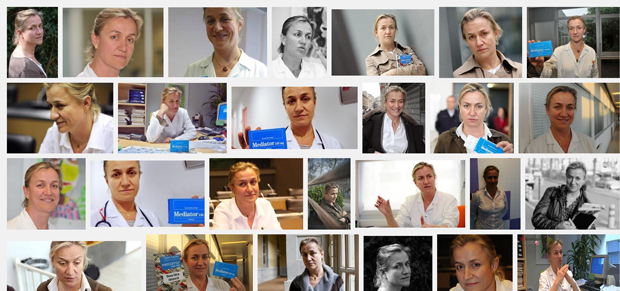
Irène Frachon is a French pneumologist who discovered that an antidiabetic drug frequently prescribed for weight loss called Mediator was causing severe heart damage.
The French term “lanceur d’alerte” [literally: “alarm raiser”], which translates as “whistleblower”, was coined by two French sociologists in the 90’s and popularised by scientific André Cicolella, a whistleblower who was fired in 1994 from l’Institut national de recherche et de sécurité [the National institute for research and security] for having blown the whistle on the dangers of glycol ethers.
While the history of whistleblowing in the United States is closely associated with the case of Daniel Ellsberg, who leaked the Pentagon Papers to The New York Times in 1971, exposing US government lies and helping to end the Vietnam war, whistleblowing in France was first associated with cases of scientists who raised the alarm over a health or an environmental risk.
In England, the awareness that whistleblowers needed protection grew in the early 1990s, after a series of accidents (among which the shipwreck of the MS Herald of Free Enterprise ferry, in 1987, which caused 193 deaths) when it appeared that the tragedies could have been prevented if employees had been able to voice their concerns without fear of losing their job. The Public Interest Disclosure Act, passed in 1998, is one of the most complete legal frameworks protecting whistleblowers. It still is a reference.
France had no shortage of national health scandals in the 1990s, from the case of HIV-contaminated blood to the case of growth hormone. But no legislation followed. For a long time, whistleblowers were at the center of a confusion: their action was seen as reminiscent of the institutionalised denunciations that took place under the Vichy regime when France was under Nazi occupation. In fact, no later than this year, some conservative MPs managed to defeat an amendment on whistleblowers’ protection by raising the spectre of Vichy.
For Marie Meyer, Expert of Ethical Alerts at Transparency International, an anti-corruption NGO, this confusion makes little sense: “Whistleblowing is heroic, snitching cowardly”, she says.
“In France, the turning point was definitely the Mediator case, and Irène Frachon,” Meyer adds, referring to the case of a French pneumologist who discovered that an antidiabetic drug frequently prescribed for weight loss called Mediator was causing severe heart damage. In 2010, Frachon published a book – Mediator, 150mg, Combien de morts ? [“Mediator, 150mg, How Many Deaths?”] – where she recounted her long fight for the drug to be banned. Servier, the pharmaceutical company which produced the drug, managed to censor the title of the book and get it removed from the shelves two days after publication, before the judgement was overturned. Frachon has been essential in uncovering a scandal which is believed to have caused between 500 and 2000 deaths. With scientist André Cicolella, she has become one of the better-known French whistleblowers.
“What is striking is that people knew, whether in the case of PIP breast implants or of Mediator”, says Meyer. “You had doctors who knew, employees who remained silent, because they were scared of losing their job.”
This year, the efforts of various NGOs led by ex whistleblowers were finally met with results. Last January, France adopted a law (first proposed to the Senate by the Green Party) protecting whistleblowers for matters pertaining to health and environmental issues. The Cahuzac scandal, which fully broke in February and March, prompting the minister of budget to resign over Mediapart’s allegations that he had a secret offshore account, was instrumental in raising awareness and created the political will to protect whistleblowers.
For Meyer, France’s failure to protect whistleblowers employed in the public service has had direct consequences on the level of corruption in the country.
“Even if a public servant came to know that something was wrong with the financial accounts of a Minister, be it Cahuzac or someone else, how could he have had the courage to say it, and risk for his career and his life to be broken?” she says.
In June, as France discovered Edward Snowden’s revelations in the press over mass surveillance programs used by the National Security Agency, it started rediscovering its own whistleblowers: André Cicolella, Irène Frachon or Philippe Pichon, who was dismissed as a police commander in 2011 after his denunciations on the way police files were updated. Banker Pierre Condamin-Gerbier, a key witness in the Cahuzac case, was recently added to the list, when he was imprisoned in Switzerland on the 5th of July, two days after having been heard by the French Parliamentary Commission on the tax evasion case.
Three new laws protecting whistleblowers’ rights should be passed in the autumn. France will still be missing an independent body carrying out investigations into claims brought up by whistleblowerss, and an organisation to support them, like British charity Public Concern at Work does in the UK.
So far, French law doesn’t plan any particular protection to individuals who blow the whistle in the press, failing to recognise that, for a whistleblower, communicating with the press can be the best way to make a concern public – guaranteeing that the message won’t be forgotten, while possibly seeking to limit the reprisal against the messenger.
7 Aug 2013 | In the News
#DONTSPYONME
Tell Europe’s leaders to stop mass surveillance #dontspyonme
Index on Censorship launches a petition calling on European Union Heads of Government to stop the US, UK and other governments from carrying out mass surveillance. We want to use public pressure to ensure Europe’s leaders put on the record their opposition to mass surveillance. They must place this issue firmly on the agenda for the next European Council Summit in October so action can be taken to stop this attack on the basic human right of free speech and privacy.
(Index on Censorship)
GLOBAL
Google revamps search to feature in-depth articles
Want to know more about censorship, love, or legos? The Web giant reworks its search feature to display more comprehensive articles, papers, and blog posts alongside its quick answer listings.
(CNET)
Bitcoin is crucial for the future of free speech, say experts
When US servicemen Bradley Manning was found guilty on 20 counts in connection with leaking classified military information, experts mused that bitcoin was instrumental in the continuing operation of WikiLeaks, the whistleblowing website that he helped.
(Coin Desk)
From the U.K. to Vietnam, Internet censorship on the rise globally
In the U.K., a proposed filter would automatically block pornography and, according to Internet rights groups, other unwanted content. In Jordan, newsWeb sites can’t operate without a special license from the government.
(Washington Post)
RUSSIA
Welcome to my world: An open letter to Edward Snowden
Roman Dobrokhotov has some words of wisdom for Russia’s newest resident, Edward Snowden. Translated by John Crowfoot.
(Index on Censorship)
Russia opens probe into flag desecration by US band
Russia’s interior ministry on Monday launched a criminal probe into flag desecration after a US rock musician stuffed a Russian flag down his trousers at a concert.
(Dawn)
SOUTH AFRICA
Free speech for all, save the chief justice?
CHIEF Justice Mogoeng Mogoeng may face an impeachment hearing before the Judicial Service Commission (JSC) for comments he made last month at the annual general meeting of Advocates for Transformation.
(Business Day Live)
TANZANIA
Report: Anti-media attacks in Tanzania on rise, repressive laws sowing fear, self-censorship
A media watchdog says that a rise in anti-press attacks and repressive laws is sowing fear and self-censorship among journalists in Tanzania.
(Washington Post)
TURKEY
Former head of Turkish army is one of 17 jailed for life over ‘Deep State’ coup plot
Ringleaders of ‘deep state’ plot are sentenced as epic trial concludes with 300 verdicts
(The Independent)
UNITED KINGDOM
Guardian rejects press watchdog as ‘own goal’ threatening independence
New regulator will lack support of press intrusion victims and allow dominance by biggest papers, says CEO Andrew Miller
(The Guardian)
Dear Mr. Cameron: U.K.’s Love for Porn and Censorship Don’t Mix
There’s an insatiable demand for Internet porn in the U.K. Whether it be straight, gay, tranny or BDSM, modern Brits have put their arms around the idea of devouring sexually explicit material in the privacy of their own homes.
(XBIZ)
UNITED STATES
Bringing global human rights into the surveillance debate
Guest Post: Surveillance is no longer the Cold War mentality of “us” and “them”
(Index on Censorship)
The Judd Apatow Test of Free Speech
The issue was whether a school district in Pennsylvania violated the rights of two middle-school girls who were suspended for wearing “I ♥ boobies!” bracelets.
(Wall Street Journal)
‘Virgin Mary Should’ve Aborted’: Facebook Page Is Not Anti-Christian Hate Speech, Says Social Network
Another rabble-rousing community page is testing the limits of Facebook’s policies regarding offensive content, only this time it’s the devoutly religious who say they are the target of hate speech.
(International Business Times)
‘CENSORSHIP’: ANTI-ABORTION ACTIVISTS PREPARE TO BATTLE THE MAINSTREAM MEDIA
Pro-life groups have had enough of what they call a “media blackout” when it comes to the abortion issue. So, they’re coming together to hold a “March on the Media” this Thursday. The protest rally is being organized by Lila Rose, president of Live Action, an anti-abortion group. The event’s targets are mainstream media outlets that some critics, including Rose, believe have been too silent about issues pertaining to life and the protection of the unborn.
(The Blaze)
Sen. Rockefeller Continues His Quest To Regulate Free Speech With His ‘Violent Content Research Act’
Sen. Jay Rockefeller’s pet project — fighting violent media — just got a shot in the arm from the Senate Commerce, Science and Transportation Committee (because those three seem like perfect complements…), which “advanced” his legislation directing the National Academy of Sciences to study the effects of violent media on children.
(Tech Dirt)
It’s Dangerous For Free Speech When We Confuse Leakers With Spies
We’ve tried to make similar points a few times in the past about our concern with the Obama administration going after whistleblowers and the journalists who publish their leaks by using the Espionage Act more than all other Presidents in history, combined (more than twice as much, actually).
(Tech Dirt)
VIETNAM
US Concerned About Vietnam Censorship Law
The United States is criticizing a new decree in Vietnam that would outlaw sharing news stories online.
(VOA)
Previous Free Expression in the News posts
Aug 6 | Aug 5 | Aug 2 | Aug 1 | July 31 | July 30 | July 29 | July 26 | July 25 | July 24 | July 23 | July 22 | July 19 | July 18 | July 17 | July 16
6 Aug 2013 | In the News
#DONTSPYONME
Tell Europe’s leaders to stop mass surveillance #dontspyonme
Index on Censorship launches a petition calling on European Union Heads of Government to stop the US, UK and other governments from carrying out mass surveillance. We want to use public pressure to ensure Europe’s leaders put on the record their opposition to mass surveillance. They must place this issue firmly on the agenda for the next European Council Summit in October so action can be taken to stop this attack on the basic human right of free speech and privacy.
(Index on Censorship)
BAHRAIN
After Arresting and Disappearing of Two Journalists, ANHRI Demands Revealing their Fate
The Arabic Network for Human Rights Information (ANHRI), denounces the continuing harassments against the photographers and the journalists by the Bahraini authorities in addition to arresting them without clear reasons in addition to the denial of the authorities for its relation with some of the direct detention process, which arouse concerns related to the life of the detainees.
(ANHRI)
BRAZIL
Citizen journalists take on Brazil’s media
The Ninja media group want independent journalism and a revolution of Brazil’s media coverage. During the country’s recent unrest, the citizen journalists were hailed as an alternative to major media outlets.
(DW)
CHINA
Fear and Loathing at the China Daily
When Mitch Moxley arrived in Beijing in 2007 to work for China’s largest English-language daily, he discovered life in the Chinese media could be very strange indeed.
(The Atlantic)
IRAN
Hassan Rouhani raises Iranian hopes for free expression
During his inauguration address, Iran’s new president Hassan Rouhani promised peace and a push towards a more open dialogue with the West. Although it is far too soon to gauge whether his promises will transform into policies as he pushes against Iran’s convoluted theocracy, one thing is certain–Rouhani’s election has instilled a great feeling of hope among the Iranian people. Small Media reports
(Index on Censorship)
ITALY
Hundreds expected to protest anti-free speech ‘homophobia’ law in Rome, Paris
Up to 500 people are expected to hold a demonstration later tonight outside the Italian parliament to protest a bill that would criminalize homophobia and “transphobia,” something constitutional experts believe would shut down citizens’ right to free speech, especially for Christians.
(LifeSiteNews.com)
KENYA
Parliament Should Not Kill the Freedom of Expression
As Parliament passes the forthcoming media bill, it should remember Kenya and her development require more, not less freedom of the media.
(The Star via AllAfrica.com)
RUSSIA
Banned, unbanned – film debacle continues
“We have the greatest constitution on the planet,” tweeted a relieved Jahmil Qubeka after the Film and Publishing Board’s Appeal Tribunal unbanned his film Of Good Report over the weekend.
(Index on Censorship)
SOUTH AFRICA
Banned, unbanned – film debacle continues
“We have the greatest constitution on the planet,” tweeted a relieved Jahmil Qubeka after the Film and Publishing Board’s Appeal Tribunal unbanned his film Of Good Report over the weekend.
(Grocott’s Mail)
The futility of online censorship
Local legislators should not follow the UK prime minister’s ill-advised plan, says Andrew Verrijdt.
(TechCentral)
TUNISIA
How Censorship Stifled Us In Tunisia
During the era of former Tunisian President Ben Ali, book-shoppers were banned from buying books that have anything to do with politics. Being exposed to such books would allow both intellectuals and common people to better understand the nature of political life in Tunisia and ultimately realize that Tunisians are indeed living under the shadows of dictatorship.
(The Tunis Times)
TURKEY
Turkey sentences nearly 300 for “plotting coup”
A Turkish court on Monday sentenced a former military commander to life in prison and dozens of others including opposition members of parliament to long terms for plotting against the government, in a case that has exposed deep divisions in the country.
(Al-Akhbar)
UNITED ARAB EMIRATES
Journalist Held Incommunicado, Netizens Arrested, Censorship
Reporters Without Borders condemns Egyptian journalist Anas Fouda’s detention by the authorities in the United Arab Emirates for the past month. Based for many years in the UAE, Fouda has been held incommunicado ever since his arrest on 3 July.
(RSF via AllAfrica.com)
UNITED STATES
Children given lifelong ban on talking about fracking
Two Pennsylvanian children will live their lives under a gag order imposed under a $750,000 settlement
(The Guardian)
Judge Says No Speech Protection Applied To Whistleblower Cop
A Federal Judge last week dismissed a lawsuit by an NYPD officer who said he was punished when he complained about quotas in his precinct, ruling that constitutional protections on free speech do not apply because the officer was speaking as a member of the Police Department and not as a private citizen.
(The Chief)
Previous Free Expression in the News posts
Aug 5 | Aug 2 | Aug 1 | July 31 | July 30 | July 29 | July 26 | July 25 | July 24 | July 23 | July 22 | July 19 | July 18 | July 17 | July 16
5 Aug 2013 | In the News
#DONTSPYONME
Tell Europe’s leaders to stop mass surveillance #dontspyonme
Index on Censorship launches a petition calling on European Union Heads of Government to stop the US, UK and other governments from carrying out mass surveillance. We want to use public pressure to ensure Europe’s leaders put on the record their opposition to mass surveillance. They must place this issue firmly on the agenda for the next European Council Summit in October so action can be taken to stop this attack on the basic human right of free speech and privacy.
(Index on Censorship)
CHILE
Chilean Director Patricio Guzmán Slams TVN Censorship
Chilean television station TVN recently broadcast the Patricio Guzmán documentary “Nostalgia de la Luz”, which takes as main scenery the Atacama desert, shows the testimony of the relatives of some victims of the Pinochet regime and their quest for finding the missing corpses of those victims.
(I Love Chile)
CHINA
Wall Street Journal Hits the Great Chinese Firewall
Another major international website has hit the Great Chinese Firewall—this time it’s the Wall Street Journal’s Chinese language edition, and it’s a mystery as to why the site has been blocked.
(Epoch Times)
Wiki reboot: Chinese Wikipedia makes comeback after early censorship
A censorship blackout lost Chinese Wikipedia many of its users. Now a new generation of mainland volunteers is resuscitating the site
(South China Morning Post)
EUROPEAN UNION
The Last of Us European censorship confirmed
Naughty Dog has confirmed that the PAL territory version of The Last of Us is missing some elements found in the American release.
(VG 24/7)
PAKISTAN
Internet censorship in Pakistan
He is a devout Muslim. He prays five times a day. He observes fasting during the holy month of Ramazan. He recites the Holy Quran in the morning and evening. His very name is Mohammad Islam.
(The Nation)
RUSSIA
6 Human Rights Violations in Russia Where Snowden Has Asylum
To the chagrin, and the anger, of the U.S., Russia — quite likely with the direct approval of President Vladimir Putin — has granted temporary asylum to Edward Snowden. The former NSA contractor who exposed extraordinary government surveillance of metadata for cell phone calls and online communication has spent over a month in the transit area of Moscow’s Sheremetyevo Airport after leaving Hong Kong, where he had first gone public about the leaked files back in June.
(Care 2)
SINGAPORE
Singapore Media and Censorship
After working for three years as sub-editor in a leading Singapore newspaper, Mark Fenn explains how censorship is enforced in the country
(Global Voices)
SOUTH AFRICA
Net censorship won’t stop child porn
Local legislators should not follow the UK prime minister’s ill-advised plan, says Andrew Verrijdt.
(Mail & Guardian)
SRI LANKA
Freedom of Expression
A number of fallacies are common in the blogosphere. A lot of people cannot cope with, or even understand, disagreement. Americans bloggers are fond of citing the First Amendment to the US Constitution. If someone disagrees with them, they complain that they are being silenced. Genuine disagreement is often described as “whining”.
(The Nation)
TURKEY
Facebook facing accusations of censoring citizen journalism
With its mysterious management team for countries, Facebook continues to be a difficult place for people to engage in citizen journalism. The latest case is Ötekilerin Postası (The Others’ Post), whose site has been closed twice in the last month for no clear reason by Facebook management
(Hurriyet Daily News)
UNITED KINGDOM
Christian rights group wants Scotland Yard to protect street preachers
A Christian legal rights group has asked Scotland Yard to inform its police officers that street preachers have free speech rights.
(Deseret News)
Why banning online porn is not the solution to society’s problem
I find it difficult not to be disturbed by the normalisation of pornography. I talk to a group of 14-year-olds and they openly boast about ‘their porn’. When I raise concerns about the pornification of life with a couple of colleagues they look at me as if to say ‘get real and just enjoy it’.
(YourCanterbury)
Twitter UK Chief Apologizes to Female Victims of Online Abuse
The general manager of Twitter UK, Tony Wang, sent a series of tweets Saturday, apologizing to women who have experienced abuse on its site.
(Legal Insurrection)
UNITED STATES
Obama’s Downward Spiral
Four freedoms have always formed the bedrock of American liberty. The freedom of speech, the freedom of assembly, the rights to privacy and to a fair trial, largely covered in the first, fourth, and sixth Amendments. It is astonishing that a single president has so thoroughly undermined all four.
(Dissident Voice)
How We Can Balance Freedom Of Speech And The Rights Of College Athletes
The Ninth Circuit Court of Appeals ruled yesterday that video game manufacturer EA Sports could not use the First Amendment to toss out a lawsuit against its use of the names, images, and likenesses of college athletes without compensation when it produced its line of NCAA football video games.
(Think Progress)
ACLU Accuses Union of “Extortion” for Using its Free Speech to Criticize It
Everyone supports free speech, until it’s free speech aimed at them. And suddenly the ACLU, an organization that is perfectly okay with turning over classified information to terrorists that can get Americans killed, draws the line at… being embarrassed in the press.
(Frontpage Mag)
For Twitter, Free Speech Is a High-Wire Act
Twitter likes to carry a free-speech banner, but as the micro-blogging site expands globally, freewheeling tweets are clashing with divergent laws and standards in markets.
(Wall Street Journal)
New mural painted at site of art, free speech debate
Original piece at art store was peeling, so owners had artists put up a new one
(San Luis Obispo Tribune)
Free speech doesn’t exist everywhere
Americans excel at one thing for sure: speaking their minds. Everyone has an opinion, and most are eager to share them. We live in a country where it’s not uncommon to hear criticisms of any elected official, from President Obama right on down the line.
(Yuma Sun)
Previous Free Expression in the News posts
Aug 2 | Aug 1 | July 31 | July 30 | July 29 | July 26 | July 25 | July 24 | July 23 | July 22 | July 19 | July 18 | July 17 | July 16
