[vc_row][vc_column][vc_column_text]Russian and international journalists who were covering anti-corruption protests that took place across Russia on Sunday 26 March 2017 were among those detained as police moved to disperse demonstrators.
The protests erupted following allegations of hidden assets amassed by Russian Prime Minister Dmitry Medvedev. A video detailing the investigation conducted by the Russian NGO Anti-corruption Foundation attracted nearly 20 million views and caused a wave of public indignation.
Alexey Navalny, an opposition political activist and co-founder of the NGO, had called for demonstrations, which took place in nearly 100 cities. Initiative groups in Moscow and other cities supported the protest and called on local members to participate. As a result, meetings took place in 98 cities from Vladivostok to Kaliningrad. In 30 cities, the protests were broken up by the police, who detained many and reportedly committed human rights violations. According to OVD-Info, a website that monitors police detainments, in Moscow alone there more than 1,000 people detained, with around 150 detained in Makhachkala and 130 in Saint Petersburg. Some detainees in Moscow spent two nights in custody while waiting for court hearings.
In Moscow, Saint Petersburg, Makhachkala, Petrozavodsk and Saratov, journalists were detained and harassed by the police among protesters.
Moscow police detained RBC correspondent Timofey Dzyadko, Mediazona publisher Piotr Verzilov, correspondent for Open Russia website Sofiko Arifdzhanova, Public Television of Russia journalist Olga Orlova, Echo of Moscow journalist Alexandr Pluschev and Pyotr Parkhomenko of Kommersant-FM. They all spent 3-4 hours in police stations and were released after intervention by their employers.
The owner and editor of the infotainment website gagster.ru Vladimir Stolyarov was detained at his home during the Moscow demonstration for posting, according to his brother, “a link to the live stream of the protest actions and organized streaming on this website”.
[/vc_column_text][/vc_column][vc_column width=”1/2″ css=”.vc_custom_1490969733608{background-image: url(https://www.indexoncensorship.org/wp-content/uploads/2017/01/MMF_report_2016_WEB-1-1A.jpg?id=85872) !important;background-position: center !important;background-repeat: no-repeat !important;background-size: cover !important;}”][/vc_column][/vc_row][vc_row][vc_column][vc_column_text]Guardian correspondent Alec Luhn was among those detained by police officers as he took a picture of someone being detained at protests in Moscow. Luhn told Mapping Media Freedom: “I was charged with the administrative violation of holding an unsanctioned rally even though I repeatedly said I was a journalist and showed police my accreditation from the foreign ministry.”
He was brought to a police station where he spent more than five hours. “The police didn’t care about the legality of their actions and were very glib, refusing to answer for hours why I was being detained.” In an earlier Twitter post Luhn said police told him: “Maybe you are accused of killing Kennedy.”
“This lack of respect for the press is shocking, but even more shocking is their willingness to roughly detain so many peaceful protesters,” Luhn said. He spoke of a 15-year-old who probably had his nose broken after being kicked in the face by police.
Vladimir Suvorov, a photographer for the Russian website Life, was injured in Moscow when he was hit by a bottle thrown as police moved to arrest demonstrators.
In Petrozavodsk, the capital of the Republic of Karelia, a police officer hit Aleksey Alekseyev, correspondent for local news website Chernika, in the face, breaking his glasses, and took his phone. Alekseyev, who was wearing a press badge, was then detained and spent several hours in the police station. His smartphone was returned. The Union of Journalists of the Republic of Karelia made a special statement condemning the violent detention of Alekseyev.
In Saint Petersburg, police officers detained Novaya Gazeta correspondent Sergey Satanovski and confiscated his journalist ID. Police said later that the credential was lost during the administrative process. Satanovski reported that police had used force on detainees during their detention. The editor-in-chief of the Novaya Gazeta’s Saint Petersburg edition Diana Kachalova, stated she would appeal to the prosecutor on his case.
Artyom Aleksandrov, a correspondent for Delovoy Petersburg, and Roman Pimenov, a correspondent for Interpress, and Aleksandr Petrosyan and Nadezhda Zaitseva, journalists working for the Vedomosti business newspaper were also detained in Saint Petersburg.
A special police unit officer told Violetta Ryabko, Saint Petersburg correspondent for Deutsche Welle, to leave the scene: “Get away from here with your camera”.
In Makhachkala, the capital of the Republic of Dagestan, several journalists were brought to the police station, including Kommersant correspondent Sergey Rasulov, Makhachkala correspondent for Kavkazskaya Politika Faina Kachabekova and Eto Kavkaz correspondent Vladimir Sevrinovski.
In Saratov, Aleksandr Nikishin, a journalist for news agency Svobodnye Novosti and TV presenter of Open Channel, was detained after the protest.
A Saratov court found Nikishin, who is also a member of the public monitoring committee, guilty of disobeying police referring to the fact that he was “holding the door” when trying to enter police department. Nikishin was sentenced to four days in jail.
The court refused to use a video of his forced detention as evidence in the the trial.
“In detaining so many peaceful protesters, Russia is in clear violation of its human rights commitments,” Katie Morris of human rights NGO Article 19 told Mapping Media Freedom. Morris said that Russia is obliged to facilitate peaceful protest and journalists covering demonstrations should get increased protections.
“By arresting journalists, the Russian authorities are seeking to limit the spread of news about the protests in independent media and online,” she said.[/vc_column_text][vc_column_text]
“I wear my Turkish and Muslim identity as easily a pair of well-worn jeans. I no longer worry that my writing will land me in trouble.”
These were some of the heady feelings I shared with Yeni Safak, a highbrow pro-Islamic newspaper, in a 2005 interview. Recep Tayyip Erdogan and his conservative Justice and Development Party (AKP) had been in power for just three years. Overtly pious yet savvily flexible AKP used its big popular mandate to dismantle decades of army tutelage and embark on a giddying raft of reforms. Turkey, it seemed, was on a path to full-blooded democracy, shaming the European Union into opening talks for Turkish membership that same year.
It was a golden age. Erdogan became the first leader to publicly acknowledge that the country’s long-suffering Kurds had been treated unfairly by the state. Bans on the Kurdish language were steadily eased while Kurdish rebel leaders sat opposite Turkish government officials to hammer out a deal for lasting peace.
The changes swept across the ethnic, religious and ideological divide. Using the word genocide which accurately captures the horrors that befell the Ottoman Armenians in 1915 was no longer a criminal offence. In 2003, Turkey’s long-suppressed yet vibrant LGBT community held its first ever gay pride march in Istanbul. In 2011, Zenne, a film about the first officially recorded gay honour killing in Turkey, swept five of the country’s prestigious Antalya Golden Orange awards including best film. That night as I snuggled in bed with my beloved friends and the film’s co-directors, Caner Alper and Mehmet Binay, my heart soared. Albeit in fits and starts, my country was becoming a community of shared values, where citizens of all stripes and creeds could find a place for themselves, be respected, and treated equally before the law. And yes, a majority Muslim country that could prove to hundreds of millions of other Muslims living under thuggish regimes that yes, it is possible, that yes, they too can become us, this. Or so I believed.
Six years on it all seems like a distant dream.
Today, Yeni Safak, is nothing but a government propaganda sheet, spouting off obscene conspiracy theories about how everything from the failed July 2016 coup attempt, to the deadly New Year’s Eve shooting spree at the Reina nightclub in Istanbul, were all engineered by the USA, and other dark forces bent on destroying Turkey.
Apparently I was among them. Turgay Guler, the managing editor of another pro-government title, Gunes, said I helped “plan” the Reina attack. He declared this to his 480 thousand plus Twitter followers unleashing a tidal wave of cyber threats which inundated my timeline for days. The tweet has not been removed. A Turkish prosecutor saw no harm in it and ignored my formal complaint, as has Twitter. Yet, well over a hundred of my colleagues, some of them dear, trusted friends, are languishing in jail for airing critical views of the government that are grounded in hard facts.
Peace with the Kurds is also on thin ice. A two and a half year-long ceasefire with the Kurdish rebels broke down in July 2015, soon after Mr Erdogan disowned a draft roadmap for peace that was initiated between his government and Kurdish leaders. The rebels recklessly threw coals on the fire by carrying the battle into towns and cities. Over 2,000 people, at least 300 of them are thought to be civilians, have died in the fighting since then
Emboldened by the new spirit of openness Diyarbakir, the biggest and most vibrant city in the mainly Kurdish south-east region had been striving to recreate its multi-cultural past. Udi Yervant, a renowned Armenian oud virtuoso gave up his life in California to return. Today, Diyarbakir is a ghost of its former self. Large chunks of its historic centre, home to a glorious Armenian Orthodox church, and a cherished Ottoman mosque, were pulverised following months of bitter fighting between Kurdish rebel youths and Turkish security forces, who bloodily prevailed. Diyarbakir’s co-mayors, a man and a woman, in keeping with the main Kurdish parties’ emphasis on gender equality, are currently in prison on thinly-supported terror charges.
Tens of thousands of others have been sacked, jailed or both, on tenuous charges of involvement in the failed putsch. Fethullah Gulen, the Sunni cleric and a former ally of Erdogan is accused of masterminding the coup. While there is little doubt that many of his associates were involved few believe they were acting alone.
Torture and arbitrary detentions are once again the norm. Not since the 1980 coup has Turkey been this divided, broken and grim. Should yes votes outnumber the nos in a critical referendum on formalising the vast powers Erdogan already exercises, Turkey’s sharp turn towards authoritarianism can only accelerate. And in the opposite case a fresh cycle of revenge may be on the cards.
How did it come to this? Many say it is because Erdogan was never serious about democracy. His real goal all along was to supplant the generals’ tutelage with his own. Others blame Turkey’s perennially squabbling pro-secular opposition politicians.
Power crazed Gulen has caused incalculable harm as well. Then there is Europe which held out the hope of full membership only for the likes of Germany’s Angela Merkel and the former French president, Nicholas Sarkozy to declare that it was all a farce. Turkey was too big, too Muslim and too poor. Either way, the rise of populism and xenophobic nationalism infecting Turkey is a global trend.
Many cast the April 16 referendum as a final chance to turn back the clock. But the odds are heavily stacked against the opposition. The referendum is being held under emergency rule. The government has virtually full control of the media. It is painting the vote as a choice between Erdogan and the abyss, between patriotism and treachery. Whatever the outcome, Turkey has entered uncharted waters. The big question now is how long it can remain afloat.[/vc_column_text][vc_column_text]
Turkey Uncensored is an Index on Censorship project to publish a series of articles from censored Turkish writers, artists and translators.
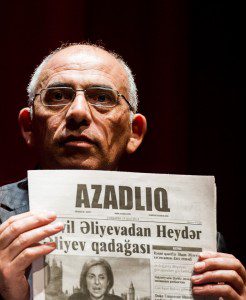
Rahim Haciyev, acting editor-in-chief of 2014 Index on Censorship Freedom of Expression Journalism Award-winning Azerbaijani newspaper Azadliq (Photo: Alex Brenner for Index on Censorship)
Civil, political and human rights are harshly restricted and frequently violated in Azerbaijan. Independent and critical journalists frequently find themselves — or their families — targeted.
Rahim Haciyev, acting editor in chief of the Index Award-winning independent newspaper Azadliq, was forced to flee Azerbaijan after years of official harassment. The government has repeatedly cracked-down on dissent.
Haciyev wrote to Index on Censorship from exile in a western European country:
I’m very sorry that the repressive policy of the Azerbaijani authorities against the Azadliq newspaper forced me to leave the country.
After the arrest of the newspaper’s financial director Faig Amirli, the authorities soon stopped issuing a print version. Amirli was arrested on obviously fabricated charges. I was summoned several times to the prosecutor’s office several times to testify about the paper’s financial affairs. The prosecutors said that this was connected with the criminal case of Amirli, but are invesitgating him under charges of “inciting religious hatred” and “violating the rights of citizens under the pretext of conducting religious rights”.
It turned out that they were interested in the financial issues of the newspaper in order to find a way to silence it. In addition, several employees of the newspaper were summoned for questioning. Then a court ordered tax authorities to comb through the paper’s financial activities. It’s clear that this was undertaken to increase pressure on the newspaper and me personally.
Aiming to cripple Azadliq, the government-owned distribution company was ordered to withhold circulation receipts — $84,000. So we weren’t able to print or even pay our bills. Three staffers are in prison — Seymur Hezi, Faig Amirli and Elchin. Each of them had sharply criticised the lawlessness and corruption of Azerbaijani officials.
In February, 11 Azadliq employees were summoned to the prosecutor’s offices to be interrogated again. Several government agencies increased their pressure on the newspaper’s online operation.
I had been warned twice in the past two years by the prosecutor general’s office that under my leadership Azadliq had been slandering Azerbaijani authorities. In their notices I was told that failure to comply with their terms would mean legal repercussions for me. But I refused. The newspaper continued to report on corruption, abuses of power and the absence of the rule of law. We were devoted to pursuing the truth.
And that is why the authorities intensified repression against the newspaper. Now this lawlessness has forced me to leave the country.
This decision was extremely difficult. I am cut off from my family and friends. I have two children and don’t know when I will see them again.
But despite all the problems I will continue to work daily for the newspaper’s website.
It’s my job, this is my job, this is my life.
Rahim Haciyev
Acting Editor-in-Chief, Azadliq
Haciyev is just one of the many journalists who have been targeted by Azerbaijani authorities in recent years. The country is ranked 163rd out of 180 countries in RSF’s 2016 World Press Freedom Index, which ranks 180 countries according to the level of freedom available to journalists. Almost everyone who speaks out against the regime of President Ilham Aliyev, including journalists, human rights defenders, activists and bloggers, are commonly imprisoned on spurious charges, such as drug and weapon possession, hooliganism and tax evasion. Reports of torture and abuse are typical by those being detained. At least 15 Azerbaijani prisoners of conscience currently remain in jail, including:[/vc_column_text][/vc_column][/vc_row][vc_row][vc_column width=”1/2″][vc_column_text]
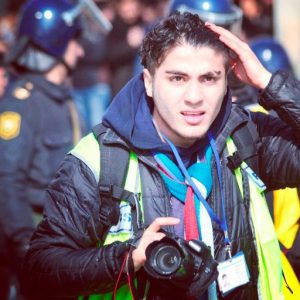
Mehman Huseynov (Twitter)
Mehman Huseynov, an Azerbaijani journalist and pro-opposition blogger, was sentenced to two years in jail on 3 March by a Baku court for defaming the police chief of the city’s Nasimi district. Huseynov intends to appeal his sentencing. According to Front Line Defenders, a group of police officers violently attacked Huseynov on 9 January. The next he was brought to court, found guilty of disobeying police orders and fined 200 manat (£96). [/vc_column_text][/vc_column][vc_column width=”1/2″][vc_column_text]
Founder and editor of online news portal Kend.info Elchin Ismayilli was arrested on 17 February on charges of “extorting money” and “aggravated abuse of a position of influence”. According to the Caucasian Knot, he was also accused of blackmailing a local office, charges he insists were fabricated to silence his coverage of local corruption and human rights violations. On 18 February, Ismayilli was sentenced to a pre-trial detention period of 24 days. He has previously been subject to multiple arrests and cases of harassment related to his work as a journalist.[/vc_column_text][/vc_column][/vc_row][vc_row][vc_column width=”1/2″][vc_column_text]
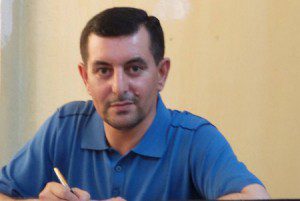
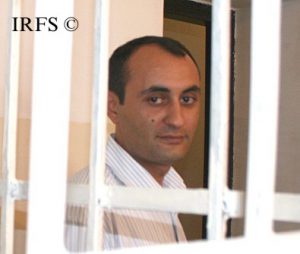
On 3 March, a court decided to prolong the period of investigation of Faig Amirli for three months, the Azerbaijan Press Agency reported. Amirli, financial director of newspaper and assistant chairman of the Azerbaijani Popular Front Party (APFP), was arrested on 20 August 2016 for “inciting religious hatred” and “violating the rights of citizens under the pretext of conducting religious rights,” according to Radio Free Europe/Radio Liberty.[/vc_column_text][/vc_column][vc_column width=”1/2″][vc_column_text]
Writer and blogger Rashad Ramazanov was arrested on 9 May 2013 and sentenced to nine years in prison. According to English PEN, his charges included “illegal possession and sale of drugs”. Police claimed to have found nine grams of heroin on his body, although Ramazanov insists that the drugs were planted by the officers, who he claims also beat him up and tortured him during interrogation. Ramazanov was sentenced to nine years in prison in November 2013 on a trumped-up drug trafficking charge. PEN International reported that on 23 January Ramazanov was moved to solitary confinement for 15 days, the reason for which remains unknown. On 7 February Ramazanov was released from solitary confinement, and his family was given permission to visit him.[/vc_column_text][/vc_column][/vc_row][vc_row][vc_column width=”1/2″][vc_column_text]
Founder and editor of the website Azel, Afgan Sadygov, was sentenced on 12 January to 2.5 years in jail. Sadygov was arrested on 22 November 2016 based on accusations of “hooliganism” after he was attacked on 9 August 2016 and allegedly hit a woman, Contact Online news reported. Sadygov’s website often reports on issues such as poor infrastructure maintenance, bad quality of roads and waste of public funds in Azerbaijan’s Jalilabad region.[/vc_column_text][/vc_column][vc_column width=”1/2″][vc_column_text]
Seymur Hezi
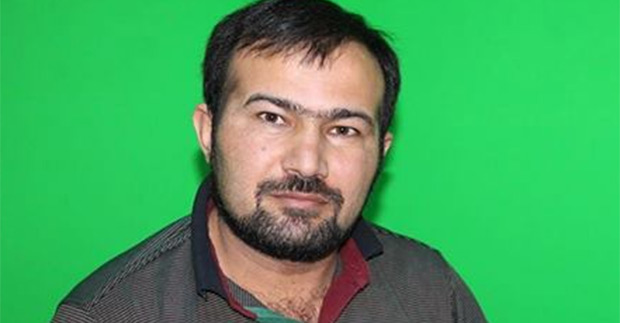
According to MeydanTV, the Supreme Court will hear the appeal of Seymur Hezi, reporter for opposition news source Azadliq and presenter for critical TV program “Azerbaycan Saati” on 13 April. The journalist was sentenced to five years in prison on 29 January 2015 on a trumped-up charge of aggravated hooliganism, Index on Censorship reported. The charge came after Hezi was attacked on 29 August by Maherram Hasanov, a complete stranger, and defended himself. Hezi has accused President Ilham Aliyev and chief of staff Ramiz Mehdyev of ordering his arrest.[/vc_column_text][/vc_column][/vc_row][vc_row][vc_column width=”1/2″][vc_column_text]
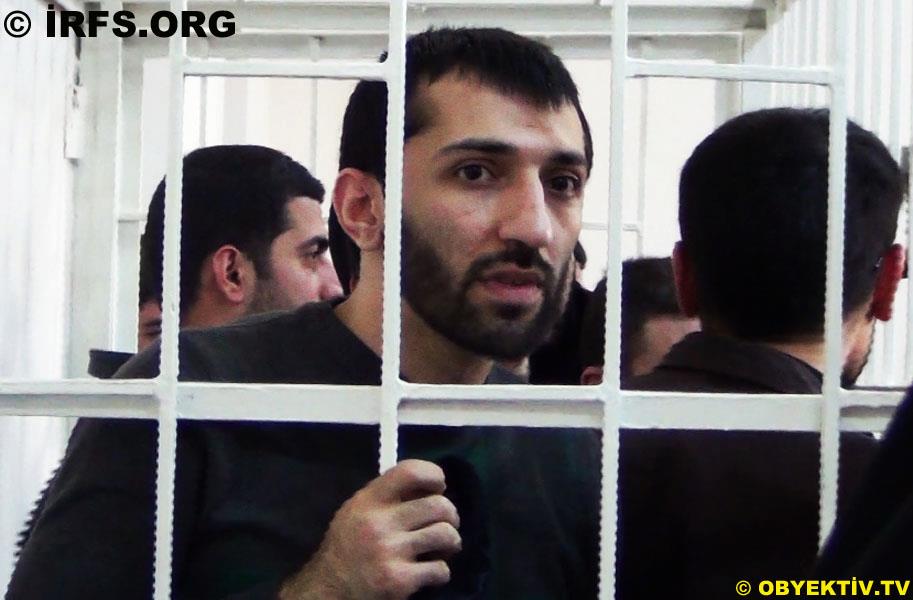
The lawyer of Nijat Aliyev, former chief editor of religious website Azadxeber.org, has not been able to get hold of the text of the verdict of the Supreme Court of Azerbaijan for his client, Contact Online news reported. Aliyev’s lawyer believes that the delay has been intentional in order to prevent the filing of a complaint with the European Court of Human Rights, Contact Online news reported. According to IRFS, Aliyev was detained on 20 May 2012 and sentenced to 10 years in prison on 9 December 2013 on charges of illegal possession of drugs and weapons, incitement of religious hatred, calls to seize power and distributing banned religious literature. Aliyev’s website previously published criticisms of the government’s policies in regards to religion, the possibility of a LGBT parade in Baku and the allotment of too much funding for the Eurovision Song Contest in 2012, OCCRP reported.[/vc_column_text][/vc_column][vc_column width=”1/2″][vc_column_text]
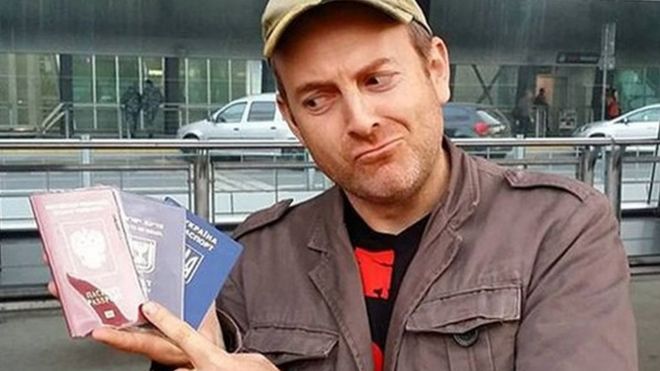
Russian-Israeli travel blogger Alexander Lapshin was extradited from Belarus to Azerbaijan on 7 February. He faces up to five years in prison on charges of “public calls against the state” and “unauthorised crossing of borders,” according to Armenian News Agency ArmenPress. These charges came after Lapshin traveled to the disputed territory of Nagorno-Karabakh and sympathised in his blog entries with the Armenians he met, GlobalResearch reported. [/vc_column_text][/vc_column][/vc_row][vc_row][vc_column width=”1/2″][vc_column_text]
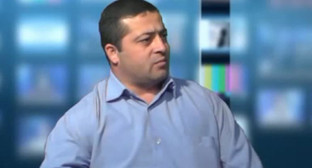
Fikrat Faramazoglu, editor-in-chief of news website jam.az, has been detained since 30 June 2016 on the charge of extortion by means of threats, which is punishable by up to five years in prison. According to Azerbaijan Free Expression Platform, these charges originated when a local restaurant owner accused Faramazoglu of extorting money from him when asked to remove defamatory articles about the restaurant on websites owned by the journalist.[/vc_column_text][/vc_column][vc_column width=”1/2″][vc_column_text]
Blogger and social media activist Abdul Abilov has been imprisoned since 22 November 2013. According to Azerbaijan Free Expression Platform, Abilov was charged with illegal possession, storage and manufacturing or sale of drugs when authorities claim to have found illegal drugs in his home and on his person, which Abilov continues to protest were planted on him. On 27 May 2014 Abilov was sentenced to five-and-a-half years in prison. Stop Sycophants!, the Facebook page previously run by Abilov, was shut down following his arrest, IRFS reported. The page was known to strongly criticise authorities.[/vc_column_text][/vc_column][/vc_row]
It took me three tries to watch the video, which has since been removed from YouTube by the user. The first pass was simply because it was one of the most popular videos during the latest war of words Europe-Turkey crisis. On the second pass, I got over my initial disgust and watched it fully. The third pass allowed me to step back and think about the question of how its creator is part of a social phenomenon.
In the video, a Turkish man of about 25 or so with an Islamic beard is phoning the Dutch police while proudly telling the viewer what he is up to with a wicked smile. As soon as the call is answered, he begins speaking in Turkish while in the background a friend blares an Ottoman war march from another smartphone. He tells the police: “Get your grannies ready! Because our grandfathers are coming for them!” He does not use the F word. He doesn’t need to. His obscene smile makes that clear.
This man is a fellow citizen of Turkey. As an educated Turk, I am supposed to understand him, even respect him and his point of view. Otherwise I would be categorised as part of the “oppressive, arrogant elite”. He, on the other hand, has no such responsibility. He just is. He’s free to carry on in his chauvinist bubble secure in the righteousness of his cause.
Soon the world might be full of such men and women, who are proud to be vulgar and carrying unleashed banality as a political identity. All over the globe, these individuals claim to be “real people”. If they are the “real”, then anyone who is astonished by their inane antics of this reality show is “unreal”.
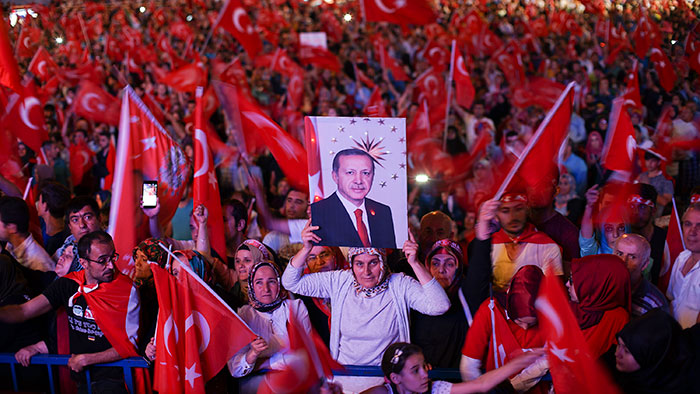
Unfortunately, these “real people” like the men in the video have been the social and psychological stronghold of Turkey’s government and President Recep Tayyip Erdogan. They are also the leading actors in the Europe-Turkey crisis playing out on the streets of the continent’s cities. They have become internationally visible due to the demonstrations in The Netherlands and elsewhere. A European citizen who sees such videos and such people may think that these “real people” represent all Turks. They do not.
As a matter of fact, these people simply were not. They did not exist. They were manufactured during the AKP’s time in power. It is as if the concept of shame has been removed from the social lexicon. This loosening of morals has allowed these individuals to become the dominant figures and even role models in society. As the AKP and Erdogan evolved to become borderless, so did their followers.
When the AKP was vying to come to power in 2002, I went on an election tour to meet this new brand of conservative. It was a new social movement — a movement of the righteous, if you will — being born before our eyes. I met local representatives of the party who were usually the most respected figures in their town or neighbourhood. Each of them was exceedingly polite, presentable and moderate in their conservative lifestyle. Although the conventional wisdom had it that these new kids on the block couldn’t possibly pull off an election win, some of us were aware that there was something new in the air and that the political scene would never be the same. Abdullah Gül, an AKP founder and former president was the balanced and well-educated figure who described this young force by saying: “We are the WASPs of Turkey.”
And then it happened. The AKP wasp won the election in a landslide. In my column written after Erdogan’s first, unexpected victory, I wrote:
“Erdogan somehow magically made himself be seen as the underdog and managed to identify himself with the masses. Throughout the election period, he made himself look like he was never allowed to speak by the old guards of the secular regime, which made the voters suffer for and with him. Now he is the winner and we will see for how long he will be able to sustain the role of ‘the sole oppressed’. And we also will have to think what the political answer could be to this spectacle of the fabricated oppressed.”
The column was printed in November 2002. Since then Turkey’s political opposition has struggled to formulate a response to Erdogan’s “underdog politics”. Now he’s playing it on an international stage with much higher stakes.
So if Europeans or Americans are wondering whether or not the argument of the “oppressed and neglected real people are coming to power” farce is sustainable, the answer is it sustained in Turkey for 15 years and still there is no light at the end of the tunnel. For the last fifteen years rebranding the lumpenproletariat as “the real people” in Turkey first legitimised, then exhilarated and finally sanctified all the eccentricities, banality and the ultimate vulgar and now all Europe is watching the spectacle of this fabricated mass. Meanwhile Erdogan, who still is “the man who is not allowed to speak”, is giving endless speeches about how he and his people are silenced.
During the first half of these 15 years, one of the most popular stories circulating on Facebook was about that old cliché: boiling the frog slowly. Before the Turkish and Kurdish opposition were deep fried in prison cells, Erdogan was excelling in making different and sometimes opposite sectors of the social and political spectrum believe that he was actually their man in Ankara. The Kurds fell for it. The liberal democrats fell for it. Some feminists and some LGBT people did as well, not to mention the conservative nouveau riche and radical Islamists.
However, on the day that his second term began in 2007, he was already very clearly hinting at what he would do. In his victory speech on the election night, he said: “All those who did not vote for us are also the colours of this country.” Somehow many intellectuals saw this as an “all-embracing” speech. But I wasn’t. My article on that day infuriated many. From my point of view, Erdogan was making people like me “the embellishment on the plate that could be removed if not wanted”. Somehow, as with the USA today, the masses have a tendency to woolgathering, to think that things cannot be that bad even when the leaders make it crystal clear they actually will be. Yes, that wall could really happen. What’s worse, children could have teachers loyal to Trump’s doctrine, Americans could be glued to Trump TV and neighbours could turn on neighbours for disloyalty.
A country’s leadership sets the tone, but can also penetrate the very fabric of the public’s existence, igniting a metamorphosis that creates political clones. Power doesn’t just stun people but also hypnotises them into becoming little creatures at the command of the leader.
So now I am watching a video produced by my fellow citizen, a Frankenstein monster, who thinks that the idea of our Ottoman grandfathers raping European grandmothers is not only amusing but also a way to educate infidel Westerners. He was just about 10 when the AKP came to power. He grew up imbibing the belief that he could do anything if portrayed himself as the underdog. He thinks that educated people are evil because it has been drilled into his little mind by the political machine. He has been ruthlessly force-fed Turkey’s rewritten history, which is a bizarre combination of the greatness of our illustrious ancestors and how the secular elite paired with Westerners to steal Turkey’s greatness through devilish tricks. He believes that if one man rules the country all the confusion will be gone, Turkey will be great again and everything will be awesome.
Today I wonder what happened to those polite and proper AKP representatives I met in 2002. But more importantly what will happen to these newly fabricated people if — and when — Erdogan is gone? What will happen to these creatures after their creator has left the scene? Will some future leader be trolling through video channels to hunt them down?
Turkey Uncensored is an Index on Censorship project to publish a series of articles from censored Turkish writers, artists and translators.