17 Jan 2013
Kostas Vaxevanis, Greek journalist
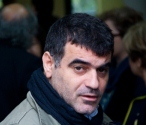 The arrest of Greek investigative journalist Kostas Vaxevanis on 28 October 2012, just days after he published a list of more than 2,000 suspected tax evaders, drew international condemnation.
He was found not guilty of breaking data privacy laws in November 2012, but the Athens public prosecutor subsequently ordered a retrial. If he is sentenced, he faces up to two years’ imprisonment or a fine.
Vaxevanis published the so-called “Lagarde List” of wealthy Greeks with Swiss bank accounts in his weekly magazine Hot Doc in October 2012. The list is named after IMF head Christine Lagarde, who handed it over to her Greek counterpart in 2010 when she was French finance minister.
Successive Greek governments have failed to prosecute a single person on the list or any other high-profile individual for tax evasion. Vaxevanis argues that publication of the list was in the public interest. He told the Guardian: “The country is governed by a poisonous combination of politicians, businessmen and journalists who cover one another’s backs … Had it not been for the foreign media taking such an interest in my own story, it would have been buried.”
Dimitris Trimis, head of the Athens Newspaper Editors Union, told the BBC that the pressure on press freedom in Greece was the most intense of his career. Before Vaxevanis’ arrest two state TV presenters were taken off air after discussing a minister’s response to claims by anti-fascist demonstrators that they had been tortured by the police.
Soon after Vaxevanis’ arrest, journalist Spiros Karatzaferis was detained after announcing he would leak damaging documents about the country’s faltering economy. “The government feels insecure,” Trimis said. The only way it feels it can convince society of its policies is to try to manipulate the media through coercion.
Photo: Demotix / Kostas Pikoulas
Mosireen, Egyptian citizen media collective
 Founded in Egypt in early 2011, the Mosireen Collective sought to support and promote the growing wave of citizen journalism that had emerged in the lead-up to the ousting of Hosni Mubarak, when members of the public captured the protests and police brutality on their mobile phones.
Working as facilitators, producers and archivists, Mosireen provide both online and offline space to share this wave of citizen news and people’s perspectives with the wider world.
Whilst none of the Mosireen founders were journalists by profession – they come from a variety of other disciplines, from urban planning to graphic design and mechanics – they recognised the importance of the independent media voices emerging from the revolution.
Mosireen’s media centre in Cairo is a community-supported space, and although professionals also use the centre, the focus is on providing ordinary people with skills, equipment, and know-how. The collective has since trained several hundred people with the output of their work available to download, stream, screen and distribute for free on a non-commercial basis. Footage from the archive is also regularly screened at Tahrir Cinema, a free open-air cinema off Tahrir Square (pictured). It continues to film the on-going discontent to this day.
Mosireen – a play on the Arabic words for “Egypt” and “determined” – also holds regular public events and talks in its workspace in downtown Cairo. The opportunity for the public to get involved in all aspects of production allows for an unprecedented level of interactivity in the creation of Egyptian history. All of which is in line with another of Mosireen’s objectives: to counter the narratives put forward by state-owned media through the presentation of multiple viewpoints.
Ta Phong Tan, imprisoned Vietnamese blogger
 Ta Phong Tan is one of three Vietnamese bloggers, collectively calling themselves the ‘Club for Free Journalists’, at the centre of a draconian clampdown by the country’s authorities. Vietnam is one of the world’s most restrictive countries for freedom of speech and the press. Only China, Eritrea and North Korea come lower on RSF’s press-freedom index.
Tan (pictured) and her fellow bloggers were arrested in September 2012 and charged with ‘conducting propaganda against the state’ in articles that allegedly ‘distorted and opposed’ the Vietnamese government.
In fact in over 700 articles on Tan’s blog Cong Ly va Su That (‘Justice and Truth’) she exposed the extent of corruption in the country. She covered a broad range of social issues, including the maltreatment of children, corruption, unfair taxation and illegal land confiscations by local party officials.
Before becoming a journalist, Tan worked as a police woman in Hanoi, giving her an insight into the workings of the system. On 4 October 2012, after a trial lasting just one day, Tan was sentenced to spend the next ten years in jail, with an additional five years of house arrest upon release. She refused to plead guilty.
This month a court in Vinh in Nghe An province, northern Vietnam, sentenced 14 activists, many of them bloggers, to up to 13 years in jail followed by several years of house arrest. The BBC reported that their convictions relied on loosely worded national security laws — in this instance article 79 of the penal code, which vaguely prohibits activities aimed at overthrowing the government. The Committee to Protect Journalists reported that state officials had beaten and stripped online reporter Nguyen Hoang Vi while detained by Ho Chi Minh City police.
“These shocking prison sentences confirm our worst fears — that the Vietnamese authorities have chosen to make an example of these bloggers, in an attempt to silence others,” Rupert Abbott, Amnesty’s researcher on Vietnam, told the New York Times, adding that freedom of expression in the country was “dire and worsening.”
Before the trial began, Tan’s mother killed herself in a self-immolation protest against the treatment of her daughter, and the violence, harassment and threats of deportation levelled against the family.
Sadiye Eser and Turkey’s imprisoned journalists
 Sadiye Eser (pictured) who writes for the leftist daily Evrensel (Universal) Newspaper, was arrested on 10 December and is still being held. The most recent reports claimed she is now likely to be being held at Bakirkoy Women’s prison.
Police asked Eser about political rallies she had covered as a journalist, as well as the notes she had kept on them, according to a statement by the Journalists’ Union of Turkey.
Broadly worded anti-terror and penal code statutes allow the authorities to conflate coverage of banned groups and special investigations with outright terrorism or other anti-state activity.
These statutes ” make no distinction between journalists exercising freedom of expression and [individuals] aiding terrorism,” said Mehmet Ali Birand, an editor with the Istanbul-based station, Kanal D, speaking to Committee to Protect Journalists (CPJ).
Censorship in Turkey remains endemic. CPJ estimated that Eser’s detention brought to 50 the number of people in jail for journalistic activity in the country. Other organisations suggest the number is even higher. Turkey currently is ahead of even Iran and China in the number of journalists it is known to have in prison.
There is also more widely a chilling atmosphere for free expression and press freedom in Turkey leading to sackings of journalists and self-censorship: as the European Commission said in its 2012 progress report on Turkey: “On a number of occasions journalists have been fired after signing articles openly critical of the government. All of this, combined with a high concentration of the media in industrial conglomerates with interests going far beyond the free circulation of information and ideas, has a chilling effect and limits freedom of expression in practice, while making self-censorship a common phenomenon in the Turkish media.” They also point out that 16641 cases in total were pending against Turkey at the European Court of Human Rights in September 2012. In March 2012, Orhan Pamuk, a Turkish writer and Nobel laureate, was charged and fined for a statement in a Swiss newspaper that “we have killed 30,000 Kurds and one million Armenians.”
16 Jan 2013 | China
After a week of protests and walkouts over a censored Near Year editorial, and rigorous calls for press freedom, journalists at China’s Southern Weekly have gone back to work. A normal edition of the paper was published last Thursday.
Outrage over the actions of Guangdong’s propaganda chief, Tuo Zhen, seemed to reach another climax when The Beijing News, an offshoot newspaper of Southern Weekly, refused to print an editorial taken from the nationalistic Global Times blaming the protests on “activists outside the media industry” instead of on the censorship apparatus.
Dai Zigeng, the editor-in-chief, was said to have nearly resigned over the editorial. However, the BBC reported this:
When the BBC visited The Beijing News offices, the chief editor’s office manager and several of the paper’s journalists issued assurances that Mr Dai was still at work. Reports that protesters were camping outside The Beijing News offices also appeared to be untrue.
The newspaper printed the directive as a news item the next day.
Maria Repnikova, an academic who writes on state-media relations at Oxford University, wrote in the Wall Street Journal that so far the Southern Weekly affair has not helped to make any waves in press freedoms here because
These journalists [at Southern Weekly] did not confront the Central Publicity Department or the Party-state in Beijing. After a few days of protest, when they quietly settled the dispute with local authorities, some netizens were outraged that they didn’t explain their decision to their supporters.
An editorial entitled Dim Hopes for a Free Press in China published on Monday in the New York Times and written by Xiao Shu, a commentator for Southern Weekly for six years, notes that ever since Tuo Zhen started overseeing the Guangdong party propaganda last May, he has “micromanaged every aspect of media operations.”
Xiao Shu went on to say that under Tuo “Guangdong retreated into its darkest period since the start of Deng Xiaoping’s ‘reform and opening up’ policies in the late 1970s.” Xiao was told to quit in March 2011, as authorities grew nervous of Arab-Spring inspired dissent.
It would seem that some of the most daring journalists in China have settled for a deal which, as Xiao Shu described, was “ending pre-publication censorship by the Communist Party’s propaganda arm in Guangdong Province and permitting greater editorial independence.” I asked Antony Tao, founder and blogger at Beijing Cream, a well-regarded China news blog, how credible these assertions were.
“It sounds good on paper, but I wouldn’t put much stock in ‘tacit’ agreements,” he said. “We should also keep in mind that in most Chinese newsrooms, to the best of my knowledge, editors and censors work in symbiosis to keep themselves out of trouble. No one wants to draw the ire of higher-ranking censors.”
According to Tao, a settlement was best for editors and journalists involved. As for what it means for media freedoms in China, Tao said:
“I don’t think the key players in this drama were ever as concerned about advocating for expanded media rights across China as China watchers perhaps wanted them to be.”
15 Jan 2013 | Uncategorized
The European Court of Human Rights deemed today (15 January) that a woman working for British Airways was unfairly discriminated against for her religion. Nadia Eweida was fired by BA in 2006 for refusing to stop wearing her crucifix visibly. Judges ruled that Eweida’s rights under Article 9 of the European Convention on Human Rights were violated. Three other Christians who had taken their employees to court lost their cases. Shirley Chaplin, whose employer also stopped her wearing crucifix necklaces, Lillian Ladele, disciplined after refusing to conduct same-sex civil partner ceremonies — and Gary McFarlane, a marriage councillor fired for saying he might object to offering sex advice to gay couples.

Aaron Swartz’s suicide prompted calls for cyber law reform
The suicide of US activist Aaron Swartz on 11 January has prompted calls to reform computer crime laws in America. The 26 year old was awaiting trial, charged with 13 felony counts of wire fraud and hacking two years ago. Swartz had downloaded millions of academic papers from online archive JSTOR and was due to face trial in April, for which he could have been jailed for decades and faced massive fines. Calls for amendments to The Computer Fraud and Abuse Act have been widespread, with critics alleging that certain internet hacking laws are too vague and broad, and impose overly harsh penalties.
On 9 January, Iran’s Supreme Court ratified the death penalty of five Ahwazi (Arab-Iranian) human rights defenders. Hadi Rachedi, Hashim Shabani Nejad, Mohammad Ali Amuri Nejad, Jaber Al-Bushoke and his brother Mokhtar Al-Bushoke were arrested by Iran’s Ministry of Intelligence and National Security in the spring of 2011. They were charged with spawning mischief, threatening national security and inciting propaganda against the Islamic Republic. The activists had been protesting for their right to speak Arabic, rather than the national language of Persian – a right that is written into Iranian constitution. They were allegedly tortured into giving false confessions in detention.
App developers Tencent have apologised to users of social media app WeChat, after the programme appeared to be censoring controversial terms globally. Tencent, China’s most widely used internet portal, blamed a “technical glitch” after it had blocked terms such as Southern Weekend and Falun Gong, a banned group in China often referred to as a sect. Activists have voiced concern that authorities are hacking the app, in order to increase surveillance on some of its 200million users. WeChat has subscribers in the UK and America, and will soon be launched across Asia.
US Vice President Joe Biden met with the president of the Entertainment Software Association on Friday, to discuss the gaming industry’s influence over violence, following a school shooting in Connecticut that prompted calls for reforms on gun policy. Biden’s White House meeting aimed to establish whether America was undergoing a “coarsening of our culture”, discussing how to eliminate the culture of violence, a happening the gaming industry is frequently blamed for. The National Rifle Association (NRA) had accounted the rate of gun crime in America to media and video game violence, which the gaming industry refuted, expressing fears that they could become a scapegoat in the Connecticut debate.
15 Jan 2013 | Uncategorized
As the trans/Moore/Burchill spat draws to a close, and an article that gave much offence to trans folk is taken down from the Observer’s site — it is time, perhaps to reflect how this episode encapsulates, in one seamless narrative, the two or three most serious issues facing free speech in the UK today.
Over all lies the question of censorship.
I do not believe Julie Burchill’s article should have been published: doubt it would find space in a respectable publication were it written about any other minority; and have little time for the many in the press who defend it on grounds of free speech.
Once up, though it should not have come down as it did.
The damage was done, in terms of hate speech published and serious traumatic stuff distributed where it could do most harm, in the original publication. 48 hours on, copied, commented, archived its dread power was mostly spent. (And meanwhile, the fatuousness of the Observer decision to remove the piece was instantly exposed by the Telegraph’s mischievous counter-decision — to put it back up! Will they, one wonders, be paying a repeat fee to the Guardian for the privilege? Have they even, one wonders, sought permission not just from the author — but the article’s original publisher, the Observer?)
It leaves an awkward hole on the Observer website, filled by an apology that most in the trans community feel is mere token: too little too late, and the suspicion that it only finally went when Observer lawyers pointed out the paper could run the risk of prosecution. From whom is not entirely clear.
One person who took the matter to the police did not get very far. They told him, he claims, that they could not act because no identifiable group of individuals had been targeted. Huh?
They suggested, instead, he try the Press Complaints Commission. But the PCC won’t intervene because no named individual is targeted (which is why some groups would like to see a right of class complaints under whatever new regulations are put in place post-Leveson).
Still, the legal dimension does drain, somewhat, the worth of the apology — as does recent press conduct in respect of their sacred cow of freedom!
The Observer, happy to host the initial carefully confected abuse, stuck doggedly to its rules of moderation. Why, though, bother to moderate at all, I inquired, not altogether facetiously — as another commenter, reproducing an extract from Burchill’s piece with “women” substituted for “trans women” found their post blocked.
There is much lack of consistency here. The same press that squeals “censorship” at the least attempt to regulate, is other times busy taking out libel writs when people say nasty things about them (Daily Mail take heed!). Meanwhile, if you live by a creed of happily dishing up offence to all and sundry, Moore and Burchill, don’t be surprised when someone trumpets that offense back at you.
If questions of censorship topped the bill in this case, lesser issues also played a part: the question of online etiquette, for instance.
As Brooke Magnanti writes eloquently in the Telegraph, today’s world is more interconnected than ever before. Any and every faux pas regarding a minority community is magnified: so politeness is more than its own reward. It is the price one pays for not being continually distracted from what one wants to say by the need to apologise for every least deviation from the currently acceptable mode of expression.
Barrier to free speech? Yes: sort of. But also common courtesy: for why would you go out of your way — as Suzanne Moore clearly did at the start of this episode — to insult the subject of one’s writing?
Then there’s the “cabal” thing: the suggestion by Julie Bindel that online nastiness might be being orchestrated — in this case by a bunch of trans activists. Well, hardly. It makes as much sense to detect caballerous behaviour in informal links on the journalistic side of the kerfuffle: from the saccharine tributes paid by Burchill to her friend, Moore — or the pre-tweeting of a line from what Burchill eventually filed by colleague and co-author, Nick Cohen, approximately 24 hours before it went live. Nothing wrong with this, especially as it appears to reflect behaviour exhibited by most journalists, myself included.
However, the online “monstering” of Moore that Burchill objected to was probably the least organised behaviour around. Elsewhere, I’ve likened it to the murmuration of a flock of starlings, wheeling this way and that in instant response to external stimuli: “mobbing” any predator, actual or potential, that puts their nose above the parapet.
But that’s not right, either. We live, all of us, nowadays, with the reality of social networks. If Moore writes something offensive about trans folks, then, she must get that her views will percolate at light speed across the web. The angry and the obsessed and the merely voyeuristic will turn up, in a trice, to deliver a good drubbing and the net effect (no pun intended) is likely to be horrid.
I’ve been on the receiving end of net monsterings twice. They are awful and not for the faint-hearted: a sort of bullying lite, with most individuals making reasonable if sharp comment, but the whole being much worse than the sum of the parts, and the total effect being one of intimidation. I sympathise with those on the receiving end. I sympathised with Moore.
But I am not sure where to go from there. Bullying is bad. But how, short of implementing online some exceedingly illiberal “common purpose” laws do you stop it? I’m stumped.
Moore temporarily rejoined Twitter to address the issue, and while she may not exactly have agreed to kiss and make up with the trans community, she has agreed to talk about kissing and making up.
Meanwhile, the speech issues of our age, the responsibility of press and public alike for online offence rumble on unresolved — albeit with a growing sense, in the trans community and elsewhere, that they are already returning to their bad old ways.
Jane Fae is a feminist and writer on issues of political and sexual liberty
http://janefae.wordpress.com/
