28 Aug 2015 | Mapping Media Freedom, mobile, News, Romania
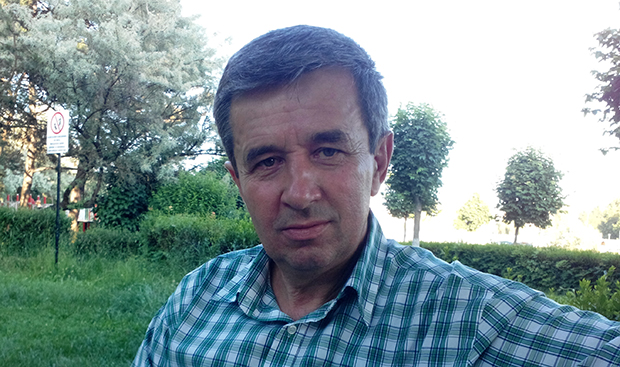
Vasile Luca (Photo: Zoltan Sipos)
Vasile Luca, a veteran journalist working at Radio Cluj, a Romanian public radio station based in Cluj-Napoca, was fired in May 2015 as a result of a disciplinary committee hearing.
Two months before his termination, Luca, who had been with the station for 25 years, went public with internal documents showing that a station employee, Debreczeni Hajnalka, who was also the press secretary for the head of a political party, was not actually completing any work despite an unusually high salary. Luca filed a complaint at the public prosecutor’s office and, after media coverage, Hajnalka resigned from the station. The station refused to disclose what Hajnalka’s job title had been.
At the time of the resignation, Hajnalka said her role had been to coordinate media strategies, internal communication between public stations and media monitoring. She denied that she had broken any laws or acted inappropriately.
“The case of Debreczeni Hajnalka was surely not the sole reason for my dismissal”, Luca told Index during an interview. “However, after the Debreczeni scandal, there was a lot of pressure, and multiple phone calls were made because the party she works for, the Democratic Union of Hungarians in Romania (DAHR), is very influential in the upper echelons of public radio”.
Luca had a long track record of conflicts with station management. He had previously documented illegalities and misuse of public funds at the radio station. In 2010, Luca was granted whistleblower status by Transparency International Romania after he gathered evidence that Florin Zaharescu, director of the station at the time, was embezzling funds.
Luca was subjected to his first disciplinary action in January 2015. Station management accused him of being the author of caricatures of the radio station’s directors. The images were found in the office he shared with six other journalists.
“When Ovidiu Miculescu, the general director of the Romanian Radio Broadcasting Company, was showing his solidarity with the murdered editors of Charlie Hebdo at the French Embassy, editor-in-chief at Radio Cluj, Bogdan Rosca, was trying to impose disciplinary actions against me for a couple of ironic quotes and some pictures of a bristly kitten”, the journalist said.
Along with the “bristly kitten”, the disciplinary committee also weighed a private letter the journalist had written to Vasile Dancu, a local politician and sociologist. In the letter, Luca criticised Dancu for supporting Rosca, his former student, calling him “incompetent”, “unprepared” and “resentful”.
The committee also considered a letter that Luca wrote to Miculescu that criticised Rosca’s managerial performance by citing research that showed that the radio station’s audience numbers plummeted after Rosca took over in February 2014.
As a result of the hearing, Luca’s salary was cut by 10 per cent for one month.
Immediately after the first disciplinary hearing, the editor-in-chief filed a complaint against Luca accusing him of collaborating with a privately-owned television station while he was on sick leave.
“My work ended well before I took a couple of months of sick leave. Even the disciplinary committee had to admit that I had management’s approval for a one-year collaboration with Argo TV which began in April 2013”, Luca said.
Months after the series of documentaries were shot and aired, the television station uploaded the documentary onto their website. The web publication date coincided with the period Luca was on leave. He also appeared on an Argo TV talk show during his leave.
“Luca had an appearance on television as an editor he could not account for”, Attila Szász, the head of the disciplinary committee told Index. “We did not recommend he be dismissed. The dismissal was the decision of the general director”.
According to Luca, the hearing of the disciplinary committee was unlawful because he was not granted the right to be represented by a lawyer. In a written request sent to the committee just before the hearing, Luca pointed out that the exact time and place of the hearing was not set and when they finally made the decision, his lawyer was unable to be present.
Luca said he did not receive copies of the medical records used as evidence against him and, he believes, that the process did not meet standards required by Romanian labour law. As a whistleblower, Luca said, there are legal requirements for transparency that were not met. For example, the time and location of the hearings were supposed to be publicised three days in advance and members of the press should have been granted access.
He has filed a legal complaint and a judge will decide whether he has grounds to challenge the disciplinary actions.
Mapping Media Freedom
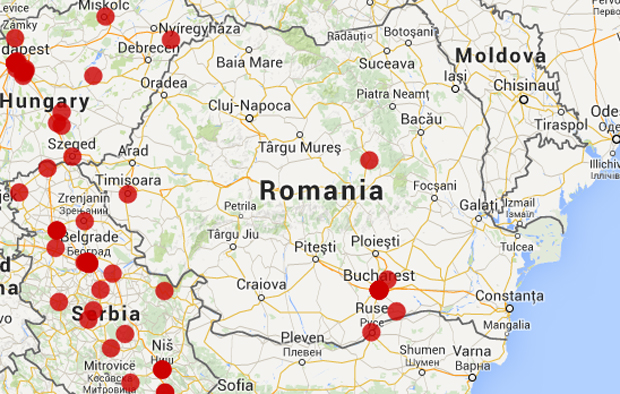
Click on the bubbles to view reports or double-click to zoom in on specific regions. The full site can be accessed at https://mappingmediafreedom.org/
|
Related:
• Romania: Whistleblowing journalist fired by public radio station (28 May 2015)
• Romania: 52 reports since May 2014
This article was published at indexoncensorship.org on 28/8/2015
8 Oct 2014 | Mapping Media Freedom, News, Politics and Society, Romania
In November, Romanians are set to head to the polls to elect a new president from a field of 14 candidates during two rounds of polling. But one important participant, the National Audiovisual Council of Romania (CNA), will be sidelined as it loses its legally mandated quorum.
According to the CNA’s website, its role is to “ensure that Romania’s TV and radio stations operate in an environment of free speech, responsibility and competitiveness.”
While the first round of voting is set to get underway on 2 November, the CNA’s quorum of eight will be halved on 4 November when four members of the council step down at the end of their terms. If no candidate wins a majority in the first poll, the top candidates will compete in a second round on 16 Nov.
“Without a quorum, the CNA cannot function, and thus it cannot sanction the eventual abuses of television or radio stations during the election campaign,” said Narcisa Iorga, a CNA board member. Iorga believes politicians will benefit from this, as it is in their best interests to have an inactive CNA. Television stations will also use the situation in their favor, though they are already accustomed to breaking the audiovisual legislation, she added.
According to some members of the council, it could be January before the CNA regains its quorum and the ability to make decisions on issuing sanctions, well after the election campaign and the two rounds of voting.
The CNA is Romania’s only regulatory body overseeing television and radio programmes. In its watchdog role, the regulator ensures that legislation governing programming is respected. It’s a key role in a country where television is the dominant media among the population. Political parties and interest groups use the country’s live television shows to get their message across to the public.
By law, the CNA is supposed to have 11 board members. To maintain a quorum, eight members need to be present at the proceedings. The members, who have a mandate of six years, are nominated by the senate (three members), the chamber of deputies (three), the president (two), the government (three), and are confirmed by the parliament.
This is where politics comes into play: the parliament, controlled by a coalition led by the party of Victor Ponta, the prime minister who is the best-placed candidate at the presidential elections, did not vote to confirm the new members before the parliamentary vacation began. Therefore in less than a month, the CNA will have only seven members, one member short of the quorum.
Not having enough members to be able to take decisions is nothing new for the regulatory body. When there are politically sensitive issues on the table, some of its members usually go on a vacation.
For example, on 9 October a number of complaints against the Antena 3 news television will be debated, but it is more than likely that will be no quorum. Two CNA members are currently on vacation, and another two just announced their absence, wrote Iorga on her Facebook wall.
Media violation reports from mediafreedom.ushahidi.com
Penal code change could ensnare journalists
Falun Gong practitioner detained during interview
Journalists denied access to government building
Director of public television receives “warnings”
Jurnalul National editor assaulted and threatened
This article was published on 8 Oct 2014 at indexoncensorship.org
11 Dec 2013 | Romania
See statement from Romanian civil society groups:
Attacks on freedom of expression: Insult and libel recriminalized
The signatory organizations condemn the anti-democratic practices adopted and exercised by the current parliamentary majority and publicly ask the Romanian President not to promulgate the law through which, surreptitiously, the offenses of libel and insult were reintroduced in the Criminal Code.
In 2006, the Parliament decided to repeal the offenses of insult and libel. In 2007, the Constitutional Court ruled that the offenses of libel and insult are not repealed, then, in 2010, the High Court of Cassation and Justice has ruled that the offenses of insult and libel are abolished, and in 2013 the Constitutional Court ruled again that the offenses of libel and insult are not repealed.
OSCE congratulated Romania after insult and libel were decriminalized. This decriminalization also increased the rating of the country in relevant international rankings, such as those of Reporters Without Borders.
An old bill 2011 (Pl-x 680/2011) proposed the repeal of a single article of the Criminal Code, namely Article 74/1. Under very suspicious circumstances, this bill was radically changed the night before being adopted by the Chamber of Deputies during the plenum of 10 December 2013 (“The International Human Rights Day”) by introducing, among other provisions, the offenses of libel and insult.
This decision, taken without any public consultation made useless ten years of efforts made by the society for the decriminalization of insult and libel. It eliminates Romania from the democracies who reject the idea that a man can be imprisoned for his words.
We remind politicians that the decisions of the Constitutional Court quoted as a pretext for introducing the offenses of insult and libel in the Criminal Code must comply with the European Convention on Human Rights and the jurisprudence of the ECHR – which have the force of law in Romania. Imposing an obligation on defamation to be criminally sanctioned is not supported by any article of the European Convention on Human Rights and of any judgment by the European Court of Human Rights.
On the other hand, due to the haste with which the amendments to the Criminal Code were adopted, another obsolete article was passed, namely Article 207 – burden of proof. This article is in manifest contradiction with ECHR jurisprudence, demanding those who make a statement to prove the absolute truth of the facts narrated, proof impossible in many situations, especially when it comes to journalistic investigations in complex cases. According to the jurisprudence of the ECHR (see case Dalban v. Romania, for example), those who make a statement, even false / exaggerated, cannot be penalized in any way if they prove the existence of a reasonable factual basis for their statement.
It is imperative that Articles 205-207, which recriminalize insult and libel be removed from the Criminal Code. The current form of the law is a serious assault on press freedom and freedom of expression in general.
The signatory organizations ask the Romanian President not to promulgate this law through which, clandestinely, the offenses of libel and insult were reintroduced in the Criminal Code.
Association for the Defense of Human Rights in Romania – the Helsinki Committee
ActiveWatch
Association for Technology and Internet
Center for Independent Journalism
16 Sep 2013 | News, Politics and Society, Religion and Culture, Sudan
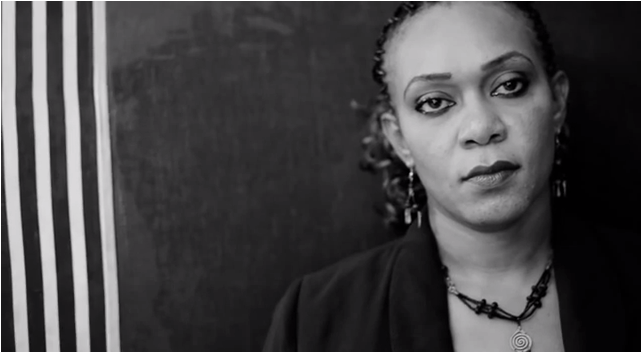
A shot from the video Amira Osman recorded urging Sudanese people to stand up to Public Order Laws.
Sudan’s Public Order Law (POL) is making headlines after female activist and engineer Amira Osman was arrested on August 27 in Jebel Awliya, a suburb of Khartoum, for refusing to pull up her head-scarf. Amira is now facing trial for “indecent conduct” under Article 152 of the Sudanese penal code, and risks being punished with flogging and/or bail. Her next trial is scheduled for September 19.
In a calculated act of defiance against one of Africa’s most oppressive regimes, Ms. Osman recorded a video where she described the demeaning manner in which she was treated by Public Order Police (POP) and invited Sudanese citizens (men and women) to attend her trial, saying: “if you think that the Public Order Law is against you, come to Jabel Awliya’s Court…and let’s put the Public Order Law on trial”.
The first session of her trial was on September 1. It was attended by almost 100 regular citizens, civil society members and women’s rights activists. The trial was postponed when the judge did not show up due to sickness.
Osman’s trial is reminiscent of the POL case of Sudanese journalist Lubna Hussien, who captivated national and international attention in July 2009 when she and 12 other women were arrested in a restaurant in Khartoum for wearing trousers.
Public order laws or social control laws?
Sudan’s POLs date back to 1983. They were referred to back then as the September Laws, imposed by the authoritarian regime of President Jafaar Numeiri. He introduced Sharia corporal punishments (hudood) for acts such as consuming alcohol, stealing, gambling or mixing between the sexes. These laws fueled the national discontent that led to the uprising that toppled Numeiri in April 1985.
When the current regime took power in 1989 following a military coup, it introduced an extensive array of Public Order Laws. With the intention of creating an Islamic State, the National Islamic Front (as it was called back then) initiated a detailed “Civilization Project” that reached into every aspect of Sudanese social life, and placed restrictions on long entrenched traditional norms such as private parties with music, mixing between the sexes and the making and consumption of alcohol.
However, no other aspect of the Public Order Regime has altered the daily lives of Sudanese women like Article 152 of the Criminal Act of 1991 that says: “(1) Whoever commits, in a public place, an act, or conducts himself in an indecent manner, or a manner contrary to public morality, or wears an indecent, or immoral dress, which causes annoyance to public feelings, shall be punished, with whipping, not exceeding forty lashes, or with fine, or with both; (2) The act shall be deemed contrary to public morality, if it is so considered in the religion of the doer, or the custom of the country where the act occurs.”
Human rights lawyers have consistently pointed out that Article 152 is vague and does not define what is meant precisely by indecent clothing or indecent behaviour. It thus leaves a lot to be interpreted by POP and the judges in the Public Order Courts.
Prominent human rights lawyer Nabeel Adeeb recently commented in an op-ed that,”what is seen by me as indecent attire may be seen by someone else as decent”. He adds that from a religious perspective it’s hard to impose one uniform on women because it depends on their personal understanding of their faith. “Judges should not be god’s representatives on earth.” he says. Society’s understanding of “decent” attire is a constantly shifting concept, and Sudan’s diversity makes this even more complex and a matter that should not be decided in the courts. “It is an issue left to families and religious leaders, because it is linked to education and upbringing and not the law,” he concludes.
Poor and fleeing women targeted
No national statistics are available to shed light on how many women or men around Sudan are impacted by the Public Order Regime, however in 2008 the head of the Public Order Police in Khartoum said that in that year 41,000 persons were stopped under Article 152 and signed promissory documents “not to wear indecent clothing”.
Most POL cases are processed quickly in Public Order Courts without the presence of lawyers, with no due process and with judges who lack proper legal training.
Women’s rights activists who have been fighting this law for years point out that the stigma associated with being arrested by POP drive many women, who are less knowledgeable about their rights and more concerned about their reputation, into accepting summary trials in Public Order Courts where they are often flogged and/or have to pay a bail .
The women most impacted by the POL are not the urban educated women like Amira and Lubna, but rather the thousands of women fleeing conflicts and hard conditions in other regions such as the Nuba Mountains and Darfur, and who have to support their families by working in Khartoum’s informal sector selling tea, food or making a local millet-based beer called marisa.
Monim Adam, a human rights lawyer, says: “in most cases these women cannot afford the bail that can go up to $200, and they end up serving prison terms of up to one month. Many of them also endure sexual harassment that goes as far as rape, from the Public Order Police officers who have limited oversight”.
A prominent case that’s also running in the courts right now is that of Nuba Mountains woman Awadiya Ajabna. She was shot dead in March 2012 when she interfered as the POP were harassing her brother outside their family home, accusing him of being drunk. Ajabna died hours after POP fired shots that also injured her mother and sister.
This is not the first documented case of death at the hands of POP, as in 2010 a tea lady, Nadia Saboon was fleeing what is referred to as a Kashaa (a raid or sweep) by the POP. Saboon fell on a piece of metal and died due to the injury sustained. Raids and confiscations of the equipment of tea ladies by POP are a common practice in Khartoum, and it is done under the premise of “preserving the appearance of the public domain”.
Sudan has undergone severe limitations on fundamental rights after the separation of South Sudan in July 2011. In the last two years the Islamist regime of Omer Al Bashir has clamped down on freedom of the press, freedom of association and assembly, by closing newspapers and pro-democracy civil society organizations, and violently clamping down on peaceful protest.