
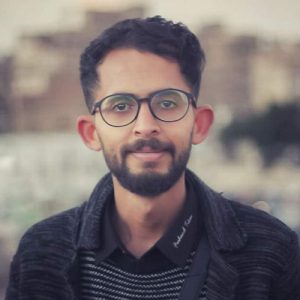
 Yemeni artist Thiyazen Al-Alawi uses his craft to shed light on the destructive situation in Yemen through street art campaigns. He hopes to inform the public of what the war has done to his homeland.
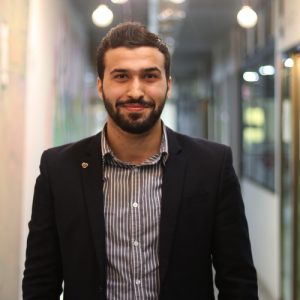 Moe Moussa is a journalist, podcaster, poet, and the founder of the Gaza Poet Society. He uses various forums and mediums to amplify the voices of Palestinians.
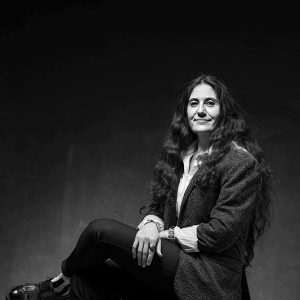 Fatoş İrwen is a Kurdish artist and teacher from Diyarbakır, Turkey working with a variety of materials and techniques.
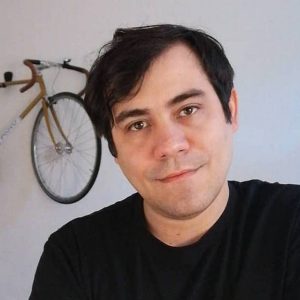 Hamlet Lavastida has been described as a political activist by way of art. Lavastida uses his art to document human rights abuses in Cuba and to criticise Cuban authorities.
Dissidents, spies and the lies that came in from the cold
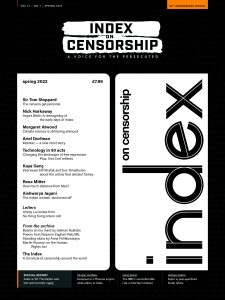
The story of Index on Censorship is steeped in the romance and myth of the Cold War.
In one version of the narrative, it is a tale that brings together courageous young dissidents battling a totalitarian regime and liberal Western intellectuals desperate to help – both groups united in their respect for enlightenment values.
In another, it is just one colourful episode in a fight to the death between two superpower ideologies, where the world of letters found itself at the centre of a propaganda war.
Both versions are true.
It is undeniably the case that Index was founded during the Cold War by a group of intellectuals blooded in cultural diplomacy. Western governments (and intelligence services) were keen to demonstrate that the life of the mind could truly flourish only where Western values of democracy and free speech held sway.
But in all the words written over the years about how Index came to be, it is important not to forget the people at the heart of it all: the dissidents themselves, living the daily reality of censorship, repression and potential death.
The story really began not in 1972, with the first publication of this magazine, but with a letter to The Times and the French paper Le Monde on 13 January 1968. This Appeal to World Public Opinion was signed by Larisa Bogoraz Daniel, a veteran dissident, and Pavel Litvinov, a young physics teacher who had been drawn into the fragile opposition movement during the celebrated show-trial of intellectuals Andrei Sinyavsky and Yuli Daniel (Larisa’s husband) in February 1966. This is now generally accepted as being the beginning of the modern Soviet dissident movement.
The letter itself was written in response to the Trial of Four in January 1968, which saw two students, Yuri Galanskov and Alexander Ginzburg, sentenced to five years’ hard labour for the production of anti-communist literature.
The other two defendants were Alexey Dobrovolsky, who pleaded guilty and co-operated with the prosecution, and a typist, Vera Lashkova.
Ginzburg later became a prominent dissident and lived in exile in Paris, Galanskov died in a labour camp in 1972 and Dobrovolsky was sent to a psychiatric hospital. Lashkova’s fate is unclear.
The letter was the first of its kind, appealing to the Soviet people and the outside world rather than directly to the authorities. “We appeal to everyone in whom conscience is alive and who has sufficient courage… Citizens of our country, this trial is a stain on the honour of our state and on the conscience of every one of us.”
The letter went on to evoke the shadow of Joseph Stalin’s show-trials in the 1930s and ended: “We pass this appeal to the Western progressive press and ask for it to be published and broadcast by radio as soon as possible – we are not sending this request to Soviet newspapers because that is hopeless.”
The trial took place in a courthouse packed with Kremlin supporters, while protesters outside endured temperatures of 50 degrees below zero.
The poet Stephen Spender responded to the letter by organising a telegram of support from 16 prominent artists and intellectuals, including philosopher Bertrand Russell, poet WH Auden, composer Igor Stravinsky and novelists JB Priestley and Mary McCarthy.
It took eight months for Litvinov to respond, as he had heard the words of support only on the radio and was waiting for the official telegram to arrive. It never did.
On 8 August 1968, the young dissident outlined a bold plan for support in the West for what he called “the democratic movement in the USSR”. He proposed a committee made up of “universally respected progressive writers, scholars, artists and public personalities” to be taken not just from the USA and western Europe but also from Latin America, Asia, Africa and, ultimately, from the Soviet bloc itself. Litvinov later wrote an account in Index explaining how he had typed the letter and given it to Dutch journalist and human rights activist Karel van Het Reve, who smuggled it out of the country to Amsterdam the next day. Two weeks later, Soviet tanks rolled into Czechoslovakia to crush the Prague Spring.
On 25 August 1968, Litvinov and Bogoraz Daniel joined six others in Red Square to demonstrate against the invasion. It was an extraordinary act of courage. They sat down and unfurled homemade banners with slogans that included “We are Losing Our Friends”, “Long Live a Free and Independent Czechoslovakia”, “Shame on Occupiers!” and “For Your Freedom and Ours”.
The activists were immediately arrested and most received sentences of prison or exile, while two were sent to psychiatric hospitals.
Vaclav Havel, the dissident playwright and first president of the Czech Republic, later said in a Novaya Gazeta article: “For the citizens of Czechoslovakia, these people became the conscience of the Soviet Union, whose leadership without hesitation undertook a despicable military attack on a sovereign state and ally.”
When Ginzburg died in 2002, novelist Zinovy Zinik used his Guardian obituary to sound a note of caution. Ginzburg, he wrote, was “a nostalgic figure of modern times, part of the Western myth of the Russia of the 1950s, ’60s and ’70s, when literature, the word, played a crucial part in political change”.
Speaking 20 years later, Zinik told Index he did not even like the English word “dissident”, which failed to capture the true complexity of the opposition to the Soviet regime. “The Russian word used before ‘dissidents’ invaded the language was ‘inakomyslyashchiye’ – it is an archaic word but was adopted into conversational vocabulary. The correct translation would be ‘holders of heterodox views’.”
It’s perhaps understandable that the archaic Russian word didn’t catch on, but his point is instructive.
As Zinik warned, it is all too easy to romanticise this era and see it through a Western lens. The Appeal to World Public Opinion was not important because it led to the founding of Index. The letter was important because it internationalised the struggle of the Soviet dissident movement.
As Litvinov later wrote in Index: “Only a few people understood at the time that these individual protests were becoming a part of a movement which the Soviet authorities would never be able to eradicate.” Index was a consequence of Litvinov’s appeal; it was not the point of the exercise and there was no mention of a magazine in the early correspondence.
The original idea was to set up an organisation, Writers and Scholars International, to give support to the dissidents. It was only with the appointment of Michael Scammell in 1971 that the idea emerged to establish a magazine to publish and promote the work of dissidents around the world.
Spender and his great friend and co-collaborator, the Oxford philosopher Stuart Hampshire, were still reeling from revelations about CIA funding of their previous magazine, Encounter.
“I knew that [they]… had attempted unsuccessfully to start a new magazine and I felt that they would support something in the publishing line,” Scammell wrote in Index in 1981.
Speaking recently from his home in New York, Scammell told me: “I understood Pavel Litvinov’s leanings here. He understood that a magazine that was impartial would stand a better chance of making an impression in the Soviet Union than if it could just be waved away as another CIA project.”
Philip Spender, the poet’s nephew, who worked for many years at Index, agreed: “Pavel Litvinov was the seed from which Index grew… He always said it shouldn’t be anti-communist or anti-Soviet. The point wasn’t this or that ideology. Index was never pro any ideology.”
It has been suggested that Index did not mark quite such a clean break – it was set up by the same Cold Warriors and susceptible to the same CIA influence. In her exhaustive examination of the cultural Cold War, Who Paid the Piper, journalist Frances Stonor Saunders claimed Index was set up with a “substantial grant” from the Ford Foundation, which had long been linked to the CIA.
In fact, the Ford funding came later, but it lasted for two decades and raises serious questions about what its backers thought Index was for.
Scammell now recognises that the CIA was playing a sophisticated game at the time. “On one level this is probably heresy to say so, but one must applaud the skills of the CIA. I mean, they had that money all over the place. So, I would get the Ford Foundation grant, let’s say, and it never ever occurred to me that that money itself might have come from the CIA.”
He added: “I would not have taken any money that was labelled CIA, but I think they were incredibly smart.”
By the time the magazine appeared in spring 1972, it had come a long way from its origins in the Soviet opposition movement. It did reproduce two short works by Alexander Solzhenitsyn and poetry by dissident Natalya Gorbanevskaya (a participant in the 1968 Red Square demonstration, who had been released from a psychiatric hospital in February of that year). But it also contained pieces about Bangladesh, Brazil, Greece, Portugal and Yugoslavia.
Philip Spender said it was important to understand the context of the times: “There was a lot of repression in the world in the early ’70s. There was the imprisonment of writers in the Soviet Union, but also Greece, Spain and Portugal. There was also apartheid. There was a coup in Chile in 1973, which rounded up dissidents. Brazil was not a friendly place.”
He said Index thought of itself as the literary version of Amnesty International. “It wasn’t a political stance, it was a non-political stance against the use of force.”
The first edition of the magazine opened with an essay by Stephen Spender, With Concern for Those Not Free. He asked each reader of the article to say to themselves: “If a writer whose works are banned wishes to be published and if I am in a position to help him to be published, then to refuse to give help is for me to support censorship.”
He ended the essay in the hope that Index would act as part of an answer to the appeal “from those who are censored, banned or imprisoned to consider their case as our own”.
Since Index was founded, the Berlin Wall has fallen and apartheid has been dismantled. We have witnessed the “war on terror”, the rise of Russian president Vladimir Putin and the emergence of China as a world superpower.
And yet, if it is not too grand or presumptuous, the role of the magazine remains unchanged – to consider the case of the dissident writer as our own.
Hungary elections 2022: What does another Orban term mean for freedoms?
LGBTQI rights. Gender equality. Media freedom. The fate of liberties in Hungary hang in the balance as the nation heads to the polls on Sunday. With a falling currency, a mismanaged response to the pandemic still fresh to mind and a stronger opposition under United For Hungary – a coalition of six parties spanning the political spectrum – the election campaign has been the closest in years. But the war in Ukraine, right on Hungary’s border, has changed its course in unexpected ways. Below we’ve picked the most important things to consider when it comes to the April 2022 elections.
Basic rights could worsen
Since his election in 2010, Hungarian Prime Minister Viktor Orban has whittled away fundamental rights in the country to the extent that Hungarian activist Dora Papp told Index in 2019 free expression had no more space “to worsen”.
Orban’s main targets have been people who identify as LGBTQI. Last year, amid global outcry, he passed a law that bans the dissemination of content in schools deemed to promote homosexuality and gender change. Seeking approval for this legislation, Hungary is holding a referendum on sexual orientation workshops in schools this Sunday alongside the parliamentary elections.
Orban also takes aim at the nation’s Roma and immigrants, and has revived old anti-Semitic tropes in his attacks on George Soros, a Hungarian-born Jewish philanthropist who Orban claims is plotting to flood the country with migrants (an accusation Soros firmly denies).
As for half of the population, Orban’s macho-style leadership manifests in rhetoric on women that is dismissive, insulting and focuses on traditional roles. Asked in 2015 why there were no women in his cabinet, he replied that few women could deal with the stress of politics. That’s just one example. The list goes on.
His populist politics have seeped into every democratic institution and effectively dismantled them. The constitution, the judiciary and municipal councils have all been reorganised to serve the interests of Orban. Education, both higher and lower, has seen huge levels of interference. Progressive teachers and classes have been removed. Even the Billy Elliot musical was cancelled after Orban called the show a propaganda tool for homosexuality.
But the media can’t freely report much of this
In response to claims of media-freedom erosion, the Hungarian government likes to point out that there are no journalists in jail in Hungary, nor have any been murdered on Orban’s watch. But as we know only too well there are many ways to cook an egg. Through gaining control of public media, concentrating private media in the hands of Orban allies and creating a hostile environment for the remaining independent media (think misinformation laws and constant insults), the attacks come from every other angle. Orban has even been accused of using Pegasus, the invasive spyware behind the murder of Saudi journalist Jamal Kashoggi, to target investigative journalists.
It’s little wonder then that in 2021 Reporters Without Borders labelled Orban a “press freedom predator”, the only one to make the list from the EU.
As election day approaches the attacks continue. In February, for example, pro-government daily Magyar Nemzet said it had obtained recordings showing that NGOs linked to Soros were “manipulating” international press coverage of Hungary, a claim instantly rejected by civil society groups.
Ukraine War has shifted the narrative, for better and worse
Given Orban’s track-record on rights, it comes as no surprise that he’s the closest EU ally of Vladimir Putin. This wasn’t a great look before 24 February and it’s even less so today, as the opposition are keen to highlight. They are pushing Orban hard on his neutral stance, which has seen him simultaneously open Hungary’s borders to Ukrainian refugees and oppose sanctions and the sending of weapons.
But Orban is playing his hand well. Fears of becoming embroiled in the war appear to be stronger in Hungary than anger at Putin’s aggression, many analysts says. Orban is claiming a vote for him is a vote for stability and neutrality, while a vote for the opposition is a vote for war. He’s even tried to cast his February visit to Moscow as a “peace mission”.
And though he has condemned the invasion, he has yet to say anything bad about Putin himself. Worse still, Hungarian media is blasting out Russian propaganda. Pundits, TV stations and print outlets are pushing out lines like the war was caused by NATO’s aggressive acts toward Russia, Russian troops have occupied Ukraine’s nuclear plants to protect them and the Ukrainian government is full of Nazis.
Anything else?
Yes. Orban met with a coalition of Europe’s far-right in Spain at the start of the year. They discussed the possibility of a Europe-wide alliance. What that looks like now in a post-Ukraine world is hard to tell. We’d rather not see.
Then there’s the fact that Serbia also goes to the polls Sunday. Like Orban, the ruling Serbian Progressive Party (SNS), led by president Aleksandar Vučić, has been unnerved by growing opposition. Also like Orban, they’re close to Putin and using the Ukraine war to their advantage – reminding people of the 1999 Kosovo war when NATO launched a three-month air strike. Orban and Vučić have developed close ties and will no doubt be buoyed up by each other’s victories should that happen on Sunday.
So will the Hungary elections be free and fair?
If the 2018 elections are anything to go by, they will be “free but not fair”, the conclusion of the Organisation for Security and Co-operation in Europe (OSCE), who partially monitored the 2018 election process. That’s the optimistic take. Others are fearful they will be neither free nor fair, so much so that a grassroots civic initiative called 20K22 has recruited more than 20,000 ballot counters – two for each of Hungary’s voting precincts – to be stationed at polling centres on election day with the aim of stopping any voting irregularities.
News from yesterday isn’t confidence-boosting either. Hungarian election officials reported a suspected case of voter fraud to the police. Bags full of completed ballots were found at a rubbish dump in north-western Romania, home to a large Hungarian minority who have the right to vote in Hungary’s elections. Images and videos shared by the opposition featured partially burnt ballots marked to support them. As of writing, no details have been provided of the actual perpetrators and their motives, and Orban has been quick to accuse the opposition of being behind the incident. Either way, it leaves a bad taste in the mouth.
Andrei Kurkov on Russia’s war against Ukrainian culture
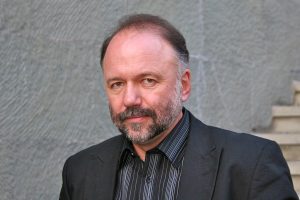
Celebrated Ukrainian author Andrei Kurkov. Photo: Juerg Vollmer
After five days of silence, my friend, a writer, journalist, and historian in occupied Melitopol, finally sent me a message. I’d been afraid something had happened to her, that I would never hear from her again. But, thank God, it turned out that she’d simply had no internet access or telephone reception. I asked her to keep a diary of life under occupation, to take photos on her smartphone, and to send all that to me. I would keep it safe. The original diary could then be destroyed.
She’s been living under occupation for more than two weeks and doesn’t set foot outside, for fear of being captured. The director of the Melitopol History Museum, Leyla Ibragimova, a Crimean Tatar, has already been kidnapped. They terrorised her, interrogated her, confiscated her and her family’s phones and computers — then released her. The next morning they picked her up for another interrogation. Activists and journalists are disappearing in the occupied territories. FSB agents walk the streets with lists of names and addresses in hand. These lists were prepared before the start of the war.
Oleg Baturin, a journalist from Kakhovka, was abducted by the Russian military. Eventually, he was released — after eight days of beatings and torture, of demands to go over to the Russian side, of hunger and thirst, of humiliation. Those who beat him hid their faces and forbade him to raise his head and look at them. Is this today’s Russia? Yes. But it is also the Soviet Union of the 1930s. These are the practices of the Gulag. The Ukrainian author Stanislav Aseyev wrote an entire book about the torture camp in Donetsk. After two years of captivity in this camp and in the prison run by separatists, he had plenty of material. He studied closely those who beat and abused Ukrainian prisoners of war and others who had been seized on the streets and brought to this already infamous concentration camp, called “Isolation.” Years ago, the place had been a factory for the manufacture of insulation for electrical wires. Later, under the same name, it became a contemporary art centre. When the separatists, aided by the Russian military, captured Donetsk, they converted it into a concentration camp, with a set of chambers in which all their detainees were tortured. Stanislav Aseyev’s book has already appeared in several languages, including English. I highly recommend it to anyone who seeks to better understand what went on and continues to go on in the separatist “republics” since 2014. And now the same things are happening in the territories occupied by the Russian army.
We’re well into 2022. Books about what is happening now in Ukraine are already being written, but are not yet published.
The unsuccessful attempt to annex or, to put it plainly, occupy all of Ukraine has angered Putin and now, judging by the military actions of the Russian army, Russian generals have been ordered to destroy cities and villages, to kill civilians, and simply to make sure that Ukraine ceases to exist.
This is not the first attempt to destroy Ukraine and Ukrainians. In the late 1920s, Ukrainian peasants refused to join collective farms, and for this the Soviet government deported 250,000 families to Siberia. In 1932-1933, as punishment for the same individualism and unwillingness to become part of Soviet collective agriculture, all reserves of wheat and, indeed, all sources of nourishment were confiscated from Ukrainian peasants, leaving them with no food for the winter. Some seven million Ukrainians perished during this artificial famine organised by Moscow.
In those same years, the Soviet government decided to destroy Ukrainian culture. Nearly all the country’s leading writers, poets, and playwrights were arrested, sent to Solovki in the north of Russia, and shot. In Ukrainian literary history, the authors of this period are referred to as the “Executed Renaissance.” These people had tried to revive Ukrainian culture after decades of official prohibitions on the use of the Ukrainian language and on anything distinctly Ukrainian in tsarist Russia. Soviet communists had decided that the revival of Ukrainian culture posed a danger to the Soviet Union. And alongside the writers, poets, and playwrights they executed, the NKVD also shot many artists and theatre directors. The works of Mykhaylo Semenko (1892-1937), Maik Yohansen (1895-1937), Mykola Zerov (1890-1937), and dozens of other Ukrainian writers killed in that purge could only be published again after the collapse of the USSR.
Today’s Ukrainian intellectuals face the same danger. That goes for writers and journalists and historians. Anyone who believes that Ukraine should remain independent and become part of Europe is already an enemy of Russia. Culture is what cements a nation. Ukrainian culture has only just begun to revive after 70 years of Soviet rule, 70 years of censorship and persecution.
But today that culture and its representatives are the targets of Russian bombers. The attacks on Kyiv have killed Artem Datsyshyn, the principal dancer of the National Opera of Ukraine, and the famed actress Oksana Shvets. Near Kyiv, in the village of Bucha — home to a number of writers and composers— Oleksandr Kislyuk, a well-known translator from Ancient Greek and other languages, a teacher at the Theological Academy, and a professor at the Drahomanov Pedagogical University, was shot by Russian soldiers on the threshold of his house. It is thanks to him that Ukrainians can read the works of Aristotle, Tacitus, Thomas Aquinas, and other classic authors in their own language.
Now Oleksandr Kislyuk has been murdered and one wonders who will finish the translations he was working on in his final days.
Among those killed in this war are at least three painters. There are also photographers and scientists, musicians and architects, schoolteachers and university professors.
For almost a month, now, Russian bombers have been aiming directly at schools and universities, theatres and libraries.
Near Kyiv, in the village of Ivankiv, a bomb hit a historical museum that housed the works of famous Ukrainian primitive artist Maria Prymachenko (1909-1997). While the museum burned, locals carried her paintings out of the fire. Now those canvases are kept in the homes of people who live next to the ruined museum.
The Ukrainian Ministry of Culture has sent an order to all museums to prepare their exhibits for evacuation to Western Ukraine. Some museums managed to pack up their collections, others simply lowered them into basements and underground rooms. But none have so far been evacuated. The most important thing is to evacuate people from cities under constant bombardment and artillery fire.
For two weeks, Ukrainian writers tried to extract their colleague, the Russophone prose writer Volodymyr Rafeyenko, from the village of Klavdiyevo, which was practically destroyed by the Russian army. He is a refugee twice over. First, in 2014, he had to leave his apartment in Donetsk. Since then, he and his wife had been living in Klavdiyevo, at the dacha of the Ukrainophone writer and translator Andriy Bondar. Klavdiyevo has been all but flattened by Russian artillery and is surrounded by their tanks. Volodymyr and his wife spent more than a week in the basement of a half-collapsed house. At long last, they managed to break out of encirclement and volunteers took them to Kyiv.
Kyiv is also being hit by rockets, but not so intensively. The chances of survival are greater in Kyiv. There, in his apartment near the railway station, the publisher Mykola Kravchenko* sits at his table and works. He’s editing a novel by a young woman from Lutsk, titled Porcelain Doll. The novel concerns domestic violence. He knows that he won’t be able to publish it anytime soon, but he continues to work in order to preserve his psychological balance, in order to think less about the war.
Yet the war, including the violent attack on Ukrainian cultural heritage, continues. The number of bombed-out churches is already in the tens.
The Ukrainian Ministry of Culture is still at work and every day its employees collect new information about the historical sites and cultural institutions destroyed by the Russian army.
The list of Russia’s crimes against Ukrainian culture is constantly being updated.
* Editor’s note: Not the Ukrainian political figure of the same name who died in the early days of the Russian invasion of Ukraine.