On the surface, Belarus is one of the quieter places for journalists – one rarely hears about gruesome violations, physical assaults or murders of media workers in this post-Soviet country. But a lack of horror stories does not mean there is a liberal policy towards the media. In 2017, Belarus scored 83 points out of 100 (100 indicating the least free) in the Freedom of the Press rating compiled by Freedom House, and in 2018 it was ranked 153rd out of 180 countries in the World Press Freedom Index by Reporters Without Borders.
In a country where most media outlets are state-owned, one of the most common ways of interfering with journalism is the legislation banning foreign media workers and outlets from reporting without state accreditation – Article 22.9 of the Administrative Code. In 2018, the Belarusian Association of Journalists (BAJ) recorded 118 fines imposed on freelance journalists collaborating with foreign media without accreditation, totalling €43,000.
No outlet faced the consequences of this policy like Belsat TV.
Index on Censorship’s Monitoring and Advocating for Media Freedom project documents, analyses, and publicises threats, limitations and violations related to media freedom in Azerbaijan, Belarus, Russia, Turkey and Ukraine, in order to identify opportunities for advancing media freedom in these countries. The project collects, analyses and publicises limitations, threats and violations that affect journalists as they do their jobs. Its staff also advocate for greater press freedom in these countries and raises alerts at the international level. The project builds on Index on Censorship’s 4.5 years monitoring media freedom in 43 European countries, as part of Mapping Media Freedom platform.
The curious case of Belsat TV
“In the spring of 2017, Belsat TV contributors have been repeatedly arrested, tried and heavily fined for covering the protests. The total amount of fines reached $9,000. In addition, our journalists spent more than 30 days in prison,” states the channel’s website.
The tensions between the office of Belarusian President Alexander Lukashenko and the Poland-based, Belarus-centred Belsat TV date back to its founding in 2007. Lukashenko had called it a “stupid, uncongenial and unfriendly project” even before it launched. The independent media outlet is sponsored by the Polish government, and is owned by public broadcasting corporation Telewizja Polska.
As the channel’s website outlines: “Its original content is prepared by more than 100 associates from all over Belarus supported by around 80 editors, managers and technicians in Warsaw.”
The “associates” in question are independently-minded Belarusian journalists whose work is hindered by the restrictive state legislation. Belsat TV is not accredited or recognised in the country, and neither are any of its correspondents and stringers. The Belarusian Ministry of Foreign Affairs has repeatedly declined to accredit the outlet, prompting its journalists to do partisan work. The state punishes them with repeated fines, with no limit on how many times a single journalist can be punished.
“The definition of accreditation in Article 1(1) of the Law on Mass Media is as follows: ‘The confirmation of the right of a mass medium’s journalists to cover events organised by state bodies, political parties, other public associations, other legal persons as well as other events taking place in the territory of the Republic of Belarus and outside it’,” said BAJ law expert Volha Siakhovich.
In practice, she explains, the law blocks freelance journalists and independent media outlets from covering the activities of the government and makes accreditation a requisite for a career in journalism. Although refusing accreditation does not equal a total ban on a journalist’s professional activities, it creates obstacles for accessing information. This discriminatory structure is especially acute for freelance journalists and those who work for independent media outlets.
“Article 35(4) of the Law on Mass Media prohibits the activities of foreign journalists in Belarus without accreditation of the Foreign Ministry,” she said. “As Belarusian authorities are unable to control foreign media, they aim to control Belarusian citizens contributing to them. Their aim is to punish and intimidate in order to show that they are under their control at any given time.
“Under Article 22.9, the courts can rule that journalistic activity without accreditation equals ‘illegal production and/or distribution of media content’. The reason for prosecuting journalists for this offence is not the content of their work but that they were published through foreign media.”
And she added: “[When] freelancers are gathering information while filming or interviewing people, they can be detained and accused under Article 22.9. Police officers file reports against freelance journalists and send them to the court. In such cases, the usual evidence is the testimony of the police officers who detained the journalists, and of the people interviewed by the journalists. Then the judges sentence the accused to pay a fine. It’s not unusual if the fine exceeds an average monthly wage in the country [which is about €400].”
Case studies
Here are some of the incidents recorded by Index on Censorship between February and July 2019.
Ales Lyauchuk and Milana Kharytonava
On 31 May, a judge in the Maskouski district of Brest fined journalists Ales Lyauchuk and Milana Kharytonava for “illegal production and distribution of media content”. They were contributing to Belsat TV, covering the ongoing protests against the construction and launch of the iPower battery plant in the city. They were tried in absentia, and learned about the fines only upon returning from their holiday. They had to pay 1,020 Belarusian rubles each (about $1,000 in total).
This wasn’t the first time Lyauchuk and Kharytonava got fined this year. On 21 March, a judge fined them 2,250 Belarusian rubles (about $1,100). The pair had been repeatedly spotted covering protests against the same factory near Brest and interviewing local people, and the trial was based on reports filed by police.
“The materials of the case did not include information about the exact time of our being in the square, no names of people whom we had interviewed; there were no witnesses but, still, we have got a fine of 2,550 rubles,” Lyauchuk told his colleagues at Belsat TV.
On 18 April, the journalists were fined 1,275 Belarusian rubles (about $600) each, also for co-operating with Belsat TV without accreditation. The story they filmed was about the forgotten village of Veluyn, cut off from Brest by a lack of roads and public transportation.
In all, they were fined six times in 2018.
On 15 May, the trial of independent journalists Alena Shabunia and Viachaslau Lazarau took place in Navapolatsk. A judge found both journalists guilty of “illegal production and distribution of media content” under Article 22.9 and fined them 637.5 Belarusian rubles (over $300) each. The case was built around a video of an accident at the Polimir Navapolatsk plant that was broadcast on Belsat TV – the team interviewed worker Andrei Shvilpo, who saved his colleagues but was later convicted of causing harm to production.
Viktar Stukau, head of the Polatsk-Navapolatsk BAJ branch, told online outlet Charter27: “What these journalists did was the usual work of journalists. Moreover, according to our constitution, any person can create such materials, since everyone has a camera in a pocket, and can send them to social networks or to some mass media, Belarusian or foreign. How is it possible to prohibit this?”
On 30 April, Andrei Tolchyn, a Homel-based freelance journalist, was taken to court in connection with four unpaid fines. He was informed that his bank account had been frozen and he would have 10 days to pay the fines to regain access. The hefty fines for “illegal production of media content” came as a result of his unaccredited work for Belsat. The fines totalled 3,200 Belarusian rubles ($1,523). Tolchyn’s account was unblocked after he paid the fines but, in May, he filed a complaint with the UN Human Rights Committee.
Tolchyn used to work with Konstantin Zhukovsky, producing video stories and publishing them on YouTube. Their content was used by a variety of media outlets, including Belsat, so the courts applied Article 22.9 and the journalists were hit with mounting fines. As a result, Zhukovsky and his family left the country in January this year.
On 15 April, a freelance journalist from Hlybokaye, Zmitser Lupach, stood trial in the Sharkaushchyna district court for contributing to Belsat TV without accreditation. A judge imposed a fine of 892.5 Belarusian rubles (about $440) over a news story about the economic situation and low salaries in the district. This was the second time Lupach was fined in a month: on 11 April, the same court fined him 1,020 Belarusian rubles ($485).
He was tried under Article 22.9 (illegal production and/or distribution of media content) and Article 23.34 (violation of the procedure for organising or conducting mass events).
In the first case, the journalist was punished for his report aired on Belsat TV; in the second, for raising a white-red-white flag during Freedom Day, the anniversary of the Belarusian People’s Republic.
Lupach was also tried on 21 February for a story aired on Belsat TV about the monument erected in honour of the Komsomol in Hlybokaye. A judge fined him 892.5 Belarusian rubles (around $430). The previous year, Lupach was in court nine times on the same charges.
On 11 April, a judge in the Leninski district court of Mahiliou fined freelance journalist Alina Skrabunova 1,275 Belarusian rubles ($600). She was found guilty of “participation in the illegal production of media content”, as her video about the opening of an inclusive cafe operated by wheelchair-users had been broadcast on Belsat TV. The police documentation contained the wrong date for the alleged violation and a different charge. However, Skrabunova lost the case.
On 15 March, the Vitsebsk district court found journalist Vitaly Skryl guilty of illegal production and distribution of media content under Article 22.9. He was fined 637.5 Belarusian rubles (about $300) for his video on the closure of an enterprise which was broadcast on Belsat TV. Skryl told Radio Raciyja that he wasn’t surprised by the fine as he’d been fined on a similar charge the year before, for covering the unemployment situation in Orshy.
On 1 February, Ales Kirkevich and Ales Dzianisau were fined 765 Belarusian rubles (about $370) each in the Leninski district court of Hrodna. The charge followed their story titled Historians Exploring the Ancient Hrodna Cellars which was broadcast on Belsat TV. Both journalists were charged with Article 22.9 offences.
However, journalists collaborating with Belsat TV weren’t the only ones who got fined. Bloggers and freelance reporters whose work appeared in foreign or unaccredited media outlets met the same fate.
On 12 April, freelance journalist Yauhen Skrabets was fined 765 Belarusian rubles ($364) in Brest for “production of information content for a foreign media outlet that was not accredited in the Republic of Belarus”.
His article, entitled Activists and Independent Journalists Not Allowed Into the Press Conference at the I-Power Plant, had appeared on the website of Belarusian Radio Racyja, which is based in Poland. Like Belsat, the radio station had been previously denied accreditation by the Belarusian Ministry of Foreign Affairs.
Just a day before, the Leninski district court of Brest reviewed another case against the journalist on similar charges. The police report stated that he “interviewed without accreditation, thus violating the rights and obligations of a foreign media journalist”. As a result, a judge fined him 765 Belarusian rubles ($364). Skrabets insists that he never sent the article in question to Radio Racyja.
The judge assigned to the case, Aliaksandr Semianchuk, also handled the criminal case of the blogger Siarhei Piatrukhin, accused under Part 2 of Article 188 (“Slander”) and Part 2 of Article 189 (“Insult”) of the Criminal Code on 18 April. The criminal case was opened after a request by a police officer over a video on the blogger’s YouTube channel, Narodnyj Reportior, where people accused police officers of violence.
Piatrukhin was fined 9,180 Belarusian rubles ($4,590) and told to pay damages to the four police officers. The bill totalled $8,840, to be paid within a month, and the judge ordered him to pay the legal fees. The blogger also made a written undertaking not to leave the country, and his property was seized until his dues were paid.
But Piatrukhin remained defiant.
“I’m confident that if there wasn’t this case, there would be another one. They are demonstrating that, if they want, they would do anything,” he told Radio Svoboda. “To make me shut up they should at least shoot me. Whatever they do, they can’t hurt me any more. If they exile me, they’d make me a martyr, a star, draw attention to me. Look at how I live – I don’t have a car or anything. So they can go you-know-where with this fine and the compensation to the policemen. I’m not going to pay anything. Let them do whatever they want. Let them ban me from travelling abroad, I don’t care. This is my country, and I’ve never planned to leave it.”
Piatrukhin’s fundraising campaign, which he later launched on the MolaMola website in order to pay the fines, was suspended by the service provider on 5 May. It explained in a letter that “such activity could be seen as an attempt to evade criminal prosecution” and that it didn’t comply with the current Belarusian legislation. He was able to withdraw the money collected up until that date.
On 12 February, a judge in the Biaroza district court fined blogger Aliaksandr Kabanau 510 Belarusian rubles ($245) for failing to comply with the ruling of the Brest Economic Court. He was found guilty of damaging the reputation of a battery plant being built near Brest in his video published on YouTube. The court decided that Kabanau must remove the video – Lead Will End Up with Brest – from the platform, and publish an apology letter written on his behalf by the battery plant management. Kabanau refused to apologise, and the video has not been removed.
Andrei Bastunets, head of BAJ
The persecution of freelance journalists collaborating with foreign media began in 2014. This was not due to a change in legislation, but the police and the courts began to apply Article 22.9 in order to fine journalists for “illegal production and/or distribution of media products”.
The most difficult period was 2018, when the persecution intensified sharply. Before this, journalists of various foreign publications were fined. This year, it was only Belsat and Radio Rasyja.
Since the beginning of 2019, 38 fines have been imposed. The most recent penalty was on 31 May but, since then, the application of Article 22.9 has been suspended. Perhaps this is because Belarus is hosting the European Games and there are approaching elections. Usually, temporary “liberalisation” occurs before elections in the hope of a more favourable assessment by the international community. The degree of pressure on journalists is, in principle, determined by the political situation in the country.
By penalising freelance journalists for collaborating with foreign media, Belarus violates its international obligations – in particular, Article 19 of the International Covenant on Civil and Political Rights. The Belarusian Association of Journalists is in favour of lifting the ban on the activities of foreign journalists without accreditation.
Blocked Access
The second most common category of press freedom violation in Belarus this year is blocked access, as recorded by the Monitoring Media Freedom project. Cases range from denying accreditation for political events to journalists being detained prior to mass protests.
In Brest, blogger Aliaksandr Kabanau was detained by riot police in February as he left fellow blogger Siarhei Piatrukhin’s apartment.
The detention occurred just before the start of one of the weekly protests against the construction of a battery factory near Brest that have been taking place every Sunday for a year. Kabanau was released soon after the protest ended.
On 26 May, Piatrukhin was detained by Brest police on a flimsy pretext shortly before the start of an ecological protest. He was held for an hour.
On 9 July, police detained Belsat TV journalist Ihar Kuley and camera crew Syarhei Kavaliou and Maksim Harchanok, who were filming an episode of the programme Belsat Near You at the local market in Hantsavichy, in the Brest region. Officers told them to go to the police station, claiming they were not allowed to film there, and forced them to turn off their cameras. After the police got explanations, the journalists were released.
No journalists were allowed at the meeting held between Anatol Lis, the head of the Brest regional government, and environmental protesters on 12 June, despite the fact that three independent journalists had been included in the list of participants. Audio recording and photography during the meeting were banned.
The management of the iPower battery plant held a press conference on 11 June, but did not allow the majority of independent media representatives and bloggers regularly covering the protests and events connected with this plant to enter.
On 7 June, a Brestskaya Gazeta journalist was told she could not enter a new court building after its inauguration, citing her lack of accreditation.
The foreign ministry officer told Hrodna journalist Victar Parfionenka in a telephone conversation on 14 May that he had again been denied accreditation.
Parfionenka has been contributing to Radio Racyja for 10 years. Every year he appeals to the Belarusian Ministry of Foreign Affairs for accreditation as a foreign correspondent and always gets rejected.
On 18 April, journalists for news website TUT.BY,news agency BelaPAN, newspaper Belorusy I Rynok and European Radio for Belarus were denied accreditation to cover the annual address by Alexander Lukashenko to the National Assembly the following day. This was despite two of them – BelaPAN’s Tattyana Karavenkova and Zmitser Lukashuk, special correspondent for European Radio for Belarus – having permanent accreditation in the parliament.
Index on Censorship’s Monitoring and Advocating for Media Freedom project documents, analyses, and publicises threats, limitations and violations related to media freedom in Azerbaijan, Belarus, Russia, Turkey and Ukraine, in order to identify possible opportunities for advancing media freedom in these countries. The project collects, analyses and publicises limitations, threats and violations that affect journalists as they do their job, and advocates for greater press freedom in these countries and raises alerts at the international level. The project builds on Index on Censorship’s 4.5 years monitoring media freedom in 43 European countries, as part of Mapping Media Freedom platform.
Index on Censorship’s Monitoring and Advocating for Media Freedom project tracks press freedom violations in five countries: Azerbaijan, Belarus, Russia, Turkey and Ukraine. Learn more.
BirGün journalists to stand trial for news coverage
30 August 2019 – Four journalists from BirGün daily — İbrahim Aydın, Barış İnce, Can Uğur and Bülent Yılmaz — were charged with “aiding a terrorist organization without being its member” in a new indictment. The accusation stems from the journalists’ reporting about posts from before the year 2016 by the Twitter account that used the pseudonym “Fuat Avni,” Bianet reported.
The 16-page indictment was recently accepted by the 32nd High Criminal Court of Istanbul, which will be overseeing the case. The indictment claims that the newspaper’s reporting about “Fuat Avni” helped “Fethullahist Terrorist Organization (FETÖ/PDY)” in their attempts to manipulate public opinion.
UPDATE: Journalist Mehmet Baransu ordered to remain behind bars at end of 21st hearing
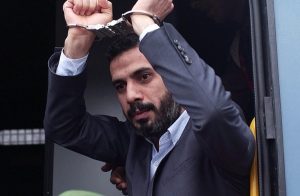
Mehmet Baransu
29 August 2019 – The trial of former executives of the shuttered Taraf daily and reporter Mehmet Baransu for allegedly publishing a secret military document called the “Egemen Operation Plan” resumed on 27 August 2019 at the 13th High Criminal Court of Istanbul, P24 reported.
Baransu, the only jailed defendant in the case, who was brought to the courtroom from the Silivri Prison accompanied by gendarmerie, continued presenting his defense statement on the first day of the hearing, which was planned to continue for three days.
Taraf’s former executives Ahmet Altan, Yasemin Çongar and Yıldıray Oğur were not in attendance because they are exempt from personal appearance in court. The hearing scheduled for 28 August did not take place because the court failed to send a summons to the Silivri Prison for Baransu to be brought to the courthouse.
Baransu continued making his defense statement on the third day of the hearing on 29 August. In its interim ruling at the end of that hearing, the court ordered the continuation of Mehmet Baransu’s detention on remand on the grounds of “the nature and type of the alleged crime” and because he “has still not completed his defense statement.” The court set 10-11-12 December 2019 as the dates for the next hearing.
29 August 2019 – Ümit Uzun, a reporter for Demirören News Agency (DHA), was taken into custody in Istanbul as he was covering a news story for the agency.
Uzun was arrested and handcuffed behind his back as he was interviewing the owner of a store in the Gaziosmanpaşa district, where a car crashed into. The grounds for Uzun’s arrest was “disrupting the scene of the accident.” Uzun was released after interrogation. After being released, the journalist filed a complaint with the Public Prosecutor’s Office about the officers who arrested him.
Local reporter injured by gunshot in Turkey’s Balıkesir
29 August 2019 – A local reporter in Turkey’s western town of Balıkesir was wounded by a gunshot on his foot fired by two unidentified assailants in front of his home in the early hours of 29 August.
Levent Uysal, who was the owner and publisher of the local newspaper Balıkesir Yenigün which recently closed down due to economic reasons, was taken to the hospital following the attack.
Uysal said the assault occurred around 1 a.m. at night. Two unidentified people wearing helmets approached him to ask for an address and fired six gunshots before taking off on motorcycles, he said.
The journalist said the police had obtained footage showing the assailants performing surveillance nearby his house a few days ahead of the attack. He added that he thought the attack was organized. “I’m not involved in any vendettas or inheritance dispute. I’ve recently made reports that disturbed and disfavored some [individuals],” he told local media according to DW Turkish. “I think that [the assailants] were instigated by them,” he said requesting from officials a thorough investigation into the case.
Uysal explained his reports were looking to shed light on the favors granted by high officials of the Balıkesir Metropolitan Municipality to their relatives as well as the establishment of new cliques in local institutions. “Questioning and monitoring those who work to serve the public is my task. If [my reports] contain errors or slanders I am ready to be held accountable of it,” he said. No trial or criminal investigation was launched for his reporting so far, Uysal said.
He also said he had to stop printing his newspaper and added that it was impossible for local media to survive without the support of local institutions.
The attack against Uysal came after a wave of attacks targeting journalists, including local reporters, during a heated local elections campaign. The attack was condemned by Balıkesir Journalists’ Association, Reporters Without Borders and the OSCE Representative on Freedom of the Media.
UPDATE: Journalists arrested in Mardin released after police interrogation
26 August 2019 – Mezopotamya news agency (MA) reporters Ahmet Kanbal and Mehmet Şah Oruç, JinNews reporter Rojda Aydın and journalists Nurcan Yalçın and Halime Parlak, who were arrested in Mardin on 20 August 2019, were released late on 26 August after giving their statements at the Mardin Police Department, Mezoptamya news agency reported.
All five journalists were arrested as they were covering demonstrations in Mardin in protest of the government’s recent removal of the mayors of Mardin, Diyarbakır and Van from office. They were held in custody for six days before being released. During police interrogation, all five were asked what they were doing on the scene of the protests. Oruç said after they were released that they were handcuffed behind their back while they were being arrested. The journalists also said in a statement that they were subjected to strip searches at the police department.
Reporter Yelda Özbek, who was arrested the same day in Diyarbakır, was released from custody on 21 August. The detention period of the five journalists under arrest in Mardin was extended for four more days on 23 August.
UPDATE: Journalists arrested in Diyarbakır released after seven days in custody
26 August 2019 – Tümen Anlı, the press and media relations officer for the Democratic Society Congress (DTK), and Vedat Dağ, the press relations officer for the Diyarbakır branch of People’s Democratic Party (HDP) were released under judicial control measures by a court on 26 August after spending seven days in custody. They were both arrested as part of operations on the heels of the government’s removal of the mayors of Diyarbakır, Mardin and Van from office late on 18 August.
Dağ said all 16 questions he was asked during his interrogation at the police department were about why he attended press statements by the HDP. Ziyan Karahan, an editor for the Mezopotamya news agency who was arrested as part of the same operation, was released on 22 August. Anlı and Dağ’s custody period was extended until 26 August.
Evrensel writer Ayşegül Tözeren released kept three days in custody
23 August 2019 – Ayşegül Tözeren, a medical doctor, writer, literary critic and a columnist for Evrensel daily, was taken into custody on 20 August 2019 during a midnight police raid on her Istanbul home.
The raid was conducted on the grounds of an anonymous “tip-off,” daily Evrensel reported. Tözeren was barred from seeing her lawyer during the first 24-hour period of her detention.
After having been held in custody for three days, Tözeren was brought to the Istanbul Courthouse on 23 August. The prosecutor investigating her file referred her to court for release under judicial control measures, without taking her statement. The 4th Istanbul Criminal Judgeship of Peace ruled to release Tözeren under an international travel ban. The court minutes showed that Tözeren is a suspect in an ongoing investigation launched for “membership in a terrorist organization.”
Two journalists briefly arrested in relation with protests, charged by court
23 August 2019 – Taylan Özgür Öztaş, a reporter for Özgür Gelecek newspaper, was arrested on 22 August 2019 in a midnight police raid on his home in Istanbul, P24 reported. He was arrested based on the claim that he took part in a demonstration on 20 August in Kadıköy in protest of the government-appointed trustees of Diyarbakır, Mardin and Van.
Another Istanbul-based journalist, Tunahan Turhan, a reporter for the Etkin news agency (ETHA), was also taken into custody in Istanbul on 22 August. Turhan was detained following a criminal record check by the police in Kadıköy. The reporter was in Kadıköy to cover a demonstration by the HDP’s local branch in protest of the removal of Diyarbakır, Mardin and Van mayors from office.
Both Öztaş and Turhan were brought to the Anatolian Courthouse on Istanbul’s Asian side on 23 August. There, they first gave their statements to a prosecutor, who referred both journalists to a court for release. The court released both journalists under judicial control measures.
Local journalist Sami Harunlar assaulted in Mersin
23 August 2019 – Mersin-based journalist Sami Harunlar, the owner of the local newspaper Barış (Peace), was attacked by armed assailants near his home in Tarsus, Demirören News Agency reported.
The 58-year-old journalist was injured in the assault carried out by two unidentified men. Harunlar was hospitalized following the incident. Police has launched an investigation into the attack.
Journalist and video activist Oktay İnce briefly detained in İzmir
22 August 2019 – Oktay İnce, a member of the video activist collective Seyri Sokak, was taken into custody on 22 August in Izmir, online news website Gazete Duvar reported. He was arrested along with 26 lawyers from the Izmir Bar Association as he was covering the lawyers’ press statement protesting the removal of Mardin, Diyarbakır and Van mayors from office.
İnce was taken to the Izmir Police Department. He was released the same day after giving his giving his statement at the police department.
Six journalists arrested while covering protests against government
20 August 2019 – Six journalists were arrested on 20 Auguıst 2019 in Mardin and Diyarbakır as they were covering public demonstrations in both cities in protest of the government’s recent removal of the mayors of Mardin, Diyarbakır and Van from office.
Mezopotamya news agency (MA) reporters Ahmet Kanbal and Mehmet Şah Oruç, Jinnews reporter Rojda Aydın and journalists Nurcan Yalçın and Halime Parlak were arrested in Mardin while reporter Yelda Özbek was arrested in Diyarbakır.
Police dispersed the crowds who gathered in front of Diyarbakır and Mardin municipalities. The reporters were arrested as they were taking pictures of the protesting crowds.
Four journalists arrested in Diyarbakır during police operations
19 August 2019 – Four journalists were taken into custody o9 in Diyarbakır as part of sweeping operations across several cities. The operations followed immediately on the heels of the removal of Diyarbakır, Mardin and Van mayors from office late on 18 August by the government, which appointed trustees to run these three cities.
The Mezopotamya news agency (MA) reported on Monday that Ziyan Karahan, an editor for the agency’s Kurdish edition, was arrested during a raid on her home in Diyarbakır as part of the operations. MA said Karahan was brought to the Diyarbakır Police Department’s anti-terror branch. The grounds for Karahan’s arrest were not immediately disclosed.
Turkish Journalists Union (TGS) Diyarbakır representative Mahmut Oral told P24 that journalist Tümen Anlı, the press and media relations officer for the Democratic Society Congress (DTK), Vedat Dağ, the press relations officer for the Diyarbakır branch of People’s Democratic Party (HDP), and Özgür Ülke, the press relations officer for the local Bismil Municipality, were also taken into custody during Monday’s raids.
The four journalists were among a total of 418 individuals, who also included local HDP politicians and municipal employees, arrested as part of the operations that took place in the early hours of Monday.
20 August 2019 – Journalist Ergin Çağlar, a Mersin-based reporter for Mezopotamya news agency, was arrested on 16 August 2019 at the Mersin Courthouse where he had gone to give his statement as part of an ongoing criminal investigation against him. He was released under judicial control measures by a Mersin court on 20 August after spending four days in custody, Mezopotamya news agency reported.
Çağlar’s apartment in Mersin was raided on 14 August as part of an investigation by the Mersin Chief Public Prosecutor’s Office, which had also issued an arrest warrant for the journalist.
Çağlar was brought to the Mersin Police Department for interrogation after being arrested at the Mersin Courthouse. The journalist is charged with “membership in a terrorist group” and a confidentiality order was in place concerning the investigation.
9 August 2019 – Cebrail Arslan, a reporter for the Pir News Agency (PİRHA) was arrested on 8 August 2019 along with five other people during a raid on his home in Ankara, online news website Gazete Karınca reported.
Arslan and the five other people were released one day after giving their statement. News reports said the six people were questioned in relation to their involvement in protests, called “White Flag,” against the military operations and curfews in civilian areas of the Southeast in 2016,
8 August 2019 – A court in the eastern province of Van ruled to keep imprisoned journalist İdris Yılmaz in pre-trial detention, online news website Artı Gerçek reported. The hearing was the first one after two separate cases where he is charged with “membership of a terrorist organization” were merged.
Yılmaz was previously sentenced to 6 years and 3 months in prison but his sentence was overturned by an appellate court, which ordered re-trial. This case was then merged with another ongoing one in which Yılmaz is again charged with “membership of a terrorist organization.” Yılmaz attended the court hearing via court video-conferencing system from a prison in Elazığ further west, where he is held since his arrest.
The court ruled for Yılmaz’s continued pre-trial detention at the end of the hearing and adjourned the trial until 27 September.
Court blocks access to 135 web sources, including Gazete Fersude and ETHA
7 August 2019 – The Ankara 3rd Criminal Judgeship of Peace has ruled for access to a total of 136 websites, web pages and social media accounts.
Among the websites blocked by the decision are those of news portal Gazete Fersude and Etkin News Agency (ETHA). The website geziyisavunuyoruz.org, which follows the trial of Osman Kavala and 15 others facing the charge of “attempting the overthrow the government” for their involvement in the Gezi protests, is also among those that were blocked for allegedly violating Turkey’s Internet law.
The ruling dated 16 July 2019 was rendered in response to a complaint submitted on the same day by the Gendarmerie Command which claimed that the mentioned sites violated Article 8/A of the Law No. 5651, which covers online publication and cyber-crimes.
The law allows judges to order removal of content or block access on one or more of the following grounds: to protect the right of life or security of life and property, to protect national security and public order, to prevent the commission of a crime, or to protect public health.
The ruling to block access to ETHA’s website etha10.com.tr, geziyisavunuyoruz.org and Gazete Fersude’s website gazetefersude.com was implemented following the decision of the Ankara 3rd Criminal Judgeship of Peace. Among the 136 Internet sources that the court ordered banned are websites and social media accounts including numerous Facebook, Instagram, Twitter, Youtube and Pinterest pages.
Details pertaining to the court decision that were obtained by bianet’s lawyer later revealed that bianet.org was erroneously included in the list of URLs to be blocked, although decision remains in effect for 135 other web addresses. Court documents obtained on 7 August by lawyer Meriç Eyüboğlu showed that the complainant Gendarmerie Command had applied to the Ankara 3rd Criminal Judgeship of Peace on 17 July, stating that bianet.org was erroneously included in the list and requesting that the court decision be revised accordingly. The court, in response, issued a decision saying the order to block access to bianet.org was removed while the decision remains valid for the remaining 135 web URLs.
Regulation bringing online broadcasting under TV watchdog’s control goes into effect
1 August 2019 – A regulation that gives Turkey’s radio and television watchdog RTÜK tha authority to supervise content streamed online formally went into effect upon its publication in the Official Gazette.
The regulation, which raised concerns over possible censorship, makes it mandatory for online media content providers to obtain broadcasting licenses and permits from RTÜK, in return for significant sums. It also allows RTÜK to supervise content provided by them and introduce sanctions in case of non-compliance with broadcasting principles.
Streaming platforms like Netflix, local streaming platforms PuhuTV and BluTV will now be subject to RTÜK supervision and potential fines or loss of their license.
In addition to subscription services like Netflix, free online news outlets will also be subject to the same measures. Providers will be required to pay TL 10,000 (around $ 1,800) to get a license to provide radio services while TV and subscription-based service providers will need to pay TL 100,000 (around $ 18,000).
Yaman Akdeniz, a law professor and a cyber rights specialist, said access to the Netflix platform or to news outlets broadcasting from abroad could be blocked. Akdeniz also commented that media outlets such as Turkish services of the BBC or Deutsche Welle, which have emerged as sources of news not subject to government control over the past years, were possible intended targets of the regulation.
Kerem Altıparmak, a human rights lawyer, said the move was the “biggest step in Turkish censorship history” and said all outlets producing opposition news would be affected. “Everyone who produces alternative news and broadcasts will be impacted by this regulation,” Altıparmak wrote on Twitter. “Every news report that can be against the government will be taken under control.”
Source of violation: Government / State Agency / Public official(s) / Political party
Online news websites T24 and Diken face terrorism investigation
1 August 2019 – The Istanbul Chief Public Prosecutor’s Office launched an investigation against a group of media outlets, including independent news websites T24 and Diken, on the charge of “supporting a terrorist group without being its member.” Both websites are under scrutiny for reporting on Twitter posts of an anonymous account called “Fuat Avni” nearly five years ago.
T24 reported that the investigation was subject to a confidentiality order and that it was not clear what media outlets other than T24 and Diken were involved. It said editors and executives of T24 who worked there in 2014-2016 were summoned by the Istanbul Chief Public Prosecutor’s Office to give statements as part of the investigation.
Those summoned were asked questions on why they reported on “Fuat Avni” tweets, who prepared the reports and whether they had received any instructions to report on the tweets.
The account under the “Fuat Avni” nickname, which has since been deactivated, shared alleged inside information on secret dealings of then Prime Minister Recep Tayyip Erdoğan and other government members.
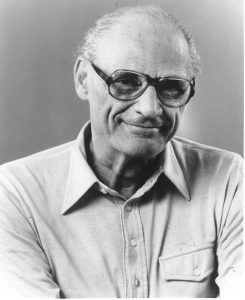
Arthur Miller, American playwright (Photo: U.S. Department of State / Wikipedia)
It is always necessary to ask how old a writer is who is reporting his impressions of a social phenomenon. Like the varying depth of a lens, the mind bends the light passing through it quite differently according to its age. When I first experienced Prague in the late 60s, the Russians had only just entered with their armies; writers (almost all of them self-proclaimed Marxists if not Party members) were still unsure of their fate under the new occupation, and when some 30 or 40 of them gathered in the office of Listy to ‘interview’ me, I could smell the apprehension among them. And indeed, many would soon be fleeing abroad, some would be jailed, and others would never again be permitted to publish in their native language. Incredibly, that was almost a decade ago.
But since the first major blow to the equanimity of my mind was the victory of Nazism, first in Germany and later in the rest of Europe, the images I have of repression are inevitably cast in fascist forms. In those times the communist was always the tortured victim, and the Red Army stood as the hope of man, the deliverer. So to put it quite simply, although correctly, I think, the occupation of Czechoslovakia was the physical proof that Marxism was but one more self-delusionery attempt to avoid facing the real nature of power, the primitive corruption by power of those who possess it. In a word, Marxism has turned out to be a form of sentimentalism toward human nature, and this has its funny side. After all, it was initially a probe into the most painful wounds of the capitalist presumptions, it was scientific and analytical.
What the Russians have done in Czechoslovakia is, in effect, to prove in a western cultural environment that what they have called socialism simply cannot tolerate even the most nominal independent scrutiny, let alone an opposition. The critical intelligence itself is not to be borne, and in the birthplace of Kafka and of the absurd in its subtlest expression absurdity emanates from the Russian occupation like some sort of gas which makes one both laugh and cry. Shortly after returning home from my first visit to Prague mentioned above, I happened to meet a Soviet political scientist at a high-level conference where he was a participant representing his country and I was invited to speak at one session to present my views of the impediments to better cultural relations between the two nations. Still depressed by my Czech experience, I naturally brought up the invasion of the country as a likely cause for American distrust of the Soviets, as well as the United States aggression in Vietnam from the same detente viewpoint.
That had been in the morning; in the evening at a party for all the conference participants, half of them Americans, I found myself facing this above-mentioned Soviet whose anger was unconcealed. ‘It is amazing,’ he said, ‘that you – especially you as a Jew – should attack our action in Czechoslovakia.’ Normally quite alert to almost any reverberations of the Jewish presence in the political life of our time, I found myself in a state of unaccustomed and total confusion at this remark, and I asked the man to explain the connection. ‘But obviously,’ he said (and his face had gone quite red and he was quite furious now) ‘we have gone in there to protect them from the West German fascists.’
I admit that I was struck dumb. Imagine! The marching of all the Warsaw Pact armies in order to protect the few Jews left in Czechoslovakia! It is rare that one really comes face to face with such fantasy so profoundly believed by a person of intelligence. In the face of this kind of expression all culture seems to crack and collapse; there is no longer a frame of reference.
In fact, the closest thing to it that I could recall were my not infrequent arguments with intelligent supporters or apologists for our Vietnamese invasion. But at this point the analogy ends, for it was always possible during the Vietnam war for Americans opposed to it to make their views heard, and, indeed, it was the widespread opposition to the war which finally made it impossible for President Johnson to continue in office. It certainly was not a simple matter to oppose the war in any significant way, and the civilian casualties of protest were by no means few, and some – like the students at the Kent State College protest – paid with their lives. But what one might call the unofficial underground reality, the version of morals and national interest held by those not in power, was ultimately expressed and able to prevail sufficiently to alter high policy. Even so, it was the longest war ever fought by Americans.
The sin of power is to not only distort reality but to convince people that the false is true, and that what is happening is only an invention of enemies
Any discussion of the American rationales regarding Vietnam must finally confront something which is uncongenial to both Marxist and anti-Marxist viewpoints, and it is the inevitable pressure, by those holding political power, to distort and falsify the structures of reality. The Marxist, by philosophical conviction, and the bourgeois American politician, by practical witness, both believe at bottom that reality is quite simply the arena into which determined men can enter and reshape just about every kind of relationship in it. The conception of an objective reality which is the summing up of all historical circumstances, as well as the idea of human beings as containers or vessels by which that historical experience defends itself and expresses itself through common sense and unconscious drives, are notions which at best are merely temporary nuisances, incidental obstructions to the wished for remodelling of human nature and the improvements of society which power exists in order to set in place.
The sin of power is to not only distort reality but to convince people that the false is true, and that what is happening is only an invention of enemies. Obviously, the Soviets and their friends in Czechoslovakia are by no means the only ones guilty of this sin, but in other places, especially in the West, it is possible yet for witnesses to reality to come forth and testify to the truth. In Czechoslovakia the whole field is pre-empted by the power itself.
Thus a great many people outside, and among them a great many artists, have felt a deep connection with Czechoslovakia – but precisely because there has been a fear in the West over many generations that the simple right to reply to power is a tenuous thing and is always on the verge of being snipped like a nerve. I have, myself, sat at dinner with a Czech writer and his family in his own home and looked out and seen police sitting in their cars down below, in effect warning my friend that our ‘meeting’ was being observed. I have seen reports in Czech newspapers that a certain writer had emigrated to the West and was no longer willing to live in his own country, when the very same man was sitting across a living-room coffee table from me. And I have also been lied about in America by both private and public liars, by the press and the government, but a road – sometimes merely a narrow path – always remained open before my mind, the belief that I might sensibly attempt to influence people to see what was real and so at least to resist the victory of untruth.
I know what it is to be denied the right to travel outside my country, having been denied my passport for some five years by our Department of State. And I know a little about the inviting temptation to simply get out at any cost, to quit my country in disgust and disillusion, as no small number of people did in the McCarthy 50s and as a long line of Czechs and Slovaks have in these recent years. I also know the empty feeling in the belly at the prospect of trying to learn another nation’s secret language, its gestures and body communications without which a writer is only half-seeing and half-hearing. More important, I know the conflict between recognising the indifference of the people and finally conceding that the salt has indeed lost its savour and that the only sensible attitude toward any people is cynicism.
So that those who have chosen to remain as writers on their native soil despite remorseless pressure to emigrate are, perhaps no less than their oppressors, rather strange and anachronistic figures in this time. After all, it is by no means a heroic epoch now; we in the West as well as in the East understand perfectly well that the political and military spheres – where ‘heroics’ were called for in the past – are now merely expressions of the unmerciful industrial-technological base. As for the very notion of patriotism, it falters before the perfectly obvious interdependence of the nations, as well as the universal prospect of mass obliteration by the atom bomb, the instrument which has doomed us, so to speak, to this lengthy peace between the great powers.
That a group of intellectuals should persist in creating a national literature on their own ground is out of tune with our adaptational proficiency which has flowed from these developments. It is hard anymore to remember whether one is living in Rome or New York, London or Strasbourg, so homogenised has western life become. The persistence of these people may be an inspiration to some but a nuisance to others, and not only inside the oppressing apparatus but in the West as well. For these so-called dissidents are apparently upholding values at a time when the first order of business would seem to be the accretion of capital for technological investment.
It need hardly be said that by no means everybody in the West is in favour of human rights, and western support for eastern dissidents has more hypocritical self-satisfaction in it than one wants to think too much about. Nevertheless, if one has learned anything at all in the past 40 or so years, it is that to struggle for these rights (and without them the accretion of capital is simply the construction of a more modern prison) one has to struggle for them wherever the need arises.
That this struggle also has to take place in socialist systems suggests to me that the fundamental procedure which is creating violations of these rights transcends social systems – a thought anathematic to Marxists but possibly true nevertheless. What may be in place now is precisely a need to erect a new capital structure, be it in Latin America or the Far East or underdeveloped parts of Europe, and just as in the 19th century in America and England it is a process which always breeds injustice and the flaunting of human spiritual demands because it essentially is the sweating of increasing amounts of production and wealth from a labour force surrounded, in effect, by police. The complaining or reforming voice in that era was not exactly encouraged in the United States or England; by corrupting the press and buying whole legislatures, capitalists effectively controlled their opposition, and the struggle of the trade union movement was often waged against firing rifles.
There is of course a difference now, many differences. At least they are supposed to be differences, particularly that the armed force is in the hands of a state calling itself socialist and progressive and scientific, no less pridefully than the 19th-century capitalisms boasted by their Christian ideology and their devotion to the human dimension of political life as announced by the American Bill of Rights and the French Revolution. But the real difference now is the incomparably deeper and more widespread conviction that man’s fate is not ‘realistically’ that of the regimented slave. It may be that despite everything, and totally unannounced and unheralded, a healthy scepticism toward the powerful has at last become second nature to the great mass of people almost everywhere. It may be that history, now, is on the side of those who hopelessly hope and cling to their native ground to claim it for their language and ideals.
The oddest request I ever heard in Czechoslovakia – or anywhere else – was to do what I could to help writers publish their works – but not in French, German or English, the normal desire of sequestered writers cut off from the outside. No, these Czech writers were desperate to see their works in Czech! Somehow this speaks of something far more profound than ‘dissidence’ or any political quantification. There is something like love in it, and in this sense it is a prophetic yearning and demand.
[/vc_column_text][/vc_column][/vc_row][vc_row][vc_column width=”1/3″][vc_custom_heading text=”Border forces: How barriers to free thought got tough” font_container=”tag:h3|text_align:left” link=”url:https%3A%2F%2Fwww.indexoncensorship.org%2F2019%2F06%2Fmagazine-judged-how-governments-use-power-to-undermine-justice-and-freedom%2F|||”][vc_column_text]The autumn 2019 Index on Censorship magazine looks how governments are using borders to restrict free speech and the flow of ideas[/vc_column_text][/vc_column][vc_column width=”1/3″][vc_row_inner][vc_column_inner][vc_single_image image=”108826″ img_size=”full” onclick=”custom_link” link=”https://www.indexoncensorship.org/2019/06/magazine-judged-how-governments-use-power-to-undermine-justice-and-freedom/”][/vc_column_inner][/vc_row_inner][/vc_column][vc_column width=”1/3″][vc_custom_heading text=”Subscribe” font_container=”tag:h3|text_align:left”][vc_row_inner][vc_column_inner][vc_column_text]In print, online. In your mailbox, on your iPad.
Subscription options from £18 or just £1.49 in the App Store for a digital issue.
Every subscriber helps support Index on Censorship’s projects around the world.
Index on Censorship’s Monitoring and Advocating for Media Freedom project tracks press freedom violations in five countries: Azerbaijan, Belarus, Russia, Turkey and Ukraine. Learn more.
TV crew assaulted while reporting on illegal logging in Kharkiv region
28 August 2018 — Unknown individuals attacked a 112-Ukraine TV crew, which was reporting on illegal logging and theft of wood in the village Zolochiv, in the Kharkiv region, 112-Ukraine TV channel reported.
A group of men blocked the journalists’ car and struck its wheels, threatening the journalists with physical violence. A TV reporter called the police, who arrived, but did not intervene. Journalist Oleg Reshetnyak went on the air, described the situation, but the assaulters noticed this and took the camera during the live broadcast.
Reshetnyak was beaten during the assault. An ambulance was called to him.
UPDATE: 29 August 2019 — Police detained 49 individuals suspected of assaulting a television crew, Kharkiv region police reported.
“A conflict between security guards and journalists arose during the shooting of the video. Security guards blocked the car, tried to seize the camcorder and injured a journalist,” the Kharkiv region police press service reported.
One of the most active individuals is suspected of “obstruction of legitimate professional activity of journalists.” Two more individuals have been detained on suspicion of “threatening or abusing a journalist.”
According to police, private guards working for the logging company used violence, blocked the TV crew’s car, tried to seize the camcorder and injured the journalist. The journalist received multiple injuries to their back and kidneys, as well as bruises on their face.
Categories: Blocked Access, Physical Assault/Injury, Attack to Property, Intimidation
Source of violation: Known private individual(s)
TV correspondent harassed at nationalist rally
24 August 2019 — Nash/Maxi TV journalist Bogdan Karabyniosh was harassed on-air by unknown individuals at a nationalist march in Kyiv, Detector Media reported.
During a live broadcast, participants in the march people called the channel pro-Russian, shouted the name of the owner of the channel, Volodymyr Murayev, and Vladimir Putin. Afterwards, the unknown individuals called on the journalist to leave and not interfere with the rally. The journalist considered such actions as obstruction of his journalistic activity.
20 August 2019 — Ukrainian President Volodymyr Zelenskiy’s Chief of Staff Andriy Bohdan filed the lawsuit in the Shevchenko District Court of Kyiv against three journalists from Schemes, an investigative program that’s a joint production of Radio Free Europe/Radio Liberty and public broadcaster UA:Pershyi. The three journalists are Nataliya Sedletska, Valeria Yegoshina, and Maksym Savchuk, Kyivpost reported.
The details of the lawsuit are currently unavailable, so it is unclear which of Schemes’ reports about the presidential aide Bohdan found defamatory.
“At this point, we have not received the text of Bohdan’s lawsuit. Therefore, we cannot comment on it,” the editorial board of Schemes wrote on Twitter on Aug. 21. “We are confident that the information we publish is reliable and are ready for the trial.”
Bohdan is a former lawyer whose most famous client was oligarch Ihor Kolomoisky. After Zelenskiy’s victory in the presidential election, Bohdan was appointed his chief of staff, heightening concerns over Kolomoisky’s suspected influence on the new president.
Schemes did several investigations into Bohdan. One of them revealed his multiple trips to Tel Aviv, where Kolomoisky resided at the time, while the lawyer was de facto running Zelensky’s election campaign. The show also reported on his secret meeting with the then-head of the constitutional court.
In an interview with Ukrayinska Pravda published on April 25, Bohdan said he was preparing to sue Schemes’ journalists for spreading false information that he had taken 11 flights to Russia, six of which were through Belarus. However, the journalists never reported that. In their investigation, they said Bohdan had made three trips to Russia since 2014 and crossed the Belarusian border 11 times “in an unknown direction during 2018-2019.”
Source of violation: Government/State Agency/Public official(s)/Political party
Drunk man assaults local TV crew
16 August 2019 — A drunk patron of a shop assaulted members of a TV crew from a regional TV station in Mariupol, Mariupol News reported. The name of the TV channel and the names of journalists were not disclosed.
The individual hit the cameraman and damaged a video camera, the local police press service reported. Journalists filed a complaint to the police. The officers found the offender, who turned out to be a 44-year-old resident of Mariupol.
The incident was investigated as an “obstruction of the legitimate professional activities of journalists”, which is punishable with up to three years in prison.
Categories: Physical Assault/Injury, Attack to Property
Source of violation: Known private individual(s)
MP calls journalist “a stupid sheep”
18 August 2019 — Maxim Buzhansky, a member of the Ukrainian parliament, who belongs to president Volodymyr Zelensky’s political party, called Olga Dukhnich, a journalist working for Novoe Vremya (New Time) “a stupid sheep”, Ukrayinska Pravda reported.
“Another stupid sheep who is a journalist for the odious media Novoe Vremya said in an interview with a representative of Servant of the People political party that I was nostalgic for the USSR and president Yanukovych’s times. I understand that some colleagues are too restrained to call things by their names, so I will help them. A stupid sheep from the odious media,” Buzhanskiy posted on his Telegram public channel.
In response, Dukhnich posted on Facebook that “to answer to Mr. Buzhansky is like trying to figure out a relationship with a pigeon that shit on your coat sleeve.” The journalist called on the politician to apologise to Novoe Vremya, which is a weekly magazine.
In an interview with the leader of Servant of the People, Dmytro Razumkov, Dukhnich said that Buzhanskiy was “nostalgic for the USSR and Viktor Yanukovych’s time.” Razumkov, for his part, said the MPs should be judged for the current and future acts.
In July 2019, parliamentary elections were held. Servant of the People Zelensky’s party gained more than 43 percent of the vote.
Source of violation: Government/State Agency/Public official(s)/Political party
Court leaves journalist under house arrest
15 August 2019 — The Korolyovsky District Court of Zhytomyr ruled that journalist and blogger Vasyl Muravitsky should remain under house arrest until 12 October 2019, Ukrinform news agency reported.
Prosecutor Vadym Levchenko filed a motion to change Muravitsky’s pre-trial detention from 24-hour house arrest to remand in custody. According to the prosecutor, there were risks that Muravitsky may hide or commit similar crimes by “writing publications on anti-Ukrainian topics.”
The journalist’s lawyer, Svitlana Novitska, insisted on changing the measure of restraint on personal commitment or bail, instead of house arrest.
At a court hearing the prosecutor read out Muravitsky’s correspondence with other individuals, in which publications, various Ukrainian politicians, the organisation of a press conference and fees were mentioned. In addition, the prosecutor provided a disk with screenshots of Muravitsky’s correspondence on Facebook, Telegram, Skype, as well as the e-mails.
The lawyer noted that such evidence is clearly inadmissible and is an interference with the private correspondence of her client. The prosecutor replied that the investigating judge allowed him to examine the journalist’s correspondence. The court took into consideration the evidence provided by the prosecution, Ukrinform reported.
On 2 August 2017, Muravitsky was arrested on suspicion of treason and undermining the territorial integrity of Ukraine because he worked for Russian news agencies. Until June 27 2018, the journalist was in custody, after which the court changed the preventive measure to house arrest.
On 6 August 2018, after the court hearing in Zhytomyr, activists from neo-Nazi C14 group splashed Muravitsky with the dye brilliant green as he left the building. (Known as ‘zelenka’, this dye was widely used as an antiseptic during the Soviet period but is now increasingly used in attacks against dissidents and political opponents in Russia and Ukraine, where it is still readily available. It is extremely difficult to wash off the skin, and though not as corrosive as most acids, it can cause chemical burns.)
Source of violation: Government/State Agency/Public official(s)/Political party
Man harasses TV crew in Odessa
8 August 2019 — An unidentified person interfered with and harassed a Dumskaya TV crew in a casino, Dumskaya.net reported.
The individual began to threaten the news crew when they learned that a live broadcast was in progress. “If I see myself on the TV screen, you will have a lot of trouble,” the man said to a female journalist who wanted to talk about possible gambling legislation.
The individual forcibly took the camera from the cameraman. The crew’s equipment was damaged as a result of the incident.
The journalists filed a complaint with the police.
Categories: Physical Assault/Injury, Attack to Property, Intimidation
Source of violation: Unknown
MP called to attack pro-Russian TV channels with anti-tank missile
12 August 2019 — Appearing on Pryamiy TV, People’s Front MP Serhiy Vysotsky said pro-Russian television channels should be blown up with an anti-tank missile, Strana.ua reported.
“These channels that we are talking about, they work against Ukraine — in favor of the enemy, all the journalists who work there — they are combatants of the Russian Federation. And what should be done with them is to blow them up with an anti-tank guided missile, that is, to close them,” Vysotsky said during a talk show.
The head of the National Union of Journalists, Serhiy Tomilenko, commented that the deputy’s appeal was an incitement to hostility which is criminalised in Ukraine.
“With anxiety I note the escalation of pressure on the TV channel. I hope that the new government will find the strength to preserve freedom of expression, to stop the pressure and to ensure the right of journalists to the profession,” the Channel 112 Ukraine CEO Yehor Benkendorf said.
On July 13 2019, the main office of TV Channel 112 Ukraine was attacked with a rocket-propelled grenade in Kyiv. The police still haven’t found the offenders.
During the parliamentary elections of 2019, Vysotsky ran for European Solidarity political party of the ex-president Poroshenko, but was not elected.
Source of violation: Government/State Agency/Public official(s)/Political party
Court rules against independent TV channel
6 August 2019 — The commercial court of Kyiv granted far right groupC14’s claim against Hromadske TV, Hromadske reported.
C14 filed a lawsuit against Hromadske TV “on the protection of honour, dignity and business reputation” in July 2018. One of the documents in the statement of claim featured a copy of a tweet posted to the Twitter of the media organization’s English-language service Hromadske International, which describes C14 as a “neo-Nazi group”. The tweet was posted on May 4 2018, when representatives of C14 captured and forcefully took Brazilian militant Rafael Lusvarghi to Ukraine’s Security Service.
The court noted that the information circulated by Hromadske in May 2018 “harms the reputation” of C14 and ordered Hromadske to refute the information and pay 3,500UAH ($136) in court fees to C14.
Olena Tchaikovska, the attorney for Hromadske TV, called the decision “incorrect and illegal.” “It introduces an egregious tendency that suppresses freedom of speech. We will appeal it,” she said.
“We are surprised by this decision. Not only does it contradict the judicial logic, but is also a dangerous precedent for other media and for freedom of speech in general,” editor-in-chief of Hromadske Angelina Karyakina said of the decision.
“The position of C14 is that they are not a neo-Nazi group in their activities or in the nature of their activities. They are a nationalist group, but they are by no means neo-Nazi,” said Victor Moroz, C14’s lawyer at a previous court hearing. According to Moroz, what Hromadske called the organisation harms the business reputation of C14.
Hromadske television defends its position and insisted that it did not commit any violations by characterising the organisation as “neo-Nazi.”
UPDATE:
7 August 2019 — A number of international human rights organisations have criticised the decision of the commercial court of Kyiv, the Institute of Mass Information reported.
Freedom House Ukraine qualified this decision as a dangerous precedent of interference with freedom of opinion and expression in Ukraine. “C14 can contest/deny Hromadske’s characterisation but it is the right of the media to publish their view, in good faith, based on the information they gathered” on C14 and its members, “many of whom declared that they joined the group because of its neo-Nazi orientation”, Matthew Shaaf, director of Freedom House Ukraine said on. Shaaf believes an increase in self-censorship among media in Ukraine could be the most pernicious impact of ruling against Hromadske for calling C14 neo-Nazi.
Source of violation: Government/State Agency/Public official(s)/Political party
Local TV crew assaulted
1 August 2019 – A Kapri TV crew was assaulted by unidentified individuals and a political aid of a parliamentary candidate in Pokrovsk Donetsk region, the Institute of Mass Information reported.
As a result of the assault, the cameraman received a concussion, his camera and mobile phone belong to journalist Alyona Sobolenko were damaged.
According to Sobolenko, Vitalii Verbicky, a political aide working for MP candidate Ruslan Trebushkin, broke her smartphone after snatching it from her hands as she attempted to enter the building. Verbicky then forcefully shoved the cameraman into the building where a meeting of the members of the district election commission and the city leadership was taking place.
The journalists had gone to the offices to investigate why the election commission members were not engaged in recounting a local vote, but instead were meeting with Trebushkin himself behind closed doors.
Once in the building the cameraman reported he was assaulted and his camera was broken. The individuals also destroyed the memory card containing video, Sobolenko said. The cameraman said he was threatened with further violence and that the men wanted to know if there were additional TV crews outside. The cameraman was prevented from leaving the building for half an hour.
Sobolenko, who remained in the parking lot, called the police to the scene of the incident. “The police did not arrive at once, I had to call three times, but the officers were in no hurry … We were very worried because we did not know what was going on behind closed doors in the room… We recorded the beating in the hospital, and today called an ambulance again because the cameraman had dizziness, he was diagnosed with a brain injury,” Sobolenko told IMI.
When the police finally arrived, they were prevented from accessing the building by a crowd of men, who blocked the entrance. Subsequently, the police called for reinforcements and freed the cameraman.
The journalists filed a complaint with the police. A criminal case was opened on the article “obstruction of journalists’ legal activities.”

 “In the spring of 2017, Belsat TV contributors have been repeatedly arrested, tried and heavily fined for covering the protests. The total amount of fines reached $9,000. In addition, our journalists spent more than 30 days in prison,” states the channel’s website.