24 May 2019 | Media Freedom, media freedom featured, Monitoring and Advocating Coverage, News
[vc_row][vc_column][vc_row_inner][vc_column_inner][vc_column_text]This article is part of an ongoing series exploring the issues raised by Index on Censorship’s Monitoring and Advocating for Media Freedom project.[/vc_column_text][/vc_column_inner][/vc_row_inner][vc_column_text]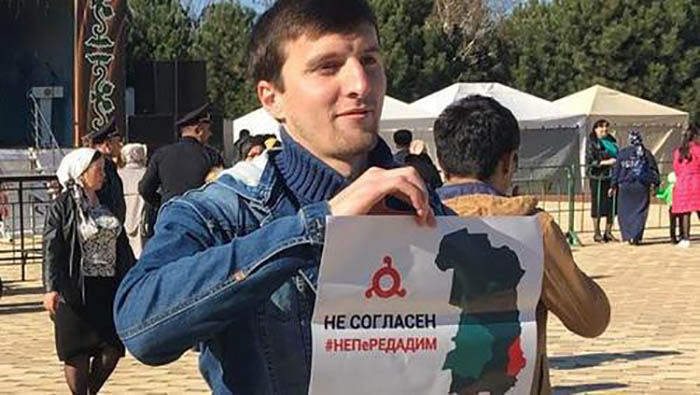
On 8 May 2019 the Belarussian authorities ordered the extra-judicial deportation of Russian blogger Ismail Nalgiev after his arrest in Minsk Airport. Nalgiev was preparing to travel to Prague, but was detained by border guards at the airport and told that he was on the Russian Federation’s wanted list.
Police released Nalgiev after three hours but officers from the Main Directorate for Combating Organized Crime and Corruption, as well as the Department of Citizenship and Migration of the Kastryčnicki district of Minsk, immediately re-arrested Nalgiev and took him to a detention centre in Minsk. Nalgiev’s lawyer was only permitted to meet with his client several hours later, in the late evening of 8 May. Nalgiev was charged with an administrative offence, but an administrative protocol on the reason for his detention was not filed.
It was expected that the Court of the Kastryčnicki district of Minsk would consider the charge on 10 May, but in the morning, it was announced that the expulsion had already been put in place. On 11 May, Nalgiev was taken to a prison in the city of Nalchik in the Russian Federation’s Republic of Kabardino-Balcaria. Nalgiev was banned from re-entering Belarus for 10 years and remains in prison in Nalchik.
Ismail Nalgiev is a blogger and human rights defender from the Republic of Ingushetia, Russian Federation. He is the co-ordinator of Choice of Ingushetia, which has been opposing a land-swap deal signed by the Ingush and Chechen leaders in September 2018. Since October 2018, protesters – Nalgiev among them – have opposed the land-swap on the basis that Ingushetia is giving Chechnya prime real estate in exchange for remote mountainous terrain. Ingushtians have been demanding the resignation of their leader, Minus Yevkurov.
On 27 March 2019 protests in the Ingush capital of Magas turned violent after police forcibly dispersed hundreds of protesters. Protesters are understood to have used chairs (brought on site for elderly protesters) to defend themselves but dozens of injuries were reported. A criminal case on the use of violence was subsequently opened.
It is now understood that Ismail Nalgiev was placed on the Ingushetia Ministry of Internal Affairs’ wanted persons list on 27 April, having been charged under Article 318(2) and Article 212(3) of the Criminal Code in relation to the protests. Nalgiev says that he was not made aware of this at the time.
On 8 May Nalgiev was convicted in absentia and sentenced to two months in prison. He began serving his sentence on 11 May. His lawyer is in the process of trying to appeal the sentence.[/vc_column_text][/vc_column][/vc_row][vc_row][vc_column][vc_basic_grid post_type=”post” max_items=”4″ element_width=”6″ grid_id=”vc_gid:1561033970217-f5fce0e8-f6b4-6″ taxonomies=”172″][/vc_column][/vc_row]
15 May 2019 | Artistic Freedom Case Studies
[vc_row][vc_column][vc_column_text]Name of Art Work: Isis Threaten Sylvania
Artist/s: Mimsy
Date: August – September 2015
Venue: The Mall Galleries as part of Passion for Freedom’s September exhibition of artworks exploring ideas of Freedom
Brief description of the artwork/project: ‘Isis Threaten Sylvania’ is a satirical series of light box tableaux, using the children’s toys ‘Sylvanian Families’. The toys are featured at picnics, on the beach and at school, threatened by more of the toy animals dressed up as members of Isis in the background. They had previously been exhibited without incident at ART15 global art fair. Passion for Freedom, who, since 2009, have mounted an annual competition and exhibition celebrating freedom of expression, hired the Mall Gallery for the exhibition.[/vc_column_text][vc_single_image image=”106736″ img_size=”full” add_caption=”yes”][vc_custom_heading text=”Why was it challenged?” font_container=”tag:h3|text_align:left” use_theme_fonts=”yes”][vc_row_inner][vc_column_inner width=”1/2″][vc_single_image image=”106735″ img_size=”full” add_caption=”yes”][/vc_column_inner][vc_column_inner width=”1/2″][vc_column_text]The police identify “serious concerns” regarding the “potentially inflammatory content” of Mimsy’s work and outline a number of security measures that need to be taken. The curators asked for more information about these concerns, especially if they relate to any threat to Mimsy herself. No more information was given by the police. In a meeting with Passion for Freedom, gallery management tells the curators Passion for Freedom that Mimsy’s work is not real art; also that Tasleem Mulhall’s ‘Stoned’ is one of several works being reviewed by the gallery to establish whether or not it is appropriate.
Mall Galleries specify that the additional police security will carry costs to be charged to the artist and would amount to £6000 per day – or £36000 for the week. Passion for Freedom are also reminded that, contractually, whether or not they want to pay for the police to provide security, the Mall Galleries has the right to withdraw from the contract if they feel artworks are inappropriate.[/vc_column_text][/vc_column_inner][/vc_row_inner][vc_custom_heading text=”What action was taken?” font_container=”tag:h3|text_align:left” use_theme_fonts=”yes”][vc_column_text]Passion for Freedom decide that, as they cannot afford the additional costs, they will not include Isis Threaten Sylvania in their exhibition. The curators issued the following statement to the gallery: “Taking into consideration the fact that if MIMSY’s artwork is going to be exhibited at Mall galleries, Passion for Freedom will be billed £6000 per day for providing security to all staff and public throughout the opening time (£36000 per week) and the paragraph 4.a. in our contract (the right of the gallery to request an artwork/s to be removed if necessary) unfortunately we are unable to show this artwork.” The gallery still requests that there is some additional security, the costs of which are charged to Passion for Freedom. The removal of the artwork receives some criticism in the media. [/vc_column_text][vc_custom_heading text=”What happened next?” font_container=”tag:h3|text_align:left” use_theme_fonts=”yes”][vc_column_text]Mimsy and Passion for Freedom organisers print 5000 copies of cards with an image of Mimsy’s work and an explanation of the situation. They call this: “Entartete Kunst” which means “Degenerate Art”, and refers to the Nazi treatment of art that was not in the service of the Nazi propaganda machine. They distribute these to the guests leaving the gallery. They also place an advert in Standpoint Magazine, informing the public what had happened. Neither the police nor the gallery took any further action. One year later Channel 4 holds a pop-up exhibition of ISIS Threaten Sylvannia hosted by Trevor Phillips at Gillett Square in Dalston. There were no incidents.[/vc_column_text][vc_custom_heading text=”Refections” font_container=”tag:h3|text_align:left” use_theme_fonts=”yes”][vc_column_text]In an interview with Agnieszka Kolek, in the lead up to Passion for Freedom’s 2018 show, Julia Farrington asked how the experiences of 2015 impacted on how her approach to this year’s exhibition.
The commitment and the conviction are still there. But we are not clear where we stand, because there is no clear definition of what is appropriate or what is inflammatory. It is a shifting ground. In the past, we created the space to fully exhibit work that had been censored elsewhere by a curator or a gallery owner. Now we are in the situation where the state, through the arm of the police, imposes this pre-emptive self-censorship on you. Since the censorship incident, we cannot guarantee artists that they will be able to exhibit/perform during a festival talking about freedom. Over the years there has been a number of artists who requested to be exhibited under pseudonyms (as often their lives are threatened in the UK or back in their home countries). Can we guarantee that the police will not arrest them? Until now, we could guarantee it to them. Since 2015 we are not sure that is the case. My approach is not to have any preconceived idea of how it will go with the police this time. We will still try to be open and have a dialogue in the belief that the police are still there to protect us and it is still a democratic country. I will be honest – we are also treating it as a kind of testing ground. Let’s see if this is still a democratic country or is it just on paper?
The artistic community in the United States and Australia is shocked by the police’s censorious attitude to arts in London. There are groups of people who decided to open Passion for Freedom branch offices in New York and Sydney to ensure that British censorship is being exposed. And in case freedom is completely extinguished in the UK they can continue the important work to give artists the platform to exhibit their works and debate important issues in our societies. And if we discover that there is even less freedom than in 2015, we are considering moving this exhibition to Poland because there is more freedom there. This is on the cards, we are already discussing it.
Passion for Freedom took place at Royal Opera Arcade Gallery & La Galleria Pall Mall, London October 2018.
Miriam Elia aka ‘Mimsy’
Claire Armistead of the Guardian had been writing about the ‘lady bird thing’ [the ‘Peter and Jane go to the Gallery’ written with her brother Ezra, which earned them a legal letter from Penguin “for breach of copyright”]. She asked me if I was doing anything else. So I told her how my piece ‘ISIS threaten Sylvannia’ had been removed from the ‘Passion from Freedom’ exhibition – I showed her the police letters and images of the Sylvannia piece. She wanted to write about it and asked if she could and if she should use my name. I was a bit scared actually. I didn’t make it with any idea that it would impact in anyway, and I knew what had happened to Agnieszka [survivor of the terrorist attack in Copenhagen]. I was planning a family at the time, so I said ‘let’s just keep quiet about it – I’ll call myself Mim or something’. But it’s a good job that I did, because it went viral, and all the newspapers were talking about it, the BBC was talking about it and it was on Russian news. I thought it was hilarious. But what you think is funny, someone else will kill you for it, doesn’t mean you’re not going to do it. Nobody knew it was me except perhaps my mum and a handful of people. It was only because I had a connection with someone in the media that it came out at all – this sort of thing is probably happening a lot and you just get on with it.
But at the same time I felt the work hadn’t really been finished. I am not happy with a piece of work that only exists virtually or in the news. I made a book out of it and it into an artwork. People were sharing it they didn’t know it was me. Then there was this Channel 4 thing. They showed it in a pop up gallery. Trevor Philips was really behind it and he asked people who came in to the gallery if they thought this was offensive and everyone said they thought it was really funny.
It’s odd that the police can get involved isn’t it? It means that the people who are threatening you are winning. [The police] are cowards, they should be standing up for the people taking the mickey, and they say no no no but you’re triggering them. That was what was scary, the idea that now you have no protection. If you want to do this then on your own head be it. That’s a really bad sign.
You’re not allowed to cause offence. It’s so demented. I think offence is part of freedom, not killing people, or inciting people to violence but taking the piss out of each other is normal.
I am anti-identity politics.My latest book is ‘Piggy Goes to University’. This pig that is guilt tripped into thinking that he is the reason that everything is wrong in the world and that’s the basis of his moral compass – pig privilege it’s a huge send up of identity politics. This pig is motivated by this need for a completely kind world, where no one offends anyone. It’s basically animal farm but brought up to date in the university campus, he ends up assaulting everybody and shutting everybody down, bullying people basically, based on what they look like. Identity politics is an ideology, it’s like a religion, it doesn’t make sense. It’s totalitarian and it’s time they come under attack as in satire, not censorship. It’s a huge power.
I was in the Synogogue for Yom Kippur and the Rabbi said that this was the opportunity for apologising for your sins – so if you have hurt someone, or offended them this is the chance to say sorry. So I put my hand up and said it says in the prayer book to apologise for killing someone, or stealing. My job is to be a satirist. Am I meant to apologise for satirising stuff – we go to the gallery might offend conceptual artists and they might cry – grow up!! The message is stop making satire or any kind of parody – politics is going into religion into everything. He couldn’t answer- and everyone was shocked at what I said. England is so good for its history of satire and poking fun at things, to lose this just for all this ideological pap.[/vc_column_text][three_column_post title=”Case studies” full_width_heading=”true” category_id=”15471″][/vc_column][/vc_row]
3 May 2019 | Media Freedom, media freedom featured, News
[vc_row][vc_column][vc_single_image image=”103553″ img_size=”full”][vc_column_text]The investigation into the July 2016 murder of Belarusian journalist Pavel Sheremet in Kyiv, Ukraine continues to be shrouded in mystery. Ukrainian authorities have remained silent, releasing no new information since July 2017.
“The authorities in Ukraine must ensure that there is a fully transparent investigation and they must do their utmost to make real progress,” Joy Hyvarinen, head of advocacy at Index on Censorship said. “There are now too many unanswered questions related to the murder of Pavel Sheremet. The murder cannot be allowed to go unpunished.”
Journalists from the Organized Crime and Corruption Reporting Project, in partnership with Slistvo.info studied a number of leads on the case and analysed footage from more than 50 different surveillance cameras. They used their findings to create an investigative documentary called “Killing Pavel” which later won the IRE Medal, the highest honour that can be received for investigative journalism. One of the most significant findings detailed in the documentary, which was released in May 2017, was the revelation that a former Ukrainian secret service agent and two unidentified individuals were present outside Sheremet’s apartment when the explosives were planted under his car.
Petro Poroshenko, the former president of Ukraine, said in July 2016 that justice for Sheremet’s murder was a “matter of honour” and that the case would be treated with utmost priority. However, he has failed to follow through on this bold statement. Ambassadors from the USA, Canada, the UK, France, Germany, Italy and Japan have emphasised “the importance of continuing the investigation” in order to bring those responsible to justice. Pressures from other countries, human rights organisations and journalists rights groups, have had little effect on the overall progress of the investigation.
Sheremet, who primarily covered political figures, received considerable recognition for his work exposing corruption in Belarus, Russia and Ukraine. According to a letter from Olena Prytula, his partner and the owner of the Ukrainska Pravda news site, to the prosecutor general Yury Lutsenko, Sheremet “was stripped of his Belarusian citizenship due to his criticism of the Belarusian government”. In addition to spending three months in prison for speaking out against the government of Belarusian President Alexander Lukashenko, Sheremet’s Belarusian cameraman, Dzmitry Zavandski was also kidnapped and killed in 2000 after returning to Belarus from a reporting trip in Russia.
The presidents of Ukraine and Belarus met on 20 June 2017 to solely discuss “economic co-operation” between the two countries. However, this meeting was highly criticised by journalists for being held on the first anniversary of Sheremet’s murder and the honours with which Lukashenko was received by Poroshenko.
Poroshenko’s support of Lukashenko and his desire to establish closer relations with Belarus conflicted with the promises he made to attack corruption, and bring resolve to Sheremet’s case. Mustafa Nayyem, a Ukrainian journalist and the co-founder of the Hromadske Network, criticised Poroshenko for praising Lukashenko, whose acts of corruption and crimes against human rights directly tie him to Sheremet’s case. In a Facebook post that later received substantial support from the public, Nayyem wrote that Lukashenko “destroyed freedom of speech in his country, under whom hundreds of journalists have disappeared or been jailed” and emphasised the fact that it was “the very same Lukashenko under whom Pavel was sent to pretrial detention and his friend and cameraman was brutally murdered”.
Volodymyr Zelenskiy, a Ukrainian comedian who defeated Poroshenko in the Ukraine presidential election on 21 April 2019 by a landslide winning 73% of vote, has repeatedly denounced corruption and has promised to expel it from the Ukrainian government; however he has not yet addressed the future development of Sheremet’s case or any other unsolved cases. Although Sheremet’s case has been ignored for almost three years, it has not been forgotten.
On the second anniversary of Sheremet’s murder, Marie Yovanovitch, the US ambassador to Ukraine, said in an interview for Radio Liberty that Sheremet “played an immensely important role here in Ukraine, in terms of finding out what was happening and presenting it to the Ukrainian people so that they could make their own decisions about the situation in the Ukraine”. Furthermore, she emphasised the importance behind the renewal of the investigation, and stated that the “Ukrainian people deserve to know the truth about what happened”. However, the truth continues to be sidestepped regardless of continual demands from country ambassadors, human rights organisations, journalists and the Ukrainian community for justice.[/vc_column_text][/vc_column][/vc_row][vc_row][vc_column][vc_basic_grid post_type=”post” max_items=”4″ element_width=”6″ grid_id=”vc_gid:1556881896863-0ee92b86-a4fa-7″ taxonomies=”8568″][/vc_column][/vc_row]
1 May 2019 | Journalism Toolbox Russian
[vc_row][vc_column][vc_custom_heading text=”Уроженец Ирана, студент механико-машиностроительного факультета, был главным редактором «Фаноса» (Fanos), студенческого журнала, который запретили из-за поддержки Зелёного движения (Green Movement).
“][vc_single_image image=”101323″ img_size=”full” add_caption=”yes”][vc_column_text]В 2009 году Махмуд Ахмадинежад победил Мир-Хосейна Мусави в очень сомнительных справовой точки зрения иранских выборах. Это повлекло за собой общественное негодование и формирование Зелёного движения. Улицы наполнились демонстрантами, требующими отставки Ахмадинежада. На протяжении последующих двух лет иранские власти проводили кампанию с целью ареста журналистов и политических оппонентов. Репортёр Омид Резаи – один из задержанных.
Уроженец Ирана студент механико-машиностроительного факультета был главным редактором «Фаноса» (Fanos), студенческого журнала, который запретили из-за поддержки Зелёного движения (Green Movement). Уроженец Ирана, студент механико-машиностроительного факультета, был главным редактором «Фаноса» (Fanos), студенческого журнала, который запретили из-за поддержки Зелёного движения. Резаи арестовали в октябре 2011 года.
В 2012 он бежал в Ирак, а в 2015 переехал в Германию. В феврале 2017 года открыл свой собственный многоязычный веб-сайт «Перспектив Иран» (Perspective Iran), где новости об Иране публикуются в основном на немецком языке. Пребывая в ссылке, он также работает журналистом-фрилансером в немецких СМИ. Резаи стремится обнародовать многие скрытые аспекты Ирана и проиллюстрировать ежедневную жизнь его жителей.
Индекс на цензуру: Вы стали журналистом в очень юном возрасте. Что Вас подвигло выбрать именно этот путь так рано?
Омид Резаи: Мне нравилось делится информацией с самого детства. Это самое первое, что я о себе понял. Сначала я читал истории — и это могли быть журналистские публикации и сюжеты СМИ или литературные произведения, а после рассказывал о них. Когда мне было 10 лет, я учредил маленький журнал в начальной школе, но он долго не просуществовал. Вышло только два выпуска. К 15 годам на первом курсе старшей школы я основал второй журнал. Он выходил на протяжении года. К 17 годам я учредил следующий, который распространялся по всех старших школах нашего города. Именно из-за него на меня первый раз обратили внимание власти. Однако на мой взгляд, это стоило всех тех проблем, поскольку эта деятельность предоставила мне возможность распространять информацию. А это самое восхитительное в мире.
Индекс: Почему Вы покинули Иран?
Омид: Первый раз я задумался о том, что нужно уезжать из страны, когда сидел один в камере днями и ночами без возможности с кем-либо общаться. Я спрашивал себя, как долго я смогу выдержать такую ситуацию. Когда меня засудили до двух лет лишения свободы, я над этим серьёзно задумался. Было много причин: личные и политические, которые привели меня к решению покинуть страну. Я бы сказал самая важная, даже до сих пор – мне не хватало свободы. Прежде всего – свободы слова, а также свободы образа жизни.
Индекс: Расскажите нам подробно о Вашем пешем побеге в Ирак.
Омид: Кроме опасностей, физических и технических нюансов, я никогда не забуду тот момент, когда я пересёк границу, как будто это был конец Земли. Никогда не забуду, как я посмотрел назад на землю, которая была моей родиной. Наверное, есть большая разница, когда ты покидаешь страну на самолёте и не видишь этой «границы», и когда ты пересекаешь её пешком, и понимаешь, что ты не скоро возвратишься. Это сильно огорчает.
Индекс: Вы активно пишете в онлайне. На Ваш взгляд, как интернет изменил журнализм?
Омид: Моя профессиональная карьера началась в онлайне, и сейчас я изучаю цифровой журнализм. Теперь это уже часть меня, а я являюсь частью цифрового мира. Честно, я понятия не имею, как профессиональный журнализм когда-то работал, во времена до «онлайна». Сам факт того, что я могу делать репортажи про Иран и Средний Восток, хотя много лет нахожусь за их пределами, заслуга интернета и онлайн мира. Даже не смотря на все неприятности, с которыми мы сталкиваемся, мы ближе друг к другу благодаря интернету. И самое важное: цифровой мир даёт нам – журналистам – больше возможностей бороться с нелегальными властями по всему миру.
Индекс: Вам удалось построить новую жизнь вдали от дома?
Омид: Я не могу сказать, что я не скучаю по моему родному городу, по месту, где я учился, и по людях, которых я любил – и продолжаю любить сейчас, и по тех, которые любят меня. Однако ты чувствуешь себя дома там, где ты свободен, где ты можешь развиваться и достойно жить. Я храню много хороших воспоминаний об Иране и очень скучаю за многими людьми, но я никогда не считал Иран своим домом, и тоже самое касается Германии. Мой дом – это мой язык. И я не имею в виду фарси; я люблю немецкий язык так же, как и свой родной, и это также касается английского и других языков, которые я изучаю сейчас. Мой дом – это моя информация, которой я делюсь, и я строю свою новую жизнь, донося её до людей. Я твёрдо убеждён, что нас спасёт её распространение.[/vc_column_text][vc_column_text]This article is part of Index on Censorship partner Global Journalist’s Project Exile series, which has published interviews with exiled journalists from around the world.[/vc_column_text][/vc_column][/vc_row][vc_row][vc_column width=”1/2″][vc_video link=”https://youtu.be/6BIZ7b0m-08″][/vc_column][vc_column width=”1/2″][vc_column_text]Index on Censorship partner Global Journalist is a website that features global press freedom and international news stories as well as a weekly radio program that airs on KBIA, mid-Missouri’s NPR affiliate, and partner stations in six other states. The website and radio show are produced jointly by professional staff and student journalists at the University of Missouri’s School of Journalism, the oldest school of journalism in the United States. [/vc_column_text][/vc_column][/vc_row][vc_row][vc_column][vc_custom_heading text=”Don’t lose your voice. Stay informed.” use_theme_fonts=”yes”][vc_separator color=”black”][vc_row_inner][vc_column_inner width=”1/2″][vc_column_text]Index on Censorship is a nonprofit that campaigns for and defends free expression worldwide. We publish work by censored writers and artists, promote debate, and monitor threats to free speech. We believe that everyone should be free to express themselves without fear of harm or persecution – no matter what their views.
Join our mailing list (or follow us on Twitter or Facebook). We’ll send you our weekly newsletter, our monthly events update and periodic updates about our activities defending free speech. We won’t share, sell or transfer your personal information to anyone outside Index.[/vc_column_text][/vc_column_inner][vc_column_inner width=”1/2″][gravityform id=”20″ title=”false” description=”false” ajax=”false”][/vc_column_inner][/vc_row_inner][/vc_column][/vc_row][vc_row full_width=”stretch_row_content”][vc_column][three_column_post title=”Global Journalist / Project Exile” full_width_heading=”true” category_id=”22142″][/vc_column][/vc_row]

