16 Oct 2014 | News, Politics and Society, Russia
Russia’s All-Russian Memorial Society faces closure after the Justice Ministry filed a suit with the country’s Supreme Court late last month.
The Justice Ministry filed its suit on 26 September, though Russian news outlets only publicised the case last week.
Recently, Memorial, a long-time critic of the Kremlin, has tried to gain more information on political prisons and has sought justice for victims of political persecution.
Russian prosecutors first sued for Memorial to register as a “foreign agent” under a law that targets groups that receive grants from abroad. However, the court struck down this request.
The Supreme Court will hold another hearing on 13 November, according to Radio Free Europe.
Updated 31 October. An earlier version of this article incorrectly reported that the International Memorial Society, an Index on Censorship award winner, was the subject of the Kremlin action.
This article was posted on 16 October 2014 and updated on 31 October 2014 at indexoncensorship.org
5 Jun 2014 | Azerbaijan News, Events, News
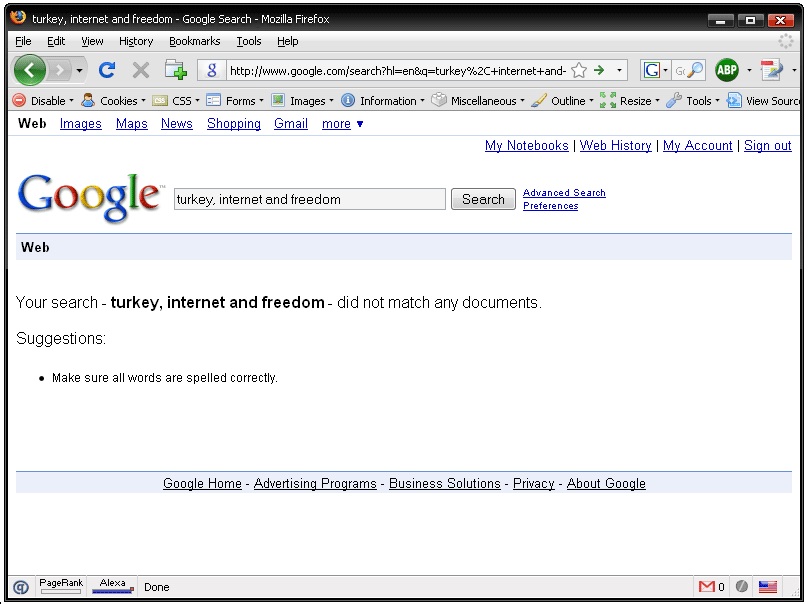
(Photo: Kusadasi-Guy via Creative Commons)
“Whenever we’ll have to choose between excessive regulation and protection of online freedom, we’ll definitely opt for freedom” Vladimir Putin, 1999
Since Putin said this, 3 days before becoming President, history has marched on…
“We will make arrangements without limiting and restricting freedom, but also without bowing to threats and without ignoring the dangers. We will hand over Turkey to generations who are not slaves to technology, but who rule and direct technology” Recep Tayyip Erdoğan, 2014
Terrorised twitter users, blackmailed bloggers and intimidated independent media, digital freedom has been facing a crack-down in Russia, Turkey and Azerbaijan.
Index on Censorship are bringing some of these countries foremost journalists and digital freedom advocates to Brussels to discuss events in their countries, to debate what the EU could do to help and to consider what we ourselves could learn from these experiences?
As we approach several major summits on internet governance, how can the EU tackle the growing risk of fragmentation, avoid calls for forced local hosting and stand up to the top-down approach favoured by the Russians?
“Is it because I was free that I was warned that I was going to lose my column if I would not stop criticizing the government? Is it because I was free that I was fired when I turned a deaf ear to warnings?” Amberin Zaman
The discussion, moderated by new Index CEO Jodie Ginsberg, will include:
- Andrei Soldatov – Investigative Journalist, Founder Agentura.ru. @AndreiSoldatov
- Anton Nossik – Blogger and Founding Editor-In-Chief of leading news websites inc. Gazeta.Ru, Lenta.Ru, Vesti.Ru, NTV.Ru (now NewsRu.com). @dolboed
- Dr Yaman Akdeniz – renowned advocate and Professor of Law, Istanbul Bilgi University, Founder and Director of Cyber-Rights.Org. @cyberrights
- Amberin Zaman – Censored former columnist at Haberturk, current journalist at Taraf and Turkey correspondent for The Economist.
- Arzu Geybulla – Azerbaijani Blogger, based in Istanbul. @arzugeybulla
WHEN: 5pm CET, Thursday 19 June 2014
WHERE: Google, Chaussée d’Etterbeek 180, Bruxelles, Belgium
TICKETS: Free but space limited – RSVP to [email protected]
Follow the discussion live @IndexEvents – #beatingretreat
16 May 2014 | News, Religion and Culture, Russia
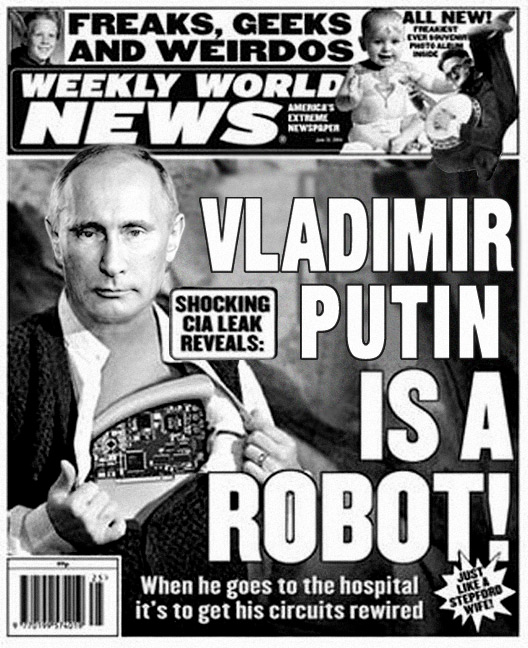
In September last year Vladimir Putin spoke at the Valdai Conference, an autumnal landmark in the Russian political calendar. The theme was values and identity and Putin proposed a “return” to morality and spirituality, praising the Russian Orthodox Church, religious tradition and resistance to political correctness.
Fast forward to Spring 2014 – and Putin’s appeal to nostalgic morality has collided with the internet age. “Swearbots” are the latest deployment – an attempt to curtail Russian’s propensity for foul language online and save the bruised fingers of online censors, who have until recently been tasked with checking over five thousand websites “manually” for profanities each day.
But how does this square off with Russian “identity,” which Putin was so keen to discuss? Russians love swearing, as much as they love vodka or not smiling at strangers. Browsing this eyebrow raising online dictionary (optimised for non-Cyrillic readers), demonstrates quite how large the Russian profanity compendium is. As one commentator cheekily told the BBC “If they ban swearing in Russia, all technical progress will grind to a halt …Warehouses will close and the army will lose its combat readiness. For our Motherland, it will be the end.”
In an attempt to police this ocean of foul language, enter the swearbot. It’s a computer programme forecast to go live this autumn, enforcing laws passed last spring. It should automate the rooting out of blasphemous Russians, and take the pressure off the media watchdog Roskomandzor, who were wilting under the pressure of censoring so much filth.
According to a statement from Moscow’s Academy of Science the law applies to “obscene references to the male and female reproductive organs, copulation and women of loose morals, and all words derived from them.”
Although that seems fairly vague, it’s a step up from when the legislation was originally passed last April. At that point, there wasn’t a specific list of forbidden words. It took until December for the the Institute of Russian Language at the Russian Academy of Sciences to confirm four words they believed should be censored – roughly translated as “c*ck” “f*ck” “wh*re” and “c**t”.
Although it’s still not exactly clear which swear words the swearbot will be primed with, those four seem a good start.
The fines for those cussing too strongly come in at 3000 rubles ($85) for an individual, and over $500 for an organisation. The bill, having passed through the parliament’s Lower House, is expected to be fully ratified by July – at which point it will come into law.
The Kremlin also announced that public performances, including cinema, theatre and stand-up comedy, would be subject to the swearing restrictions. Again, fines are in places as well as a three month suspension of business activities for repeat offences.
A trade magazine for comics, Chortle, lamented the news – worrying that comics would feel limited.
Irish stand-up comedian Rory O’Hanlon told Chortle the new rules would “make it difficult, near impossible to perform,” adding that “on the other hand it may push comedy underground and make it more exciting.’
The private TVC TV channel found itself in controversial waters when it decided to beep out the word “hrenovina” (“bullshit”). Eldar Ryazanov called the decision “an act of idiocy”.
The Ministry of Culture is defending its new legislation. “The law is not aggressive; its only aim is to regulate this sphere, so that swearing will have its purpose,” a ministry spokesperson told the Moscow Times. “It will be up to the artistic director to decide what to do with swearing, whether to break the new law or not, we will not interfere in the process.”
With the arrival of the “swearbot” program some analysts say bloggers might be at risk, especially as a law that defines major blogs as mass media is speeding towards approval.
Bloggers are now required to register as publishing entities, in a process similar to registration for TV stations and newspapers. Commentators have warned this will have a chilling effect as bloggers will be licensed to publish, as well as having their addresses logged with the government.
This article was published on May 16, 2014 at indexoncensorship.org
