18 Jan 2013 | Awards
Bassel Khartabil, Champion of open internet detained in Syria
 Software engineer Bassel Khartabil has been held in detention since his arrest in Damascus on 15 March 2012. The Gulf Centre for Human Rights believes his arrest is related to his work as a computer engineer, specialising in the development of open source software.
Khartabil, a Palestinian-born Syrian, spent his career advancing open source and related technologies to ensure a freer internet. Internationally, he is known for his voluntary work with open source projects such as Creative Commons and Mozilla Firefox. In 2012, Foreign Policy magazine named him in its list of the top 100 global thinkers.
As yet, authorities have failed to provide an official statement about his arrest, the charges he is facing or his whereabouts. Just weeks before he was jailed, Khartabil tweeted: “The people who are in real danger never leave their countries. They are in danger for a reason and for that they don’t leave.” Khartabil’s arrest was part of the Syrian government’s crackdown against the popular uprising, which has resulted in at least 60,000 deaths since March 2011.
Since his arrest, Khartabil has been shuttled back and forth between a civilian and military prison. The GCHR reported that in October 2012, he was moved to a military facility thereby stripping him of his right to a lawyer and the right of appeal.
Furthermore, military trials can take place in secret and those found guilty can face the death penalty. FreeBassel.org, a website set up by a coalition of friends and supporters, has since reported that Bassel has returned to a civilian prison and been granted visitation rights.
Claims have emerged from a local source that Bassel has been tortured. In December 2012, netizens went on chain-fast as part of a campaign for Khartabil’s release, in which each pledged to fast for one day until he was freed.
Photo: Flickr / Joi Ito
Moez Chakchouk, Tunisian internet agency chief
 Since taking over as the head of the Tunisian Internet Agency (ATI) in February 2011, Moez Chakchouk has campaigned for greater internet freedom, winning the admiration of bloggers and digital activists along the way.
Under his leadership, the ATI has moved from its previous incarnation as a censorship and surveillance machine to an agency that champions free speech, net neutrality and online privacy.
On taking office shortly after the January 14th revolution in Tunisia, Chakchouk immediately cancelled commitments to filtering and monitoring, turning off one of the Arab World’s most efficient online surveillance and blocking systems. He has since had to resist a bid to force the ATI to reinstate web blocking, starting with online pornography.
In an article for Index on Censorship, he explained his thinking: “In post-revolutionary Tunisia, we are determined to break with the former regime’s censorship practices.”
He believes that Tunisia can, and should, serve as an example for the rest of the region where attempts at promoting internet freedom are foundering. Though Chakchouk feels constrained by the law – in May 2012 he says he was forced to block four Facebook pages run by critics of the military on a legal order from the country’s main military court – he has won plaudits for his line on freedom of expression and information.
October he told the 3rd Annual Arab Bloggers Conference in Tunis that Western IT companies had tested surveillance software in Tunisia, connecting them with the detention and mistreatment of hundreds of citizens under the old regime. “His intervention was historic,” said Riadh Guerfali, a professor and lawyer who co-founded the collective blog Nawaat.org, a partner of Index in Tunisia.
“For me, the revolution started in the street, and finished when we can hear such a speech from the CEO of the Tunisian Internet Agency,” Guerfali told Tunisia Live.
Rajeev Chandrasekhar, Indian parliamentarian
 Indian MP and businessman Rajeev Chandrasekhar has battled tirelessly against growing internet censorship in India, using his position in the upper house of parliament to challenge legislation that chokes digital freedom. Through numerous articles and speeches he has urged the government to revise the 2011 Information Technology Rules and repeal part of the 2008 act on which it is based. He has described both as a “serious risk” to democracy.
Under the rules, internet companies, including providers, websites and search engines, are required to remove within 36 hours, any content deemed “grossly harmful, harassing, blasphemous”, “ethnically objectionable”, or “disparaging”, by any Internet user who submits a formal objection letter to that intermediary.
Information Technology Minister Kapil Sibal has even suggested that companies pre-screen content for removal before it is flagged – an impossible task given the volume of content posted online in any single day. The legislation has been used to force companies, especially social-networking websites, to censor content. Also this year Google, Facebook and others have been summoned to court to answer a case brought by the editor of an Urdu weekly, who claims the websites encouraged defamation, obscenity, and promotion of enmity among different religious and race groups.
India has an important role to play in the future of internet governance. Currently, it has deferred a decision on whether to back calls from Russia and China to increasingly bring aspects of internet regulation under the ambit of UN body, the International Telecommunications Union, a call Index believes could lead to content regulation and censorship. While it is encouraging that India hasn’t backed these calls to date, it is yet to make clear it supports an open multi-stakeholder approach to the internet rather than top-down state-led regulation.
Writing in the Times of India in 2011, Chandrasekhar, who previously worked on the Intel’s design team for the Pentium processor, said he was mystified by the government’s approach to the internet: “It defies logic and does not adhere to the values of our republic and democracy.” Chandrasekhar has called on the government to launch a multi-stakeholder consultation on internet regulation, to allow voices from civil society, academia and the general public to be heard.
18 Jan 2013 | Awards
Pussy Riot – Russian Punk Group
 Feminist punk collective Pussy Riot made international headlines in 2012 when they were arrested for their anti-Putin performance in Christ the Saviour Cathedral, Moscow. Maria Alyokhina, Nadezhda Tolokonnikova and Yekaterina Samutsevich performed the so-called punk prayer in February 2012, imploring the Virgin Mary to “throw Putin out”. International media followed the consequent court case closely, many denouncing it as no different from a Communist show trial.
In August 2012, the three were sentenced to two years in jail for hooliganism motivated by religious hatred, although Samutsevich was later freed on appeal. Despite Putin’s attempt to make an example of the trio, they have come to represent the struggle for free speech and justice in Russia and garnered support worldwide including from fellow musicians, among them Madonna, Sting and Yoko Ono.
The verdict was a bitter blow for freedom of expression in Russia, which has been under increasing attack since Putin’s re-election to the presidency in March 2012. But Pussy Riot members remained defiant, and delivered clear, pointed and excoriating attacks on the Putin regime in their closing statements from the dock. Yekaterina Samutsevich explained the setting for their protest:
“That Christ the Saviour Cathedral had become a significant symbol in the political strategy of the authorities was clear to many thinking people when Vladimir Putin’s former [KGB] colleague Kirill Gundyayev took over as leader of the Russian Orthodox Church”.
Maria Alyokhina spoke more generally about her country: “Russia, as a state, has long resembled an organism sick to the core. And the sickness explodes out into the open when you rub up against its inflamed abscesses. At first and for a long time this sickness gets hushed up in public, but eventually it always finds resolution through dialogue.”
As punk musician John Robb said “the 40 seconds performance in Christ the Saviour Cathedral was like the sound check for their performance in the dock”.
Photo: Demotix / Maria Pleshkova
Zanele Muholi – South African Photographer
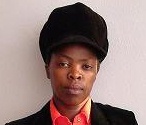 Zanele Muholi is an award-winning photographer and LGBT activist whose work focuses on gender and sexual identity in post-Apartheid South Africa. The Open Society Initiative for South Africa has described her as “one of the country’s foremost artists”. Through her work, Muholi has documented the lives of the South Africa’s black lesbians in a manner that questions traditional perceptions of the black female body.
“In the face of all the challenges our community encounters daily, I embarked on a journey of visual activism to ensure that there is black queer visibility,” she told the New Yorker. Her images are both a statement and an archive, “marking, mapping and preserving an often invisible community for posterity”.
Although South Africa bans discrimination on the basis of sexuality, hostility towards sexual difference is pervasive and extremely violent. Homosexuality is still taboo and lesbians have been the targets of horrendous hate crimes including murders and “corrective rape”. Zanele told Index “Between March and September 2011, four lesbians had been murdered and between June and Nov. 2012, eight black lesbians have been killed. The political climate does nothing for the rights of those in danger right now.”
In 2009, Lulama Xingwana, the then minister for arts and culture, walked out of one of Muholi’s exhibitions. Xingwana later told press that she found the images of nude, lesbian couples “immoral” and against “nation-building”. As Zanele: “Many who have come out in the black community have been ostracised, disowned and others harmed. The social climate is that of fear. The townships are gripped by unthinkable violence and fear. “
Zanele has continued to work in spite of this hostility. However she suffered the greatest attack possible on an artist last year when more than 20 external hard drives representing more than five years’ work were stolen from her flat. One contained images of the funerals of three lesbians killed in hate crimes. “It was devastating, I got depressed and I went into mourning, but it also sparked a fierce desire in me, to continue to create and document. It temporarily set me back, but I am back on my grind.”
Photo: Flickr / museedesconfluences
Haifaa al Mansour– Saudi-Arabian film maker
 In October 2012, filmmaker Haifaa al Mansour broke new ground in Saudi Arabia. Not only did she create the first film to be shot entirely in Saudi Arabia, but she is also the country’s first female filmmaker. No small feat in a country where women cannot drive, vote or work with men. Under the Saudi guardianship system, women are treated like minors. Regardless of their age, they are forbidden from travelling, studying or working without consent from their male guardians.
Against this backdrop, Al Mansour pressed ahead with her film Wadjda, which was shot entirely in Saudi Arabia using local actors, including two women in leading roles. The film follows a 10-year-old girl in the capital Riyadh who longs for a bike even though it is forbidden for women to cycle. But instead of being frustrated by the country’s strict laws, Al Mansour looked for innovative solutions to the challenges she faced. The film has received critical acclaim in the West. E Nina Rothe, for instance, described her as a ‘talented, ground-breaking film maker’ in the Huffington Post.
In a society where starring in films is frowned upon, finding female cast members was just one of these challenges. Another was the fact that Saudi Arabian women are not allowed to walk the streets alone. As a result, Al Mansour was forced to rely on location scouts to find the perfect spots to film. Filming also proved tricky and when in conservative neighbourhoods, she hid in a van and directed the cast from a phone or walkie-talkies.
Even though Al Mansour’s first feature film has received widespread critical acclaim, the chances are it won’t be shown in her home country, where there are no cinemas. She hopes however that people will watch it on satellite television or on DVD. Like other countries in the region, Saudi Arabia was hit by a wave of popular discontent in early 2011. In the wake of the Arab Spring, the authorities have clamped down on public criticism of officials or government policies.
Photo: Shutterstock.com / andersphoto
Aseem Trivedi – Indian Cartoonist
 25-year-old Indian cartoonist Aseem Trivedi has emerged as one of India’s most controversial satirical artists. In September 2012, he was taken into custody and charged with sedition for allegedly ‘insulting the constitution’. The complainant against him claimed ‘there is nothing bigger than the Indian constitution’.
Trivedi’s cartoons are often scatological critiques of the authorities, showing politicians as animals urinating on the constitution. Other cartoons depict schoolchildren being taught ‘How To Be Corrupt’, and government officials making a drink from the blood of countrymen.
Trivedi has shown great courage in standing up to various attempts to silence him. In January 2012, his website Cartoons Against Corruption was suspended by the Mumbai Crime Branch for its supposedly offensive content – but shortly afterwards he reacted by establishing a blog hosting content in a similar vein. Speaking to the Wall Street Journal, he said his intention was to depict the ‘ailing truth’ of the nation and send a strong message to the population. His consistent claim that it is foolish to enshrine respect of national symbols in law has been crucial in forcing the Indian public to consider their own views on some of India’s more archaic laws around blasphemy and sedition. He also challenges Section 66a of the Indian government’s Information Technology Act, which curtails free expression online. During December 2012, Trivedi fasted for eight days in protest.
India’s record on free expression is far from exemplary. Kunal Majumber, principal correspondent for the Indian daily Tehelha, told Index, ‘“Here we are laughing at Pakistan for trying to prosecute an 11-year-old girl for blasphemy, but in our country we’re trying to prosecute someone for sedition. Sometimes it’s funny we call ourselves the largest democracy on earth.”
18 Jan 2013
Pussy Riot – Russian Punk Group
Feminist punk collective Pussy Riot made international headlines in 2012 when they were arrested for their anti-Putin performance in Christ the Saviour Cathedral, Moscow. Maria Alyokhina, Nadezhda Tolokonnikova and Yekaterina Samutsevich performed the so-called punk prayer in February 2012, imploring the Virgin Mary to “throw Putin out”. International media followed the consequent court case closely, many denouncing it as no different from a Communist show trial.
In August 2012, the three were sentenced to two years in jail for hooliganism motivated by religious hatred, although Samutsevich was later freed on appeal. Despite Putin’s attempt to make an example of the trio, they have come to represent the struggle for free speech and justice in Russia and garnered support worldwide including from fellow musicians, among them Madonna, Sting and Yoko Ono.
The verdict was a bitter blow for freedom of expression in Russia, which has been under increasing attack since Putin’s re-election to the presidency in March 2012. But Pussy Riot members remained defiant, and delivered clear, pointed and excoriating attacks on the Putin regime in their closing statements from the dock. Yekaterina Samutsevich explained the setting for their protest:
“That Christ the Saviour Cathedral had become a significant symbol in the political strategy of the authorities was clear to many thinking people when Vladimir Putin’s former [KGB] colleague Kirill Gundyayev took over as leader of the Russian Orthodox Church”.
Maria Alyokhina spoke more generally about her country: “Russia, as a state, has long resembled an organism sick to the core. And the sickness explodes out into the open when you rub up against its inflamed abscesses. At first and for a long time this sickness gets hushed up in public, but eventually it always finds resolution through dialogue.”
As punk musician John Robb said “the 40 seconds performance in Christ the Saviour Cathedral was like the sound check for their performance in the dock”.
Photo: Demotix / Maria Pleshkova
Zanele Muholi – South African Photographer
Zanele Muholi is an award-winning photographer and LGBT activist whose work focuses on gender and sexual identity in post-Apartheid South Africa. The Open Society Initiative for South Africa has described her as “one of the country’s foremost artists”. Through her work, Muholi has documented the lives of the South Africa’s black lesbians in a manner that questions traditional perceptions of the black female body.
“In the face of all the challenges our community encounters daily, I embarked on a journey of visual activism to ensure that there is black queer visibility,” she told the New Yorker. Her images are both a statement and an archive, “marking, mapping and preserving an often invisible community for posterity”.
Although South Africa bans discrimination on the basis of sexuality, hostility towards sexual difference is pervasive and extremely violent. Homosexuality is still taboo and lesbians have been the targets of horrendous hate crimes including murders and “corrective rape”. Zanele told Index “Between March and September 2011, four lesbians had been murdered and between June and Nov. 2012, eight black lesbians have been killed. The political climate does nothing for the rights of those in danger right now.”
In 2009, Lulama Xingwana, the then minister for arts and culture, walked out of one of Muholi’s exhibitions. Xingwana later told press that she found the images of nude, lesbian couples “immoral” and against “nation-building”. As Zanele: “Many who have come out in the black community have been ostracised, disowned and others harmed. The social climate is that of fear. The townships are gripped by unthinkable violence and fear. “
Zanele has continued to work in spite of this hostility. However she suffered the greatest attack possible on an artist last year when more than 20 external hard drives representing more than five years’ work were stolen from her flat. One contained images of the funerals of three lesbians killed in hate crimes. “It was devastating, I got depressed and I went into mourning, but it also sparked a fierce desire in me, to continue to create and document. It temporarily set me back, but I am back on my grind.”
Photo: Flickr / museedesconfluences
Haifaa al Mansour– Saudi-Arabian film maker
In October 2012, filmmaker Haifaa al Mansour broke new ground in Saudi Arabia. Not only did she create the first film to be shot entirely in Saudi Arabia, but she is also the country’s first female filmmaker. No small feat in a country where women cannot drive, vote or work with men. Under the Saudi guardianship system, women are treated like minors. Regardless of their age, they are forbidden from travelling, studying or working without consent from their male guardians.
Against this backdrop, Al Mansour pressed ahead with her film Wadjda, which was shot entirely in Saudi Arabia using local actors, including two women in leading roles. The film follows a 10-year-old girl in the capital Riyadh who longs for a bike even though it is forbidden for women to cycle. But instead of being frustrated by the country’s strict laws, Al Mansour looked for innovative solutions to the challenges she faced. The film has received critical acclaim in the West. E Nina Rothe, for instance, described her as a ‘talented, ground-breaking film maker’ in the Huffington Post.
In a society where starring in films is frowned upon, finding female cast members was just one of these challenges. Another was the fact that Saudi Arabian women are not allowed to walk the streets alone. As a result, Al Mansour was forced to rely on location scouts to find the perfect spots to film. Filming also proved tricky and when in conservative neighbourhoods, she hid in a van and directed the cast from a phone or walkie-talkies.
Even though Al Mansour’s first feature film has received widespread critical acclaim, the chances are it won’t be shown in her home country, where there are no cinemas. She hopes however that people will watch it on satellite television or on DVD. Like other countries in the region, Saudi Arabia was hit by a wave of popular discontent in early 2011. In the wake of the Arab Spring, the authorities have clamped down on public criticism of officials or government policies.
Photo: Shutterstock.com / andersphoto
Aseem Trivedi – Indian Cartoonist
25-year-old Indian cartoonist Aseem Trivedi has emerged as one of India’s most controversial satirical artists. In September 2012, he was taken into custody and charged with sedition for allegedly ‘insulting the constitution’. The complainant against him claimed ‘there is nothing bigger than the Indian constitution’.
Trivedi’s cartoons are often scatological critiques of the authorities, showing politicians as animals urinating on the constitution. Other cartoons depict schoolchildren being taught ‘How To Be Corrupt’, and government officials making a drink from the blood of countrymen.
Trivedi has shown great courage in standing up to various attempts to silence him. In January 2012, his website Cartoons Against Corruption was suspended by the Mumbai Crime Branch for its supposedly offensive content – but shortly afterwards he reacted by establishing a blog hosting content in a similar vein. Speaking to the Wall Street Journal, he said his intention was to depict the ‘ailing truth’ of the nation and send a strong message to the population. His consistent claim that it is foolish to enshrine respect of national symbols in law has been crucial in forcing the Indian public to consider their own views on some of India’s more archaic laws around blasphemy and sedition. He also challenges Section 66a of the Indian government’s Information Technology Act, which curtails free expression online. During December 2012, Trivedi fasted for eight days in protest.
India’s record on free expression is far from exemplary. Kunal Majumber, principal correspondent for the Indian daily Tehelha, told Index, ‘“Here we are laughing at Pakistan for trying to prosecute an 11-year-old girl for blasphemy, but in our country we’re trying to prosecute someone for sedition. Sometimes it’s funny we call ourselves the largest democracy on earth.”
18 Jan 2013
Bassel Khartabil, Champion of open internet detained in Syria
Software engineer Bassel Khartabil has been held in detention since his arrest in Damascus on 15 March 2012. The Gulf Centre for Human Rights believes his arrest is related to his work as a computer engineer, specialising in the development of open source software.
Khartabil, a Palestinian-born Syrian, spent his career advancing open source and related technologies to ensure a freer internet. Internationally, he is known for his voluntary work with open source projects such as Creative Commons and Mozilla Firefox. In 2012, Foreign Policy magazine named him in its list of the top 100 global thinkers.
As yet, authorities have failed to provide an official statement about his arrest, the charges he is facing or his whereabouts. Just weeks before he was jailed, Khartabil tweeted: “The people who are in real danger never leave their countries. They are in danger for a reason and for that they don’t leave.” Khartabil’s arrest was part of the Syrian government’s crackdown against the popular uprising, which has resulted in at least 60,000 deaths since March 2011.
Since his arrest, Khartabil has been shuttled back and forth between a civilian and military prison. The GCHR reported that in October 2012, he was moved to a military facility thereby stripping him of his right to a lawyer and the right of appeal.
Furthermore, military trials can take place in secret and those found guilty can face the death penalty. FreeBassel.org, a website set up by a coalition of friends and supporters, has since reported that Bassel has returned to a civilian prison and been granted visitation rights.
Claims have emerged from a local source that Bassel has been tortured. In December 2012, netizens went on chain-fast as part of a campaign for Khartabil’s release, in which each pledged to fast for one day until he was freed.
Photo: Flickr / Joi Ito
Moez Chakchouk, Tunisian internet agency chief
Since taking over as the head of the Tunisian Internet Agency (ATI) in February 2011, Moez Chakchouk has campaigned for greater internet freedom, winning the admiration of bloggers and digital activists along the way.
Under his leadership, the ATI has moved from its previous incarnation as a censorship and surveillance machine to an agency that champions free speech, net neutrality and online privacy.
On taking office shortly after the January 14th revolution in Tunisia, Chakchouk immediately cancelled commitments to filtering and monitoring, turning off one of the Arab World’s most efficient online surveillance and blocking systems. He has since had to resist a bid to force the ATI to reinstate web blocking, starting with online pornography.
In an article for Index on Censorship, he explained his thinking: “In post-revolutionary Tunisia, we are determined to break with the former regime’s censorship practices.”
He believes that Tunisia can, and should, serve as an example for the rest of the region where attempts at promoting internet freedom are foundering. Though Chakchouk feels constrained by the law – in May 2012 he says he was forced to block four Facebook pages run by critics of the military on a legal order from the country’s main military court – he has won plaudits for his line on freedom of expression and information.
October he told the 3rd Annual Arab Bloggers Conference in Tunis that Western IT companies had tested surveillance software in Tunisia, connecting them with the detention and mistreatment of hundreds of citizens under the old regime. “His intervention was historic,” said Riadh Guerfali, a professor and lawyer who co-founded the collective blog Nawaat.org, a partner of Index in Tunisia.
“For me, the revolution started in the street, and finished when we can hear such a speech from the CEO of the Tunisian Internet Agency,” Guerfali told Tunisia Live.
Rajeev Chandrasekhar, Indian parliamentarian
Indian MP and businessman Rajeev Chandrasekhar has battled tirelessly against growing internet censorship in India, using his position in the upper house of parliament to challenge legislation that chokes digital freedom. Through numerous articles and speeches he has urged the government to revise the 2011 Information Technology Rules and repeal part of the 2008 act on which it is based. He has described both as a “serious risk” to democracy.
Under the rules, internet companies, including providers, websites and search engines, are required to remove within 36 hours, any content deemed “grossly harmful, harassing, blasphemous”, “ethnically objectionable”, or “disparaging”, by any Internet user who submits a formal objection letter to that intermediary.
Information Technology Minister Kapil Sibal has even suggested that companies pre-screen content for removal before it is flagged – an impossible task given the volume of content posted online in any single day. The legislation has been used to force companies, especially social-networking websites, to censor content. Also this year Google, Facebook and others have been summoned to court to answer a case brought by the editor of an Urdu weekly, who claims the websites encouraged defamation, obscenity, and promotion of enmity among different religious and race groups.
India has an important role to play in the future of internet governance. Currently, it has deferred a decision on whether to back calls from Russia and China to increasingly bring aspects of internet regulation under the ambit of UN body, the International Telecommunications Union, a call Index believes could lead to content regulation and censorship. While it is encouraging that India hasn’t backed these calls to date, it is yet to make clear it supports an open multi-stakeholder approach to the internet rather than top-down state-led regulation.
Writing in the Times of India in 2011, Chandrasekhar, who previously worked on the Intel’s design team for the Pentium processor, said he was mystified by the government’s approach to the internet: “It defies logic and does not adhere to the values of our republic and democracy.” Chandrasekhar has called on the government to launch a multi-stakeholder consultation on internet regulation, to allow voices from civil society, academia and the general public to be heard.
