4 Feb 2012 | Russia

One month ahead of presidential polls, tens of thousands of people marched through the centre of Moscow today to protest Prime Minister Vladimir Putin’s expected return to the Kremlin for a third presidential term.
The stop-Putin movement staged its third major rally since disputed 4 December parliamentary polls. Protesters rallied together and accepted a set of demands read aloud by organisers during the rally. Opposition leaders demanded new parliamentary elections, the release of political prisoners, the dismissal of the head of the Central Election Committee, as well as the registration of Grigory Yavlinsky as a presidential candidate. Yavlinksy, the founder of the Yabloko opposition party, was recently refused registration in the race by the Central Election Committee.
Despite the freezing temperatures turnout was higher than expected. Organisers estimated 120,000 attended, but police put that number at 36,000. The march and rally from Kaluzhskaya to Bolotnaya Square today was the largest protest to date, organisers vowed to hold another demonstration on 26 February if the Kremlin fails to meet their demands.

Today’s protest brought together the diverse elements of the ant-government movement, four big columns were formed by protesters representing the leftists, liberals, nationalists and civil activists. Smaller columns were formed to represent smaller groups, including religious and sexual minority groups. Protesters seeking peaceful change held white balloons to signify unity. Bright and creative posters were held up during the protest, with messages like “Russia without Putin,” “Putin you’re fired,” “Put in out” and “We’re ruled by vegetables.”
Putin’s supporters have dismissed the historically large rallies, claiming that participants are “financed by the West to destabilise the situation in Russia.” Vladimir Markin, member of Putin’s United People’s Front and spokesperson for the Russian Investigative Committee dismissed video evidence of fraud during the 4 December election, claiming that it was falsified, financed, and spread by the United States.
Anti-Putin rallies spread outside of the capital city, with similar rallies held across Russia and even in cities in 17 other countries, including London, Madrid, Sydney, and New York. Smaller anti-Putin rallies were held by individuals who felt that they could not march under the same banner as communists and nationalists.

A parallel rally in support of Putin was held at Poklonnaya Hill in Moscow, it attempted to link the loose stop-Putin coalition to the anti-government Orange Revolution that took place in Ukraine seven years ago, attendees were warned of an “orange threat from USA.” There have been allegations that participation in the rally was not voluntary, claims that many participants were employees of government-funded institutions, such as post offices and city councils, and that they were told that they would lose their jobs if they did not take part. Police estimated 138,000 participants, eyewitnesses put the figure much lower.
Putin speaking at a press conference in the Ural Mountains region said that the number of Muscovites who turned out in support was a reflection of his popularity not just the product of “administrative resources“. Although he did acknowledge that such resources may have been used to mobilise his supporters.
Meanwhile bloggers, rights activists, opposition members and journalists are gearing up to monitor the upcoming presidential elections as fears of vote-rigging rise.
25 Jan 2012 | Europe and Central Asia, News
 States urged to heighten sanctions against Europe’s last dictator as opposition leader tells of fears. Michael Harris reports
(more…)
18 Jan 2012 | Events
Date: 1 March
Time: 7-8.30pm
Venue: Sheikh Zayed Theatre, New Academic Building, LSE
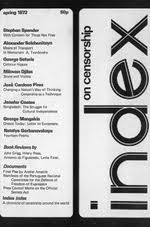
Speakers: Pavel Litvinov and Michael Scammell, chaired by Jo Glanville
Tickets: free, register here
Acclaimed writer and founding editor of
Index on Censorship Michael Scammell and former Russian dissident Pavel Litvinov discuss the nature of censorship and the future of freedom of speech. It was Pavel Litvinov’s courageous public appeal to the West for help, during a Soviet show trial in 1968, that inspired the creation of
Index on Censorship magazine, a forum for banned writers, artists and intellectuals in the struggle against censorship. Forty years on, as Index on Censorship celebrates its anniversary, this will be a rare opportunity to hear an illuminating discussion from two leading voices in the history of free speech.
Michael Scammell is the author of The Indispensable Intellectual, the authorised biography of Arthur Koestler. Pavel Litvinov is a writer, physicist and human rights activist.
17 Jan 2012 | Russia
Popular Russian blogger Oleg Kozyrev has been threatened with a defamation lawsuit by Moscow Region Election Committee for filing a complaint on alleged election law violations.
“Clearly this is an example of pressure against bloggers who succeeded on election law violations reporting,” Kozyrev told Index. “This may be regarded as a part of the Central Election Committee policy which is likely to take vengeance on bloggers by initiating show trials”, he concluded.
Two months ago Kozyrev filed a complaint to the Central Election Committee in the time leading up to Russia’s parliamentary elections on 4 December. He complained that the posters used by Vladimir Putin’s United Russia party were far too similar to those used by the committee to remind citizens to vote.
The blogger said that it was likely that the posters could confuse voters by leading them to believe that the state supported one party — United Russia. According to Kozyrev, this could compromise the impartiality of the election commission, and place political parties on different footing, which is against the law. Kozyrev used Russian election statutes to support his allegations, and asked that the Central Election Committee take down the confusing posters, and investigate whether or not United Russia also violated the law with their campaign materials.
Moscow mayor and secretary of the local chapter of United Russia, Sergey Sobyanin, slammed Kozyrev’s complaint, claiming that the resemblance between the posters did not violate the law. Sobyanin told Itogi magazine two weeks before the election that there was no use in “stretching the truth” and that when talking about United Russia in Moscow, they “imply that the party and city superiors are in fact, the same unit.”
After the elections, the Organisation for Security and Cooperation in Europe (OSCE) filed a report reiterating the concerns of activists, stating that the parliamentary elections were “marked by the convergence of the State and the governing party.”
In late December Oleg Kozyrev received two replies to his concerns—one from Moscow Election Committee, the other from Moscow Region Committee. Both committees refuted his claims, and said that the United Russia posters did not violate the law. Moscow Region Committee head Irek Vildanov added that Kozyrev’s complaints had “no proper proof, do not meet reality and are slanderous, undermining the Committee’s reputation.” The blogger’s complaint was then forwarded to the local prosecution office, and the Ministry of Interior department as well as Investigative committee are both seeking an investigation of Kozyrev for slander.
Kozyrev remains optimistic, as he thinks that Vildanov’s attempt to prosecute him will not be pursued, as prosecution of citizens for their complaints is against the law in Russia. The State Duma also amended the Criminal Code to decriminalise defamation. Still, he is concerned, as bloggers who actively monitored the recent parliamentary elections have been threatened with prosecution. As Russian general prosecutor Yuri Chaika said in January, the administrative punishment for slander “is still quite sensible financially”. On his blog, Kozyrev wrote that such threats are merely “the authorities’ attempt not only to punish bloggers for their successful coverage of election fraud, but also to smooth out the information field on the eve of presidential elections.”
