24 Aug 2011 | Index Index, minipost
Russian investigators have detained a former lieutenant police colonel as a suspect in the murder of Russian journalist Anna Politkovskaya. The campaigning reporter was openly critical of Russia’s involvement in Chechnya. According to the latest investigation, Dmitry Pavlyuchenkov was offered cash to murder Politkovskaya, and he was a part of a group aiming to kill her, including Rustam Makhmudov. Makhmudov was arrested on 31 May for allegedly shooting Politkovskaya. There are also allegations that Pavlyucenkov used his position as lieutenant police colonel to monitor the movements of the journalist.
22 Aug 2011 | Uncategorized
In many parts of the world, the BBC is a voice of reason, providing real information to even out the state propaganda elsewhere on the radio dial. Burmese pro-democracy leader Aung San Suu Kyi recently said the BBC World Service gave her a lifeline while she was under house arrest.
Read Index’s Jo Glanville’s brilliant essay about the service’s future in London Review of Books “Auntie Mabel doesn’t give a toss about Serbia”
If it is considered an important part of the World Service’s mission to impart information to audiences in countries where the media are restricted, then shortwave surely wins out as the more reliable means of communication. It can be jammed, but it cannot be wholly disabled – as the internet and mobile phone networks were in Egypt earlier this year. Shortwave’s adherents are concerned that the World Service is turning away from the people who need it in favour of an audience of ‘opinion-formers’. Its managers claim the contrary, pointing to the maintenance of shortwave in Burma as an example, but a poorer, rural audience is being left behind, and when a country’s dictator takes control of radio broadcasts, the World Service will no longer be available there in any form.
If the BBC decides that it can no longer afford to maintain the infrastructure for shortwave, and begins to close down its transmitter sites around the world as other international broadcasters have done, there will be consequences for its participation in a new form of digital radio called Digital Radio Mondiale (DRM). It is the digital version of shortwave and medium wave, providing high-quality radio with the advantage that it can be transmitted, free from political interference, over great distances. DRM is still in its early stages and receivers are not yet widely available, but India and Russia have both committed to it, and Brazil is thinking about it. The World Service is involved – one of its executives chairs the DRM consortium – but its role might be jeopardised if it pulls out of shortwave since DRM uses the same facilities and frequencies.
14 Aug 2011 | Uncategorized
Many of the modern issues that Index on Censorship tackles are what I call the shades of grey. From Wikileaks to privacy to hate speech and phone hacking, free expression comes hurtling against other rights or perceived rights. Rarely do absolutes prevail in this more complex and technological world.
It was therefore salutary for me to be reminded of the black and white which still confronts us: journalists and activists murdered, imprisoned or threatened for trying to hold the powerful to account and expose wrongdoing.
The British theatre group IceandFire transport audiences into the worlds of five crusading reporters and photo-journalists as they risk their lives for the sake of their stories. Several of these real-life cases have been followed and documented by Index. One of them, Lal Wickrematunge, Editor of the Sri Lankan newspaper Sunday Leader was reportedly threatened by his country’s president by telephone only a week ago. His brother, Lasantha, was murdered by the authorities in 2009.
The travails of Lydia Cacho, one of the world’s most fearless journalists, were movingly portrayed. Only six weeks ago Cacho says she received anonymous death threats for her continued campaign to expose corruption and criminality, particularly the role of senior politicians in sex offences and trafficking. From the work of a brave Israeli journalist working inside the West Bank, to an American defying the US military’s largely successful attempts to sanitise the Iraq war, the play brings home not just the bravery, but also the doubts and dilemmas faced by a small but determined group of reporters. The episode most familiar to me personally was the newsroom at Novaya Gazeta, for long a beacon of fearless journalism in a Russia where the attacks on free speech have remained constant over the past 20 years, long after the collapse of Communism.
Within 20 metres of leaving the theatre, in Hackney in east London, I came across three riot police vans. It was, at first glance, a shock. The officers were lounging around, eating Macdonalds. The city was still reeling from riots and looting. Yet amid all the gloom and self-doubt that has beset Britons, and only a month after the height of the phone-hacking scandal, it was worth remembering that, there are still many countries grappling with troubles on an altogether different scale.
John Kampfner is chief executive of Index on Censorship
13 Aug 2011 | News
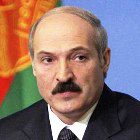
Belarus’s president “pardons” nine of 41 political prisoners on 11 August, the same day when US toughened economic sanctions against his regime. Olga Birukova reports
(more…)
