23 Oct 2018 | European Union, Media Freedom, media freedom featured, News, Serbia
[vc_row][vc_column][vc_single_image image=”103409″ img_size=”full”][vc_column_text]Dear Index on Censorship,
We wish to inform you about the key issues, problems and processes related to media and media freedom in Serbia today and to explain our views and attitudes, as well as arguments we based them on.
The information provided here will help you fully understand the complexity and stratification of the problems faced by Serbian journalists and media, as well as the citizens, whose constitutional right to be informed truthfully, comprehensively and timely informed about matter of public interest is seriously violated. We would also like to explain in more detail the role of media and journalists’ associations in media processes, especially those related to the dialogue with representatives of the authorities.
Despite a very difficult, we could say dramatic, situation in the media, the associations are always ready to have a dialogue and cooperate with representatives of the authorities if that leads to solving problems. We started cooperation with the Serbian government in June this year on creating the Media strategy, having been given firm guarantees by the Prime Minister Ana Brnabic that there was an unwavering political will among the authorities to improve the situation in the media and to cooperate with relevant journalists’ and media associations in order to achieve that goal. We would like to remind you that in the period preceding our cooperation, the authorities tried to create the media strategy, but all relevant journalists’ and media associations withdrew from the process dissatisfied with the methodology and possible outcomes. A few months later, as a result of pressures, the Serbian government stopped this process and elevated it from the level of the Ministry of Culture and Information to the level of the Serbian government. OSCE was invited to facilitate the process, while journalists’ and media associations were asked to contribute by delegating members of the task force for designing the media strategy. That is good news is that this document is being drafted at the moment and, despite certain problems, it is a widely inclusive process, which is satisfactory.
However, bear in mind that the Serbian government is supposed to adopt this document and that it can undergo major, even substantial, changes in comparison to the draft, which will be submitted to the government by the working group. What is more important is that this document itself does not mean much, even if its quality is exceptional – it merely represents a promise of the Serbian government to adhere to it during a future period. Large number of strategic documents in Serbia has remained nothing but a list of nice, yet unfulfilled wishes.
It is only after the media strategy is adopted that the process of amending the existing or creating new laws will begin. It is important to note that three years passed from the moment the media strategy was �produced to the moment the laws were adopted by the parliament (2011-2014). To be honest, we are afraid that a large number of professional media in Serbia will not last long enough to see the new laws; especially media exposed to great and varied political and economic pressures.
An issue greater than passage of time is the fact that the problems in the field of media in Serbia are only in small part a result of imperfect legal solutions – they are mostly a result of violations and mocking the law, i.e. lack of the rule of law. In practical terms, it means that even if we get excellent laws, it will not mean anything, nor can it be guaranteed that the situation in the field of media will improve. Namely, even the existing laws regulating media have been evaluated as positive by international stakeholders and experts. Yet, four years later, we have, and all relevant analyses, research and reports testify to that fact, the same dramatic problems in the world of media market, media freedom and media pluralism.
We would also like to remind you that Serbia received high appraisals from relevant institutions in the process of European integrations for the media laws of 2014. We believe that you understand our concern that the goal of the authorities now, just like in 2014, is not to improve the situation in the media, but to present the state of affairs in Serbian media to the international community in a light that does not reflect reality. We would like warn if the possibility that the authorities in Serbia present the process of drafting the Media strategy as a giant leap forward and that they might use it to divert attention away from all other problems in the media.
It is because of this concern that we requested from the authorities to initiate a process parallel to the process of drafting the media strategy, in which we would jointly work on fast-tracking solutions to a number of media-related problems in the existing legal framework. Having reached an agreement, journalists’ and media associations formed a team for the dialogue, while the Serbian government established the coordination body, thus creating a platform for negotiations. The associations entered the process hoping to help overcome current problems in the field of media and that the results would be visible in a relatively short period. Unfortunately, four months after the dialogue began we still do not have a single proof, spoken reassurances aside, that there is a genuine political will on behalf of the authorities to improve the situation in the field of media and media freedom, which seriously questions the usefulness of the initiated dialogue. At the same time, the problems related to media are becoming more complex and numerous on a daily basis, thus creating extremely negative effects on the media, journalists, media freedom and media pluralism.
On August 16 2018, journalists’ and media associations submitted to the government’s coordination body 13 requests for solving the key issues in the field of media, wishing to see if there was really political readiness to solve them. We did not set a deadline for the realisation of requests, because we were fully aware that some of them required more time, but we expected to receive adequate answers, which would indicate the readiness on behalf of the coordination body to fulfil them, naturally with our help and support. Unfortunately, we have so far received nothing but partial, incomplete answers that we are absolutely not satisfied with. We have decided, as agreed on the previous meeting between the �team for the dialogue and the coordination body, to further specify our requests, prioritise them and set deadlines. Should the deadlines not be met – and they are realistic and not too demanding – we retain the right to withdraw from the dialogue, as well as to reconsider our participation in the Working group in charge of drafting the Media strategy.
As we have already stated, parallel to these processes, the situation in the field of media is becoming increasingly difficult. Representatives of the authorities publicly call names, insult and humiliate journalists and media workers, labelling them as enemies of the society or “foreign agents”, thus seriously jeopardising their safety. There are many examples of such behaviour, the most recent one was the attack of the Head of the Parliamentary Group of the ruling Serbian Progressive Party Aleksandar Martinović on the President of the IJAV Nedim Sejdinović, whom he called an “enemy of Serbia” from the podium in the National Assembly for making critical comments about the authorities in Serbia. This was not the first time Martinović had called out a journalist by name. He had already called out Sejdinović’s name before, who received a large number of death threats as a result, all of which were reported to the police, but no court proceeding has been initiated. A few days ago an official from the Security Information Agency (BIA) Marko Parezanović stated that the “greatest threat to Serbia are the foreign agents working in media, non-governmental agencies and opposition parties”, while the Serbian president Aleksandar Vučić supported the claim. As we have stated, there are many cases of representatives of the authorities attacking the “disobeying” media and journalists. In its online database, the Independent Journalists Association of Serbia recorded 72 cases of calling out, insults, degradation and discrimination of journalists, media, journalists’ and media associations by the politicians and public officials.
The latest incident took place on 19.10.2018 when the President of RS Aleksandar Vudić first called a public service broadcaster by her name and insulted and humiliated her, and then turned to TV N1 journalist who had asked him not to put pressure on colleagues from the PSB (see transcript in English here).
Serbian authorities abuse various inspection services to put pressure on the media. “Vranjske” daily were closed in September 2017, was subjected to political, economic and administrative pressures, while the owner and Editor-in-chief Vukašin Obradović went on a hunger strike. Journalists, media and civil society organisations protested for months because of this, but to no avail. The latest case from Niš, the “Južne vesti” case, is also very disturbing. Namely, the tax administration spent six months in this small media company and, even though it had conducted its business in compliance with the law, fined it. Representatives of the tax administration abused their position in various ways in order to cause damage to the company.
Representatives of Serbian authorities often sue media companies and journalists, while court decisions are not in line with the laws in Serbia and practice of the European Court of Human Rights, which envisage that public officials are obliged to be subject to critical opinion. The fines make the already difficult situation even less bearable for the media that are not close to the authorities. On the other �hand, despite being at the receiving end of threats and other forms of pressures, journalists do not have the adequate legal protection. The police, public prosecutor’s offices and courts are utterly inefficient when it comes to such cases, so the attacks on journalists remain unsolved and unsanctioned. We would also like to remind you that Serbia has still not seen court epilogue of murders of journalists that happened 15 and more years ago. On the other hand, state bodies in charge show a high level of efficiency when the targets of threats are representatives of the authorities. In such cases, the offenders are quickly found and sanctioned.
The tabloid print media are increasingly breaking the Serbian Journalists’ Code of Ethics, as confirmed by the reports of the Press Council. It is important to note that the media that break the Code the most are those closest to the authorities and they are in large part financed from public revenues. Those media spread hate speech, call names and insult those critical of the authorities, as well as citizens of other nationalities and confessions. The authorities have completely blocked and stultified the work of the Regulatory Authority of Electronic Media (REM), which is why chaos and lawlessness rule the field of electronic media. The media with national coverage have been turned into propaganda tools, with programmes of extremely low quality dominating the field. The Regulatory Authority is not reacting, even though the realised programmes are completely different from the submitted proposals, i.e. suggested work plans that the stations submitted when applying for frequencies. REM is not reacting even when it comes to a striking example of a breach of the Law on Electronic Media, i.e. when certain TV stations with national coverage broadcast live the sessions of the main board of the ruling party.
The case of the national news agency Tanjug is one of the most famous cases of breaching the law and endangering the legal system in the country. This agency is still actively working, even though a decision to close it down was made, pursuant to the law, on October 31, 2015. This agency is now a propaganda tool owned by the state, although the state decided to pull out from owning any media, pursuant to the laws of 2014. Furthermore, the state is, unlawfully, a co-owner of daily newspapers “Večernje novosti” and “Politika”, while the local self-government in Kragujevac is, also unlawfully, a co-owner of the previously privatised radio-television Kragujevac.
Truth be told, Serbia is allocating extremely large amounts from the budget to the media, but completely non-transparently, selectively and discriminatorily. The laws allow the state to intervene financially in some rare cases and by co-financing projects of public interest. However, it is allocating enormous amounts through other means (public procurements, promotions, advertising, sponsorships, contracts on business and technical cooperation) in a way that is completely deregulated, as highlighted by the Anti-Corruption Council. In its report, the council pointed out that the decisions made by political and economic elites on where to advertise and how much money to spend directly influenced the future of media companies. In order to attract advertisements, the council claims, the employees in such media companies try to create content which are in line with the interests of advertisers, thus neglecting the Journalists’ Code of Ethics, i.e. the ethical principles of their profession. It is with this intervention that the funds are allocated to the media close to the authorities, thus creating a serious imbalance on the media market and discriminating against “inadequate” media. No-one knows exactly how big these �amounts are (one of our requests is to have the coordination body submit a report on it, but the state is allegedly unable to obtain this information), but we are definitely talking about dozens of millions of euro annually. This is one of the most efficient recipes for controlling the media, where you subject them to both corruption and blackmail at the same time.
When it comes to competitions for co-financing projects of public interest in the media, we have been experiencing serious problems for years now. Although the law stipulates that the allocation of funds should be entrusted to media experts delegated from journalists’ and media associations and that the funds should be used in the interest of the public, this authority have turned this process into financing the media close to them and self-promotion. The funds are allocated to the media that have repeatedly broken the Journalists’ Code of Ethics, even though it is one of the basic criteria for fund allocation.
We would like to remind you that the European Commission’s 2018 Report on Serbia contains a very negative assessment of the situation in the media, where the highlighted problems are the lack of transparency in ownership structure, the state’s co-financing of media and the consequent influence on not only the media, but the freedom of expression in general. The focus is on co-financing the issues of public interest in the field of information, the model of state’s financial intervention in the field of media envisaged by the Law on Public Information and Media of 2014, as well as “the distribution of advertising funds“. The report states that Serbian authorities should ensure that informal pressure on editorial policy is not exerted through the distribution of advertising funds, including from public companies, as well as through project co-funding from local budgets.
The public broadcasters in Serbia do not obey their legal obligations, which state that they should work in public interest and report truthfully, unbiasedly and comprehensively and that they should have independent editorial policies. Researches have shown that the public broadcasters are places from which public dialogue and critical thinking have been ousted and that their news programmes are dramatically dominated by the executive authorities. We would like to remind you that two years ago many editors were removed from their positions at the Public Broadcasting Service of Vojvodina for political reasons, that the situation in this company has remained unchanged, despite the protest of journalists’ and media associations and international organisations, and that this public broadcasting service is also weakened by other numerous affairs.
A huge problem for journalists’ and media organisations is the fact that there is political pressure on the institution of the Commissioner for Information of Public Importance. Since 2015, the authorities have ignored 601 decisions of the commissioner related to the complaints submitted to the commissioner because of the infringement of the right to have free access to information. This is a staggering fact. We are certain that you are fully aware how important the instrument of free access to information is to journalists and media.
Unfortunately, this is just a brief overview of the most significant problems that the media in Serbia, as well as we, journalists’ and media associations, and citizens of Serbia are facing. We hope that this overview clarifies why we evaluate the situation as dramatically bad.
�We also hope that, having read this, you will better understand our doubt that there is a political will among the authorities to solve the problems in the field of media within the scope of the process of the accession of Serbia to the European Union.
Independent Journalists’ Association of Serbia
Independent Journalists’ Association of Vojvodina
Association of Local Independent Media – Local Press
Association of Independent Electronic Media
Association of Online Media[/vc_column_text][/vc_column][/vc_row][vc_row][vc_column][vc_custom_heading text=”Mapping Media Freedom: Serbia” use_theme_fonts=”yes” link=”url:https%3A%2F%2Fmappingmediafreedom.org%2Findex.php%2Fcountry-profiles%2Fserbia%2F|||”][vc_column_text]Incidents reported to and verified by Mapping Media Freedom since May 2014[/vc_column_text][vc_raw_html]JTNDaWZyYW1lJTIwd2lkdGglM0QlMjI3MDAlMjIlMjBoZWlnaHQlM0QlMjI0MDAlMjIlMjBzcmMlM0QlMjJodHRwcyUzQSUyRiUyRm1hcHBpbmdtZWRpYWZyZWVkb20udXNoYWhpZGkuaW8lMkZzYXZlZHNlYXJjaGVzJTJGMTAxJTJGbWFwJTIyJTIwZnJhbWVib3JkZXIlM0QlMjIwJTIyJTIwYWxsb3dmdWxsc2NyZWVuJTNFJTNDJTJGaWZyYW1lJTNF[/vc_raw_html][vc_raw_html]JTNDaWZyYW1lJTIwd2lkdGglM0QlMjI3MDAlMjIlMjBoZWlnaHQlM0QlMjI2MDAlMjIlMjBzcmMlM0QlMjJodHRwcyUzQSUyRiUyRm1hcHBpbmdtZWRpYWZyZWVkb20udXNoYWhpZGkuaW8lMkZzYXZlZHNlYXJjaGVzJTJGMTAxJTJGZGF0YSUyMiUyMGZyYW1lYm9yZGVyJTNEJTIyMCUyMiUyMGFsbG93ZnVsbHNjcmVlbiUzRSUzQyUyRmlmcmFtZSUzRQ==[/vc_raw_html][/vc_column][/vc_row]
8 May 2018 | Europe and Central Asia, News, Serbia
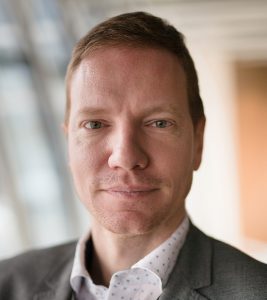
Milan Antonijević (Craig Jackson / Human Rights House Foundation)
As one of Serbia’s most influential activists, Milan Antonijević uses the rule of law as his main line of defence in human rights protection. This is a major accomplishment considering he was a law student attending Belgrade University at the end of Milošević era, a time of censorship. Before Antonijević had completed his degree, the government fired any Serbian professor lecturing on the importance of human rights, gutting the education system of these important ideas.
However, Antonijević had barely reached adulthood in the wake of the atrocities that coincided with the Balkan wars and the fall of Yugoslavia in the 1990s. Witnessing these events at a young age sparked a passion for activism in him, which was only further fuelled by his professors’ expulsion. He completed an informal education with these persistent lecturers, all of whom were human rights pioneers that bravely continued teaching despite losing their academic careers.
Antonijević has served as the director of YUCOM since 2005, joining the organisation in 2001 after formally receiving his MA in International Law, along with his human rights education on the side. Over the course of his career Antonijević has worked with a large number of human rights organisations, contributing to the creation of multiple campaigns and educational initiatives. This includes the Youth Group of the Belgrade Centre for Human Rights, where he advocated for tolerance and reconciliation to the youth of the Balkan region in 2000. He is also currently involved in a coalition project promoting LGBTQ rights in Serbia, Montenegro and Kosovo.
Many of Antonijević’s successes in activism were made during his time leading YUCOM, the Belgrade-based Lawyer’s Committee for Human Rights. Internationally recognised for its efforts in defence, its team of lawyers and experts provide legal assistance to victims of human rights violations before Serbian and international courts. YUCOM grants legal aid to more than 1,500 citizens annually and also represents other human rights organisations in court when needed. The organisation is currently aiding citizens in several cases and represents activist groups such as Woman in Black and Youth Initiative for Human Rights.
YUCOM advocates for the rule of the law and seeks court orders to ensure the proper implementation of Serbian legislation when required. With each case, the organisation works to ensure genuine commitment and implementation of new laws protecting human rights. These cases involve economic and social violations such as unequal access to public resources, hate crime, harassment, hate speech, and denied access to healthcare and education.
Many of Serbia’s citizens and marginalised communities are subject to these violations frequently. In addition to legal assistance, YUCOM also organises civic initiatives and campaigns to further advance their cause of human rights protection and defence. In January of 2018, they launched a project to bolster and improve the level of reporting on the rule of law in several Balkan nations.
Antonijević is also a founder and board member of Human Rights House Belgrade, which interacts with an international network to promote and defend human rights in Serbia. YUCOM is one of the five member organisations that contributes to the efforts of Human Rights House Belgrade, the other four being Belgrade Centre for Human Rights, Civic Initiatives, Helsinki Committee, and Policy Centre.
Despite a regime that tried to hinder the formation of activist minds like Antonijević’s, he’s persisted with dedication to his cause, proving that censorship cannot stop a new generation from fighting for the rights of their fellow citizens.
Milan Antonijević spoke with Index on Censorship’s Samantha Chambers about the state of human rights in Serbia and his organisation’s work. Below is an edited version of their interview:
Index: What would you say are the most pressing human rights issues affecting Serbia’s democracy today?
Antonijević: To start, we can look at the rule of law and the possibility of our legal system to provide solutions for human rights violations. First, we spot deficiencies in implementation of existing law in the protection of human rights. So from the point of view of legislation and constitution, we do not have as many deficiencies, but there are still things that should be polished and there are improvements that can be made on the legal side. We’re identifying it in areas of discrimination, hate speech, hate crime, and in freedom of expression. I cannot say that there is any true implementation that we can be proud of. There is improvement, but the whole system of protection and implementation of the laws should be listed in order to really answer the needs of citizens for their rights to be fully protected.
Index: Just to verify, its solely the issue of the implementation laws and not the laws themselves causing human rights issues at the moment?
Antonijević: Yes, only the implementation of the laws, the laws themselves are agreed on by experts and the senate commission and so on, so full standards are there.
Index: Which human rights issues do you find yourself needed to defend the most often? What marginalised communities are facing the biggest threats?
Antonijević: YUCOM usually has around 2,000 cases per year defending rights through representation before the court, so this is our day to day work. Within those, generally we can say that economic and social rights are the biggest challenge for Serbia. But when speaking about marginalised groups and underrepresented minorities, the Roma are subject to multiple forms of discrimination, and there’s a breach on their rights in every level. So, of economic and social rights, specifically in healthcare, education and non-equal opportunities. In the Roma situation, there is no accurate response from the country’s social workers. Things are moving, we used to have a large population of Roma who were not registered, who didn’t have identification, who didn’t have any access to health care or welfare. Now things are solid on the level of the law, and they are solid on the level of implementation. If they do not have an address or live in an informal supplement, there are mechanisms in order to bring them into the system so that the system recognises them and gives them support.
Another minority group, the LGBT community also experiences harassment through hate speech and hate crimes without any adequate response from the state or from the judiciary. In Serbia we recently had a prime minister who was openly a member of this community. However, it hasn’t lowered the number of incidents for hate speech in front of the media or parliament.
Index: Why did you decide to work for and become the director of an NGO (YUCOM) defending human rights? Why is your work so important in the nation’s current state?
Antonijević: My passion for human rights began as a very young student. Some of my professors at Belgrade law school, who were deeply involved in human rights protection were expelled from the law school, by the regime under President Milošević. A new law that was adopted in 1996 on education, and later on in 1999, completely cleared the professors who were dealing with human rights from the law school. I just continued working with them through informal lessons and lectures. From that, I became devoted to human rights. In addition, some of the injustice that I witnessed from the armies in 1994 and 1995. In 1994 and 95 as a young kid of 18 or 19 years, I witnessed some of the mistreatment, and international justice became important to me.
Index: Do you find that academic censorship is still a very pressing issue in Serbia today?
Antonijević: Academically, the moves of Milosevic had a big negative influence, and the law school never recovered from that.Those professors didn’t come back to university to raise new generations, so now the education from the law school is leaning towards disrespect of human rights. I’m sorry to say that now, very rare are the professors who share the ideas of human rights in this law school.
Index: How did continue to learn from these professors after they were expelled?
Antonijević: Those were some of the people who were initially starting the human rights organisations at that time. They met with special groups of students because many of us worked in the same organisations, so we were able to meet and continue our education. You had to do continue with both had the formal education where you could get your degree and your diploma and you’d stay with the informal classes, with professors who were expelled. They were really the pioneers of human rights in 70s, 80s, 90s and are still the names that you quote today.
Index: Do the Balkan wars have an impact on human rights work in Serbia?
Antonijević: Yes.The Balkan wars led to gross human rights violations and displacement of populations on all sides, so neither side is innocent in that sense. Serbs were forced to leave Croatia and parts of Bosnia, Kosovo and the same can be said for all nations that used to live in ex-Yugoslavia. Only the civil society is speaking on the victims of other nations, while politicians are stuck in the rhetoric of proving that the nation that they come from is the biggest victim, quite far from the restoration of justice and future peace. When you have mass murders, mass graves, and disappeared persons, speaking out about human rights becomes a harder task. Frustrations are high on all sides, with reason.
Index: Has media freedom declined under Aleksandar Vučić?
Antonijević: Funding has a negative influence on the media, because subsidies are only given to media if they are pro-government, not to others. Sometimes there are higher taxes for media that is independent and there’s a disregard for journalists posing questions from these organisations. There are also trends that are visible often in other European countries, with officials and others using social media and fake news, there is an atmosphere that you can easily create in a country with that kind of attitude. People are not questioning the information that they’re getting, and its really leaving a lot of space for malinformation, leaving many misinformed.
Index: What do you find is YUCOM’s biggest struggle working under a sometimes oppressive regime? What have been the biggest systematic barriers in accomplishing the goals of the organisation?
Antonijević: I wouldn’t call it oppressive. We’re in this strange situation where you’re sitting at the table discussing legislation with the democratic officials of your country, but — at the same time — not seeing the change of policy on every level. We’ve managed to influence the induction of the laws, and we’re still working on the changes with the government so it’s not a typical regime where you cannot say one word against the government. They have proven that they are able to allow separation of powers and debate in our society. We’re just now talking about the quality of the democracy, not the existence or non-existence of the democracy. The country is really leaning towards the EU and all the EU values are repeated from time to time by our officials. It’s not something that can be compared with Russia. It’s really a bit different, however, we need more commitment to the laws. Examples we see are going in the wrong direction, on an implementation level. We have sets of laws that are not being fully implemented, including the labor laws, the anti-discrimination laws, hate speech and hate crime laws, laws on environmental protection, etc. A few years ago YUCOM organised a panel with the minister of labour at that time, who is still in the government, and we discussed the new labour laws. The minister stated openly that there is no “political will” to implement the law. But we must note that the political will has to come from the government, parliament, judges and prosecutors. Only they can generate it. The public can demand it, but we as a civil society can only demand this implementation.
Index: How have the human rights violations occurring in Serbia affected you personally?
Antonijević: There is a constant side against us by different non-paid sectors. Some of the media that are not quite pro-government are reading that we work with the officials. Sometimes we receive threats but they are not coming from the state. Receiving threats is something that happens in this area of work, especially in issues on war crimes and cases that are more sensitive.
Index: Why is it important for Yucom to be part of a larger organisation like Human Rights House Belgrade? What has the support of the larger organisation done for Yucom?
Antonijević: I’m the director of YUCOM, but we also founded the Human Rights House Belgrade. It’s a new possibility, a new space to have one place dedicated to human rights and the promotion of human rights. The Human Rights House concept has helped YUCOM gain visibility and connect us to activism on an international level with other Human Rights Houses across Europe. There are 19 other houses and we all have one unanimous voice and find support from one another.
3 May 2018 | Europe and Central Asia, Mapping Media Freedom, Media Freedom, media freedom featured, News, Serbia
[vc_row][vc_column][vc_column_text]
It’s been six months since Južne Vesti, the most popular news website in southern Serbia, was subject to severe and inexplicably long tax inspections. This was their fifth such investigation in five years. Their clients and advertisers have also been pressured, and their family members harassed and intimidated. These frequent, months-long visits are exhausting for employees, keeping them away from their regular day-to-day work. Inspectors have never established any irregularities nor has the website ever been penalised. Nonetheless, controls have intensified.
“It’s difficult for me to believe that the motives behind so many frequent and intense inspections are anything but political,” Predrag Blagojević, editor-in-chief of Južne Vesti told Mapping Media Freedom. But what was the trigger?
The first tax inspector knocked on Južne Vesti’s door in December 2013, right after the portal ran a story about Zoran Perišić, then mayor of the city of Niš, who hid his salary from anti-corruption investigators, Blagojević explained. Perišić asked the portal not to run the piece. “Why don’t you reveal incomes of Južne Vesti?” he asked. Blagojević let Perišić know that all the data was publicly available through the Business Registers Agency website. A few days later, after an anonymous tip, tax inspectors came looking for documents related to Južne Vesti’s incomes. Four months later, the website was told that “there were no irregularities found”. This was just the first in a series of inspections.
In an interview, Blagojević said state pressure on the media — like in the similar case of the weekly Vranjske which was forced to shut down — is dangerous and deceitful because the government can always justify it as “the rule of law”. There are few witnesses willing to publicly testify about the pressures they’re exposed to because people fear challenging the Tax Administration.
“They are chasing away our clients and by doing so, cutting our incomes, killing us financially in a way that even well-informed citizens can’t notice,” Blagojević said. “And if we give up in the end, our prime minister will say — just like in the case of Vranjske newspaper — that ‘they didn’t survive the market game’.”
After Južne Vesti informed the public about extensive audits followed by threats and intimidation of their clients and their family members, the Independent Journalists’ Association of Serbia (NUNS) issued a strong condemnation, demanding prime minister Ana Brnabić end the campaign of government pressure on Južne Vesti. The same letter was sent to the European Commission, the European Federation of Journalists and other international organisations.
The OSCE representative on freedom of the media Harlem Désir, who visited Serbia to discuss media freedom issues with Serbia’s highest officials — president Vučić and prime minister Brnabić — and media representatives, was also told about the problems and pressures that Južne Vesti has been struggling with.
Following the meetings with Désir, Brnabić stated that she asked the director of tax administration to “stop the controls if they are not needed”. At the time, there was only one tax inspector working on the case. On the very next day, Južne Vesti counted at least 14 new inspectors visiting their advertisers and business partners.
The president of NUNS, Slaviša Lekić, told Mapping Media Freedom that their public appeal to the prime minister and her conversation with tax authorities happened to coincide with intensified and extended inspection of Južne Vesti. “I want to believe it was a coincidence.”
Blagojević thinks that the real message is that Brnabić’s statement on the inspections actually conveys that there is no rule of law in Serbia. “How can a prime minister ask for the dismissal of tax controls? It means that she can make similar demands for other companies or individuals,” the editor explained. Blagojević also said he wonders if the prime minister knows that the tax administration is conducting investigations where none are needed.
The Serbian state secretary for media, Aleksandar Gajović, invited Južne Vesti to contact him in writing regarding their case. But Blagojević believes if Gajović really wanted to help, he would have contacted the management of the website himself instead of publicly inviting them to write to him. “These kinds of statements stultify all currently existing legal forms, and state secretary’s engagement in the production of new documents, such as Serbia’s new media strategy, clearly suspend everything that was achieved so far.”
NUNS strongly opposed the draft of Serbia’s new media strategy, which has yet to be released to the public. The union demanded a new strategy document be drafted because the first has been, according to NUNS, based on the interests of government officials and not the public’s right to information. “It is completely unacceptable,” Lekić said. “If it gets passed, it means that the state is coming back to the media and position of journalists and media organisations will be far worse than today, although that seems unthinkable now.”
If renationalisation of the media is the goal of Serbia’s government, the strategy that would run counter to the country’s media reform and privatisation laws.
Other media organisations and associations have also criticised the draft document. Many resigned from the working group that had been established to prepare the draft strategy. Representatives of those groups said they believe that the new document will only worsen the already worrying condition of media freedom in Serbia.
In the wake of Désir’s visit to the country, Brnabić announced on 24 April that the government’s media strategy would be put on hold because the working group that created the first draft was “illegitimate” due to the absence of relevant media associations’ representatives. It is unclear what the next steps in the development of the strategy will be or who will devise it.
The latest Serbia Human Rights report issued by the US department of state said that “while independent media organisations generally were active and expressed a wide range of views, there were reports that the government pressured media by withholding advertising, abusing tax audits, and restricting access to public information”.
But Južne Vesti is not the only organisation to face financial losses due to pressure from tax authorities. One of the consequences of intensive inspections into the publication and its business partners is that they paid 600,000 dinars (€5,079) less taxes for the first quarter of 2018. “We simply couldn’t deliver some services because we have to deal with nonsense,” Blagojević said.
Despite the near-constant pressures, Južne Vesti gained support from colleagues, citizens and civic activists who got in touch, asking how to help, offering expert advice and legal aid. “There is not much we can do. We are sure that everything is clear on our side and we have no concerns about that,” Blagojević says.
Južne Vesti never asked inspectors to end their investigations, but rather demanded they do not overstep their legal authorisation, that they stop intimidating their clients, advertisers and suppliers. The editor-in-chief said he is worried that the tax administration is ceasing to be an institution that works in the public interest and becoming a weapon in the hands of authorities.
Lekić notes that the “virus of fear”, which was thought to have been eradicated or suppressed, has infected almost all of Serbia’s journalists. “And that is dangerous for our society, especially when common citizens mostly expect journalists to be what the citizens themselves are not: truthful, brave and to represent the public interest.”
“Media freedom is deeply related with media sustainability, which means the situation is catastrophic,” Blagojević said. For the last three years, Serbia’s IREX global Media Sustainability Index is lower than it was in 2000, the last year of Milošević’s dictatorship, when it had been considered to be the worst possible. “I think it illustrates best the condition of media freedom in Serbia.”[/vc_column_text][/vc_column][/vc_row][vc_row][vc_column][vc_basic_grid post_type=”post” max_items=”4″ element_width=”6″ grid_id=”vc_gid:1525340385482-07b627f0-df12-5″][/vc_column][/vc_row]
23 Jan 2018 | Azerbaijan, Cyprus, Europe and Central Asia, Latvia, Mapping Media Freedom, Media Freedom, media freedom featured, News, Serbia, United Kingdom
[vc_row][vc_column][vc_column_text]
Index on Censorship’s Mapping Media Freedom project verifies threats, violations and limitations faced by the media throughout the European Union and neighbouring countries. Serious threats verified by the platform in January indicate that pressure has not let up in 2018. Here are five recent reports that give us cause for concern.
A Serbian minister announced on 12 January that he is suing the Crime and Corruption Reporting Network (KRIK), nominees for the 2017 Index on Censorship Freedom of Expression Awards, over the publications reporting on offshore companies and assets outlined in the Paradise Papers, a set of 13.4 million confidential documents relating to offshore investments leaked in November 2017.
Nenad Popovic, a minister without portfolio, was the main Serbian official mentioned in the leaked documents that exposed the secret assets of politicians and celebrities around the world. Popovic was shown to have offshore assets and companies worth $100 million.
“Serbian and Cypriot authorities have already launched lawsuits against various media workers so we’re particularly concerned that investigative outlets like KRIK are being sued for uncovering corruption of government officials,” Hannah Machlin, project manager, Mapping Media Freedom said. “Journalists reporting on corruption were repeatedly harassed, and in some cases murdered, in 2017, so going into the new year, we need to ensure that their safety is prioritised in order to preserve vital investigative reporting.”
KRIK was one of the 96 media organisations from over 60 countries that analysed the papers.
In December 2017 suspended senior state attorney Eleni Loizidou sued the daily newspaper Politis, seeking damages of between €500,000-2 million on the grounds that the media outlet breached her right to privacy and personal data protection. The newspaper had published a number of emails Loizidous had sent from her personal email account that implied Loizidou may have assisted the Russian government in the extradition cases of Russian nationals.
On 10 January the District Court of Nicosia approved a ban which forbids Politis from publishing emails from Loizidou’s account which she claims have been intercepted.
The ban will be in effect until the lawsuit against the paper is heard or another court order overrules it.
On 4 January, the Iranian embassy in London asked the United Kingdom Office of Communications to censor Persian language media based in the UK. The letter said the media’s coverage of the protests had been inciting people to “armed revolt”.
The letter primarily focused on BBC Persian and Manoto. BBC Persian has previously been criticised by Iranian intellectuals and activists for not distancing itself sufficiently from the Iranian government.
A journalist who works for the All-Russia State Television and Radio Broadcasting Company (VGTRK) was branded a threat to national security on 4 January and ordered to leave the country within 24 hours after being detained.
Olga Kurlaeva went to Latvia planning to make a film about former Latvian president Vaira Vike-Freiberga. Kurlaeva had interviewed activists critical of Latvia’s policies towards ethnic Russians and was planning on interviewing other politicians critical of Latvian policies.
Two days earlier, her husband, Anatoly Kurlajev, a producer for Russian TV channel TVC, was detained by Latvian police and reportedly later deported to Russia.
Elchin Mammad, the editor-in-chief of the online news platform Yukselis Namine, wrote in a public Facebook post on 4 January that he is being investigated for threatening and beating a newspaper employee.
Mammad wrote that the alleged victim, Aygun Amiraslanova, was never employed by Yukselis Namine and potentially does not exist. Mammad believes this is another attempt to silence his newspaper and staff.
Mammad was previously questioned by Sumgayit police in November about his work at the newspaper. The police told him that he was preventing the development of the country and national economic growth. [/vc_column_text][/vc_column][/vc_row][vc_row][vc_column][vc_basic_grid post_type=”post” max_items=”4″ element_width=”6″ grid_id=”vc_gid:1516702060574-c4ac0556-7cf7-1″][/vc_column][/vc_row]

