13 Dec 2013 | Europe and Central Asia, News, Russia
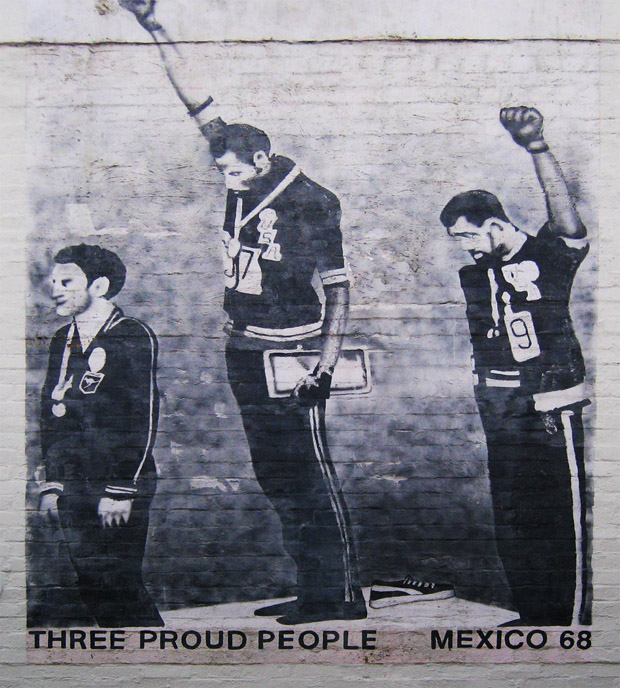
Grafitti of Tommie Smith, John Carlos and Peter Norman showing solidarity for the civil rights movement at the Mexico City Olympics in 1968 (Image: Newtown graffiti/Wikimedia Commons)
Athletes preparing to head off to Sochi Winter Olympics in February, have been reminded that they are barred from making political statements during the games.
”We will give the background of the Rule 50, explaining the interpretation of the Rule 50 to make the athletes aware and to assure them that the athletes will be protected,” said IOC President Thomas Bach in an interview earlier this week. Rule 50 stipulates that ”No kind of demonstration or political, religious or racial propaganda is permitted in any Olympic sites, venues or other areas.” Failure to comply could, at worst, mean expulsion for the athlete in question.
Political expression is certainly a hot topic at Sochi 2014. The games continue to be marred by widespread, international criticism of Russia’s human — and particularly LGBT– rights record. The outrage has especially been directed at the country’s recently implemented, draconian anti-gay law. Put place to “protect children”, it bans “gay propaganda”. This vague terminology could technically include anything from a ten meter rainbow flag to a tiny rainbow pin, and there have already been arrests under the new legislation.
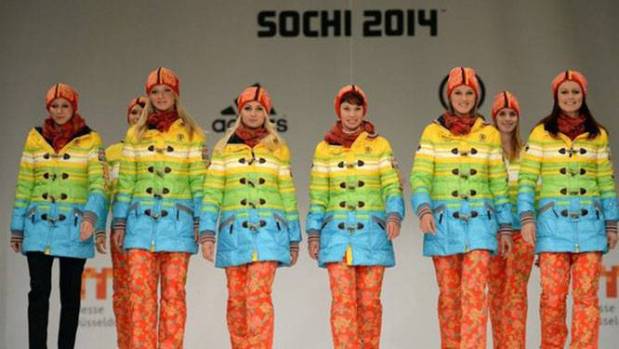
The confusion continued as the world wondered how this might impact LGBT athletes and spectators, or those wishing to show solidarity with them. Russian authorities have for instance warned of possible fines for visitors displaying “gay propaganda”. Could this put the Germans, with their colourful official gear, in the firing line? (Disclaimer: team Germany has denied that the outfits were designed as a protest.)
On the other hand, Russian president Vladimir Putin has promised there will be no discrimination at the Olympics, and IOC Chief Jaques Rogge, has said they “have received strong written reassurances from Russia that everyone will be welcome in Sochi regardless of their sexual orientation.”
On top of this, the IOC also recently announced that there will be designated “protest zones” in Sochi, for “people who want to express their opinion or want to demonstrate for or against something,” according to Bach. Where these would be located, or exactly how they would work, was not explained.
But while the legal situation in Russia adds another level of uncertainty and confusion regarding free, political expression for athletes, rule 50 has banned it for years. And for years, athletes have taken a stand anyway.
By far the most famous example came during the 1968 Olympics in Mexico City — American sprinters Tommie Smith and John Carlos, on the podium, black gloved fists raised in solidarity with the ongoing American civil rights movement. The third man on the podium, Australian Peter Norman, showed his support by wearing a badge for the Olympic Project for Human Rights. All three men faced criticism at the time, but the image today stands out as one of the most iconic and powerful pieces of Olympic history.
However, the history of Olympians and political protest goes further back than that. An early example is the refusal of American shotputter Ralph Rose to dip the flag to King Edward VII at the 1908 games in London. It us unknown exactly why he did it, but one theory is that it was an act of solidarity for Irish athletes who had to compete under the British flag, as Rose and others on his team were of Irish descent.
The Cold War years unsurprisingly proved to be a popular time for athletes to put their political views across. When China withdrew from the 1960 Olympics in protest at Taiwan, then recognised by the west as the legitimate China, taking part. The IOC then asked Taiwan not to march under the name ‘Republic of China’. While considering boycotting the games, the Taiwanese delegation instead decided to march into the opening ceremony with a sign reading “under protest”.
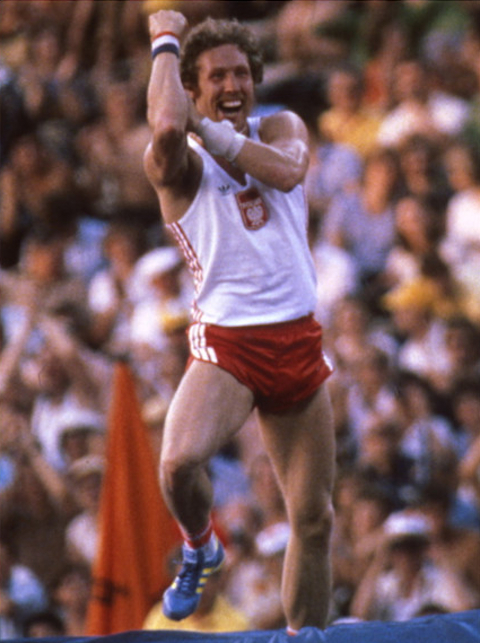
The same year as the Smith and Carlos protest, a Czechoslovakian gymnast kept her face down during the Soviet national anthem, in protest at the brutal crackdown of the Prague Spring earlier that year. And that was not the only act of defiance against the Soviet Union. During the controversial 1980 Moscow Olympics, boycotted by a number of countries over the USSR invasion of Afghanistan, the athletes competing also took a stand. The likes of China, Puerto Rico, Denmark, France and the UK marched under the Olympic flag in the opening ceremony, and raised it in the medal ceremonies. After winning gold, and beating a Soviet opponent, Polish high jumper Wladyslaw Kozakieicz also made a now famous, symbolic protest gesture towards the Soviet crowd.
But there are also more recent examples. At Athens 2004, Iranian flyweight judo champion Arash Miresmaeili reportedly ate his way out of his weight category the day before he was set to fight Israeli Ehud Vaks. “Although I have trained for months and was in good shape, I refused to fight my Israeli opponent to sympathise with the suffering of the people of Palestine” he said. A member of the South Korean football team which beat Japan to win bronze at the 2012 London Olympics, celebrated with a flag carrying a slogan supporting South Korean sovereignty over territory Japan also claims.
When the debate on political expression comes up, the argument of “where do we draw the line” often follows. If the IOC is to allow messages of solidarity with Russia’s LGBT population, should they allow, say, a Serbian athlete speak out against Kosovan independence? Or any number of similar, controversial political issues? Is it not easier to simply have a blanket band, and leave it at that?
The problem with this is, as much as the IOC and many other would like it, the Olympics, with all their inherent symbolism, simply cannot be divorced from wider society or politics. The examples above show this. With regards to Sochi in particular, the issue is pretty straightforward — gay are human rights. Some have argued we should boycott a Olympics in a country that doesn’t respect the Universal Declaration on Human Rights, or indeed the Olympic Charter. This is not happening, so the very least we can is use the Olympics to shine a light on gay rights in Russia. At its core, the Olympics are about the athletes — they are the most visible and important people there. It remains to be seen whether any of them will take a stand for gay rights, outside cordoned-off protest areas, in the slopes and on the rink, where the spotlight shines the brightest. And if they do, they should have our full support.
This article was posted on 13 Dec 2013 at indexoncensorship.org
18 Nov 2013 | Magazine
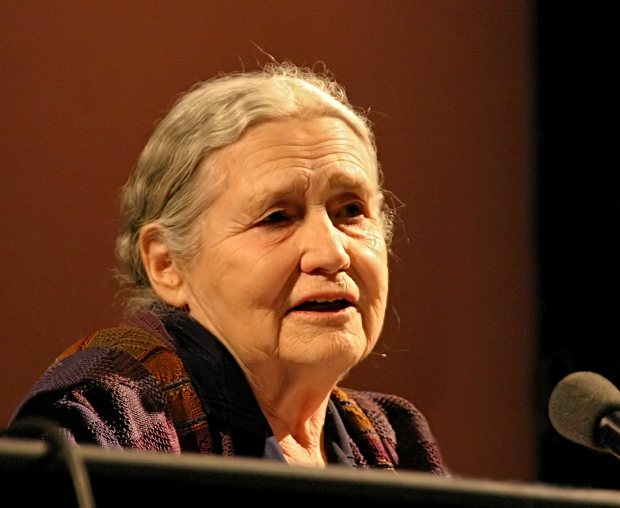 Recent revelations about conditions inside China’s Gulag camps by a former prisoner make the impressions of privileged visitors seem almost frivolous. Yet what we found was unexpected and, at the very least, a witness to China’s capacity for change.
Three of us, Michael Holroyd, Margaret Drabble and myself, went to China for the British Council, as guests of the main writers’ organisation, for over two weeks. Each of us was independently told that we would find sullen, unsmiling populations who would surround us and stare, and who were afraid to speak to foreigners. They would also spit everywhere all the time.
An American journalist who has worked in Beijing for five years said all this was true, up to three years ago: people were so afraid of drawing attention that even the bicycle bells were muted.
We went to Beijing, Shanghai, Shian and Canton (now Guangdong), all full of tourists from Europe, but even more from Japan, South Korea and other adjacent countries. We found smiling, laughing, robust and friendly people who did not spit, did not stare and were concerned with foreigners only to be helpful, to make money out of us, or to learn to make money.
The students in the universities were well informed about British and American literature and at least as sophisticated as their American counterparts.
This is a country on the make, determined to do well, full of energy, confidence, competence. We did not see one drunk person. Every city greets you with slogans like ‘China welcomes you with a billion smiles’.
As for being afraid, everyone talks freely about everything, particularly the Cultural Revolution. The euphoria of the times is such that people will say confidently there is no poverty in China (perhaps hoping there soon won’t be), yet if you walk down a minor street in Shanghai or Beijing there are the bare rooms where whole families are putting themselves to bed under a naked electric light bulb, reminding me of the ‘brick lines’ in Africa. The gap between rich and poor must surely widen.
My most informative encounter was with a group of magazine editors and writers, in their thirties and forties. We met publicly at a Friendship Restaurant. When I commented that to the outside world China gives the impression of continuous 100% swings in policy, with the implication that this was a swing to liberalism, and why weren’t they afraid their now so open criticisms might be held against them, they said, ‘What liberalism?’
Clearly they had expected more from China’s glasnost. They told me of a friend’s novel about conditions in the Chinese army, which are every bit as bad as those in the old Soviet army.
Yet controversial books are published: Jung Chang’s Wild Swans, already published abroad in translation, is expected soon. With a certain scepticism, however. A democratic writer, the idol of youth, has upset the literary establishment with her irreverent, rude, crude stories and poems, but they are forced to accept her because of her popularity. She has not been prohibited nor censored. In short, the situation is fluid. Novels and stories about the
Cultural Revolution are plentifully printed.
We met hardly anyone who had not suffered; even the highest were affected — for instance, the former Minister of Culture, Wang Meng. At that private encounter at the Friendship Restaurant every person around the table told what had happened to them.
When asked what he felt about being defamed and tortured in prison, one replied that the victims were, at other times, themselves the victimisers.
The Cultural Revolution is thought of by us as a war against people, but the young iconoclasts also destroyed orchards, gardens, even mulberry trees and silkworks, let alone temples and shrines. In a traditional courtyard in
Beijing the little stone lions that often guard homes had all had their heads knocked off. When with these lively, sensible, practical, humorous people, it is not easy to hold in one’s mind the knowledge that these same people, just like oneself and one’s friends, were so recently part of that lunacy; or that the entire population was willing, at a word from Chairman Mao, to stand — for hours, or days — beating pots and gongs to prevent birds from landing anywhere so that they fell out of the sky dead or so weak they could be clubbed to death — in myriads, in billions. Birds had been categorised as pests. So few birds are left in China; any wild bird you do see is in a cruel cage.
Two phenomena, both much discussed, seem portents of danger to the country. One is the 100 million people forced off the land by mechanisation, all on the move. But ‘what is 100 million?’ seems to be the feeling. They will be absorbed. These displaced ones do casual labour, pilfer, are petty traders or become bandits on an old and familiar model. They can always go back to their villages — so it is said — where they will be looked after.
But for how long will these people be regarded as the responsibility of their villages when they contribute nothing? At a farm near Guangdong (the city is like a vast building site, and the traffic horrendous, so the 10-mile journey took two-and-a-half hours each way) they told us that 10 years ago every member of the couple of hundred villagers had worked on the farm, but now 15 people did all the work. The others were working as labourers in the building industry. This is a revolution of traditional China so profound it must make previous revolutions seem like minor upheavals. In this village we were proudly shown the loudspeaker that not long ago howled out Party directives or banged out loud martial music nearly all the time. Now it was silent.
The other thing everyone talks about is what they call ‘The Little Emperor problem’. The law that there must only one child per family is more or less enforced in the cities, sometimes with cruel pressure. Everywhere you see wonderful babies and little children, each one being adored by attendant grownups. Each is a little emperor (or empress, but, it seems, fewer of them) who gets the best of everything, from love to education. But in the provinces it is not so easy to enforce the law, and there are many farmers, number unspecified, who have three or four children.
These are badly educated or not educated at all, and will always be poor, unless China decides to educate and feed them, but that would mean a reversal of a policy regarded as essential — the curtailment of population.
Once again, as before in China’s history, ignorant and poor peasants will look in at the privileged towns, full of their rich and educated contemporaries.
We did not go into the poor parts of China. Our guide said confidently that there were no poor areas, no poor farms. She did not know there was controversy over Tibet, which was a place where she and friends talked of taking a holiday. She was well educated, and demonstrated one of the reversals of policy when she recited the list of Chinese dynasties from their beginning, long before Christ, or even Confucius.
Until recently, history taught in schools began with Communism: the imperial past was ignored.
It seemed to me during this trip, and remains with me now, that the most astonishing thing is that five years ago, less, it meant prison or torture or even death for conversations of the kind we were having, so easily, at all levels. But that loudspeaker on the roof of the communal hall on the farm had not been removed, only switched off.
China makes me think of a great lumbering farm cart that has had the most modern of engines fitted to it and is rattling along at 50 miles an hour instead of five. Rushing ahead it certainly is; but the strains and stresses may, almost certainly will, again and again slow or check the cart, even change its direction in unexpected ways.
As China grows strong it will influence the whole world. Let us hope its way of reducing everything to simple and simple-minded formulae does not catch on. The successes of Political Correctness show that we should not be too confident.
This article was originally published in Index on Censorship magazine, September 1993.
Click here to subscribe to Index on Censorship magazine, or download the app here
2 May 2013 | In the News, Newswire
GLOBAL
Report: World Media Freedom At Low Point
Media freedom throughout the world declined last year to its lowest point in almost a decade, according to a new report from Freedom House, a U.S.-based democracy-monitoring organization. (Radio Free Europe)
CANADA
Harper Government muzzles scientists
The Harper government is facing an investigation by the Federal Information Commissioner’s Office concerning allegations of the censorship of Canadian scientists. (The Canadian)
CUBA
No freedom of speech in Cuba despite easier foreign travel
The Castro government’s easing of foreign travel restrictions on Cubans has not led to greater freedoms on the island, a leading dissident said yesterday. (Free Malaysia Today)
INDIA
No consensus on sex, violence and censorship in Bollywood
Getting directors, producers and activists into a room to figure out Indian cinema’s connection to violence toward women, rape and crudeness in society can be like a family gathering. People shout, get angry and fail to solve fundamental problems because they can’t agree on anything. (Reuters)
LIBYA
Voices in Danger: In Libya, Gaddafi’s media suppression lingers
Though Gaddafi is gone, the tools he used to stop Libyan journalists attacking him are still being used. (The Independent)
The New Libya Is Free, if You Don’t Count the Jailed Journalists
Being a journalist under the autocratic rule of Libyan dictator Moammar Qadhafi was an exercise in choice: between promoting state propaganda and spending time in jail. Now that NATO has toppled the regime, Libya is a little better at letting reporters practice their trade. But the press in Libya is by no means free. (Wired)
SOUTH KOREA
S. Korea ranks higher in terms of press freedom in 2013
How free is the press in South Korea? Well, according to the U.S.-based human rights organization Freedom House’s latest report, Korea’s level of press freedom increased this year ranking sixty-fourth out of 196 countries. (Arirang News)
SRI LANKA
World Press Freedom day, Uthayan and Freedom of Expression in Sri Lanka
This year, World Press Freedom Day focuses on themes that are particularly relevant to Sri Lanka. “Safe to Speak: Securing Freedom of Expression in All Media” and focuses on safety of journalists, combating impunity for crimes against freedom of expression, and securing a free and open Internet as the precondition for online safety. (Ground Views)
TRINIDAD
Libel laws to be amended
Prime Minister Kamla Persad-Bissessar will today take a note to Cabinet to amend the laws to ensure that no journalist can be jailed under section nine of the Libel and Defamation Act for the malicious publication of any defamatory libel. (Trinidad Express)
UGANDA
We should protect freedom of expression in all media
World Press Freedom Day is celebrated every May 3 to celebrate the fundamental principles of press freedom and to honour journalists who have lost their lives in pursuit of their profession. (Daily Monitor
UNITED KINGDOM
Don’t give politicians final say on changes to press regulation system, say public
Most members of the public do not want to see politicians interfering in a new system regulating the press, new research suggests. (The Telegraph)
UNITED STATES
Black pastor uninvited from speaking at college for criticizing Obama
Rev. Kevin Johnson, senior pastor of Bright Hope Baptist Church in North Philadelphia and alumni of the famed Morehouse College in Atlanta, was scheduled to speak at the school until he criticized Barack Obama in an op-ed at the Philadelphia Tribune. As a result of that op-ed, The Blaze reported Tuesday, Johnson was uninvited by the school. (Examiner.com)
In First Amendment Case Over Afghan War Memoir, Justice Department Asks Judge to End Lawsuit
The Justice Department has asked a federal judge to conclude that a former Defense Intelligence Agency officer “has no First Amendment right to publish the information at issue” in a memoir he penned at on his service in the war in Afghanistan. (The Dissenter)
Texas House OKs measure mitigating defamation lawsuits
The Texas House has passed a bill allowing publishers to mitigate the effects of libel lawsuits if the party affected by a mistake doesn’t request a correction or retraction. (SFGate)
2 May 2013 | Uncategorized
GLOBAL
Report: World Media Freedom At Low Point
Media freedom throughout the world declined last year to its lowest point in almost a decade, according to a new report from Freedom House, a U.S.-based democracy-monitoring organization. (Radio Free Europe)
CANADA
Harper Government muzzles scientists
The Harper government is facing an investigation by the Federal Information Commissioner’s Office concerning allegations of the censorship of Canadian scientists. (The Canadian)
CUBA
No freedom of speech in Cuba despite easier foreign travel
The Castro government’s easing of foreign travel restrictions on Cubans has not led to greater freedoms on the island, a leading dissident said yesterday. (Free Malaysia Today)
INDIA
No consensus on sex, violence and censorship in Bollywood
Getting directors, producers and activists into a room to figure out Indian cinema’s connection to violence toward women, rape and crudeness in society can be like a family gathering. People shout, get angry and fail to solve fundamental problems because they can’t agree on anything. (Reuters)
LIBYA
Voices in Danger: In Libya, Gaddafi’s media suppression lingers
Though Gaddafi is gone, the tools he used to stop Libyan journalists attacking him are still being used. (The Independent)
The New Libya Is Free, if You Don’t Count the Jailed Journalists
Being a journalist under the autocratic rule of Libyan dictator Moammar Qadhafi was an exercise in choice: between promoting state propaganda and spending time in jail. Now that NATO has toppled the regime, Libya is a little better at letting reporters practice their trade. But the press in Libya is by no means free. (Wired)
SOUTH KOREA
S. Korea ranks higher in terms of press freedom in 2013
How free is the press in South Korea? Well, according to the U.S.-based human rights organization Freedom House’s latest report, Korea’s level of press freedom increased this year ranking sixty-fourth out of 196 countries. (Arirang News)
SRI LANKA
World Press Freedom day, Uthayan and Freedom of Expression in Sri Lanka
This year, World Press Freedom Day focuses on themes that are particularly relevant to Sri Lanka. “Safe to Speak: Securing Freedom of Expression in All Media” and focuses on safety of journalists, combating impunity for crimes against freedom of expression, and securing a free and open Internet as the precondition for online safety. (Ground Views)
TRINIDAD
Libel laws to be amended
Prime Minister Kamla Persad-Bissessar will today take a note to Cabinet to amend the laws to ensure that no journalist can be jailed under section nine of the Libel and Defamation Act for the malicious publication of any defamatory libel. (Trinidad Express)
UGANDA
We should protect freedom of expression in all media
World Press Freedom Day is celebrated every May 3 to celebrate the fundamental principles of press freedom and to honour journalists who have lost their lives in pursuit of their profession. (Daily Monitor
UNITED KINGDOM
Don’t give politicians final say on changes to press regulation system, say public
Most members of the public do not want to see politicians interfering in a new system regulating the press, new research suggests. (The Telegraph)
UNITED STATES
Black pastor uninvited from speaking at college for criticizing Obama
Rev. Kevin Johnson, senior pastor of Bright Hope Baptist Church in North Philadelphia and alumni of the famed Morehouse College in Atlanta, was scheduled to speak at the school until he criticized Barack Obama in an op-ed at the Philadelphia Tribune. As a result of that op-ed, The Blaze reported Tuesday, Johnson was uninvited by the school. (Examiner.com)
In First Amendment Case Over Afghan War Memoir, Justice Department Asks Judge to End Lawsuit
The Justice Department has asked a federal judge to conclude that a former Defense Intelligence Agency officer “has no First Amendment right to publish the information at issue” in a memoir he penned at on his service in the war in Afghanistan. (The Dissenter)
Texas House OKs measure mitigating defamation lawsuits
The Texas House has passed a bill allowing publishers to mitigate the effects of libel lawsuits if the party affected by a mistake doesn’t request a correction or retraction. (SFGate)