21 Jul 2015 | Art and the Law Case Studies, Artistic Freedom Case Studies
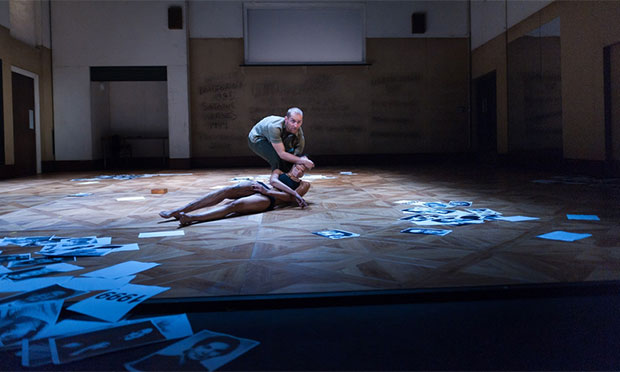
A scene from Can We Talk About This? (Photo: Matt Nettheim for DV8)
As part of our work on art, offence and the law, Julia Farrington, associate arts producer, Index on Censorship, interviewed Eva Pepper, DV8’s executive producer about how she prepared for potential hostility that the show Can We Talk About This? might provoke as it went on tour around the world in 2011-12.
Background
Can We Talk About This?, created by DV8’s Artistic Director Lloyd Newson, deals with freedom of speech, censorship and Islam. The production premiered in August 2011 at Sydney Opera House, followed by an international tour of 15 countries — Sweden, Australia, Hong Kong, France, Italy, Austria, Germany, Greece, Slovenia, Hungry, Spain, Norway, Taiwan and Korea and the UK between August 2011 and June 2012 — and was seen by a 60,000 people.
Extract from publicity of the show:
“From the 1989 book burnings of Salman Rushdie’s The Satanic Verses, to the murder of filmmaker Theo Van Gogh and the controversy of the ‘Muhammad cartoons’ in 2005, DV8’s production examined how these events have reflected and influenced multicultural policies, press freedom and artistic censorship. In the follow up to the critically acclaimed To Be Straight With You, this documentary-style dance-theatre production used real-life interviews and archive footage. Contributors include a number of high profile writers, campaigners and politicians.”
Q&A
Farrington: How did you set about working with the police for this tour?
Pepper: We focused on the UK with policing; I didn’t speak to any police forces in other countries at all, just in the UK cities we toured to: West Yorkshire Playhouse in Leeds; Warwick Arts Centre; Brighton Corn Exchange; The Lowry in Manchester and the National Theatre in London. But we did have a risk assessment and risk protocol that we shared with every venue we went to. We let them know the subject matter and the potential risks: security, safety of the audiences, media storms, safety of the people who were working on the show. They dealt either with their in-house security, or, in the UK, they would often alert the police as well.
Farrington: How did your preparations with police vary around the UK?
Pepper: We started with the Metropolitan Police, about six months before and told them our plans and that we would also contact other police forces. The National Theatre had their own contacts with the police who were already on standby. We still kept the MET events unit informed, but they [National Theatre] dealt with the police themselves. They were much more clued up, they had a head of security whom I briefed; we talked quite a lot. I made sure that he was copied in when anything a bit weird came up on the internet.
Our first venue was Leeds and we approached them about six weeks before the UK premiere. There was a bit of nervousness around Leeds, because of the larger Muslim population in the area. But we were only just beginning our liaison with the police and it took a little time to get a response. In the end we approached senior officers, but they often didn’t engage personally, just put us in touch with the appropriate unit to deal with.
Farrington: They didn’t see it as that important?
Pepper: They liked to be alerted that something might happen and they assured us that they were preparing. The venues also had their own police liaison; sometimes there was a bit of conflict if they had their own. I probably ruffled a few feathers when I went to a more senior officer.
Our starting point to the police was a very carefully worded letter which set out who we were. We didn’t ask permission to put it on we just alerted them that we might need police involvement. I did have some calls and a couple of meetings with officers, where they reiterated what is often said, which is that the police’s mandate is to keep the peace. It was made clear that they have as much of a duty to those people who want to protest or potentially might want to protest, as they have to allow us to exercise our freedom of expression. In Leeds nothing happened but there was a certain amount of nervousness around it.
Farrington: Where – at the venue?
Pepper: I think we were probably a bit nervous, and the police took it seriously enough. We had contact numbers to call. They were very much in the loop of the risk assessment.
Farrington: Was there a police presence on the night?
Pepper: I don’t remember seeing anybody. There was security of the venue of course, but regional venues only go so far with security. With some venues we were a little insistent that they get somebody upstairs and downstairs for example.
Farrington: And search bags, that kind of thing?
Pepper: We insisted people check in bags. The risk protocols weren’t invented for Can We Talk About This? They were really invented for To Be Straight With You [DV8’s previous show] and just tightened up for Can We Talk About This?. The risk protocols are just bullet points to get people thinking through scenarios.
Farrington: In general how would you describe your dealings with the police?
Pepper: I think generally supportive but we came to alert them that we might need them – there wasn’t a crisis. They said ‘thanks for letting us know let us deal with it.’ We would have quite liked to go through their risk assessments, but that didn’t happen. I think we were a little bit on their radar. They offered to send round liaison people to discuss practicalities around the office – stuff we hadn’t really thought about. It was a little bit tricky to get their attention.
The things we asked them to look out for were internet activity, if there was something brewing; sounds terribly paranoid. If there were issues around our London office or tour venues like hate mail, suspicious packages and then protests. So protest was just one thing our board was concerned about.
Farrington: Did you do anything else with the venue to prepare them for a possible hostile response from the media or a member of the public?
Pepper: I asked every venue artistic director or chief executive to prepare a statement. Lloyd would have been the main spokesperson for us if anything went wrong, but for a regional venue it is important that you are ready with a response and they all did that.
Farrington: What kind of thing did they say?
Pepper: We have supported this artist for the last 20 years. Lloyd has always been challenging in one way or another. This time he is challenging about this and we are going with him.
Farrington: Did you have any contact with lawyers?
Pepper: We looked carefully at the contents of the show. We had used interviews with real people and we wanted to be sure that nothing said was libellous or factually incorrect. So we had things looked at. The lawyer would say have you thought about that, did you get a release for this, are you using this from the BBC, do you have permission, have you spoken to this person, does he know you are doing it? And sometimes it is yes and sometimes it was a no.
Farrington: They pointed out some bases you hadn’t covered?
Pepper: Maybe one. We were really good and a bit obsessive. Sometimes we thought we didn’t have to ask because the information was in the public domain anyway, based on an interview that has been online for ten years for example. And the lawyer would or wouldn’t agree with that. It was good for peace of mind. That’s the thing with legal advice it doesn’t mean that nobody comes after you, because the law isn’t black and white.
Farrington: Were there some venues that you took the show to that didn’t think it was necessary to make special preparations?
Pepper: We always made them aware and we let them handle it. There are certain things that we always did. We asked them to consider security, and certainly PR. I was quite concerned that it would be a big PR story and then out of the PR story, as we saw with Exhibit B, comes the police. The protests don’t come from nowhere usually, somebody comes and stirs things up.
Farrington: Did you prepare the venue press departments?
Pepper: Yes we did, and we quite consciously had interviews, preview pieces before hand, where Lloyd could give candid interviews about the show. Almost to take the wind out of people’s sails, to put it out in the open so nobody could say they were surprised.
Farrington: How did you prepare with the performers for potential hostility?
Pepper: We talked through the risk procedure with them. We also got some advice from a security specialist, about being more vigilant than usual, noticing things that are out of the ordinary; if somebody picks a fight in the bar after the show, find a way to alert the others. So yes, the security specialist had a meeting with us here in the office, but also came up to Leeds to talk to the performers.
Farrington: Did it create a difficult atmosphere?
Pepper: It did yes, it got a bit edgy. Next time I would not do it around the UK premiere. It took a long time to set all of this up. To find the right people, to get people to take it seriously, to have meetings scheduled.
Farrington: It took time to find the right kind of security specialist?
Pepper: It also took a little while to get straight what we needed. We probably tried to figure it out for ourselves for a long time. And then got somebody in after all, just as maybe we, or the board got a bit more nervous. When you talk about protests you always worry about the general public, but as an employer there are the people who you send on tour who have to defend the show in the bar afterwards, potentially they are the targets.
Farrington: But they were behind the show?
Pepper: Yes, undoubtedly. But it’s an uncomfortable debate. There were so many voices in that show and you didn’t agree with every voice and it was never really said what really is Lloyd’s or DV8’s line. I would say that all the dancers were fine, but sometimes if somebody corners you in a bar it gets squirmy. No one is comfortable with everything.
Farrington: Can you summarise the response to the show?
Pepper: We had everything from 1 to 5 stars. We had people that loved the dance and hated the politics, who loved the politics and hated the dance. Occasionally somebody liked both. Occasionally somebody hated both. The show was discussed in the dance pages, in the theatre pages and in the comments pages. So in terms of the breadth and depth of the discussion we couldn’t have been more thrilled. Then we had dozens of blogs written about the show. For us Twitter really started with Can We Talk About This? and it was a great instrument for us. Social media was largely positive, though some people were picking a fight on Facebook at some point. It was very, very broad and very widely discussed.
Farrington: And did you interact with Twitter or did you let it roll?
Pepper: Mostly we let it roll. As part of the risk strategy we had a prepared statement from Lloyd which was very similar to the forward in the programme and anybody who had any beef would be redirected to the statement.
Farrington: Did the venues take this performance as an opportunity to have post show discussion and debate?
Pepper: Lloyd prefers preshow talks because he doesn’t like people to tell him what they thought of the shows. Quite often there is a quick Q&A before. In UK, we had one in Brighton [organised by Index] and one at the National. We had fantastic ones in Norway after the Breivik killings. In Norway they weren’t sure it was relevant and then the killings happened and then I got the call to say now we need to talk about it.
But having pre-show talks is certainly how we decided to deal with it. There is a conflict with having a white middle-aged atheist put on a show about Islam. But the majority of voices in the show were Muslim voices of all shades of opinion. It wasn’t fiction. It was based on his research and based on people’s stories – writers, intellectuals, journalists, politicians and who had a personal story to tell
Farrington: How did you prepare work with the board regarding potential controversies?
Pepper: Really the work with the board started with the previous show To Be Straight With You that already dealt with homosexuality and religion and culture; how different communities and religious groups make the life of gay people quite unbearable, internationally and in this country. And even then, we started to say, ‘can we say this? are we allowed to criticise these people like this?’ and out of that grew the ‘yes, I do want to talk about this’ because if we don’t a chill develops. Can We Talk About This? was a history about people who had spoken out about aspects of Islam that they were uncomfortable with or against and what happened to them.
Farrington: What kind of board do you need if you are going to be an organisation that explores taboos like this?
Pepper: We have got a fantastic board; it is incredibly responsible and so is Lloyd. There is a very strong element of trust in Lloyd’s work. They wouldn’t be on the board if they didn’t support him. But, as employers, they are aware of their responsibilities to everyone who works for us. As a company we have to be prepared in the eventuality that there is a PR or security disaster. What we were really trying to do was avoid that eventuality. We will never know. Maybe nothing bad would have happened. I think that Lloyd now wishes more people had seen it, that a film had been made, that it was more accessible to study by those who want to. He thinks that maybe we were a bit too careful. But as an organisation, as DV8, as an employer I think that we did the right thing by looking after people.
Farrington: What advice could you give to prepare the ground for doing work that you know will divide opinion and you know could provoke hostility?
Pepper:
E: If you can anticipate this you already have an advantage, but it’s not always possible to second-guess who might find what offensive. But if you know, I would suggest you ask yourself what buttons you are likely to push; you have to be confident why you are pushing them – usually in order to make an important point. It’s a good idea to articulate this reasoning very well in your head and on paper. Then you have got to be brave and get on with your project. Strong partners are invaluable, so try to get support. But in the end it is about standing up and being able to defend what you do.
Farrington: So you think you could have gone a bit further?
Pepper: I think if you prepare well you could go a bit further. I don’t think there is a law in this country that would stop you from being more offensive than we were. Every artist has to decide for themselves what they want to say and why they are saying it, and if they can justify it they can go for it.
21 Jul 2015
A scene from Can We Talk About This? (Photo: Matt Nettheim for DV8)
By Julia Farrington
July 2015
As part of our work on art, offence and the law, Julia Farrington, associate arts producer, Index on Censorship, interviewed Eva Pepper, DV8’s executive producer about how she prepared for potential hostility that the show Can We Talk About This? might provoke as it went on tour around the world in 2011-12.
Background
Can We Talk About This?, created by DV8’s Artistic Director Lloyd Newson, deals with freedom of speech, censorship and Islam. The production premiered in August 2011 at Sydney Opera House, followed by an international tour of 15 countries — Sweden, Australia, Hong Kong, France, Italy, Austria, Germany, Greece, Slovenia, Hungry, Spain, Norway, Taiwan and Korea and the UK between August 2011 and June 2012 — and was seen by a 60,000 people.
Extract from publicity of the show:
“From the 1989 book burnings of Salman Rushdie’s The Satanic Verses, to the murder of filmmaker Theo Van Gogh and the controversy of the ‘Muhammad cartoons’ in 2005, DV8’s production examined how these events have reflected and influenced multicultural policies, press freedom and artistic censorship. In the follow up to the critically acclaimed To Be Straight With You, this documentary-style dance-theatre production used real-life interviews and archive footage. Contributors include a number of high profile writers, campaigners and politicians.”
Q&A
Farrington: How did you set about working with the police for this tour?
Pepper: We focused on the UK with policing; I didn’t speak to any police forces in other countries at all, just in the UK cities we toured to: West Yorkshire Playhouse in Leeds; Warwick Arts Centre; Brighton Corn Exchange; The Lowry in Manchester and the National Theatre in London. But we did have a risk assessment and risk protocol that we shared with every venue we went to. We let them know the subject matter and the potential risks: security, safety of the audiences, media storms, safety of the people who were working on the show. They dealt either with their in-house security, or, in the UK, they would often alert the police as well.
Farrington: How did your preparations with police vary around the UK?
Pepper: We started with the Metropolitan Police, about six months before and told them our plans and that we would also contact other police forces. The National Theatre had their own contacts with the police who were already on standby. We still kept the MET events unit informed, but they [National Theatre] dealt with the police themselves. They were much more clued up, they had a head of security whom I briefed; we talked quite a lot. I made sure that he was copied in when anything a bit weird came up on the internet.
Our first venue was Leeds and we approached them about six weeks before the UK premiere. There was a bit of nervousness around Leeds, because of the larger Muslim population in the area. But we were only just beginning our liaison with the police and it took a little time to get a response. In the end we approached senior officers, but they often didn’t engage personally, just put us in touch with the appropriate unit to deal with.
Farrington: They didn’t see it as that important?
Pepper: They liked to be alerted that something might happen and they assured us that they were preparing. The venues also had their own police liaison; sometimes there was a bit of conflict if they had their own. I probably ruffled a few feathers when I went to a more senior officer.
Our starting point to the police was a very carefully worded letter which set out who we were. We didn’t ask permission to put it on we just alerted them that we might need police involvement. I did have some calls and a couple of meetings with officers, where they reiterated what is often said, which is that the police’s mandate is to keep the peace. It was made clear that they have as much of a duty to those people who want to protest or potentially might want to protest, as they have to allow us to exercise our freedom of expression. In Leeds nothing happened but there was a certain amount of nervousness around it.
Farrington: Where – at the venue?
Pepper: I think we were probably a bit nervous, and the police took it seriously enough. We had contact numbers to call. They were very much in the loop of the risk assessment.
Farrington: Was there a police presence on the night?
Pepper: I don’t remember seeing anybody. There was security of the venue of course, but regional venues only go so far with security. With some venues we were a little insistent that they get somebody upstairs and downstairs for example.
Farrington: And search bags, that kind of thing?
Pepper: We insisted people check in bags. The risk protocols weren’t invented for Can We Talk About This? They were really invented for To Be Straight With You [DV8’s previous show] and just tightened up for Can We Talk About This?. The risk protocols are just bullet points to get people thinking through scenarios.
Farrington: In general how would you describe your dealings with the police?
Pepper: I think generally supportive but we came to alert them that we might need them – there wasn’t a crisis. They said ‘thanks for letting us know let us deal with it.’ We would have quite liked to go through their risk assessments, but that didn’t happen. I think we were a little bit on their radar. They offered to send round liaison people to discuss practicalities around the office – stuff we hadn’t really thought about. It was a little bit tricky to get their attention.
The things we asked them to look out for were internet activity, if there was something brewing; sounds terribly paranoid. If there were issues around our London office or tour venues like hate mail, suspicious packages and then protests. So protest was just one thing our board was concerned about.
Farrington: Did you do anything else with the venue to prepare them for a possible hostile response from the media or a member of the public?
Pepper: I asked every venue artistic director or chief executive to prepare a statement. Lloyd would have been the main spokesperson for us if anything went wrong, but for a regional venue it is important that you are ready with a response and they all did that.
Farrington: What kind of thing did they say?
Pepper: We have supported this artist for the last 20 years. Lloyd has always been challenging in one way or another. This time he is challenging about this and we are going with him.
Farrington: Did you have any contact with lawyers?
Pepper: We looked carefully at the contents of the show. We had used interviews with real people and we wanted to be sure that nothing said was libellous or factually incorrect. So we had things looked at. The lawyer would say have you thought about that, did you get a release for this, are you using this from the BBC, do you have permission, have you spoken to this person, does he know you are doing it? And sometimes it is yes and sometimes it was a no.
Farrington: They pointed out some bases you hadn’t covered?
Pepper: Maybe one. We were really good and a bit obsessive. Sometimes we thought we didn’t have to ask because the information was in the public domain anyway, based on an interview that has been online for ten years for example. And the lawyer would or wouldn’t agree with that. It was good for peace of mind. That’s the thing with legal advice it doesn’t mean that nobody comes after you, because the law isn’t black and white.
Farrington: Were there some venues that you took the show to that didn’t think it was necessary to make special preparations?
Pepper: We always made them aware and we let them handle it. There are certain things that we always did. We asked them to consider security, and certainly PR. I was quite concerned that it would be a big PR story and then out of the PR story, as we saw with Exhibit B, comes the police. The protests don’t come from nowhere usually, somebody comes and stirs things up.
Farrington: Did you prepare the venue press departments?
Pepper: Yes we did, and we quite consciously had interviews, preview pieces before hand, where Lloyd could give candid interviews about the show. Almost to take the wind out of people’s sails, to put it out in the open so nobody could say they were surprised.
Farrington: How did you prepare with the performers for potential hostility?
Pepper: We talked through the risk procedure with them. We also got some advice from a security specialist, about being more vigilant than usual, noticing things that are out of the ordinary; if somebody picks a fight in the bar after the show, find a way to alert the others. So yes, the security specialist had a meeting with us here in the office, but also came up to Leeds to talk to the performers.
Farrington: Did it create a difficult atmosphere?
Pepper: It did yes, it got a bit edgy. Next time I would not do it around the UK premiere. It took a long time to set all of this up. To find the right people, to get people to take it seriously, to have meetings scheduled.
Farrington: It took time to find the right kind of security specialist?
Pepper: It also took a little while to get straight what we needed. We probably tried to figure it out for ourselves for a long time. And then got somebody in after all, just as maybe we, or the board got a bit more nervous. When you talk about protests you always worry about the general public, but as an employer there are the people who you send on tour who have to defend the show in the bar afterwards, potentially they are the targets.
Farrington: But they were behind the show?
Pepper: Yes, undoubtedly. But it’s an uncomfortable debate. There were so many voices in that show and you didn’t agree with every voice and it was never really said what really is Lloyd’s or DV8’s line. I would say that all the dancers were fine, but sometimes if somebody corners you in a bar it gets squirmy. No one is comfortable with everything.
Farrington: Can you summarise the response to the show?
Pepper: We had everything from 1 to 5 stars. We had people that loved the dance and hated the politics, who loved the politics and hated the dance. Occasionally somebody liked both. Occasionally somebody hated both. The show was discussed in the dance pages, in the theatre pages and in the comments pages. So in terms of the breadth and depth of the discussion we couldn’t have been more thrilled. Then we had dozens of blogs written about the show. For us Twitter really started with Can We Talk About This? and it was a great instrument for us. Social media was largely positive, though some people were picking a fight on Facebook at some point. It was very, very broad and very widely discussed.
Farrington: And did you interact with Twitter or did you let it roll?
Pepper: Mostly we let it roll. As part of the risk strategy we had a prepared statement from Lloyd which was very similar to the forward in the programme and anybody who had any beef would be redirected to the statement.
Farrington: Did the venues take this performance as an opportunity to have post show discussion and debate?
Pepper: Lloyd prefers preshow talks because he doesn’t like people to tell him what they thought of the shows. Quite often there is a quick Q&A before. In UK, we had one in Brighton [organised by Index] and one at the National. We had fantastic ones in Norway after the Breivik killings. In Norway they weren’t sure it was relevant and then the killings happened and then I got the call to say now we need to talk about it.
But having pre-show talks is certainly how we decided to deal with it. There is a conflict with having a white middle-aged atheist put on a show about Islam. But the majority of voices in the show were Muslim voices of all shades of opinion. It wasn’t fiction. It was based on his research and based on people’s stories – writers, intellectuals, journalists, politicians and who had a personal story to tell
Farrington: How did you prepare work with the board regarding potential controversies?
Pepper: Really the work with the board started with the previous show To Be Straight With You that already dealt with homosexuality and religion and culture; how different communities and religious groups make the life of gay people quite unbearable, internationally and in this country. And even then, we started to say, ‘can we say this? are we allowed to criticise these people like this?’ and out of that grew the ‘yes, I do want to talk about this’ because if we don’t a chill develops. Can We Talk About This? was a history about people who had spoken out about aspects of Islam that they were uncomfortable with or against and what happened to them.
Farrington: What kind of board do you need if you are going to be an organisation that explores taboos like this?
Pepper: We have got a fantastic board; it is incredibly responsible and so is Lloyd. There is a very strong element of trust in Lloyd’s work. They wouldn’t be on the board if they didn’t support him. But, as employers, they are aware of their responsibilities to everyone who works for us. As a company we have to be prepared in the eventuality that there is a PR or security disaster. What we were really trying to do was avoid that eventuality. We will never know. Maybe nothing bad would have happened. I think that Lloyd now wishes more people had seen it, that a film had been made, that it was more accessible to study by those who want to. He thinks that maybe we were a bit too careful. But as an organisation, as DV8, as an employer I think that we did the right thing by looking after people.
Farrington: What advice could you give to prepare the ground for doing work that you know will divide opinion and you know could provoke hostility?
Pepper:
E: If you can anticipate this you already have an advantage, but it’s not always possible to second-guess who might find what offensive. But if you know, I would suggest you ask yourself what buttons you are likely to push; you have to be confident why you are pushing them – usually in order to make an important point. It’s a good idea to articulate this reasoning very well in your head and on paper. Then you have got to be brave and get on with your project. Strong partners are invaluable, so try to get support. But in the end it is about standing up and being able to defend what you do.
Farrington: So you think you could have gone a bit further?
Pepper: I think if you prepare well you could go a bit further. I don’t think there is a law in this country that would stop you from being more offensive than we were. Every artist has to decide for themselves what they want to say and why they are saying it, and if they can justify it they can go for it.
A round-the-world tour of censorship
20 Jul 2015 | Magazine, mobile, Volume 44.02 Summer 2015
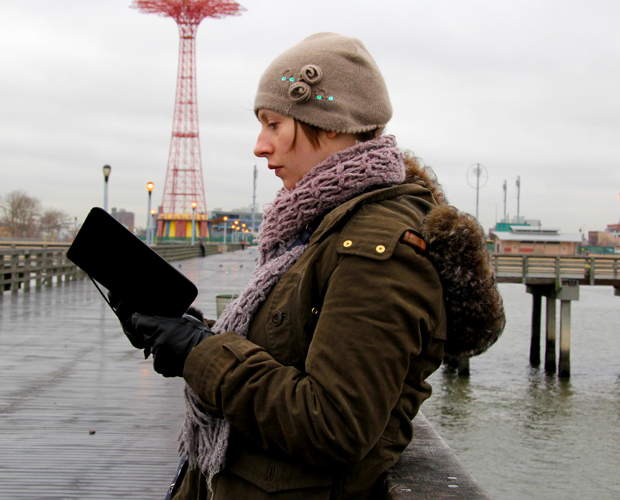
Ann Morgan’s self-imposed challenge to read 196 books in a year taught her much about the world of literary censorship. Credit: Steve Lennon
“For as long as people have been telling stories other people have been trying to shut them up,” writes Ann Morgan in Reading the World: Confessions of a Literary Explorer. The book, published earlier this year, charts her bid to read a book from each of the world’s 196 independent states. In the 365-day challenge, she faced constant barriers, from trying to find literature in places with almost no publishing industry, such as the Marshall Islands, to tracking down the works that the authorities have tried to hide.
Morgan found herself getting a crash course in world censorship. Two of the exiled writers she profiled have stories featured in the summer 2015 edition of Index on Censorship magazine: Ak Welsapar from Turkmenistan and Hamid Ismailov from Uzbekistan.
It was a chance tweet that Morgan spotted about Welsapar’s poetry that first led her to the as-yet-unpublished translation of his novel, The Tale of Aypi. She was soon struck by his use of Aesopian language and allegory to communicate subversive or challenging ideas, a literary tactic that Welsapar revealed was by no means accidental. Morgan told Index, “Towards the end of the Soviet era there was a relative loophole in one of the censor’s guidance documents that said that if there was an element of doubt in what was meant, the writer had the benefit of the doubt. This was a grey area that was quite freeing for Ak.” However, when the country declared independence in 1991, he found himself more censored than ever before, his works were banned and he was forced to flee to Sweden.
Ismailov faced a similar plight. After working on a series of articles and projects that criticised the Uzbek regime, his books – and even any mention of his name – were forbidden. He fled the country and ended up in the UK, working for the BBC. Morgan said: “When [Ismailov] was growing up, he always thought there was something wrong with the literature he was reading. All the positives he’d been bombarded with in Soviet literature didn’t make sense. He was seeing this gap between his reality and the reality of what he was reading.”
But of the 196 countries Morgan explored on a literary level, North Korea was the one that intrigued her the most. Keen to discover what – if anything – is read within its fiercely guarded border, she contacted a spokesman for the Democratic People’s Republic of Korea’s (DPRK) Committee for Cultural Relations for Foreign Countries (run by Alejandro Cao De Benós, the first and only foreigner to be allowed to work for the government in North Korea) and, after much persistence, was eventually sent a manuscript of My Life and Faith, the memoir of jailed North Korean war correspondent Ri In Mo. Mo was imprisoned for 40 years in South Korea in 1950, after being arrested for fighting as a guerrilla during the Korean War. Although his autobiography is primarily used as propaganda, Morgan found his work far less two-dimensional than she had expected; it included thought-provoking passages on how Mo engaged with the South Korean media after his release and how his words were altered by journalists to make him sound “more North Korean”.
Morgan feels her interactions with the DPRK Committee and reading the corresponding work taught her much about our refusal in the west to engage with abhorrent ideas: “I got reactions from people saying you shouldn’t read anything from there [North Korea], but to me this was still censorship, it was quite sinister. How are you to have a dialogue and move forwards if you are banishing them from the realm of the human and not allowing for any common ground?”
So does she believe books such as hers can help bring people’s attention worldwide to the issues surrounding literary censorship and further publicise these semi-forgotten works? “Hopefully, the project has brought attention to the works of a number of those writers who I encountered, and the works of many other writers out there who I didn’t read directly. I hope it encourages readers generally to look further and I hope in the long run it will bring more opportunities for other writers.”
You can read short stories by Ak Welsapar and Hamid Ismailov in the summer 2015 issue of Index on Censorship magazine. Ann Morgan’s book, Reading the World: Confessions of a Literary Explorer, was published in the UK by Harville Sacker in January 2015. Her blog is A year of reading the world.
The power of satirical comedy in Zimbabwe
14 Jul 2015 | Magazine, mobile, Volume 44.02 Summer 2015, Zimbabwe
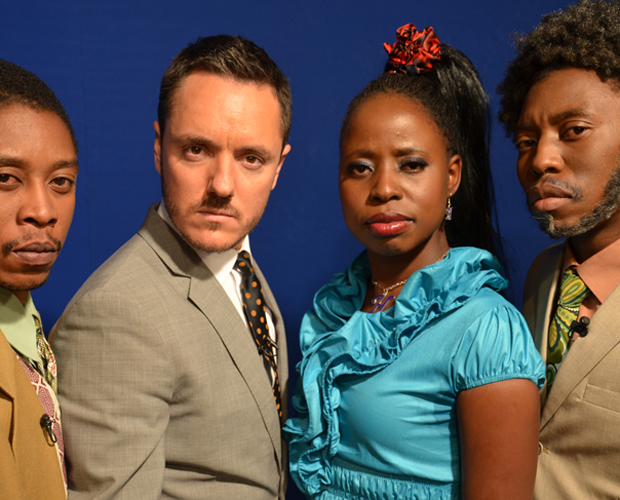
Zambezi News cast, pictured left to right – Michael Kudakwashe, Samm Farai Monro, Chipo Chikara and Tongai Makawa
The Zimbabwean Minister of Impending Projects proudly stands in front of a mine that he has christened Mine Mine. “Because,” he says, “it’s mine. And because a diamond mine is a minister’s best friend.” This corrupt politician who has never completed a single programme in his department, is a fictional character on Zambezi News, a satirical show I helped create, with fellow activist Outspoken.
Zambezi News has become Zimbabwe’s leading satirical programme, reaching millions of viewers across the country and the whole continent. The show is a parody of the state-controlled propaganda machine, the Zimbabwe Broadcasting Corporation, and mimics the station’s sycophancy to the ruling party, the Zimbabwe African National Union Patriotic Front (Zanu PF). Quite frankly, our show started off by fluke. Outspoken and I have a background as spoken word and hip-hop artists and were approached by a friend involved in a local film festival to do a live news skit. When it aired at the festival and was really well received, we knew we were on to something.
We shot the first season in 2011 as a faux news show with three comic newscasters. The show cut between the newsroom and satirical reports from the field and featured a string of outrageous characters. We even did a special episode for the 2013 elections where our newscaster, Mandape Mandape, showed how easy it is to vote – unless you are young, urban and likely to vote for the opposition. We publicised the show around the country using partners ranging from community radio stations to activist groups. We also pushed it heavily on social media and shared the videos on YouTube. Interest was so great we then produced 10,000 DVDs, which were requested in more than 100 different towns and villages in Zimbabwe. Since then we have shot two more seasons. The show has been viewed by six million Zimbabweans, and we have been invited to do live shows in Sweden, South Africa, Swaziland and the USA.
The fact that there is thriving satire in Zimbabwe and that we, as the cheeky cast of Zambezi News, are still alive confuses a lot of people. Most TV and radio in Zimbabwe is controlled by the state or cronies of the ruling party, so the public has a growing appetite for comedy and satire that present an alternative voice. People like to laugh and think about our crazy situation at the same time.
“Political satire has provided comic relief to many Zimbabweans, but, above all, it has been an innovative way of speaking truth to power,” said political commentator Takura Zhangazha. “Zambezi News is key in carrying on this tradition especially across various media spectrums and between generations.” The fact that we’re still alive? Well, I guess that’s down to luck and the fact that we hide in plain sight.
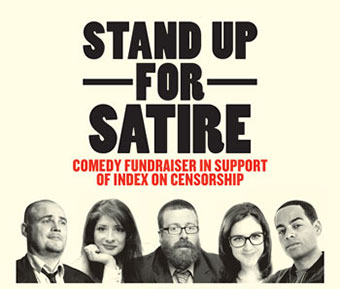 Index on Censorship has been publishing articles on satire by writers across the globe throughout its 43-year history. Ahead of our event, Stand Up for Satire, we published a series of archival posts from the magazine on satire and its connection with freedom of expression.
14 July: The power of satirical comedy in Zimbabwe by Samm Farai Monro | 17 July: How to Win Friends and Influence an Election by Rowan Atkinson | 21 July: Comfort Zones by Scott Capurro | 24 July: They shoot comedians by Jamie Garzon | 28 July: Comedy is everywhere by Milan Kundera | Student reading lists: Comedy and censorship

However, being a leading satire show and poking fun at the powerful, comes with risks: one of our main actors in Zambezi News has been threatened by people we suspect are state security agents. The actor was approached after we launched our first season in 2012. He was threatened for working on an “anti-government, regime-change agenda” and told that he would be “dealt with”. Our content is blacklisted on state-controlled radio and TV, while we often get attacked by Zanu PF-aligned bloggers who write that we produce “anti-government propaganda”. Earlier this year, as we prepared to launch our third season, the police called up to ask if we had “police clearance” to do so. We also get harassed by the officials from the censorship board and the Central Intelligence Organisation who ask us: “Do you have accreditation and clearance to do this?” I guess this means that they are watching our show, so half our job is done.
We are not alone. Other online satirical shows are emerging, including PO Box, The Comic King Show and LYLO, to name but a few. PO Box has been a viral success in Zimbabwe with its weekly five-minute skits posted on Facebook with the skits getting 20,000 views in two days. The show deals with the country’s social and economic issues and has the cast playing everything from corrupt politicians to victims of xenophobic violence in South Africa. “Comedy and satire depict society’s stance and are the voice of the ordinary people to the elite,” said PO Box creator Luckie Aaroni.
Many outsiders wouldn’t expect to discover Zimbabweans poking fun at the powerful, or mocking the president and his wife, an act that was taboo until recently. “It’s a reflection of the times,” said leading comedian and comedy promoter, Simba The Comic King. “Things are hard, so people might as well laugh about them. That’s their form of protest.” There are also standup shows in the main cities of Harare and Bulawayo. Bulawayo’s gritty Umakhelisa Comedy Club regularly features the city’s top comedians, who joke about the tough social and economic realities that are modern Zimbabwe. Harare’s two leading monthly comedy events, the Bang Bang Comedy Club and Simuka Comedy, often attract capacity crowds to their hard-hitting shows.
Stand-up comedy emerged in Zimbabwe in the 1990s but today has grown into something more daring, where comedians are continually pushing boundaries. However, the authorities don’t always think the jokes should be shared with the public. “A couple of times I have been approached by presumed state security agents who have told me that certain jokes are funny, but get them out of your set if you want to live till the next show,” said Simba. Such threats are real and common in the country. It’s a recurring joke in Zimbabwe among artists: you have freedom of expression, but not freedom after expression.
Despite these trends, Zimbabwe is not an easy place to perform. The state has basically used a carrot-and-stick approach with artists. The carrot is the 75 per cent local-content policy on all state-controlled radio and TV, introduced in April 2000 by the Zanu PF government. For musicians, this means your songs will get played if you aren’t dissing the government and they will get played even more so if you are praising it. And if you’re known to be obedient, Zanu PF might also book you to play at one of its many galas, where taxpayers’ money is used to enchance the party’s image. The stick approach is more straightforward: critical artists get no state support, won’t have their songs played on radio and TV, and are likely to be harassed and threatened.
Artists such as comic character Dr Zobha get airplay on state-controlled radio as they are seen as obedient and toeing the party line. Whereas Zimbabwean music legend Thomas Mapfumo, a national hero for his role in the liberation struggle, was hounded out of the country in 2001 after releasing music critical of Zanu PF. Mapfumo now lives in self-imposed exile in the USA.
With more and more young people online in Zimbabwe sharing videos and content on Facebook and WhatsApp, we now have more and more alternative means of disseminating our content. And considering our politicians aren’t going to stop being clowns anytime soon, we definitely won’t be running out of things to say. So we’ll keep striving to build a new country. One joke at a time.
© Samm Farai Monro
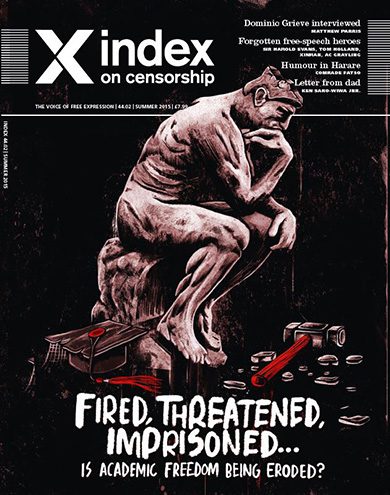 This article is part of the culture section of a special issue of Index on Censorship magazine on academic freedom, featuring contributions from the US, Ukraine, Belarus, Mexico, India, Turkey and Ireland. Subscribe to read the full report, or buy a single issue. Every purchase helps fund Index on Censorship’s work around the world. For reproduction rights, please contact Index on Censorship directly, via [email protected]