29 Jan 2011 | Iran, Middle East and North Africa
These striking images from a Tehran production of Ibsen’s Hedda Gabler caught my eye on the Revolutionary Road Facebook page. Sadly the accompanying statement announced that the play had been shut down by the authorities; the director and cast had been “summoned”, accused of promoting “degeneracy”. Iran’s state television Fars had called Vahid Rahbani’s production a “platform for degeneracy and normalising polyandry, the intermingling of men and women and other worthless proceedings”.
However unreasonable such claims may seem, it’s no surprise that Ibsen’s idealistic heroine doesn’t sit comfortably with the powers set on controlling every outward voice in Iran, however fictional. Fear of impression and influence is paramount.
Later that same week I saw a rather beautiful poster for a August Strindberg play in the heart of Iran and far from the frenzied pace of Tehran. Gleaning as much information as I could from the thumbnail images, I extracted the name of one of the actresses and set out to make contact with her. Strindberg’s The Stronger was opening that Saturday in a small town in a province of Iran in the same week that Ibsen’s Hedda Gabler was banned in the capital.
I arranged an interview with the 28-year-old actress who held the main speaking part in the play. I was eager to find out how they had staged the production, the significance of the work of a Swedish playwright to her environment and if she was aware of the Hedda Gabler story. Days later I was still waiting, anxious because, even though she’d been enthusiastic, I was aware that she may have had second thoughts about the possible exposure — the consequences of which can’t be taken lightly.
Strindberg’s published short stories were openly anti-establishment and as an atheist, socialist and anarchist, he was tried for blasphemy in Sweden in 1882. Today, more than 130 years and many civilisations on, the people of Iran are tried for blasphemy on a daily basis.
Two weeks later we’re in contact again. She tells me that the owner of the venue where they are performing The Stronger has been threatened and photographic evidence of “activities” has been obtained. The group have dispersed and cancelled performances. She felt compelled to contact me. We begin the interview. The following are her reflections on her involvement in the production and her short-lived performance:
The speed at which they land on you doesn’t allow for articles or interviews before it’s all over. From the first day I always said that [the play] was likely to be cancelled, so I set out to at least enjoy the rehearsals. We hadn’t had a good experience of putting on a production. We’d done some Pinter but there was nowhere to show it. As a student in Tabriz, things weren’t as limited. Here, even non-political playwrights are hot eggs.
We had about two and a half months of rehearsals; with everyone in different jobs, twice a week at first, then more in the last month. We met at an empty house that belonged to a friend’s family. It was freezing. The director would say “the cold is character building”. We kept going with hot drinks and coffees. My role in the play is full of extremes — happy, then depressed. Our plan was to travel with our performance — to take it to Badar Pahlavi, Rasht, Tehran. In the performance our prop was a table. We didn’t care what we’d find, whether we’d have a table or not, we’d improvise, we just wanted to perform. That was our plan. The coherence of it was precarious but we thought we’ll perform for one day, one hour and must be prepared for anything that transpired.
One of the main reasons we chose the café was that there’s nowhere else. There is a public hall that we theoretically could use but it has so many pillars there were blind spots everywhere. I’d heard of a café society in Tehran. Here everything is taboo. There are only two cafés in our town — both relatively new — one is completely glass-fronted and therefore not appropriate. In the café we used, you enter in darkness then go through upstairs. The owner has an artistic background. It worked out well. We thought: let’s overcome our [restricted] situation. It’s not worth our consideration. We thought we could put on a play and at the same time promote a new culture.
People of all ages came, from 17- and 18-year-olds to 60-year-olds. It was exciting. Scenarios arose, like I’d be playing with a cigarette and it would make someone in the audience ask a stranger for a cigarette. The café has WiFi so someone would be sitting with a laptop and before long two or three people would strike up a conversation with them and they’d share online stuff together. There was no control in this situation. The place was packed. What we were presenting became almost irrelevant. We were linking people. It was so busy and there was a sense of disorder. The result is that we had no control over who could be filming. The Ministry of Culture and Islamic Guidance contacted saying “we’ve heard that you’re gathering 15, 16 people”. That was too many. In reality there were 50-60 people in a café with capacity for 30. On “stage” I was fully in hijab, it was in character and I had envisaged this happening. But the problem was our audience. We previewed twice for feedback and held five public performances before we were intimidated and shut down.
On Tuesday [the day of the following performance] my friends said “You mustn’t go, don’t expose yourself”. We’ve all dispersed and I haven’t contacted the café since.
We hadn’t put posters up. It was all through Facebook and word of mouth. After the performance people would stay and hang out. They were on a high. The artistic community appeared. One guy who was much older came three times and I said to him “Tonight I will improvise differently so there’s something new in it for you” but he said no, that he was coming to see the original performance, gaining a new perspective each time he saw it. We had a box. At each performance we said, “This box has many roles…it’s for you to give your comments and it also accepts donations, according to your enjoyment.” We decided to wait until the last performance before opening it, so I don’t know what it holds.
When I was at university, there was a committee that came to oversee productions before any stage performance. There was always a mullah among them controlling what you wore, checking how tight our clothes were. We did Chekhov’s The Proposal, I wore all black — which falls in line with regulations — but they still pulled me up for my leggings. The undercurrent of our work — and I never want to forget this — has always been pressure.
I liked my character [Strindberg’s ‘Miss X’] very much. Maybe it’s pride, or vanity, but I like monologues, so I enjoyed it. I enjoy talking. I probably couldn’t write with the same audacity. My character puts all her effort into expressing herself. In some respects it’s like her last breath, an outpouring of everything, a last chance. The scenario is the character but the speech and deliverance was mine. We changed the ending. I was supposed to exit but a friend said, what are we left with? This is a cut, a slice of life. There is an oral tradition in the work of a Chilean group, it inspired the new ending we composed. When I leave the stage the other character is bereft and shaking. So I return, in a worse state than ever, I offer my cigarette and we share it. We realise that even Bob [the unseen male character] isn’t strong. If we’re weak, he’s not stronger. Ultimately, we’ve shaken the foundations through theatre. It’s a nightmare for the authorities.
Later that same day she contacts me to ask that I remove all names and locations as the situation has escalated and members of the production team have been summoned to answer for their actions. The café owner has been implicated and is still “under enormous pressure”. She still wants this interview to be published.
17 Dec 2010 | Uncategorized
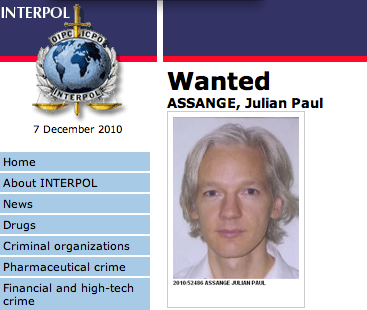
There has been some criticism of the handling of the case against Wikileaks founder Julian Assange by the Swedish authorities. We asked Anne Ramberg, Secretary General of the Swedish Bar Association, to look at how the allegations square with Swedish legal practice.
Criticism 1: All parties to sexual misdemeanors should remain anonymous until conviction secured in Swedish law
The main rule is that information of the identity of an alleged, aggrieved/injured person is public. Under certain conditions, however, this type of information can be subject to secrecy. According to Swedish legislation (The Public Access to Information and Secrecy Act, Chapter 35, Section 12 and Chapter 43, Section 5 and 8 in conjunction with the Code of Judicial Procedure) information about the identity of a person suspected being a victim of a crime and other personal circumstances of that person may be subject to secrecy, if it is possible that making the information public could harm the party in any serious way. This regulation specifically applies to aggrieved persons in cases involving sexual crimes.
Criticism 2: In most countries to reinvestigate a case that’s been closed is considered an abuse of process if there¹s no further evidence
According to Swedish law a reinvestigation of a case requires further or new circumstances to be considered.
Decision to prosecute
Once the preliminary investigations have been completed, the prosecutor must decide whether or not to prosecute. If the prosecutor, on objective grounds, judges that there is sufficient evidence to establish that the suspect has committed an offence, he/she is obliged to prosecute. If a prosecution is initiated, it is the task of the prosecutor to prove to the court that a crime has been committed.
If there is insufficient evidence to prove that an offence has been committed, the suspect cannot be prosecuted. It could, for example, be because the suspect denies committing the offence or that there are no witnesses or forensic evidence linking the suspect to the crime. Sometimes it becomes apparent during the course of the preliminary investigation that it is not possible to prove that a crime has been committed. Under these circumstances the prosecutor decides to discontinue the preliminary investigation. A decision like this has the same significance as a decision to drop the charges against a suspect. In the case of both decisions it means that the preliminary investigations can be resumed if new information is received concerning the crime. The victim of the crime, the injured/aggrieved party, is always informed of the decision reached by the prosecutor.
Review
It is possible to request a review of a prosecutor’s ruling concerning, for example, a discontinued preliminary investigation or a decision not to bring charges. Requests for review are made by one of the Prosecution Authority’s prosecution development centres. If a request for a review is received by a public prosecution office, first of all the prosecutor who made the ruling shall decide whether or not any new circumstances have come to light in the matter. If new circumstances are cited, the prosecutor reconsiders his/her decision. If this reconsideration fails to result in any change to the original ruling, the matter is referred to the prosecution development centre. The same applies if there are no new circumstances to be considered in the case. At the prosecution development centre, the case will be reviewed by the Director of Public Prosecution, who will then make a decision on, for instance, the resumption of a discontinued investigation or that certain investigation measures should be taken. The case is then referred back to the original public prosecution office, but to a different prosecutor. Decisions made by a prosecution development centre can also be reviewed, and the matter will in this case be handled by the Office of the Prosecutor-General.
Criticism 3: Prosecution refusing to reveal texts exchanged between the two women
Circumstances on which the suspicions are founded are as a general rule subject to secrecy during the preliminary investigation.
Decisions to keep information included in the preliminary investigation confidential are usually based on considerations that publicity would impair the progress of the work, or that evidence, in case the information became public, could be destroyed. However, decisions on secrecy, especially in cases regarding sexual misdemeanours where there might be some delicate information, may also be referred to the consideration to the injured persons involved in the case.
The information in the preliminary investigation, with some exceptions, becomes public when the prosecutor decides to prosecute the suspect.
When the preliminary investigation has advanced so far that a person is reasonably suspected of committing the criminal offence, he shall, when he is heard, be notified of the suspicion. To the extent possible without impediment to the investigation, the suspect and his defence counsel shall be informed continuously of developments in the investigation. They shall also have the right to state what inquiries they consider desirable and otherwise consider to be necessary. A notice concerning these matters shall be delivered or sent to the suspect and to his defence counsel upon which they shall be afforded a reasonable time for counselling. Prosecution may not be decided before this is done.
Furthermore, at the request of the suspect or his defence counsel a person shall be questioned, or other inquiry be made, if this may be assumed to be relevant to the investigation. When such a request is denied, the reasons for the denial shall be stated.
Criticism 4 Sexual molestation is a minor offence
As you will see below, the range of punishment for sexual molestation is a fine or imprisonment for at most two years. Hence, I would say that sexual molestation indeed is regarded as a serious offence according to Swedish law.
Swedish legislation in question – the Swedish Penal Code:
Chapter 6
Section 1 – rape
A person who by assault or otherwise by violence or by threat of a criminal act forces another person to have sexual intercourse or to undertake or endure another sexual act that, having regard to the nature of the violation and the circumstances in general, is comparable to sexual intercourse, shall be sentenced for rape to imprisonment for at least two and at most six years.
This shall also apply if a person engages with another person in sexual intercourse or in a sexual act which under the first paragraph is comparable to sexual intercourse by improperly exploiting that the person, due to unconsciousness, sleep, intoxication or other drug influence, illness, physical injury or mental disturbance, or otherwise in view of the circumstances in general, is in a helpless state.
If, in view of the circumstances associated with the crime, a crime provided for in the first or second paragraph is considered less aggravated, a sentence to imprisonment for at most four years shall be imposed for rape.
If a crime provided for in the first or second paragraph is considered gross, a sentence to imprisonment for at least four and at most ten years shall be imposed for gross rape. In assessing whether the crime is gross, special consideration shall be given to whether the violence or threat was of a particularly serious nature or whether more than one person assaulted the victim or in any other way took part in the assault or whether the perpetrator having regard to the method used or otherwise exhibited particular ruthlessness or brutality.
Section 10 – sexual molestation
A person who, otherwise than as previously provided in this Chapter, sexually touches a child under fifteen years of age or induces the child to undertake or participate in an act with sexual implications, shall be sentenced for sexual molestation to a fine or imprisonment for at most two years.
This also applies to a person who exposes himself or herself to another person in a manner that is likely to cause discomfort, or who otherwise by word or deed molests a person in a way that is likely to violate that person’s sexual integrity.
Chapter 4
Section 4 – unlawful coercion
A person who, by assault or otherwise by force or by threat of a criminal act, compels another to do, submit to or omit to do something, shall be sentenced for unlawful coercion to a fine or imprisonment for at most two years. Anyone who to such effect exercises coercion by threatening to prosecute or report another for a crime or give detrimental information about another, shall also be sentenced for unlawful coercion, provided that the coercion is wrongful.
If the crime referred to in the first, paragraph is gross, imprisonment for at least six months and at most six years shall be imposed. In assessing whether the crime is gross special consideration shall be given to whether the act included the infliction of pain to force a confession, or other torture.
Criticism 5 The case has been influenced by political pressure
Any kind allegations concerning political interference in a specific legal case must be taken seriously and properly investigated if probable grounds for the allegations.
However, as Secretary General of the Swedish Bar Association, I am not in a position to give you any detailed information on the specific case regarding Mr. Assange. This case is, and evidently should be, tried in accordance with ordinary procedures as any other case where someone is suspected of having committed sexual criminal offences in accordance with the rules in the Swedish Code of Judicial Procedure.
To conclude I would like to add the following. When it comes to Swedish legislation on sexual offences the adjudication off such cases has been widely debated after the last legislative review some years ago. The main change made at that time included an extension of the definition of rape. That extended definition was criticised by the Swedish Bar Association and others for being too vague giving rise to demarcation problems. The Bar expressed concern with as a matter of the rule of law aspects. On the other hand there were those who wanted the legislation to go even further and introduce a requirement for consent. Recently such a proposal has been submitted to the government.