8 Aug 2013 | France, News, Politics and Society
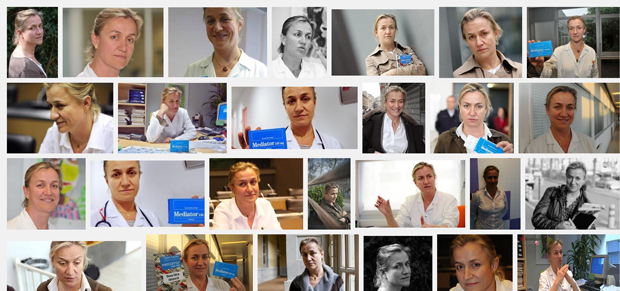
Irène Frachon is a French pneumologist who discovered that an antidiabetic drug frequently prescribed for weight loss called Mediator was causing severe heart damage.
The French term “lanceur d’alerte” [literally: “alarm raiser”], which translates as “whistleblower”, was coined by two French sociologists in the 90’s and popularised by scientific André Cicolella, a whistleblower who was fired in 1994 from l’Institut national de recherche et de sécurité [the National institute for research and security] for having blown the whistle on the dangers of glycol ethers.
While the history of whistleblowing in the United States is closely associated with the case of Daniel Ellsberg, who leaked the Pentagon Papers to The New York Times in 1971, exposing US government lies and helping to end the Vietnam war, whistleblowing in France was first associated with cases of scientists who raised the alarm over a health or an environmental risk.
In England, the awareness that whistleblowers needed protection grew in the early 1990s, after a series of accidents (among which the shipwreck of the MS Herald of Free Enterprise ferry, in 1987, which caused 193 deaths) when it appeared that the tragedies could have been prevented if employees had been able to voice their concerns without fear of losing their job. The Public Interest Disclosure Act, passed in 1998, is one of the most complete legal frameworks protecting whistleblowers. It still is a reference.
France had no shortage of national health scandals in the 1990s, from the case of HIV-contaminated blood to the case of growth hormone. But no legislation followed. For a long time, whistleblowers were at the center of a confusion: their action was seen as reminiscent of the institutionalised denunciations that took place under the Vichy regime when France was under Nazi occupation. In fact, no later than this year, some conservative MPs managed to defeat an amendment on whistleblowers’ protection by raising the spectre of Vichy.
For Marie Meyer, Expert of Ethical Alerts at Transparency International, an anti-corruption NGO, this confusion makes little sense: “Whistleblowing is heroic, snitching cowardly”, she says.
“In France, the turning point was definitely the Mediator case, and Irène Frachon,” Meyer adds, referring to the case of a French pneumologist who discovered that an antidiabetic drug frequently prescribed for weight loss called Mediator was causing severe heart damage. In 2010, Frachon published a book – Mediator, 150mg, Combien de morts ? [“Mediator, 150mg, How Many Deaths?”] – where she recounted her long fight for the drug to be banned. Servier, the pharmaceutical company which produced the drug, managed to censor the title of the book and get it removed from the shelves two days after publication, before the judgement was overturned. Frachon has been essential in uncovering a scandal which is believed to have caused between 500 and 2000 deaths. With scientist André Cicolella, she has become one of the better-known French whistleblowers.
“What is striking is that people knew, whether in the case of PIP breast implants or of Mediator”, says Meyer. “You had doctors who knew, employees who remained silent, because they were scared of losing their job.”
This year, the efforts of various NGOs led by ex whistleblowers were finally met with results. Last January, France adopted a law (first proposed to the Senate by the Green Party) protecting whistleblowers for matters pertaining to health and environmental issues. The Cahuzac scandal, which fully broke in February and March, prompting the minister of budget to resign over Mediapart’s allegations that he had a secret offshore account, was instrumental in raising awareness and created the political will to protect whistleblowers.
For Meyer, France’s failure to protect whistleblowers employed in the public service has had direct consequences on the level of corruption in the country.
“Even if a public servant came to know that something was wrong with the financial accounts of a Minister, be it Cahuzac or someone else, how could he have had the courage to say it, and risk for his career and his life to be broken?” she says.
In June, as France discovered Edward Snowden’s revelations in the press over mass surveillance programs used by the National Security Agency, it started rediscovering its own whistleblowers: André Cicolella, Irène Frachon or Philippe Pichon, who was dismissed as a police commander in 2011 after his denunciations on the way police files were updated. Banker Pierre Condamin-Gerbier, a key witness in the Cahuzac case, was recently added to the list, when he was imprisoned in Switzerland on the 5th of July, two days after having been heard by the French Parliamentary Commission on the tax evasion case.
Three new laws protecting whistleblowers’ rights should be passed in the autumn. France will still be missing an independent body carrying out investigations into claims brought up by whistleblowerss, and an organisation to support them, like British charity Public Concern at Work does in the UK.
So far, French law doesn’t plan any particular protection to individuals who blow the whistle in the press, failing to recognise that, for a whistleblower, communicating with the press can be the best way to make a concern public – guaranteeing that the message won’t be forgotten, while possibly seeking to limit the reprisal against the messenger.
30 Jul 2013 | France, News, Politics and Society
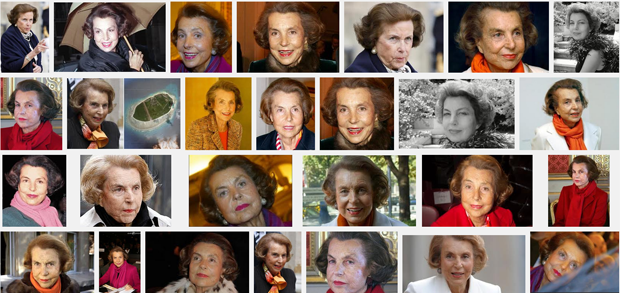
In a controversial ruling, a French court has ordered Mediapart to withdraw Bettencourt “butler tapes” from its website.
Since Tuesday 3 November 2015, the fourth part of the Bettencourt case is being judged in a Bordeaux court. This time the accused is Pascal Bonnefoy, former butler of Liliane Bettencourt. Bonnefoy is accused of privacy violations in conjunction with media outlets Le Point and Mediapart, which reproduced excerpts of recordings Bonnefoy had made. The tapes allowed the French justice system to condemn several people for abuse of a vulnerable person — the L’Oréal heiress — and spawned investigations into alleged corruption.
Following a court decision that became effective on Monday 22 July 2013, independent French news website Mediapart has had to withdraw the infamous Bettencourt “butler tapes” from its website, as well as 72 articles including quotes from the recordings, prompting a campaign of solidarity in the French and international media.
In the balance between freedom to inform and right to privacy, the court ruled that it was more important to protect the right to privacy. Reporters Without Borders published the censored content on Wefightcensorship.org, a website that has until now published content from countries more commonly associated with abuses of press freedom, such as Turkmenistan, China and Belarus.
Between 2009 and 2010, Pascal Bonnefoy, the butler of L’Oréal heiress, 87 year-old Liliane Bettencourt, secretly recorded conversations between his boss and Patrice de Maistre, her wealth manager, as well as other advisers. As Bonnefoy explained in a recent interview with French Vanity Fair, he did this because he thought Bettencourt was being manipulated by a close circle of advisers and friends. Apalled by the conversations he had intercepted, he gave the recordings to Bettencourt’s daughter who gave them to representatives of the justice system.
A 21 hour-long copy of the tape also came in possession of Mediapart and Le Point magazine. Journalists at the two publications edited down the content to one hour, getting rid of references to Liliane Bettencourt’s private life. What they kept was damning: the excerpts published in June 2010, contained, among other things, evidence of tax evasion and influence peddling, they raised suspicions of illegal political funding and interference in justice proceedings by a French presidential adviser.
The butler tapes have been at the centre of a lengthy investigation, as the Bettencourt case gradually unfolded, turning into the Bettencourt-Woerth case (when it appeared that Eric Woerth, successively budget and labour minister during Sarkozy’s presidential term, was involved) and the Sarkozy case, when France’s ex-president was placed under investigation over allegations that he had accepted illegal donations. The recordings were recognised as evidence by the criminal chamber of the appeal court in January 2012 and will be at the centre of a trial in Bordeaux, which date is still to be announced.
Meanwhile, following a complaint by Bettencourt’s legal guardian and by her former wealth manager, the Versailles appeal court ruled on 4 July that Mediapart and Le Point had to take down the recordings and all direct quotes from it or face significant financial penalties (10,000 euros per day per infraction). They will also have to pay 20,000 euros of damages to Bettencourt if her representatives claim the fee.
“What’s the balance between the freedom to inform and the right to privacy? This is the question raised by this ruling”, says Antoine Héry, head of the World Press Freedom Index at Reporters Without Borders. For him, the excerpts of the recordings used by Mediapart and Le Point are of public interest. “Erasing this content means erasing a part of this country’s collective memory”, he says. “Mediapart has written a lot about the case, which marks an important moment of French Fifth Republic’s history, and possibly one of the greatest scandal it has known,” he adds. The ruling might have a chilling effect – and make it more difficult for journalists to break stories in the future, for fear of costly court proceedings and fees. It will also make it complicated for Mediapart to write about the upcoming Bordeaux court case, as its journalists won’t be able to quote from the recordings, which constitute a very central piece of evidence.
“This decision”, says Edwy Plenel, a former Le Monde editor, who co-founded Mediapart in 2008 with other former print journalists, “is incredibly backwards, and recalls the very reactionary decisions taken by the judiciary system during the Second Empire, which showed an increasing tension towards the growing modernity of the publishing world and journalism.” For Plenel, the verdict can only be read as a reaction to changes prompted by the Internet – which allows a free circulation of information. It is part of a greater debate which has been taking place around the Snowden and Wikileaks case, and the Condamin-Gerbier case in Switzerland, where national security, banking secrecy and protection of privacy are opposed to the right to inform. Mediapart will appeal to the decision in France and take the case to the European Court of Human Rights if needs be.
The solidarity campaign which immediately followed the Versailles court decision has shown that such a verdict was absurd in the era of internet. After three years, the Bettencourt file has entered the public domain and has been copied everywhere: it’s easy to find on BitTorrent or Reflets.info. Following the verdict, several publications immediately offered to host the content that Mediapart was obliged to censor as a sign of protest. Among them, Belgian national newspaper Le Soir, French publications such as rue89 website, Les Inrockuptibles magazine or Arrêt sur Images website. Media organisations, NGOs and unions launched an appeal entitled “We have the right to know” supported by 53,000 signatures, which said: “When it comes to public affairs, openness should be the rule and secrecy the exception.”
Following the Streisand effect, the Versailles verdict seems to have backfired. Never have so many people listened to the Bettencourt tapes, nor read about the story, nor be interested in Mediapart, an investigative journalism website which has proven its ability to set the news agenda in France, and created a new business model as French printed press sunk deeper into crisis – Mediapart charges readers for access and doesn’t carry any advertisement.
Le Monde, France’s most well-known newspaper, abstained from the solidarity campaign, as well as conservative newspaper Le Figaro, a decision seen by many as disappointing, given that Le Monde was associated with Wikileaks and Offshore Leaks earlier this year.
“For me”, says Plenel, “this can be explained by a certain illiberal tradition within the French press, the fact that in this country journalism is often too close to political power, and also by a certain fear of the changes that Internet is causing in the media – embodied by Mediapart.” This distrust of new media associated with the Internet could explain the smear campaign endured by Mediapart by a good part of the traditional and conservative press from December last year, when the website broke the Cahuzac scandal (also prompted by a tape) which caused France’s budget minister to resign in April, finally admitting that he had a secret offshore account. France’s traditional written press seems to have become extremely cautious, and unable to break scandals, a task which was filled for a long time by the satirical weekly publication Le Canard Enchaîné, and now is also filled by Mediapart.
How does France rank on the Press Freedom Index?
“It’s only 37”, says Héry. A mediocre rank explained by the mediocrity of the law framing the protection of sources for journalists, and by reforms passed during Sarkozy’ presidency which streightened governmental control over France Télévisions, the French public national television broadcaster – allowing France’s president to name its CEO. Hollande’s government is expected to work on these issues – and new laws on the protection of sources for journalists, the status of whistleblower, and the nomination of the head of France Television should be passed. On Friday, the appeal launched in solidarity with Mediapart was handed to Aurélie Fillippetti, minister of culture and communication of the Hollande government, as well as the whole Bettencourt file.
Interestingly, the Versailles verdict took place on the same day France refused to grant asylum to Edward Snowden – a strong reminder that France could do a lot better to protect the right to inform and to be informed.