21 Jul 2016 | Europe and Central Asia, Mapping Media Freedom, mobile, News, Turkey, Turkey Uncensored
The failed 15 July coup, bloody and despicable, delivered a lethal blow to the already crippled democratic order in Turkey. The cabal behind the putsch has become a midwife to Turkey’s “autogolpe” or self-coup. With every step, President Reccep Tayyip Erdogan and his Justice and Development Party (AKP) backers have introduced further restrictive sanctions.
This creeping self-coup is a prospect I raised in early 2014 with a long analysis for the German edition of Le Monde Diplomatique entitled Putsch im Zeitlupe. In that article I pointed out the parallels between the career of Alberto Fujimori, the former Peruvian president who is in prison for his corruption, and the increasingly autocratic methods employed by Erdogan.
The reaction to the totally unacceptable coup so far sadly has endorsed my theory. The reformatting of the Turkish state is now in fast-forward mode with a massive purge underway.
Tension has spilled over into academia. The head of the Supreme Board of High Education (YÖK), which itself is the product of the 1980 military coup d’état, called all the presidents of universities to an emergency meeting. It was followed by two drastic steps: YÖK issued a directive demanding the resignations of 1,577 deans across the country and, on Wednesday morning, blocked travel for all academics who were travelling abroad. YÖK also ordered all Turkish academics resident in universities in other countries to return home.
The media has been strangled even further. Within the past 48 hours, around 20 news sites were blocked by the Telecommunications Authority (TIB). On Tuesday night, the High Board of Radio and TV (RTUK) cancelled the licences of 24 TV and radio channels. The office of the press directorate announced that the press cards of 34 editors and reporters were cancelled. Officials cited “linkage with FETO structures” when explaining the bans. According to Turkish authorities, FETO is the terrorist organisation headed by the US-based cleric Fetullah Gulen, who has created a parallel state and is behind the failed coup.
The daily Özgür Düşünce, now accused of being an extension of “FETO terror organisation”, announced on Wednesday it was shutting down. The irony is that the daily that had assembled the finest core of liberal columnists who for many years struggled for a democratic order.
Also on Wednesday the editor of Meydan daily Levent Kenez and managing editor Gülizar Baki were arrested during a police raid without any explanation. Both are first class journalists.
Another drama has been developing around Wikileaks, which has published nearly 300,000 emails along with thousands of attached files from 762 mailboxes that allegedly belong to email domain of the AKP. The e-mails span between 2010 and June 2016.
Wikileaks was banned after some hours. “Turks will likely be censored to prevent them reading our pending release of 100k+ docs on politics leading up to the coup,” an earlier statement by Wikileaks read. It was later reported that ”WikiLeaks’ infrastrucutre was under sustained attack” following its announcement.
Concerns are at the alert level internationally. The International Federations of Journalists and the European Federations of Journalists contacted the Council of Europe about a series of new press freedom violations. Mapping Media Freedom has logged 18 violations of press freedom aimed at news outlets or professionals since the night of the coup attempt.
All journalists affiliated with the independent outlets know they have to work on the realistic presumption that conditions will worsen for them. If the Erdogan-led government has decided to deepen the path towards a self-coup and to utilise the extraordinary circumstances to ruthlessly settle scores with all dissent and opposition, the presumption is legitimate. All segments of civil society may soon be unable to avoid feeling they have been “taken hostage” as a result of the coup attempt that has pushed Turkey back decades.
A version of this article was originally posted to Suddeutsche Zeitung. It is published here with permission of the author.
Turkey Uncensored is an Index on Censorship project to publish a series of articles from censored Turkish writers, artists and translators.
16 Jul 2015 | Europe and Central Asia, Mapping Media Freedom, mobile, News, Serbia
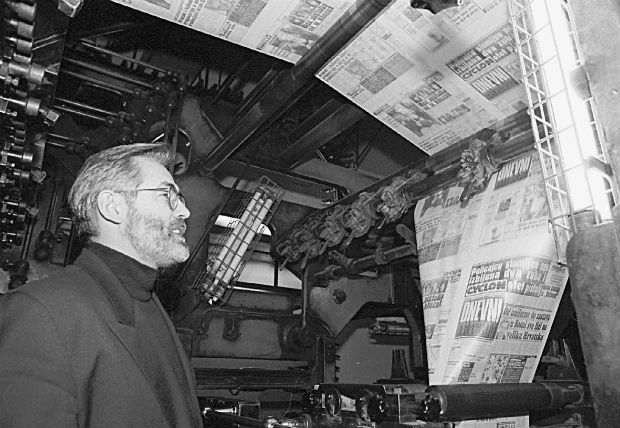
Journalist Slavko Curuvija, murdered in Belgrade in 1999 (Photo: Predrag Mitic)
As NATO bombs were falling on the Serbian capital Belgrade on 11 April 1999 , a man was being executed on a side street in the centre of the city. The victim was later identified as Slavko Curuvija, a prominent Serbian anti-regime journalist. A post mortem found that Curuvija had been shot in the back 17 times. Five days earlier the state-run daily Politika Ekspres had published an article calling Curuvija a traitor and a NATO supporter.
Fast forward to 1 June 2015: the trial of four former security officers begins before a special court in Belgrade. It took 16 years for anyone to stand trial over what had become a notorious case of intimidation of journalists in Serbia.
Much of the credit for pursuing a cause by many considered lost can go to veteran journalist Veran Matic, the editor-in-chief of media group B92.
Several Serbian governments had shown no signs that they were willing to solve Curuvija’s case; the same goes for many other war-time murders. For years, Matic and his fellow journalists would mark the anniversary of Curuvija’s death by laying flowers at Svetogorska Street, where he lived and died, and by raising awareness in the media and with the government. It was not enough.
In 2013, Matic was fed up with waiting for answers about the murders of his colleagues. He proposed to form a special body to investigate the killings of Curuvija and two other journalists. Prime Minister Aleksandar Vucic — then deputy prime minister — gave Matic permission to form the Commission for Investigating Killings of Journalists in Serbia. It was an unexpected move. As Curuvija was being executed on a Belgrade side street, Vucic was minister of information in President Slobodan Milosevic’s government.
“Some criticised the establishment of the commission for giving an opportunity to Vucic to clear his past,” says Matic, referring to the unease many journalists felt towards Vucic, who was highly critical towards independent media during the nineties.
“Marking every year the anniversary of the killing, visiting the place of assault, criticising the state again and again for failing to resolve those crimes became very humiliating for me,” Matic said. “In this way, I have been given another instrument through which I could do something in practice.”
It was clear that Matic needed the government’s cooperation if he wanted the murders to be solved. “I wanted to get hold of every single document and, in order to do this, we needed a commission that would be supported by the government,” he said. But Matic managed to ensure the body was made up of three representatives of the independent media, three members of the ministry of internal affairs and three representatives of the security information agency. With Matic himself serving as the commission’s chairman, journalists will always be in the majority.
Progress and challenges
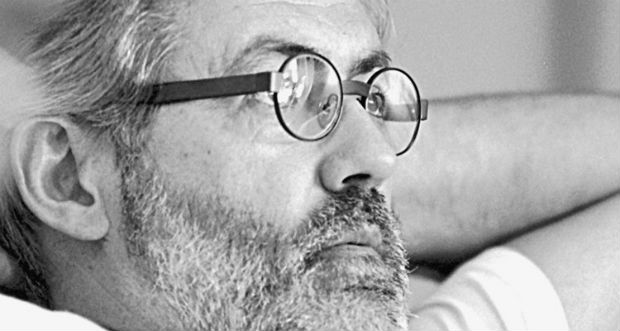
(Photo: Predrag Mitic)
The commission is focusing on three big murder cases from the recent past. The work around Curuvija’s case has been the most successful until now, with four people charged. Trials for former Chief of State Security Rade Markovic and the two ex-secret service officers Ratko Romic and Milan Radonjic began 1 June. The fourth accused is Miroslav Kurak, also a former state security member and the man who is believed to have pulled the trigger on Curuvija. He is being tried in absentia, as he is still at large, an Interpol warrant issued for his arrest. There are clues that Kurak is living in Central or South Africa where he owns a hunting safari agency.
The Dada Vujasinovic case is perhaps the most difficult, as the murder took place over two decades ago. Vujasinovic was a reporter for the news magazine Duga and wrote about Zeljko Raznatovic, also known as Arkan. She was found dead in her apartment in 1994. The police ruled it a suicide, but most evidence disputes this. When the commission started working on the case, there were doubts about the forensic research done in Serbia at the time. “I decided that the first step would be to seek expertise outside of the country, as the trust in domestic institutions had been compromised,” said Matic. “We asked the Dutch National Forensic Institute based in The Hague, who offered to perform the forensic examinations for 35,000 euro. We are now raising funds for this, given that the prosecutor’s office has no budget for these services.”
The third case is that of Milan Pantic, who was murdered in June 2001 while entering his apartment building in the central Serbian town of Jagodina. Attackers broke his neck, and was also struck on the head with a sharp object. Pantic worked for the newspaper Vecernje Novosti, where he reported on criminal affairs and corruption in local companies. Prior to the killing, he had received numerous telephone threats in response to articles he had written. It’s not an easy task to investigate. “We know that one of the suspects is living in Germany under a different name,” explained Matic. “But we didn’t get permission to conduct an interview with him.”
The commission is also looking into the deaths of 16 media staffers from RTS — Serbia’s state broadcaster — who were killed during a NATO airstrike targeting its headquarters in 1999. “This is a very complex issue,” said Matic. “The executioner is certainly a pilot of one of the NATO member countries. The people who decided to put a media company on the list of war targets should face trial, as well as those who issued the order to launch missiles and kill the media workers. And also the people responsible in Serbia, who knew the building would be bombed and did not evacuate it.” NATO is refusing to cooperate in this case.
Unique commission
It is of great importance, Matic believes, that these cold cases will be solved. “Unpunished crimes, especially this committed by state institutions, only call for new violence, threats and endangerment of the safety of journalists. It leaves deep scars in the lives of journalists in this country and it contributes to censorship and fear.”
A commission like this is unique in the world; a government body controlled by independent media representatives. And its first success, the arrests in the Curuvija murder case, was surprising to many who’d lost faith in the justice system in Serbia. “This commission was not established by politicians. On the contrary, they accepted all my requests and ideas,” said Matic. “This is quite an atypical commission that works on making results, and none of its members have any political or other motives, but solely finding the killers and masterminds that hide behind the killings, and bringing them to justice.”
Jailing the head of Serbia’s secret service during the nineties, a dark period for both the country and its internal security apparatus, has come with a high price. Matic now lives under 24/7 police protection and he can’t travel anywhere without a police escort. “Some names have again been brought to light, along with their disgraceful role [in the killings]. Some are threatened with arrest, while some of them have been arrested already,” he said of the ongoing investigation.
Matic receives threats often, mostly via email, some of them to his life. But he has gotten used to having police officers in front of his door at all times because, he said, the truth is worth the compromise.
“This is the price we have to pay in order to resolve those crimes,” he said. “It will contribute to the catharsis of our society.”
Mapping Media Freedom
Click on the bubbles to view reports or double-click to zoom in on specific regions. The full site can be accessed at https://mappingmediafreedom.org/
|
An earlier version of this article stated that Aleksandar Vucic was interior minister when the commission was set up. This has been corrected.
This article was posted on 16 July 2015 at indexoncensorship.org
30 Apr 2013 | authoritarian, Russia, Uncategorized
In March the Russian authorities turned their attentions to online social networks — and the Kremlin proved adept at getting major international companies to comply with its directives: on 15 March Twitter blocked an account that promoted drugs and on 29 March Facebook took down a page called “Suicide School” rather than see its entire network blacklisted.
On 25 March, reports surfaced that the ministry of Communications and Mass Media planned to transfer maintenance of the Registry of Banned Sites from communications regulator Roskomnadzor to a third party selected by Roskomnadzor. The ministry proposed changes to the registry; to maintain website owners’ information on the register but deny sites owners — as well as hosting and Internet providers — access to the entire registry. Internet service providers will also be obliged to restore access to sites that have been removed from the register within 24 hours.
Education and schools
ISPs win small victory on child protection
Reports from 1 March stated that Vladimir Putin agreed a change to the Russian administrative code exempting internet service providers from responsibility for preventing availability to children of harmful materials from publicly accessible internet services. Responsibility now rests with all “persons who provide access to information distributed via telecommunication networks in places accessible to children” rather than ISPs.
Saratov demands better filtering
On 13 March the Saratov regional prosecutor reported that the Bazarno-Karabulaksky district prosecutor had discovered that pornographic websites were accessible from computers in the village school of Alekseevka. Similar violations were discovered in schools of Maksimovka, Vyazovka and Sukhoi Karabulak. The schools were told to upgrade their content filtering.
Tyva schools ordered to improve content filtering
On 27 March it was reported that the Tandinsky district court in the Tyva Republic had accepted a district prosecutor’s demand that Kochetovo village school enhance its content filtering. An inspection had found that students could access websites providing instructions on manufacturing smoking blends and explosives, as well as publications included on the Federal List of Extremist Materials.
Neryungri prosecutor demands filtering
It was reported on 27 March that the Neryungri prosecutor had discovered that computers in several schools and a college allowed access to undesirable websites. Educational managers were fined for their negligence and content filters are currently being installed.
Pskov clamps down on porn
On 29 March it was reported that the Dnovsky district prosecutor in Pskov had discovered that students in a secondary school in the town of Dno were able to freely access pornographic websites and sites promoting the use of illegal drugs. The school was told to stop allowing such access.
Bashkortostan targets cannabis site
The Meleuzovsky prosecutor in Bashkortostan discovered that banned websites were accessible in several Meleuz educational institutions. Students in one school could access a website containing information on manufacturing hashish. The prosecutor demanded that the schools restrict access.
Extremism
Extremism “discovered in burger bar”
On 28 February an inspection by the counter-propaganda department of the Karachay-Cherkess Republic ministry of the interior’s anti-extremism unit found an extremist website on the Federal List of Extremist Materials, made publicly accessible from a computer in the Momento Burger internet cafe in Cherkessk. The case is now being considered by the local prosecutor.
Syktyvkar assault on ‘extremist materials’
It was reported on 15 March that the Syktyvkar city court had accepted its prosecutor’s writ demanding that access to 20 sites be restricted by the ISP ParmaTel for featuring extremist materials.
Vologda blocks Islamist website
On 18 March it was reported that the Sokolsky prosecutor had issued a request to an ISP to block access to radical Islamist websites including an article included on the Federal List of Extremist Materials.
Samara clamps down
On 19 March the Kirovsky district court of Samara granted the prosecutor’s office claim against an Internet provider for providing access to a website that contained the book The Gardens of the Righteous by Imam Abu Zakaria Mohiuddin Yahya. The book is included on the Federal List of Extremist Materials.
Moscow prosecutor restricts access
On 19 March it was reported that Gagarinsky prosecutor in in Moscow had filed a writ with Gagarinsky district court against the ISP Niko-2001, demanding restrictions on access to five websites containing publications on the Federal List of Extremist Materials. The ISP complied and the case was dropped.
Nazis suppressed in Lipetsk
Reports from 19 March stated that the Sovetsky district prosecutor in Lipetsk had successfully demanded that the White Resistance (Beloie Soprotivleniie) website be recognised as extremist because it contained Aryan supremacy propaganda, including Adolf Hitler’s Mein Kampf.
Ulyanovsk goes for Islamists
On 21 March the Ulyanovsk regional prosecutor stated that the Inzensky district prosecutor had found a number of publicly accessible websites containing extremist materials, including the Letter of the Autonomous Mujahideen Group of Vilayata KBK IK, which is on the Federal List of Extremist Materials. The district prosecutor has served a writ against the local branch of the ISP Rostelekom demanding that access be blocked.
Saratov upholds ban
On 22 March it was reported that the civil law panel of the Saratov regionial court had upheld a lower court’s decision to order the ISPs COMSTAR-Regions and Altura to restrict access to websites containing extremist materials.
Saratov prosecutor sues against hatred
On 27 March the Saratov regional prosecutor was reported to have filed eight writs against the ISP COMSTAR-Regiony and the regional branch of the ISP Rostelekom, demanding restrictions on access to websites containing references to extremist activity and materials aimed at inciting hatred or enmity.
Poem targeted in Tambov
On 27 March it was reported that the Michurinsk city prosecutor in Tambov had demanded that the ISP Telesputnik restrict access to a web page containing a poem included on the Federal List of Extremist Materials. The poem was declared extremist by a city court in Yuzhno-Sakhalinsk in 2007.
Chelyabinsk restricts nationalist site
On 28 March the Chelyabinsk regional prosecutor announced that the Leninsky district prosecutor in Magnitogorsk had filed seven writs demanding that ISPs restrict access to a right-wing website publishing extremist materials — among them the the article Open Questions of Russian Nationalism.
Sverdlovsk targets Islamists
On 28 March the Sverdlovsk regional prosecutor announced that the Kamensk-Uralsky prosecutor had filed several writs against the ISPs Kamensk-Telekom and Konveks-Kamensk and the regional branch of Rostelekom demanding restrictions on access to websites containing materials on the Federal List of Extremist Materials including the tract Adhering to the Sunnah of the Prophet (Peace and Blessings of Allah be Upon Him).
Bryansk ISP gets court order
On 28 March it was announced that the Bryansk regional court had granted the request of the Volodarsky district prosecutor to restrict access to websites containing extremist materials. The Sovetsky district court last year rejected the request but was overturned on appeal.
Ivanovo prosecutor wants explosives ban
On 28 March the Ivanovo regional prosecutor reported that the Teikovsky prosecutor had identified publicly accessible websites that contain information about manufacturing explosives. Writs demanding restriction of access to the websites were subsequently issued.
Kirov kills fascist website
On 28 March the Kirov regional prosecutor reported that a publicly accessible website offering items with fascist symbols for sale was identified during an audit. The Kirov city prosecutor demanded that the ISP MTC block access and the court complied.
Gambling and online casinos
‘No more gambling’ in Chapayevsk
On 6 March the Samara regional prosecutor declared that the Lenin district court of Samara had accepted 19 complaints by the Chapayevsk town prosecutor about inadequate restrictions on access to gambling websites.
Ulyanovsk restricts pyramid schemes
On 14 March it was reported that the Novomalyklinsky district prosecutor’s office of the Ulyanovsk region had issued writs against the local branch of the ISP Rostelekom demanding restrictions on access to websites run by the pyramid-scheme impresario Sergey Mavrodi.
Kurgan stops the betting
On 15 March it was reported that the Dalmatovsky district prosecutor had identified 25 gambling websites. The prosecutor demanded that the ISP Rus block the sites, and it agreed.
Online gambling halted in Penza
On 15 March the Penza regional prosecutor reported that the Lenin district prosecutor had identified 13 online casino websites. The prosecutor filed a writ against the ISP Rostelekom demanding that access be restricted, which was granted.
Orenburg rules out casinos
On 15 March it was reported that the Novotroitsk town court in the Orenburg region had agreed to a prosecutor’s demands for restrictions on access to online casino sites. The ISP Ass-Com blocked more than 20 websites voluntarily.
Omsk bars access to gambling
On 20 March the Leninsky district prosecutor’s office in Omsk sued the ISP Sakhalin in the Leninsky district court, demanding restrictions on access to pyramid-scheme websites.
Pskov stops the gamblers
On 21 March it was reported that the Pskov regional prosecutor had found 85 websites with gambling-related information and demanded access restrictions for the sites. After a long legal wrangle, the local branch of the ISP Rostelecom was ordered to restrict access.
Khanty-Mansiysk closes online bookies
On 22 March the Khanty-Mansiysk Autonomous district prosecutor’s office reported that the Nyagan Town prosecutor had identified several gambling websites. Based on the results of the inspection, the prosecutor filed a lawsuit against the local Rostelekom branch demanding that access to the websites be restricted. The Khanty-Mansiysk district court has granted the petition in full.
Perm blocks gambling access
On 26 March the Perm regional prosecutor reported that pyramid-scheme websites had been found in the public domain in Chernushinsky district. The district prosecutor issued a writ demanding that the local ISP restrict access to these sites, which was accepted by the district court.
Khanty-Mansiysk clamps down
On 26 March it was reported that the appeal court in the Khanty-Mansiysk autonomous district had accepted demands from local prosecutors that pyramid-scheme websites be blocked.
Social networks
Twitter closes account and deleted Tweets
On 15 March it became known that in the two preceding weeks Twitter had blocked access to five tweets and closed one user account upon request from Roskomnadzor because its owner advertised the sales of illegal drugs. Three Tweets were blocked for promoting suicide and two more for assisting in drug distribution. The deleted user’s account had advertised a drug distribution network, and was reported to Roskomnadzor by Twitter after its removal.
ISP blocks social networks in Ryazan and Orel
On 28 March it was reported that the ISP Rostelekom had blocked the Odnoklassniki and VKontakte social networks in the Ryazan and Orel regions and had blocked access to YouTube in Orel and Livejournal in Ryazan. The websites were included on the Registry of Banned Sites, but the block was later lifted.
Roskomnadzor warns Facebook
On 28 March it was reported that the federal communications agency Roskomnadzor notified Facebook that it would be blocked unless it removed a page called “Suicide school”, containing (mostly humurous) information about suicide. The page was added to Russia’s internet blacklist and was taken down by the social networking site.
Drugs and pornography
Samara blocks drug-dealing sites
On 12 March it was reported that the Novokuibyshevsk city court in Samara region had demanded that local ISPs MIRS, Next Tell-Samara, Progress IT and TesComVolga restrict access to 25 websites that offered narcotics and psychedelic substances for sale. The websites were identified during an audit conducted by the FSB Department of Samara Region.
Sverdlovsk prosecutor demands drugs action
Reports from 12 March stated that the Sverdlovsk regional prosecutor had filed eight writs against the local branch of the ISP Rostelekom, demanding restrictions on access to the websites containing material encouraging the use of illegal drugs.
Vladimir restricts access to porn and drugs
On 18 March the Vladimir regional prosecutor declared that the Kolchuginsky interdistrict prosecutor had found websites containing pornographic materials, information about drug manufacturing and articles about suicide methods, made publicly accessible from a computer installed in the Kolchugino town post office. The prosecutor issued a writ against against a local branch of the ISP Rostelekom demanding that access be restricted, to which the ISP agreed.
Samara prosecutor demands porn block
On 19 March it was reported that the Novokuibyshevsk city prosecutor had filed six writs to block websites featuring child pornography. The lawsuits are pending.
Khabarovsk court upholds ISP porn decision
On 21 March it was reported that the Khabarovsk regional court had upheld the decision of the Centralny district court in October 2012 against the local branch of the ISP Rostelekom, restricting access to two websites with pornographic content.
And the rest…
Website blocked for suicide book
On 27 March it was reported that a book by Perm psychotherapist Yuri Vagin, Aesthetics of Suicide (Estetika samoubiystva) had been categorised as extremist. The federal communications agency Roskomnadzor included the website of the Perm psychoanalytic society, which published the book, on the Registry of Banned Sites.
Orthodox parish registered as dangerous
On 27 March it was reported that Roskomnadzor had included the website of Svyato-Vvedensky parish of Rostov on the Register of Banned Sites. As of 30 March, a message “The requested page could not be found” could be seen when attempting to access the site.
Websites warned over Pussy Riot
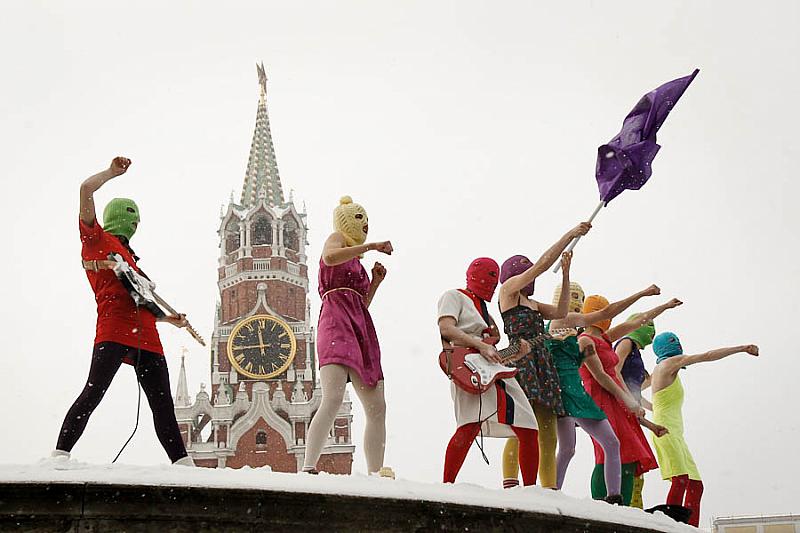
On 5 March Roskomnadzor reported that it had issued warnings in late February 2013 to the editorial boards of Argumenty i Fakty newspaper and the Polit.ru online news service for republishing a video clip by the Pussy Riot punk collective. The video had been previously been defined by a court as extremist.
Popular writers blog added to banned list
On 19 March Roskomnadzor added to the Register of Banned Sites a page from the online blog of popular writer Leonid Kaganov that featured the lyrics to a satirical song from a 1990s TV show — supposedly for encouraging suicide. A blog post in which Kaganov commented on this ban was then added to the register — and then so was his entire blog, even though, on the request of Roskomnadzor, Kaganov removed the contentious lyrics from his blog.
Sakhalin ISP told to stop giving bribery tips
On 26 March the Sakhalin regional court reversed a previous Yuzhno-Sakhalinsk city court decision not to ban the ISP Rostelekom from allowing access to a website containing information about giving bribes. The ISP must now restrict access to the site.
Andrei Soldatov is a Russian journalist, and together with Irina Borogan, co-founder of the Agentura.Ru website. Last year, Soldatov and Borogan co-authored The New Nobility: The Restoration of Russia’s Security State and the Enduring Legacy of the KGB (PublicAffairs)