3 Dec 2013 | Campaigns
Members and partners of the Human Rights House Network condemn in the strongest terms the excessive use of force by Ukrainian authorities to disperse peaceful demonstrations, following the refusal by Ukraine to sign the European Union association agreement.
Tuesday, 03 December 2013, by Human Rights House Foundation (HRHF)
In their joint letter [download on the right], member and partner NGOs of the Human Rights House Network (HRHN) also call upon President Viktor Yanukovych to immediately revoke measures aiming at using force against protestors and release all protestors and journalists detained, and ensure that relatives of injured and arrested protestors and journalists were informed of their situation.
The 29-30 November 2013 demonstration on Maidan Nezalezhnosti, Kyiv’s Independence Square, essentially of students and activists, was peaceful until the police used excessive force to disperse it. The NGOs call upon Ukrainian authorities to undertake an independent and transparent investigation on the unlawful dispersal of the peaceful protest, and bring those responsible to justice, as requested by one of the members of the Human Rights House Kyiv, the Ukrainian Helsinki Human Rights Union.
Another member of the Human Rights House Kyiv, the Information Centre for Human Rights reports that 52 journalists were injured by police forces or by stones and grenades thrown by violent elements. The Centre for Civil Liberties, also a member of the Human Rights House Kyiv, is coordinating the legal aid “EuroMaidanSOS” since Sunday night. The Centre has received around 200 phone calls during the weekend. So far, they have registered 75 complaints related to arrests, beatings and people who were temporarily taken away from the 29-30 November demonstration. This does not include clashes with the police in front of the Presidential Administration Sunday 1 December. The NGOs call upon Ukrainian authorities to immediately and unconditionally drop all charges against peaceful protestors and journalists, release and compensate all of them, and ensure that they can carry out their work.
According to “EuroMaidanSOS”, 14 people (youth activists and students apparently) have disappeared, since the police intervention on 29-30 November 2013 at Maidan Nezalezhnosti. “EuroMaidanSOS” and human rights groups have called hospitals but not found information allowing them to trace back to the disappeared people. The NGOs call upon President Viktor Yanukovych to ensure that law enforcement authorities inform relatives of injured and arrested protestors of their situation. Ukraine has the obligation to protect anybody from being a victim of an enforced disappearance, even more so when injured or arrested by law enforcement authorities at a peaceful protest.
In their joint letter, the NGOs call upon you President Viktor Yanukovych to follow advice from Ukrainian civil society, including by:
Taking concrete measures aiming at stopping the use of force by police to disperse protestors, even if they occupy governmental buildings, and to publicly acknowledge the right of anybody to peacefully protest and the duty of the State security forces to protect peaceful protestors;[1]
Undertaking an independent and transparent investigation on the unlawful dispersal of the peaceful protest of 29-30 November 2013, and ensure that those responsible are brought to justice and do not enjoy impunity; Immediately and unconditionally dropping all charges against peaceful protestors and journalists, release and compensate all of them; Ensuring that law enforcement authorities inform relatives of injured and arrested protestors of their situation, protecting everybody from being a victim of an enforced disappearance, including by immediately investigating the cases of 14 people disappeared following the police intervention on 29-30 November 2013 at Maidan Nezalezhnosti;[2]
Ensuring that human rights NGOs and journalists are able to monitor assemblies and report on police violence without fearing retaliation, and that human rights defenders and activists are not charged for participating in peaceful protests.[3]
Signed by:
Human Rights House Kyiv (on behalf of the following NGOs):
Ukrainian Legal Aid Foundation
Ukrainian Helsinki Human rights Union
Human Rights Information Center
Association of Ukrainian Human Rights Monitors on Law Enforcement (Association UMDPL)
Azerbaijan Human Rights House (on behalf of the following NGOs):
Women’s Association for Rational Development
Institute for Reporters’ Freedom and Safety
Society for Humanitarian Research
Media Rights Institute
Association for the Protection of Women’s Rights in Azerbaijan after D. Aliyeva
Legal Education Society
Azerbaijan Lawyers Association
Barys Zvozskau Belarusian Human Rights House in exile, Vilnius
Human Rights House Belgrade (on behalf of the following NGOs):
Helsinki Committee for Human Rights in Serbia
Lawyers Committee for Human Rights (YUCOM)
Belgrade Centre for Human Rights
Human Rights House Sarajevo (on behalf of the following NGOs):
Association Transitional Justice Accountability and Remembrance in Bosnia and Herzegovina
Helsinki Committee for Human Rights in Bosnia and Herzegovina
Renesansa
Serbian Civic Council
Human Rights House Tbilisi (on behalf of the following NGOs):
Article 42 of the Constitution
Caucasian Centre for Human Rights and Conflict Studies
Georgian Centre for Psychosocial and Medical Rehabilitation of Torture Victims
Human Rights Centre
Union Sapari – Family without Violence
Human Rights House Oslo (on behalf of the following NGOs):
Human Rights House Foundation
Human Rights House Voronezh (on behalf of the following NGOs):
Charitable Foundation
Civic Initiatives Development Center
Confederation of Free Labor
For Ecological and Social Justice
Free University
Golos
Interregional Trade Union of Literary Men
Lawyers for labor rights
Memorial
Ms. Olga Gnezdilova
Soldiers Mothers of Russia
Voronezh Journalist Club
Voronezh-Chernozemie
Youth Human Rights Movement
Human Rights House Yerevan (on behalf of the following NGOs):
Helsinki Citizens’ Assembly – Vanadzor
Socioscope
Jurists against Torture
Human Rights House Zagreb (on behalf of the following NGOs):
Association for Promotion of Equal Opportunities for People with Disabilities
B.a.B.e. – Be active, Be emancipated
Centre for Peace Studies
Documenta – Centre for Dealing with the Past
GOLJP – Civic Committee for Human Rights
Svitanje – Association for Protection and Promotion of Mental Health
Election Monitoring and Education Center, Azerbaijan
Helsinki Foundation for Human Rights, Poland
Human Rights Club, Azerbaijan
Index on Censorship, United Kingdom
29 Nov 2013 | News, Turkey, Turkey Uncensored
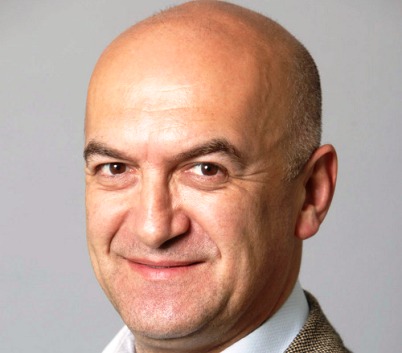
Yavuz Baydar
Turkey’s “mainstream” media, politically and economically in shackles is moving towards submitting to the kind of conditions like those in Central Asian republics such as Azerbaijan. This progression was plain for all to see on live television this week.
Tuesdays have for a long time turned into political shouting matches in Ankara. Stretching the boundaries of parliament’s bylaws, leaders of the parties assemble deputies in so- called group meetings in the lawmakers’ building, where they unleash propaganda.
These appearances are, as obliged by law, broadcast by the state-run TRT channels.
But, as Turkey’s Prime Minister Recep Tayyip Erdoğan has systematically tightened the screws over the proprietors of the conglomerate media, all the national private news channels – there are at least 15 of them – for months turned this custom into a routine of airing his lengthy, loud speeches without interruption.
Last Tuesday, the disturbing pattern went even further. It was the the beginning of the local elections campaign, so Erdoğan let media know that he would announce the names of some of the minor mayoral candidates, in the group meeting.
Amid pomp and circumstance, he did. The entire meeting was meticulously designed as a massive propaganda show for the AKP, backed with lengthy video clips on the achievements in each and every city. And the private media followed herdlike in airing it live.
Many wondered whether Turkey had turned into Azerbaijan or Turkmenistan overnight.
“Unbelievable!” wrote Hasan Cemal, a veteran colleague who was forced to leave Milliyet daily for his defence of good journalism 6 months ago. “Election propaganda that can only be done by paid adverts was sent live on all the channels. This can never happen in any democratic country. I would not wish to be in the place of my colleagues who had to do this.”
The truth of the matter is, by each step, because of the enthusiastic consent of media proprietors in Turkey, either blinded by greed, or frightened to submission or both – to surrender fully to the will of political power, there is not much basic journalism left in the country. All this has been happening against the background of Turkey’s accession process with the European Union.
in a recent update of two earlier reports by the liberal think-tank, TESEV, dated 2011 and 2012, Dr Ceren Sözeri of Galatasaray University concluded that “the media owners are increasingly winning the important public tenders in proportion to their sizes, and the role of their media operations during this process cannot be underestimated. It also explains why the media owners please the government at every possible occasion…”
Sözeri added that businesses that own the big media outlets win important public tenders in direct proportion to their weight in the media sector.
Commenting in a recent article on Turkish conglomerate media’s shady relations with the government, Barış Altıntaş, a colleague from daily Today’s Zaman wrote “it is no wonder readers rarely see stories about shady business dealings involving government agencies, although it is no secret that corruption, especially in public tenders, is rampant in Turkey.”
As a consequence, whatever remains of editorial independence at the center of Turkish journalism, as Tuesday’s spectacular media cooperation displayed, has been eroded further. The new media order being cemented is run by a control-obsessed prime minister, submissive media barons, civil-servant type puppet editors in chief, ostrich-like newsrooms and frightened or weary reporters.
Turkey’s needy public is kept farther away from truth; and instead bombarded by propaganda.
The lack of solidarity within the profession is remarkable. As the screws are tightened further, one of the greatest stories unfolding was about the National Intelligence Agency of Turkey (MIT), which wiretapped a group of journalists with the consent of the Prime Ministry.
Independent-secularist daily Cumhuriyet reported the story that a classified document signed by the head of MIT was sent to the Prime Ministry and that Prime Minister Erdoğan gave approval to the wiretapping of some journalists and writers, that the “necessary coordination was made with the judiciary,” and that MIT carried out the wiretappings. According to the daily, phones of journalists Yasemin Çongar, Mehmet Baransu, Amberin Zaman and Mehmet Altan were wiretapped.
When the story was first revealed last year, the journalists filed a criminal complaint against MIT, and a legal case was opened. An İstanbul court hearing the case earlier asked MİT why the journalists were wiretapped by the organization. The organisation sent a response to the court and said the wiretapping was carried out legally and the phones of the journalists were wiretapped for the ‘benefit of the public’.
Cumhuriyet’s story received no denials from the authorities. One of the targeted journalists, Mehmet Altan, told daily Taraf “[T]his one is a big scandal and constitutional breach.
“This document of directive, signed by the prime minister and head of MIT shows that the authorities do not take seriously its own constitution nor its laws, which were also violated by a cooperation between MIT and the judiciary” he said.
Perhaps not so surprisingly, the story – which is earth-shattering in its essence, revealing the worrisome trends in Turkey against the very core of media freedom and right to privacy – was almost entirely ignored by the conglomerate media, and covered only by a very few small outlets.
One of the few objections to the self-censorship over the story came from Doğan Akın, Editor of the independent web site T24, who in a bitter column accused the entire journalism corps of what he called “not being able to cry out, with mouths shut”.
He bashed media barons for ‘buying opression on journalism’ and ‘investing only on fear’ for the sake of their other business interests.
Another colleague, Abdullah Bozkurt, Ankara Bureau Chief of daily Today’s Zaman, expressed profound concern that media has become toothless and added another dimension:
“Considering the widespread allegations that MIT has been putting journalists on its payroll in Turkey, financing reporters through clandestine activities to promote the agency and to clutter the information space through unscrupulous reporting fed to them by the agency, the media’s public interest advocacy role is very much diluted.”
Turkey Uncensored is an Index on Censorship project to publish a series of articles from censored Turkish writers, artists and translators.
26 Nov 2013 | Campaigns, European Union, United Nations
In a joint letter to Baroness Catherine Ashton, High Representative for Foreign Affairs & Security Policy and Vice-President of the European Commission, Index on Censorship has joined 66 human rights NGOs from European Union member States, States from the European Partnership and States in cooperation with the European Union stress that the intent to reduce OHCHR’s budget is a signal in the wrong direction. The programme budget for the biennium 2014-2015 for 2014-2015 already decreases the budget of OHCHR by a net 4.8%, whilst the promotion and protection of human rights represents only 3% of the overall UN budget.
Keeping in mind that within the overall UN budget, the share allocated to the promotion and protection of human rights represents approximately 3%, the intent to reduce OHCHR’s budget is a signal in the wrong direction. Soon the Human Rights Council will celebrate its 10 years of existence – we believe that all States and group of States aiming at promoting human rights should ambition to raise that share to at least 10% to celebrate the 10 years of existence of the Council, which will be made impossible if the European Union continues to pressure for more and more “across the board” cuts in the UN’s human rights budget.
20 years after the Office was established, does the European Union really want to a force contributing to undermining the sustainability of OHCHR, hence weakening the voice for human rights within the UN system?
Azerbaijan Human Rights House (on behalf of the following NGOs):
Association for Protection of Womens’ Rights
Azerbaijan Lawyers Association
Human Rights Center of Azerbaijan
Institute for Peace and Democracy
Legal Education Society
Women’s Association for Rational Development
Media Rights Institute
Public Union of Democracy and Human Rights Resource Centre
Society for Humanitarian Research
Barys Zvozskau Belarusian Human Rights House in exile, Vilnius
Human Rights House Belgrade (on behalf of the following NGOs):
Belgrade Centre for Human Rights
Lawyers’ Committee for Human Rights
Helsinki Committee for Human Rights in Serbia
Policy Center
Human Rights House Kiev (on behalf of the following NGOs):
Association of Ukrainian Human Rights Monitors on Law Enforcement (Association UMDPL)
Center for Civil Liberties
Human Rights Information Center
Human Rights House Tbilisi (on behalf of the following NGOs):
Article 42 of the Constitution
Caucasian Centre for Human Rights and Conflict Studies
Georgian Centre for Psychosocial and Medical Rehabilitation of Torture Victims
Human Rights Centre
Media Centre
Union Sapari – Family without Violence
Human Rights House Oslo (on behalf of the following NGOs):
Human Rights House Foundation (HRHF)
Health and Human Rights Info
Norwegian Helsinki Committee
Human Rights House Voronezh (on behalf of the following NGOs):
Charitable Foundation
Civic Initiatives Development Centre
Confederation of Free Labor
For Ecological and Social Justice
Free University
Golos
Interregional Trade Union of Literary Men
Lawyers for labor rights
Memorial
Ms. Olga Gnezdilova
Soldiers Mothers of Russia
Voronezh Journalist Club
Voronezh-Chernozemie
Youth Human Rights Movement
Human Rights House Yerevan (on behalf of the following NGOs):
Armenian Helsinki Association
Helsinki Citizens’ Assembly – Vanadzor
Jurists against Torture
Guaranteeing Equal Opportunities
Shahkhatun
Socioscope
Women’s Resource Center
Human Rights House Zagreb (on behalf of the following NGOs):
Association for Promotion of Equal Opportunities for People with Disabilities
B.a.B.e. – Be active, Be emancipated
Centre for Peace Studies
Documenta – Centre for Dealing with the Past
GOLJP – Civic Committee for Human Rights
Svitanje – Association for Protection and Promotion of Mental Health
Russian Research Centre for Human Rights (on behalf of the following NGOs):
Human Rights Network Group
Independent Psychiatric Association of Russia
Moscow Centre for Prison Reform
Moscow Helsinki Group
Mother’s Right Foundation
Non-violence International
Right of the Child
Right to Live and Have Civil Dignity
Social Partnership FoundationUnion of the Committees of Soldiers’ Mothers of Russia
Helsinki Foundation for Human Rights, Poland
Human Rights Club, Azerbaijan
Rafto Foundation, Norway
Human Rights House Foundation (HRHF)
Index on Censorship
26 Nov 2013 | News, Politics and Society, United Nations
The UN has been urged to officially recognise the International Day to End Impunity for Crimes against Journalists as the Third Committee, dedicated to dealing with human rights issues, will today be asked to vote on a draft resolution.
The resolution, backed by at least 48 countries, is based on the UN Plan of Action on the Safety of Journalists and the Issue of Impunity, approved on 12 April 2012, which saw United Nations agencies work with member states towards a free and safe working environment for journalists. If successful, the UN Secretary General will present a report on the implementation of the resolution at the next General Assembly 2014, with 2 November officially being recognised as the official UN International Day to End Impunity.
Co-sponsored by 80 organisations and backed by countries including the United States — and even Azerbaijan and Colombia — the draft resolution calls for the acknowledged ‘condemnation of all attacks and violence against journalists and media workers, such as torture, extrajudicial killings, enforced disappearances and arbitrary detention, as well as intimidation and harassment in both conflict and non-conflict situations’.
Index on Censorship as a founding member of IFEX has been supporting the International Day to End Impunity since its launch in 2010 which has seen the 23 November recognised as the day for campaign. Annie Game, IFEX Executive Director, stated: “This is a positive move forward because IFEX members acknowledged that making the International Day to End Impunity an official UN day can help to raise the global profile of the issue. Every year, a growing number of IFEX members and concerned individuals take part in this campaign that strikes at the very roots of the problem. Having the UN acknowledge the importance of this issue will help us broaden our reach and turn up the volume on the call to end impunity.”
The draft resolution also:
• acknowledges ‘the specific risks faced by women journalists in the exercise of their work, and underlining, in this context, the importance of taking a gender-sensitive approach when considering measures to address the safety of journalists’;
• the acknowledgement that ‘journalism is continuously evolving to include inputs from media institutions, private individuals and a range of organisations that seek, receive and impart information and ideas of all kinds, online as well as offline, in the exercise of freedom of opinion and expression, in accordance with article 19 of the International Covenant on Civil and Political Rights’;
• and ‘urges Member States to do their utmost to prevent violence against journalists and media workers, to ensure accountability through the conduct of impartial, speedy and effective investigations into all alleged violence against journalists and media workers falling within their jurisdiction, and to bring the perpetrators of such crimes to justice and to ensure that victims that access to appropriate remedies’.
The full draft resolution can be seen here.
This article was originally published on 26 Nov 2013 at indexcensorship.org
